


| CARVIEW |
Select Language
HTTP/2 200
date: Tue, 27 Jan 2026 03:01:52 GMT
content-type: text/html; charset=UTF-8
server: cloudflare
nel: {"report_to":"cf-nel","success_fraction":0.0,"max_age":604800}
cache-control: no-cache, must-revalidate
pragma: no-cache
vary: User-Agent,Accept-Encoding
strict-transport-security: max-age=31536000; includeSubDomains
x-frame-options: SAMEORIGIN
x-content-type-options: nosniff
referrer-policy: strict-origin-when-cross-origin
report-to: {"group":"cf-nel","max_age":604800,"endpoints":[{"url":"https://a.nel.cloudflare.com/report/v4?s=nfZJi0NfQs4eLmS8nMTROgrIVrRAnkDP6%2FtvvbzIXMpAi5Pt6%2Bda6e0UGgIshLHEYRvjeXq2muDcvKF06oIWgMCsXk32kE%2BiHD1yzSLnzA%3D%3D"}]}
cf-cache-status: DYNAMIC
content-encoding: gzip
cf-ray: 9c4502087cbe755c-BLR
alt-svc: h3=":443"; ma=86400
Linux Hardware Reviews & Performance Benchmarks, Open-Source News - Phoronix

AMD Radeon Linux Driver Introduces Low-Latency Video Decode Option
Valve's Proton 10.0-4 Released With More Windows Games Now Running On Linux
AMD Squeezing Out More More ROCm/HIP Performance With New Device-Side PGO
Firefox Nightly Enables Split-View Mode Option By Default
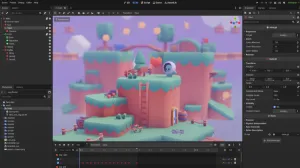
Godot 4.6 Ships Many Improvements For This Leading Open-Source Game Engine
Intel Panther Lake / Arc B390 Linux Benchmarks Still Coming
Revisiting The Linux 6.19 Performance With Some New Wins & Losses
Patch Proposed To Allow Toggling Linux Kernel VT Support At Boot Time
Initial AMD GFX13 Target Merged To LLVM 23 Git - Presumably RDNA5
AMDGPU Patches Updated For HDMI Gaming Features On Linux With Radeon Graphics
LG Gram Style 14 Laptop To See Working Speaker Support With Linux 7.0

ASRock Rack PAUL PCIe IPMI Card Sees DT Patches For The Mainline Linux Kernel
New Patches Aim To Lower Linux Memory Use For Swap, Slightly Improve Performance
Several New X.Org Libraries See 2026 Releases
Linux 6.19-rc7 Released With Kernel Continuity Plan, A Few Important Fixes
LACT 0.8.4 Brings Improved Overclocking UI For GPUs On Linux
AMD Sends In A Variety Of Graphics Driver Fixes Ahead Of Linux 7.0 Cycle
Linux Kernel Continuity Document Added: What Happens If Torvalds' Git Repo Goes Away?
Focusrite Forte USB Audio Interface To Be Supported By Linux 7.0
Snapdragon 8 Elite Gen 5 Display Support & Old Adreno 225 Enablement For Linux 7.0

SVT-AV1 4.0 Released With More Performance Optimizations

GIMP 3.0.8 Released In Advance Of GIMP 3.2
Wine-Staging 11.1 Adds Patches For Enabling Recent Adobe Photoshop Versions On Linux
CachyOS Starts 2026 By Switching To Plasma Login Manager & Live ISO Using Wayland
DAXFS Proposed As Newest Linux File-System
DXVK-NVAPI 0.9.1 Released With New Override & Improvements
A Decade In The Making, Time Slice Extension Could Be Merged For Linux 7.0
AMD Releases MLIR-AIE 1.2 Compiler Toolchain For Targeting Ryzen AI NPUs
AMDGPU Driver Reverts Code For A Number Of Regressions On Linux 6.19
GNOME's AI Assistant Newelle Adds Llama.cpp Support, Command Execution Tool
ASUS Armoury Driver For Linux 6.19 Picks Up Support For More ASUS Laptops
KDE Plasma Saw At Least 9 Crash Fixes This Week
GNU C Library 2.43 Released With More C23 Features, mseal & openat2 Functions

Wine 11.1 Released In Kicking Off The New Development Cycle

Firmware Upstreamed For Audio Support With Upcoming Dell & Lenovo Panther Lake Laptops
Linux 6.19 Scheduler Feature Being Disabled Due To Performance Regressions
VVenC H.266 Encoder Rolls Out More ARM Optimizations For Nice Performance Gains
Vulkan Roadmap 2026 Milestone: Variable Rate Shading, Host Image Copies & More

AMD Ryzen AI Software 1.7 Released For Improved Performance On NPUs, New Model Support

GNU Guix 1.5 Released With RISC-V Support, Experimental x86_64 GNU Hurd Kernel
Linux Lands Fix For Its "Subtly Wrong" Page Fault Handling Code For The Past 5 Years
Zlib-rs 0.6 Released With Improved AVX-512 Support
Vulkan 1.4.340 Released With Descriptor Heap & Other New Extensions
KMSCON 9.3 Released With Mouse Support By Default, Other Improvements
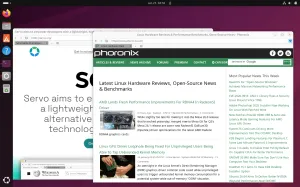
Servo 0.0.4 Browser Engine Released & Finally Supporting Multiple Windows
AMD Lands Fresh Performance Improvements For RDNA4 In RadeonSI Driver
Linux GPU Driver Loophole Being Fixed For Unprivileged Users Being Able To Tap Unbounded Kernel Memory
Intel Xeon 6780E "Sierra Forest" Linux Performance ~14% Faster Since Launch
AMD Announces Ryzen 7 9850X3D Pricing Of $499 USD
Updated Intel Panther Lake IPU Firmware Published With New Features & Bug Fixes
Rust 1.93 Brings Improvement For Inline Assembly Handling
AMD AOMP 22.0-2 Released With Flang Fortran Improvements
Prominent Intel Compiler Engineer Heads Off To AMD
ReactOS Celebrates 30 Years In Striving To Be An Open-Source Windows Implementation
Linux Finally Retiring HIPPI: The First Near-Gigabit Standard For Networking Supercomputers
AMD Sends Out Linux Patches For Next-Gen EPYC Features: GLBE, GLSBE & PLZA
AMD ROCm 7.2 Now Released With More Radeon Graphics Cards Supported, ROCm Optiq Introduced
Mesa 26.0-rc1 Released With RADV Improvements Leading The Way Along With Intel & NVK
PyTorch 2.10 Released With More Improvements For AMD ROCm & Intel GPUs
XDG-Desktop-Portal 1.21 Released With Reduced Motion Setting, Support For Linyaps Apps
Linux 7.0 Apple Silicon Device Tree Updates Have All The Bits For USB Type-C Ports
Adjusting One Line Of Linux Code Yields 5x Wakeup Latency Reduction For Modern Xeon CPUs
New Patches Aim To Make x86 Linux EFI Stub & Relocatable Kernel Support Unconditional
PHPStan Now 25~40% Faster For Static Analysis
- Articles & Reviews
- News Archive
- Forums
- Premium Ad-Free
- Contact
- Popular Categories
- Close
99 Minutes Ago - Mesa - RadeonSI Low-Latency Decode - Add A Comment
AMD's RadeonSI Gallium3D driver for next quarter's Mesa 26.1 release is introducing a new low-latency video decode mode. This lower-latency video decoding comes with a trade-off of increased GPU power consumption.
3 Hours Ago - Valve - Proton 10.0-4 - 4 Comments
Valve and CodeWeavers today released Proton 10.0-4 as their newest update to this downstream of Wine that powers Steam Play for running Windows games on Linux.
7 Hours Ago - AMD - Profile Guided Optimizations - 4 Comments
Compiler profile guided optimization (PGO) techniques have paid off well for increasing CPU performance via application/workload-specific profiles fed back to the compiler to make more informed decisions. AMD compiler engineers have been working on crafting device-side PGO for their AMDGPU LLVM back-end for allowing ROCm/HIP workloads to achieve greater GPU performance. An initial merge request is now open for upstream LLVM.
8 Hours Ago - Mozilla - Firefox Split View - 12 Comments
The latest Firefox Nightly builds have now enabled the Split View mode by default to easily view two web pages at once within a single window.
9 Hours Ago - Linux Gaming - Godot 4.6 - 4 Comments
Godot 4.6 is officially out today as the newest feature release for this leading open-source, cross-platform game engine.
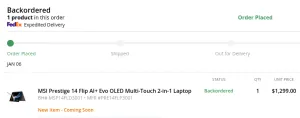
10 Hours Ago - Intel - Not Yet... - 6 Comments
Ahead of tomorrow's official availability of new Intel Core Ultra Series 3 "Panther Lake" laptops, the review embargo lifted on Panther Lake and its much anticipated Arc B390 graphics. There have been several Windows 11 reviews of Panther Lake out today, but what about Linux?
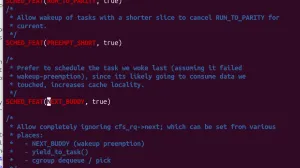
Back at the start of the Linux 6.19 kernel cycle I ran benchmarks showing some scheduler performance regressions with the new kernel. Fortunately, two weeks out from the Linux 6.19 stable release, merged this weekend was disabling the scheduler's NEXT_BUDDY feature due to performance regressions. Here are some fresh benchmarks looking at the latest Linux 6.19 Git state with/without NEXT_BUDDY and comparing it to Linux 6.18 stable for reference.
13 Hours Ago - Linux Kernel - VT_ENABLE - 11 Comments
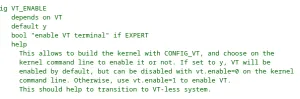
A patch causing a healthy technical debate today on the Linux kernel mailing list would allow the kernel virtual terminal "VT" support to be enabled/disabled at boot time rather than being limited to the current CONFIG_VT build-time option.
14 Hours Ago - AMD - AMD GFX13 - 6 Comments
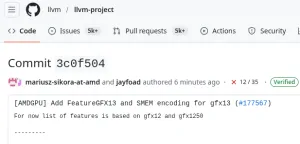
Added to the LLVM 23 Git codebase minutes ago is a pull request adding the initial AMDGPU GFX13 target for their next-generation graphics core IP. AMD GFX13 is presumably for RDNA5.
16 Hours Ago - Radeon - HDMI Gaming Features - 16 Comments
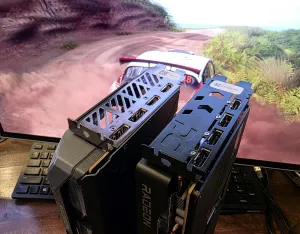
A patch series posted last week for the open-source AMDGPU kernel driver implements HDMI Variable Rate Refresh "VRR" and other gaming features for HDMI displays. With the HDMI Forum blocking HDMI 2.1 open-source support, these HDMI gaming features for the AMDGPU driver were developed via trial-and-error and the limited public knowledge available. A second iteration of these patches are now available for testing.
16 Hours Ago - Hardware - LG Gram Style 14 - Add A Comment
For the Intel-powered LG Gram Style 14 laptop one of the Linux support caveats is the internal speakers not working properly under Linux, but with a patch expected for the upcoming Linux 6.20~7.0 kernel cycle it will finally fix the laptop speaker support for one of the laptop models in this series.
16 Hours Ago - Hardware - ASRock Rack PAUL - 6 Comments
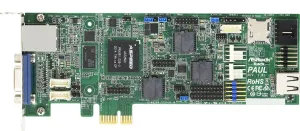
ASRock Rack's PAUL is a low-profile PCIe IPMI card built around the widely-used ASPEED AST2500 controller for providing IPMI/BMC capabilities for any platform. New patches provide mainline Linux kernel support for ASRock Rack PAUL with the necessary Device Tree bits.
17 Hours Ago - Linux Kernel - Better Swap - 17 Comments
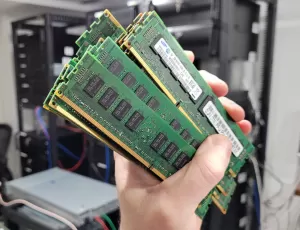
Kairui Song of Tencent sent out a new patch series overnight working on enhancing the Linux kernel's swap code. With the patches there are some memory savings -- and more on the way -- while also providing for slightly faster performance.
25 January
25 January 08:14 PM EST - X.Org - X.Org Component Updates - 25 Comments
While we wait to see what comes of the new X.Org Server Git branch plans and a possible X.Org Server 26.1 release, several X.Org libraries saw new point releases this weekend. These seldom-updated libraries saw new releases to ship various build fixes and other minor improvements.
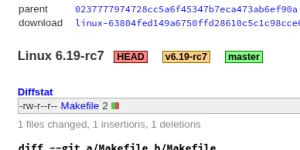
25 January 05:29 PM EST - Linux Kernel - Linux 6.19-rc7 - Add A Comment
The Linux 6.19 kernel remains on track for its official release two weeks from today, with the extra RC being baked in due to the end of year holidays. Out today is Linux 6.19-rc7 with a few changes worth highlighting for the week.
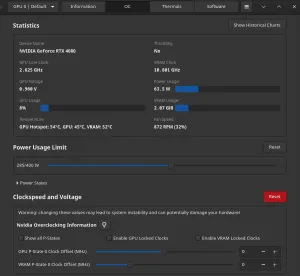
25 January 01:58 PM EST - Hardware - LACT 0.8.4 - 9 Comments
In the absence of any official GUI control panel from AMD or Intel for their graphics cards on Linux, LACT remains a popular choice particularly for AMD Radeon Linux gamers/enthusiasts to manage various aspects of their GPU from a convenient UI. LACT also supports Intel GPUs and some features on NVIDIA GPUs too. Out today is LACT 0.8.4 for further enhancing this third-party GPU driver user interface.
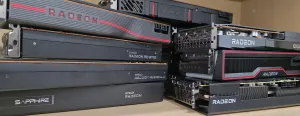
25 January 12:27 PM EST - Radeon - AMDGPU For Linux 7.0 - Add A Comment
This week's batch of AMDGPU and AMDKFD changes queued up ahead of the next kernel merge window is focused on delivering a variety of driver fixes.
25 January 06:18 AM EST - Linux Kernel - Linux Kernel Continuity - 55 Comments
Following discussions from the 2025 Linux Maintainer Summit, merged overnight for the Linux 6.19 kernel is documentation concerning the Linux kernel project's continuity in the event that Linus Torvalds' official Git repository were to disappear or otherwise be inaccessible for continuing the upstream development of the Linux kernel.
25 January 06:10 AM EST - Multimedia - Focusrite Forte - Add A Comment
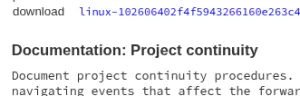
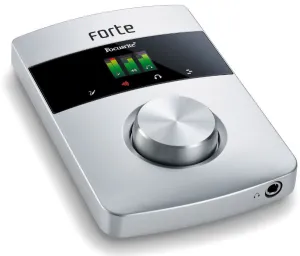
The Focusrite Forte 2-in, 4-out USB audio interface as a portable audio recording solution will be supported by the mainline Linux 7.0 kernel. The patches are queued in the Linux kernel's sound subsystem development tree. While a convenient little device, the Focusrite Forte is no longer manufactured but can still be found used online.
25 January 05:54 AM EST - Linux Kernel - Qualcomm MSM Driver - 5 Comments
Rob Clark this week sent out the latest MSM DRM kernel driver updates for the latest Qualcomm display/graphics enhancements ahead of next month's Linux 7.0 merge window.
25 January 05:38 AM EST - Multimedia - SVT-AV1 4.0 - 10 Comments
SVT-AV1 4.0 is out as the newest major feature release for this open-source AV1 video encoder that was originally started by Intel as an open-source project and now continuining on thanks to the Alliance For Open Media.
24 January
24 January 08:52 PM EST - Free Software - GIMP 3.0.8 - 10 Comments
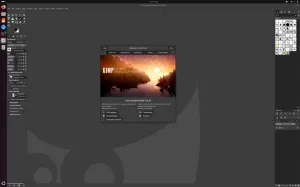
While the GIMP 3.2 release is expected out soon, GIMP 3.0.8 is available tonight as what could end up being the last set of bug fixes for GIMP 3.0.
24 January 07:33 PM EST - WINE - Wine-Staging 11.1 - 7 Comments
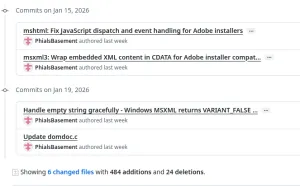
Following yesterday's release of Wine 11.1 for kicking off the new post-11.0 development cycle, Wine-Staging 11.1 is now available for this experimental/testing version of Wine that present is around 254 patches over the upstream Wine state.
24 January 12:50 PM EST - Operating Systems - CachyOS January 2026 - 43 Comments
The Arch Linux powered CachyOS distribution is out with its first new ISO release of 2026. This Linux distribution continues to be quite popular with Linux gamers, enthusiasts craving peak performance, and others for wanting to enjoy a polished Arch Linux desktop experience.
24 January 12:42 PM EST - Linux Storage - DAXFS - 8 Comments
There's yet another new Linux file-system on the block: DAXFS has been announced as a new read-only open-source file-system.
24 January 12:24 PM EST - Linux Gaming - DXVK-NVAPI 0.9.1 - 1 Comment
DXVK-NVAPI 0.9.1 is out today as this NVIDIA NVAPI implementation that is used by Valve's Steam Play (Proton) with DXVK and VKD3D-Proton. This is the important piece of the Steam Play puzzle to allow for NVIDIA DLSS, NVIDIA Reflex, PhysX, and other features for Windows games running on Linux.
24 January 09:51 AM EST - Linux Kernel - Time Slice Extension With RSEQ - 15 Comments
With the upcoming Linux 6.20~7.0 kernel cycle it looks like the time slice extension work could finally been merged, which has seen various attempts over the past decade. Time slice extension for the Linux kernel implemented using Restartable Sequences "RSEQ" allows user-space processes to request a temporary, opportunistic extension of their CPU time slice without being preempted.
24 January 07:22 AM EST - AMD - AMD MLIRE-AIE 1.2 - Add A Comment
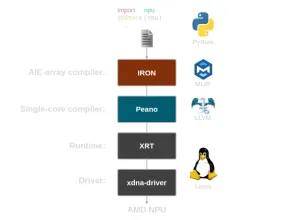
In addition to AMD releasing the Ryzen AI Software 1.7 release on Friday, they also published a new version of their MLIR-AIE compiler toolchain for targeting AMD Ryzen AI NPU devices with this LLVM-based MLIR-focused stack.
24 January 06:36 AM EST - Radeon - AMDGPU Regression Fix - 8 Comments
Merged on Friday as part of this week's DRM kernel graphics driver fixes for the week is addressing a regression affecting many different users with the Linux 6.19 development kernel.
24 January 06:19 AM EST - GNOME - Newelle 1.2 - 13 Comments
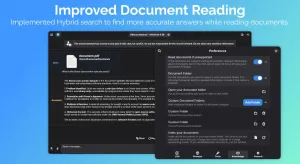
Newlle as a virtual AI assistant for the GNOME desktop with API integration for Google Gemini, OpenAI, Groq, and also local LLMs is out with a new release. Newelle has been steadily expanding its AI integration and capabilities and with the new Newelle 1.2 are yet more capabilities for those wanting AI on the GNOME desktop.
24 January 05:52 AM EST - Hardware - ASUS Armoury Driver - 2 Comments
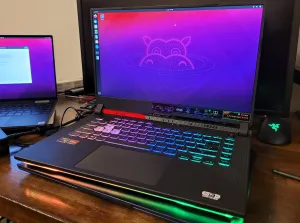
A new driver in the Linux 6.19 kernel is the ASUS Armoury driver for supporting additional functionality with the ROG Ally gaming handhelds and other ASUS ROG gaming hardware like their laptops.
24 January 12:00 AM EST - KDE - KDE Plasma Crash Fixes - 32 Comments
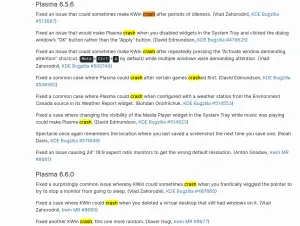
KDE Plasma 6.6 feature development work continues winding down while Plasma 6.7 has begun seeing more feature work. This week also saw at least nine different crash fixes affecting Plasma/KWin.
23 January
23 January 08:06 PM EST - GNU - Glibc 2.43 - 18 Comments
Version 2.43 of the GNU C Library "glibc" was released on Friday evening as the newest half-year feature update. This is a very feature packed update and even managed to be released ahead of the 1 February release plan.
23 January 04:12 PM EST - WINE - Wine 11.1 - 5 Comments
Following the release of Wine 11.0 stable just under two weeks ago, Wine 11.1 is now available as the first of the bi-weekly development snapshots for Wine in leading toward the Wine 12.0 release next January.
23 January 01:53 PM EST - Intel - Cirrus CS42L45 - Add A Comment
Similar to the new Intel IPU 7.5 firmware upstreamed for Panther Lake this week, Cirrus has upstreamed their CS42L45 codec firmware for upcoming Dell and Lenovo laptops making use of this audio codec.
23 January 12:00 PM EST - Linux Kernel - NEXT_BUDDY - 5 Comments
Queued into tip/tip.git's "sched/urgent" Git branch today is a patch to disable the kernel scheduler's NEXT_BUDDY functionality that was re-implemented back during the Linux 6.19 merge window. It turns out to cause some performance regressions that have yet to be otherwise addressed.
23 January 11:08 AM EST - Multimedia - Benchmarks On NVIDIA GB10 - 28 Comments
Fraunhofer HHI this week released a new version of VVenC, their open-source H.266 video encoder. Among the changes this release are more performance optimizations for ARM and I have run some comparison benchmarks using a NVIDIA GB10 SoC with the Dell Pro Max GB10.
23 January 10:12 AM EST - Vulkan - Vulkan Roadmap 2026 - 7 Comments
In addition to the release today of Vulkan 1.4.340 with the new descriptor heap "VK_EXT_descriptor_heap" extension and three other new extensions, The Khronos Group's Vulkan Working Group has also published the Vulkan Roadmap 2026 Milestone.
23 January 09:18 AM EST - AMD - AMD Ryzen AI Software 1.7 - 9 Comments
AMD today released a new version of Ryzen AI Software, the user-space packages for Microsoft Windows and Linux for making use of the Ryzen AI NPUs for various AI software tasks like Stable Diffusion, ONNX, and more.
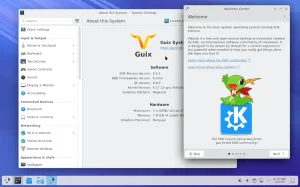
23 January 08:54 AM EST - Operating Systems - GNU Guix 1.5 - 15 Comments
GNU Guix 1.5 is out today as the latest major release for this platform built around its functional package manager. This is a big upgrade with it having been three years since the GNU Guix 1.4 release.
23 January 08:11 AM EST - Linux Kernel - Page Fault Handling Mistake - 9 Comments
Merged today for the Linux 6.19 Git kernel and then in turn for back-porting to prior Linux kernel series is making the x86 page fault handling code disable interrupts properly. Since 2020 it turns out the handling was subtly wrong but now corrected by Intel.
23 January 06:21 AM EST - Free Software - zlib-rs 0.6 - 11 Comments
Zlib-rs is the effort out of the Trifecta Tech Foundation to provide a Zlib compression implementation written in the Rust programming language that can serve as a C dynamic library and Rust crate. The intent here being that zlib-rs is potentially safer than the classic C-based implementation of Zlib.
23 January 06:00 AM EST - Vulkan - VK_EXT_descriptor_heap - 7 Comments
Vulkan 1.4.340 is out today as the first significant new Vulkan API update following the end of year holidays. With Vulkan 1.4.340 comes four new extensions worth talking about.
23 January 05:58 AM EST - Free Software - KMSCON 9.3 - 13 Comments
KMSCON as a KMS/DRM-based virtual console emulator in user-space has been released. KMSCON is one of the leading solutions for potentially replacing the in-kernel Virtual Terminal (VT) implementation.
23 January 05:40 AM EST - Free Software - Servo 0.0.4 - 30 Comments
Servo 0.0.4 is out today as the newest monthly update to this open-source, Rust-based web browser engine. Building off recent Servo embedding API additions, Servo 0.0.4 introduces support for multiple browser windows.
22 January
22 January 08:21 PM EST - Radeon - GFX12 + RadeonSI Performance - 6 Comments
While slightly too late for making it into the Mesa 26.0 release that branched yesterday, merged now to Mesa Git for Q2's Mesa 26.1 release are some new RadeonSI Gallium3D (OpenGL) driver optimizations for the latest AMD Radeon RDNA4 graphics cards.
22 January 03:25 PM EST - Linux Kernel - System-Wide Out Of Memory - 20 Comments
An oversight in the Linux kernel's Direct Rendering Manager (DRM) graphics driver common code could allow unprivileged users to trigger unbounded kernel memory consumption for a potential system-wide out-of-memory "OOM" situation.
22 January 12:00 PM EST - Processors - 2 Comments
As part of my end-of-year 2025 benchmarking I looked at how the Intel Xeon 6980P Granite Rapids performance evolved in the year since launch and seeing some nice open-source/Linux optimizations during that time. On the other side of the table were also benchmarks of how AMD EPYC 8004 Sienna evolved in its two years, Ubuntu 24.04 vs. 26.04 development for AMD EPYC Turin, the AMD EPYC Milan-X in its four years since launch, and also a look at the performance evolution lower down the stack with the likes of sub-$500 laptop hardware. Out today is a fresh look at how the Intel Xeon 6780E Sierra Forest has evolved in its one and a half years since its launch.
22 January 10:19 AM EST - AMD - Ryzen 7 9850X3D - 17 Comments
Back at CES AMD announced the Ryen 7 9850X3D as a faster sibling to the Ryzen 7 9800X3D. Today they have announced the suggested price for this 3D V-Cache desktop processor and confirmation of its availability starting on 29 January.
22 January 09:54 AM EST - Intel - Intel IPU7 Firmware - Add A Comment
Ahead of the first Intel Core Ultra Series 3 Panther Lake laptops expected to hit retail channels next week, Intel has published updated IPU7 (IPU 7.5) firmware for the image processing unit used by the web cameras on the higher-end Panther Lake laptops.
22 January 09:18 AM EST - Programming - Rust 1.93 - 9 Comments
Rust 1.93 is out today as the first feature release for this programming lanugage of 2026.
22 January 08:15 AM EST - AMD - AOMP AOMP 22.0-2 - Add A Comment
Yesterday along with releasing ROCm 7.2 there was also the release of AOMP 22.0-2 as the newest version of their open-source downstream of LLVM/Clang/Flang that is focused on offering the best OpenMP/OpenACC offloading support to Instinct/Radeon hardware.
22 January 06:12 AM EST - AMD - Intel Compiler Expert Now At AMD - 3 Comments
James Brodman worked for the last 15 years at Intel on their ISPC SIMD compiler and then in more recent years on the Intel DPC++ compiler and SYCL support as part of Intel's oneAPI initiative. Rather interestingly, this compiler expert has now joined AMD.
22 January 05:57 AM EST - Operating Systems - ReactOS 30 Years Old - 51 Comments
The ReactOS project is celebrating today that it marks 30 years since their first code commit in the ReactOS source tree. During the past 30 years now the project has seen more than 88k commits from more than 300 developers as it seeks to be a robust open-source Windows implementation. In their 30 year birthday blog post they also provide a look ahead at what they're working on.
21 January
21 January 08:20 PM EST - Linux Networking - HIPPI - 12 Comments
While the Linux kernel has been seeing preparations from NVIDIA for 1.6 Tb/s networking in preparing for next-generation super-computing, the kernel has still retained support to now for the High Performance Parallel Interface. HIPPI was the standard for connecting supercomputers in the late 1980s and a portion of the 1990s with being the first networking standard for near-Gigabit connectivity at 800 Mb/s over distances up to 25 meters. But HIPPI looks like it will be retired from the mainline kernel with Linux 7.0.
21 January 05:48 PM EST - AMD - GLBE, GLSBE, PLZA - Add A Comment
Sent out to the Linux kernel mailing list this afternoon were a set of 19 patches in preparing for some new CPU features presumably to be found with AMD's next-generation EPYC "Venice" processors.
21 January 03:52 PM EST - AMD - ROCm 7.2 - 44 Comments
Back at CES earlier this month AMD talked up features of the ROCm 7.2 release. ROCm 7.2 though wasn't actually released then, at least not for Linux. That ROCm 7.2.0 release though was pushed out today as the latest improvement to this open-source AMD GPU compute stack and officially extending the support to more Radeon graphics cards.
21 January 02:49 PM EST - Mesa - Mesa 26.0-rc1 - 8 Comments
Eric Engestrom just released Mesa 26.0-rc1 with the code for this quarter's Mesa feature release now branched and under a feature freeze leading up to the stable release in February.
21 January 12:49 PM EST - AI - PyTorch 2.10 - 3 Comments
PyTorch 2.10 is out today as the latest feature update to this widely-used deep learning library. The new PyTorch release continues improving support for Intel GPUs as well as for the AMD ROCm compute stack along with still driving more enhancements for NVIDIA CUDA.
21 January 11:14 AM EST - Desktop - XDG Desktop Portal - 50 Comments
XDG-Desktop-Portal 1.21 is now available for testing with the latest features for this portal frontend service to Flatpak.
21 January 09:18 AM EST - Apple - Apple Silicon USB-C - 2 Comments
Ahead of the Linux 6.20~7.0 cycle kicking off next month, the Apple Silicon Device Tree updates have been sent out for queuing ahead of that next merge window. Notable this round are the Device Tree additions for rounding out the USB 2.0/3.x support with the USB-C ports.
21 January 06:27 AM EST - Intel - Wakeup Latency Reduction - 2 Comments
A new patch posted to the Linux kernel mailing list aims to address the high wake-up latency experienced on modern Intel Xeon server platforms. With Sapphire Rapids and newer, "excessive" wakeup latencies with the Linux menu governor and NOHZ_FULL configuration can negatively impair Xeon CPUs for latency-sensitive workloads but a 16 line patch aims to better improve the situation. That is, changing one line of actual code and the rest being code comments.
21 January 05:55 AM EST - Linux Kernel - Linux x86/x86_64 Boot Cleanup - 7 Comments
Prominent Intel Linux engineer H. Peter Anvin has posted a new patch series working to clean-up the Linux x86/x86_64 kernel boot code. Besides cleaning up the code, the kernel configuration would drop options around EFI stub mode and relocatable kernels in making those features now always enabled.
21 January 05:40 AM EST - Programming - PHPStan 2.1.34 - 5 Comments
For those using the powerful PHPStan tool for static analysis on PHP code, this week's PHPStan 2.1.34 is promoting optimized performance with projects seeing around 25% to 40% faster analysis times.
Past 30 Days Of News | Articles & Reviews | News Archives | RSS Feed
Copyright © 2004 - 2026 by Phoronix Media.
All trademarks used are properties of their respective owners. All rights reserved.