



Every year since 1966, the residents of Gävle, Sweden, erect a giant yule goat made of straw to celebrate the season. The Gävle Goat has proven to be a huge tourist draw, and an entire festival grew up around it. In recent years, it has been broadcast worldwide on a live webcam. But the goat is always in danger. In about one out of every three years, someone has managed to burn the goat down before the new year. The expected arson has been less frequent in the 21st century because of serious security protocols. But the goat is still vulnerable to other methods of destruction. In 2023, the Gävle Goat was eaten by birds!
In 2025, it appeared as if the goat was going to make it to New Year's Day, but fate intervened. Storm Johannes brought winds up to 40 miles per hour to Sweden, and the goat was no match for them. It collapsed to the ground early Saturday afternoon. Thus, 2025 will be another disastrous entry into the history the world's unluckiest Christmas decoration.
| CARVIEW |
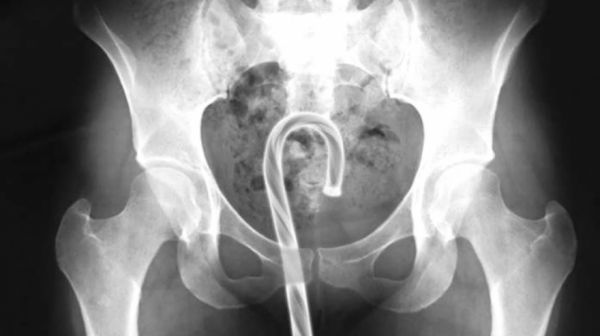
Every year, Barry Petchesky (previously at Neatorama) sifts through the records of the U.S. Consumer Product Safety Commission's database of emergency room visits, looking for cases of foreign objects stuck in body orifices that require medical attention. 2025 is the 13th year of his report, and he has suspended reporting on things that were stuck in ears, noses, and throats. No one paid much attention to those anyway. But the internet is intrigued with the objects that had to be medically retrieved from penises, vaginas, and rectums. Some cases on the list come with notes taken verbatim from the medical reports, for example, "INSERTED TWO DIAMOND RINGS IN HER VAGINA WHILE AT A PARTY IN FEAR THEY WOULD BE STOLEN." Yes, there are a couple of tales of slipping and falling in the shower, and even more of patients not remembering how it happened. The entire post should be considered NSFW. Read all three lists at Defector.
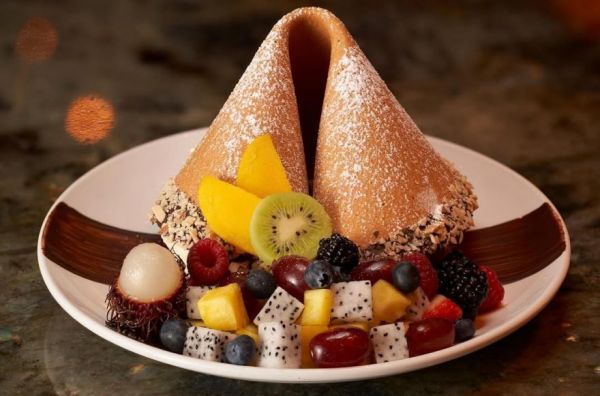
It's common enough to get a couple fortune cookies delivered with the bill at the end of a meal at a Chinese restaurant. But TAO Asian Bistro goes much, much further. Its iconic fortune cookie is a complete dessert course. At a guess, I'd say that it's about eight inches across. Here's a video that shows how the chefs make it.
Furthermore, the bistro makes custom versions of its fortune cookie dessert for Christmas, Breast Cancer Awareness Month, and the Chinese New Year.
This fortune cookie is one of 15 huge desserts compiled by The Takeout, including huge sundaes, milkshakes, and a 25-pound apple pie.

Earlier this year, New York City banned cell phones in classrooms through high school. The results are mostly positive. Teachers report that students are more likely to get to class on time. The downside is that they really don't know that they are on time, because many don't know how to read the analog clock found in every room. These same students were taught how to tell time in the first and second grades, but since then they've relied on their phones to display the time digitally.
It's a phenomenon we've all heard about from time to time, but the NYC school story shines a light on how widespread it is. Students who don't understand analog clocks don't understand the terms "a quarter 'til," "top of the hour," or "incoming fire at ten o'clock," much less "clockwise." Such phrases often reveal a misunderstanding of fractions. I read about a student declaring that "a quarter 'til three" meant 2:35 because a quarter was 25. But how can 35 be three-quarters? A misunderstanding of round clocks may also interfere with the understanding of 360° geometry or compasses, not to mention number systems outside base ten.
There are those who would argue that people no longer need to understand analog clocks because there are digital clocks everywhere, and the phrases we use for time and direction are outdated. What do you think?
-via Fark
(Image credit: Julian Herzog)
In 2023, millions of fans went to stadiums to see Taylor Swift's Eras tour. Most of the fans were young ladies, many of them too young to drive to concerts. Tickets were very expensive, and often out of reach for entire families. So the fathers of fans who were lucky enough to get tickets took their daughters to the arena, and then waited in the parking lot for hours to take them home. With so many other men in the same boat, they had a community of sorts in the parking lot. After all, they have a few things in common.
Hearing the music through their children, some of these dads are Taylor Swift fans themselves, and some are not, but they all love their daughters. Paul Scheer noticed the parking lot phenomenon and spent several evenings outside Swift's concerts in Los Angeles talking to these dads, 50 of them, to see who they were and how they felt about what they were doing. You might need to grab a hankie. -via Metafilter
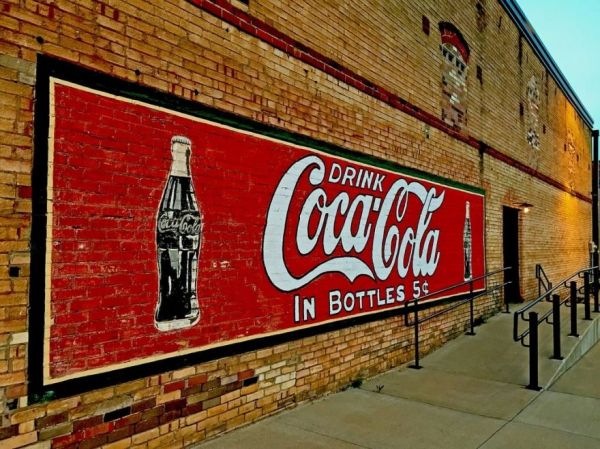
Lucky for us, modern commercial food production is governed by laws on food safety and regulations ensuring fair trade practices. For the most part. But it wasn't always so, and some iconic brands have sad or cutthroat origin stories. You know John Pemberton developed Coca-Cola and named it after its ingredients, but did you know he started using cocaine to treat his own morphine addiction? Okra is not native to the US, and was smuggled in. Fanta was developed during World War II when Germany lost their American suppliers and had to use garbage from local food processors to made soda. The story of the first pink lemonade is either cute or gross, depending on which story you believe. Several companies blatantly ripped off the competition and won through the magic of marketing, leaving the originals in the dust. Read the more nefarious (and sometimes gruesome) parts of the origin stories of 12 familiar foods at The Takeout.
(Image credit: angrit)
In 1989, Star Trek: The Next Generation introduced us to the Borg, a collective of cyborgs that work together as one unit to capture and assimilate the universe's beings and technology for their own purpose- which is to capture and assimilate others. They are seemingly soulless, more powerful than Starfleet, and growing bigger and more powerful all the time. A truly frightening nemesis.
The more our heroes learn about the Borg, the more frightening they became. In later episodes, the philosophical question of individualism, free will, and the hive mind are explored. However, over time and multiple appearances in later movies and series of the Star Trek universe, the Borg lost their horror because they were always ultimately thwarted. We also got to know a few individual Borg drones, and they became sympathetic. The Borg never succeeded in permanently assimilating any of the main characters, although they came frighteningly close. This video is 20 minutes long, but it's from The Art of Storytelling, so you know it's going to be riveting. -via Laughing Squid
Exotic, amazing, and totally untrue tales from faraway lands come through many paths. Locals like to troll visitors with scary stories, like that of the snipe or drop bear. Returning travelers like to impress people by becoming brave witnesses to things they heard. Some storytellers have an agenda, like proving their superiority over uncivilized cultures. And news outlets sometimes prioritize a good story over the truth. Sometimes legends arise due to a combination of these factors. And that's how we got the Man-Eating Tree of Madagascar.
On April 28, 1874, the New York World published an account of German botanist Karl Leche about a tree in Madagascar that resembled an eight-foot pineapple. The Mkodo tribe showed him a ceremony in which a woman was sacrificed to the tree by forcing her to drink its poison nectar, after which the tree's upper tendrils encased her. When Leche returned later, all that was left of the woman was her skull at the base of the tree.
The problems with the story are 1. there is no evidence of the existence of Karl Leche, 2. there is no Mkodo tribe in Madagascar, and 3. no one ever saw the tree after that. But the story spread like crazy, and stuck around. This happened after insectivorous plants were discovered. There was a 19th-century queen of Madagascar who eliminated her rivals and invading foreigners by forcing them to drink poison. And, perhaps most importantly, most readers knew very little about Madagascar. Read how the legend of the man-eating tree came about at American Strangeness. -via Strange Company

Christopher B. Buck, Ph.D., is a virologist with the National Institutes of Health's Laboratory of Cellular Oncology. Science News reports that he has lately experimented on himself and his brother by brewing and drinking beer that contains effective vaccines against cancer-causing polyomarivuses.
The project has caused legal difficulties for Buck who, as a scientist with the US federal government, is constrained by ethical requirements for experiments on human subjects--even if test subjects are himself and his brother. The formed and serves as the sole employee of the Gusteau Research Corporation to provide himself with some means of evading these restrictions.
-via NEXTA

The headstone for the grave of Joan Wytte in Cornwall, UK, is quite intriguing. Her birth date, death date, and burial date are in three different centuries! And the last line is quite sad- "no longer abused." Who was Joan Wytte?
It turns out there is no documentary evidence of a woman named Joan Wytte, and the name "Joan" was often given to Cornish women who were considered a village wise woman. In other words, a witch. Forensic evidence shows the woman buried underneath this stone was around 38 years old at the time of her death, short, and undernourished. She died in the Bodmin jail in 1813, and we know a lot more about her existence after that. Her body was supposed to go to an anatomist, but he didn't bother to actually collect it, so she stayed at the jail, and her bones were used in a seance. Then a doctor took possession of the skeleton, and later sold it to the Museum of Witchcraft and Magic in the 1950s, although the actual museum didn't open until years later. Read what we know about the woman whose restless remains were finally interred with dignity 185 years after she died. -via reddit
(Image credit: Capricorn007_)
Chesty is a bulldog who serves as the official mascot of the United States Marine Corps. He's named for Lt. Gen. Lewis "Chesty" Puller (1898-1971).* This particular bulldog is the sixteenth to bear the title of Chesty when the Marine Corps adopted its first bulldog for this purpose in 1957.
This video shows how Chesty is trained and kitted out to serve the corps and engage in his work for it. Although there are treats involved, Chesty also has responsibilities and standards to uphold.
-via Instapundit
*I enthusiastically recommend the Pulitzer Prize-winning autobiography of Chesty Puller's son. It's a raw, honest, and moving story of the full life of a man in all its ordeals.
Oxford's Mathematical Institute reports about the development of shapes that can physically exist only in zero gravity. These "soft shapes" lack corners and are partially available as biological tissues. But recreating them in practice against the pull of gravity is challenging. The fluid dynamics require micro or zero gravity.
In the above video, Hungarian astronaut Tibor Kapu created an accurate physical model of one of these shapes while on board the International Space Station.
-via My Modern Met

Barry's Borderpoints is a website featuring photos and maps of national borderpoints visited by Barry Arnold, the Vice President of the International Border Research Group--an organization of border enthusiasts.
Arnold's website includes some of the more eccentric borders that history and politics have drawn across the world. Among them is this house that is in Slovenia but is surrounded by Italy. It is set in the region of Trieste--a city long disputed among Italians, Slovenians, and Croatians.
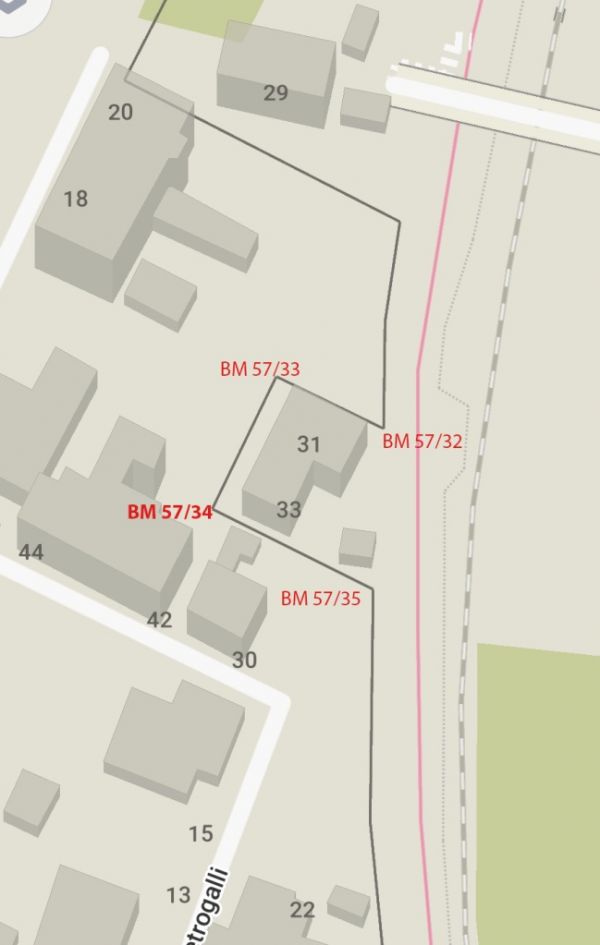
A map reveals the international border. There are official marker points at all four corners. Residents have incorporated them into their garden landscaping. There are no indications that the Slovenian and Italian residents across the fence are hostile to each other.

In the 1990 Christmas movie Home Alone, the McCallister family experiences a nighttime power outage. As a result, their alarm clocks don't go off and the family wakes up only when the airport shuttle van arrives to pick them up. This electrical problem is central to the plot. If the McCallisters are not frantically rushed to leave, it's very improbable that Kevin would have been left home alone.
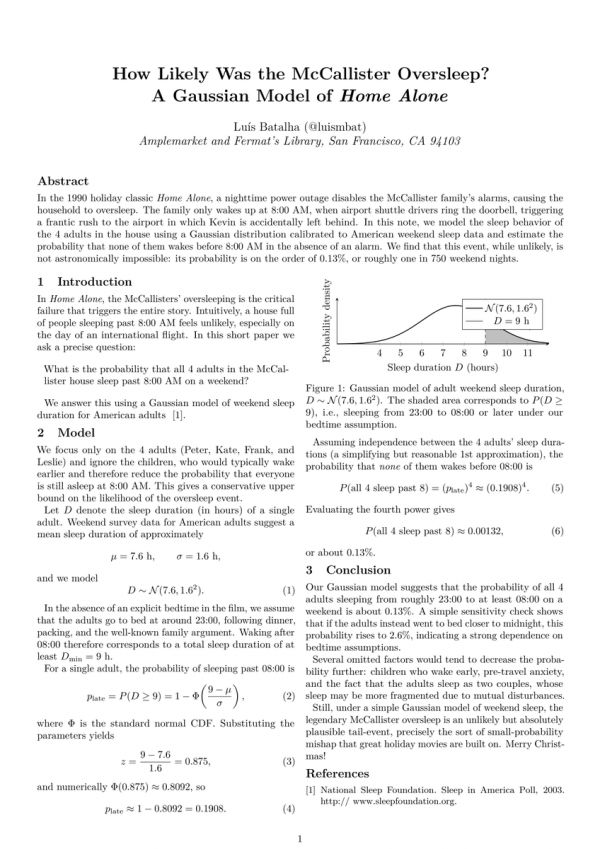
How likely is it that there would be a power outage on that particular night? Physicist Luís Batalha produced this brief analysis on the subject. His conclusion is that the likelihood of this event is about 0.13%.
Kevin got lucky.
You know what Christmas needs? More chaos and destruction! In this bizarre animated sequence the Grinch gets lost on his way to Whoville and somehow ends up in the United States. Instead of correcting his mistake, he instead decides to ruin Christmas here. But since he's not familiar with the huge and powerful transportation and logistics systems in America, he takes quite a beating- to a ridiculous degree. He discovers that his nefarious schemes are no match for the country's over-the-top Christmas spirit. Yet instead of a genuine change of heart, the Grinch realizes that it is in his own best interest to leave Christmas alone. It's the American way.
This involves teleportation, time travel, and the suspension of the laws of physics, which is what cartoons are for. It's the kind of nonsense you'd expect from Landon Fernald of Landon’s Animation Wheelhouse (previously at Neatorama). He hand-animated all the scenes in Blender, and did the music as well. -via The Awesomer




Check out NeatoShop's large selection of T-shirts
Science T-Shirts | Sci-Fi T-Shirts | Fantasy T-Shirts
Funny T-Shirts | Horror T-Shirts | Video Game T-Shirts
Shirts available in sizes S to 10XL:
6XL T-Shirts | 7XL T-Shirts | 8XL T-Shirts
9XL T-Shirts | 10XL T-Shirts
Big & Tall and Curvy Tees are our specialties!
Customization and personalization available.
Specialty T-Shirts:
Anime Big & Tall T-Shirts (3XL to 10XL)
Success! Your email has been sent!
This website uses cookies.
This website uses cookies to improve user experience. By using this website you consent to all cookies in accordance with our Privacy Policy.