


| CARVIEW |
 Paid leave
 Immigration FAQ
 The 47th president
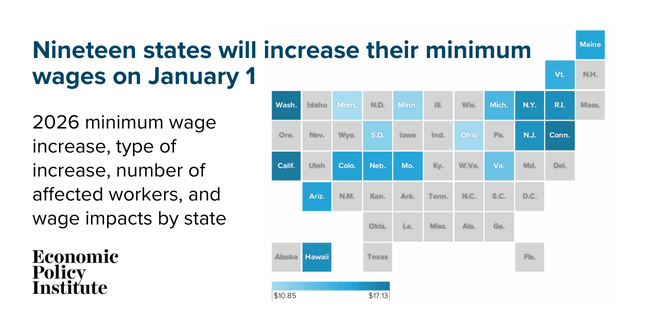 Minimum wage
Paid Family and Medical Leave and paid sick leave laws have passed at state and local levels in record numbers over the last few years. New evidence is building support for a benefit that workers have long known about, and employers are only recently getting hip to: Paid leave is a key work support that may increase employment and workforce attachment.
Many state governments in the South have passed policies that only provide paid parental benefits for some public employees which leaves a long way to go for a comprehensive paid family and medical leave program.
All workers in the South—and their employers—would benefit from a comprehensive paid leave policy.
Related
- Southern policymakers leave workers with lower wages and a fraying safety net
- By repealing paid sick leave, Missouri state legislators will hurt working families
- Paid sick leave supports working families, improves workers’ health and the economy
- Access to paid sick leave continues to grow but remains highly unequal by geography and wage level
- Economic Research and Analysis Network (EARN) in the South
Immigration is among the most important economic and political issues and a main topic of discourse and debate among policymakers and the public. But misperceptions persist about many fundamental aspects of this crucial topic, especially unauthorized immigrants.
Understand the background and facts around immigration, the impact on the economy, visa types, and law enforcement.
In the first year of his second term, President Trump has actively made life less affordable for working people. We examine 47 of the most significant actions Trump has taken that make it harder for working families to afford the cost of living across
- Eroding workers’ wages and economic security;
- Undermining job creation;
- Weakening workers’ rights;
- Enabling employer exploitation; and
- Creating an ineffective government.
These highlight a subset of Trump’s actions with clear impacts on working people’s economic security and ability to afford a basic quality of life. Read more →
Starting January 1, 19 states will increase their minimum wage floor. This will boost earnings for more than 8.3 million workers, with an additional $5 billion in pay due to the increases.
As concerns about rising prices and affordability dominate the news cycle, it is critical to recognize that “affordability” is a function of both prices and wages. And while prices are in most cases unlikely to decline significantly, policymakers can make decisions that boost wages for workers. Read more →
Latest Research
-
47 ways Trump has made life less affordable in the last year
-
Did Trump really fix NAFTA?: What USMCA failed to do and how to put workers first in North American trade
-
Raising taxes on the ultrarich: A necessary first step to restore faith in American democracy and the public sector
-
Trump’s assault on independent agencies endangers us all
-
Racial and ethnic disparities in the United States: An interactive chartbook
October 15, 2025 Report
Blog
-
Six ways the Trump administration tried to erase MLK’s legacy in 2025
-
New research reveals how work permits reduce child labor violations
-
December jobs report shows a decidedly weaker labor market than a year ago
-
Billionaire-funded Trump Accounts won’t end child poverty: But they will widen structural inequities in the U.S. economy
-
Ending ACA tax credits would impose high costs on Black Americans in 10 major metro areas: Over 170,000 losing health insurance, $740 million more in annual premiums, and more than 200 preventable deaths each year
-
Don’t be fooled—Senator Cassidy’s labor reform proposals are not pro-worker
-
Over 8.3 million workers will benefit from minimum wage increases on January 1: Nineteen states will raise their minimum wages. Here’s where.
EPI in the news
-
School systems have encountered a similar shortage, tracking a 9.5% decrease in bus drivers from 2019 to 2025, according to the economic policy institute.
Cardinal News (Virginia) | January 20, 2026 -
The Economic Policy Institute (EPI) argues that the prospects for national reparations are currently weak, but there is movement at the local level. They list some 40 localities that had reparations initiatives as of December 2024.
EPI offers a reasonable set of criteria for what constitutes reparations at the state and local levels.
Roanoke Tribune | January 20, 2026 -
Not only are many gig workers earning less, they may not even be earning minimum wage. A study from the Economic Policy Institute found about one in seven workers (14%) earned less than the federal minimum wage on an hourly basis.
MoneyWise | January 20, 2026 -
The article leaves out Bureau of Labor Statistics data but quotes the aptly described “progressive think tank” Economic Policy Institute, known as EPI. The think tank states that raising the federal minimum wage is “critical for improving affordability.”
It’s simple enough to say, but it isn’t that easy.
San Antonio Express-News | January 20, 2026 -
Even entry-level workers have seen some progress. According to the Economic Policy Institute, real wages for young adults have grown 9.1% since 2020, faster than for older workers. However, those gains haven’t translated into stability.
GO Banking Rates | January 20, 2026 -
The teacher pay penalty — the relative gap between the weekly wages of teachers and other college graduates — grew to a record 26.9% in 2024, according to a new report from the Economic Policy Institute and the Center for Economic and Policy Research (CEPR).
Las Cruces Sun News | January 20, 2026 -
Elise Gould, senior economist at the Economic Policy Institute, noted that as more workers grab more positions, it could become even more difficult for the unemployed to break into a labor market where the hiring rate is at its lowest since April 2020 and, absent the pandemic, at a level not seen since 2013.
Yahoo Finance | January 20, 2026
HOLDING THE LINE
Federal worker protections are under attack. The crisis calls for urgent action. Get the state solutions →
EARN
Everything you need to know about…
Program on Race, Ethnicity, and the Economy
 All of the data, none of the confusion. Visit data.epi.org
 Federal Policy Watch
 EPI's watchdog team of economists and attorneys monitor actions affecting workers. View the tracker