


| CARVIEW |
 Administration & Leadership
How to Practice Active Listening as a School Leader
Use these strategies to help ensure that teachers and other stakeholders feel heard and valued, which can lead to better decision-making.Your content has been saved!
Go to My Saved Content.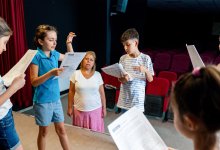 Arts Integration
Cultivating Student Potential Through the Performing Arts
When elementary students participate in performance-focused activities, they learn skills that build confidence and support academic success.Your content has been saved!
Go to My Saved Content. Literacy
Teaching Irony in Middle School With Picture Books
Using picture books as mentor texts is the perfect way to teach verbal, dramatic, and situational irony to middle school students.623Your content has been saved!
Go to My Saved Content. Brain-Based Learning
Leveraging Prior Knowledge to Build Understanding
By guiding students through developing their own understanding of core concepts, teachers ensure that the whole class is starting on a strong foundation.Your content has been saved!
Go to My Saved Content. Literacy
Using Board Games to Strengthen Literacy Skills
Creating board games based on vocabulary helps upper elementary students learn, build confidence, and have fun at the same time.1.1kYour content has been saved!
Go to My Saved Content. Administration & Leadership
A 4-Step School Improvement Process That Works
By using data to see patterns and trends, administrators can identify small changes that will help students make measurable progress.665Your content has been saved!
Go to My Saved Content. Literacy
How and Why to Teach Handwriting in Middle and High School
Incorporating handwriting lessons can have numerous benefits for older students—here’s how to get them started.2.2kYour content has been saved!
Go to My Saved Content. Technology Integration
Benefits of Organizing Course Materials With HyperSlides
Using HyperSlides—hyperlinked slides—is a simple way to consolidate course materials, promote student agency, and save time.425Your content has been saved!
Go to My Saved Content. Critical Thinking
4 Ways to Bring Logic Puzzles Into Your Math Class
Take the pressure off of problem-solving with engaging thinking games that encourage students to work together to find solutions.813Your content has been saved!
Go to My Saved Content. Parent Partnership
Using Tech for Better Communications With Multilingual Families
Reusable message banks, videos with captions, and smart use of translation tools help schools consistently communicate with families in their home language.953Your content has been saved!
Go to My Saved Content.
 Classroom Management
How to Differentiate Without Splitting Students Up
Advice for teachers who want to make sure everyone in their classroom works and learns in tandem.63kYour content has been saved!
Go to My Saved Content. Literacy
A Scaffolding Strategy to Help Experienced ELLs Express Complex Ideas
This technique gives multilingual students explicit instruction on how to effectively develop their ideas for each part of a paragraph and to link one idea to the next.18kYour content has been saved!
Go to My Saved Content. Brain-Based Learning
Scaffolding Deeper Learning With Recall Activities
When students are asked to remember and explain relevant knowledge just before applying it, they arrive at a more concrete understanding of the content.15.7kYour content has been saved!
Go to My Saved Content. Literacy
Making Literary Analysis Creative Through Thematic Sculptures
When students use playful materials to build a physical object that represents their thinking, they grapple with texts in new ways.13.6kYour content has been saved!
Go to My Saved Content. Mindfulness
Combining Mindfulness, Movement, and Meaning in Brain Breaks
The best brain breaks aren’t random or mere time-fillers—they’re purposeful pauses that help students regulate, reconnect, and reset.
 Social & Emotional Learning (SEL)
Helping Students Learn the Art of Trying in Math
These four classroom shifts can make academic risk-taking feel safer, clearer, and more worthwhile for middle school students.2.8kYour content has been saved!
Go to My Saved Content. Student Engagement
Running a Dungeons and Dragons Club
Through a weekly game, teachers can help students feel connected to one another and foster their creative problem-solving. Social & Emotional Learning (SEL)
How Sensory Play Helps Preschool Students Develop Self-Regulation
Teachers can set up hands-on exploration to promote young students’ ability to calm themselves when emotions are running high.4.8kYour content has been saved!
Go to My Saved Content. Social & Emotional Learning (SEL)
3 Easy Ways to Make Feelings Visible in the Classroom
Teachers can use these strategies for promoting emotional literacy to help students develop self-regulation and motivation for learning.4.2kYour content has been saved!
Go to My Saved Content. Administration & Leadership
Supporting Students as They Navigate Adult Responsibilities Outside of School
When high school students are balancing more than just their coursework, schools need to rethink how to best support them.2kYour content has been saved!
Go to My Saved Content.
 ChatGPT & Generative AI
3 Ways to Use MagicSchool to Support English Language Learners
The AI tools in the popular platform can guide students to practice language skills and receive feedback while working independently.3.2kYour content has been saved!
Go to My Saved Content.- Literacy
A Scaffolding Strategy to Help Experienced ELLs Express Complex Ideas
This technique gives multilingual students explicit instruction on how to effectively develop their ideas for each part of a paragraph and to link one idea to the next.18kYour content has been saved!
Go to My Saved Content.  English Language Learners
Sentence-Level Scaffolds That Foster English Learners’ Independence and Growth
Teachers can structure supports to guide English learners to speak and write using grade-level, discipline-specific language.11.1kYour content has been saved!
Go to My Saved Content. English Language Learners
Adapting Gradual Release of Responsibility for English Language Learners
This model provides scaffolded active engagement and opportunities for guided practice to help students master new skills.8.9kYour content has been saved!
Go to My Saved Content. Communication Skills
How Podcasting in the Classroom Boosts Communication Skills
When students practice their oral communication skills by making podcasts, their writing, speaking, and storytelling abilities blossom.3.6kYour content has been saved!
Go to My Saved Content.
 Formative Assessment
Making Formative Assessments More Efficient and Effective
Incorporating peer review and individual reflections makes frequent, intentional formative assessment manageable, with big benefits for student learning.8.4kYour content has been saved!
Go to My Saved Content. Formative Assessment
Using Interviews to Gain Insight Into Students’ Math Thinking
Elementary teachers can talk with students one-on-one to probe their thinking and learn things that might be missed with traditional assessments.1.6kYour content has been saved!
Go to My Saved Content. Formative Assessment
Fun Formative Assessment Activities Inspired by UDL
Varying the format of comprehension checks guides students to demonstrate learning and provides teachers feedback on progress.6.5kYour content has been saved!
Go to My Saved Content. Formative Assessment
13 Super-Quick Formative Assessments
Teachers can use these techniques to gauge students’ understanding mid-lesson and then decide whether to reteach or press ahead. Formative Assessment
Crafting Data-Driven Narratives About Students
Telling stories with and about data helps students better see themselves as learners and helps teachers center them in the classroom.7.3kYour content has been saved!
Go to My Saved Content.