


| CARVIEW |
The post Fellow Reflection: Stanislava Gardasevic appeared first on DLF.
]]>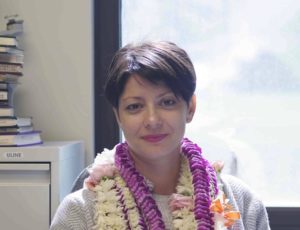 This post was written by Stanislava Gardasevic, who attended the 2025 DLF Forum as an Emerging Professionals Fellow. The views and opinions expressed in this blog post are solely those of the author and do not necessarily reflect the official policy or position of the Digital Library Federation or CLIR. 2025 Emerging Professionals Fellowships were supported by a grant from MetaArchive.
Stanislava (Stasha) Gardasevic works as a Metadata Librarian in Hamilton Library, University of Hawaiʻi at Mānoa (UHM), and her focus is on the description of digital objects. She obtained her PhD in the Communication and Information Sciences (CIS) interdisciplinary program. She holds an MLIS degree from the Digital Library Learning program (joint degree from Norway, Estonia, and Italy) and specializes in metadata for digital resources and interoperability. Her bachelor’s degree is in LIS from the University of Belgrade, Serbia, where she worked at the National Library of Serbia in the digitization department. Stasha was engaged in several digitization projects of historical archives in Hawaiʻi (i.e., Kawaiahaʻo Church, Congressional Papers) and worked as a teaching assistant/course instructor at the Library and Information Science (LIS) at UHM.
Emerging Professional at DLF 2025: Exploring the Migration Pathways
Almost 15 years ago, I was a new professional, fresh out of MLIS and into the National Library of Serbia. After five years working there on metadata for digital libraries, I decided to go back to school, this time in Hawaii  . After taking a scenic route to finish my PhD, I’m back in the metadata role working with digital collections (in Hamilton Library, at University of Hawaiʻi at Mānoa)- but this time in a completely different context and country, so I consider myself a newbie! Thanks to DLF fellowship I was able to bridge the gap every emerging professional has: to meet new people and to learn about the systems that are used across the continent- but especially, the migration stories I will reflect upon!
The first session that I attended related to this topic was “DAM’ed if You Do, DAM’ed if You Don’t: Using Generative AI to Support a Digital Asset Manager Migration”, where the Digital Initiatives Librarian R.C. Miessler from Gettysburg College had a fantastically informative and humorous, almost-standup-performance quality, presentation on his activities that are often required when migrating to a new platform. This presentation was about using ChatGPT as a helper for a non-programmer to develop scripts to perform tasks such as renaming files to IDs, moving images into compound objects, wrangling metadata, and similar. A good takeaway was not to try to use it for OpenRefine GREL, as it hallucinates commands and syntax, and to use SMARTER prompt engineering.
Also, I attended the panel named “Challenges and Opportunities in Migrating to a Modern Digital Collection Platform”, during which we could hear experiences from three librarians from different universities, who switched to Islandora from either the older Islandora version or DSpace. It was interesting to hear that some of these institutions took either a long time to migrate or are still in the migration process, prioritizing the most heavily used materials. It was encouraging to learn that this process helped librarians develop skills, such as data management through the command line, which were previously reserved for technical staff only.
I’m finishing this post with one of the most informative sessions I have heard, even beyond this conference, “Lost in the Web: Safeguarding the Visibility and Integrity of Digital Collections” by Akanksha Singh from Discovery Garden. A comment of one of the attendees upon the end of this presentation was- ‘I feel like I should share this presentation with everyone, like candy’, and that is what I did- I forwarded it to my colleagues as soon as I came back in the office.
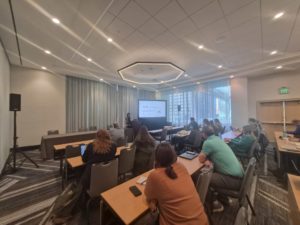
This conference was a great experience for me. Since it was my first time attending, I sincerely hope it is not my last, and I plan to attend it in the future.
The post Fellow Reflection: Stanislava Gardasevic appeared first on DLF.
]]>The post Fellow Reflection: Sara Hansen appeared first on DLF.
]]>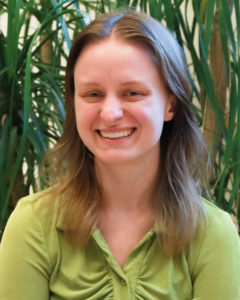 This post was written by Sara Hansen, who attended the 2025 DLF Forum as an Emerging Professionals Fellow. The views and opinions expressed in this blog post are solely those of the author and do not necessarily reflect the official policy or position of the Digital Library Federation or CLIR. 2025 Emerging Professionals Fellowships were supported by a grant from MetaArchive.
Sara Hansen is the Research Data Curator for the Purdue University Research Repository (PURR). Their background is in open, data-intensive ecological research, which was a natural stepping stone toward their dream digital libraries career. Sara’s favorite part of their job is exploring a wide variety of research projects across Purdue’s campus by working hands-on with the data they use and generate. Sara is excited to expand their understanding of information science and make lots of new connections at the DLF Forum.
An Ecologist Goes to DLF Forum (or, why you should try the thing you want to try, even if you don’t think you can)
I started my first libraries job only a few months before the 2025 DLF Forum, so I was initially a little nervous to attend. As a data curator at a university focused heavily on biology and agriculture, my background in ecology[1] translates directly to my position; in the overall libraries space, however, I sometimes feel like a fish out of water. Can someone from an entirely different discipline fit in at a conference full of supersmart digital libraries people?
The answer is yes, and I can see now that it is entirely by design. In a word, the DLF Forum was unpretentious. Whereas some conferences can leave you feeling confused and inadequate, I was pleasantly surprised to find myself feeling the opposite. Even though I had a fraction of the experience of most of the presenters and other attendees, the sessions left me with a feeling of “I can probably figure that out.” Presenters welcomed us into their world, leading with “Here is what I know because I’ve made the mistakes” and offering to make space and provide help. Many presenters requested feedback from beginners and experts alike. Common academic problems like name-dropping, overuse of buzzwords, and unexplained acronyms were few and far between. I even kept a running list of “basic” vocabulary and acronyms that were explicitly defined by presenters (everything from GitHub to headless browsers to OAIS) and was shocked at how long it got. While I probably could have guessed that information professionals would be really good at conveying information in an accessible way, it was refreshing to experience firsthand. Is “a fish in water” a real phrase?
I came away from the conference with not only a positive feeling but an actionable list of things to help me grow as a libraries professional and individual. My reading list grew to include Hood Feminism and Data Feminism, I found the perfect Carpentries workshops to build skills I’ve been meaning to work on, and I bookmarked the Data Advocacy for All Toolkit for the next time I need to teach something new.
My point: If a conference skeptic like me can feel genuinely inspired by a conference, you and I can both finally learn Python. Whatever it is you’ve been meaning to try, I believe you can do it. Find a starting point somewhere in the Forum notes and presentations. If somehow you fail, it will make a great talk for next year’s Forum.
My other point: If you are one of the people saying “National Science Foundation” instead of “NSF” and explaining what a hashtag is even when it feels weird, please keep doing it! You are building vitally important on-ramps, and I’m grateful for that extra work.
[1] If you’re wondering why I’m not a field ecologist now, picture someone who got lost at the airport, lost in downtown Denver, and lost in the hotel all before the opening plenary trying to navigate a complex wetland ecosystem.
The post Fellow Reflection: Sara Hansen appeared first on DLF.
]]>The post Fellow Reflection: Rosalía Iriye appeared first on DLF.
]]>Rosalía Iriye is a Master in Library and Information Science at University of California – Los Angeles (UCLA), B.A. Labor Studies. She is currently the Digital Collections Manager for the UCLA Institute for Research on Labor and Employment (IRLE) labor archive, supporting in community digitization partnerships with labor organizations such as Asian Pacific American Labor Alliance (APALA AFL-CIO) LA chapter and Garment Worker Center. She previously worked on California State Library and National Endowment of the Humanities queer cataloging/reparative metadata grants with the UCLA Chicano Studies Research Center library/archive. Iriye most recently interned in digital records management with the National Park Service, and volunteers in herbaria and natural history collections digitization with the UCLA Mathias Botanic Garden, Los Angeles County Arboretum & Botanic Garden, and California Botanic Garden. She hopes to learn more about digital preservation for public histories, exploring research data in environmental conservation and industrial/labor histories.
My graduate research explores how digital preservation requires a commitment to sustainability and labor, from open science and the research collections we preserve, to engaging critically and empathetically with our own digital workflows; I’ve seen these values emerge throughout the forum, and am grateful to have attended my first Digital Library Federation through this fellowship.
Plenary began with Dr. KáLyn “Kay” Coghill’s exploration of online protection against gender-based violence, and how we all, librarians and moreso as individuals, can contribute to digital gardens in our creation of online landscapes. Lightning talks followed such as Jonathan Page’s “A Brief History of Times Fighting Bots” and Lauren Turner’s “Start Here: Born-Digital Archiving in 5 Minutes (Spoiler: It’s a Journey, Not a Sprint)” that humanized the work surrounding today’s web-crawling, both protecting repositories from recent surges in data mining and the workflows needed to begin preservation internally. This work is so timely in the everchanging environment of digital preservation, yet grounding to assess our own capacities in a moment of constant change.
I went on to attend session introducing the systems-agnostic conceptual-model Delivering Archives and Digital Objects: a Conceptual Model (DadoCM). Emphasizing the relationship between archival and digital records across digital publishing platforms, I appreciated this model’s development from workshops across repositories and from open standards of International Image Interoperatability Framework (IIIF).
My interest in archival metadata and GIS expanded in geospatial librarianship when attending “Allmaps: Open Source Georeferencing for Historical Maps”, the workshop coinciding with the announcement of IIIF’s partnership with AllMaps. I was inspired by this commitment to open science and IIIF-delivery, with all georeferenced data from the software being published as openly licensed datasets. Explorations in open data grew from sessions providing toolkits and frameworks for data advocacy. Session “Why keep data science local? Case Studies from Two Universities Building Scholarly Indices with Open Data to Improve Institutional Data Literacy” saw value too beyond its open data, the panel conversation bridging seemingly localized skills of digital librarians into a network of relationships and research data collaboration.
Overarchingly, I’m fortunate to have attended collaborative session “Planning What’s Next for the DLF Climate Justice Working Group”, exploring critical approaches and information literacy to AI workflows and data center expansions in digital repositories. Conversations in later sessions grew from “Measuring and Critiquing genAI tools for Geographic Metadata Creation”, finding low accuracy in large language models’ (LLM) for generating geographic metadata for historic photograph and map collections. It was a grounding moment again, amidst adaptation in the digital world, to find more confidence in our geographies, our histories, and one another in its stewardship. Thank you again Digital Library Federation for the opportunity to travel to Denver for DLF Forum!
The post Fellow Reflection: Rosalía Iriye appeared first on DLF.
]]>The post Fellow Reflection: Noah Garcia appeared first on DLF.
]]> This post was written by Noah Garcia, who attended the 2025 DLF Forum as a Student Fellow. The views and opinions expressed in this blog post are solely those of the author and do not necessarily reflect the official policy or position of the Digital Library Federation or CLIR. 2025 Student Fellowships were supported by a grant from MetaArchive.
Noah Garcia is an emerging information professional and lens-based artist pursuing an M.S. in Library Science – Archival Studies (2025) and an M.F.A. in Studio Art – Photography (2026) at the University of North Texas. His work specializes in the digitization and preservation of cultural heritage materials. As the Graduate Services Assistant in UNT’s Digital Projects Lab, he has developed expertise in imaging technologies, metadata, and digital library standards, contributing to projects for The Portal to Texas History and UNT Digital Library. In 2024, he received the Texas Conference on Digital Libraries Student Excellence Award for his innovative digitization tools. His work has been presented at state-wide and regional conferences.
Attending the 2025 Digital Libraries Federation Forum as a Student Fellow was incredibly enlightening and a huge privilege. I am very grateful to CLIR and DLF for the Fellowship. Without the financial and logistical support provided through the program, I would not have been able to attend the conference.
The 2025 DLF Forum was my first national conference. Listening to and learning from information professionals from a diverse collection of institutions was beyond helpful. As I close out my time within my MS-LS program, it was beneficial to realize what I do know and have experience with – and what I do not. These realizations do not feel like limitations, but rather more like a roadmap of new skills to learn and continue developing as I transition from a student to an emerging professional.
I have worked within the UNT Libraries Digital Projects Lab as the Graduate Services Assistant for two and a half years, which has fostered a particular interest in digitization and the preservation of archival cultural heritage materials. I have primarily worked with 2-D materials, so the session We Thought It Was One Tape, One Record: Metadata Mayhem and Workflow Lessons from a Large-Scale A/V Digitization Project by Louise Smith, Katie Ehrbar from the University of Southern California provided lots of valuable insight into the digitization of A/V materials in seventeen different formats and the metadata that followed after. I particularly enjoyed seeing the creativity involved in the digitization of vinyl records, where records had to be recorded physically upside down and backwards and then digitally reversed to correct the recordings. I am always reminded about how creative one has to be while digitizing unique materials, so it was fun to see that reflected within their presentation.
As expected, several of the presentations and conversations revolved around technologies like artificial intelligence and ways that institutions are engaging with and adapting to the rapidly changing models of AI. As both a library student and visual artist, the implementation of AI feels both exciting and something I am very tentative about. This was certainly reflected in the post-presentation discussions and questions, where enthusiasm for efficiency met apprehension over ethics and an overall desire for clearer best practices.
Outside of the presentations and case studies, I particularly enjoyed meeting new friends, mentors, and colleagues from around the country at the coffee breaks and mealtimes. I am especially thankful for the DLF Mentor/Mentee program which allowed me to connect with my DLF mentor Snowden Becker and fellow mentee Ying Hu before, during, and after the conference proceedings. These more informal conversations proved to be some of the most meaningful, allowing for guidance and reflection on professional paths, upcoming challenges, and personal insights that extended beyond the conference themes. Building these connections reinforced the community-based nature of the field and affirmed my pathway within digital libraries.
Overall, my experience at the 2025 DLF Forum was grounding and motivating as I finish out my MS-LS studies and prepare to enter into the world of GLAM institutions and digital libraries. The Fellowship not only made my attendance possible, but also affirms the importance of including student voices within dialogue about current and future library practices. I am incredibly grateful for the opportunity to attend the Forum, and I look forward to hopefully returning in the future!
The post Fellow Reflection: Noah Garcia appeared first on DLF.
]]>The post Fellow Reflection: Hassna Ramadan appeared first on DLF.
]]>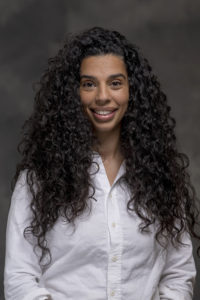 This post was written by Hassna Ramadan, who attended the 2025 DLF Forum as the HBCU Students and Workers Fellow. The views and opinions expressed in this blog post are solely those of the author and do not necessarily reflect the official policy or position of the Digital Library Federation or CLIR.
Hassna Ramadan is the Digital Innovation & Access Services Librarian and Assistant Professor at Alabama State University’s Levi Watkins Learning Center, leading digitization, metadata, and access initiatives. Her work promotes equitable, user-centered digital collections that enhance access to HBCU history and culture. A 2025 DLF Forum Fellow, she is pursuing an Ed.D. in Applied Learning Sciences at the University of Miami and holds an MLIS from the University of Washington.
At Alabama State University’s Levi Watkins Learning Center, I spend my days living at the intersection of digitization, metadata, and access, trying to make sure our digital collections don’t just exist online, but actually reach the people who need them. As a Fellow at the 2025 DLF Forum, I expected to pick up practical ideas (and I did), however what I didn’t expect was how clearly one message would thread itself through so many conversations: digital work is people work, and safety and care have to be designed, not assumed.
That theme landed for me during the opening plenary with Dr. KáLyn Coghill, “Your Silence Will Not Protect You: A Clarion Call to Make Online Protection the Rule and NOT the Exception.” Dr. Coghill’s “Digital Community Garden” metaphor stayed with me because it shifts the question away from individual survival tactics (“just delete the app,” “ignore it,” “log off”) and toward collective responsibility. In a garden, the healthiest plants don’t thrive because they’re tough, they thrive because someone is paying attention. Someone is noticing harm early, naming what’s happening, and taking action to protect the space.
That framing made me think differently about the digital spaces I help shape at ASU. When we build digitization workflows, write metadata guidance, or design user interfaces, we’re also setting norms: what gets named, what gets hidden, what gets prioritized, and who feels welcome, or surveilled, when they arrive. “Online” isn’t separate from “real life.” The decisions we make about description, search, and access ripple outward into the offline world: who is visible, who is protected, and who is exposed.
I heard echoes of that in sessions on reparative metadata and harmful content statements. The conversation wasn’t simply “remove bad terms” (though sometimes that’s necessary). It was about giving users agency, documenting the iterative nature of description, and being honest about what harm looks like in both collections and metadata. If we want people to trust our collections, we can’t pretend neutrality protects anyone. We have to make our choices visible, explain our intent, and create pathways for repair.
I left DLF thinking less about new tools and more about presence, about noticing harm, naming it, and refusing to treat it as inevitable. Digital stewardship, at its best, is an act of care: care for people, for history, and for the futures our collections make possible. That care shows up in small, cumulative choices, and those choices are what ultimately determine whether our digital spaces can sustain trust.
DLF Forum 2025 reminded me that digital stewardship isn’t only about preservation and access. It’s also about sustenance, security, and care. And if we want our collections, and our communities, to last, we have to tend the garden together.
The post Fellow Reflection: Hassna Ramadan appeared first on DLF.
]]>The post Fellow Reflection: Emily Woehrle appeared first on DLF.
]]>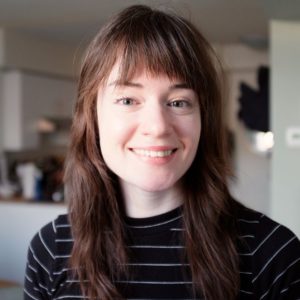 This post was written by Emily Woehrle, who attended the 2025 DLF Forum as an Emerging Professionals Fellow. The views and opinions expressed in this blog post are solely those of the author and do not necessarily reflect the official policy or position of the Digital Library Federation or CLIR. 2025 Emerging Professionals Fellowships were supported by a grant from MetaArchive.
Emily Woehrle is a Digital Content Librarian at the University of Toronto Libraries, where she supports a large-scale website renewal project and manages the library’s LibGuides service. She also works as a part-time librarian at the Toronto Public Library. With a background in non-profit communications and content management, Emily brings an interdisciplinary perspective to her work and looks forward to sharing experiences and learning from peers at the DLF Forum to advance sustainable, user-centered digital library practices.
Documentation as responsible digital stewardship
Attending the DLF Forum as one of the Emerging Professionals fellows was an incredibly positive experience that left me with new connections, new ideas, and a validating sense of solidarity. The Forum was only my second library conference, yet I felt immediately comfortable among people who get it and were ready to share and listen to each other’s experiences. It was also a joy to navigate the conference with my fellow Fellows.
Two presentations stood out to me over the course of the Forum, and neither focused on trendy hot topics. Instead, they highlighted the importance of documentation; the practical, behind-the-scenes work that keeps digital libraries and archives running by codifying tacit knowledge and establishing the workflows, structures, and guidelines that sustain digital library work.
In my current role, I’m coordinating a large-scale website consolidation project that requires my colleagues and me to build processes and governance structures impacting 20+libraries and departments. Documentation has become essential to scaling the project and keeping everyone aligned. Over the past year, I’ve spent a lot of time thinking about the most effective ways to develop knowledge-management systems, why some workplace cultures prioritize them more than others, and what that means for long-term success.
The first session, “Agile Documentation Development for Digital Preservation Systems,” offered strategies to make documentation immediately useful, iterative, and collaborative. The presenters emphasized creating “minimum viable documents” that favor progress over perfection – start with something usable, then refine it over time. They also underscored how role clarity and interdepartmental culture shape the success of documentation efforts. This session helped me reframe documentation as a living tool whose maintenance must be built into our work rather than treated as an afterthought.
The second session, “Renaming Failure as “readme.files”: Lessons Learned from Early and Mid-career Archives Perspectives,” reminded me that unexpected challenges are inevitable and that they can serve as learning opportunities instead of being perceived as failures. The speaker spoke about the importance of recording “detours” as they happen and how documentation can play a key part in reflection on lessons learned. She also discussed the value of using documentation to close “open loops” when offboarding from a project, ensuring that future staff can build on past work rather than unknowingly duplicating it. It was a practical reminder that documenting failure isn’t about dwelling on mistakes; it’s about giving the next person a clearer path forward.
Taken together, these sessions reinforced that documentation is more than a checklist. It can be a form of care—not only for colleagues and users who will later take on or inherit the work, but also for the library systems that depend on it. Creating collaborative documentation is an often overlooked and undervalued core competency, yet it is fundamental to both project and organizational success. I left the Forum with a renewed commitment to integrating these approaches into my own knowledge-management practices and to advocating for clearer, more collaborative documentation across the teams I work with.
The post Fellow Reflection: Emily Woehrle appeared first on DLF.
]]>The post Fellow Reflection: Dorian McIntush appeared first on DLF.
]]>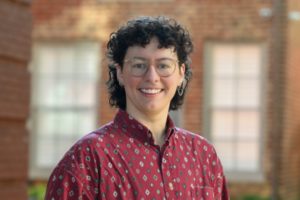 This post was written by Dorian McIntush, who attended the 2025 DLF Forum as an Emerging Professionals Fellow. The views and opinions expressed in this blog post are solely those of the author and do not necessarily reflect the official policy or position of the Digital Library Federation or CLIR. 2025 Emerging Professionals Fellowships were supported by a grant from MetaArchive.
Dorian McIntush is the Open Scholarship and Data Resident Librarian at Washington and Lee University, where he supports faculty and students with digital research and open knowledge initiatives. He has a commitment to creating equitable access to knowledge and is particularly interested in exploring the environmental impact of digital technologies and open scholarship models that prioritize accessibility and long-term sustainability. Beyond his professional work, he enjoys tromping through Virginia’s hiking trails with his dog, taking on new knitting projects, and cooking interesting recipes for dinner.
When I stepped into my current role of Data and Open Scholarship Resident Librarian at Washington and Lee University in July of this year, I was also stepping for the first time into the world of academic libraries. I focused on public libraries during my MLIS and after graduation I worked at the DC Public Library. My new academic librarian position was also brand new at my institution and was constructed to be a librarian residency. This meant that I would have a lot of freedom to grow into and shape the role, but also no real history to use as a support and learn from. This was simultaneously a gift and also a little daunting.
Coming from public libraries, I had grown used to thinking about access in very practical, immediate terms. Who has a library card? Who can physically get to our building? What barriers keep people from the resources they need? But the sessions at DLF pushed me to think about access in ways that felt more expansive.
Amber Dierking’s presentation on the Queer Liberation Library was a particular highlight for me. I’d already been a user and huge fan of QLL, but hearing Dierking talk about the work behind it reinforced everything I loved about their approach. QLL didn’t reinvent the wheel. They focused on using existing tools, keeping it simple, making it free. As someone building a role from scratch, the creative pragmatism of QLL felt like a blueprint I could make use of.
I was also drawn to Mariam Ismail’s presentation on the 23/54 Project. The work of preserving a community quilt through 3D scanning and building an interactive digital exhibit felt like a perfect example of what digital humanities could be at its best: deeply rooted in community, respectful of material culture, and genuinely expanding access rather than just digitizing for digitization’s sake. It made me think about the special collections and archives at my own institution and how we might engage descendant communities and students in similar ways.
The Data Advocacy for All Toolkit presentation tied these threads together for me in a way I didn’t expect. The team was talking about who gets to tell stories with data, who gets left out of those stories, and how we can teach people to use data ethically for social change. This toolkit offered a framework that felt aligned with my public library values, one that’s accessible, focused on equity, and designed to empower data users and learners.
DLF gave me permission to think big while starting small. I’m returning to W&L with a clearer sense of what this residency could become, not a replica of someone else’s role, but something shaped by the communities I serve and the values I bring from public libraries into this new academic space.
The post Fellow Reflection: Dorian McIntush appeared first on DLF.
]]>The post Fellow Reflection: Darcy Ruppert appeared first on DLF.
]]>Darcy Ruppert is an archivist and librarian living and working in the greater Seattle area. Since receiving their MLIS from the University of Washington in 2023, Darcy has worked in various museums, special collections, and community archives, specializing in the digital preservation of audiovisual collections. Their professional work has been defined by a commitment towards democratizing access to digital archives themselves and the tools of digital preservation. They are currently managing King County Library System’s Memory Lab, a Mellon Foundation-funded community oral history project with a mission to record, preserve, and share the stories of King County.
I am so grateful to have had the opportunity to attend my first DLF Forum as a 2025 Public Library Worker Fellow. In my current work as project manager for a new community oral history project based out of a large public library system, I often feel somewhat separate from the day-to-day of the rest of my organization. The work that I do connects to and is born out of the work of the library, but the unique nature of the program within my organization means that I am often working through problems and making decisions on my own. For this and many other reasons, it was refreshing to be surrounded by a community of my professional peers who are facing similar challenges and grappling with similar emergent questions, both practical and philosophical, within our field.
The first day’s opening plenary by Dr. Kay Coghill provided, for me, a grounding moment at the very beginning of the Forum. Dr. Coghill shared an entreaty for all of us, as digital library professionals and as human beings, to use our platforms, skills, and resources to mitigate harms to members of systemically marginalized groups in digital spaces. Their incisive talk made me think about my own positionality in digital spaces, and drove me to reflect on my own professional decisions and the cascading effects these (at times, seemingly small) decisions can have. In the work that we do, I think it’s easy to become complacent, to lose sight of the fact that we hold power to protect and, by the same token, harm, when we introduce new solutions without appropriate testing, community consultation, and evaluation. I think there’s a real danger in our field of focusing so much on integrating new technologies and providing “results” to our institutions that we may passively introduce real risks into the lives of our users and members of our greater community.
With Dr. Coghill’s talk framing the rest of the Forum for me, I think I appreciated the sessions I attended with a rejuvenated perspective towards care and stewardship. I thought about the race to adopt “industry standard” digital preservation tools, and what we lose when we fail to properly evaluate these tools for the unique needs of our organizations and user groups. At the University of Denver’s session on curating digital exhibits, I reflected on our ability as cultural heritage stewards to uplift and uncover marginalized voices rather than bend to dominate cultural narratives. At a session on AI-powered transcription, I considered the balance of risk and reward that is inherent to the world of LLMs. I’m thankful for all of the speakers who generously shared their work at the Forum, and for the opportunity to reflect on these important issues alongside my peers.
The post Fellow Reflection: Darcy Ruppert appeared first on DLF.
]]>The post Fellow Reflection: Cláudia De Souza appeared first on DLF.
]]>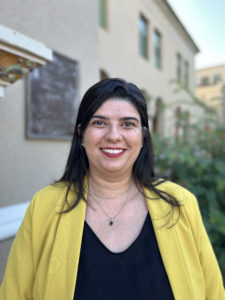 This post was written by Cláudia De Souza, who attended the 2025 DLF Forum as the Grassroots Archives and Cultural Heritage Workers Fellow. The views and opinions expressed in this blog post are solely those of the author and do not necessarily reflect the official policy or position of the Digital Library Federation or CLIR.
Cláudia De Souza is an associate professor at the College of Communication and Information at the University of Puerto Rico. She teaches in the Graduate Program in Information Science, focusing on information organization and retrieval, with particular emphasis on the analysis, evaluation, and design of digital libraries and archives. She is also the academic coordinator of the UPR Caribe Digital project, an initiative dedicated to advancing Digital Humanities research and scholarship in and for the Caribbean. She advocates for and fosters open access to knowledge, supports digital preservation, and promotes the dissemination of documentary heritage. Her work is driven by a commitment to enhancing the visibility and accessibility of information resources across the Insular Caribbean.
Attending the 2025 DLF Forum for the first time was an exceptional experience, especially as the sole fellow selected for the Grassroots Archives and Cultural Heritage Workers program. I arrived with high expectations, and the event exceeded them, offering a rich environment for learning, collaboration, and professional growth. I had the chance to meet and engage with attendees from a wide range of institutions and backgrounds, including students, emerging professionals, librarians, and archivists. I am especially grateful to the selection committee for choosing such a diverse group of fellows, which I truly appreciate. This experience of connection and dialogue with new voices gave me the opportunity to interact with a diversity of approaches in professional and academic practice, as well as the value of building collaborative networks.
One of the challenges was choosing among the multiple sessions happening simultaneously over the three days. I decided to focus on the topics most closely related to my work at the University of Puerto Rico and that I am most passionate about in library and information science: open access, metadata, information organization and retrieval, community archives, and the visibility of digital collections.
Among the new tools and approaches I explored, the Marriott Reparative Metadata Assessment Tool (MaRMAT) stood out, an open-source application designed to support reparative metadata evaluations and processes of repair and justice in information. It allows librarians to identify harmful, outdated, or otherwise problematic language in tabular metadata using pre-curated or custom lexicons. I definitely plan to explore its use in the work we are developing with community groups in Puerto Rico, as part of the UPR Caribe Digital project. I was also inspired by the presentation of Krystyna Matusiak, which demonstrated how digital collections can be expanded through exhibits that highlight the stories of underrepresented communities. Digital curation not only extends the reach of archives but also provides new opportunities to tell stories in an inclusive and meaningful way, showing how information organization can impact representation and access to collective memory. I leave the Forum inspired and motivated to apply these insights as part of the Digital Humanities initiatives we are planning at my institution, and it will serve as a model to follow.
I am grateful for the opportunity to participate and look forward to continuing these conversations and collaborations. I also hope that next year I will have the chance to submit a presentation to share with others all that I have put into practice. See you at DLF 2026!
The post Fellow Reflection: Cláudia De Souza appeared first on DLF.
]]>The post Fellow Reflection: Amaobi Otiji appeared first on DLF.
]]>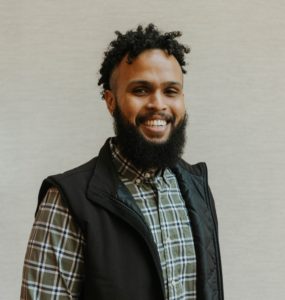 This post was written by Amaobi Otiji, who attended the 2025 DLF Forum as a Student Fellow. The views and opinions expressed in this blog post are solely those of the author and do not necessarily reflect the official policy or position of the Digital Library Federation or CLIR. 2025 Student Fellowships were supported by a grant from MetaArchive.
Amaobi Otiji is pursuing his Master of Information at Rutgers University concentrating in the Technology, Information, and Management pathway. Prior to entering this program, Amaobi earned a bachelor’s degree in history from Howard University and has worked in roles involving federal collections, both digitized and born-digital. His professional interests center on digital curation, metadata development, and exploring new approaches to preserving and sharing underrepresented histories. He is focused on increasing equitable access to information and helping to shape how emerging technologies influence our cultural memory. In his spare time, Amaobi enjoys playing baritone ukulele, attending live theater, and playing video games.
Digital Memory Work Across Regions and Histories: Reflections on Community-Driven Projects
As I attended this year’s DLF Forum, I kept returning to two themes that resonated with me across multiple different presentations: community engagement and the quiet connective work that builds the infrastructure for it. Two of the sessions I attended during the conference stood out to me in particular because they approached these ideas from different perspectives but utilized similar underlying practices for catering their projects to their communities’ needs. These sessions were about the HBCU Digital Library Trust and the Borderlands storytelling initiative. Both of these projects work with different kinds of communities, rooted in distinct histories spread across North America. Yet all of them demonstrated how effective digital stewardship can be when community engagement is built into the planning of a project rather than treated as a final step at the end.
The Historically Black Colleges and Universities (HBCU) Digital Library trust session outlined a fantastic model that was centered on providing long term support for HBCUs and their unique archival histories. Their emphasis on shared ownership reflected a great understanding of these institutions and their historical challenges trying to navigate limited resources, public scrutiny, and a society that too often worked against them. What stood out to me in particular was how intentional their approach felt. Rather than expecting HBCUs to adapt to them, they adapted to the HBCUs by meeting them where they were. The Trust, hosted by the Atlanta University Center’s Woodruff Library, focused on building capacity in ways that supported institutional autonomy and reflected the needs of the communities they were trying to serve. Their model felt refreshing, informed and grounded in culturally informed practices that support long term institutional resilience.
The Borderlands storytelling session approached their community engagement from another direction. Their work seemed shaped by the layered histories and cultural dynamics found in the U.S.-Mexico Borderlands and by the University of Arizona’s position as a Hispanic-Serving Institution (HSI) with ties to the region. Their presentation drew from movements, identities, and complex narratives that define the region as well as from the data intensive methods they were using to support the work. They spoke about their efforts mapping, visualizing, and other forms of data storytelling that were central to how researchers were interpreting that complexity. What especially stood out to me was how they treated their approach to “place” as more than a backdrop. It functioned as a structure that was allowed to shape the research itself and set the terms for how they partnered with their researchers. It felt rooted in the region in a way that kept the work responsive so that it could move across research, teaching, and student engagement while still staying grounded in the histories and contexts that give it direction.
Across both of the sessions, I found myself thinking about how our community and networks shape our digital memory work every day. The HBCU Digital Library Trust and the Borderlands initiative each operate within distinct historical and cultural environments, yet they are undeniably interconnected through their commitment to engagement shaped by the histories and needs of the communities they serve. Together, these sessions were a great illumination of how digital memory work is always anchored somewhere and shaped by places, relationships, and shared histories that give it meaning. For those hoping to steward this work, our role is to listen closely enough that those anchors guide the paths we build.
The post Fellow Reflection: Amaobi Otiji appeared first on DLF.
]]>The post DLF Digest: January 2026 appeared first on DLF.
]]>Hi DLF Community! I’ve really enjoyed connecting with so many of you at the Forum and in Working Group meetings over the past few months. Every conversation, formal and informal, has left me inspired and grateful to be part of a community fueled by care, creativity, and collaboration. I’m excited to keep learning with you all and stay in touch. If you want to chat one-on-one, just send me an email anytime (swillis@clir.org). Wishing you an encouraged, grounded start to 2026!
— Shaneé from Team DLF
This month’s news:
- New DLF Working Group: The new Open Source Capacity group kicks off at the end of this month with a meeting on January 28. Learn more about this group and join their inaugural meeting.
- Closing Today, Call for Proposals: Digital Library Pedagogy Group (DLF Teach) has extended its toolkit CFP through end of day today; submit here.
- Metadata Quality Benchmarks Announced: DLF-AIG Metadata Assessment Working Group (MWG) is pleased to announce the public release of benchmarks for metadata quality. Read about them on the DLF Blog.
- IIIF Call for Proposals: IIIF’s annual conference will be held June 1-4 in the Netherlands. Review and submit to the CFP here by January 23.
- CLIR Call For Proposals: CLIR is accepting applications for the thirteenth cycle of Recordings at Risk until February 24, 2025. See details here.
- Registration Open, Program Available: IIIF’s Online Meeting will take place January 27-29; see the full program on the IIIF website, and register on Eventbrite.
- Fellow Reflections: Starting tomorrow (January 6), look for reflections from the 2025 DLF Forum fellows on the DLF blog. Read past fellow reflections here.
- Office closure: CLIR’s offices are closed on Monday, January 19, for Martin Luther King Jr. Day.
This month’s open DLF group meetings:
For the most up-to-date schedule of DLF group meetings and events (plus NDSA meetings, conferences, and more), bookmark the DLF Community Calendar. Meeting dates are subject to change. Can’t find the meeting call-in information? Email us at info@diglib.org. Reminder: Team DLF working days are Monday through Thursday.
- DLF Digital Accessibility Working Group (DAWG): Tuesday, 1/6, 2pm ET / 11am PT
- DLF Born-Digital Access Working Group (BDAWG): Tuesday, 1/6, 2pm ET / 11am PT
- DLF AIG Cultural Assessment Working Group: Monday, 1/12, 1pm ET / 10am PT
- AIG User Experience Working Group: Friday, 1/16, 11am ET / 8am PT
- DLF Digitization Interest Group: Monday, 1/26, 2pm ET / 11am PT
- DLF Committee for Equity & Inclusion: Monday, 1/26, 3pm ET / 12pm PT
- DLF Climate Justice Working Group: Tuesday, 1/27, 1pm ET / 10am PT
- NEW GROUP! DLF Open Source Capacity Group: Wednesday, 1/28, 1pm ET / 10am PT
- DLF AIG Metadata Assessment: Thursday, 1/29, 1:15 pm ET / 10:15 am PT
- DLF Digital Accessibility Policy & Workflows subgroup: Friday, 1/30, 1pm ET / 10am PT
DLF groups are open to ALL, regardless of whether or not you’re affiliated with a DLF member organization. Learn more about our working groups on our website. Interested in scheduling an upcoming working group call or reviving a past group? Check out the DLF Organizer’s Toolkit. As always, feel free to get in touch at info@diglib.org.
Get Involved / Connect with Us
Below are some ways to stay connected with us and the digital library community:
- Subscribe to the DLF Forum newsletter.
- Join, start, or revive a working group and browse their work on the DLF Wiki.
- Subscribe to our community listserv, DLF-Announce.
- Bookmark our Community Calendar.
- Learn more about becoming a DLF member organization.
- Follow us on LinkedIn and YouTube.
- Contact us at info@diglib.org.
The post DLF Digest: January 2026 appeared first on DLF.
]]>The post Benchmarks for Metadata Quality appeared first on DLF.
]]>This suite of pages includes the benchmarks as well as supporting documentation.
Benchmarks include minimal, suggested better-than-minimal, and ideal criteria for descriptive metadata quality, primarily related to cultural heritage and digital library materials. The expanded benchmarks outline metrics and examples to show how the benchmarks might be applied.
Supporting documentation is intended to supplement the benchmarks by providing [1] questions to answer before benchmarking, to help organizations think through how they want to approach these activities; [2] various quality metrics synthesized from a number of metadata frameworks that could be used by organizations to develop local better-than-minimal standards; and [3] citations and other reference materials on related topics for further reading.
About Benchmarking
Metadata quality conversations are often about assessment or evaluation, which is a critical component of reviewing metadata and (hopefully) making improvements. However, the purpose of benchmarks is to help answer “when is metadata ‘good enough’” or, “how good is [this] metadata compared to other metadata?” When used in combination with assessment activities, benchmarks can help to set specific goals to bring a set of metadata records to a particular level of quality — whether that is minimal (perhaps to be improved in the future), ideal (i.e., the best it can be with known information), or somewhere in between.
As part of the development process, the Benchmarks Sub-Group reviewed literature about benchmarking from other industries to get a clearer sense of how benchmarks function. One important component is that benchmarks serve as a shared reference point to define a specific level of quality. In other industries, benchmarks allow different companies to all point to the same criteria and metrics to identify whether they meet certain standards. The development of the benchmarks for metadata quality provides a similar reference point for descriptive metadata.
Many aspects of metadata quality are subjective or heavily dependent on local and community contexts. Even aspects of metadata that are more quantifiable (e.g., values are formatted as expected) rely on the requirements of the particular schema or environment where it lives. For this reason, the Benchmarks Sub-Group determined that trying to set iterative levels of quality would not be practical, as there is too much variation among both expectations of metadata and resources/capability to assess and correct records that do not meet particular standards. Instead, the benchmarks define what makes a record “absolute minimum” quality and “ideal/gold standard” quality, leaving all intermediary steps up to local organizations.
The Benchmarks Sub-Group
The sub-group formed in 2018 to start considering benchmarking in the context of descriptive metadata and the best ways to provide suggestions and support to organizations wanting to measure or evaluate the overall quality of metadata in their collections.
Initially, the group created a comprehensive survey asking questions about which metadata fields digital libraries are using, how they evaluate quality, and other contextual information. That survey had 151 complete or partial responses, providing significant amounts of data related to digital libraries during 2019, including size, hardware/software usage, metadata fields, and evaluation practices or needs. More information, along with the survey, data, and related publications is available on the MWG website: https://dlfmetadataassessment.github.io/projects/benchmarks/
Based on that data and other feedback from peer reviewers during iterations of the current documentation, the sub-group outlined specific benchmarking criteria and compiled supplementary information. Work related to benchmarking is intended to be ongoing. Although this marks the public release of the “final” project, the benchmarks may change over time based on feedback and there are tentative plans to add other supporting documentation or resources, depending on time and needs expressed by the community.
More Information
Links related to this project:
- Benchmarks main page: https://dlfmetadataassessment.github.io/MetadataQualityBenchmarks/
- To provide feedback on the benchmarks, see the GitHub repository: https://github.com/DLFMetadataAssessment/MetadataQualityBenchmarks/
Links related to the MWG:
- Other MWG projects and resources: https://dlfmetadataassessment.github.io/
- About the MWG, including how to join or learn more about our work: https://wiki.diglib.org/Assessment:Metadata
The post Benchmarks for Metadata Quality appeared first on DLF.
]]>The post DLF Digest: December 2025 appeared first on DLF.
]]>Hello DLF Community! It was amazing to see so many of you at the DLF Forum last month. Keep an eye on your inboxes as we’ll soon be releasing our opening plenary recording as well as photos from the event. Be sure you’re signed up for the Forum Newsletter so you don’t miss a beat. Interested in helping out for the 2026 event? We’ll open the call for the Planning Committee early in the new year. We wish you a wonderful holiday season and we look forward to reconnecting with you in 2026!
— Aliya from Team DLF
This month’s news:
- Working Group Survey: The DLF Assessment Interest Group Metadata Working Group (MWG) is conducting a brief survey — expected to take around 5 minutes or less — to gather data for planning next year’s activities. If you are a current or former member of the MWG or have any interest in metadata assessment and quality activities, please consider answering a few questions.
- Survey: IIIF’s Implementation Survey is open through December 31. The aim of this survey is to get current data on current usage of IIIF, understand the levels of implementation for the different IIIF APIs, and identify topics for future workshops and training opportunities. Take the survey.
- Call For Proposals: CLIR is accepting applications for the thirteenth cycle of Recordings at Risk until February 24, 2025. See details here.
- Office closure: CLIR’s offices are closed for winter holiday from Monday, December 22 through Friday, January 2, 2026.
This month’s open DLF group meetings:
For the most up-to-date schedule of DLF group meetings and events (plus NDSA meetings, conferences, and more), bookmark the DLF Community Calendar. Meeting dates are subject to change. Can’t find the meeting call-in information? Email us at info@diglib.org. Reminder: Team DLF working days are Monday through Thursday.
- DLF Digital Accessibility Working Group (DAWG): Tuesday, 12/2, 2pm ET / 11am PT
- DLF Born-Digital Access Working Group (BDAWG): Tuesday, 12/2, 2pm ET / 11am PT
- DLF AIG Metadata Assessment: Thursday, 12/4, 1:15 pm ET / 10:15 am PT
- DLF AIG Cultural Assessment Working Group: Monday, 12/8, 1pm ET / 10am PT
- DLF Committee for Equity & Inclusion: Monday, 12/15, 3pm ET / 12pm PT
- AIG User Experience Working Group: Friday, 12/19, 11am ET / 8am PT
- DLF Digitization Interest Group: Monday, 12/22, 2pm ET / 11am PT
- DLF Climate Justice Working Group: Tuesday, 12/30, 1pm ET / 10am PT
DLF groups are open to ALL, regardless of whether or not you’re affiliated with a DLF member organization. Learn more about our working groups on our website. Interested in scheduling an upcoming working group call or reviving a past group? Check out the DLF Organizer’s Toolkit. As always, feel free to get in touch at info@diglib.org.
Get Involved / Connect with Us
Below are some ways to stay connected with us and the digital library community:
- Subscribe to the DLF Forum newsletter.
- Join, start, or revive a working group and browse their work on the DLF Wiki.
- Subscribe to our community listserv, DLF-Announce.
- Bookmark our Community Calendar.
- Learn more about becoming a DLF member organization.
- Follow us on LinkedIn and YouTube.
- Contact us at info@diglib.org.
The post DLF Digest: December 2025 appeared first on DLF.
]]>The post DLF Digest: November 2025 appeared first on DLF.
]]>Hello DLF Community! It’s November, which means it’s finally, finally, finally time for the Forum in Denver! After months of preparation, we are so excited to welcome many of you to convene in person in the Mile High City for the 2025 DLF Forum and Learn@DLF. If you can’t make it, be sure to check the Forum website soon for shared notes, uploaded presentations, and information on how to stream our fantastic opening plenary talk by featured speaker Dr. KáLyn Coghill. Read on for news about what else is going on in our community this month.
— Aliya from Team DLF
This month’s news:
- Community Call: IIIF welcomes the team from DadoCM–a minimal, system-agnostic framework for describing digital objects with archival principles–to their Community Call on November 12 at 12pm ET / 9am PT. More info is available on the IIIF Community Calendar.
- Working Group Survey: The DLF Assessment Interest Group, Metadata Working Group (MWG) is conducting a brief survey — expected to take around 5 minutes or less — to gather data for planning next year’s activities. If you are a current or former member of the MWG or have any interest in metadata assessment and quality activities, please consider answering a few questions.
- Working Group Call for Proposals: The DLF Digital Library Pedagogy Working Group invites proposals for practical, adaptable teaching materials that use digital methods in music and sound contexts which will be published as part of the #DLFteach Toolkit. Proposals are due December 5. Learn more and submit here.
This month’s open DLF group meetings:
For the most up-to-date schedule of DLF group meetings and events (plus NDSA meetings, conferences, and more), bookmark the DLF Community Calendar. Meeting dates are subject to change. Can’t find the meeting call-in information? Email us at info@diglib.org. Reminder: Team DLF working days are Monday through Thursday.
- DLF Digital Accessibility Working Group (DAWG): Tuesday, 11/4, 2pm ET / 11am PT
- DLF Born-Digital Access Working Group (BDAWG): Tuesday, 11/4, 2pm ET / 11am PT
- DLF AIG Metadata Assessment: Thursday, 11/6, 1:15 pm ET / 10:15 am PT
- DLF AIG Cultural Assessment Working Group: Monday, 11/10, 1pm ET / 10am PT
- DLF AIG User Experience Working Group: Friday, 11/21, 11am ET / 8am PT
- DLF Digitization Interest Group: Monday, 11/24, 2pm ET / 11am PT
- DLF Climate Justice Working Group: Tuesday, 11/25, 1pm ET / 10am PT
DLF groups are open to ALL, regardless of whether or not you’re affiliated with a DLF member organization. Learn more about our working groups on our website. Interested in scheduling an upcoming working group call or reviving a past group? Check out the DLF Organizer’s Toolkit. As always, feel free to get in touch at info@diglib.org.
Get Involved / Connect with Us
Below are some ways to stay connected with us and the digital library community:
- Subscribe to the DLF Forum newsletter.
- Join, start, or revive a working group and browse their work on the DLF Wiki.
- Subscribe to our community listserv, DLF-Announce.
- Bookmark our Community Calendar.
- Learn more about becoming a DLF member organization.
- Follow us on LinkedIn and YouTube.
- Contact us at info@diglib.org.
The post DLF Digest: November 2025 appeared first on DLF.
]]>The post DLF Digest: October 2025 appeared first on DLF.
]]>Hello DLF Community! I’m excited to join you as Senior Program Officer and to be a part of this vibrant member network. I really enjoyed meeting the Working Group chairs at the September meeting, in some cases seeing familiar faces! I’m looking forward to continuing these conversations as we dive into preparations for the DLF Forum, a great opportunity to learn, share and connect. I’m grateful to be on this journey with you and eager to see where we go next as a community.
— Shaneé from Team DLF
This month’s news:
- Forum registration closing soon: Registration for the 2025 DLF Forum in Denver, CO closes on Friday, 10/31. Register now to secure your spot.
- Conference hotel filling: Book your room in the DLF Forum conference hotel for the lowest available room rates and to stay close to the action. Block closes 10/24.
- Sponsorship opportunities still available: Support the community and the DLF Forum by becoming a partner for this year’s events.
- Call for proposals: The CFP for the IIPC 2026 Web Archiving Conference is open now through 10/15. Learn more and submit.
- Call for proposals: The CFP for the 2026 IIIF Online Meeting (January 27-29, 2026) is now open. Read the full call, including information about themes, proposal instructions, and other important details here. Submissions are due 11/3.
This month’s DLF group events:
DAWG Accessibility Ambassadors Project Overview
Thursday, October 2, 2025 at 11:30am ET / 8:30am PT;
https://sjny.zoom.us/meeting/register/Rfc7pOoCTjKzaB94hXHCSw
Please join the DAWG Advocacy and Education group on Thursday, October 2, 2025 at 11:30 am ET to learn about the Accessibility Ambassadors Project @UMich.
Tiffany Harris (she/her) is the Accessibility Program Assistant for the University of Michigan library, and she is pursuing her Master’s of Science in Environmental Justice. During her presentation, she will be discussing the accessibility training that she and other members of the Library Accessibility team are leading for the Accessibility teams within the library. She is hosting training on Learning about People with Disabilities, Accessible Documents, Accessible Presentations, and Accessible Spreadsheets. She will also be discussing some of the Accessibility Ambassador projects such as assessing the end cap signage throughout the library, live captioning on slides and PowerPoints, and sensory friendly maps and floor plans. We give student staff a wide variety of projects to choose from to ensure that they are working on projects that relate to their interests and build out skills to develop for their resume.
You must Register in advance for this meeting. After registering, you will receive a confirmation email about joining the meeting. Please review the DLF Code of Conduct prior to attending.
This month’s open DLF group meetings:
For the most up-to-date schedule of DLF group meetings and events (plus NDSA meetings, conferences, and more), bookmark the DLF Community Calendar. Meeting dates are subject to change. Can’t find the meeting call-in information? Email us at info@diglib.org. Reminder: Team DLF working days are Monday through Thursday.
- DLF Digital Accessibility IT Subgroup (DAWG-IT): Monday, 10/6, 1pm ET / 10am PT
- DLF Born-Digital Access Working Group (BDAWG): Tuesday, 10/7, 2pm ET / 11am PT
- DLF Digital Accessibility Working Group (DAWG): Tuesday, 10/7, 2pm ET / 11am PT
- DLF AIG Cultural Assessment Working Group: Monday, 10/13, 1pm ET / 10am PT
- DLF AIG User Experience Working Group: Friday, 10/17, 11am ET / 8am PT
- DLF Digital Accessibility IT Subgroup (DAWG-IT): Monday, 10/27, 1pm ET / 10am PT
- DLF Digitization Interest Group: Monday, 10/27, 2pm ET / 11am PT
- DLF Committee for Equity and Inclusion: Monday, 10/27, 3pm ET / 12pm PT
- DLF Climate Justice Working Group: Tuesday, 10/28, 1pm ET / 10am PT
DLF groups are open to ALL, regardless of whether or not you’re affiliated with a DLF member organization. Learn more about our working groups on our website. Interested in scheduling an upcoming working group call or reviving a past group? Check out the DLF Organizer’s Toolkit. As always, feel free to get in touch at info@diglib.org.
Get Involved / Connect with Us
Below are some ways to stay connected with us and the digital library community:
- Subscribe to the DLF Forum newsletter.
- Join, start, or revive a working group and browse their work on the DLF Wiki.
- Subscribe to our community listserv, DLF-Announce.
- Bookmark our Community Calendar.
- Learn more about becoming a DLF member organization.
- Follow us on LinkedIn and YouTube
- Contact us at info@diglib.org.
The post DLF Digest: October 2025 appeared first on DLF.
]]>The post 2025 DAWG Technology Survey Report appeared first on DLF.
]]>
We asked respondents how they categorized the technologies they shared in regards to the type of work the technology supported. Respondents could select multiple responses from the following:
- DAM’s (Islandora, CDM)
- Digital exhibition platforms (Omeka)
- ILS’s (Alma)
- Institutional repositories (DSpace)
- Cataloging tools
- Publishing platforms (OJS, Pressbooks)
- Archives tool (Archivematica)
- Tools for metadata work (open refine)
- Other [please specify] (ResearchWorks, Springshare)
The most common categories were:
- Archives tool (ex: Archivematica) (11 responses)
- DAM’s (ex: Islandora, CDM) (10 responses)
- Institutional repositories (ex: DSpace) (7 responses)
- Publishing platforms (ex: OJS, Pressbooks) (3 responses)
- ILS’s (ex: Alma) (3 responses)
The following technologies were all assigned multiple categories:
- DIMES
- Archives tool (ex: Archivematica)
- Archival discovery interface
- Cantaloupe IIIF Image Server
- Archives tool (ex: Archivematica)
- Image server for JPEG2000s
- Aeon (Atlas)
- Archives tool (ex: Archivematica)
- Request and workflow management
- Hyrax
- DAM’s (ex: Islandora, CDM)
- Institutional repositories (ex: DSpace)
- Open Journal Systems
- Publishing platforms (ex: OJS, Pressbooks)
- Hosting platform for OA journals
- CollectionSpace
- Cataloging tools
- Museum collections management tool
- Islandora
- DAM’s (ex: Islandora, CDM)
- Institutional repositories (ex: DSpace)
The technologies people mentioned were:
- ArchivesSpace (5)
- Archives tool (ex: Archivematica)
- dSpace (3)
- Institutional repositories (ex: DSpace)
- Hyrax (3)
- DAM’s (ex: Islandora, CDM)
- Institutional repositories (ex: DSpace)
- Alma/Primo (3)
- ILS’s (ex: Alma)
- Islandora (2)
- DAM’s (ex: Islandora, CDM)
- Institutional repositories (ex: DSpace)
- OpenRefine (2)
- Tools for metadata work (ex: open refine)
- The following each had one person mention them:
- ABBYY FineReader
- OCR software
- Aeon (Atlas)
- Archives tool (ex: Archivematica)
- Request and workflow management
- Archipelago
- DAM’s (ex: Islandora, CDM)
- Archivematica
- Archives tool (ex: Archivematica)
- ArcLight
- Archives tool (ex: Archivematica)
- Avalon Media System (custom fork)
- DAM’s (ex: Islandora, CDM)
- Cantaloupe IIIF Image Server
- Archives tool (ex: Archivematica), Image server for JPEG2000s
- CollectionSpace
- Cataloging tools, Museum collections management tool
- CONTENTdm
- DAM’s (ex: Islandora, CDM)
- DART (APTrust)
- Archives tool (ex: Archivematica)
- Dataverse
- Institutional repositories (ex: DSpace)
- DIMES (Rockefeller Archive Center)
- Archives tool (ex: Archivematica)
- Archival discovery interface
- DuraCloud
- Digital preservation
- Elasticsearch
- Distributed search engine
- Esploro
- Institutional repositories (ex: DSpace)
- Fedora (Lyrasis)
- Institutional repositories (ex: DSpace)
- Janeway
- Publishing platforms (ex: OJS, Pressbooks)
- MarcEdit
- Cataloging tools
- Matomo
- Web analytics tool
- Omeka
- Digital exhibition platforms (ex: Omeka)
- Open Journal Systems
- Publishing platforms (ex: OJS, Pressbooks), Hosting platform for OA journals
- osTicket
- Support ticket system
- PressBooks
- TIND DA
- DAM’s (ex: Islandora, CDM)
- ABBYY FineReader
With this information, we intend to develop more activities based around examining and developing accessibility practices for these tools. We thank everyone who responded for their time. Keep an eye out for new audits, policy reviews and recommendations, programs, and conversations in the upcoming years.
Posted on behalf of the DAWG Admin Team
Wendy Roberston
Jasmine Clark
The post 2025 DAWG Technology Survey Report appeared first on DLF.
]]>The post DLF Digest: September 2025 appeared first on DLF.
]]>Team DLF has some wonderful news: we are welcoming Shaneé Willis as our new DLF Senior Program Officer! Read about Shaneé on our blog and look for her at upcoming working group meetings as she gets up to speed in the coming months. With the coming of fall, those groups are busy as ever, and Forum planning is in full swing – make sure you register to join the fun in Denver and reserve your hotel room soon.
— Aliya from Team DLF
This month’s news:
- Forum featured speaker announced: DLF is delighted to share that Dr. KáLyn Coghill will open the DLF Forum this fall with their talk, “Your Silence Will Not Protect You: A Clarion Call to Make Online Protection the Rule and NOT the Exception.” Read the abstract and learn more about Dr. Coghill.
- Conference hotel filling: If you’re attending the DLF Forum this fall, make sure to book your room for the lowest available room rates. Staying in the conference hotel enhances your networking opportunities and helps us meet our commitments and allocate more resources to the events.
- Call for proposals: The CFP for the IIPC 2026 Web Archiving Conference is open now through October 15, 2025. Learn more and submit.
- Save the date: The IIIF Consortium will host their annual Online Meeting, January 27-29, 2026. The Online Meeting is free for all and will feature updates from the IIIF staff and editors, lightning talks, and workshops. Sign up for the IIIF Newsletter for updates on the Call for Proposals and registration.
- Sponsorship opportunities available: Support the community and the DLF Forum by becoming a partner for this year’s events.
This month’s open DLF group meetings:
For the most up-to-date schedule of DLF group meetings and events (plus NDSA meetings, conferences, and more), bookmark the DLF Community Calendar. Meeting dates are subject to change. Can’t find the meeting call-in information? Email us at info@diglib.org. Reminder: Team DLF working days are Monday through Thursday.
- DLF Born-Digital Access Working Group (BDAWG): Tuesday, 9/2, 2pm ET / 11am PT
- DLF Digital Accessibility Working Group (DAWG): Tuesday, 9/2, 2pm ET / 11am PT
- DLF AIG Cultural Assessment Working Group: Monday, 9/8, 1pm ET / 10am PT
- DLF AIG Metadata Assessment Working Group: Thursday, 9/11, 1:15pm ET / 10:15am PT
- DLF AIG User Experience Working Group: Friday, 9/19, 11am ET / 8am PT
- DLF Digitization Interest Group: Monday, 9/22, 2pm ET / 11am PT
- DLF Committee for Equity and Inclusion: Monday, 9/22, 3pm ET / 12pm PT
- DLF Digital Accessibility Working Group Policy & Workflows Subgroup: Friday 9/26, 1pm ET / 10am PT
- DLF Digital Accessibility IT Subgroup (DAWG-IT): Monday, 9/29, 1pm ET / 10am PT
- DLF Climate Justice Group: Tuesday, 9/30, 1pm ET / 10am PT
DLF groups are open to ALL, regardless of whether or not you’re affiliated with a DLF member organization. Learn more about our working groups on our website. Interested in scheduling an upcoming working group call or reviving a past group? Check out the DLF Organizer’s Toolkit. As always, feel free to get in touch at info@diglib.org.
Get Involved / Connect with Us
Below are some ways to stay connected with us and the digital library community:
- Subscribe to the DLF Forum newsletter.
- Join, start, or revive a working group and browse their work on the DLF Wiki.
- Subscribe to our community listserv, DLF-Announce.
- Bookmark our Community Calendar.
- Learn more about becoming a DLF member organization.
- Follow us on LinkedIn and YouTube
- Contact us at info@diglib.org.
Socials
NOTE: We no longer post to Twitter/X, Instagram, or Facebook.
The post DLF Digest: September 2025 appeared first on DLF.
]]>The post Shaneé Yvette Willis to join CLIR as the new Senior Program Officer for DLF appeared first on DLF.
]]>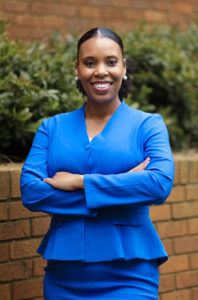 CLIR is delighted to announce that Shaneé Yvette Willis will join CLIR as the new Senior Program Officer for DLF, beginning September 2, 2025.
With over 14 years of experience in the GLAM (Galleries, Libraries, Archives, and Museums) sector, Shaneé brings a dynamic combination of leadership in community engagement, digital strategy, and cultural heritage programming. She most recently served as Program Manager at the HBCU Library Alliance, where she led strategic initiatives across 90+ member libraries and championed collaborative resource-sharing and accessibility.
Throughout her career, Shaneé has advanced digital transformation and inclusion within national networks such as the Digital Public Library of America (DPLA) and in academic settings like the University of West Georgia, where she was both Assistant Professor and University Archivist. Her award-winning leadership has been recognized with honors including the Library Journal’s Mover and Shaker Award in 2021 and Faculty Member of the Year in 2018.
In her new role at CLIR, Shaneé will provide strategic leadership and vision for the Digital Library Federation, aligning DLF’s work with CLIR’s broader mission to enhance research, learning, social justice, and the public good through digital library technologies. She will oversee the development and implementation of DLF program initiatives and events, including the annual DLF Forum, and foster a strong sense of community through active engagement with DLF members, working groups, and partners.
Shaneé Willis brings to DLF and CLIR the exceptional insight and experience of someone who has built communities and successfully applied their collective agency to the most complex challenges of our era. The timing could not be better: with phenomena like AI touching on so many aspects of our professional life, her acumen and leadership skills will help guide a steady, informed exploration of ideas and practices that will define our future.
“Shaneé Willis brings to DLF and CLIR the exceptional insight and experience of someone who has built communities and successfully applied their collective agency to the most complex challenges of our era. The timing could not be better: with phenomena like AI touching on so many aspects of our professional life, her acumen and leadership skills will help guide a steady, informed exploration of ideas and practices that will define our future.”
— Charles Henry, President, CLIR
“Stepping into the Senior Program Officer role for DLF is a natural extension of my commitment to community stewardship and digital transformation,” said Shaneé Willis. “I am particularly excited to contribute to CLIR’s collaborative culture where innovation thrives and to support the growth of our colleagues across the field, especially in light of the challenges we face today.”
—Shaneé Willis
Shaneé holds an MLS from North Carolina Central University, an MDiv from Drew Theological School, and a BA in Religion and Philosophy from Bethune-Cookman University. She is also a graduate of the Archives Leadership Institute and holds certifications in grant writing and nonprofit management.
Please join us in warmly welcoming Shaneé to CLIR and the DLF community!
The post Shaneé Yvette Willis to join CLIR as the new Senior Program Officer for DLF appeared first on DLF.
]]>The post DLF Digest: August 2025 appeared first on DLF.
]]>
Greetings, DLF community! August can seem like a quiet, slow-going month, but it’s also the time when so much behind-the-scenes work is being done to prepare for the busy events, meetings, and schedules in the months ahead. If you’re like much of our community, quietly working hard now with an eye toward the fall, just remember to take a beat and soak up a few sunny warm moments here and there – you deserve rest too.
— Aliya from Team DLF
This month’s news:
- DLF Forum early bird registration ends August 15: Register at the earlybird rate to join us in Denver in November, and view the program for the 2025 DLF Forum and Learn@DLF.
- Call for Proposals: The CFP for the IIPC 2026 Web Archiving Conference is open now through October 15, 2025. Learn more and submit.
- Sponsorship opportunities available: Support the community and the DLF Forum by becoming a partner for this year’s events.
- Office closure: CLIR offices will be closed September 1st for Labor Day.
This month’s DLF group events:
Arts and Cultural Heritage Working Group Special Session: Reimagining Digital Library Software for Arts & Cultural Heritage Collections
Thursday, August 28 2025 at 1pm ET / 10am PT; https://clirdlf.zoom.us/meeting/register/BcLPpWNkQQubOtFBKN2oLg
Join the Arts and Cultural Heritage Working Group for a special session presented by Kendra Bouda.
Metavus (https://metavus.net) is a free, open source digital collections platform developed by Internet Scout Research Group at the University of Wisconsin–Madison. Originally designed to support STEM repositories with no physical holdings, Scout is now exploring how the platform might be adapted for small to mid-sized libraries, museums, historical societies, and archives that manage both digital and physical collections.
Join presenter Kendra Bouda for this one-hour session introducing the Metavus for Museums project—a customized installation of Metavus tailored to the needs of arts and cultural heritage institutions. Kendra will share project goals, demo the software and its features, and discuss key challenges encountered in adapting the platform.
Participants will be invited to share their own experiences and expectations—whether by discussing functionality they value in a digital collections platform or reflecting on challenges they’ve encountered in their own environments. This session aims to spark conversation, surface shared needs, and explore ideas that may lead to more adaptable and user-informed tools. Participants of all backgrounds and levels of expertise are welcome to attend.
Register to attend this session: https://clirdlf.zoom.us/meeting/register/BcLPpWNkQQubOtFBKN2oLg
This month’s open DLF group meetings:
For the most up-to-date schedule of DLF group meetings and events (plus NDSA meetings, conferences, and more), bookmark the DLF Community Calendar. Meeting dates are subject to change. Can’t find the meeting call-in information? Email us at info@diglib.org. Reminder: Team DLF working days are Monday through Thursday.
- DLF Born-Digital Access Working Group (BDAWG): Tuesday, 8/5, 2pm ET / 11am PT
- DLF Digital Accessibility Working Group (DAWG): Tuesday, 8/5, 2pm ET / 11am PT
- DLF AIG Cultural Assessment Working Group: Monday, 8/11, 1pm ET / 10am PT
- DLF AIG Metadata Assessment Working Group: Thursday, 8/14, 1:15pm ET / 10:15am PT
- DLF AIG User Experience Working Group: Friday, 8/15, 11am ET / 8am PT
- DLF Digital Accessibility IT Subgroup (DAWG-IT): Monday, 8/25, 1pm ET / 10am PT
- DLF Digitization Interest Group: Monday, 8/25, 2pm ET / 11am PT
- DLF Committee for Equity and Inclusion: Monday, 8/25, 3pm ET / 12pm PT
- DLF Climate Justice Group: Tuesday, 8/26, 1pm ET / 10am PT
- DLF Digital Accessibility Working Group Policy & Workflows Subgroup: Friday 8/29, 1pm ET / 10am PT
DLF groups are open to ALL, regardless of whether or not you’re affiliated with a DLF member organization. Learn more about our working groups on our website. Interested in scheduling an upcoming working group call or reviving a past group? Check out the DLF Organizer’s Toolkit. As always, feel free to get in touch at info@diglib.org.
Get Involved / Connect with Us
Below are some ways to stay connected with us and the digital library community:
- Subscribe to the DLF Forum newsletter.
- Join, start, or revive a working group and browse their work on the DLF Wiki.
- Subscribe to our community listserv, DLF-Announce.
- Bookmark our Community Calendar.
- Learn more about becoming a DLF member organization.
- Follow us on LinkedIn and YouTube
- Contact us at info@diglib.org.
The post DLF Digest: August 2025 appeared first on DLF.
]]>The post DLF Digest: July 2025 appeared first on DLF.
]]>Happy July, DLF Community! We hope you’re having a pleasant summer so far and that you’re staying cool however you can. Between vacations and time to relax, we hope to catch you at a DLF Working Group meeting sometime this month. And, because the fall will be here before we know it, we hope you’re making plans to come to the Forum and Learn@DLF this November – registration is open and all programs have been released for what’s sure to be a wonderful week in colorful Colorado.
See you soon!
— Aliya from Team DLF
This month’s news:
- Forum program announced, registration open: The program for the 2025 DLF Forum is now available. Register at the earlybird rate to join us in Denver in November.
- Recordings now available: Check out the recordings from IIIF Annual Conference and the IIPC Web Archiving Conference, which both took place earlier this year.
- Opportunity: H-NET Spaces invites applications for its Spaces Cohort Program, which supports early-stage projects and/or scholars in need of support and hands-on training in DH methods. Applications due July 1.
- Free virtual event: The Libraries & DH Special Interest Group of the Alliance of Digital Humanities Organizations (ADHO) is co-hosting Libraries & DH: Histories, Perspectives, Prospects Mini-Conference, a free gathering at this summer’s DH2025 Conference in Lisbon, Portugal, on July 14.
- Call for climate-conscious bookworms: DLF’s Climate Justice Working Group summer book group is meeting Tuesday, July 29 at 1pm ET. They’ll be discussing chapters 5&6 of After Disruption: A Future for Cultural Memory by Trevor Owens, which is available open access. All are welcome to join, even if you’re not a regular participant in the working group and/or missed the first discussions. Register here to join.
- Office closure: CLIR offices will be closed July 3-4 in observance of Independence Day.
This month’s open DLF group meetings:
For the most up-to-date schedule of DLF group meetings and events (plus NDSA meetings, conferences, and more), bookmark the DLF Community Calendar. Meeting dates are subject to change. Can’t find the meeting call-in information? Email us at info@diglib.org. Reminder: Team DLF working days are Monday through Thursday.
- DLF Born-Digital Access Working Group (BDAWG): Tuesday, 7/1, 2pm ET / 11am PT
- DLF Digital Accessibility Working Group (DAWG): Tuesday, 7/1, 2pm ET / 11am PT
- DLF AIG Cultural Assessment Working Group: Monday, 7/14, 1:00pm ET /10am PT
- DLF AIG Metadata Assessment Working Group: Thursday, 7/17, 1:15pm ET / 10:15am PT
- DLF AIG User Experience Working Group: Friday, 7/18, 11am ET / 8am PT
- DLF Digital Accessibility Policy & Workflows Subgroup: Friday, 7/25, 1pm ET / 10am PT
- DLF Digital Accessibility Working Group IT & Development (DAWG-IT) Subgroup: Monday, 7/28, 1:15pm ET / 10:15am PT
- DLF Digitization Interest Group: Monday, 7/28, 2pm ET / 11am PT
- DLF Committee for Equity and Inclusion: Monday, 7/28, 3pm ET / 12pm PT
- DLF Climate Justice Working Group: Tuesday, 7/29, 1pm ET / 10am PT
DLF groups are open to ALL, regardless of whether or not you’re affiliated with a DLF member organization. Learn more about our working groups on our website. Interested in scheduling an upcoming working group call or reviving a past group? Check out the DLF Organizer’s Toolkit. As always, feel free to get in touch at info@diglib.org.
Get Involved / Connect with Us
Below are some ways to stay connected with us and the digital library community:
- Subscribe to the DLF Forum newsletter.
- Join, start, or revive a working group and browse their work on the DLF Wiki.
- Subscribe to our community listserv, DLF-Announce.
- Bookmark our Community Calendar.
- Learn more about becoming a DLF member organization.
- Follow us on LinkedIn and YouTube
- Contact us at info@diglib.org.
The post DLF Digest: July 2025 appeared first on DLF.
]]>The post 2025 DLF Forum Program Now Available appeared first on DLF.
]]>The program for the in-person event is available here.
The DLF Forum welcomes digital library, archives, and museum practitioners from member institutions and beyond—for whom it serves as a meeting place, marketplace, and congress. Here, the DLF community celebrates successes, learns from mistakes, sets grassroots agendas, and organizes for action. The Forum is preceded by Learn@DLF, our pre-conference workshop day on November 16. Learn more about the events.
Register for both events today to take advantage of early bird pricing and best Learn@DLF workshop availability, secure your spot in our discounted hotel block while supply lasts, and plan your trip with our community-written local guide to Denver.
Subscribe to our newsletter to be sure to hear all the Forum news first.
The post 2025 DLF Forum Program Now Available appeared first on DLF.
]]>The post NDSA Excellence Awards: Submitting a Notable Nomination appeared first on DLF.
]]>The time has come again to recognize and celebrate the accomplishments of our colleagues!
Nominations are accepted in five categories (individuals, educators, future stewards, projects, organizations, or sustainability activities) which are described on the NDSA Excellence Awards’ webpage. Selecting a category that best suits a nominee is the first step in preparing a nomination. From there a nominator must describe what makes the nominee’s work exemplary. Last year, the former Excellence Awards Working Group co-chair, Kari May, wrote a blog post providing some ideas and insights for writing a notable nomination. Some of the suggestions include highlighting:
- Firsts: this could be work to produce new tools, workflows, methods, or strategies for preserving digital material.
- A new angle on the known: this could be work that offers updated guidance on preservation formats or other typical good practices, updated tools, or research that provides new insights.
- Hot topics: this could be work that connects digital preservation practices with topics such as environmental sustainability.
- Widespread impact: this could be work that has a positive impact to a significant portion of the field of digital preservation
We encourage you to take a look at the full blog post for more suggestions and nominate a notable colleague, organization, or project today!
Nominations can be submitted using the 2025 NDSA Excellence Awards Nominations form until June 23, 2025.
The post NDSA Excellence Awards: Submitting a Notable Nomination appeared first on DLF.
]]>The post Insights and Inspirations from the 2023 Excellence Award Winners appeared first on DLF.
]]>The time has come again to recognize and celebrate the accomplishments of our colleagues! Nominations are now being accepted for the NDSA 2025 Excellence Awards. Nominations can be submitted using the 2025 NDSA Excellence Awards Nominations form until June 23, 2025.
Last year, we asked the 2023 award winners to share their reflections on what being a recipient of an Excellence Award means to them. For a bit of nomination inspiration, we’re sharing their reflections again this week.
Here’s what they had to say:
Sophia van Hoek, Winner of the Excellence Award for Future Stewards
“In 2023 I received the Future Steward Excellence award for my efforts in sustainability in the digital preservation field. I am truly honoured to have received this award, which represents not only a recognition of my efforts in digital preservation but also a validation of commitment this field has for sustainability. Being acknowledged in this way has been incredibly meaningful to me, serving as a reminder of the importance of our work and the impact it can have on future generations. The recognition has motivated me to continue exploring the topic of sustainability through my work as an archivist, and advisor in the Dutch archival sector.
As I reflect on this recognition, I see it as an opportunity to encourage and support the next generation of early-career professionals and students in digital preservation. I am committed to sharing my insights and experiences that have shaped my journey with others in the field, and I am excited about the potential for collaboration. To anyone considering nominating themselves for an award, I encourage you to take that step. Recognition can be a powerful catalyst for growth and innovation, not only for yourself but also for the digital preservation community. Don’t hesitate to put yourself out there!”
Ashley Blewer, Winner of the Excellence Award for Educators
“I really feel honoured when I look at all the other awardees over the years and see myself alongside some absolutely brilliant people and project teams. We are an incredibly talented field with so many types of strengths, and it’s so rewarding to be a part of the digital preservation community. Recently, I co-taught an online workshop course at the University of Illinois Urbana-Champaign about using audiovisual preservation tools, which has been helping me in my understanding of how to best inform large groups of students about the challenges of digital preservation for time-based media assets, leveraging some of the work noted in the NDSA 2024 award. My goal is to continue forward with lowering technical barriers and helping students have confidence in their abilities through building tools that facilitate learning. To those considering nominating themselves for an award…never hesitate to hype yourself or your work! Even if you don’t win an award this time, it’s an excellent opportunity for self-reflection and how you can continue to grow your expertise in the direction of your choosing.”
Stephen Abrams, Winner of the Excellence Award for Individuals
“Practitioners have long recognized that effective and sustainable digital preservation is possible only by complementing local effort with communal support. No one individual or institution can ever hope to have the expertise and capacity needed to respond to ever-increasing growth in the number, size, diversity, and complexity of digital content needing proactive preservation stewardship. In my experience over the past 25 years, the digital preservation community has been uniformly welcoming, nurturing, innovative, and collegial. I have profited so much, personally as well as professionally, from interactions large and small across the community over the years. So, it was extremely gratifying to have received public recognition by valued colleagues and peers in the form of an NDSA Excellence Award, particularly as an Individual Award reflects on the span of a career. I’ve always tried to give back to the community to some small degree relative to what I’ve gained, perhaps this Award is a sign of progress in that direction. What I’ve been able to achieve has come from “standing on the shoulders of giants.” I hope my experience encourages others to continue to explore, to experiment, to achieve, to share, and to advance the grand challenges and opportunities of long-term digital stewardship.”
Michelle Donoghue of the Nuclear Decommissioning Project, Winner of the Excellence Award for Projects
“My team and I were delighted to have been awarded the NDSA Excellence Project Award in 2023. It was an amazing opportunity to champion our work both internally and across the digital preservation sector. The issues we face in nuclear decommissioning with regard to preserving our legacy data for the very (very) long term are often overshadowed by more immediate priorities. Winning this award afforded us the opportunity to celebrate our progress, highlight its value, and demonstrate our contribution to this field. I strongly encourage anyone to nominate themselves – it’s a quick and easy process – and the benefits are wide ranging!”
Dr. David S.H. Rosenthal & Victoria Reich, Winners of the Excellence Award for Sustainability
“We were delighted and honoured to be recognized by our peers. Working in digital preservation is like sailing against the wind. The justifications are difficult – why pay money to safeguard materials that might be useful in the future? Being recognized by peers, is metaphorically “wind in sails”. That extra push is most useful to those currently helming the boat. We recommend current practitioners nominate themselves and their programs for recognition and benefit from the boost being an award recipient provides.”
All are welcome to make a nomination to the NDSA Awards – you do not have to be affiliated with NDSA or member institutions. Nominations, and self-nominations, from all parts of the world and all digital preservation disciplines are welcomed and encouraged, as are submissions reflecting the needs and accomplishments of historically marginalized and underrepresented communities.
Help us highlight and reward distinctive approaches to digital preservation practice – nominate a colleague, project, or organization today! Nominations can be submitted using the 2025 NDSA Excellence Awards Nominations form until June 23, 2025.
The post Insights and Inspirations from the 2023 Excellence Award Winners appeared first on DLF.
]]>The post DLF Digest: June 2025 appeared first on DLF.
]]>Hello June! Now that the spring semester has wound down and summer is here, there’s lots happening in our community. From free or inexpensive high-quality online events to major milestones for convenings coming up this fall (hello Forum registration!), we’re excited to bring you a Digest chock-full of great happenings. Read on, be well, and enjoy your month.
— Aliya from Team DLF
This month’s news:
- Registration open, program announced: Registration for the DLF Forum and Learn@DLF is now open. Peruse the Learn@DLF schedule and register at the earlybird rate to join us in Denver in November. DLF Forum program will be released later this month.
- Attention bookworms: DLF Climate Justice working group will host a summer reading and discussion group this year on After Disruption: A Future for Cultural Memory by Trevor Owens, available open access, two chapters at a time. Register here. First meeting is June 3.
- Virtual event: Accessibility Summer Camp will be held June 13 online.
- Coming soon: Registration for iPRES 2025 in Wellington, NZ opens on June 3.
- Opportunity: H-NET Spaces invites applications for its Spaces Cohort Program, which supports early-stage projects and/or scholars in need of support and hands-on training in DH methods. Applications due July 1.
- Free virtual event: The Libraries & DH Special Interest Group of the Alliance of Digital Humanities Organizations (ADHO) is co-hosting Libraries & DH: Histories, Perspectives, Prospects Mini-Conference, a free gathering at this summer’s DH2025 Conference in Lisbon, Portugal, on July 14.
- Office closure: CLIR and DLF are closed on Thursday, June 19, in observance of Juneteenth.
This month’s open DLF group meetings:
For the most up-to-date schedule of DLF group meetings and events (plus NDSA meetings, conferences, and more), bookmark the DLF Community Calendar. Meeting dates are subject to change. Can’t find the meeting call-in information? Email us at info@diglib.org. Reminder: Team DLF working days are Monday through Thursday.
- DLF Digitization Interest Group: Monday, 6/2, 2pm ET / 11am PT
- DLF Climate Justice Group: Tuesday, 6/3, 1pm ET / 10am PT
- DLF Born-Digital Access Working Group (BDAWG): Tuesday, 6/3, 2pm ET / 11am PT
- DLF Digital Accessibility Working Group (DAWG): Wednesday, 6/4, 2pm ET / 11am PT
- DLF AIG Metadata Assessment Working Group: Thursday, 6/19, 1:15pm ET / 10:15am PT
- DLF AIG User Experience Working Group: Friday, 6/20 11am ET / 8am PT
- DLF Digitization Interest Group: Monday, 6/23, 2pm ET / 11am PT
- DLF Committee for Equity and Inclusion: Monday, 6/23, 3pm ET / 12pm PT
- DLF Climate Justice Group: Tuesday, 6/24, 1pm ET / 10am PT
- DLF Digital Accessibility Policy & Workflows Subgroup: Friday, 6/27, 1pm ET / 10am PT
- DLF Digital Accessibility Working Group – IT Subgroup: Monday, 6/30, 1pm ET / 10am PT
DLF groups are open to ALL, regardless of whether or not you’re affiliated with a DLF member organization. Learn more about our working groups on our website. Interested in scheduling an upcoming working group call or reviving a past group? Check out the DLF Organizer’s Toolkit. As always, feel free to get in touch at info@diglib.org.
Get Involved / Connect with Us
Below are some ways to stay connected with us and the digital library community:
- Subscribe to the DLF Forum newsletter.
- Join, start, or revive a working group and browse their work on the DLF Wiki.
- Subscribe to our community listserv, DLF-Announce.
- Bookmark our Community Calendar.
- Learn more about becoming a DLF member organization.
- Follow us on Instagram, Facebook, LinkedIn, and YouTube.
- Contact us at info@diglib.org.
The post DLF Digest: June 2025 appeared first on DLF.
]]>The post Now Accepting Nominations for Excellence Awards 2025 appeared first on DLF.
]]>The time has come again to recognize and celebrate the accomplishments of our colleagues! Nominations are now being accepted for the NDSA 2025 Excellence Awards.
Anyone, any institution, or any project acting in the context of the award categories (noted below) can be nominated for an award. No NDSA membership or affiliation is required. Self-nomination is accepted and encouraged, as are submissions reflecting the needs and accomplishments of historically marginalized and underrepresented communities.
We encourage you to help us highlight and reward distinctive approaches to digital preservation practice. Please submit nominations here: 2025 NDSA Excellence Awards Nominations form. Awards will be presented at the Digital Preservation 2025 event this fall.
Nominations are accepted in the following categories:
- Individual Award: Recognizing those individuals making a significant contribution to the digital preservation community through advances in theory or practice.
- Educator Award: Recognizing academics, trainers, and curricular endeavors promoting effective and inventive approaches to digital preservation education through academic programs, partnerships, professional development opportunities, and curriculum development.
- Future Steward Award: Recognizing students and early-career professionals making an impact on advancing knowledge and practice of digital preservation stewardship.
- Organization Award: Recognizing those organizations providing support, guidance, advocacy, or leadership for the digital preservation community.
- Project Award: Recognizing those activities whose goals or outcomes make a significant contribution or strategic or conceptual understanding necessary for successful digital preservation stewardship.
- Sustainability Award: Recognizing those activities whose goals or outcomes make a significant contribution to operational trustworthiness, monitoring, maintenance, or intervention necessary for sustainable digital preservation stewardship.
If you need a little inspiration, check out our webpage for lists of past winners or this blog post on submitting a notable nomination. If you have any questions about the nomination form, please contact the Excellence Awards Working Group co-chairs.
The post Now Accepting Nominations for Excellence Awards 2025 appeared first on DLF.
]]>The post Registration is Now Open for the 2025 DLF Forum, Learn@DLF Program Available appeared first on DLF.
]]>
The program for Learn@DLF, which features 6 exciting workshops, is also now available. The DLF Forum program will be released in early summer.
Secure the early bird rate, register for Learn@DLF workshops, and start planning for yet another memorable week with DLF.
DLF member organizations receive one complimentary DLF Forum registration as part of their member benefits. Not sure who received your code? Email us at forum@diglib.org.
If you have any questions, please write to us at forum@diglib.org. We’re looking forward to seeing you in Denver this fall.
-Team DLF
P.S. Want to stay updated on all things related to the DLF Forum? Subscribe to our Forum newsletter.
The post Registration is Now Open for the 2025 DLF Forum, Learn@DLF Program Available appeared first on DLF.
]]>The post A conversation around “Writing Alt Text for a Scientific Figure” by Kristin Briney appeared first on DLF.
]]>
Kristin Briney posted Writing Alt Text for a Scientific Figure on August 15th, 2024 where she provides a brief introduction and shares resources to guide the reader in describing scientific figures. In response to this post, members of DAWG shared other resources and experiences (Thanks to Wendy Robertson at the University of Iowa for sharing Briney’s post and Jasmine Clark for compiling and organizing the thread in blog form):
Direct Responses to Briney’s Post:
We’re working with our campus screenreader specialist on making our content accessible, and he’s pretty excited by the idea. Our grad student created the ALT text, and did so by dropping the images into UMGPT (our campus’ private secure ChatGPT clone), taking the generated captions, and cleaning them up. You can see examples of the resulting ALT text attached to the images in this draft internal presentation (which we ended up not using, but it’s useful backup for this conversation). The screenreader specialist liked these.
Here is our final version. Less ALT text, and more links to screenreader-adapted versions of the original spreadsheets from which we drew the data for the images.
– Courtesy of PF Anderson, University of Michigan
I love the formula for writing alt text for data visualizations, in Briney’s post. I ran WAVE on the link that Jen-chien sent.
alt text = *Chart type* of *type of data* where *reason for including chart*. *Link to source data.*
with the example
Column chart of research data availability where research data on the internet disappears at a rate of 2.6% per year. For underlying data, see “Figure2_UnavailableByYear.csv” file at https://doi.org/10.22002/h5e81-spf62
Embedded in this recommendation is the assumption that the researchers have published their data: in an open repository, in an accessible and usable format, with a persistent ID.
This recommendation seems as though it would also improve the article. If you can’t summarize your visualization in this format, then perhaps it doesn’t support your argument, or it isn’t needed, or it’s too complicated, or you don’t really understand your research!
I’m interested to hear the opinions from actual users of assistive technology. Is the advice in these posts helpful or unhelpful?
– Courtesy of Susan Hoover, University of Houston
Additional Related Resources:
Demo: AI to interpret charts for the visually impaired — arXiv Accessibility Forum 2024
<https://www.youtube.com/watch?v=kUsk7wVVQAo>
AI and Accessibility — arXiv Accessibility Forum Session 2024
<https://www.youtube.com/watch?v=mdzC9J78i6I>
Graphic Medicine in Disability Studies – Getting Started with Graphic Medicine in Disability Studies, by Ann Fox
– Courtesy of PF Anderson, University of Michigan
Dena Strong published a “data verbalization” post that shows “how to craft a simple and effective data verbalization…”
– Courtesy of Jen-chien Yu, Director Of Library Assessment, University of Illinois
Response to Strong’s post (shared by Yu above):
This is great! We’ve been having debates about the accessibility of comics when used in presentations. This:
“What type of visual is this?
What does it show?
Why does it matter?”
maps to what we’re calling functional ALT text, as contrasted with descriptive ALT text. For presentations, it’s about why is this on screen — is it decorative, a cognitive or symbolic placeholder for more complex content, is it communicating information, etc. For functional alt text, we keep the “what does it show” really simple and short.
What we are finding is that folk who were blind from birth have different desires from alt text than folk who lost vision later in life. Our screenreader specialist was blind from birth, and will tell us, “I don’t care if it’s pink. That doesn’t tell me anything. Just tell me why it’s there.” Folk who have memories of color and shape may actually want that information.
I also had tried putting the links to the screenreader-versions of data in the ALT text and have been instructed to NOT do this, because it’s annoying to have to listen to the computer read the URL aloud. I’ve also been told not to put the full links on the slide itself, but I balk at that, because for accessibility for me, I want to be able to see that before I click on it, and I don’t want to have to hover to see it. A suggestion provided by Ann Fox was to add the stripped down functional alt text in the presentation slides, and create a separate external Google Doc or downloadable file with enriched alt text. I’m working right now on my first effort to do this. It’s a lot of work. It looks something like this.
SLIDE 1
Image 1 (functional ALT text): …
Image 1 (descriptive ALT text): …
Image 1 (additional resources, links, data): …
Image 2 …
– Courtesy of PF Anderson, University of Michigan
A final response to the different resources shared:
I think those guides are indeed valuable resources to share with graduate students for their theses and dissertations—they offer helpful guidance across various areas.
Resources like the Do No Harm Guide, referenced from Writing Alt Text for a Scientific Figure by Kristin Briney, provide excellent frameworks for describing charts, such as the Four-Ingredients and Four-Levels Models, which can effectively address diverse user needs based on vision experiences, as PF mentioned. However, I’d like to offer a quick clarification on alt text for graphs that might help us apply these tags more effectively. Balancing alt text length is crucial; alt text within the <alt> tag is most effective when kept short and direct, ideally a single sentence conveying the key information.
For more detailed descriptions, best practice suggests using a <longdesc> tag or a linked long description with a <div> tag to add structure. This method enables screen reader users to navigate complex information more easily, reducing the risk of feeling “trapped” in lengthy, continuous alt text.
Another alternative is to link to a detailed description near the image, leading users to a separate page or section with a fuller explanation. This setup allows users to engage with image details at their own pace, focusing on specific information without becoming overwhelmed. For complex visuals, this flexible approach can enhance both accessibility and the user experience.
Just throwing this out there—I feel a bit panicked when I see people trying to put an entire block of text into alt text. It can easily end up overwhelming and confusing for screen reader users…
– Courtesy of Wen Nie Ng, MIS, UXD, CPWA, Digital Collections Librarian
The post A conversation around “Writing Alt Text for a Scientific Figure” by Kristin Briney appeared first on DLF.
]]>The post DLF Digest: May 2025 appeared first on DLF.
]]>
It’s hard to believe it’s already May. The DLF community is as busy as ever, and we’re excited to share with you a variety of news, meetings, and things to read. We hope you enjoy them and have a wonderful month.
— Team DLF
This month’s news:
- Nominations open: Have ideas about who should be the featured speaker at the 2025 DLF Forum? Submit your thoughts by May 15.
- On the DLF blog: Members of the DLF Digital Accessibility Working Group have authored a blog post, “What you need to know as a library to prepare for ADA Title II rule changes.” Read it now.
- Panel Discussion: OCEAN is hosting “Cultural Heritage/Ethics and Intellectual Property Workshop Part II: Analysing Case Studies,” a case study analysis dedicated to working with legacy collections that contain materials of distinct cultural significance. Friday, May 2 at 12pm ET. Register and learn more here.
- Workshop: IIIF’s next five-day introductory training will be the week of May 19. No prior knowledge of IIIF is required, and the core sessions should be easily accessible to those with confidence using the Web. By the end of the workshop, participants will have completed a small IIIF project, which they will demo for the group at the final meeting.
- Conference: Registration is open for the 2025 IIIF Annual Conference in Leeds, UK. This year’s conference features two full days of presentations, followed by a day of workshops and other activities. All workshops and tours are included in your registration, but space is limited. The program is available here, and registration is open on ConfTool.
- Recordings Coming Soon: The 2025 IIPC General Assembly and Web Archiving Conference in Oslo, which saw 200 attendees from 83 organizations and 33 countries, has officially wrapped! Be on the lookout for conference recordings on their YouTube channel in the coming months.
This month’s open DLF group meetings:
For the most up-to-date schedule of DLF group meetings and events (plus NDSA meetings, conferences, and more), bookmark the DLF Community Calendar. Meeting dates are subject to change. Can’t find meeting call-in information? Email us at info@diglib.org. Reminder: Team DLF working days are Monday through Thursday.
- DLF Born-Digital Access Working Group (BDAWG): Tuesday, 5/6, 2pm ET / 11am PT
- DLF Digital Accessibility Working Group (DAWG): Wednesday, 5/7, 2pm ET / 11am PT
- DLF AIG Cultural Assessment Working Group: Monday, 5/12, 1pm ET/10am PT
- DLF AIG User Experience Working Group: Friday, 5/16, 11am ET / 8am PT
- DLF AIG Metadata Assessment Working Group: Thursday, 5/22, 1:15pm ET / 10:15am PT
- DLF Climate Justice Group: Wednesday, 5/28 12pm ET/9am PT
- DLF Digital Accessibility Policy & Workflows Subgroup: Friday, 5/30, 1pm ET / 10am PT
DLF groups are open to ALL, regardless of whether or not you’re affiliated with a DLF member organization. Learn more about our working groups on our website. Interested in scheduling an upcoming working group call or reviving a past group? Check out the DLF Organizer’s Toolkit. As always, feel free to get in touch at info@diglib.org.
Get Involved / Connect with Us
Below are some ways to stay connected with us and the digital library community:
- Subscribe to the DLF Forum newsletter.
- Join, start, or revive a working group and browse their work on the DLF Wiki.
- Subscribe to our community listserv, DLF-Announce.
- Bookmark our Community Calendar.
- Learn more about becoming a DLF member organization.
- Follow us on Instagram, Facebook, LinkedIn, YouTube, and X.
- Contact us at info@diglib.org.
The post DLF Digest: May 2025 appeared first on DLF.
]]>The post Community Voting Now Open for DLF Forum 2025 appeared first on DLF.
]]>How to participate in DLF Community Voting:
- Get a feel for your favorites by reading proposal abstracts, organized by event in Airtable or in our accessible Google Sheet.
- Navigate to the voting form to cast your votes.
- You’ll be asked to enter your email address. Email will only be used to ensure that each person votes just once, then will be de-coupled from the votes themselves.
- Click the +Add button under each event name to select your favorites for each event.
Community voting is open through April 28.
To learn more about our events, visit our event website. If you have questions, please let us know at forum@diglib.org. Thanks!
-Team DLF
The post Community Voting Now Open for DLF Forum 2025 appeared first on DLF.
]]>The post What you need to know as a library to prepare for ADA Title II rule changes appeared first on DLF.
]]>With the updates to ADA Title II, many had questions about how these changes would affect them and their information organizations. DLF Digital Accessibility Working Group members shared some resources that they’ve come across to learn more:
ADA Title II – Events and Resources (BTAA)
URL: https://btaa.org/accessibility-collaboration/events-and-resources
From Karen Grondin: “The Big Ten Academic Alliance (BTAA) has gathered resources on the new ADA Title II regulations. Included here are links to webinar recordings, slides, and other presentation materials.”
ADA Title II and Academic Libraries (Library Accessibility Alliance)
URL: https://www.libraryaccessibility.org/ada-title-ii
From Karen Grondin: “This site provides only a brief overview of the ADA Title II regulations without a focus on how this will impact academic libraries. It does, however, have links to related news and resources and a link to the LAA’s Dear Colleague letter to library vendors that may be useful for other institutions.”
Licensing E-resources for Accessibility
URL: https://www.libraryaccessibility.org/events/licensing-e-resources-accessibility
From Karen Grondin: “Webinar recording from October 18, 2023 presented by the Library Accessibility Alliance to share the Triangle Research Libraries Network Guide to Negotiating Accessibility in E-Resources Licenses (PDF). The webinar included a walkthrough of this document which was created as part of a larger licensing principles document as well as discussion around how libraries may use this guide to help with negotiations. In August 23, 2024, a follow-up webinar, “Licensing for Accessibility: Ask Me Anything” was held, but was not recorded. The group is working on revisions to the guide and will likely make changes to the negotiating strategies in relation to the ADA 504 updates.”
Understanding the Revised ADA Title II: Implications for Library Publishing (Library Publishing Coalition and Library Accessibility Alliance)
URL: Recording
Shared by Wendy Robertson: [Full description] “…Join Pete Bossley, former Deputy ADA Coordinator at The Ohio State University and current Senior Manager of Accessibility at Thomson Reuters for a 60-minute webinar (30-minute presentation followed by Q&A) about the revisions to ADA Title II and its implications for library publishing. He will discuss what public entities need to know about their obligations under the new regulations, and what organizations serving these entities can do to support them in meeting those requirements. Angel Peterson, Production Specialist and Accessibility Coordinator at Penn State, as an expert in both digital accessibility and library publishing, will facilitate the Q&A….”
ADA Title II: Implications for Accessibility and Equity in Education
URL: Recording and full description
From Adele Fitzgerald: “An insightful webinar that gathers experts from educational institutions, ed-tech suppliers, and public sector to discuss the implications of these new regulations. Hosted by D2L and recorded Nov 7, 2024.”
How to Comply with DOJ’s Seemingly Impossible Web Accessibility Regulation
URL: Link to article
From D Krahmer: “Really good go-through with the implications of the new rule.”
Other resources members thought would be helpful
No Mouse Challenge
URL: https://nomouse.org/
From Elliott Stevens: “This is such a simple, elegant, and devastating digital accessibility test. Workers with varying levels of accessibility testing skills can do the No Mouse Challenge on a website (or digital tool or application), and the No Mouse Challenge not only reveals if a website is accessible without a mouse but also shows whether or not it’s organized hierarchically and according to WCAG 2.1AA levels. If a website fails the No Mouse Challenge, it’s a problem.”
Preparing for the European Accessibility Act – Essential Guidance for Publishers (KGL)
URL: Recording and full description
From Wendy Robertson: “The European Accessibility Act will go into effect June 2025. This webinar (18 November 2024) is for publishers, with a lot of attention to books, but journals are also covered.”
The post What you need to know as a library to prepare for ADA Title II rule changes appeared first on DLF.
]]>The post Ukrainian Translation of the 2019 Levels of Digital Preservation Matrix appeared first on DLF.
]]>Links to these documents are found below as well as on the 2019 Levels of Digital Preservation OSF project page: https://osf.io/qgz98/
- V2.0 (2019)
If you would be interested in translating the Levels of Digital Preservation V2.0 into another language please contact us at ndsa.digipres@gmail.com.
Український переклад матриці рівнів цифрового збереження 2019 р.
NDSA з приємністю повідомляє, що версія №2 (2019 р.) матриці рівнів цифрового збереження була перекладена українською мовою Мариною Чернявською.
Нижче – посилання на переклад документів, які також можна знайти на OSF сторінці проєкту “Рівні цифрового збереження в.2”: https://osf.io/qgz98/
- В2.0 (2019)
Якщо б ви хотіли перекласти версію №2 Рівнів цифрового збереження іншою мовою, будь ласка, напишіть нам за адресою ndsa.digipres@gmail.com.
The post Ukrainian Translation of the 2019 Levels of Digital Preservation Matrix appeared first on DLF.
]]>The post NDSA Welcomes Two New Members in Quarter One of 2025 appeared first on DLF.
]]>The Instituto Moreira Salles has been working for the past two years on the beginning of its digital preservation program, organizing obsolete media and their digital files. They have also been implementing a workflow for preserving institutional information in digital format so that it can be preserved alongside all the permanent digital files from its collections and digital surrogates generated for preservation and online distribution. Next year, they plan to conduct a self-evaluation based on NDSA’s Levels of Preservation and the DPC-RAM organizational and service capabilities, along with building a digital preservation policy and plan.
Since 2012, Amherst College Library has made significant strides in digitizing, preserving, and cataloging holdings within its Archives and Special Collections to provide continued public access to its holdings and the long-term preservation of materials. The Library works to provide sustainable access to digital content produced by both the Library and the College through Amherst College Digital Collections (ACDC). Amherst College Library adheres to national and international community-based standards and best practices in managing its digital collections. Ongoing initiatives focus on refining strategies, policies, and workflows for preserving born-digital content, web archives, and legacy media, while also providing support to the campus regarding data management, digital repositories, and open-access initiatives.
Each organization participates in one or more of the various interest and working groups – so keep an eye out for them on your calls, and be sure to give them a shout-out. Please join me in welcoming our new members! You can review the list of members here.
The post NDSA Welcomes Two New Members in Quarter One of 2025 appeared first on DLF.
]]>The post DLF Digest: April 2025 appeared first on DLF.
]]>Hello and happy April, DLF community! It’s officially spring, and our community is staying quite busy with Working Group meetings and events. We’re particularly excited to share that the DLF Forum Call for Proposals is now open through the middle of April. Read on to learn how to be a part of all the great things happening in our world this month. We’ll see you around soon!
— Team DLF
This month’s news:
- Submit: The Call for Proposals is now open for the DLF Forum and Learn@DLF, to be held in Denver, Colorado, November 16-19. Learn more and submit by April 14.
- Program Available: The preliminary program is now available for the 2025 IIIF Annual Conference in Leeds, June 2-6. View the program and register for the event.
- Attend: Association of College and Research Libraries (ACRL) Conference, April 2-5, 2025 in Minneapolis. Learn more about it here.
- Participate: DLF’s Born Digital Access Working Group (BDAWG) invites participation in their AI for Access survey, which investigates how archivists are currently using or not using artificial intelligence to facilitate access to born-digital archival material. Learn more and participate by April 14.
- Attend: The Big Data and the Preservation Problem Webinar, part of CLIR’s Climate Resiliency Action Series, is happening Wednesday, April 9, 12pm ET/9am PT. Read on for more information about the series and this workshop.
- Discuss: After attending the webinar, join Climate Circle Discussion #6: Big Data and the Preservation Problem, on Friday, April 18, 1pm ET/ 10am PT
- Catch Up: Past Climate Action Webinars are available on the CLIR/DLF YouTube channel or the project website’s Resource page.
This month’s open DLF meetings:
For the most up-to-date schedule of DLF group meetings and events (plus NDSA meetings, conferences, and more), bookmark the DLF Community Calendar. Meeting dates are subject to change. Can’t find meeting call-in information? Email us at info@diglib.org. Reminder: Team DLF’s working days are Monday through Thursday.
- DLF Born-Digital Access Working Group (BDAWG): Tuesday, 4/1, 2pm ET / 11am PT
- DLF Digital Accessibility Working Group (DAWG): Wednesday, 4/2, 2pm ET / 11am PT
- DLF AIG User Experience Working Group: Friday, 4/18, 11am ET / 8am PT
- DLF AIG Metadata Assessment Working Group: Thursday, 4/24, 1:15pm ET / 10:15am PT
- DLF Digital Accessibility Policy & Workflows Subgroup: Friday, 4/25, 1pm ET / 10am PT
- DLF Digital Accessibility IT & Development Group: Monday, 4/28, 1:15pm ET / 10:15am PT
- DLF Digitization Interest Group: Monday, 4/28, 2pm ET / 11am PT
- DLF Committee for Equity & Inclusion: Monday, 4/28, 3pm ET / 12pm PT
DLF groups are open to ALL, regardless of whether or not you’re affiliated with a DLF member organization. Learn more about our working groups on our website. Interested in scheduling an upcoming working group call or reviving a past group? Check out the DLF Organizer’s Toolkit. As always, feel free to get in touch at info@diglib.org.
Get Involved / Connect with Us
Below are some ways to stay connected with us and the digital library community:
- Subscribe to the DLF Forum newsletter.
- Join, start, or revive a working group and browse their work on the DLF Wiki.
- Subscribe to our community listserv, DLF-Announce.
- Bookmark our Community Calendar.
- Learn more about becoming a DLF member organization.
- Follow us on Instagram, Facebook, LinkedIn, YouTube, and X.
- Contact us at info@diglib.org.
The post DLF Digest: April 2025 appeared first on DLF.
]]>The post Be a Part of the 2025 DLF Forum: Submit Your Proposal Today appeared first on DLF.
]]>
We encourage proposals from members and non-members; regulars and newcomers; digital library practitioners from all sectors (higher education, museums and cultural heritage, public libraries, archives, etc.) and those in adjacent fields such as institutional research and educational technology; and students, early- and mid-career professionals and senior staff alike. We especially welcome proposals from individuals who bring diverse professional and life experiences to the conference, including those from underrepresented or historically excluded racial, ethnic, or religious backgrounds, immigrants, veterans, those with disabilities, and people of all sexual orientations or gender identities.
Learn more about our event and session formats, view the Call for Proposals, and submit.
The submission deadline for all proposals is Monday, April 14, at 11:59pm Mountain Time.
If you have any questions, please write to us at forum@diglib.org. We’re looking forward to seeing you in Denver this fall.
All best,
Team DLF
P.S. Want to stay updated on all things #DLFforum? Subscribe to our Forum newsletter.
The post Be a Part of the 2025 DLF Forum: Submit Your Proposal Today appeared first on DLF.
]]>The post NDSA Levels of Digital Preservation ‘Sightings in the Wild’ appeared first on DLF.
]]>Levels sightings occur in a variety of formats, ranging from their use in program assessment, to specific applications for “niche” digital preservation adjacent activities, to vendors employing them as a yardstick to gauge their service offerings. They’ve been spotted in numerous published articles on digital preservation, including the oft-cited “How to Talk to IT about Digital Preservation”, and in preservation reports that range from presentations on cyber-security to a graduate student assessing the state of digital preservation for the College Park Maryland Aviation Museum. The NDSA Levels are not just used in the United States, but are an international presence as well. The Bibliothèque et Archives nationales de Québec has used the NDSA levels to help define their information model, as shared at iPres 2024; and the UK Archives Accreditation standards suggest using the NDSA Levels or DPC-RAM for self-assessment.
The scholarly literature on digital preservation is fertile ground for sightings, too, with several articles invoking the Levels just in the past year:
- Silva, W. da. (2024). Why Digital Preservation Should Be Treated as Public Policy. Collections: A Journal for Museum and Archives Professionals, 20(4).
- Underdown, David H. “Case study: Using the DiAGRAM tool for digital preservation.” Journal of Digital Media Management 11.3 (2023): 258-270.
Have you seen an example of the NDSA Levels being used by colleagues or referenced in a presentation or even by a vendor? We’d love to hear about it! As always, we also encourage the whole community to provide feedback on the Levels – including Levels sightings! – at any time.
The post NDSA Levels of Digital Preservation ‘Sightings in the Wild’ appeared first on DLF.
]]>The post Announcing the NDSA Climate Watch publication appeared first on DLF.
]]>We are excited to announce the publication of our Climate Watch Substack.
Global warming and climate change are currently wreaking havoc on the world. As digital stewardship professionals, it is our responsibility to mitigate threats that impede our ability to manage digital materials through time. Climate change not only jeopardizes our data through more frequent and more severe weather disasters, but also through reductions in food supply, mass migrations, economic contraction, and political upheaval.
Climate change reports and publications are published frequently and can be hard to keep on top of. Our objective is to curate the most relevant articles ensuring that we stay informed about the current state of the climate. We hope these resources will help make the case for appropriate long-term planning so that our field can begin proactive adaptation efforts.
We aim to publish quarterly updates reviewing climate change-related news, articles, reports, and publications. Each brief review will highlight key points from the publication and relate it back to why it is relevant to digital preservation specifically, or cultural heritage overall. Additionally, we will also maintain a list of Foundational Resources for digital stewardship colleagues that seek to become more familiar with climate scholarship, climate risks, and how these risks will impact our work, our workforce, and the collections we steward.
The post Announcing the NDSA Climate Watch publication appeared first on DLF.
]]>