


| CARVIEW |
A personal history of listening to music - from CDs to Mini Discs via an Intel MP3 player
As I finish putting together my annual playlist of music I discovered and enjoyed this year, my mind wanders back to all the ways I’ve consumed music over the last four decades.
I have already written about the old radio, our first and only record player, and the transition to cassettes. This post is about the medium that followed and was as anticipated as it was short-lived.
Cassettes, thanks to the repeated contact of the tape with the player head, tended to wear down over time. And then there was the analog nature of the players themselves - the belt drive that turned the cassette reel would not maintain its speed of rotation, especially after a trip to the local repair shop, so the tempo would go a little off over time. Not dramatic enough for voices to sound like sped-up cartoon voices but enough for me to tell that it was not the same song that I had heard thousands of times1.
Compact Discs (CDs) offered a break from all of this. When I started my job, I asked my parents if I could spend a not insignificant portion of my first wage on them. CDs were expensive back then. Before I started splurging on them, we had just a couple at home - cheap T-Series CDs of Brian Silas playing hindi oldies on the piano.
The most common way to play a CD was to pop it into my desktop tower’s CD-ROM drive and play it either using a CD player application on the PC or hit the play button on the drive itself with the headphones plugged right into the CD-ROM drive’s audio jack. Ripping them to the computer’s disk was not something I would start doing till many years later. Space on computer hard disks back then were puny. I have 60x more space on my Apple watch now than what my desktop did back then. Uncompressed CD audio takes a lot of space. This is late 90s so while mp3 format that would compress audio by as much as 10x without perceptible loss in quality was coming up, software to encode + play wasn’t mainstream yet. But even mp3s would take, what I would’ve then considered, too much space on my measly 540 MB hard disk.
Thus my consumption of CDs stayed largely tethered to the desktop. I seem to have given the entire generation of Sony’s Discman a miss. But there was another Sony product that came into my life a few years later via a short detour.
Intel - yes the processor company - made a brief (and in hindsight, ill-informed) foray into consumer hardware like webcams and audio players during early 2000s. My first portable digitial music player was from them. It had 64 MB memory (enough for about an hour of audio encoded at 128kbps). Its shape was apparently inspired by those smooth pebbles one finds by the banks of a river. It had a rubberised body with a belt clip and a transparent faceplate that you could remove and customise (which I did with cutouts from the colored printouts from the office printer). It ran on one AA battery and the limited storage meant I would have to refresh both the battery and the music on it every so often. It sustained me during those brutal hour-long work commutes in Delhi. Someone swiped it from my desk at work one day when I had gone for lunch. It took me while to overcome the devastation and two decades later, the loss still rankles.

I never bothered replacing it.
In the meanwhile, laptops were improving in specs and coming down in prices. Microsoft, my then employer, issued me one at work. The storage on these machines was now approaching gigabytes. One could afford to keep a decent collection of music on one’s hard disk. It wasn’t the sort of portability that a portable music player offered but one no longer had to lug CDs to be able to listen to them. I’d still buy audio CDs but I’d immediately rip them to mp3 files. Or rather wma files - since I was a Microsoft employee and an ardent fanboy at the time and Windows Media Player supported both the format and the act of ‘ripping’ natively.
Microsoft used to (perhaps still do?) organize annual gatherings of employees from their subsidiaries across the world. These were grand, would-fill-a-large-stadium affairs. I was due to attend one in New Orleans2 but wasn’t confirmed till quite late. I don’t know if it was my performance, my potential or something as banal as someone else opting out and the travel budget still being available. All I know is that my name was put on the list of attendees and my turn came.
That whole trip is a blur but I remember a few things well. Due to my late confirmation, I was put up in a hotel slightly further away from where everyone was. On the flip side, I had the whole room to myself3. This was the first time I was staying in a hotel room without a window. Oh there was one, but it’d open to a red-brick wall of another building which is as good as not having one. The lack of daylight, fatigue from a long flight and the jetlag meant I crashed immediately4. When I woke up, I showered and went out for a walk. It was already dark. Thanks to my jetlag, I must’ve slept through the day. I mustn’t have wandered far because back then there were no smartphones and I was terrible at reading maps. I remember visiting a Virgin music store. They were about to close for the day but I saw a black Sony Net MD player hanging from a shelf in a clear molded plastic packaging, the sort that is an absolute nightmare to open, and on a whim, bought it.

I was drawn to MiniDiscs for their small size. Or some misplaced sense of nostalgia about 3.5 inch floppy discs - at 68×72×5mm vs the floppy’s 93.7×90.0×3.3mm it wasn’t that off size-wise. It was small enough to fit on the palm of your hand. I got interested once Sony launched their Net MD format. An mp3 like compression (ATRAC3) allowed them to squeeze 4-5 hours of music on a single MiniDisc. Sony’s software, as had been the case with software bundled with most consumer electronics of that era that’d connect to a PC, was terrible. But it was functional. And within a few minutes it had helped me transfer Beethoven’s Op. 74 and Op. 95 string quartets onto a MiniDisc. I remember listening to it all day during breaks at the conference. This thing miraculously ran for 50+ hours on a single AA cell.
A couple of years later I upgraded to Sony’s next generation of Mini Discs, the so called ‘High MD’ that allowed 1 GB of storage per disc. That’s about 15 CDs worth of music per disc. I spent a considerable number of weekend afternoons re-organizing my music collection and battled with such important questions as whether I should organize my collection of works of Beethoven by opus or by instruments or if it was ok to put the symphonies together with the piano concertos or to just leave the rest of the disc empty. Truly a life of privilege and leisure5.
By this time, both I and Sony were swimming against the tide. The world was moving to iPods and other similar devices. While the original iPod used to have a spinning hard disk, flash storage was now getting cheap enough that devices with several GB were getting common and affordable. Once I got my first Mac, it was only a matter of time before I too moved on to the iPod ecosystem. But that’s for another post…
And thus the wear and the said trip to the repair shop. As a teenger, I was inseparable from my walkman. I hear that just like LPs, they are making a comeback. I will pass for the reasons that should be clear if you read the paragraph that dropped you to this footnote, thank you very much.↩︎
It’d be a new US city each time before they finally settled on Seattle because of closer proximity to the rest of the HQ staff in Redmond. The New Orleans one must’ve been in 2003. My memories are all tangled up by now but this was definitely pre-Katrina. And I remember someone organizing a visit to an IMAX theatre to watch the Matrix Reloaded which had just come out…↩︎
This had felt remarkable then because Microsoft used to put two people to a room back in the day. I am sure to save cost but perhaps also because no one city must’ve had the sort of hotel capacity back then.↩︎
I don’t know how my body used to manage those 20 hr+ plane trips (with multiple stopovers) from India. The youth really is lost on the young.↩︎
Even though I gave the player and my collection of discs away many years ago, I had a couple of blanks lying with me as souveniers until recently. I also learned today that Sony finally ceased producing MiniDiscs altogether in February this year. All those hours organising music came to nothing. I take solace in the fact that given a long enough timespan, you could say that about any human endeavour…↩︎
The new camera(s) on the iPhone 17 Pro
I recently moved to an iPhone 17 Pro after two years with an iPhone 15 Pro. The primary driver of this upgrade, just as it has been for the past several years, was the camera. It comes with an 8x optical zoom equivalent to a 200mm focal length on a 35mm body. The most that iPhone 15 Pro did was 77mm equivalent - a focal length that has now been replaced with 100mm. While I’ll miss 77mm, the transition to 100mm should be an easy one - a bit like learning a new dialect of a language you already know. Getting used to 200mm however will be like learning a new language itself.
If you think you have steady hands, try shooting with a zoom lens. Even the slightest quiver gets amplified many times over and ruins your composition. The camera app on iOS 26 does offer some help. At 8x zoom, it shows a tiny thumbnail on the top right corner of your screen with a yellow rectangular frame marking the area you are zoomed into.

It occasionally helps me find my way back to my original framing, though usually it comes in my way, especially when the framing is tight.
The reach that 200mm offers is quite stunning. In most historic cities in the Netherlands, where the buildings are full of colourful brick patterns, gable stones and other details, it is helping me see things I would’ve otherwise never caught. Like this statue of a man leaning from the gabled roof of a house. I noticed it only last week even though I must’ve walked past it hundreds of times over the past 14 years I’ve been in Amsterdam.


And even the boring, modern buildings present interesting compositional possibilities…

Now the cons:
- The images at the telephoto end are somewhat on the softer side.
- At 8x zoom the auto focus struggles to focus on the subject if the background is a lot brighter.
- The bokeh doesn’t even come close to touching what you’d get from an SLR body.
- And this sort of reach from within just a few mm thick phone body will surely have privacy implications.
While the first three should gradually disappear as hardware and software improve, I fear that the last one is something we’ll just have to learn to live with as a society.
Diesel trains in the Netherlands
A recent news article about the start of electrification of an 88 km train route1 in the Netherlands made me realize that diesel engines are still in use here. This came as a surprise to me. Even after having lived here for over 14 years, I haven’t smelled even the faintest whiff of burnt diesel at the stations here. Perhaps because these engines only run on smaller, regional lines. That anyone should have to still put up with diesel engines in a country as progressive and rich as the Netherlands, boggles my mind.
The last time I experienced diesel fumes at a station in Europe was in Scotland in 2018. The wife and I had taken a train from Edinburgh to Glasgow and had disembarked on a platform where an engine belching burnt diesel fumes stood. That, coupled with poor airflow, had made me feel quite sick.
My childhood memory of train stations in India is the odour of burnt coal mingled with the stench of piss from the dirty public urinals. I realised what that ‘train station’ smell really was quite late in life. For the longest time, it was a pungent but not an altogether repugnant smell - for my brain had come to associate it with the excitement of traveling in trains.
Clearly, I’ve grown soft.
Anyway, coming back to the electrification project here - it was originally slated to finish in 2020 but has been mired in bureaucratic delays. To quote the article:
De provincie en het rijk ruzieden over wie wat zou betalen. Vorig jaar werd de aanbestedingsprocedure stopgezet omdat er een tekort aan materialen was.
The province and the government argued about who would pay for what. Last year, the tender procedure was stopped because there was a shortage of materials.
Apparently, it costs Arriva - the operator of trains on this line - some 20-27 million Euros each year to keep these outdated diesel engines running. So they definitely have financial incentives to get a move on. The project will cost 358 million Euros and the first electric train should run on this route towards the end of 2027.
The electrification of this stretch still leaves about 400 km of the Dutch railway network reliant on diesel engines. Worse, as of this year, there are no plans to electrify it.
Used by around 22,000 riders each day.↩︎
500 kilometers
My e-bike’s odometer clocked 500 kms today. The milestone was brought on by two lovely rides we took this weekend to enjoy the unexpected spell of warm, sunny weather1.
The first one was to Het Twikse Twiske yesterday. It’s a small nature reserve just a few kilometers north of Amsterdam. We had discovered it a couple of years ago completely by chance. We were having breakfast at a cafe in Noord one day and were looking for a place to go for a long ride2. I had pulled up the map on my phone, seen this stretch of green surrounding a water body and we had decided to aim our bikes in that general direction.
We started from home around 16:45. We biked to Pontsteiger to try and catch the ferry to NDSM Werf and managed to board it with just 45 seconds to spare3.
By the time we were at Het Twikse Twiske, it was the golden hour. The trees were still leafless and the tall grass that surrounds the many waterways there, was dry and brown. It was a dreamy, monochromatic landscape complete with a windmill and stately, waterside Dutch houses.
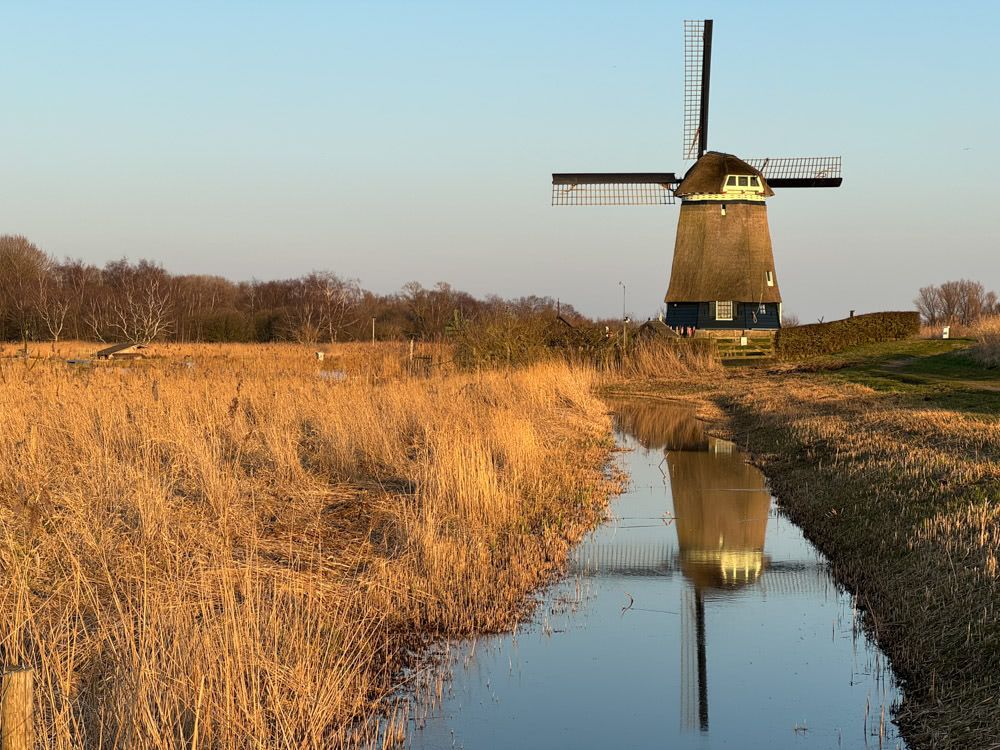
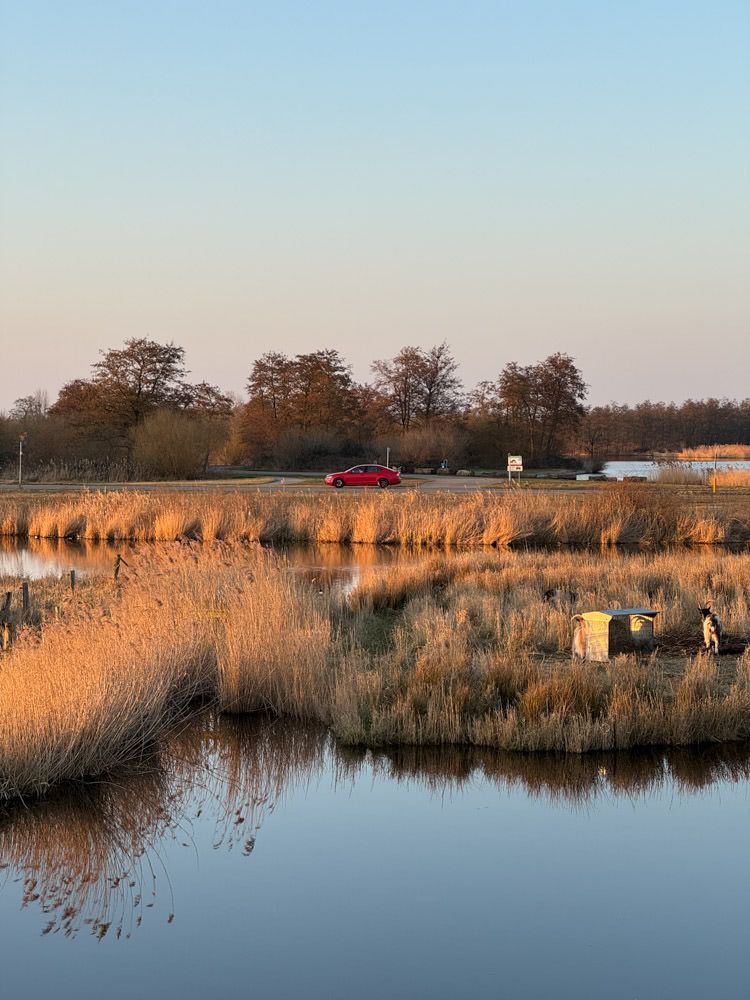
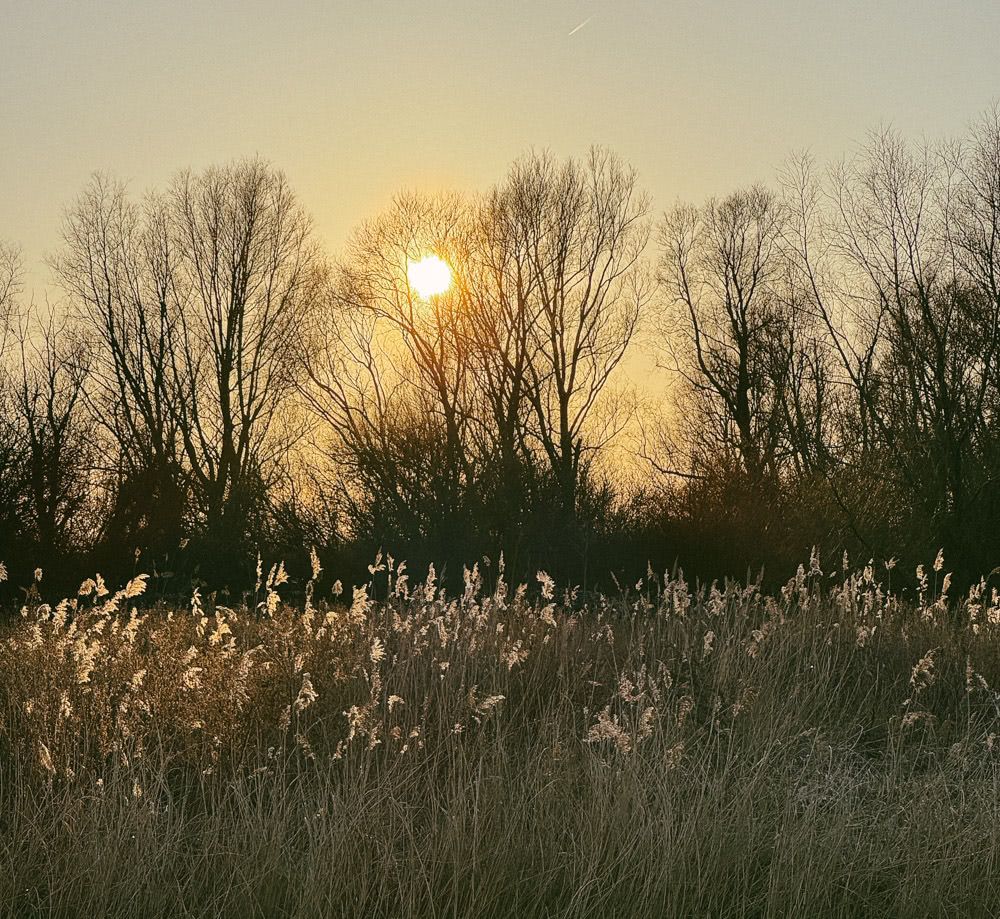
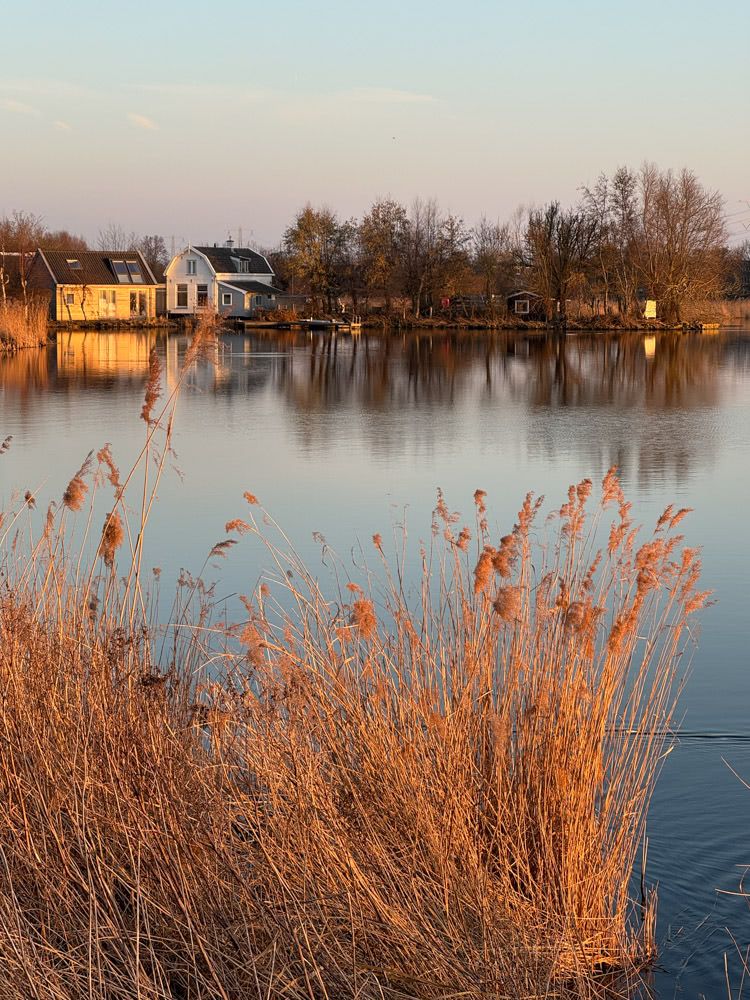
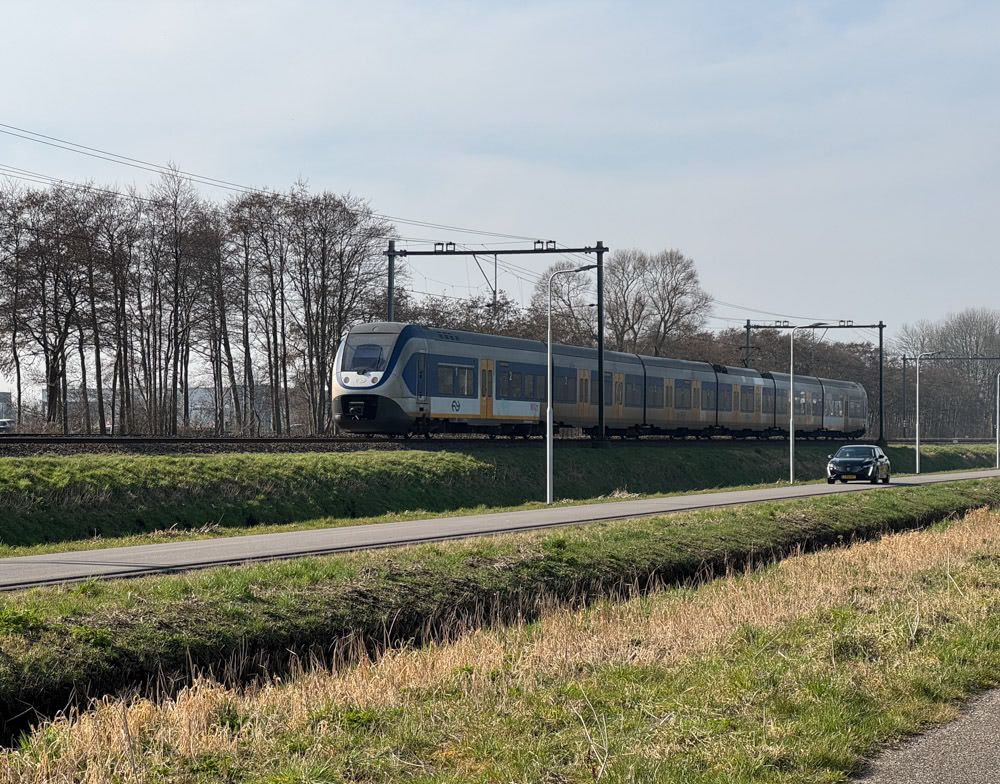
The second ride was to Haarlem today. I’ve lost count of how many times we’ve been to Haarlem since I got my e-bike. It’s a comfortable 20kms (on e-bike) away from Amsterdam and the route the wife has made for us takes us along water bodies and farms and through quiet parks and a vast stretch of nature that the maps label as ‘recreational area’. Part of the route is parallel to a train track and a road. It’s perfectly normal for a train and a car to woosh past us while a plane headed from or to Schiphol zooms overhead. We marvel at the multimodality of traffic in this country and try not to race the other modes4.
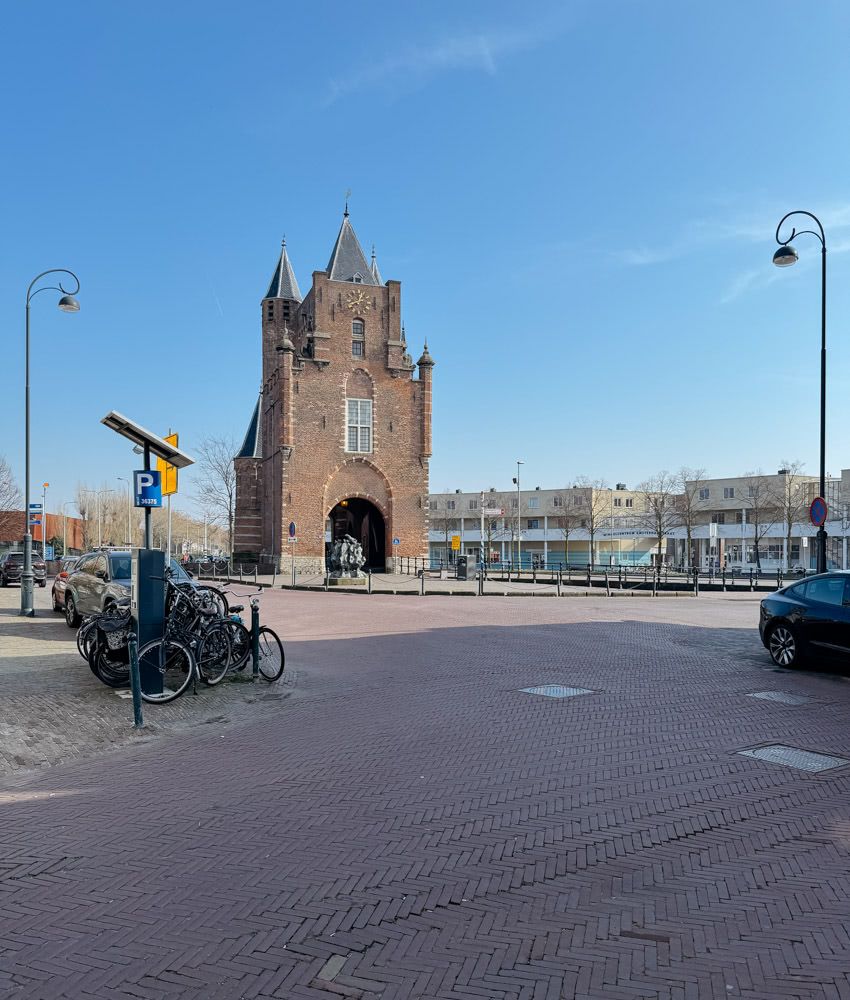
We parked our bikes at a bike stand right at the outskirts of the city under the watchful gaze of 14th century Amsterdamse Poort and made a beeline for a place in Botermarkt that serves delicious falafel rolls5.
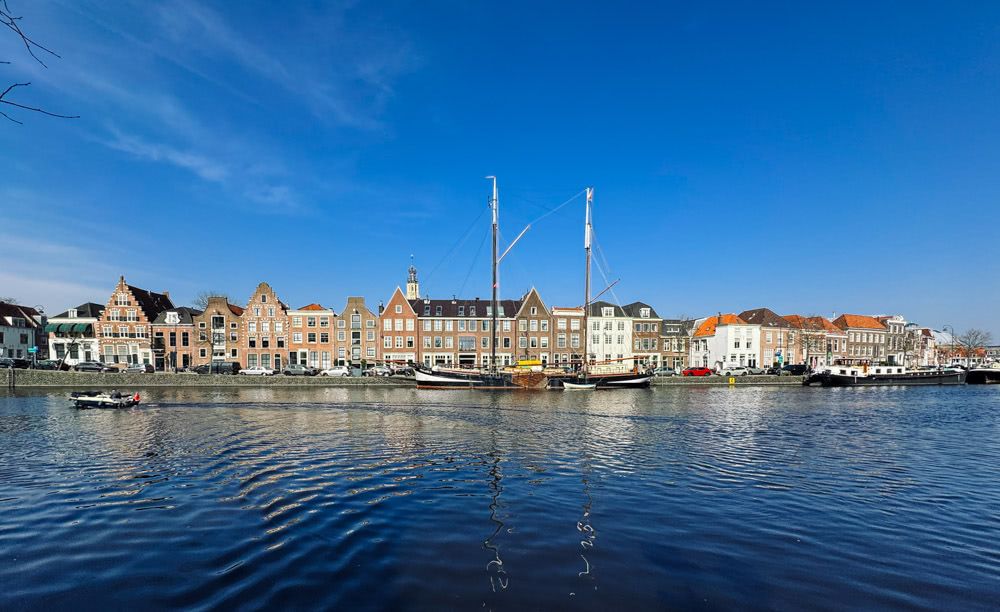
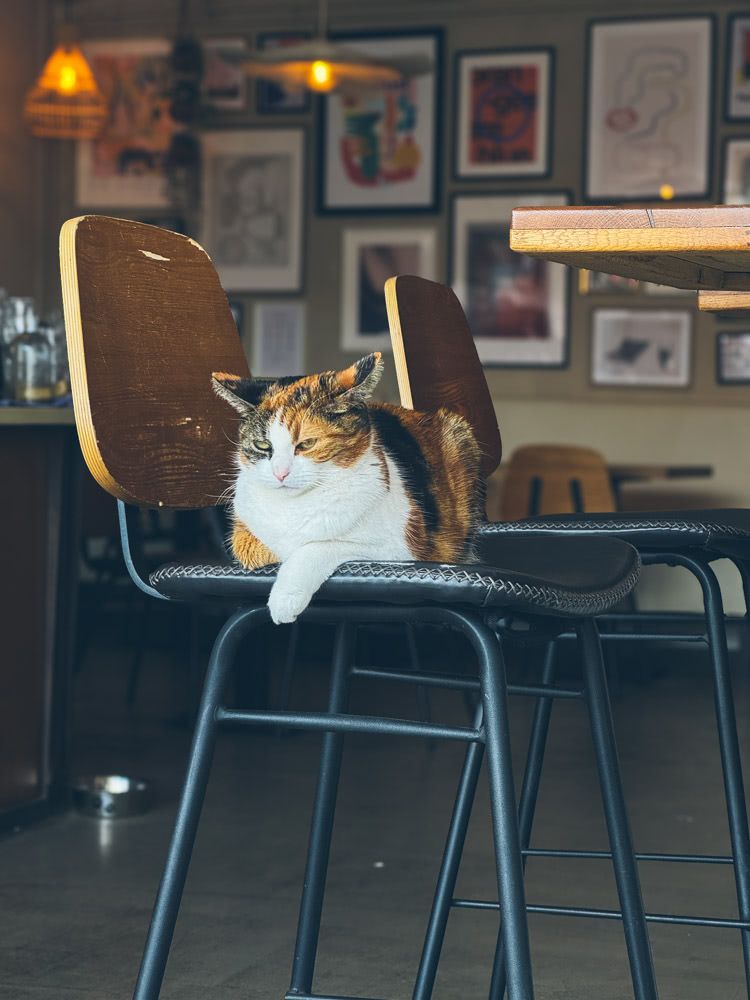
We love walking through the city that the wife rightly characterizes as “less crazy Amsterdam”. It is at once familiar and new. We walked through the streets and finally sat down for a coffee at a sunny café by Haarlem’s river-canal Binnen Spaarne. The café’s sleepy house cat wasn’t averse to being petted by customers.
I hit the 500 km milestone on our ride home. The wife, who has had her bike for much longer and regularly bikes to work, narrowly missed hitting 2500 km. If her commute doesn’t do it, I am sure we could use this as an excuse for a ride next weekend.
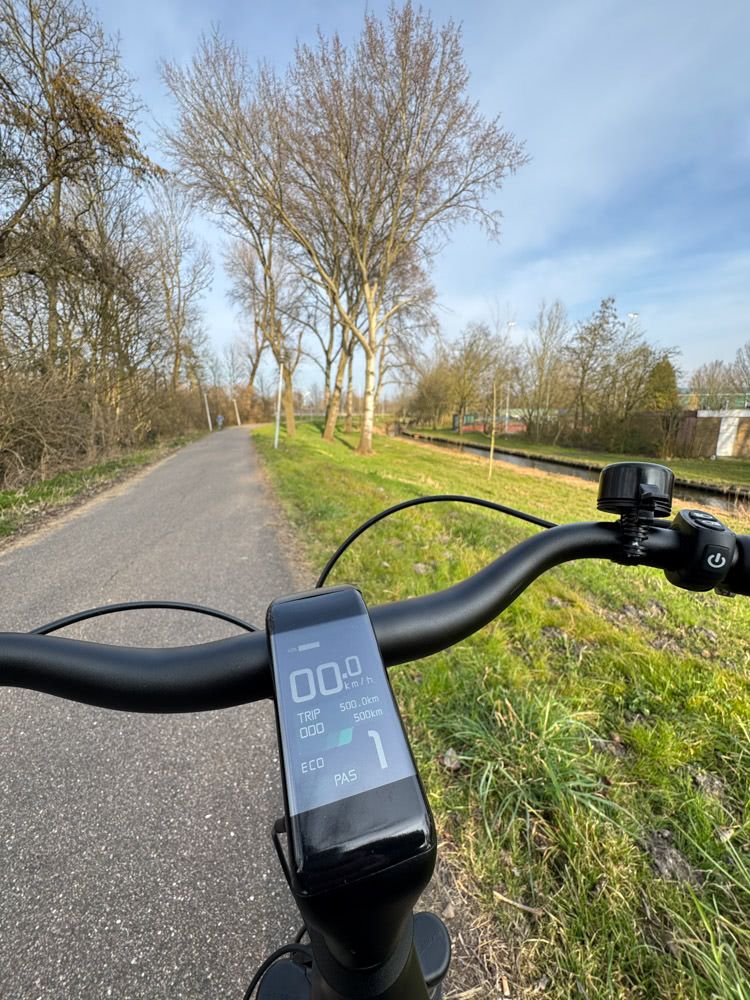
The max temperature was 17ºC. It was still a little nippy in the mornings and evenings but nothing a light jacket and brisk pedaling couldn’t counter.↩︎
This was before the e-bike, so long back then meant 7-10 kms.↩︎
We could have taken one from Centraal Station too but it was bound to be crowded there on a rare sunny March day, so we favoured Pontsteiger despite the slight extra distance we have to bike↩︎
Despite having binged on episodes of Formula 1: Drive to Survive the day before…↩︎
Bangalore Vignettes - Tipu Sultan’s Summer Palace
I lived in Bangalore for 9 years and yet never visited Tipu Sultan’s Summer Palace. On a trip to Bangalore this year, the wife and I decided to remedy this omission, especially since it was now a convenient metro ride away.
We took the purple line from the M. G. Road station towards Challaghatta, changed over to the green line at the Nagaprabhu Kempegowda (Majestic) station towards Silk Institute and got down at the Krishna Rajendra Market station. From there the palace was a short (5-10 min) walk.
We needed tickets to enter the palace, but there wasn’t a booth nearby selling the paper kind. We had to buy them online by scanning the QR code printed on a placard affixed to the entry gate. There were a couple of liveried guards at the gate who scanned them from our mobile phone and let us in.
From the gate, a footpath with two small lush green patches on either side of it leads you to the palace. The airy, arched hallway we stood in front of was grand. A man at its entrance had just poured some water on the floor and was scouring it with a broom with the fervour of Lady Macbeth trying to rid herself of her imagined bloodstains.
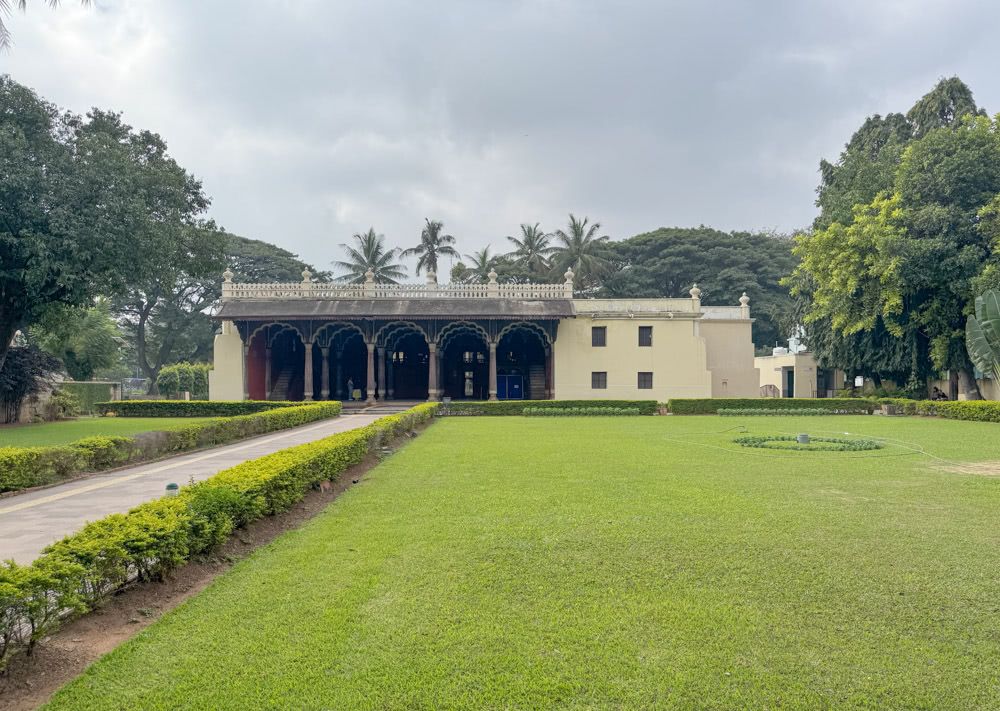
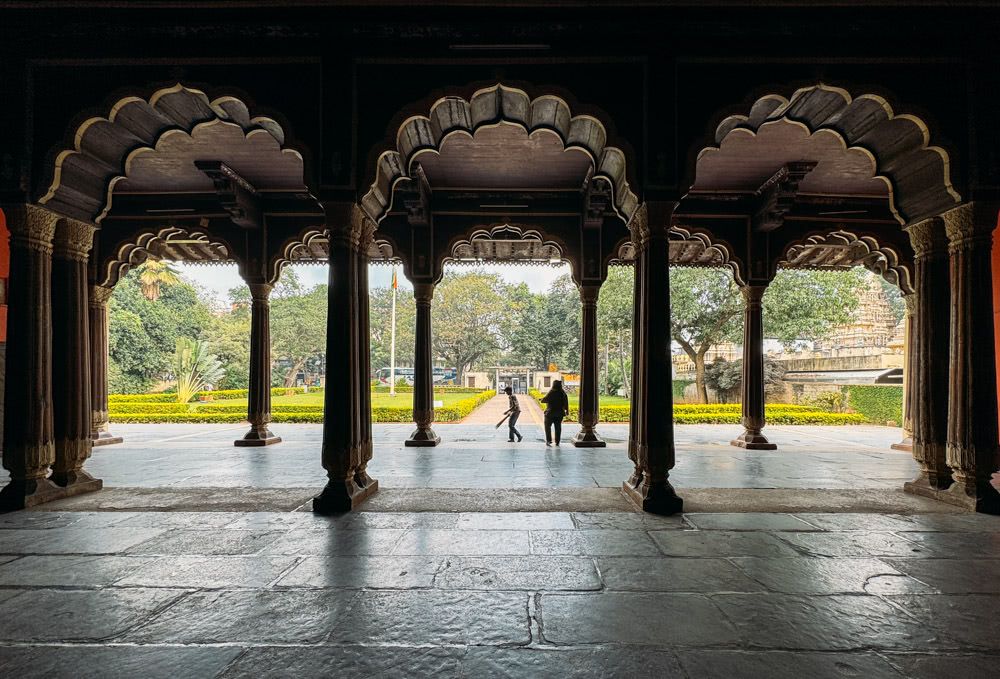
We were visiting on a working day around 10:00 AM. It was a good time to visit. We pretty much had the whole palace to ourselves.
Behind the palace was a small courtyard that housed a defunct fountain. At the moment it was merely a big, dry, rectangular, concrete hole in the ground a foot or two deep. It wasn’t particularly well marked. Someone walking without paying attention could fall in and hurt themselves, but I am probably letting my newly acquired European sensibilities come in the way here.
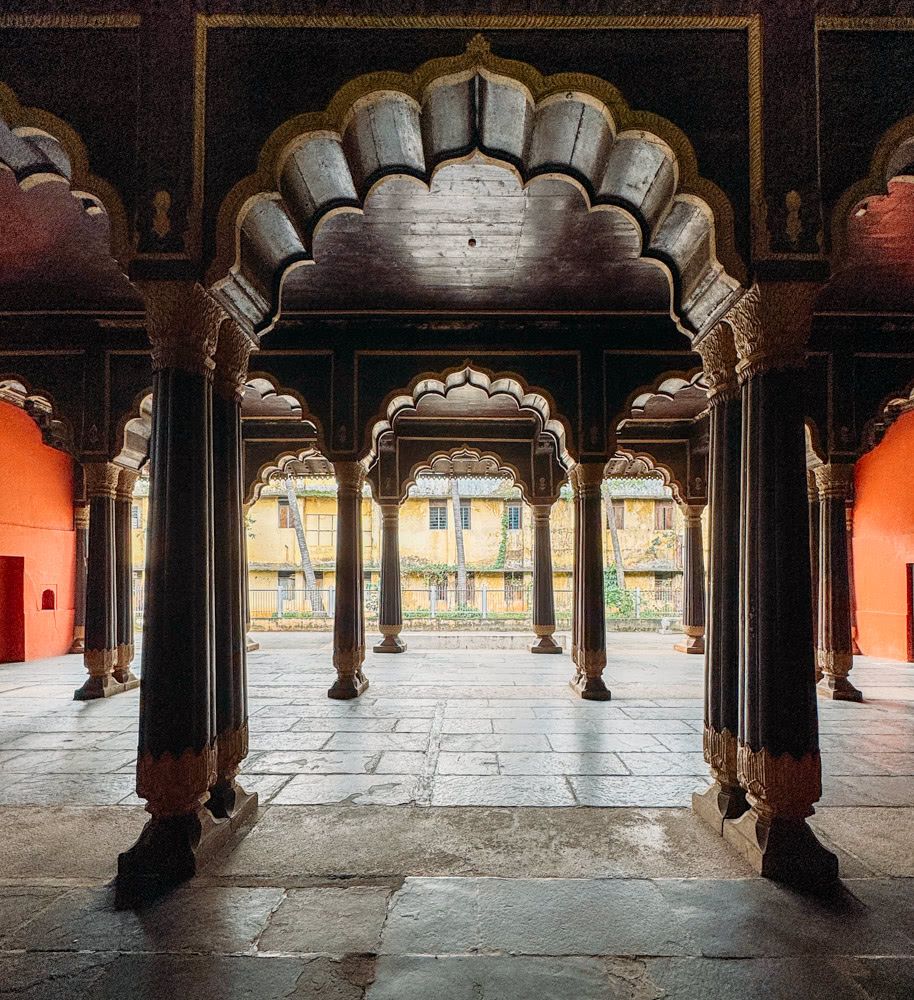
Just past the palace’s perimeter was a decrepit building that houses a school. The school was in session. Despite the din of the traffic, we could hear a chorus of children learning something by rote in one of the classes…
I retreated back into the palace hallway to admire the rows of ornate, wooden columns supporting the scalloped arches.
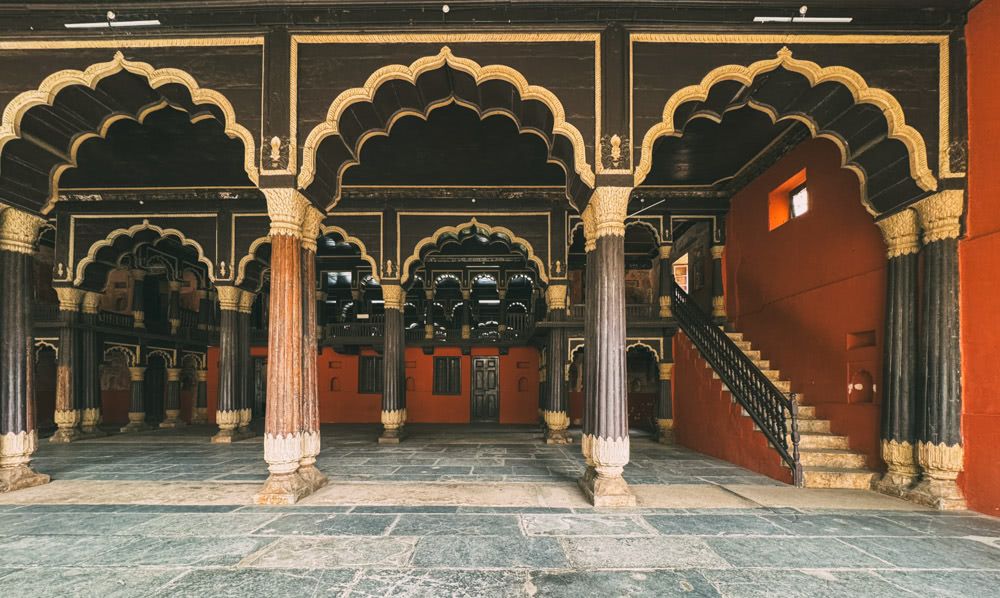
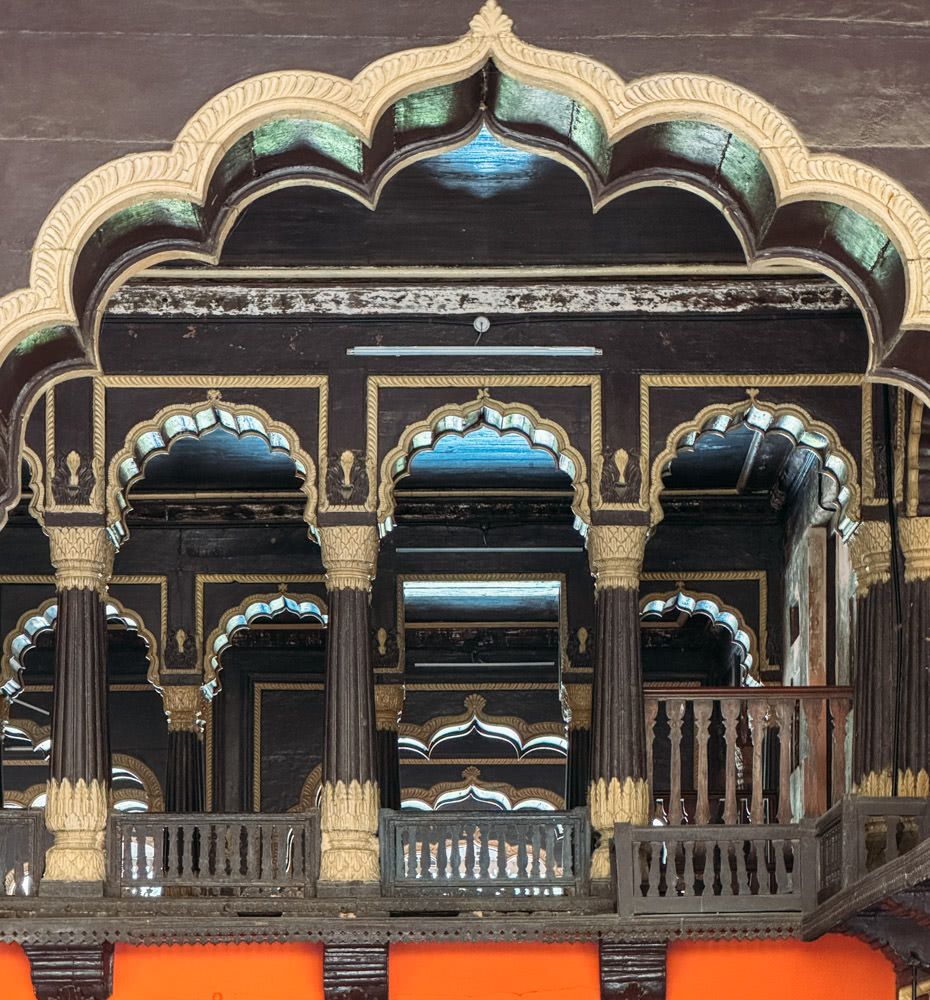
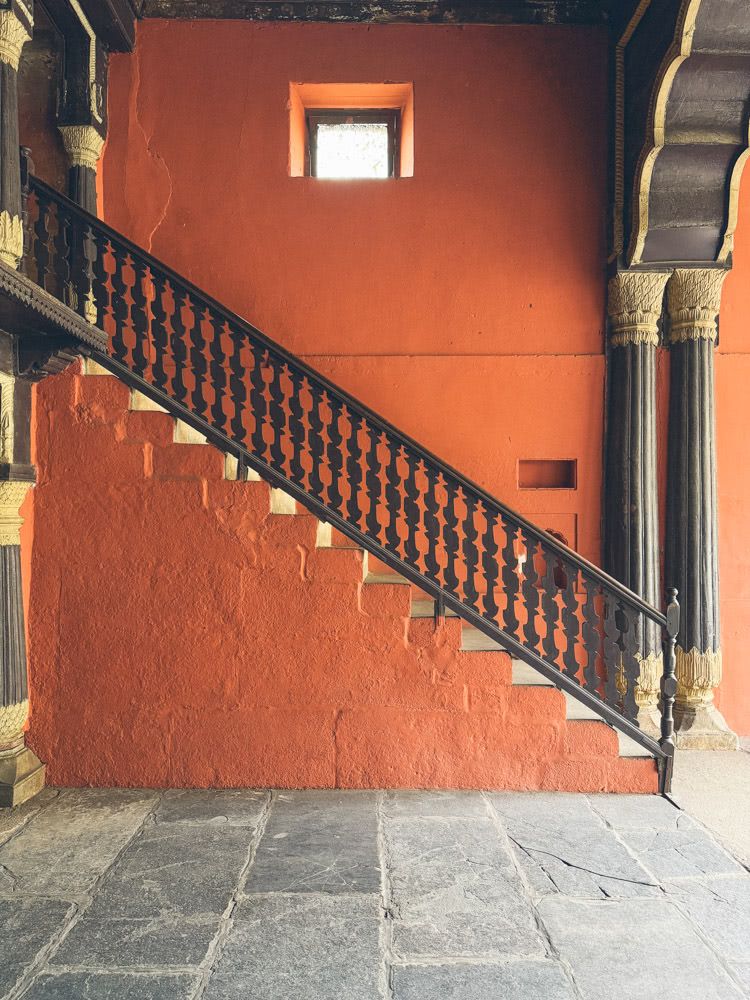
There are staircases at both ends of this hallway that you are allowed to climb. These led us to a small, brightly decorated room that was connected to a gallery on the first floor.
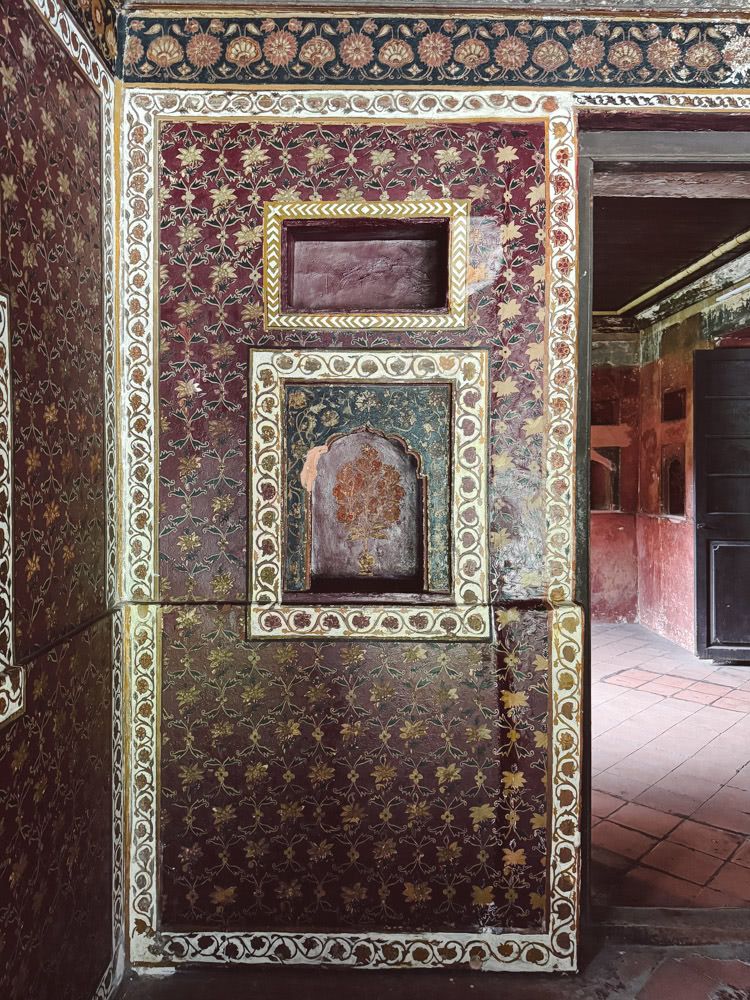
A couple of arched openings on either sides of the gallery lead to balconies. Access to them had been blocked by a wooden barrier. It had been tied to the columns from two sides so that people won’t move it aside and try to step onto the balconies.
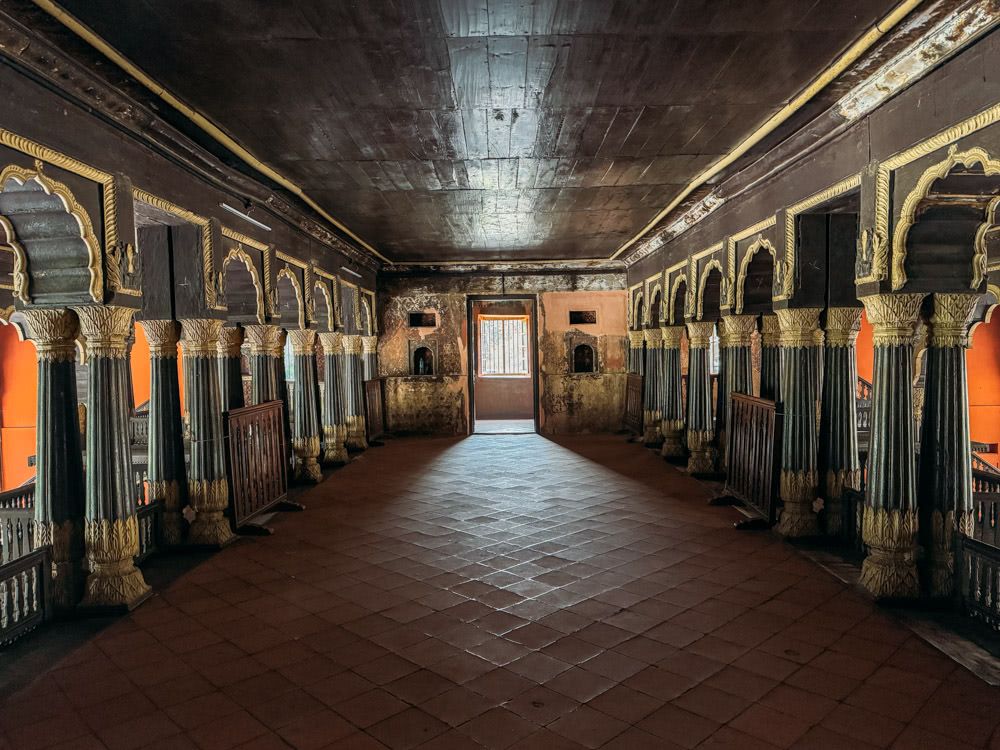
While Tipu Sultan’s Summer Palace is definitely grand, it is not very palatial (say like Mysore Palace). Meaning, after spending a few minutes, we had seen everything there was to see here.
I was glad that I could finally visit a longtime favourite of Bangalore tourists and yet I also left feeling a little sad. There were signs of wear and water damage throughout the palace. Could the restoration and upkeep be better? Sure. Though to be fair, wood can be a notoriously difficult material to maintain and restore - especially when it is exposed to the elements all year round. Short of building a climate-controlled superstructure around it, what are they to do?
2024: My year in music
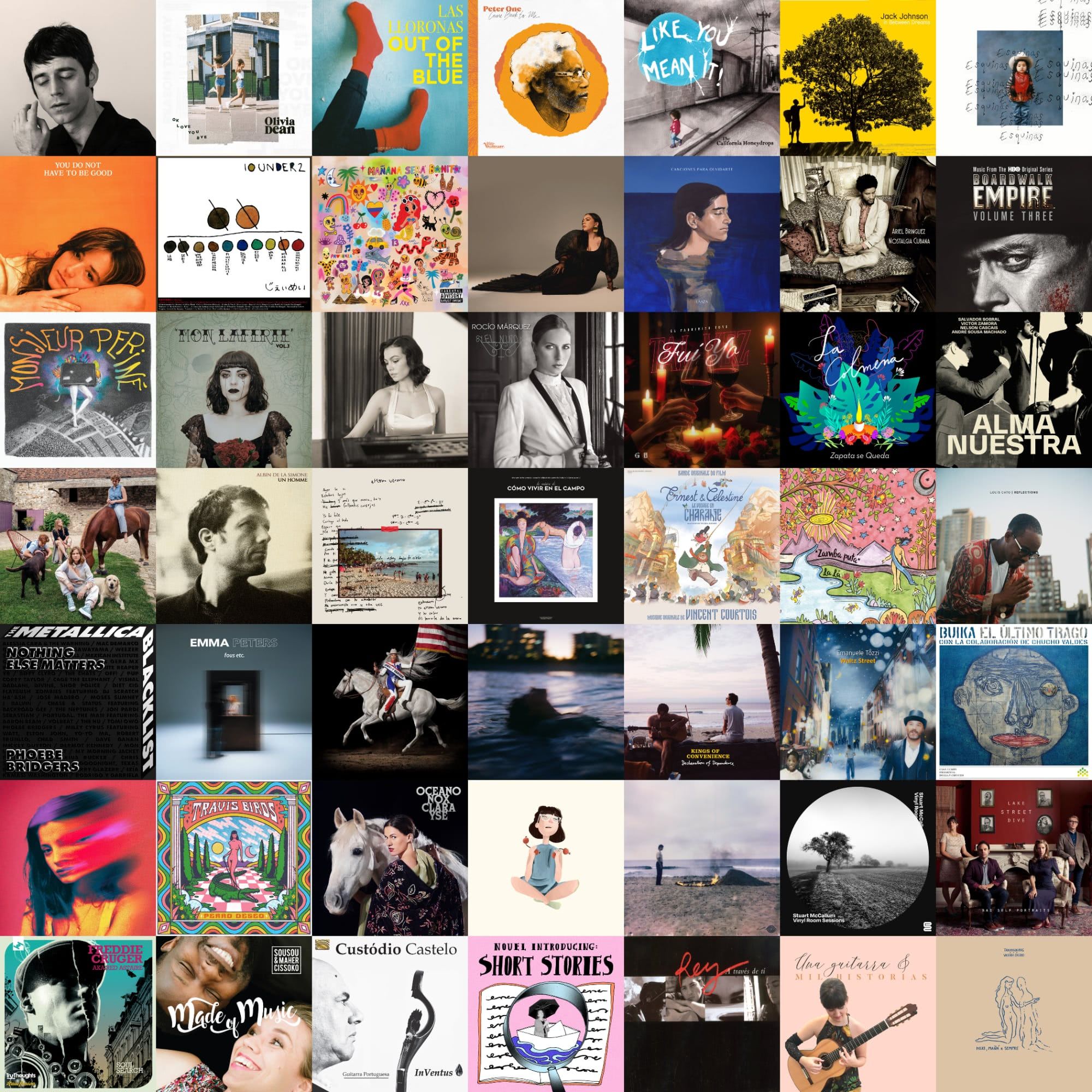
Another year, another playlist - Spotify | Youtube Music
I start each year with a silly and irrational fear of not discovering enough worthwhile music to fill a playlist of 50 or so tracks. I end the year with a playlist that’s thrice as long and requires careful culling.
It also feels a little surreal to think that this is now the 9th iteration of a ritual I started in 2016. That said, for the past few years, I haven’t been able to muster the enthusiasm to compile detailed liner notes like I was doing till 2019.
I am now in the 3rd year of learning Spanish on Duolingo1 and if I am to trust their grading, about to start approaching CEFR B1 proficiency. This has allowed me to appreciate the lyrical beauty of a lot of Spanish songs I heard this year. And so the 2024 playlist is a tad heavier in music from Spanish speaking parts of the world than the years before.
While algorithmically created playlists by Spotify - both their discovery weekly as well as the newly introduced ‘daylist’, were a big source of new music, I continue to discover new music and artists through other sources, like TV shows2 and NPR’s Tiny Desk Concerts.
Lastly, there are a couple of songs in the playlist that I want to give a special nod to.
Ryan Downey’s ‘Running’ (track #1 in the playlist) got plenty of play in our house - what a stunning voice. For some reason, he reminds me of Leonard Cohen.
The other one is Plantar un Bosque (track #12 in the playlist) - mostly for the quirky lyrics that could well be an exchange between me and my wife about me bringing in too many plants into the living room:
Yo te voy a plantar un bosque
I am going to plant you a forest
Ay, si lloras, por si lloras
Oh, if you cry, just in case you cry
Tú me lo riegues
You’ll water it for me
Y poco a poco
And little by little
Gota a gota
Drop by drop
Los ruiseñores vendrán a cantarte
The nightingales will come to sing to you
An unbroken streak of 878 days as of today.↩︎
The Peanut Vendor in this year’s playlist was featured in Boardwalk Empire↩︎