


| CARVIEW |
How can Big Data help us understand human behavior, social networks, and success?

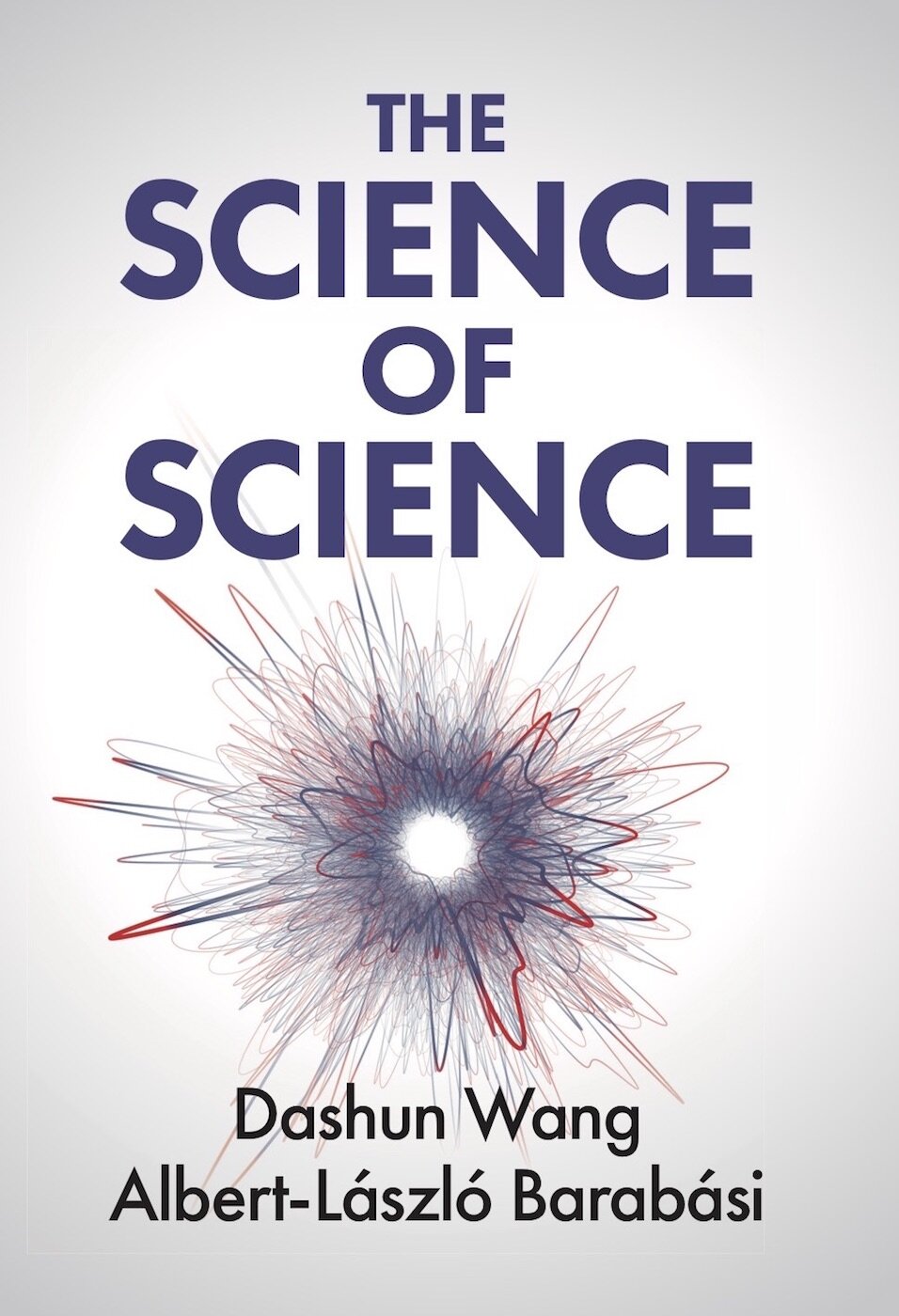
Dashun Wang is the Kellogg Chair of Technology and a Professor at the Kellogg School of Management and McCormick School of Engineering at Northwestern University. At Kellogg, he is the Founding Director of the Northwestern Innovation Institute, the Founding Co-Director of the Ryan Institute on Complexity, and the Founding Director of the Center for Science of Science and Innovation (CSSI). He is also a core faculty member at the Northwestern Institute on Complex Systems (NICO). His current research focus is the Science of Science, a quest to turn the scientific methods and curiosities upon science itself. He uses and develops tools from complexity sciences and artificial intelligence to broadly explore the opportunities for innovation and promises of prosperity offered by the recent data explosion in science. His research has been published in journals like Nature and Science, and it has been featured in virtually all major global media outlets. Dashun is a recipient of multiple awards for his research and teaching, including the AFOSR Young Investigator award, Poets & Quants Best 40 Under 40 Professors, Complex Systems Society’s Junior Scientific Award, the Erdos-Renyi Prize, Thinkers50 Radar, and more. Check out his first book: The Science of Science.
I am looking for new PhD students through either the MORS program at Kellogg or the IEMS program at McCormick. I am also recruiting postdoc candidates.
Featured Publications



In The News

Failure is an essential prerequisite for success, according to a study by Northwestern University researchers led by Dashun Wang.

Republicans have historically funded a lot of science, new research shows. President Trump might be bucking that trend.

Funders test algorithms to spot promising science, raising hopes of faster reviews—and fears of bias.

Faculty tenure is associated with increasing output during the ‘tenure clock’ years, followed by a shift to more novel and exploratory work, finds a new study.

Paper output varies between disciplines, as does the trend after tenure is achieved.
An analysis of millions of scientific papers and patents shows that the further a researcher or inventor moves from their previous work, the less cited their latest work will be.
Dashun Wang
Book
Representative Publications
Ryan Hill, Yian Yin, Carolyn Stein, Xizhao Wang, Dashun Wang, and Benjamin F. Jones (2025). Nature.
Yian Yin, Jian Gao, Benjamin F. Jones, and Dashun Wang (2021). Science, 371(6525), 128-130.
Yang Wang, Benjamin F. Jones, and Dashun Wang (2019). Nature Communications.
• One of the 50 most readNature Communications articles from across the life and biological sciences in 2019
Lingfei Wu, Dashun Wang, and James A. Evans (2019). Nature.
• arXiv preprint
• Ranked by Altmetrics as one of the 100 most-discussed papers in 2019
Lu Liu, Yang Wang, Roberta Sinatra, C. Lee Giles, Chaoming Song, and Dashun Wang (2018). Nature.
• Data and Code
• arXiv preprint
Pierre Deville, Chaoming Song, Nathan Eagle, Vincent Blondel, Albert-László Barabási, and Dashun Wang (2016). Proceedings of the National Academy of Sciences (PNAS).
• Supplementary Information
• .bib
Dashun Wang, Chaoming Song, and Albert-László Barabási (2013). Science, 342, 6154: 127-132.
• arXiv
• Supplementary Materials
• .bib