


This blog is on hiatus. My apologies.
| CARVIEW |
Select Language
HTTP/2 301
server: nginx
date: Sun, 25 Jan 2026 05:56:10 GMT
content-type: text/html; charset=UTF-8
location: https://tracerhand.wordpress.com/2007/
x-hacker: Want root? Visit join.a8c.com/hacker and mention this header.
host-header: WordPress.com
link: ; rel="https://api.w.org/"
vary: accept, content-type, cookie
x-redirect-by: WordPress
x-ac: 3.bom _dca MISS
alt-svc: h3=":443"; ma=86400
strict-transport-security: max-age=31536000
server-timing: a8c-cdn, dc;desc=bom, cache;desc=MISS;dur=380.0
HTTP/2 200
server: nginx
date: Sun, 25 Jan 2026 05:56:10 GMT
content-type: text/html; charset=UTF-8
vary: Accept-Encoding
x-hacker: Want root? Visit join.a8c.com/hacker and mention this header.
host-header: WordPress.com
link: ; rel="https://api.w.org/"
vary: accept, content-type, cookie
content-encoding: gzip
x-ac: 2.bom _dca MISS
alt-svc: h3=":443"; ma=86400
strict-transport-security: max-age=31536000
server-timing: a8c-cdn, dc;desc=bom, cache;desc=MISS;dur=398.0
Roundup
Tracer Hand
Archive for 2007|Yearly archive page
Food aid halts in Somali struggle
In Somalia on October 18, 2007 at 1:41 pmThe United Nations’ World Food Programme was suspended in Somalia yesterday after government troops kidnaped its leader.
The kidnaping came just two days after the program had restarted for the first time since June.
The WFP had been given permission by Mogadishu’s mayor, Muhammad Umar Habib, to distribute food through local mosques.
Mr. Habib is close with Somalia’s prime minister, who is currently in a power struggle with the president, Abdullahi Yusuf.
Control of food aid is seen by Somalia’s leaders as crucial to winning the support of the people.
- BBC: Somali aid stopped after kidnap
- Sagal Group: Oil Business in Somaliland/Puntland
- Economist: Breaking into even smaller bits?
- h2g2: Intervention in Somalia (1992 – 1995)
Somali troops nab UN food chief
In Eritrea, Ethiopia, Somalia on October 17, 2007 at 1:06 pmUniformed and heavily armed Somali soldiers stormed the United Nations compound in Mogadishu today, arresting Idris Osman, the head of the UN World Food Programme for Somalia.
The UN has been given no explanation for the incident and is halting food distribution in Mogadishu.
However, spokesmen for the program have in the past praised the former government of Somalia, the Islamic Courts Union (ICU), whose supporters are fighting a guerilla war against the current government.
Nine people were killed elsewhere in the capital today in fighting between these insurgents and government troops.
 The ICU was a confederation of conservative Muslim judges that had set up some social services in the early 1990s when Somalia lacked any central government.
They also set up Sharia law.
With Eritrean help, the ICU formed powerful militias that in the summer of 2006 took over Mogadishu and surrounding areas from the secular warlords that had ruled it.
The US funded the warlords, saying that the ICU was affiliated with al-Qaeda.
The World Food Programme has contradicted this view, saying after the ICU’s victory last year, “There may be extremists among them, but overall they’re providing relief for suffering people.”
Last December, the ICU was driven from power by Ethiopian soldiers encouraged by the US government. Many Somalis feel that they are now occupied by Ethiopia.
Since being driven out, ICU supporters have been fighting an Iraq-style insurgency in Mogadishu against the current government.
In the north of the country, Somaliland has its own militia, which is locked in battle with semi-autonomous Puntland.
Puntland is the home of Somalia’s president, Abdullahi Yusuf. It has huge potential oil reserves in the Nogal and Darin basins. Mr. Yusuf led it to quasi-independence in 1998.
Mr. Yusuf is currently wrangling with his prime minister over which foreign investors to give Puntland’s oil exploration rights to, among other disputes.
Transparency International says that along with Myanmar and Iraq, Somalia is the most corrupt country in the world.
- The Australian: Range takes punt on oil in Somalia
- Reuters: Threats and death stalk Somali journalists
- BBC: Somali gunmen storm UN compound
- Townhall.com: Attack in Somali Capital Kills 9
- Reuters: Somali legislators debate move to oust PM
Iraq’s refugees out of options
In Iraq, Jordan, Syria on October 16, 2007 at 11:04 amMost Iraqi provinces have shut their borders to refugees trying to avoid violence in other parts of the country. Ten of Iraq’s 18 provinces — roughly analagous to counties — have either closed their borders to outsiders or deny them aid once they arrive.
About 60,000 Iraqis are forced to leave their homes every month, and about 4.5 million have been displaced since the United States-led coalition invaded Iraq in 2003.
Last year, 535 Iraqi refugees were granted asylum in the US. Thirty were allowed into Britain.
More than 1.5 million Iraqis who managed to escape the country entirely have gone to Syria, and about half a million went to Jordan. But six weeks ago, Syria closed its border to all except the wealthiest and most educated Iraqis.
Jordan closed most of its border crossings earlier this year.
With no effective political leadership or security apparatus, Iraq has been riven by violence as competing political groups and militias strive for dominance.
- Associated Press: Iraqi Refugees Shed Sectarian Bitterness
- Agence France-Presse: Refugee groups blast lack of US help for Iraqis
- Guardian: Iraqi provinces shut out internal refugees
- Roundup: Syria turns back Iraqis
China backs off on Myanmar
In China, Myanmar (Burma), Russia on October 12, 2007 at 11:53 amOne day after endorsing a unanimous United Nations security council resolution urging Myanmar to rein in its violent tactics and engage in genuine dialogue with political opposition, China’s foreign minister said Myanmar’s political issues are purely its own.
Yesterday’s non-binding resolution was the first action taken by the security council in response to Myanmar’s violent repression of pro-democracy protests last that brought hundreds of thousands into the streets last month.
At least 10 people were killed and hundreds arrested and taken to secret camps around the country. The Democratic Voice of Burma, an opposition radio station operating from Norway, says that a 48-year-old political activist, U Than Aung, has died from being beaten while in custody.
Even before today’s backing off, China and Russia were instrumental in watering down yesterday’s resolution, stripping away language about releasing political prisoners.
Back in January, the two countries cast a rare double veto on a resolution that called for roughly the same thing.
China and Russia both have enormous investments with the junta that runs Myanmar, from gas exploration interests to billions of dollars of military technology. Russia has repeatedly attempted to sell a light nuclear reactor to the Myanmar government.
- International Herald Tribune: Myanmar’s national airline cancels most flights; UN envoy to return to Asia
- China View: China says Myanmar issue should be resolved by Myanmar itself
- Agence France-Presse: UN slams Myanmar crackdown, urges talks
- Roundup: Complete coverage
Booze saves Italian’s life
In Australia, Italy on October 12, 2007 at 10:41 amThe life of an Italian man visiting Australia was saved two months ago by a doctor who set up bottles of rum, vodka and whiskey on a drip-feed to counteract the effects of antifreeze the man had drunk.
The recommended treatment for ingestion of ethylene glycol, a poisonous chemical found in antifreeze, is pure pharmaceutical grade alcohol.
But when the 24-year-old man from Milan arrived unconscious to a hospital in a small Australian town 600 miles north of Brisbane, doctors noticed the hospital had only enough alcohol for 20 minutes of drip-feed — and all the shops were closed.
Dr. Todd Fraser, who was relaxing at home, heard his phone ring. Minutes later he had grabbed bottles of liquor from his own drinks cabinet and was on his way to the hospital. The Italian received the equivalent of three drinks an hour through a tube in his nose.
Twenty days later he flew home after making an excellent recovery.
He reported feeling no hangover.
- Sydney Morning Herald: Doc raided cache for liquor drip
- The Times: How vodka on drip-feed saved a life
Ralston departure reveals vacuum
In Iraq, Kurdistan, Turkey on October 11, 2007 at 10:45 amTurkey prepares to ignore an agreement it signed just two weeks ago that explicitly rules out Turkish military operations inside Iraq.
Dick Gephardt and Bob Livingston take Turkish money to argue that Ottoman Turks didn’t commit genocide against 1.5 million Armenians in 1915.
Turkish officials mutter about “what the US will lose” in Iraq if it crosses them.
What is going on here?
The answer might be found by looking at the abrupt and unexplained resignation this Tuesday of the retired US general Joseph Ralston, who had been the special US envoy to Turkey on the question of the Kurdistan Worker’s Party, or PKK.
* * *
The PKK is the most extreme Kurdish militant group anywhere. Founded in 1983, its structure, funding and methods resemble Lebanon’s Hezbollah. The PKK sells drugs and black-market goods in Europe to fund its activities, which are aimed at getting Turkey to create equal conditions for its Kurds.
Until 1991, Turkish Kurds were not allowed their own language, clothes, music or newspapers.
The PKK’s methods include identifying Turkish “collaborators” and either ostracizing or killing them, tactics that have not endeared them to their fellow Kurds.
This lack of support has driven many PKK into the mountainous redoubts of northern Iraq, where they sometimes launch operations back across the border against Turkish soldiers. The PKK also has bases in the more populated and accessible Erbil and Sulaimaniyah.
Turkey itches to crush the PKK insurgents in Iraq but the American occupation hinders the full-scale military effort required to do so. And Turkey’s long hoped-for and long-delayed accession to the EU would be put in jeopardy by such a move.
Then there’s the question of whether an invasion would inspire sympathy for the PKK among moderate Kurds in both Turkey and Iraq, who to this point have mixed feelings about them at best.
* * *
US general Joseph Ralston, former supreme NATO commander for Europe, was appointed in Sept. 2006 to help Turkey neutralize the PKK.
No apparent progress against the PKK was made during his tenure. A Kurdish refugee camp in northern Iraq said to harbor PKK members was raided in Jan. 2007, but “not one bullet” was found.
However, weeks after Ralston’s appointment, Turkey bought 30 new F-16 fighter aircraft from Lockheed Martin.
Ralston sits on the board of directors of Lockheed Martin. He also is vice-chairman of the Cohen Group, which has lobbied on behalf of Lockheed Martin since 2004.
Ralston’s Turkish counterpart, the retired general Edip Başer, was fired in May after complaining about the lack of success in their efforts. Ralston apparently conversed with Başer’s successor — career diplomat Rafet Akgünay — only once, to congratulate him on his new job.
* * *
A little more than two weeks ago, Turkey and Iraq signed a joint agreement of cooperation in squeezing the PKK’s funding and supply structures, while explicitly ruling out Turkish military action inside Iraq’s borders.
Ralston was not involved.
The current supreme commander of NATO forces in Europe, general John Craddock, says he is unaware of any plans to replace Ralston.
The question of whether in Ralston’s absence the US has any alternative plans to aid Turkey in its ongoing battles against the PKK remains unanswered.
* * *
Turkey’s announcement of its intention to invade northern Iraq may be designed to provoke an American answer sooner rather than later.
It may also be intended to threaten US lawmakers into defeating a resolution that would officially recognise the killing of up to 1.5 million Armenians in 1915 as a “genocide”.
The threat could be persuasive. A Turkish incursion of any scale into Kurdish territory would massively complicate US military strategy in northern Iraq. It runs the risk of alienating Iraqi Kurds, who have had no great love for the PKK but could move closer to them in response to an attack.
Iraqi Kurds have easily been America’s most reliable allies for the duration of the US occupation, and northern Iraq — even with a PKK presence — is a stable haven compared with the rest of the country.
President Bush argued against the genocide resolution yesterday on these grounds.
* * *
But despite its talk of a big invasion, Turkey’s hands may be tied by its aspiration to join the European Union.
Turkey sometimes speaks of EU membership as the equivalent of discovering oil: a massive windfall that stands to benefit everyone — including the Kurds. The country’s leadership estimates that Kurds would settle for being “Turkish” if that meant more money in their pockets.
Without the economic benefits of EU membership, and without any serious effort by Turkish leadership to redress the decades of repression and violence against the Kurds, it’s hard to see the PKK — and the grievances that birthed the PKK — going away.
Sedat Laçiner, director of the International Strategic Research Organization and a prominent Turkish intellectual, said Tuesday that in any case, armed attacks against the PKK won’t work.
“Killing more terrorists apparently does not resolve the problem.”
“Nearly 25,000 terrorists have been killed since the PKK launched its bloody campaign in the 1980s,” he said. “If today we are still where we started at, we have to revise our strategy.”
All the while, Turkish Kurds look across the border at the autonomous Kurdish zone established in northern Iraq and wonder why they can’t have the same thing. In their case, the grass really is greener on the other side.
- Turkish Daily News: And Ralston quits, officially
- Journal of Turkish Weekly: Turkey vows determined fight against terror
- New Republic: K Street Cashes in on the 1915 Armenian Genocide (July 2007)
- Harper’s: Lost in the Valley of the Wolves (Nov. 2006)
Bush downplays Armenian genocide
In Armenia, Iraq, Turkey on October 10, 2007 at 6:59 pmPresident George W. Bush urged American congressional leaders to defeat a resolution that would declare the killing of hundreds of thousands of Armenians by Ottoman Turks a “genocide”.
Calling the deaths which occurred in 1915 tragic, Bush nevertheless said that the word “genocide” could hamper American relations with Turkey.
The US walks a delicate line with Turkey, which is a crucial military ally in the occupation of Iraq.
Invasion
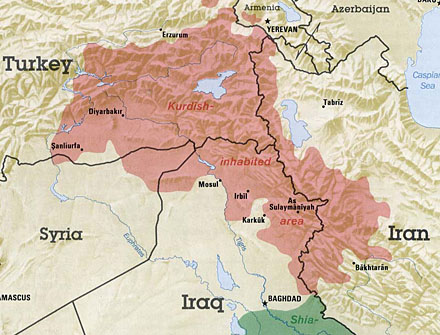
Turkey is currently preparing for an invasion of northern Iraq in order to attack Kurdish militants.
The militants, known as the PKK, have been at war with Turkey since 1984. In the last several months many have relocated from Turkey to the valley of Qendil in northern Iraq, surrounded by almost impassable mountains. They have little to do with Iraqi Kurds.
No Control
The United States has repeatedly urged Turkey not to cross the border to fight the PKK, and instead work with the Iraqi government. But the current Iraqi government has almost no control in the north, which has been controlled and administered by Kurds since 1991.
The US relies heavily on these Iraqi Kurds, who have proven to be America’s most effective and disciplined military allies in Iraq.
Many of these Kurds have grown sympathetic to the PKK as recent weeks have seen dozens of casualties in battles between Turkey and the PKK.
‘What They Will Lose’
But the US also relies heavily on Turkey as a route to Iraq. If relations deteriorate, Turkey could close its bases to US forces or deny overflight permission.
The deputy chairman of Turkey’s ruling party, Egemen Bagis, was in Washington today to lobby against the congressional resolution.
“Somebody has to tell them,” Bagis said, “what they will lose in the Middle East and Central Asia, if they lose Turkey.”
- New York Times: Bush Argues Against Armenian Genocide Measure
- The New Anatolian: Gul tells Bush “don’t do it” while Bagis lambasts pro-Armenian bill
- Moderate Risk: Patrick Lasswell interviewed by Vladimir van Wilgenburg (May 6, 2007)
Turkey plots Iraq incursion
In Iraq, Kurdistan, Turkey on October 10, 2007 at 12:16 pmTurkey is preparing to invade Kurdish-controlled territory in northern Iraq — against American wishes.
Turkish troops are already shelling Kurdish positions across the border. The executive branch will submit a request to parliament some time this week for a larger ground invasion.
Turkey says it is targeting separatists allied to the Kurdish Workers’ Party (PKK). The two sides have exchanged more than two dozen casualties each in border skirmishes over the past several weeks.
They have fought each other since 1984, mainly inside Turkey. The fighting has resulted in more than 40,000 deaths and about two million Kurdish refugees in Iraq, Iran, Syria and Lebanon.
The United States and Turkey both say the PKK are terrorists. The PKK says it is an army fighting a war against Turkey.
Ground strike
Any Turkish ground strike on the few PKK bases in Iraq would have to pass through several Iraqi cities and over several mountains. But despite a joint security agreement aimed at squeezing the PKK’s funding and resources, Iraqi negotiators have stopped short of letting Turkey inside its borders.
The US has urged Turkey to continue to act in concert with the Iraqi government but Turkey is not in a mood to listen. For months the US has promised Turkey that it would keep a lid on PKK activity in the north, with little effect.
Genocide
The US congress, meanwhile, is on the verge of passing a resolution declaring that the deaths of hundreds of thousands of Armenians at the hands of Ottoman Turks during World War I was a genocide. Turkey has lobbied hard to defeat it.
The roots of Kurdish resistance to Turkish rule grow from decades of ethnic and economic repression. Until 1991, Kurdish music, language, fashion and newspapers were all banned in Turkey.
The PKK’s demands include a further easing of language restrictions, an amnesty for PKK fighters and the right of PKK leaders to be exiled in Europe.
Since 1980, the US has sold or given Turkey, a NATO ally, more than $15 billion of weaponry.
- Rastî: Mulling the Invasion
- Kevin McKiernan: Good Kurds, Bad Kurds (documentary feature)
- Australian Broadcasting Corporation: Turkey considers retaliation raid on Iraq
- Turkish Daily News: Former chief of staff reveals thoughts on turbulent period
Junta throttles info export
In India, Myanmar (Burma) on October 9, 2007 at 11:42 amThe military government that rules Myanmar is seizing telephones and internet-capable computers.
Images of the regime’s brutal reprisals against Buddhist monks and pro-democracy demonstrators have been spread around the world in recent days.
Last week the country’s public internet link was severed, though embassy internet connections and satellite telephones continued to operate. Now those links are gone as well.
This self-debilitation would seem to present a golden opportunity for India, whose foreign minister, Pranab Mukherjee, promised on Sunday to improve Myanmar’s telecommunications infrastructure, among other things.
(It must be said that Mukherjee was apparently reading the same speech he gave four months earlier.)
-
-
-
Etc
- RSS Feed
-
-
Subscribe
Subscribed
Already have a WordPress.com account? Log in now.
 Roundup