




For many people, the dictionary is a relic once used by grandparents and is now, in its retirement, relegated to the dishonorable position of dust-covered doorstop. Lexicographers – those quiet, anti-social compilers of dictionaries – are, presumably, a thing of the past. Not so, proclaims Kory Stamper, longstanding lexicographer for Merriam-Webster. In this rousing debut that unveils the complicated craft of defining words and the science of unearthing the etymological origins of their meaning, Stamper proves the dictionary is a lexical reference that’s long been taken for granted.
Stamper sets the tone in her opening chapter, giving readers a first taste of what’s to come: a candid portrayal of the ins and outs of lexicography, delivered with sharp wit and exactitude. Recalling the day she was hired by Merriam-Webster, Stamper invites readers to the hushed confines and inelegant cubicles of the “modest two-story brick building” in Springfield, Massachusetts where word mavens work, in some instances for months at a time, to extricate the definition, pronunciation, and etymological origin of individual words. Such work requires a reverence for the English language not found in the average person.
"Lexicographers spend a lifetime swimming through the English language in a way that no one else does; the very nature of lexicography demands it. English is a beautiful, bewildering language, and the deeper you dive into it, the more effort it takes to come up to the surface for air."
Wading through the English language to pinpoint the perfect definition of a word requires a noiseless work environment. The “weird sort of monastic” devotion lexicographers give to the English language, and their hallowed approach to the daily challenges of providing the public with an up-to-date dictionary, lends itself to a work space that demands people speak in whispers and celebrate their lexical triumphs with silent fist pumps. How else, Stamper asks, could a lexicographer be expected to determine the difference between the words measly, small, and teensy?
"There’s nothing worse than being just a syllable’s length away from the perfect, Platonic ideal of the definition for “measly,” being able to see it crouching in the shadows of your mind, only to have it skitter away when your co-worker begins a long and loud conversation that touches on the new coffee filters, his colonoscopy, and the chances that the Sox will go all the way this year."
Colonoscopies are just the beginning of Stamper’s comedic contributions. She blends sophistication with humor at every turn, making the act of reading about dictionaries an absolute delight. Stamper was drawn to the life of a lexicographer, she asserts, recounting an incident when she embarrassed her daughter in public:
“Are you taking pictures for work again?”
“Just one.”
“Oh my God,” [my daughter] moaned, “can you ever just, like, live like a normal person?”
“Hey, I didn’t choose the dictionary life – ”
“Just stop – ”
“ – the dictionary life – ”
“MOM –”
“ – chose me,” I finished, and she threw her head back and sighed in exasperation.
Many of Stamper’s amusing asides are delivered as footnotes, such as her reaction to the 1721 edition of Nathaniel Bailey’s An [sic] Universal Etymological English Dictionary, whose subtitle goes on for another two hundred and twenty-two words and garners Stamper’s facetious remark: "They sure don’t title dictionaries like they used to."
facetious \ fuh-see-shuh s \ adj: 1: not meant to be taken seriously or literally 2: amusing; humorous 3: lacking serious intent; concerned with something nonessential, amusing, or frivolous.
It stands to reason that a person who specializes in defining words would demonstrate an exemplary understanding of the English language, and Stamper more than proves herself a talented wordsmith. Her use of ten-dollar words is employed in a friendly manner. Some words are defined in the footnotes, while others remain undefined and will, fittingly, send many readers running to the dictionary. While the procedure for compiling defined words into a viable resource is fascinating, Word by Word would not be as entertaining were it not infused with Stamper’s snarky personality.
The work of a lexicographer, however, requires that the person – rather, the lexicographer’s personality – be removed from the equation. “You must set aside your own linguistic and lexical prejudices about what makes a word worthy, beautiful, or right, to tell the truth about language,” Stamper explains, because writing definitions isn’t about making hard and fast rules for a word – as so many people are inclined to think – but rather, it’s an act of recording how words are being used in speech and, more importantly, in publications.
The common misperception that lexicographers are the definitive authority on the English language – whose definitions and pronunciations of words are akin to law ordained by divine beings – has resulted in more than a few letters being sent by confused or outraged individuals to Merriam-Webster’s physical and digital inboxes. Perhaps the most compelling example of this concerns the 2003 release of the Eleventh Collegiate dictionary in which the word “marriage” was redefined to include the sub-sense (a secondary meaning of a word): "the state of being united to a person of the same sex in a relationship like that of a traditional marriage." This new sub-sense was added because in the late 1990’s, when revisions to the Collegiate Dictionary began, the issue of same-sex marriage was widely debated, prevalent not just in speech but also in nearly every major news publication.
Six years after its publication, one person noticed the new sub-sense in the Eleventh Collegiate dictionary’s definition of “marriage,” took offense to it, and launched a fiery write-in campaign that inundated Stamper’s inbox with hundreds of complaints and accusations against Merriam-Webster, along with numerous threats to harm Stamper. These angry letter-writers maintained a strident adherence to the misconception that lexicographers somehow shape language, culture, and religion. Further, they failed to understand that the very act of writing about gay marriage (regardless of the vehemence they assigned to the idea of same-sex couples being legally wed) worked to create citational evidence of the word “marriage” being widely used in relation to gay couples. In other words, the efforts made by the appalled letter-writers indirectly worked to validate that the word “marriage” had, in fact, been due for a revisal of its definition to encompass its many usages.
From dealing with irate letter-writers to spending months teasing out the proper definition of overly complicated words like “is” or “a,” the work of a lexicographer is thankless. Lexicographers don’t have their names assigned to the dictionaries on which they work tirelessly. And the English language, fluid in nature and ever changing, never stops demanding that dedicated word connoisseurs hunch over their desks and puzzle out the most effective definition to encapsulate a words new usage.
"When the dictionary finally hits the market, there is no grand party or celebration. (Too loud, too social.) We’re already working on the next update to that dictionary, because language has moved on. There will never be a break. A dictionary is out of date the minute that it’s done."
Word by Word is a sublime romp through the secret life of dictionaries; a guaranteed rapturous read for word lovers, grammar fanatics, and linguists.
| CARVIEW |
Select Language
HTTP/2 302
date: Sun, 18 Jan 2026 17:42:06 GMT
content-type: text/html; charset=utf-8
location: https://redirect.viglink.com?u=https%3A%2F%2Fwww.amazon.com%2FWord-Secret-Life-Dictionaries%2Fdp%2F110197026X%2Fref%3Dsr_1_1%3Fie%3DUTF8%26qid%3D1522770598%26sr%3D8-1%26keywords%3Dword%2Bby%2Bword&key=a7e37b5f6ff1de9cb410158b1013e54a&prodOvrd=RAC&opt=false
cf-ray: 9bffe312dd16a9c3-BLR
cache-control: max-age=0, must-revalidate, no-cache, no-store, private
referrer-policy: unsafe-url
x-robots-tag: noindex
x-tinyurl-redirect-type: aff-redirect
x-tinyurl-redirect: eyJpdiI6IkxONDF6QXBrbXkxTlgwNE9ObWVzUlE9PSIsInZhbHVlIjoiSkF3SHJ6NFVaaytkWXREUlFzU0c1d2Y5QUNhWFBwQTJ3WFdDN2plc2l6Q0F0VHQ5eE1DeFJGbDluY3NWQXlqazM4a3lZekUwcTZJc0ZsT1duendFL1E9PSIsIm1hYyI6ImI3NDY1YWQ1MmUzYzg4Njk1MzY3OWJmM2I0M2U5MGM5YmUzZmUwNzMxYzg4OTk1NGY5NWI1YTVlMGI2MmFjMDQiLCJ0YWciOiIifQ==
x-content-type-options: nosniff
x-xss-protection: 1; mode=block
cf-cache-status: MISS
set-cookie: __cf_bm=Oh0Us0aT8GYbWP6jzopSpBlE6SZce.IWVKoSUx0lLqI-1768758126-1.0.1.1-hCllVM6jPLrpSOqTK60QpZ8UoVq5qO1rNP02p8pAEYYZRhpLPdJIGtmoaNOIJBNu6jcwV75p0KnBl9IDUeX0DvW2I8LTAMvjtEgCFYXp9mg; path=/; expires=Sun, 18-Jan-26 18:12:06 GMT; domain=.tinyurl.com; HttpOnly; Secure; SameSite=None
vary: Accept-Encoding
strict-transport-security: max-age=31536000; includeSubDomains; preload
server: cloudflare
alt-svc: h3=":443"; ma=86400
HTTP/1.1 302
Cache-Control: no-cache
Cache-Control: no-store
Date: Sun, 18 Jan 2026 17:42:07 GMT
Expires: Thu, 01 Jan 1970 00:00:00 GMT
Location: https://www.amazon.com/Word-Secret-Life-Dictionaries/dp/110197026X/ref=sr_1_1?ie=UTF8&qid=1522770598&sr=8-1&keywords=word+by+word
Pragma: no-cache
Set-Cookie: vglnk.PartnerRfsh.p=; Domain=.viglink.com; Path=/; SameSite=None; Expires=Thu, 01 Jan 1970 00:00:00 GMT; Secure
Set-Cookie: vglnk.Agent.p=36b63a7c3fd844c18d74dec11d5a521a; Domain=.viglink.com; Path=/; SameSite=None; Expires=Wed, 16 Jan 2036 17:42:08 GMT; Secure
Content-Length: 0
Connection: keep-alive
HTTP/2 200
content-type: text/html;charset=UTF-8
date: Sun, 18 Jan 2026 17:42:08 GMT
vary: Content-Type,Accept-Encoding,User-Agent
x-frame-options: SAMEORIGIN
server: Server
x-amz-rid: 7HN29Z5BK9H51JK9JDTX
set-cookie: session-id=139-7895419-7641857; Domain=.amazon.com; Expires=Mon, 18-Jan-2027 17:42:08 GMT; Path=/; Secure
set-cookie: session-id-time=2082787201l; Domain=.amazon.com; Expires=Mon, 18-Jan-2027 17:42:08 GMT; Path=/; Secure
set-cookie: i18n-prefs=INR; Domain=.amazon.com; Expires=Mon, 18-Jan-2027 17:42:08 GMT; Path=/
set-cookie: lc-main=en_US; Domain=.amazon.com; Expires=Mon, 18-Jan-2027 17:42:08 GMT; Path=/
set-cookie: sp-cdn="L5Z9:IN"; Version=1; Domain=.amazon.com; Max-Age=31536000; Expires=Mon, 18-Jan-2027 17:42:08 GMT; Path=/; Secure; HttpOnly
cache-control: no-cache, no-transform
accept-ch: ect,rtt,downlink,device-memory,sec-ch-device-memory,viewport-width,sec-ch-viewport-width,dpr,sec-ch-dpr,sec-ch-ua-full-version-list
x-content-type-options: nosniff
p3p: policyref="https://www.amazon.com/w3c/p3p.xml",CP="CAO DSP LAW CUR ADM IVAo IVDo CONo OTPo OUR DELi PUBi OTRi BUS PHY ONL UNI PUR FIN COM NAV INT DEM CNT STA HEA PRE LOC GOV OTC "
content-security-policy-report-only: default-src 'self' blob: https: data: mediastream: 'unsafe-eval' 'unsafe-inline';report-uri https://metrics.media-amazon.com/
x-xss-protection: 1;
content-security-policy: upgrade-insecure-requests;report-uri https://metrics.media-amazon.com/
accept-ch-lifetime: 86400
content-encoding: gzip
strict-transport-security: max-age=47474747; includeSubDomains; preload
x-cache: Miss from cloudfront
via: 1.1 10bad5640499b6b4e82e61d8de4bb8d2.cloudfront.net (CloudFront)
x-amz-cf-pop: BOM78-P4
alt-svc: h3=":443"; ma=86400
x-amz-cf-id: C1ztO9HGZz7Z0C9OybguccqOqPOL0ZsPCoKzt73jN0g19cD3STSBRg==
Word by Word: The Secret Life of Dictionaries: Stamper, Kory: 9781101970263: Amazon.com: Books

 Categories
New & Trending
Deals & Rewards
Best Sellers & More
Memberships
Communities
More
More
 Audible sample
 The Amazon Book Review
Book recommendations, author interviews, editors' picks, and more. Read it now.
 Ships from and sold by Amazon.com.Ships from and sold by Amazon.com. Details

Customers find the book fascinating and entertaining, describing it as enjoyable from cover to cover and chock full of interesting tidbits.Customers enjoy the book's humor, describing it as dryly humorous with wit and charm that makes them laugh out loud.Customers appreciate the language content of the book, describing it as a wonderful glimpse into the world of words and a loving tribute to the English language.Customers find the book highly informative and well-researched, providing great insight into how dictionaries work.Customers praise the writing quality of the book, finding it engaging and well-crafted, with one customer noting how the author makes dictionary writing come alive.Customers find the book enlightening and thought-provoking, with little gems of anecdotes and facts throughout.Customers find the book very readable and accessible, with one mentioning they always read bits and pieces of it.Customers appreciate the book's appearance, describing it as fascinating, with one customer noting its compelling style and another highlighting how English is a beautiful language.


 Categories
Recently Visited
Top Categories
All Categories
Top Categories
Fiction
Nonfiction
Recently Visited
Recently Visited
Recently Visited
Recently Visited
Memberships
Recently Visited
Recently Visited
Your Books
Download the free Kindle app and start reading Kindle books instantly on your smartphone, tablet, or computer - no Kindle device required.
Read instantly on your browser with Kindle for Web.
Using your mobile phone camera - scan the code below and download the Kindle app.

Audible sample Follow the author
Get new release updates & improved recommendations
Something went wrong. Please try your request again later.
OK
Word by Word: The Secret Life of Dictionaries Paperback – March 6, 2018
by
Kory Stamper
(Author)
Sorry, there was a problem loading this page. Try again.
{"desktop_buybox_group_1":[{"displayPrice":"INR 1,362.66","priceAmount":1362.66,"currencySymbol":"INR","integerValue":"1,362","decimalSeparator":".","fractionalValue":"66","symbolPosition":"left","hasSpace":true,"showFractionalPartIfEmpty":true,"offerListingId":"g2KewxWqR8sCEqLYZnhj5uzAAuO45ugAxN7H3Bw50odRrCYzU5BQauqPijYxsgk1kWVVhHO65XRzHGwnlmOt42x9oNGZBe6zOaV%2FXK4eIOP2W5vEQbtIFx1j%2FVoI3dFoa3kNQFSsfOA4fHPVx%2Fa3Lw%3D%3D","locale":"en-US","buyingOptionType":"NEW","aapiBuyingOptionIndex":0}]}
Purchase options and add-ons
“We think of English as a fortress to be defended, but a better analogy is to think of English as a child. We love and nurture it into being, and once it gains gross motor skills, it starts going exactly where we don’t want it to go: it heads right for the goddamned electrical sockets.”
With wit and irreverence, lexicographer Kory Stamper cracks open the obsessive world of dictionary writing, from the agonizing decisions about what to define and how to do it to the knotty questions of ever-changing word usage.
Filled with fun facts—for example, the first documented usage of “OMG” was in a letter to Winston Churchill—and Stamper’s own stories from the linguistic front lines (including how she became America’s foremost “irregardless” apologist, despite loathing the word), Word by Word is an endlessly entertaining look at the wonderful complexities and eccentricities of the English language.
With wit and irreverence, lexicographer Kory Stamper cracks open the obsessive world of dictionary writing, from the agonizing decisions about what to define and how to do it to the knotty questions of ever-changing word usage.
Filled with fun facts—for example, the first documented usage of “OMG” was in a letter to Winston Churchill—and Stamper’s own stories from the linguistic front lines (including how she became America’s foremost “irregardless” apologist, despite loathing the word), Word by Word is an endlessly entertaining look at the wonderful complexities and eccentricities of the English language.
- Print length320 pages
- LanguageEnglish
- PublisherVintage
- Publication dateMarch 6, 2018
- Dimensions5.2 x 0.7 x 8.01 inches
- ISBN-109781101970263
- ISBN-13978-1101970263
Book recommendations, author interviews, editors' picks, and more. Read it now.
Great on Kindle
Great Experience. Great Value.
Putting our best book forward
Each Great on Kindle book offers a great reading experience, at a better value than print to keep your wallet happy.
Explore your book, then jump right back to where you left off with Page Flip.
View high quality images that let you zoom in to take a closer look.
Enjoy features only possible in digital – start reading right away, carry your library with you, adjust the font, create shareable notes and highlights, and more.
Discover additional details about the events, people, and places in your book, with Wikipedia integration.
Get the free Kindle app: 

Enjoy a great reading experience when you buy the Kindle edition of this book. Learn more about Great on Kindle, available in select categories.
Frequently bought together
This item: Word by Word: The Secret Life of Dictionaries
INR1,362.66INR1,362.66
In Stock
+
INR1,518.70INR1,518.70
In Stock
+
INR1,259.24INR1,259.24
Get it Feb 6 - Mar 9
Ships from and sold by Amazon.com.Total price: $00$00
To see our price, add these items to your cart.
Try again!
Added to Cart
Some of these items ship sooner than the others.
Choose items to buy together.
What other items do customers buy after viewing this item?
Page 1 of 1 Start over
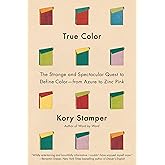 True Color: The Strange and Spectacular Quest to Define Color--from Azure to Zinc PinkHardcoverINR 1,073.25 shippingThis title will be released on March 31, 2026.
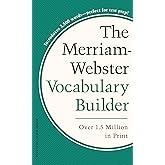 Merriam-Webster’s Vocabulary Builder - Perfect for prepping for SAT, ACT, TOEFL, & TOEICMass Market PaperbackINR 991.60 shipping
Customers also bought or read
Page 1 of 1Start over
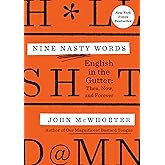
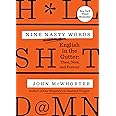
- Nine Nasty Words: English in the Gutter: Then, Now, and Forever
 PaperbackINR1,518.70INR1,518.70INR 891.81 delivery Wed, Feb 11
 - The Meaning of Everything: The Story of the Oxford English Dictionary
 PaperbackINR1,540.48INR1,540.48INR 968.92 delivery Wed, Feb 11
 - Clean, Well-Lighted Sentences: A Guide to Avoiding the Most Common Errors in Grammar and Punctuation
 PaperbackINR1,356.31INR1,356.31INR 877.29 delivery Thu, Feb 12
 - The Word Detective: Searching for the Meaning of It All at the Oxford English Dictionary
 PaperbackINR1,541.38INR1,541.38INR 973.46 delivery Wed, Feb 11
 - The Etymologicon: A Circular Stroll Through the Hidden Connections of the English Language
 PaperbackINR1,451.57INR1,451.57INR 927.19 delivery Tue, Feb 10
 - Unabridged: The Thrill of (and Threat to) the Modern Dictionary
 HardcoverINR2,098.42INR2,098.42INR 1,083.23 delivery Tue, Feb 10
 - Woe Is I: The Grammarphobe's Guide to Better English in Plain English (Fourth Edition)
 PaperbackINR1,105.91INR1,105.91INR 935.35 delivery Tue, Feb 10
 - Says Who?: A Kinder, Funner Usage Guide for Everyone Who Cares About Words
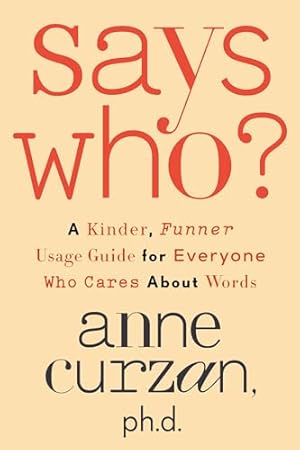 HardcoverINR1,469.71INR1,469.71INR 1,018.82 delivery Tue, Feb 10
 - The Sense of Style: The Thinking Person's Guide to Writing in the 21st Century
 PaperbackINR1,322.74INR1,322.74INR 935.35 delivery Tue, Feb 10
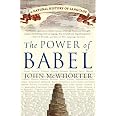
 - The Power of Babel: A Natural History of Language – A Witty Linguistics Guide to How Tongues Mix, Mutate, and Evolve
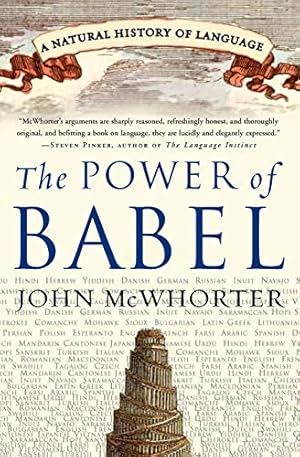 PaperbackINR1,259.24INR1,259.24INR 941.70 delivery Mon, Mar 9
 - Dreyer's English: An Utterly Correct Guide to Clarity and Style
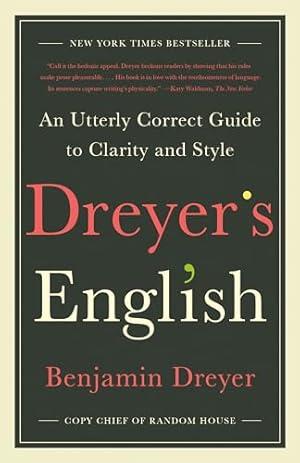 PaperbackINR1,324.56INR1,324.56INR 922.65 delivery Wed, Feb 11
 - Useless Etymology: Offbeat Word Origins for Curious Minds
 HardcoverINR1,704.69INR1,704.69INR 1,010.65 delivery Tue, Feb 10
 - The Chicago Guide to Grammar, Usage, and Punctuation (Chicago Guides to Writing, Editing, and Publishing)
 HardcoverINR2,898.60INR2,898.60INR 1,309.13 delivery Wed, Feb 11
 - Oxford School Dictionary of Word Origins
 PaperbackINR2,026.75INR2,026.75INR 1,060.55 delivery Tue, Feb 10
 - The Dictionary People: The Unsung Heroes Who Created the Oxford English Dictionary
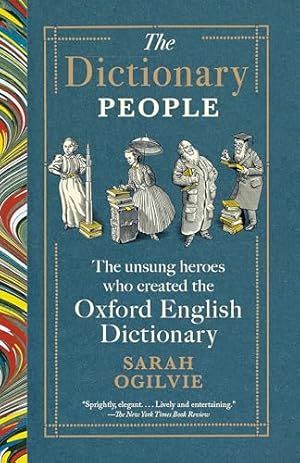 PaperbackINR1,150.37INR1,150.37INR 958.03 delivery Tue, Feb 10
 - Developmental Editing, Second Edition: A Handbook for Freelancers, Authors, and Publishers (Chicago Guides to Writing, Editing, and Publishing)
 PaperbackINR2,552.95INR2,552.95INR 1,015.19 delivery Tue, Feb 10
 - The Great Book of American Idioms: A Dictionary of American Idioms, Sayings, Expressions & Phrases
 PaperbackINR1,356.31INR1,356.31INR 964.39 delivery Tue, Feb 10
 - Merriam-Webster's Collegiate Dictionary, 12th Edition
 Just releasedHardcoverINR2,748.00INR2,748.00INR 1,870.71 delivery Tue, Feb 10
 - The Mother Tongue - English And How It Got That Way
 PaperbackINR908.14INR908.14INR 929 delivery Thu, Feb 12
 - Dictionary of the Strange, Curious & Lovely
 PaperbackINR906.32INR906.32INR 931.73 delivery Tue, Feb 10
 - Shady Characters: The Secret Life of Punctuation, Symbols, and Other Typographical Marks
 PaperbackINR1,602.17INR1,602.17INR 958.03 delivery Wed, Feb 11
 - Wordslut: A Hilarious and Informative Exploration of Gendered Language and Its Impact on Women
 PaperbackINR1,144.92INR1,144.92INR 922.65 delivery Tue, Feb 10
 - Sister Bernadette's Barking Dog: The Quirky History and Lost Art of Diagramming Sentences – A Charming Book About Grammar and Language for Writers
 PaperbackINR902.69INR902.69INR 922.65 delivery Tue, Feb 10
 - Dictionary of Word Origins: The Histories of More Than 8,000 English-Language Words
 PaperbackINR942.61INR942.61INR 1,116.80 delivery Tue, Feb 10
 - Self-Editing for Fiction Writers, Second Edition: How to Edit Yourself Into Print
 PaperbackINR1,017.91INR1,017.91INR 912.67 delivery Tue, Feb 10
 - Sin and Syntax: How to Craft Wicked Good Prose
 PaperbackINR1,131.32INR1,131.32INR 922.65 delivery Tue, Feb 10
Loading...
Editorial Reviews
Review
“[An] eloquent love letter to letters themselves. . . . A cheerful and thoughtful rebuke of the cult of the grammar scolds.” —The Atlantic
“Both memoir and exposé, an insider’s tour of the inner circles of the mysterious fortress that is Merriam-Webster. Stamper leads us through her own lexicographical bildungsroman, exploring how she fell in love with words and showing us how the dictionary works, and how it interacts with the world that it strives to reflect.” —Adrienne Raphel, The New Yorker
“As a writer, Stamper can do anything with words. . . . You will never take a dictionary entry for granted again.” —Mary Norris, best-selling author of Between You & Me: Confessions of a Comma Queen
“A fascinating, even enthralling, examination of the way words actually work in our language, warts and all.” —The A.V. Club
“An unlikely page-turner. . . . Stamper displays a contagious enthusiasm for words and a considerable talent for putting them together.” —The New Yorker
“Word by Word cherishes the dexterity involved in making dictionaries, and . . . proves refreshingly attentive to its human stories. Part of its quirky charm is a delight in the idiosyncrasies of others—not least Merriam-Webster’s many correspondents.” —The Wall Street Journal
“Packed with the kind of word-lore that keeps readers and writers up late at night: Where do our words come from? How and why do their meanings change year to year, century to century?” —The Dallas Morning News
“Great fun. . . . [Stamper] brings both zest and style. . . . An exuberant mash note to language.” —The Times Literary Supplement
“[Word by Word] mixes memoiristic meditations on the lexicographic life along with a detailed description of the brain-twisting work of writing dictionaries.” —The New York Times
“Anyone who loves words or has opinions about them will have fun in this sandbox of a book.” —The Washington Times
“A delectable feast. . . . [Stamper] declaims elegantly on the beauty and necessity of dialect, how to evaluate emerging words, and many other topics. [She] is at her best when entertaining the reader with amusing etymologies, celebrating the contentiousness of grammar, and quoting annoying emails from an opinionated public,” —Publishers Weekly (starred review)
“Fascinating. . . . Part memoir, part workplace chronicle and part history lesson.” —The New York Post
“A lexicographical bildungsroman. . . . [Stamper] presents passionate, precise, good-humored (and bad-humored) descriptions of every stage of the process that goes into making an entry.” —The Chronicle of Higher Education
“[Word by Word] entertains as much as it instructs.” —Baltimore Sun
“A captivating book.” —Lincoln Journal Star
“Idiosyncratic and engaging.” —The Gazette (Cedar Rapids, IA)
“A smart, sparkling and often hilarious valentine to the content and keepers of dictionaries. . . . A paean to the craft of lexicography.’” —Shelf Awareness
“A funny inside look at how new words make their way into dictionaries, an irreverent take on the history of English itself, and a memoir of [Stamper’s] own journey.” —Daily Hampshire Gazette
“[A] marvelous insight into the messy world behind the tidy definitions on the page. . . . By turns amusing, frustrating, surprising, and above all, engrossing. It is perhaps unsurprising, given her line of work, that Stamper employs words with delightful precision in her writing.” —Booklist
“Both memoir and exposé, an insider’s tour of the inner circles of the mysterious fortress that is Merriam-Webster. Stamper leads us through her own lexicographical bildungsroman, exploring how she fell in love with words and showing us how the dictionary works, and how it interacts with the world that it strives to reflect.” —Adrienne Raphel, The New Yorker
“As a writer, Stamper can do anything with words. . . . You will never take a dictionary entry for granted again.” —Mary Norris, best-selling author of Between You & Me: Confessions of a Comma Queen
“A fascinating, even enthralling, examination of the way words actually work in our language, warts and all.” —The A.V. Club
“An unlikely page-turner. . . . Stamper displays a contagious enthusiasm for words and a considerable talent for putting them together.” —The New Yorker
“Word by Word cherishes the dexterity involved in making dictionaries, and . . . proves refreshingly attentive to its human stories. Part of its quirky charm is a delight in the idiosyncrasies of others—not least Merriam-Webster’s many correspondents.” —The Wall Street Journal
“Packed with the kind of word-lore that keeps readers and writers up late at night: Where do our words come from? How and why do their meanings change year to year, century to century?” —The Dallas Morning News
“Great fun. . . . [Stamper] brings both zest and style. . . . An exuberant mash note to language.” —The Times Literary Supplement
“[Word by Word] mixes memoiristic meditations on the lexicographic life along with a detailed description of the brain-twisting work of writing dictionaries.” —The New York Times
“Anyone who loves words or has opinions about them will have fun in this sandbox of a book.” —The Washington Times
“A delectable feast. . . . [Stamper] declaims elegantly on the beauty and necessity of dialect, how to evaluate emerging words, and many other topics. [She] is at her best when entertaining the reader with amusing etymologies, celebrating the contentiousness of grammar, and quoting annoying emails from an opinionated public,” —Publishers Weekly (starred review)
“Fascinating. . . . Part memoir, part workplace chronicle and part history lesson.” —The New York Post
“A lexicographical bildungsroman. . . . [Stamper] presents passionate, precise, good-humored (and bad-humored) descriptions of every stage of the process that goes into making an entry.” —The Chronicle of Higher Education
“[Word by Word] entertains as much as it instructs.” —Baltimore Sun
“A captivating book.” —Lincoln Journal Star
“Idiosyncratic and engaging.” —The Gazette (Cedar Rapids, IA)
“A smart, sparkling and often hilarious valentine to the content and keepers of dictionaries. . . . A paean to the craft of lexicography.’” —Shelf Awareness
“A funny inside look at how new words make their way into dictionaries, an irreverent take on the history of English itself, and a memoir of [Stamper’s] own journey.” —Daily Hampshire Gazette
“[A] marvelous insight into the messy world behind the tidy definitions on the page. . . . By turns amusing, frustrating, surprising, and above all, engrossing. It is perhaps unsurprising, given her line of work, that Stamper employs words with delightful precision in her writing.” —Booklist
About the Author
Kory Stamper is a lexicographer who spent almost two decades writing dictionaries at Merriam-Webster. Her writing has appeared in The Guardian, The New York Times, New York Magazine, and The Washington Post, and she blogs regularly on language and lexicography at www.korystamper.com.
Excerpt. © Reprinted by permission. All rights reserved.
Hrafnkell
On Falling in Love
We are in an uncomfortably small conference room. It is a cool June day, and though I am sitting stock- still on a corporate chair in heavy air-conditioning, I am sweating heavily through my dress. This is what I do in job interviews.
A month earlier, I had applied for a position at Merriam-Webster, America’s oldest dictionary company. The posting was for an editorial assistant, a bottom-of-the-barrel position, but I lit up like a penny arcade when I saw that the primary duty would be to write and edit English dictionaries. I cobbled together a résumé; I was invited to interview. I found the best interview outfit I could and applied extra antiperspirant (to no avail).
Steve Perrault, the man who sat opposite me, was (and still is) the director of defining at Merriam-Webster and the person I hoped would be my boss. He was very tall and very quiet, a sloucher like me, and seemed almost as shyly awkward as I was, even while he gave me a tour of the modest, nearly silent editorial floor. Apparently, neither of us enjoyed job interviews. I, however, was the only one perspiring lavishly.
“So tell me,” he ventured, “why you are interested in lexicography.”
I took a deep breath and clamped my jaw shut so I did not start blabbing. This was a complicated answer.
###
I grew up the eldest, book-loving child of a blue-collar family that was not particularly literary. According to the hagiography, I started reading at three, rattling off the names of road signs on car trips and pulling salad-dressing bottles out of the fridge to roll their tangy names around on my tongue: Blue Chee-see, Eye-tal-eye-un, Thouse-and Eyes-land. My parents cooed over my precociousness but thought little of it.
I chawed my way through board books, hoarded catalogs, decimated the two monthly magazines we subscribed to (National Geographic and Reader’s Digest) by reading them over and over until they fell into tatters. One day my father came home from his job at the local power plant, exhausted, and dropped down onto the couch next to me. He stretched, groaning, and plopped his hard hat on my head. “Whatcha reading, kiddo?” I held the book up for him to see: Taber’s Cyclopedic Medical Dictionary, a book from my mother’s nursing days of yore. “I’m reading about scleroderma,” I told him. “It’s a disease that affects skin.” I was about nine years old.
When I turned sixteen, I discovered more adult delights: Austen, Dickens, Malory, Stoker, a handful of Brontës. I’d sneak them into my room and read until I couldn’t see straight.
It wasn’t story (good or bad) that pulled me in; it was English itself, the way it felt in my braces-caged mouth and rattled around my adolescent head. As I grew older, words became choice weapons: What else does a dopey, short, socially awkward teenage girl have? I was a capital-n Nerd and treated accordingly. “Never give them the dignity of a response” was the advice of my grandmother, echoed by my mother’s terser “Just ignore them.” But why play dumb when I could outsmart them, if only for my own satisfaction? I snuck our old bargain-bin Roget’s Thesaurus from the bookshelf and tucked it under my shirt, next to my heart, before scurrying off to my room with it. “Troglodyte,” I’d mutter when one of the obnoxious guys in the hall would make a rude comment about another girl’s body. “Cacafuego,” I seethed when a classmate would brag about the raging kegger the previous weekend. Other teens settled for “brownnoser”; I put my heart into it with “pathetic, lickspittling ass.”
But lexophile that I was, I never considered spending a career on words. I was a practical blue-collar girl. Words were a hobby: they were not going to make me a comfortable living. Or rather, I wasn’t going to squander a college education—something no one else in my family had—just to lock myself in a different room a few thousand miles away and read for fourteen hours a day (though I felt wobbly with infatuation at the very idea). I went off to college with every intention of becoming a doctor. Medicine was a safe profession, and I would certainly have plenty of time to read when I had made it as a neurosurgeon.*
Fortunately for my future patients, I didn’t survive organic chemistry—a course that exists solely to weed slobs like me out of the doctoring pool. I wandered into my sophomore year of college rudderless, a handful of humanities classes on my schedule. One of the women in my dorm quizzed me about my classes over Raisin Bran. “Latin,” I droned, “philosophy of religion, a colloq on medieval Icelandic family sagas—”
“Hold up,” she said. “Medieval Icelandic family sagas. Medieval Icelandic family sagas.” She put her spoon down. “I’m going to repeat this to you one more time so you can hear how insane that sounds: medieval Icelandic family sagas.”
It did sound insane, but it sounded far more interesting than organic chemistry. If my sojourn into premed taught me anything, it was that numbers and I didn’t get along. “Okay, fine,” she said, resuming breakfast, “it’s your college debt.”
###
The medieval Icelandic family sagas are a collection of stories about the earliest Norse settlers of Iceland, and while a good number of them are based in historically verifiable events, they nonetheless sound like daytime soaps as written by Ingmar Bergman. Families hold grudges for centuries, men murder for political advantage, women connive to use their husbands or fathers to bring glory to the family name, people marry and divorce and remarry, and their spouses all die under mysterious circumstances. There are also zombies and characters named “Thorgrim Cod-Biter” and “Ketil Flat-Nose.” If there was any cure for my failed premed year, this course was it.
But the thing that hooked me was the class during which my professor (who, with his neatly trimmed red beard and Oxbridge manner, would no doubt have been called Craig the Tweedy in one of the sagas) took us through the pronunciation of the Old Norse names.
We had just begun reading a saga whose main character is named Hrafnkell. I, like the rest of my classmates, assumed this unfortunate jumble of letters was pronounced \huh-RAW-funk-ul\ or \RAW-funk-ell\. No, no, the professor said. Old Norse has a different pronunciation convention. “Hrafnkell” should be pronounced—and the sounds that came out of his mouth are not able to be rendered in the twenty-six letters available to me here. The “Hraf” is a guttural, rolled \HRAHP\, as if you stopped a sprinter who was out of breath and clearing their throat and asked them to say “crap.” The -n-is a swallowed hum, a little break so your vocal cords are ready for the glorious flourish that is “-kell.” Imagine saying “blech”—the sound kids in commercials make when presented with a plate of steamed broccoli instead of Strawberry Choco-Bomb Crunch cereal. Now replace the /bl/ with a /k/ as in “kitten.” That is the pronunciation of “Hrafnkell.”
No one could get that last sound right; the whole class sounded like cats disgorging hair balls. “Ch, ch,” our professor said, and we dutifully mimicked: uch, uch. “I’m spitting all over myself,” one student complained, whereupon the professor brightened. “Yeah,” he chirped, “yeah, you’ve got it!”
That final double-l in Old Norse, he said, was called the voiceless alveolar lateral fricative. “What?” I blurted, and he repeated: “voiceless alveolar lateral fricative.” He went on to say it was used in Welsh, too, but I was lost to his explanation, instead tumbling in and over that label. Voiceless alveolar lateral fricative. A sound that you make, that you give voice to, that is nonetheless called “voiceless” and that, when issued, can be aimed like a stream of chewing tobacco, laterally. And “fricative”—that sounded hopelessly, gorgeously obscene.
I approached the professor after class. I wanted, I told him, to major in this—Icelandic family sagas and weird pronunciations and whatever else there was.
“You could do medieval studies,” he suggested. “Old English is the best place to start.”
On Falling in Love
We are in an uncomfortably small conference room. It is a cool June day, and though I am sitting stock- still on a corporate chair in heavy air-conditioning, I am sweating heavily through my dress. This is what I do in job interviews.
A month earlier, I had applied for a position at Merriam-Webster, America’s oldest dictionary company. The posting was for an editorial assistant, a bottom-of-the-barrel position, but I lit up like a penny arcade when I saw that the primary duty would be to write and edit English dictionaries. I cobbled together a résumé; I was invited to interview. I found the best interview outfit I could and applied extra antiperspirant (to no avail).
Steve Perrault, the man who sat opposite me, was (and still is) the director of defining at Merriam-Webster and the person I hoped would be my boss. He was very tall and very quiet, a sloucher like me, and seemed almost as shyly awkward as I was, even while he gave me a tour of the modest, nearly silent editorial floor. Apparently, neither of us enjoyed job interviews. I, however, was the only one perspiring lavishly.
“So tell me,” he ventured, “why you are interested in lexicography.”
I took a deep breath and clamped my jaw shut so I did not start blabbing. This was a complicated answer.
###
I grew up the eldest, book-loving child of a blue-collar family that was not particularly literary. According to the hagiography, I started reading at three, rattling off the names of road signs on car trips and pulling salad-dressing bottles out of the fridge to roll their tangy names around on my tongue: Blue Chee-see, Eye-tal-eye-un, Thouse-and Eyes-land. My parents cooed over my precociousness but thought little of it.
I chawed my way through board books, hoarded catalogs, decimated the two monthly magazines we subscribed to (National Geographic and Reader’s Digest) by reading them over and over until they fell into tatters. One day my father came home from his job at the local power plant, exhausted, and dropped down onto the couch next to me. He stretched, groaning, and plopped his hard hat on my head. “Whatcha reading, kiddo?” I held the book up for him to see: Taber’s Cyclopedic Medical Dictionary, a book from my mother’s nursing days of yore. “I’m reading about scleroderma,” I told him. “It’s a disease that affects skin.” I was about nine years old.
When I turned sixteen, I discovered more adult delights: Austen, Dickens, Malory, Stoker, a handful of Brontës. I’d sneak them into my room and read until I couldn’t see straight.
It wasn’t story (good or bad) that pulled me in; it was English itself, the way it felt in my braces-caged mouth and rattled around my adolescent head. As I grew older, words became choice weapons: What else does a dopey, short, socially awkward teenage girl have? I was a capital-n Nerd and treated accordingly. “Never give them the dignity of a response” was the advice of my grandmother, echoed by my mother’s terser “Just ignore them.” But why play dumb when I could outsmart them, if only for my own satisfaction? I snuck our old bargain-bin Roget’s Thesaurus from the bookshelf and tucked it under my shirt, next to my heart, before scurrying off to my room with it. “Troglodyte,” I’d mutter when one of the obnoxious guys in the hall would make a rude comment about another girl’s body. “Cacafuego,” I seethed when a classmate would brag about the raging kegger the previous weekend. Other teens settled for “brownnoser”; I put my heart into it with “pathetic, lickspittling ass.”
But lexophile that I was, I never considered spending a career on words. I was a practical blue-collar girl. Words were a hobby: they were not going to make me a comfortable living. Or rather, I wasn’t going to squander a college education—something no one else in my family had—just to lock myself in a different room a few thousand miles away and read for fourteen hours a day (though I felt wobbly with infatuation at the very idea). I went off to college with every intention of becoming a doctor. Medicine was a safe profession, and I would certainly have plenty of time to read when I had made it as a neurosurgeon.*
Fortunately for my future patients, I didn’t survive organic chemistry—a course that exists solely to weed slobs like me out of the doctoring pool. I wandered into my sophomore year of college rudderless, a handful of humanities classes on my schedule. One of the women in my dorm quizzed me about my classes over Raisin Bran. “Latin,” I droned, “philosophy of religion, a colloq on medieval Icelandic family sagas—”
“Hold up,” she said. “Medieval Icelandic family sagas. Medieval Icelandic family sagas.” She put her spoon down. “I’m going to repeat this to you one more time so you can hear how insane that sounds: medieval Icelandic family sagas.”
It did sound insane, but it sounded far more interesting than organic chemistry. If my sojourn into premed taught me anything, it was that numbers and I didn’t get along. “Okay, fine,” she said, resuming breakfast, “it’s your college debt.”
###
The medieval Icelandic family sagas are a collection of stories about the earliest Norse settlers of Iceland, and while a good number of them are based in historically verifiable events, they nonetheless sound like daytime soaps as written by Ingmar Bergman. Families hold grudges for centuries, men murder for political advantage, women connive to use their husbands or fathers to bring glory to the family name, people marry and divorce and remarry, and their spouses all die under mysterious circumstances. There are also zombies and characters named “Thorgrim Cod-Biter” and “Ketil Flat-Nose.” If there was any cure for my failed premed year, this course was it.
But the thing that hooked me was the class during which my professor (who, with his neatly trimmed red beard and Oxbridge manner, would no doubt have been called Craig the Tweedy in one of the sagas) took us through the pronunciation of the Old Norse names.
We had just begun reading a saga whose main character is named Hrafnkell. I, like the rest of my classmates, assumed this unfortunate jumble of letters was pronounced \huh-RAW-funk-ul\ or \RAW-funk-ell\. No, no, the professor said. Old Norse has a different pronunciation convention. “Hrafnkell” should be pronounced—and the sounds that came out of his mouth are not able to be rendered in the twenty-six letters available to me here. The “Hraf” is a guttural, rolled \HRAHP\, as if you stopped a sprinter who was out of breath and clearing their throat and asked them to say “crap.” The -n-is a swallowed hum, a little break so your vocal cords are ready for the glorious flourish that is “-kell.” Imagine saying “blech”—the sound kids in commercials make when presented with a plate of steamed broccoli instead of Strawberry Choco-Bomb Crunch cereal. Now replace the /bl/ with a /k/ as in “kitten.” That is the pronunciation of “Hrafnkell.”
No one could get that last sound right; the whole class sounded like cats disgorging hair balls. “Ch, ch,” our professor said, and we dutifully mimicked: uch, uch. “I’m spitting all over myself,” one student complained, whereupon the professor brightened. “Yeah,” he chirped, “yeah, you’ve got it!”
That final double-l in Old Norse, he said, was called the voiceless alveolar lateral fricative. “What?” I blurted, and he repeated: “voiceless alveolar lateral fricative.” He went on to say it was used in Welsh, too, but I was lost to his explanation, instead tumbling in and over that label. Voiceless alveolar lateral fricative. A sound that you make, that you give voice to, that is nonetheless called “voiceless” and that, when issued, can be aimed like a stream of chewing tobacco, laterally. And “fricative”—that sounded hopelessly, gorgeously obscene.
I approached the professor after class. I wanted, I told him, to major in this—Icelandic family sagas and weird pronunciations and whatever else there was.
“You could do medieval studies,” he suggested. “Old English is the best place to start.”
Product details
- ASIN : 110197026X
- Publisher : Vintage
- Publication date : March 6, 2018
- Edition : Reprint
- Language : English
- Print length : 320 pages
- ISBN-10 : 9781101970263
- ISBN-13 : 978-1101970263
- Item Weight : 8.2 ounces
- Dimensions : 5.2 x 0.7 x 8.01 inches
- Best Sellers Rank: #369,261 in Books (See Top 100 in Books)
- #78 in English Dictionaries & Thesauruses
- #168 in Dictionaries (Books)
- #4,354 in Memoirs (Books)
- Customer Reviews:
About the author
Follow authors to get new release updates, plus improved recommendations.
Kory Stamper is a lexicographer (that is, a writer and editor of dictionaries) who worked for nearly two decades at Merriam-Webster (the dictionary). She has traveled around the world giving talks and lectures on language and lexicography. Her writing has appeared in a number of publications, including The Washington Post, The Guardian, The Boston Globe, and The New York Times, and she cussed on the TV for fun and profit in Netflix's "The History of Swear Words." A medievalist by training, she knows a number of languages, most of them dead. She drinks more coffee and owns more dictionaries than is good for anyone.
Customer reviews
4.6 out of 5 stars
4.6 out of 5
1,224 global ratings
How customer reviews and ratings work
Customer Reviews, including Product Star Ratings help customers to learn more about the product and decide whether it is the right product for them.
To calculate the overall star rating and percentage breakdown by star, we don’t use a simple average. Instead, our system considers things like how recent a review is and if the reviewer bought the item on Amazon. It also analyzed reviews to verify trustworthiness.
Learn more how customers reviews work on AmazonCustomers say
Customers find this book entertaining and well-researched, providing a fascinating glimpse into the world of words and how dictionaries are written. The writing makes dictionary creation come alive, and customers appreciate the little gems of anecdotes and facts throughout. They describe it as a guaranteed rapturous read for word lovers, with one customer noting it's a good addition to the world of linguistics.
AI Generated from the text of customer reviews Generated from the text of customer reviews
Generated from the text of customer reviewsSelect to learn more
114 customers mention enjoyment, 107 positive, 7 negative114 customers mention "Enjoyment"107 positive7 negative
"...organized job presenting what could have been a dry read into an interesting and often funny informative read! Do yourself a favor a read this book!" Read more
"Word By Word provides a fascinating, funny, and enlightening glimpse into the world and minds of the lexicographers at Merriam-Webster...." Read more
"...Not because it is difficult to read, it is an easy, enjoyable read full of good humour and kindness...." Read more
"A wonderful book, entertaining, instructing, and riveting, even to an Englishman who spells , and perhaps thinks, differently and would never end up..." Read more
68 customers mention humor, 68 positive, 0 negative68 customers mention "Humor"68 positive0 negative
"I absolutely loved this book! It’s funny, well-written, and chock full of interesting tidbits about all the work that goes into a dictionary that..." Read more
"Witty (hilarious, actually), informative (“snollygoster” may be due for a revival), and thoroughly enjoyable memoir by a lexicographer for Webster’s..." Read more
"...Kory is very funny and irreverent. As an introvert, could totally relate to thier style of wok. Excellent, informative read." Read more
"Kory's book is absolutely fascinating and hilarious. Buy it and read it. You won't regret it." Read more
67 customers mention language content, 61 positive, 6 negative67 customers mention "Language content"61 positive6 negative
"For those who love words and grammar" Read more
"...Knowledgeable. Insiteful. Anyone who appreciates words, the English language, or even just language itself, is in for a treat with this one." Read more
"For those who love the English language or wish to better understand it. Funny, informative and smart. I loved it." Read more
"This book provided a wonderful glimpse into the world of words. Very enjoyable, informative, and entertaining. Left me wanting more." Read more
56 customers mention information quality, 55 positive, 1 negative56 customers mention "Information quality"55 positive1 negative
"Witty (hilarious, actually), informative (“snollygoster” may be due for a revival), and thoroughly enjoyable memoir by a lexicographer for Webster’s..." Read more
"...Excellent, informative read." Read more
"This is an absolutely fun, well researched, must read!..." Read more
"An excellent book. Kory Stamper is knowledgeable and funny, and she writes well ... making what could be a dry subject come alive and dance...." Read more
35 customers mention writing quality, 34 positive, 1 negative35 customers mention "Writing quality"34 positive1 negative
"I absolutely loved this book! It’s funny, well-written, and chock full of interesting tidbits about all the work that goes into a dictionary that..." Read more
"...It's a well written account of the life of a lexicographer. It even has some good humor...." Read more
"Wonderfully written, surprising and enlightening! A must-read for word lovers." Read more
"Fascinating, the author, the subject. But I am a word nut so..." Read more
31 customers mention enlightened reading, 31 positive, 0 negative31 customers mention "Enlightened reading"31 positive0 negative
"Witty, engaging, educational, fun. Great book about dictionaries and the way they are made and updated, as well as, the people who do all the work." Read more
"...She presents complex material with great humor and personal anecdotes...." Read more
"Interesting and thought-provoking. Enjoyable. She has an opinion, but I appreciated her authenticity and the education...." Read more
"A really fun read. Part autobiographical, part a look into the inner workings of how a dictionary is written...." Read more
24 customers mention readability, 20 positive, 4 negative24 customers mention "Readability"20 positive4 negative
"...An easy read. Now I want to visit the author at work and begin a pen pal relationship about words." Read more
"I loved this book and found it thorough and readable. Stamper has wit and charm and excels at describing what goes into making a dictionary." Read more
"...Funny, charming and easy reading" Read more
"...Very readable and well worth the read." Read more
13 customers mention look, 13 positive, 0 negative13 customers mention "Look"13 positive0 negative
"If you love words, this book will thrill you. It's an inside look at how dictionaries are made written by a wry, witty lexicographer...." Read more
"...trivia and much useful information, written in an engaging and compelling style, this book delivers and them some. Highly recommended." Read more
"What an exquisite and delightful book. This is an in-depth look inside the creation of a dictionary...." Read more
"...It was such a treat to get an in-depth, behind-the-scenes look at the creation of my favorite dictionary!..." Read more
Reviews with images
5 out of 5 stars
It's as if Samuel Johnson has been reincarnated
I listened to Kory Stamper's experience with awe of her humble experience as a lexicagrapher.
Thank you for your feedback
Sorry, there was an error
Sorry we couldn't load the review
Top reviews from the United States
There was a problem filtering reviews. Please reload the page.
- Reviewed in the United States on May 15, 2017Format: HardcoverVerified Purchase
- Reviewed in the United States on August 27, 2025Format: HardcoverVerified PurchaseThis book was a delightful surprise. Some of Stamper’s day-to-day work is a bit dry, but still fascinating overall, and who knew that writing dictionaries could be so difficult or controversial? The author injects humor and personal observations at every turn (often irreverently), giving the reader welcome laugh-out-loud moments. Even better, the text is sprinkled with unfamiliar words such as “foofaraw,” “cromulent,” “vitiate, ” and “borborygmus.” I’m still laughing! Word By Word should be required reading for anyone who regularly uses or appreciates the twisty, ever-changing English language.
- Reviewed in the United States on April 17, 2017Format: KindleVerified PurchaseFirstly, "their" is not a singular pronoun. Pretending it is is either silly or lazy. No one with an education writes: "A driver should carry their registration at all times." Just re-write and use the plural: "Drivers should carry their registration at all times." And if you don't want to use the universal "he," at all, ever, for fear you are being some sort of "..ist," then on the rare occasions you can't use a plural noun, write "he or she" or "his or hers." It is easy. really.
This book does not start well. Apart from the above-mentioned irritation, there are fly-by claims that could be interesting, if they had been discussed a bit more. Or at all, even. For example, she says that the word "stew" used to mean a whore-house. Interesting. I'd love to see some references to support that claim. And some discussion of how the word transitioned in meaning, with examples. That is the reason one buys this kind of wordy book; one is interested in words. But no, there is just a bald claim and that is it.
Then there's the fact that the first few chapters sound like a self-indulgent teen auto-biography, full of descriptions of angst and self doubt about her job interview, her ability to do the work of a lexicographer, blah, blah, blah. Not interested. If I were, I could have bought any one of hundred genuine self-indulgent teen autobiographies.
The repeated obscenities are an annoyance and a distraction. Do we really need "f%^k" or "sh*t" every couple of pages?
Then there are odd usages. She says "an email came down the transom." What? Things don't come DOWN the transom. That makes no sense. A transom is the flat board that makes up the stern, or part of the stern, of a small boat. Things come OVER the transom, like a fish jumping into a boat. Interestingly, Miriam-Webster, the dictionary she works for, defines the phrase "over the transom" correctly.
However. Take a deep breath and get past these major flaws, and you find a book that in spite of them, is worth reading - if you are interested in what it means to be a lexicographer. That is the book's subject; the day to day work of a lexicographer. When she is on task, and avoids PC silliness and swearing, this is a well-written and interesting book.
If you are interested in words, it is a worthwhile buy.
- Reviewed in the United States on January 2, 2026Format: PaperbackVerified PurchaseThis book on dictionary is so good it answered a lot of questions I had when I look up words since childhood. Questions like why isn't there's more example sentences, more context clues, define words with it adjective form which seems going in circles sometimes. I got a better appreciation for the dictionary after reading this.

Top reviews from other countries
-
 書斎Reviewed in Japan on August 2, 2017
5.0 out of 5 stars 辞書編集の実践的知識を与えてくれる書
Format: HardcoverVerified Purchase著者のKory Stamperはメリアム・ウェブスター社の編集者である。当然のことながらウェブスター辞書に詳しいが、特にウェブスター辞書にこだわった内容でない。著者の体験から生まれた英語辞書一般の編集のノウハウが詰まっている書である。たとえば、A dictionary is out of date the minute it’s done.(辞書は完成した瞬間時代遅れになる)/Finding a suitable quotation for a dictionary entry is near impossible, because quotations used in dictionaries need to meet three main criteria: they need to illustrate the most common usage of the word: they need to use only words that are entered in that particular dictionary; and they need to be as boring as humanly possible.(辞書に適した用例を見つけるのは至難の業である。以下の3つの主要な基準を満たす必要があるからである。第1に、用例はその語の最も普通の用法を例証しなければならない。 第2に用例は当該辞書に収録されて語のみから成ること。 第3にできるだけ人間的で退屈な用例でなければならない)。第3の基準は説明を要する。用例は奇想天外のものであってはいけないということである。当たり前のことをいっているようであるが、この当たり前のことを知らない編集者が少なくない。「短いフレーズであってもコーパス用例は、辞書の編者が作成した用例よりはるかにベターである。というのも、編者は遅かれ早かれ現実に起こりそうもない場面を想定した用例、少なくとも痛ましいほどに人工的な用例を作りがちであるからである」( Sinclair 1987: 144)という卓見と趣旨は同じである。もちろん、これ以外にもきわめて有用な指摘が随所にある。
なお、Mark Peters の書評論文 “ Word by Word is a Funny, Revealing Look at the Life of a Lexicographer" (Visual Thesaurus, March 30, 2017)も合わせて読まれたい。
- Mark RichardsReviewed in Canada on January 8, 2018
5.0 out of 5 stars this book is great. If all of that sounds incredibly boring
Format: HardcoverVerified PurchaseIf you are interested in how dictionaries are made, or linguistics in practice, or think you might be, this book is great. If all of that sounds incredibly boring, you're in the wrong place. I really enjoyed reading this and my only complaint is that the book is too short and doesn't contain amusing anecdotes for every single entry in the dictionary.
- Manuel FernandesReviewed in India on August 17, 2018
5.0 out of 5 stars Great insights into dictionary making
Format: PaperbackVerified Purchase'Word by Word: The secret life of dictionaries' by Kory Stamper, who spent almost two decades writing dictionaries at Merriam Webster, is a must-read for all those interested in the English language; and those who are not, read it anyway, you just might get interested. Drawing from her extensive experience, Ms. Stamper takes you in a highly entertaining manner through the process of defining words. The 300-page paperback covers all the serious stuff like the eight parts of speech (POS, “which also stands for 'piece of shit'”, she says), pronunciation, spelling, small words, bad words, wrong words, and the rest lucidly and with rare humour. Talking of MW's need for native English speakers as lexicographers, she says, “You need to know without being told that 'the cat are yowling' is not grammatically correct whereas 'the crowd are loving it' is just very British.” I am loving the book.
-
SagitaYeahReviewed in Spain on May 14, 2017
5.0 out of 5 stars ¡¡¡Divulgación lingüística, por favor!!!
Format: HardcoverVerified PurchaseLa autora consigue explicar los entresijos de cómo se hacen los diccionarios con humor y transmitiendo la emoción que ella siente en el día a día de su trabajo.
Imprescindible para todos los estudiantes de Lenguas Aplicadas, Filología y Lingüística.
Lanzo una propuesta a los lexicógrafos expertos: ¡anímense a compartir con los maestros, profesores, curiosos, etc. lo que ustedes saben hacer!
- Carol DenehyReviewed in Australia on September 1, 2023
3.0 out of 5 stars Disappointing 12th
Format: KindleVerified PurchaseOn the one hand, this book is exactly as presented, describing the behind the scenes working of a large and respected dictionary manufacturer. However, this reader is trained in linguistics and how to analyze English speech. We understand more completely the history, origin, pressures and stresses, and influences that language is subject to. I doubt that a linguist would agonise over a phrase from one source trying the analyze part of speech for a particular word. There is also the issue of “idiolect,” or the version of English spoken by a single individual, which really can’t be taken as a legitimate example for the language as a whole. There are millions of dialects that must be taken into account. For example, I grew up in NYC, spent my higher education in the Southern USA, and my work life in Ohio. Each dialect rubbed off on my English and an idiom from one place would be warped into a later production. I found this book sometimes a tempest in a teapot, and missing the point completely. Read it as one untutored language user trying to make sense of a very complex subject using obsolete rules and guidelines.


 |
Your recently viewed items and featured recommendations
After viewing product detail pages, look here to find an easy way to navigate back to pages you are interested in.
Get to Know Us
Make Money with Us
Amazon Payment Products
Amazon Music
Stream millions
of songsAmazon Ads
Reach customers
wherever they
spend their time6pm
Score deals
on fashion brandsAbeBooks
Books, art
& collectiblesACX
Audiobook Publishing
Made EasySell on Amazon
Start a Selling AccountVeeqo
Shipping Software
Inventory Management
Amazon Business
Everything For
Your BusinessAmazonGlobal
Ship Orders
InternationallyAmazon Web Services
Scalable Cloud
Computing ServicesAudible
Listen to Books & Original
Audio PerformancesBox Office Mojo
Find Movie
Box Office DataGoodreads
Book reviews
& recommendationsIMDb
Movies, TV
& Celebrities
© 1996-2026, Amazon.com, Inc. or its affiliates
