


| CARVIEW |
The Tijani Literature Project
RESEARCH AND LEARNING RESOURCES OF THE TIJANIYYA SUFI ORDER
Exploring the Tijani Library
Meet the Illustrious Tijani Scholars
Delve into Tijani Teachings
Library
Primary Sources
Explore foundational Arabic texts written by formative Tijani scholars.
Secondary Sources
Benefit from prior research on the Tijaniyya from academic sources.
Recent Book Publications
Teachings
01
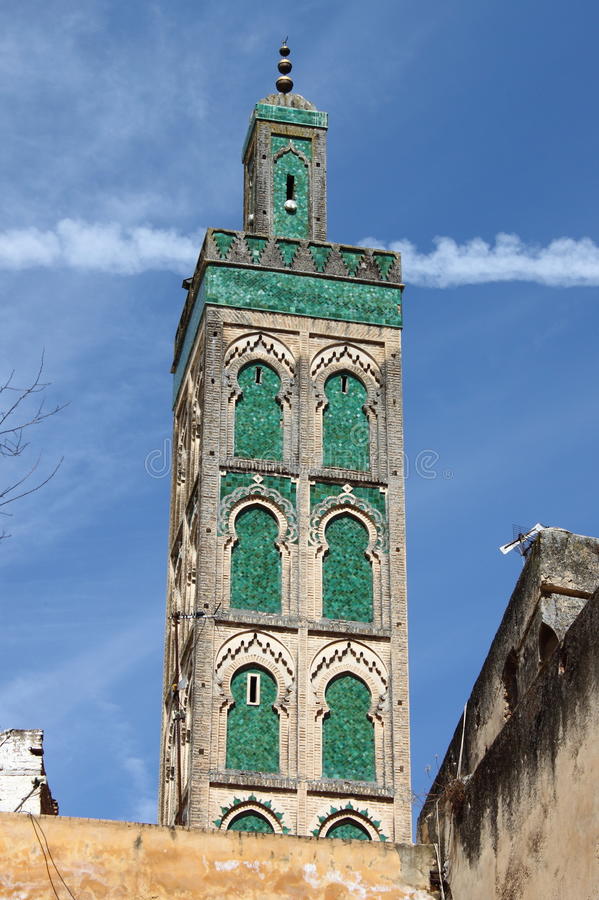
Tijaniyya and Islamic Law
It is clear from the primary sources containing Shaykh Ahmad Tijani’s ideas and behavior that he possessed a profound respect for the legal value of the Qur’an and Sunna of the Prophet ﷺ and his companions, as well as (though to a lesser extent) for the inherited tradition of scholarly interpretation of these sources.

02
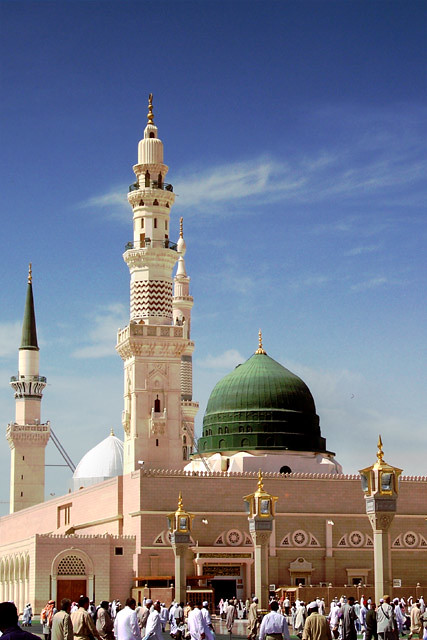
TARIQA MUHAMMADIYYA ﷺ
The Tariqa Muhammadiyya ﷺ came to mean: emphasis on the external Sunna of the Prophet ﷺ, use of concept of the Haqiqa Muhammadiyya ﷺ, experience of the waking vision of the Prophet ﷺ and restriction of the disciple to one transcendent tariqa.
03
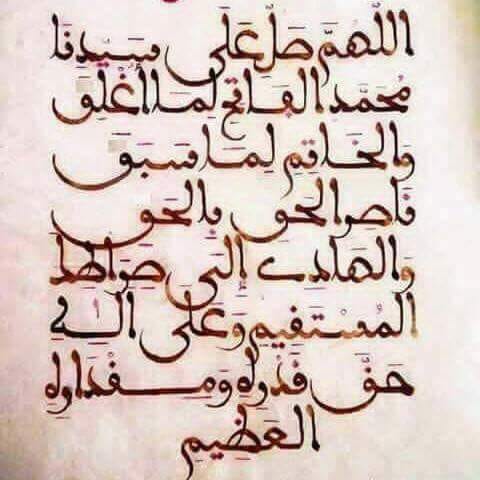
PRAYER ON THE PROPHET ﷺ
Shaykh Ahmad Tijani was particularly concerned with the explaining the benefits of offering prayer on the Prophet (ﷺ), which he declared to be the best form of nafila (supererogatory worship).
04

VISION OF THE PROPHET ﷺ
In 1196/1784 Shaykh Ahmad Tijani was graced by the much anticipated fath al-kabir, or grand illumination/enlightenment. While residing in the desert oasis town of Abi Samghun, he saw the Prophet Muhammad ﷺ “waking, not dreaming.”
05
THE WAY OF GRATITUDE
The Tariqa Muhammadiyya came to mean: emphasis on the external Sunna of the Prophet ﷺ, use of concept of the Haqiqa Muhammadiyya, experience of the waking vision of the Prophet ﷺ and restriction of the disciple to one transcendent tariqa.
06
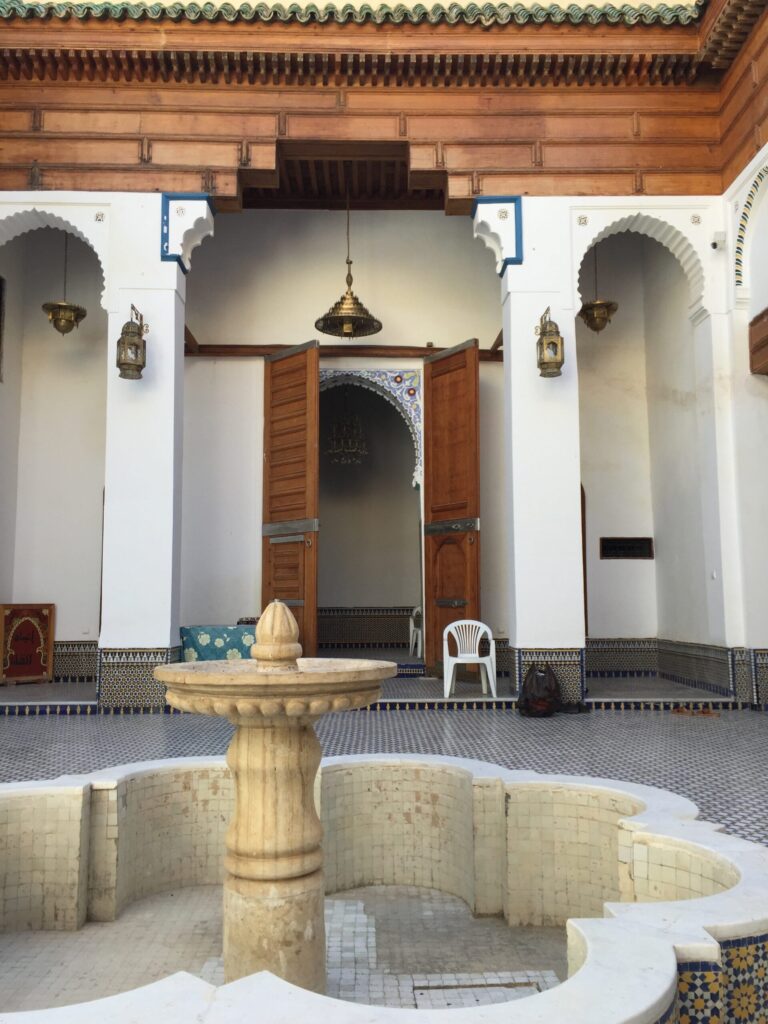
THE SPIRITUAL FLOOD
The concept of fayda, meaning “flood”, “effusion”, “inundation” or “superabundance”, came to personify the community – early on known as the Jama’at al-Fayda al-Tijaniyya – of Shaykh Ibrahim Niasse.
Scholars
Learn more about the renowned Muslim scholars affiliated with the Tijaniyya in the last two centuries.
Featured Scholar
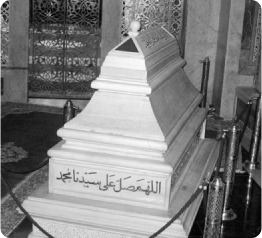
Shaykh Ahmad al-Tijani

Whoever imagines that Prophet’s spiritual support for the Muslim community came to an end with his death, God’s blessing and peace upon him, as in the case of other dead men; he is ignorant of the Prophet’s rank. He is guilty of treating him indecently, and he is therefore in danger of dying as an disbeliever if he does not repent of his deluded conviction.
- Shaykh Ahmad al-Tijani
Upcoming Events
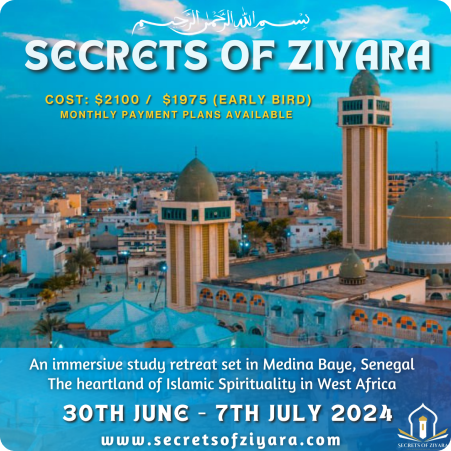
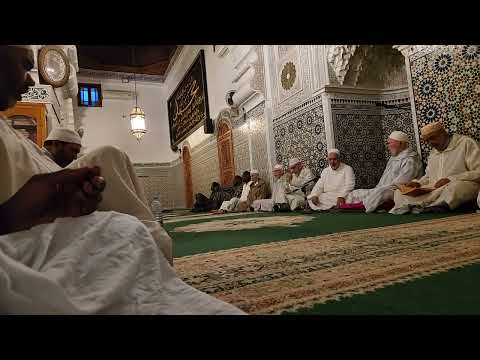
An immersive study retreat set in Madina Baye, Senegal the heartland of Islamic Spirituality in West Africa
30th june - 7th july 2024

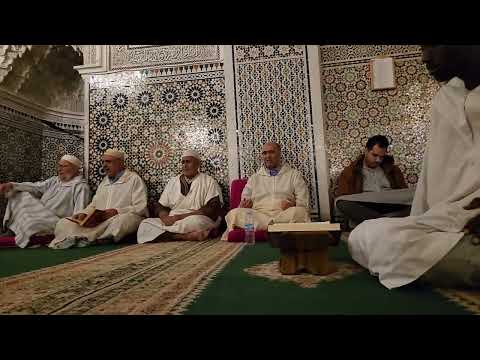
An immersive study retreat set in Madina Baye, Senegal the heartland of Islamic Spirituality in West Africa
30th june - 7th july 2024
An immersive study retreat set in Madina Baye, Senegal the heartland of Islamic Spirituality in West Africa
30th june - 7th july 2024
Frequently Asked Questions
Now that I have become a muqaddam (licensed instructor), what conditions must I present to a person who wishes to take the Tijani Tariqah (Path) from me?
To give bayʿa (allegiance) in the honorable Tijani Path, it is essential to ensure that the individual understands and accepts the non-negotiable Muhammadan conditions of the Tariqa Tijaniyya. Once these are understood, and with the permission you have from a complete Tijani Shaykh (spiritual guide), you can initiate them.
The conditions are:
- Keep up the Tijani Awrad (liturgical recitations) till death.
- Keep up the five daily prayers (if possible in Jama’ah [congregation]) and fulfill all obligations in Islamic Shariah (law).
- Do not take or practice any Dhikr (remembrance of God) from any non-Tijani Awliya (saints), while respecting them fully. You must also leave all other previous Sufi litanies you practiced.
- Do not visit any non-Tijani Wali (saint), living or dead, for spiritual help, but love them all.
- Obey your parents completely. Do note that these conditions were prescribed by the Prophet Muhammad himself to Shaykhuna al-Qutb al-Maktum Sidi Ahmad al-Tijani.
What is the ruling (hukm) regarding celebrating the Mawlid-un-Nabi (the birth of the Prophet)?
Any action we undertake may be judged by the Shari’a (Islamic law) as falling into one of the following five categories:
- Fard (Obligatory)
- Mustahabb (Recommended)
- Mubah/Ja’iz (Simply Permissible)
- Makruh (Discouraged)
- Haram (Forbidden)
Both past and present scholars from the four major Madhabs (schools of thought) — Hanafi, Shafi’i, Maliki, and Hanbali — have generally regarded the commemoration of the Prophet Muhammad’s (SAW) birth as Mubah (permissible), as there is no explicit evidence in the Shari’a that prohibits such an event.
In fact, there is some evidence that supports the commemoration of this noble occasion. For example:
- Allah says in the Qur’an:
Say, “In the Bounty of Allah and His Mercy, let them rejoice.” (Surah Yunus, verse 58). There is no greater bounty given to creation than the Holy Prophet (SAW). - The Qur’an honors the births of Prophets Isa (Jesus), Musa (Moses), and Yahya (John the Baptist). As the greatest of all Prophets, the birth of Nabi Muhammad (SAW) is even more deserving of such recognition.
- Imam al-Bukhari (the compiler of Hadith) narrates that when the Prophet (SAW) was born, his uncle, the disbeliever Abu-Lahab (the uncle of the Prophet), freed the slave-girl Thuwaybah (who brought him the good news), by gesturing to her with his finger. When Abu-Lahab passed away, his brother Sayyidna al-Abbas (RA) (the Prophet’s uncle and a companion) saw him in a dream and asked him about his condition. He replied: “I am in severe punishment, but my punishment is lessened every Monday as I am allowed to suck some water from that finger of mine with which I freed Thuwaybah.”
- It is also narrated by Imam Muslim (the compiler of Hadith) that the Prophet (SAW) used to fast on Mondays. When asked why, he (SAW) replied: “That is the day I was born.”
Many scholars have supported the Mawlid (the commemoration of the Prophet’s birth). For example, the great 9th-century Shafi’i scholar Imam Jalaluddin al-Suyuti writes in his Al-Hawi lil Fatawi (a collection of legal opinions):
To commemorate the Mawlid, which includes gathering people together, reciting parts of the Qur’an, narrating stories about the Prophet’s birth and the signs that accompanied it, serving food, and departing, is one of the good innovations; and the one who practices it gets rewarded, because it involves venerating the status of the Prophet and expressing joy at his honorable birth.
However, while commemorating the Mawlid cannot be considered Haram (forbidden), it must also not be considered Fard (obligatory). It is understood as a beneficial practice that is not obligatory.
Note that while the Mawlid itself is Mubah (permissible), many of the actions associated with it are Mustahabb (recommended), such as reciting Salawat (praises upon the Prophet), gathering of Muslims, discussing the life of the Prophet (SAW), and feeding the hungry. These actions are praiseworthy, and people will be rewarded for them. Wa Allahu A’lam (And Allah knows best).
Why do members of other turuq (Sufi paths) claim that the Tijanis believe that the prayer on the Prophet, Salat al-Fatih, holds greater merit than reciting the Qur'an? As Tijani mureeds (aspirants), we understand our duty to recite our daily litanies, and we also acknowledge the significance of continuous Qur'an recitation. What is the relative merit of Salat al-Fatih to the Qur’an?
Tijani mureeds do not believe that Salat al-Fatih is greater than the Holy Qur’an. This is a misconception. The Holy Qur’an is of utmost importance. However, we believe that reciting Salawat (blessings) on the Prophet, Allah’s blessing and peace upon him, may sometimes contain more reward than reciting the Qur’an.
According to Hadith, the reward for reciting the Holy Qur’an is ten thawab (rewards) for each letter, whereas the reward for making Salat al-Nabi (prayers upon the Prophet) is that Allah Himself sends ten Salawat on you. Allah’s direct Salat is surely the best of rewards. Moreover, it is important to note that we recite the Holy Qur’an primarily for guidance, not for reward. This is why Shaykh Ahmad Tijani (RA) encouraged daily recitation of the Qur’an, why Shaykh Ibrahim Niasse (RA) ensured all his numerous children became Huffaz (those who memorize the Qur’an), and why Shaykh Hassan Cisse (RA) established numerous Qur’an schools worldwide.
When we talk about Salat al-Fatih being a divine inspiration, what do we mean? I know that many have said that this prayer is from “God’s pre-eternal words” (kalam Allah al-qadeem). In this case, what is the distinction between the Salat al-Fatih and the Qur’an, both being "kalam Allah al-qadeem"? And could not someone then say that this constitutes a further revelation?
The kalam Allah al-qadeem are not only the Holy Qur’an. All the holy books are also from the pre-eternal Speech of God. The Qur’an is only that which was meant to be the Qur’an.
The Salat al-Fatih is obviously not part of the Exalted Qur’an, nor equal to it in status. This has been stated again and again by our Tijani scholars.
However, as confirmed by Shaykh Ahmad Sukayrij in one of his letters, the wording of Salat al-Fatih reflects the eternal meanings of Allah’s salutation to the “Muhammadan Reality” (haqiqa al-Muhammadiyya). The Qur’an confirms that this salutation is eternal: Yusallun ‘ala l-Nabi, “He is (in an ongoing state of) praying on the Prophet” (Qur’an, 33:56).
The Salat al-Fatih as we recite it contains all the meanings of that Salutation, from the Hadrat al-Itlaq to Hadrat al-Taqyid, from Infinity to the Finite…from Ahad to Ahmad. It is the opening of all Existence…al-Fatih lima Ughliq….and its end too…Miqdarih al-Azim.
As for the Arabic words of the Salat al-Fatih, they are of the Divine Inspiration called “Ilham”, which is possible for the saints (awliya) to receive.
The authentic Hadith state that an unnamed Sahabi was inspired with a certain Dua that the Prophet (SAW) said upon hearing it:
“He prayed to Allah with His Greatest Name!”
Now, as to the question whether there was a particular wisdom in the Salat al-Fatih not having been revealed to us from our Prophet (God’s blessing and peace upon him) during his lifetime amongst the companions (sahaba), but rather in the later generations: This very question was asked of our Shaykh Sidi Ahmad al-Tijani by one of his students.
The gist of his answer as I recall it from the Jawahir al-Ma’ani was that the special merits and rewards of Salat-al-Fatih were not meant for the time of the Sahaba as they did not need it. It was the people of the latter days of immense corruption that needed a powerful prayer like it, for the effacement of sins and raising of Maqams. However, the Prophet (SAW) always knew of it.
The same may be said of something like the Hizb al-Bahr or any other Dua or instruction the Awliya received from the Prophet (SAW) after his passing on. Great scholars like al-Shatibi, al-Nawawi, and even Ibn-Taymiyyah confirmed the occurrence of such things.
Join the Tijani Community
Experience the Essence of Tijani Wisdom: Your Journey Starts Here.

Teachings
Scholars
Designed by PureKernel