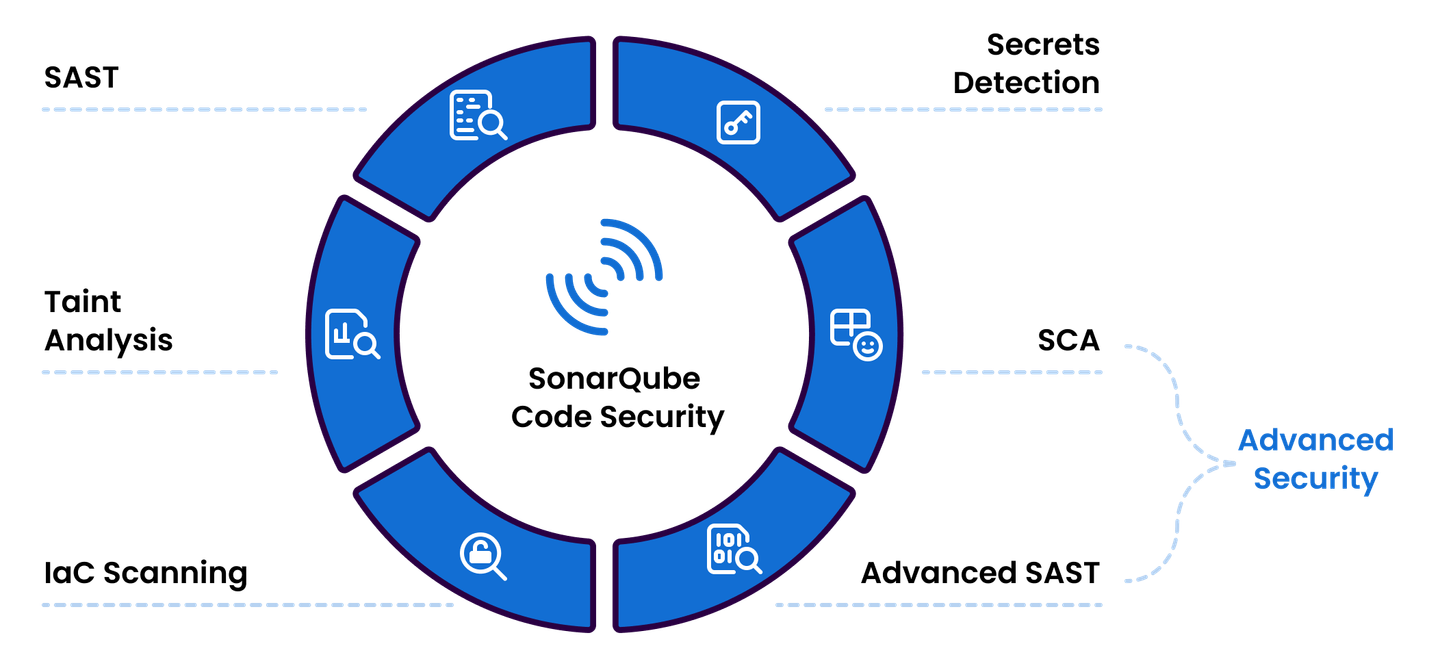
Secure your entire codebase—first-party, third-party, and everything in between. Seamlessly integrated into your workflow, SonarQube detects and fixes vulnerabilities with fast, accurate, and precise automated security analysis.
SonarQube fits seamlessly into the developer workflow, from IDE to CI/CD, delivering integrated code quality and security through advanced SAST, SCA, IaC scanning, and secrets detection. Trusted by millions of developers, it ensures comprehensive coverage for first-party, AI-generated, and third-party code. By automatically detecting issues early, you can fix problems faster, reduce rework, and ship secure, reliable software with confidence.
SAST
Taint Analysis
Secrets Detection
IaC Scanning
Advanced SAST
SCA
Static Application Security Testing (SAST)
Automatically detect vulnerabilities before they reach production with our powerful SAST solution. Our SAST technology identifies hundreds of different types of security issues that are meaningful and relevant—all during development.
Supports the most widely used programming languages including Java, JavaScript, TypeScript, Python, PHP, C, C++, C#, and more
Integrates with your IDE and CI/CD pipeline for seamless security checks
Includes detailed remediation guidance and AI CodeFix to help developers fix issues quickly
Create custom rules to enforce organization-specific security policies
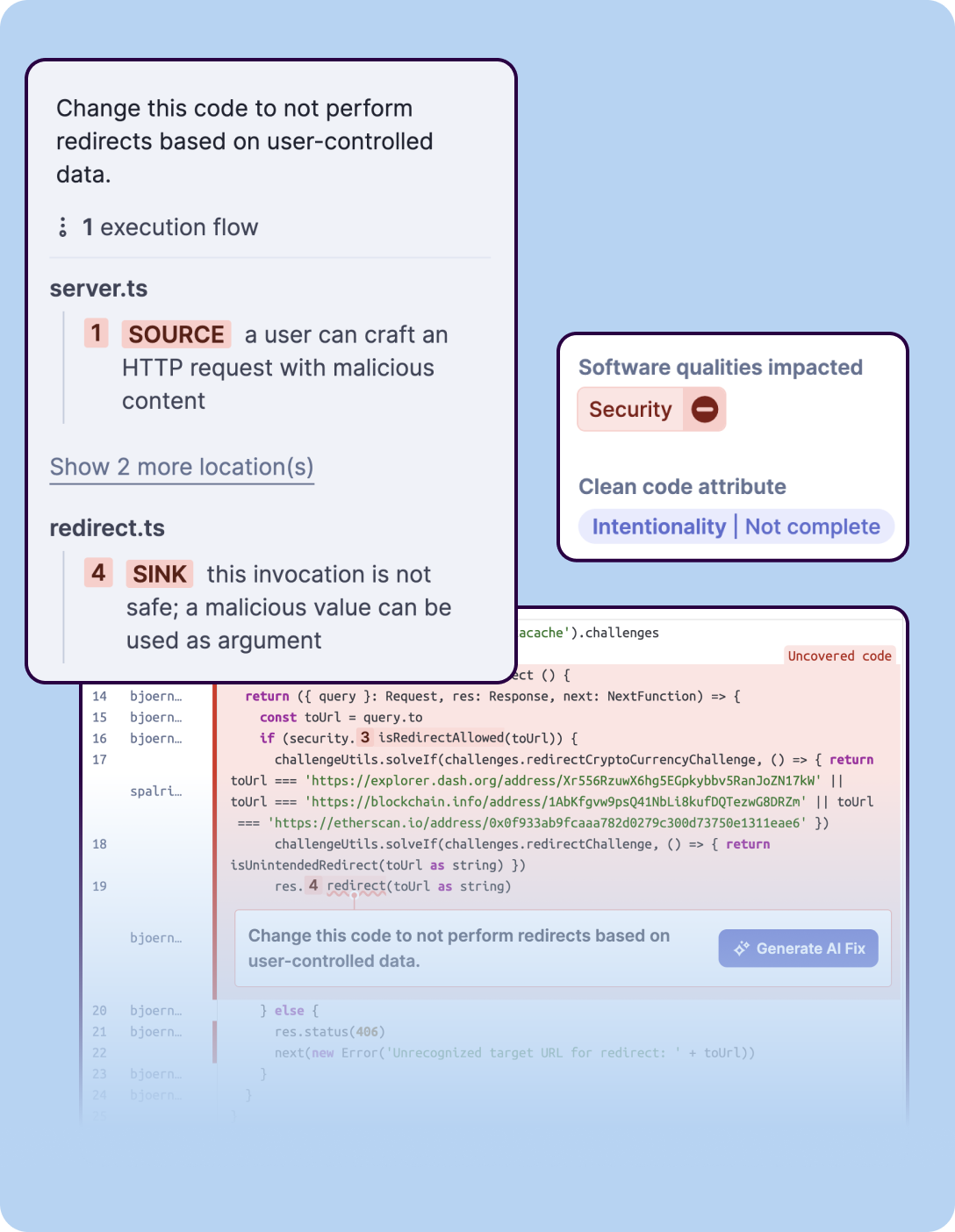
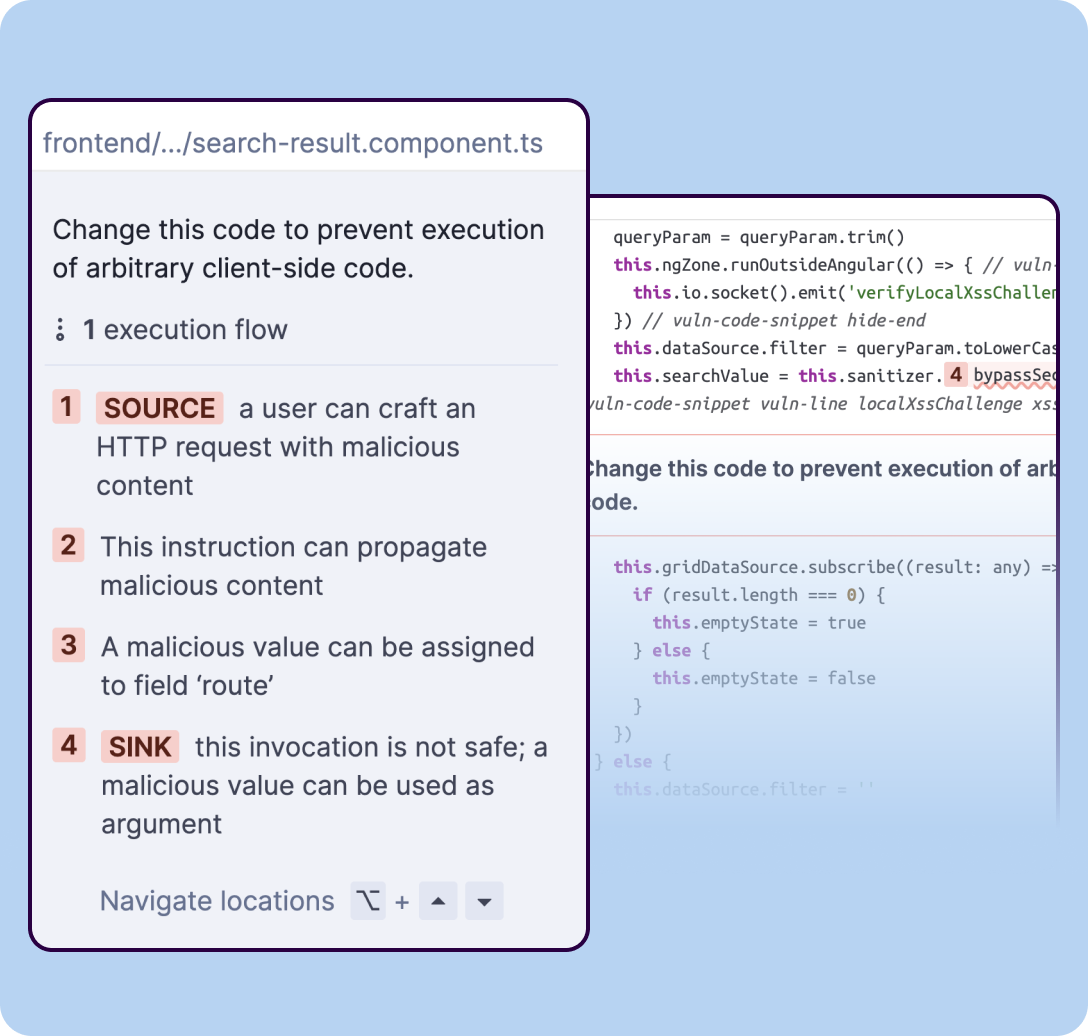
Our taint analysis engine tracks complex data flow through the layers of your application code to identify potential security vulnerabilities from untrusted sources to sensitive sinks.
Detection of SQL injection, XSS, SSRF, Deserialization, and other injection vulnerabilities
Highly sophisticated and accurate data flow analysis cross-function and cross-file to reduce false positives
Framework-aware scanning that understands security controls in popular frameworks
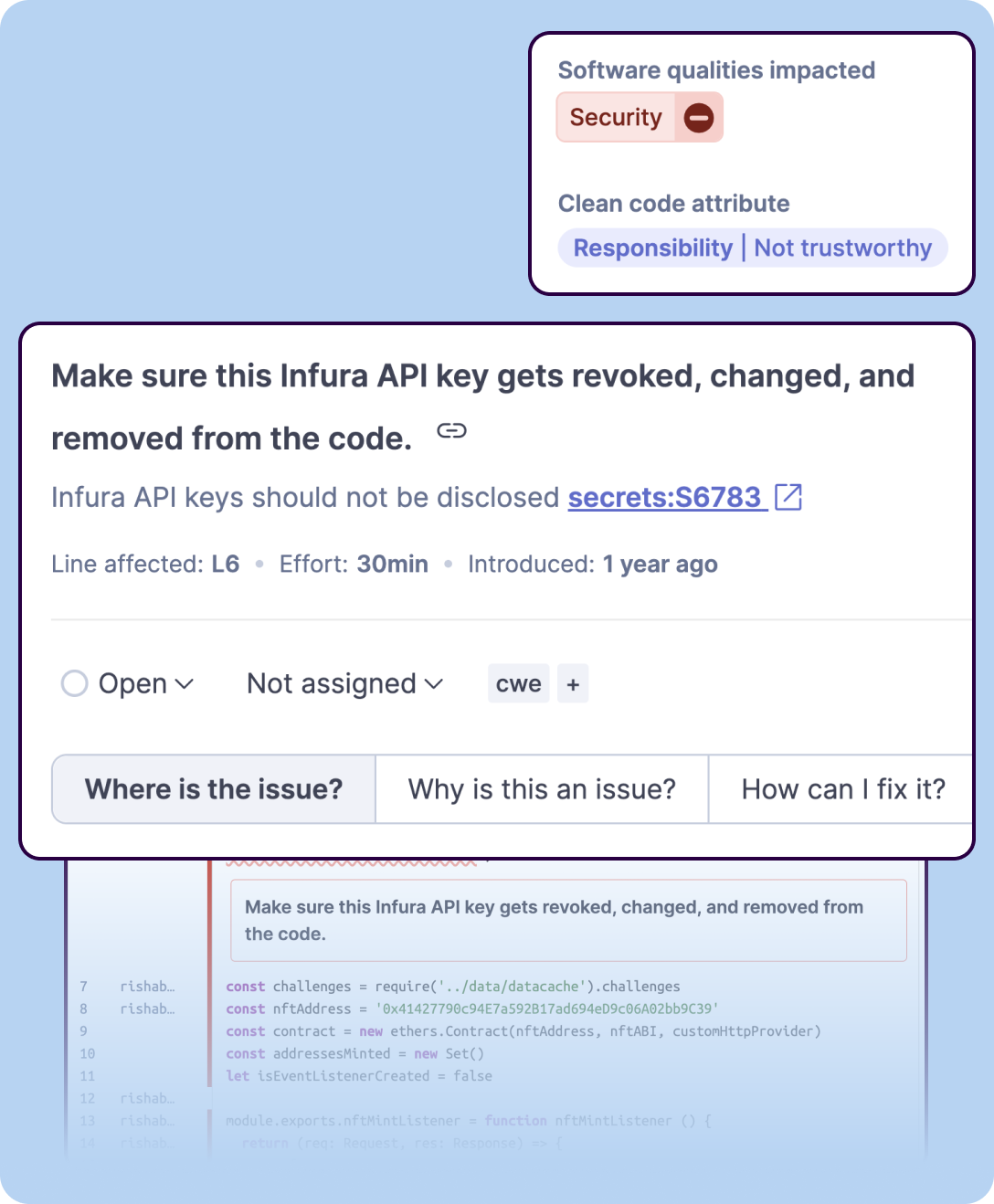
Prevent accidental exposure of sensitive information with our comprehensive secrets detection capabilities. SonarQube can find secrets in source code in your IDE using SonarQube for IDE and also detect them in your CI/CD pipeline using SonarQube (Server and Cloud).
Detection of API keys, passwords, tokens, and other sensitive data using hundreds of rules and secrets patterns that cover all popular technologies and providers
Detect secrets using a powerful combination of regular expressions and semantic analysis
Custom pattern detection for organization-specific secrets for private services
Detect secrets in your code directly in the IDE, preventing them from ever entering your repository
Our advanced static analysis capabilities go beyond traditional SAST to discover deeply hidden security vulnerabilities with fewer false positives. Advanced SAST helps identify deeper and more complex vulnerabilities due to the interaction of your application code with third-party (open-source) code.
External dependency-aware SAST analysis that understands flow between source and sinks
Cross-file taint analysis that goes deep into third-party libraries for detecting hard to find vulnerabilities
Does not require configuration and has no overhead, despite fast and accurate analysis
Available for Java, C#, JavaScript, and TypeScript
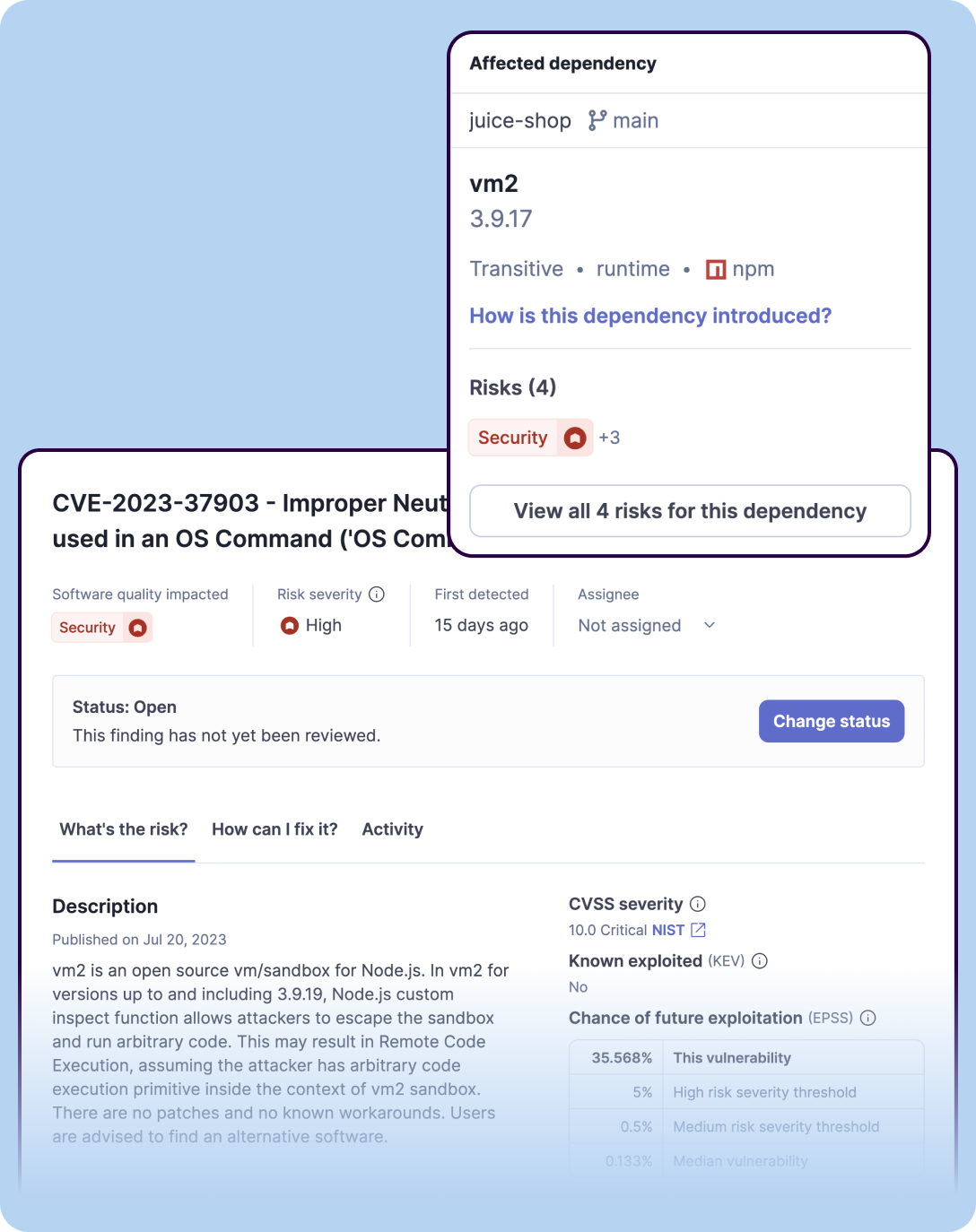
By analyzing software supply chains, identifying vulnerabilities, and ensuring license compliance, teams can proactively secure their codebase and reduce risks associated with third-party dependencies.
Vulnerability Identification: Streamlined processes for tracking, managing, and mitigating third-party vulnerabilities (including CVEs) in third-party open source dependencies
License Compliance: Ensuring that all incorporated components meet the organization’s policies for allowed software licenses
SBOM (Software Bill of Materials): Detailed inventories that help teams understand, manage, and report on the composition of their code
SonarQube Advanced Security is Sonar’s comprehensive solution for ensuring source code security and code quality across the entire software development lifecycle. It integrates seamlessly with developer workflows—from IDEs to CI/CD pipelines—and provides automated vulnerability detection for first-party, third-party, and even AI-generated code. Through advanced scanning techniques like SAST, taint analysis, and secrets detection, SonarQube helps teams catch vulnerabilities early, remediate issues quickly, and minimize risk before code goes into production.
The platform empowers organizations to adopt secure coding standards and DevSecOps practices without sacrificing productivity. By embedding security directly into the development pipeline, SonarQube not only finds security flaws but also offers detailed remediation guidance and AI-powered automated fixes. This holistic approach results in releases that are significantly safer and reduces overall costs of security oversight and penetration testing.
SonarQube’s security solutions are engineered to support and enhance every stage of the secure software development lifecycle (SDLC). Its Static Application Security Testing (SAST) and dynamic tools allow for vulnerabilities to be detected early—during code writing and before code is deployed. The platform integrates with development and deployment environments, ensuring that security checks are continuous and automated.
By incorporating advanced vulnerability detection, secrets identification, and remediation guidance, SonarQube facilitates "shift-left" security practices. This enables teams to address issues proactively within the SDLC, promote code review best practices, and streamline the vulnerability remediation process for more predictable, secure software delivery.
SonarQube Advanced Security identifies a wide array of software vulnerabilities including SQL Injection, Cross-Site Scripting (XSS), Server-Side Request Forgery (SSRF), deserialization flaws, and numerous additional injection vulnerabilities. Its sophisticated taint analysis tracks untrusted data paths across the codebase and uses data flow analysis to spot risks that may otherwise evade detection.
The platform also scans for sensitive information leaks (secrets detection), misconfigurations in infrastructure as code (IaC), and vulnerabilities in third-party dependencies via Software Composition Analysis (SCA). This broad coverage helps teams mitigate risks from both custom code and open source libraries, ensuring comprehensive protection for modern applications.
SonarQube is built to fit naturally within developer workflows by integrating with popular IDEs and CI/CD tools. Security analysis is automated and runs continuously as code is written, reviewed, and committed, allowing developers to catch and fix issues early without disrupting their routine.
This tight integration supports robust code review best practices, enabling teams to enforce security standards and validate code before it gets merged. It also powers continuous security integration, where vulnerability scans, secrets checks, and compliance verifications happen at every stage of development and deployment.
Static Application Security Testing (SAST) is a technique that analyzes application source code for vulnerabilities without executing the code. SonarQube’s SAST technology automatically detects hundreds of types of security issues during development, including security hotspots, flaws, and misconfigurations.
SonarQube’s SAST provides detailed remediation guidance and leverages AI-powered CodeFix to help developers resolve vulnerabilities quickly. It supports over 35 programming languages and integrates with IDEs and CI/CD pipelines, making static application security testing an effortless part of daily development.
While SonarQube’s primary strength lies in static analysis (SAST), the platform supports security automation across the development workflow, helping enforce secure coding standards, validate code changes, and remediate vulnerabilities efficiently. For infrastructure security, SonarQube models IaC scanning as a proactive way to catch misconfigurations before deployment.
Security scanners and automated rules can be set for organization-specific policies, ensuring security automation at scale. Although DAST—runtime security testing—is not the main feature, SonarQube’s automated approach covers most needs by integrating security checks at the source code and build stages.
SonarQube provides tools and frameworks to support regulatory compliance by helping organizations adhere to secure coding standards, supply chain security, and licensing policies. Software Composition Analysis (SCA) scans dependencies for known vulnerabilities (CVEs) and license compliance, providing detailed SBOMs (Software Bill of Materials) for audit purposes.
The integrated vulnerability detection and remediation features ensure that applications align with industry standards such as the OWASP Top Ten. By preventing secrets leakage and enabling custom rule creation, SonarQube empowers organizations to confidently meet GDPR, SOC2, PCI DSS, and other compliance mandates.
Secrets detection in SonarQube prevents the accidental exposure of API keys, passwords, tokens, and other sensitive data in source code. The system uses hundreds of rules and advanced pattern detection algorithms, including regular expressions and semantic analysis, ensuring comprehensive coverage across popular technologies.
Secrets are caught both in IDEs and CI/CD pipelines, giving developers multiple lines of defense before code is committed or deployed. Custom pattern detection supports defining organization-specific secrets, ensuring sensitive information for private services stays secure and out of public repositories.
SonarQube utilizes advanced data flow and semantic analysis within its SAST and taint analysis engines to minimize false positives and negatives. The framework-aware scanning intelligently understands popular frameworks’ security controls so that only meaningful and relevant issues are flagged.
Continuous improvements and external dependency-aware SAST help uncover deeply hidden vulnerabilities, and custom rule capabilities enable organizations to fine-tune security policies for their code environment. This unmatched precision helps teams focus on real security risks rather than wasting time on spurious alerts.
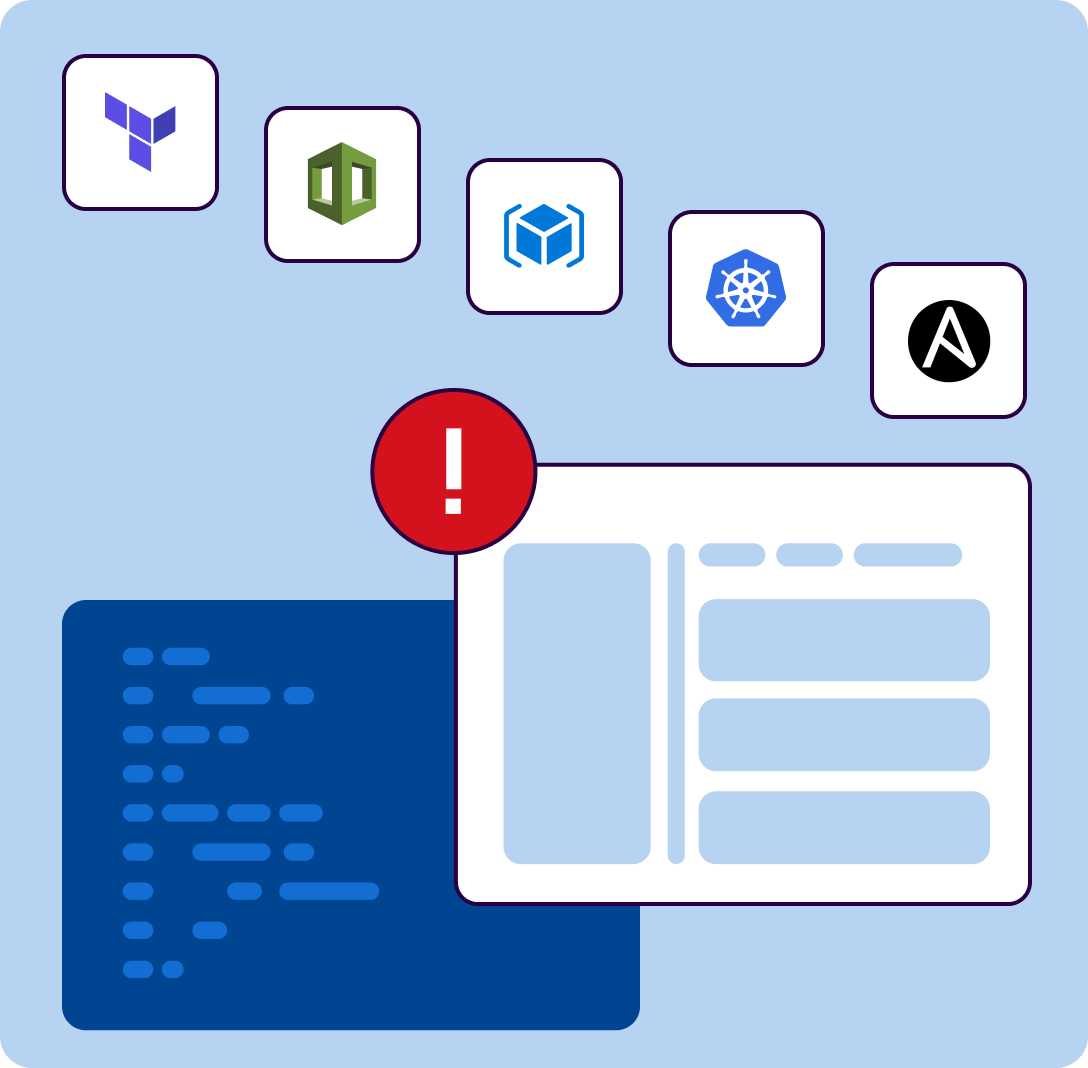
SonarQube offers broad detection and remediation capabilities for over 35 programming languages, including but not limited to Java, JavaScript, TypeScript, Python, PHP, C, C++, and C#. It also provides security scanning for infrastructure as code with support for Terraform, CloudFormation, Azure Resource Manager, Kubernetes, and Ansible.
The platform’s coverage includes first-party code, third-party dependencies, and AI-generated code. This ensures no part of the codebase is left vulnerable, making SonarQube suited for modern enterprise and open source environments alike. Supported frameworks and integrations make it adaptable to virtually any development workflow.