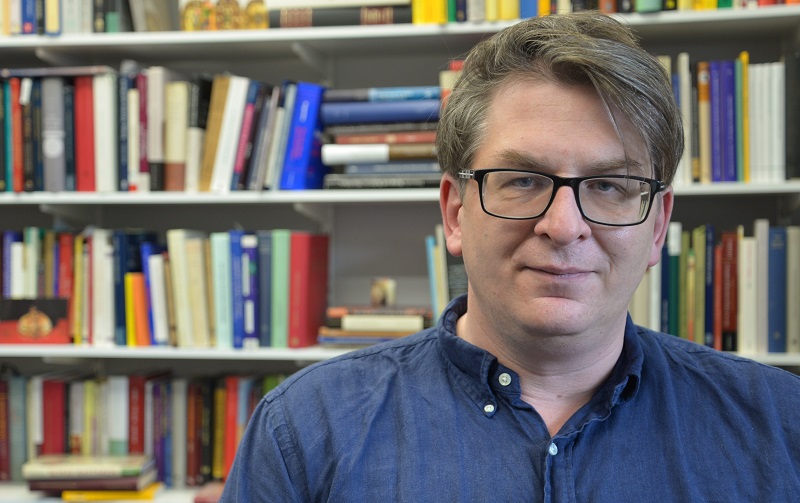
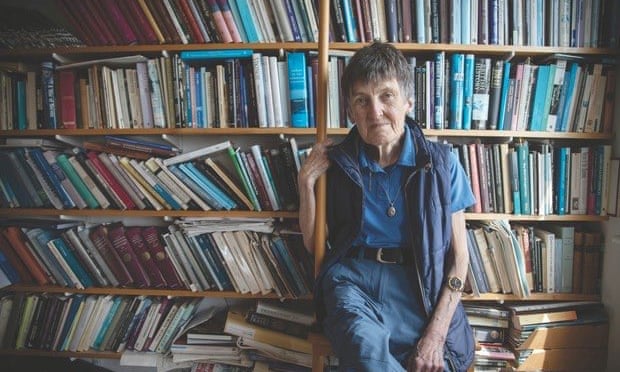
A post for Josep María Salrach

This is very old news now, partly because I didn’t hear it when it was new, but also because I’m afraid I left it until I’d got some of my own news out of the way, as the subject wasn’t going to mind the delay. Because yes, alas, this is another post of passing: one of the great contributors to my field is no more.
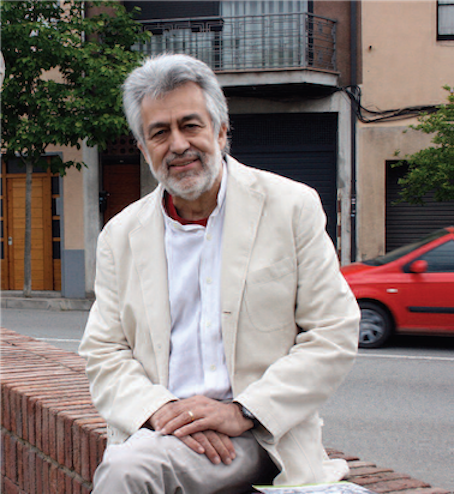
Josep Mariá Salrach

The late Josep María Salrach


If you read this blog, and also read my footnotes, then you’ve heard of Josep María Salrach i Marès, who was Professor Emeritus of History at the Universitat Pompeu Fabrà, where he had been Professor since 1993. But if you read my blog and don’t read my notes, you might have missed his name, and otherwise, while his name would probably be familiar to anyone who studies Catalan history, if you’re not one of those I’d be surprised if you’d heard of him. I did a little bit to try to change that in 2014 when I reviewed one of his books, in English, but even then I had to make the case that it would be worthwhile people trying to read it in Catalan, because as far as I know he never wrote in any non-Iberian language. Maybe some French? But nothing further north-east than that, for sure. And one might say that, since he was first and foremost a historian of early medieval Catalonia, no matter how important he was, did he need to write in any other languages? His readership could meet him on his own ground.

Now, let’s be clear, as a historian of early medieval Catalonia he was pretty important. I still cite a little pair of books he published in 1978, El procés de formació nacional de Catalunya (segles VIII – IX), because since he wrote them we’ve known who succeeded whom in charge of the Catalan counties in the eighth to tenth centuries, at least as well as we’re ever likely to (some work still to do in the ninth, some might say…).1 But that was a set of problems historians had been wrestling with since the early nineteenth century, which he just solved. His work on social change in the area, which was very much in the vein of Pierre Bonnassie’s masterwork on the subject but more explicitly informed by Marx, seemed to go through slight changes every time he wrote about it and I found it quite hard to keep up with exactly what his views now were; but they were always the thing which needed citing on that topic.2 And on the way into his retirement he did a huge amount on dispute settlement in the Catalan counties, some of which is what I was reviewing and which is all really good.3 And he was a critical driver of the monumental Catalunya Carolíngia project, as well as being part of the team which got the first decent slice of the comital archive of Barcelona into print since 1951, so as well as actually doing the history of the area he enabled many others to do it as well.4 But yes, it might be argued that if you don’t read Catalan you can’t really play in that park, so if you needed that stuff you had already made sure you could read it. And if you were in that park, you know Salrach’s work.

But there was more to it, all the same. He wrote a really useful book in Spanish on the social situation of the medieval peasantry, not just in Catalonia but in Europe more widely, and there actually aren’t many of those (and really none in English except, kinda sorta, the work of Paul Freedman, who also started by working on Catalonia).5 And he wrote a short global history of famine in deep perspective which is, as far as I know, the only such thing, and no-one’s heard of it because it’s in Catalan.6 And as I said in that review, even his Catalan-focused work still often has things to tell scholars of other areas, because when you have the kind of breadth and depth of evidence that that Catalan charter corpus gives you, you can just see more of what’s going on sometimes. I often found it quite frustrating that I couldn’t share what I was learning from his work directly. I would submit that Catalan is not a difficult language to learn to read, even, for European medievalists at least. I never had any training in it, or even in Castilian; I just went at it with French and Latin and managed. But few people put themselves in the position where they have to try, and so Salrach’s wider-ranging work was as little known outside Catalonia as his more locally-focused stuff. It seemed quite unjust.

However, these were choices he made and it obviously didn’t bother him very much. We had some very limited correspondence over the book that I reviewed in 2013; he had cited me in it and so sent me a copy, with a handwritten apology for having there called me an American. (It was a fair enough assumption; it’s not as if anyone else, other than Roger Collins, has ever got into this stuff from the UK except Susan Reynolds and Chris Wickham, both always in comparison with other areas, whereas the US has quite a respectable array of medieval Catalanists.7) That brought us into contact, and while it would be safe to say that he did not agree with much of what I have written, when we finally met at my second Catalan doctoral examination, we talked pretty much non-stop for some time despite barely sharing a language. He was horrified to find I had intended to pay for the final volumes of the Catalunya Carolíngia, and rang the shop the next day so that when I went in myself, they were already instructed to let me walk off with pretty much anything I wanted. I tried not to take the mickey, but it was difficult… And subsequently he did me an even greater favour, which was to secure me my second Catalan publication by asking me to write a short biographical article on Count-Marquis Borrell II for a volume on famous Catalans where he was dealing with the medieval stuff. I had to do it, he said, because I was “el màxim especialista”, and as you can tell I’ve always treasured that compliment. So he was an extremely kind and courteous man and I owe him a lot in person as well as the masses I owe to his work, both in print and behind editorial scenes; he was one of those people without whom what I have done and what I have become would just not have been possible. Joan Vilaseca also wrote him a touching and much more immediate obituary which also stresses Josep María’s kindness and courtesy, so I think we can assume this was a general trait, and it’s the one without which the whole academic business can’t survive so really, there are a great many reasons to be thankful for him and his work. I just wish there was still going to be more of them.

He was 80 when he died, which surprised me. Although I knew vaguely when he had retired, meeting him in 2019 I would have put him closer to 64 than the 74 he apparently was; he was fit, energetic and clear of mind, and I understand from this obituary that even a couple of weeks before he died he’d just got another book launched. Someone had told me he was ill some months before that; I heard no more and hoped it had been recoverable. But it was evidently not. I can’t claim to have known him well; but I would give something to be able to have a few more arguments with him about who killed Archbishop Ató of Osona or what was behind the closure of Sant Joan de les Abadesses.7 I’m struggling to find an end to this that’s deeper than that, because in some sense I’m still not really convinced the chance, the man, has gone. But, it is. I wish I’d sent a few more e-mails, got to Barcelona a few more times… But I got a lot of good from Josep María Salrach anyway, a lot of people did and it is a great shame that he had to leave before he was finished.


1. Josep M. Salrach i Marés, El procés de formació nacional de Catalunya (segles VIII – IX), Llibres a l’Abast 137 & 137 (Barcelona 1978), 2 vols. For 9th-century modifications, try Joan Vilaseca Corbera, Recerques sobre l’Alta Edat Mitjana Catalana (Terrassa 2010).

2. The last one I actually read was Josep M. Salrach, Catalunya a la fi del primer mil·lenni, Biblioteca de Història de Catalunya 4 (Lleida 2005), which was definitely related to the first, Josep Maria Salrach, El procés de feudalització (segles III-XII), Historia de Catalunya 2 (Barcelona 1987), but not the same. I’m almost sure there must have been an update, as well, even if not a book-length one.

3. The core of this was the work I did review, Josep M. Salrach, Justícia i poder a Catalunya abans de l’any mil, Referències 55 (Vic 2013). There was also a massive edition of all relevant documents, Josep M. Salrach i Marès & Tomas Montagut i Estragués (eds), Justícia i resolució de conflictes a la Catalunya medieval: col·lecció diplomàtica, segles IX-XI, Textos jurídics catalans: documents 2 (Barcelona 2018), and one of his only two works in English known to me, Josep M. Salrach, "Documentary production and dispute records in Catalonia before the year 1100", in Isabel Alfonso, José Maria Andrade Cernadas & Andre Evangelista Marques (eds), Records and Processes of Dispute Settlement in Early Medieval Societies: Iberia and Beyond, Medieval Law and its Practice 41 (Leiden 2024), pp. 153–180.

4. On that project, see Gaspar Feliu, "La Catalunya carolíngia", Butlletí de la Societat Catalana d’Estudis Històrics Vol. 31 (Barcelona 2020), pp. 79–93, online here.

5. José María Salrach, La formación del campesinado en el occidente antiguo y medieval: análisis de los cambios en las condiciones de trabajo desde la Roma clásica al feudalismo, Historia Universal Medieval 5 (Madrid 1997). A lot of the books that look as if they will be about the life of peasants actually turn out to be about the organisation of labour by lords, which even Salrach’s didn’t really aim to escape; one exception to my remark here is Werner Rósener, Peasants in the Middle Ages (Cambridge 1996), but even that began in German and isn’t, I have to say, easy going. For Freedman’s work see Paul Freedman, "Sainteté et sauvagerie : Deux images du paysan au Moyen Age" in Annales : Économies, sociétés, civilisations Vol. 47 no. 3 (Paris 1992), pp. 539–560, DOI: 10.3406/ahess.1992.279062 and idem, "Peasant Resistance in Medieval Europe: Approaches to the Question of Peasant Resistance" in Filozofski vestnik Vol. 18 no. 2 (Ljubljana 1997), pp. 179–211, online here; both of these seem to have come out of his work for idem, The Origins of Peasant Servitude in Medieval Catalonia, Cambridge Iberian and Latin American Studies (Cambridge 1991), itself given an updated summary in idem, "Peasant Servitude in Mediaeval Catalonia" in Catalan Historical Review Vol. 6 (Barcelona 2013), pp. 33–43, DOI: 10.2436/20.1000.01.84.

6. Josep Maria Salrach i Marès, La fam al món: passat i present, Referècies 50 (Vic 2009).

7. Him: Josep Maria Salrach i Marès, L’assassinat de l’arquebisbe Ató (971) i les lluites pel poder en els orígens de Catalunya. Discurs de recepció de Josep Maria Salrach i Marès com a membre numerari de la Secció Històrico-Arqueològica, llegit el dia 30 de maig de 2018 (Barcelona 2018), on Academia.edu here; idem, "Política i moral: els comtes de Cerdanya-Besalú i la comunitat de monges benedictines de Sant Joan (segles IX-XI)", in Irene Brugués, Xavier Costa & Coloma Boada (edd.), El monestir de Sant Joan: Primer cenobi femení dels comtats catalans (887-1017) (Barcelona 2019), pp. 225–257. Me: Jonathan Jarrett, "Archbishop Ató of Osona: False Metropolitans on the Marca Hispanica" in Archiv für Diplomatik Vol. 56 (München 2010), pp. 1–42; idem, "Nuns, Signatures, and Literacy in late-Carolingian Catalonia" in Traditio Vol. 74 (Cambridge 2019), pp. 125–152, DOI: 10.1017/tdo.2019.7.

Bigger on the inside

The very helpful discussion on blog alternatives a few posts back, still bubbling on, seems for now to be pointing to trying to regrow an audience here. I think that means I need to start posting more than once every few months, don’t you? And things are sufficiently exciting just now that I am starting to stub bloig posts again, for the first time in ages. But I have left it late for today, so let me just bounce some medievalist photography off you once again, if I may?

Ruins of White Ladies Priory, Shifnal

This is the view you see, or at least that we saw in August 2021, on approaching the remains of White Ladies Priory in Shifnal, Shropshire. I know very little about White Ladies, no more than English Heritage’s website will tell me: it was built as St Leonards Brewood for a group of Augustinian canonesses, the eponymous white ladies; it is first recorded in 1186 and architecturally is probably not much older; it was never wealthy; it just about survived till the Dissolution and then became private property; the owners built a mostly-wooden mansion house into the ruins of the church; the house is gone, the ruins are still here. It’s open access and well worth the look. Admittedly, it doesn’t look like much as seen above. But as the subject header suggests, somehow it is bigger inside…

View eastwards down the south aisle of White Ladies Priory
This view down the south from the west end has some humans for scale… And here are some other features, which you can click on to get full-sized and uncluttered.

But for me the best bits are the smaller flourishes. The priory doesn’t seem ever to be have been highly ornamented or anything, but I think every time one passed through these one would have been comforted by both their solidity and their excellence of craftsmanship. And they make a lovely pair to photograph together.

It’s interesting that the north door is a bit fancier. That may be because it was actually the entrance; a 1670s drawing suggests that the south door gave onto a cloister and was presumably for the canonesses and their staff only. Someone coming to the church from outside got the lobed archway. But that’s all!

With so little left, especially of the buildings where the canonesses actually lived and worked, rather than just the one where they worshipped, it’s hard to imagine what life here was like for a small number of medieval women except by analogy with other, preserved places. The documentation English Heritage chooses to mention on its website suggests that the prioresses, at least, sometimes favoured wine and hunting dogs as part of their lifestyle, which is all very Chaucerian. Presumably the normal canonesses didn’t enjoy quite such comfortable conditions, not least because by the end of things they apparently weren’t getting their salaries! But still: the community here lasted four centuries or so, longer than most modern institutions, and in that time a lot of women must have known this as home and the communal religious life as the one they lived. I have no bigger point than that, and I wish on visiting that I’d known some of their names or seen some of the documents, just to give some sense of connection. But worth looking at all the same!

The big ‘what’s going on’

The time has come (the blogger said) to talk of big things. I have flown flags enough, over the last few posts, sporadic as they have been, to give the impression that change was afoot in my life as well as maybe in the blog, and so here at last is the announcement. These are the headlines.

  1. For reasons which the blog more or less makes clear, if you read back over the doldrums, hiatuses, shortage of news and posts about industrial action, despite having had a secure academic appointment in a top UK university I have been looking for other work, academic and non-academic, for a few years now.
  2. Until recently, neither of those searches had been very successful; I got no academic interviews, a couple of museum ones and two real-world professional ones but no offers, and I made a few extra grand over a couple of years buying and selling stuff over eBay and evaluating grant applications, but no life-changing options opened up.
  3. Then, in March this year, a prospect emerged at a private liberal arts university in India (and forgive my paranoia or superstition or whatever it is, but I’ll identify them once I’m actually there). This very quickly became the exit plan; they offered both me and my partner jobs in April and we accepted immediately. I start there in January 2026.
  4. Therefore, in May I handed in my notice at the University of Leeds—and about that I shall say only that the response was to offer to allow me to go sooner—and on 31st August this year I ceased work for them and became a gentleman of leisure.
  5. However, in the meantime, my brilliant partner, already on unpaid leave from our employers, had obtained a fellowship – in fact she obtained two, but had to choose between them – in İstanbul for nine months, and the relevant institution were and are happy to have me there as a trailing spouse, albeit unpaid, which is really extremely good of them.
  6. However again, because it transpires that in my current situation Turkish residence is basically not possible for me to get, as I post this I am taking a couple of weeks solo in Catalonia, which I intend pretty much entirely to spend reading, writing and visiting monuments. (I will only be passing through Barcelona, sorry folks.)
  7. Oh yeah, also in there, on completely unrelated schedules and plans, this year has involved getting my mother into care and then out of it into independent sheltered accommodation with two new knees (and moving and housing her cat and a load of her belongings from the wrong end of the country and back as a result), and also my oft-mentioned partner becoming my legally wedded wife. That latter has made emigration a lot simpler, but we’d been engaged with a date in mind since before the job offers came in, so that’s not why we did it! More traditional motives like wanting to be together forever came in first there.
  8. But as a result of all this, I drafted this on a train through the Austrian Alps, which I followed with a night bus to Sofia and then a night train to the Second Rome, where I have taken up residence as an independent scholar for most of three months except for the current Pyrenean interlude. Then next year I light out to India, where after a term of initial teaching I return to İstanbul for a further two months’ respite. Then follows a brief return to the UK to see family and coordinate getting our cat shipped to India; and after that we’re both there with him for the foreseeable, except for probably-yearly trips back to Europe.
carview.php?tsp=
(A resignedly trusting cat on his unwitting way to a long stay in a cattery. Poor little fella. But no-one we knew could take him in.)

So I’m out of it, but I hope this is actually going to mean being more into it.1 My teaching load, once I have one again, is contractually fixed at 2:2 and confined to six months of the year, variously split, including marking. The gamble is that, with that in play, so much scholarship now being online, my new employers being willing to buy most books and a literal container currently containing our shared private academic library distributed about our offices and dwelling, I’ll actually be better placed to do research and contribute to things than I have been at the supposed heart of UK medieval studies. You will hopefully all be seeing more of me before long, in person or online, than has been possible these last few years. And even if not, I hope I’ll be happier.

However, none of this is simple. Until the end of August I was still responsible in my job, mainly for marking and e-mail although there were a few days in which there was literally nothing else I could do for my wage than historical research. Unfortunately I was also taking some part of the arrangements for the move—though my wife took much more—and then I was fairly frantically packing down, using up, and digitising stuff, and relocating our own cat to the other end of the country as well, until reaching the point now where my, our, belongings, are divided between three storage locations, one of which is being held for shipping to India, and then four suitcases and two rucksacks which we brought, slow-travel-wise, to İstanbul. Reducing a pretty comfortable material life, in which I had allowed myself to collect several sorts of things, to that level was a hard slog. And I really need to catch up on many months, probably years, of short sleep, which I have only really just started on. But I’m doing things, I’m reading again, I’ve sent off some delayed work (and had no acknowledgement, I guess because the relevant editor has also left UK academia and his colleagues are too swamped with term starting to check the relevant email address), and rest is possible again. And I think, before too long, things will be better.

A mosque and a tower in Istanbul
(The Sokollu Mehmet Paşa Camii and the Galata Tower as seen from the Golden Horn on my previous trip to İstanbul in 2016.)

Nonetheless, times of change. My domestic and natal homes have both gone this year, as have my wife’s; I’m unemployed for the first time in two decades, having given up what was supposed to be the job for life; I have left the only country in which I have ever lived with no immediate plans to return there except as visitor; and there are also some bigger changes going on in the world order which you’ve probably noticed yourselves but do nothing to add fixity to my sense of things. All I can say is that in a few months’ time everything will be pretty different, and that sadly in some ways, but excitingly in others, hopefully more, it needed to be. Here goes.


1. And after all, did not the great sage Harvey Bainbridge long ago point out that, “If you wanna get into it, you gotta get out of it”? (Hawkwind, “Utopia”, on Choose Your Masques (Charisma 1982).) He didn’t mean this, I’m pretty sure, but I also doubt he would disagree even now.

Name in Print XXXII: priests around Manresa

Following up unusually fast with another new post, here’s a piece of news with which I am, at least, not as late as with most of my blogging, which is that despite everything going on in the past few years I have actually managed to publish something for the first time in a year or two. I would usually at this point include a picture, but foolishly I packed the volume for shipping without thinking of that—and yes, that does imply more news, it will follow—and so you will have to make do with just a notice.
The church of Santa Maria de Manresa
(The church of Santa Maria de Manresa, “Seu de Manresa” by Josep Renalias – own work, licensed under CC BY-SA 3.0 via Wikimedia Commons.)
So, those with very long memories here will remember maybe that a while back, when I was still at Oxford and then at Birmingham, I started getting interested in Church provision in Catalonia around the town of Manresa when it was still right on the edge of government, and victim to occasional sacks and so on. Because of that endangered position, researching the city and its own Church has to be done through the slightly offset lens of the archive of the monastery of Sant Benet de Bages, which has its own exciting survival issues but never mind that now. Working through that raised all kinds of questions about the leading figures who explain the documents in that archive, how many of the people in it were monks and from when (which you’d think was a simple question but really wasn’t) and so on. But my basic feeling was always that there were churchmen in that sample whose activity didn’t focus on the monastery, and some among them who seemed to be focused in many places at once. And I reasoned that the best explanation for those last was that they were not associated with any one of those places, but with the city in the midst of them where the people concerned were probably coming to get their documents written. And in late 2013 I managed to work out how to show that and presented it a couple of times, and then it sat under the general malaise of my subsequent employment.
Tower of Sant Benet de Bages at evening, from Wikimedia Commons
(Tower of Sant Benet de Bages at evening, from Wikimedia Commons)
Fast forward, then, a decade to 2023 when the Ecclesiastical History Society announced that the theme of thir next year’s conference was ‘The Church on the Periphery’. Well, I have history with the EHS; those of you with even longer memories may remember that I gave them a paper years ago about expressions of doubt in sanction clauses which, in the end, didn’t fall close enough to their theme of that year (‘Doubt’) to get published. Of course, I didn’t mention that negative outcome here, because you know, this is publicity, but I always like to scratch these places which have rejected my work off the list if I can, and what better chance could there have been to fix this one? My work really was right in focus this time. So I submitted an abstract and was accepted. But my goodness, the fates still worked hard to prevent me…

So, for those who don’t know, the Ecclesiastical History Society has two conferences a year, a big summer one in person and a more select winter one online the next January, and the two together make up a year of proceedings and come out as a volume of Studies in Church History. If your paper doesn’t make the cut that year, therefore, it doesn’t get another chance, as the theme is over. So I had intended to go to the Summer conference, but unfortunately there was industrial action the month before. So not only could I not apply for funding to go to the conference, because I was on strike but it would in any case have been refused as the policy was that we were only allowed to do student-facing work until all deficit of that was made good, but also I really couldn’t afford the registration and travel at my own expense that month. So I got in touch and the organisers very generously allowed me to shift to the winter conference at what was quite short notice. And then my aunt had a fatal brain haemmhorage just before it. So in the end, I presented from a hotel room in Stranraer to which I had fetched my mother by road from the south over the previous two days, and then, having done so, went and sat at a deathbed for most of the next couple of days. I didn’t get to hear any of the other papers and must have looked like the most ungrateful attendee ever, but it was really only just possible for me to present at all and the only reason I did in such circumstances was that otherwise I would have missed the chance of publication. These are the kind of stupid sacrifices the Academy forces upon us.
Chart showing the breakdown of priestly activity in the charters from the Manresa area in the tenth century
(One of the slides from a 2013 presentation of this material, showing the breakdown of priestly activity in the charters from the Manresa area in the tenth century. This is why I like dense data…)
Now, that said, I then made myself still more awkward, because my employers had thrown so many obstacles in the way of this paper that I made a point of using none of their resources or time to do the work with and tried to publish it as an independent. That provoked some very difficult emails and was, in the end, the one respect in which the editors at Studies in Church History were unable to oblige this very difficult contributor, not least because in the end the University iof Leeds paid for the publication of it open access by virtue of a higher-level agreement with the publisher. So Leeds will have it after all, but so can you. And it is Jonathan Jarrett, “Priestly Provision at the Periphery: Building the Church in Tenth-Century Catalonia”, in Margins and Peripheries in Christian History, ed. by David Ceri Jones, Peter Marshall and Charlotte Methuen, Studies in Church History 61 (Cambridge 2025), pp. 116–141, DOI: 10.1017/stc.2024.33. It has a lot of charts in it and I’m pretty pleased with it. It’s not the end of the Manresa project, and I don’t know when that will be; but at least I have got it started, after a decade…

Monty Python’s Flying Research Reading

Goodness knows there has been a lot to do lately, and I will explain some of it in a couple of posts—one of the things I have been doing is making more opportunities to write, which will shortly begin to arrive, I hope and trust—but a few weeks ago, before the maelstrom truly swallowed me, I found myself wandering back here and looking at my stubbed draft posts. I tell you, I don’t remember what all of them are about, or even what I was thinking, but this old one still has legs, and is quite like what I think I would mostly do if I did in fact move off WordPress and onto Substack as I have considered doing. That Substack would probably be called I Found a Thing, and this is one of the sorts of thing I would have found. I found this one while tracking uses of the monetary term follis through papryus databases for my 2022 article "Follis or Follaron"a>, in a paper by one Richard Alston.1 (The answer to my question, by the way, is follaron until at least the seventh century.) But first, before I tell you what I found, you need to see or remember this!

Roman soldiers searching the meeting place of the People's Front of Judæa, in Terry Jones (dir.), Monty Python's Life of Brian (Handmade Films 1979)

Now, you might easily think that this creative bunch of comics were, you know, making stuff up when they got to the bathos of the spoon. But that would be to forget that half this stuff, they started coming up with when they were Oxford students, and that the late Terry Jones, in particular, the director, also had a lot of fun in his career using what he’d learned then to upset medievalists and, presumably, also Classicists.2 Because hey, thanks to Dr Alston I found the source. Alston, while talking about the Roman enforcement of authority in Alexandria, invokes a story from the work of the first-century Egyptian Jewish historian Philo, which Alston reports as follows:

"Philo was complaining about the actions of the prefect Flaccus who had searched the Jewish area, using troops, in a most tactless way, breaking into the women’s quarters and causing a great deal of disturbance. All Flaccus obtained from his search was kitchen utensils. This failure is in contrast to his earlier disarmament of the Egyptians which had filled so many boats that the Nile had been congested."3

"We found this spoon, sir!" Now, it could just be art imitating life unconsciously, of course. But if we could only ask Terry Jones, I’d wager he read Philo, or about this story in Philo, somewhere in his education, perhaps at Guildford Grammar rather than St Edmund Hall but who knows, and then, fifteen or so years later when scripting, remembered and went, "oh yes! I know where that goes!" And presumably anyone else watching the film since then who also knows Philo’s work has also spotted it and gone, "aha!" as I did. But on the odds that you, dear reader, were same as me not one of their number, here you are! I found it for you.


1. That paper being Richard Alston, "Violence and Social Control in Roman Egypt" in A. Bülow-Jacobsen (ed.), Proceedings of the 20th International Congress of Papyrologists, Copenhagen, 23-29 August, 1992 (Copenhagen 1994), pp. 517–521. My piece was Jonathan Jarrett, "Follis or follaron? The name of the Byzantine coin of 40-nummi" in Acta numismàtica Vol. 52 (Barcelona 2022), pp. 225–248.

2. When I was first teaching, the TV series which lay behind A. Ereira, Terry Jones’ Medieval Lives (London 2005), was new and my students were all over it as the ‘real’ medieval history their teachers hadn’t wanted to tell them, which is to say, of course, the muddy tropes of both the Victorian era and of Monty Python itself, which was of course taught to them at school by people themselves taught from Victorian-era scholarship… But much older, and much more evident a cat thrown among academic pigeons, is Terry Jones, Chaucer’s Knight: The Portrait of a Medieval Mercenary (London 1980, 4th edn. 2017), which has, self-evidently, done pretty well, but whose research basis has, well, been questioned, and it has even been suggested that he was being deliberately misleading. The man who gave us Dennis the Socialist Peasant? Surely not!

3. Alston, "Violence and Social Control", p. 517 n. 4, citing Philo, In Flaccum, 86-94 & 109-115, and of course because he is or was a Classicist he provides no idea what edition he was using.

Björn Weiler and Jinty Nelson

I am very late with both these pieces of news, but firstly I am not really writing here at all at the moment and secondly, they’re the kind of news one doesn’t want to have. Much as when my partner asks me if I’ve heard of a particular musician I hear a metaphorical bell toll, there is one obvious context for a subject header which is just two names, and I’m afraid that is the situation. Professor Björn Weiler, of Aberystwyth University, died on 15th November last year, and Jinty, or as she’d rather not have been known Professor Dame Janet Laughland Nelson, on 14th October, and I should have said something for them at the time. And whatever is happening to this blog, I still should, so I’m afraid I emerge from hiatus temporarily only to write a double obituary.1

Aberystwyth University publicity photograph of Professor Björn Weiler

Aberystwyth University publicity photograph of Björn Weiler

I will start with Björn because I knew him less well. I ran into him almost only at the Leeds International Medieval Congress, and since I haven’t gone to that for a while, having no new research to present, I hadn’t seen him for some time. I was warned by a friend more socially connected that he was ill, and it was by the same route that the news reached me, not all that long after, that illness had indeed claimed him. This was pretty terrible news. It’s not just that Björn was both gentleman and scholar in an age when that is hard to maintain. His numerous books and articles are scholarship in the best aspect of his academic tradition, which is to say that they are thorough, painstaking and cautious but also illuminated with brilliant insight and still humble enough to expect others to continue to move the subject on.2 We might all wish to be able to say as much of our own stuff, but I know I can’t! But it’s not just that, it is also the loss of his kindness and interest. I hardly knew Professor Weiler, but whenever we met I did not have to remind him who I was, and if he asked what I was working on he listened to and had thoughts about the reply. Anything you had to tell him was useful and interesting enough to be nice about. A collection of posts from social media collated by Medievalists.net as an obituary for him overflows with stories of his warmth and kindness. That was a trait which brought people together and built bridges between them. I have been in more than one conversation at the IMC with a certain medievalist who won’t always talk to me which was made possible just because one or other of us was already talking to Björn, and the certain medievalist didn’t like to kick off in front of him. He was in this literal respect a model to be followed, and in several others as well, and he was only 55, and it’s very sad.

Photo of Professor Janet Nelson from the Guardian obituary by Paul Fouracre

This picture of Jinty is from the Guardian’s obituary, which was written by Paul Fouracre (on whom see below). (As Wikimedia Commons observes, there is no license-free photo of Jinty available.) I assume this is Paul’s photo and take the liberty of assuming he wouldn’t mind me reusing it for this purpose. The obituary, which is naturally a rather affecting one, is linked through.

However, I still didn’t know Professor Weiler very well, whereas while I didn’t expect a funeral invitation or anything, I was rather closer to Jinty. In fact, she was one of my most important academic patrons when I first needed one, and for as long after as I asked her, and I owe her a great deal, a great deal that includes my first invitation to speak at the Institute of Historical Research, my first lecturing gig and a substantial and invaluable part of my academic library. But though I clearly owe her one, a pæan to Jinty is a daunting thing to contemplate. Where does one even start? And once started, how does one stop? She was a legend in her field, and beyond. She was the professor who told a government minister he was a fool in the press and got more coverage than he did. She was, as its first female president, part of what she jokingly called a joint queenship that briefly ran the Royal Historical Society. She was in the legendary Bucknell Group. She supervised goodness knows how many doctoral students; I was at her retirement party when one of the first of them, Paul Fouracre, now well retired himself, gave a far better speech than I could ever manage in her honour.3 She more or less held together the activity of the Earlier Middle Ages Seminar at the Institute of Historical Research for many years. She wrote only two books, both royal biographies, but also had three volumes of collected papers which gathered only a fraction of her voluminous output.4 Every piece she wrote is a jewel, too, written with increasingly conversational style through her career but never losing seriousness, and some of them are lapidary explanations of the basic operations of parts of early medieval society that you can set to students in safety but still make experts nod in agreement years after they first came out.5 She could find the obvious which needed stating and put it before you – I remember well one unusually story-time-like seminar at the IHR which had been displaced into the tea room by building work, during the early stages of Jinty’s work on her biography of Charlemagne, in which she was trying to get his marriage dates sorted out, and which included her pausing to muse briefly and then saying, "You have to understand, these weren’t nice people." From anyone else it would have seemed trivial; from Jinty it was deep truth which explained more than we would usually manage about the problems we create for ourselves by heroising the people on whom we spend so much of our mental time. She did not do so, because she was a better historian than most.

But again the other thing which stands out is her kindness. Jinty was shrewd and far from apolitical, and she was far from agreeing with everyone; but I remember that when I was in the entry stages of my dispute with Cullen Chandler, I explained things to Jinty and she said, "well, keep things comradely, that’s what matters," and I probably should have paid more attention than I did. I was not a pupil of hers, and I’m not completely sure why she decided I was worth backing, except that I think she decided a lot of people were worth backing and then did that. But that backing got me three months of teaching in her stead; a half-made book pitch for Manchester Medieval Sources laid in front of their editor for me which, alas, I never finished the other half of though I still might some day because it was a good idea; 47 more books on my shelves to this day, retrieved during increasingly final sweeps of her office ("I’m not sure I’ll ever read these, Jinty."—"That doesn’t matter, Jon, I just want them to have a good home.")6; and I don’t want to think how many references and letters of recommendation. She didn’t have to do any of that; but I showed up at seminars, asked questions where I could, hung about and was sociable and seemed, I suppose, to know my stuff, and that was enough. Obviously I was never going to be able to repay all that; neither would she have expected me to. But even during my M.Phil. in Cambridge, a time of some difficulty where I racked up a lot of favours owing, I’d realised that except for very rare occasions one couldn’t pay back academic patronage; one could only pay it forward, to the next wave of people who showed up and seemed to know their stuff. And I have tried to until very lately, and still do where I can, and I comfort myself that Jinty would probably have thought that all she would have asked of me. I used to say that the academy ran not on its paid labour but on its goodwill work; Jinty was one of the best models of that I ever saw.

The last few times I did see Jinty, it was clear that she was finding it slowly more difficult to remember things and keep track of conversations. Despite that, her final book did come out. I don’t think it’s the book I wanted her to write – which would, I suppose, have been something like what Pauline Stafford has done for the reigns of English kings and queens of the tenth and eleventh centuries in her books, but for Charlemagne – but it is the book Jinty wanted to write and so it was a massive relief to me that she finished it.7 I still very much wish she was still around to talk to, and I’m sure there are many who feel the same from much closer to her; but even if the clouds did close in on her, hers was a life whose good works, printed and personal, shone on and shine on anyway, and I hope that was a continuing comfort to her until she no longer needed it. I shall be one of very many who will miss Jinty Nelson for a long time.


1. Even this one post has been in draft since January, as well, so there is as yet no clear path to a resumption of blogging I’m afraid. Details of an unclear one are emerging, however…

2. Because Björn worked later than I tend to, I don’t have the personal knowledge of his work necessary to list his greatest hits, but I can mention as things I’ve found useful despite the time between us these: Björn K. U. Weiler, Kingship, Rebellion and Political Culture: England and Germany, c.1215-c.1250, Medieval Culture and Society (Basingstoke 2007); idem, “The King as Judge: Henry II and Frederick Barbarossa as seen by their contemporaries” in Patricia Skinner (ed.), Challenging the Boundaries of Medieval History: the legacy of Timothy Reuter (Turnhout 2009), pp. 115–140; Weiler, “Describing Rituals of Succession and the Legitimation of Kingship in the West, ca. 1000–ca. 1150″ in Alexander Daniel Beihammer, Stavroula Constantinou and Maria G. Parani (edd.), Court Ceremonies and Rituals of Power in Byzantium and the Medieval Mediterranean: comparative perspectives, The Medieval Mediterranean: Peoples, Economies and Cultures, 400-1500 98 (Leiden 2013), pp. 113–140.

3. It began something like, "You all know Jinty well, or so you think, but I’m going to tell you some things about Jinty you don’t know. First of all, she is lousy at winking…" He had the hall in stitches before he was done.

4. The biographies Janet L. Nelson, Charles the Bald, The Medieval World (London 1992) and eadem, King and Emperor: a new life of Charlemagne (London 2019); the essay volumes eadem, Politics and Ritual in Early Medieval Europe, History 42 (London 1986); eadem, The Frankish World 750-900 (London 1996); and eadem, Courts, Elites and Gendered Power in the Early Middle Ages, Variorum Collected Studies 878 (Aldershot 2007); and to them one should probably add, as well as innumerable volumes she edited, eadem (transl.), The Annals of St-Bertin, Ninth-Century Histories 1 (Manchester 1991).

5. This is a bit of a greatest-hits list, but, I would pick especially
Janet L. Nelson, “Kingship and Empire” in J. .H. Burns (ed.), The Cambridge History of Medieval Political Thought, c. 350–c. 1450 (Cambridge 1988), pp. 211–251; Nelson, “Gender and Genre in Women Historians of the Early Middle Ages” in Jean-Philippe Genet (ed.), L’historiographie en Europe (Paris 1991), pp. 149–163; Nelson, “Family, Gender and Sexuality in the Middle Ages” in Michael Bentley (ed.), A Companion to Historiography (London 1997), pp. 153–176; and Nelson, “Medieval Monasticism” in Peter Linehan and Janet L. Nelson (edd.), The Medieval World, 1st edn, Routledge Worlds (London 2001), pp. 576–604. They all opened my eyes onto topics where I might already have thought myself informed.

6 This, of course, obliges me never to get rid of them unless I can be sure they will still have a good home; but thankfully, most of them have been really useful, including constituting my basic teaching library for some years.

7. It being, of course, Nelson, King and Emperor.

Aside

I was answering e-mail from a subscriber a few days ago which involved me writing the below:

I’m sorry that I have to answer this during a phase of hiatus. The problem is that I signed up for extra work from the EU, because for complex reasons my household is down to one income at the moment, and the deadlines turned out, once contract was signed, to be near-immediate and nigh-impossible. At the same time, most of my weekends are going on helping relatives clear my mother’s house while she moves into a supported residence via a care home and at least one knee replacement. I should probably tell the blog at least some of this…

And, well, I should, so why not all of it? But in case you were especially worried, spread it around: it’s not just me. The excellent Liz Gloyn has spoken for us all in UK humanities at her blog Classically Inclined. For the moment I, like her, am safe. But for longer than the moment, bigger solutions are required and they’re probably going to keep me from blogging for a while. I will pick or wrap things up here once some of these things are completed…

Gallery

Medievalist in North Wales VII: older stones

This gallery contains 3 photos.

I am travelling this weekend and have time only for a short post, but happily one of the two final posts from my 2021 trip to North Wales is very short, and is therefore presented herewith. This was another bit … Continue reading

Correction V: Unifred less-beloved

Sorry about last week; deadlines, is all I will say, and we’ll see what happens. However, also a factor was that I didn’t really want to write this post. I was telling myself that’s because it would be hard or long, but it’s not really. The actual problem is that it’s one of the posts where I have to admit I was wrong. But you gotta, when you realise; so here goes.

Entrance to the Archivo de la Corona d'Aragón

Entrance to the Archivo de la Corona d’Aragón in 2011, where if I’d been able to spend any time in my doctorate some things might have been different

This one goes back to my doctoral research, when while working through the charters from the comital archive of Barcelona that are now in the Archivo de la Corona de Aragón I noticed a man called Unifred turning up a lot, and once with a woman called Riquilda. Lots of women were called Riquilda, but once I also had the charters from Vic in play, I thought I saw more bits of what had been going on and it was pretty interesting. Unifred, or as we might now say it if anyone still used the name, Umfred or Onfret depending on what language you want, was the name of one of the sons of the vicar Sal·la, who founded the monastery of Sant Benet de Bages; FACT.1 Riquilda had been married to someone called Unifred, Unifred Amat in fact, and had a son called Guillem; also FACTS.2 But plot twist! Sal·la’s son Unifred also turns up with a woman called Sesnanda, who seems to have been running his foundation at Òdena for him and after his death, defended her claim to lands there on the basis of him having been her man, vir; also FACTS!3 And I put all the documents I could get together and concluded that what seemed to have happened here was that Unifred son of Sal·la had been married to Riquilda and had Guillem, but had then put Riquilda aside – and in the charter which mentions her and Guillem a priest called Seniol who is elsewhere shown to be her brother apparently felt it necessary to warn her of the dangers of an active libido, so I wondered if she’d been caught sleeping with someone else.4 Then once Unifred and Riquilda were separated, or even before who knows, he had taken up with Sesnanda and passed a lot of his property onto her, but without marrying her, so that her inheritance lay open to challenge. And in that latter phase of his life he seemed to be carrying this extra name, Amat, in the documents Amado, which literally just means "beloved", so I thought his romantic entanglements might actually have brought him a nickname. Not FACT, but a smart reading of limited evidence! And so I put this in the book.5

My own copy of my book, Rulers and Ruled in Frontier Catalonia, 880-1010: pathways of power

Remember the book? Still available, kids! Jonathan Jarrett, Rulers and Ruled in Frontier Catalonia, 880-1010: pathways of power (Woodbridge 2010)…

Nonetheless, I should have thought harder about that byname. In the period of these documents the folk of what would become Catalonia didn’t use surnames, which can be extremely frustrating when trying to distinguish them. If they use two names at all, then the second one is either their father’s, by way of identification, or a nickname or byname.6 I knew who Unifred’s father was and that he wasn’t called Amat; so I went for the latter explanation because my theory fitted nicely with it. Even then, I should have remembered that the main reason you ever get these extra names is because someone needed to distinguish their holders from someone else. A few charters ago we met Guitard Beraza, remember; he’s almost certainly recorded thus because he’s not the only Guitard following Count Borrell of Barcelona around at that time.7 So the fact that Unifred Amat had a second name should have made me think there were probably two contemporary Unifreds, and then maybe look at the two relationships and think: two people, two partners? But I had a theory, and the evidence didn’t outright contradict it, so I didn’t think any of these things, and as long as no new evidence came to light no-one was going to be able to say I was wrong. Oh well.

Castellví de Rosanes nowadays, from Wikimedia Commons

Home of the Amats? Read on. This is Castellví de Rosanes in deep Barcelona, image by Pere López Brosaown work, licensed under CC BY-SA 4.0 via Wikimedia Commons

So, remember that back in late 2021 I was going through the Barcelona documents in the last volumes of the Catalunya Carolíngia? There’s the new evidence. Unifred Amat is in there and one document identifies him nice and clearly as the son of Sendred, vicar of Castellví de Rosanes.8 So, two people. At that point, of course, the whole thing comes crashing to bits. They’re still quite big bits: Unifred Amat was married to Riquilda, her priestly brother still smack-talks her urges and, note, Amat actually is a surname the family carries, as neither Unifred nor his son Guillem had fathers of that name. Also, Unifred son of Sal·la did apparently have a long but unofficial relationship with a lady castellan of his that nearly left her without means after his death. It’s just that these weren’t the same story. And I know it’s not changing the face of the earth, but I did put it in the book, and rested several blog posts on the story as well, because it was a good story. But my version, at least, was only a story. Sorry, sorry, I’ll try not to do it again…


1. He is identified as Sal·la’s son in the act of consecration of the church of Sant Benet de Bages, printed in Ramon Ordeig i Mata (ed.), Catalunya Carolíngia volum IV: els comtats d’Osona i Manresa, Memòries de la Secció històrico-arqueològico 53 (Barcelona 1999), 3 vols, doc. no. 1127, and in Sesnanda’s court case, mentioned below, ibid. doc. no. 1736, to name but two.

2. All visible in ibid. doc. no. 1564, with the family links set out in the earlier Ignasi J. Baiges i Jardí & Pere Puig i Ustrell (edd.), Catalunya Carolíngia volum VII: el comtat de Barcelona, Memòries de la Secció històrico-arqueològico 110 (Barcelona 2019), 3 vols, doc. no. 688.

3. She makes that claim in ibid. doc. no. 1736, as said above, and previously called Unifred "my lord", senior meus, in ibid. 1133; she otherwise occurs in conjunction with him in ibid. doc. no. 1263 during his life, and posthumously, executing his will, in doc. nos 1276 & 1283.

4. Ibid. doc. no. 1564, where the gift is made, "in such a way, namely, that while you shall live as long as you do not through any libidinous urge join yourself with another man you may hold and possess [this land] and provide for your sons and daughters from it and do as well as you can to do as much better as you can see with it, and after your death indeed let it revert freely and integrally and let them hold and possess it and divide it among themselves equally," in tale videlice racione ut dum ti vixeris si ad ullum ominem ten non coninuxeris per nullam libidinem teneas et possideas et filiis et filias tuas exinde nutrire facias and bene facere ut melius viderius vel potueris, post obitum vero tuum ad illis remaneat liberum vel integrum et illi teneant et possideant et inter se equaliter dividant. He has already specified that he means this gift to go to "your sons and daughters from one father", et filios et filias tuas ex uno patre genitis. I might be over-reading this, of course, but these phrases are unusual; I’ve never seen them elsewhere.

5. Jonathan Jarrett, Rulers and Ruled in Frontier Catalonia, 880‒1010: pathways of power (Woodbridge 2010), pp. 148‒150.

6. See, if you want, Josep Moran i Ocerinjauregui, "L'antroponímia catalana l'any mil" in Imma Ollich i Castanyer (ed.), Actes del Congrés Internacional Gerbert d'Orlhac i el seu temps: Catalunya i Europa a la fi del 1r. mil·leni, Vic-Ripoll, 10-13 de novembre de 1999 (Vic 1999), pp. 515–525, or the older but more accessible Jordi Bolòs, "Onomàstica i poblament a la Catalunya septentrional a l'alta edat mitjana" in Philippe Sénac (ed.), Histoire et archéologie des terres catalanes au moyen âge (Perpignan 1995), pp. 49–69, online here. In English there is the less directly relevant survey of Lluís To Figueras, "Personal naming and structures of kinship in the medieval Spanish peasantry" in George Beech, Monique Bourin and Pascal Chareille (edd.), Personal Names Studies of Medieval Europe: Social Identity and Familial Structures, Studies in Medieval Culture 43 (Kalamazoo MI 2002), pp. 53–66.

7. See, indeed, Jarrett, Rulers and Ruled, pp. 155‒159, for two more.

8. He therefore occurs in Baiges & Puig, Catalunya Carolíngia VII, doc. nos 324, 682, 688 as said above & 711, and also Ramon Ordeig i Mata (ed.), Catalunya Carolíngia volum VIII: els comtats d’Urgell, Cerdanya i Berga, Memòries de la Secció històrico-arqueològico 111 (Barcelona 2020), 2 vols, doc. no. 662. Of these, CC7 324 is a gift from his father in 951, and even his father calls him Unifred Amat.

Medievalist in North Wales VI: Finding the Wrong Welsh Bridge

I think there are three more of these posts from my tour round North Wales in summer 2021, and this one was going to be another fairly simple photo-dump, until the first bit turned into an evening’s research by itself… So now you get to find out what I found out! This was one of those happenstance discoveries made by following a random sign, a practice I wholeheartedly recommend. So this is the story.

It was only the most incidentally personal history that had led us to Dolwyddelan, and nothing to do with the interests of either blog or blogger to be honest, but once our purpose was more or less accomplished, we found our map rather inadequate and had to pause for a while to try and work out our bearings.1 And when I strode up the road a bit to see if there were signs, I found one saying, “Roman Bridge”. To which I was, as it is classically put, like, "huh", not least because I didn’t think there was really much Roman in this bit of the country. So once we had decided how we were going to get out of where we were, we thought we’d have a look down that way first. And this is what we found.

Zoomed-in view of the northward face of the Pont Sarn Ddu, Dolwyddelan, in 2021, before conservation works

This is the northwards face, zoomed in tight to show the architecture; it was about the clearest angle one could get without actually being in the river


I may not be the right period of historian, but this did not look Roman to me; the stone isn’t dressed and it’s overall a bit irregular, though it’s obviously old and in that sense has done pretty well in as far as it’s still up. But it turns out that, although there is a bridge in Penmachno called the "Roman bridge", which is nothing of the kind, being a 17th-century single-span packhorse bridge that may, may have replaced something older… we weren’t in Penmachno and this isn’t that bridge.
Pont Sarn Ddu, Dolwyddelan, seen from the north with the railway tunnel to Pont Rufeinig in the background

This is a view from further to the north, showing some of what I mean about photography problems but also the mouth of a railway tunnel behind it, which has in the end been vital in working out where we actually were


For some unknown reason I had my camera’s GPS switched off that day, so working out what it actually is at three years’ remove has been a bit of a labour. The main complication has been that I now know the sign to Roman Bridge was actually pointing to a settlement of that name, in Welsh Pont Rufeinig, which we had not reached. To make matters worse, Wicipedia has a picture of this bridge which matches the one above very closely, captioned as "Y Bont Rufeinig". And it isn’t, either Roman or in Roman Bridge, though Roman Bridge station is just through the hill (via the tunnel mouth in the picture above) and it turns out people do call this bridge after the place, which is presumably why the caption. I say, "it turns out", because eventually I did find out more.
View along the north face of the piers of Pont Sarn Ddu, Dowlyddelan, in 2021

Here’s a view along the piers, another struggle to get any camera angle on the structural elements. I couldn’t photograph the southern face at all, which would probably have told me something as, from the pictures in the archæological watching brief, that’s where the 1950s concrete is visible. But I couldn’t see it! And in any case I’m getting ahead of myself…


What we were actually looking is Pont Sarn Ddu, across the River Lledr, and its upper parts at least are said to be 18th-century on the grounds that a map of 1794 shows it. That isn’t the best argument, and I would have been prepared to accept earlier origins myself. Indeed, a story about its beginning to crack up in Nation Cymru says:2

"Known locally as 'The Roman Bridge', the bridge's lateral projections on its piers suggest anchoring points for timber struts, suggesting the structure was originally constructed from rubble piers and timber. Consequently, historians believe the bridge dates back to medieval times or even earlier."

Just as I don’t like arguments which amount to, "it’s really old, it must be Roman/Muslim/whatever", or indeed ones which assume that the first time we have surviving writing about something is when it dates from, I am also not keen on ones that go, "it was built shoddily, it must be medieval." So I went digging a bit further. Coflein’s entry for the site is disappointingly short, and just gives the 18th-century date without further details; but it does link to a 96-page archæological watching brief document, honestly a bit more than I’d bargained for.3 And it turns out that there is a really obvious reason for that date, which is that according to maps older than 1794 there was a lake here until at least 1701. So 18th-century is really all it can be.4 And in fact it’s been mightily mucked about with since then, including the addition of a concrete core in 1953, and the archæological watching brief arose because the year after we were there and I took these photographs, they put even more concrete in it so it could take heavier vehicles to Blaenaeu Dolwyddelan which lies beyond, most importantly fire engines, which had had to be banned when it started to crack. The bridge is Grade II listed, so I assume it still looks roughly the same, but it’s barely even early modern inside by now.

So what’s the moral here? Perhaps that sometimes it takes archæologists to show so-called "historians" how to do archival work? But since they did, so can I and now so can you. Or perhaps it’s that judging a structure by standing fabric without opening it up is always risky; but again, in this case we can now do better. Quite what your chances are of running into someone from near Dolwyddelan who wants to tell you they have a medieval or even Roman bridge across the Lledr there, I don’t know; but now you’re ready for ’em!


1. We were running off an 2019 AA Road Atlas, which for England and even Scotland was fine, but in Wales’s case just missed out roads, and not just tiny lanes to nowhere but numbered B-roads sometimes (though granted often still quite tiny). Compounded with that, our Garmin satnav has a marked tendency to try to cut corners off A-roads with ‘short-cuts’ which are national speed limited, in theory, but actually hill tracks, and we needed to be able to second-guess her. In the end I bought a Landranger for North Wales out of sheer frustration. The 2023 AA Road Atlas we now have has not filled in all the gaps, either. Is Wales just not thought worth mapping or something?

2. David Evans, "Conwy bridge with medieval origins visibly cracking", in Nation.Cmyru (29th October 2021), online here.

3. Carol Ryan Young, "Pont Sarn Ddu, Dolwyddelan / Sarn Ddu Bridge, Dolwyddelan: Briff Gwylio Archeolegol / Archaeological Watching Brief / Cofnodi Adeiladau / Building Recording", Yr Amgylchedd Hanesyddol yn Cofnodi Prif Gyfeirnod / Historic Environment Record Event Primary Reference Number 46197, Prosiect Rhif / Project No. G2702, Adroddiad Rhif / Report No. 1610 (March 2021), online here.

4. Ibid. p. 10, arguing directly with the Cadw Historic Buildings listing. That apparently uses the same argument as reported by Evans, "Conwy bridge", suggesting he may at least have gone as far as looking up the listing, and to be fair, I’d have trusted that too.