Emmanuel Carrère, Yoga (2020)

carview.php?tsp=

To summarize a book by Emmanuel Carrère is difficult at the best of times, and Yoga is even more difficult. Even the back cover has given up. It is about a meditation retreat, a mental breakdown, terrorist attacks, and refugees. And so many random things in between. All these being bits of Carrère’s life between 2015 and 2018 when his friend and publisher died. Added to the fact that Carrère doesn’t say if it’s fact or fiction. I chose to believe that it’s mostly memoir…ish.

It reads like butter. Smooth and rich. I tore through the pages in a few days, but at this point Emmanuel Carrère could make me read the phone book. The book has its weaknesses for sure. It is disjointed, awfully egocentric, and with sometimes pretty empty sentences. There are obviously some key private moments that Carrère chooses not to share: I respect that but it feels like a hole in the story. Carrère is full of himself, but he doesn’t want to lie either. He is totally authentic in showing us the best and worst of himself.

The downside about those books about anything and everything is that it’s difficult to have a precise memory of them a few years later. I was surprised when I checked this blog that I have read most of Carrère’s books. It left me an overwhelmingly positive impression, but still quite vague. I wonder what will be left of this one book in a few years. I would not recommend it as a first contact with Carrère but if you have read any of his previous non-fiction ones you’d know what to expect.

Laure Murat, Toutes les Epoques sont Dégueulasses (2025)

carview.php?tsp=

A few years ago, when French journalists and social media learned that in the US or UK, some books were rewritten to remove offensive language, like Agatha Christie’s or Roald Dahl, it was a huge outcry. Literature is sacred, and touching to a bestselling novel was nothing short of sacrilegious. French publishers said that they would not change the translated text. Of course, arguments were made without examining the facts, and French conservatives had a field day bashing woke Americans.

This very short essay (under 100 pages) tries to provide balanced answers to the outrage and the accusations of censorship. Laure Murat is French; she teaches at UCLA, her research is on cultural history. She argues that many rewriting efforts aim at making old (dead) authors more palatable to modern readers to push their sales numbers. Otherwise, they just might no longer be read at all, which is always an option to consider (I think here of James Bond’s books that are blatantly sexist and racist).

She points out that many rewriting attempts are for children books (Roald Dahl’s in particular), a genre where editing has always been a common practice. She’s not against sensitivity readers (another sensitive topic for French conservatives), arguing that many novels are already read and edited by legal departments to avoid litigation risks and that sensitivity readers will also contribute to better texts.

The title means “Every era is sh*tty” meaning that at every period of history, people write things that later generations will find abhorrent and offensive. Murat supports (live) writers rewriting their own works, but for dead authors, she argues that it’s better to provide the context of the original text than to change the text. I felt that this short book was full of nuances and offered a good compromise, avoiding extreme options.

Muriel Spark, Memento Mori (1959)

carview.php?tsp=

Although I read this book back in November, I haven’t posted anything to this day because I was not sure. Not sure of what? Even that is perplexing to me. Did I like it? Well I think I did. Unless Spark pulled a trick on me and I have misunderstood the whole book, which could also be possible. To be clear, I do not regret it one minute, but I don’t do very well with humor in books, so at times I was not sure if I was supposed to laugh, cry or get outraged. The Prime of Miss Brodie is like that, taking you reader from one proper British banter to the next until you have swallowed hook, line and sinker: “sorry what?”

Memento Mori is about a group of old people who receive anonymous phone calls, with a voice just reminding them “Memento Mori”. It starts with one particular lady, who has a high opinion of herself and is outraged at such a cheeky remark. But then others get it too. The police is called, but they have more serious crimes to consider, and a retired policeman takes it on with dubious results.

The little circle of friends we are introduced to is largely over 70 and they have had a lifetime to know each other’s secrets, to lie or cheat one another, but are still mostly polite to one another. The phone calls set a chain of events where some situations will be exposed, and some characters, well, expectedly or unexpectedly will die (I’m not spoiling anything). It’s British dark humor at its best, and it hasn’t aged.

I knew that I wanted to read a book by Muriel Spark in 2025, but for months I had no clue which one. My local library only has her biography of Mary Shelley (weirdly enough), and I was considering “Loitering with intent” or “Girls of slender means”. But Layla convinced me otherwise with her enthusiastic post on Memento Mori. I’m choosing to take my perplexity as something positive, to be explored further. Muriel Spark is definitely intriguing to me, and so I should probably read her again in 2026!

Raymond Radiguet, Le Diable au Corps (1923)

carview.php?tsp=

This is a French novella written by a young prodigy who died at 20 a century ago, one of those short classics that is often on the national high school lit class program. I read it as a teen myself and mostly didn’t get much out of it. I think it felt dated to me. Now that I’ve reached the time when I have one teen boy at home who’s older than the main character, I shudder and understand better the full impact of the book that created such an outrage at its publication. I read it just before Christmas, and this is completely inappropriate for a season with good feelings, happily ever after and family reunions. Nothing is less Hallmark movie than “The devil in the flesh” 😁

A typical wartime novel would probably be about the cruel sacrifice of the soldiers, of trauma and hardship on the front or back home. A typical wartime love story would describe the longing between separated couples. On the contrary, this boy tells us from the first paragraph that these four years were like a long vacation for him and his generation! Shocking! And the soldier’s wife happily cheats on him with a boy! We hear nothing about the soldier’s plight in the trenches, and the boy even makes his mistress tear his letters without reading them! Shocking!

I was shocked in a good way that Radiguet managed to make us care for a main character who is so unlikeable. He’s almost insufferable. In fact, it may be my motherly instinct, but I do blame the parents a lot more for the behavior of their son than him. They sometimes blame him, sometimes seem over-indulgent or even encourage his attitude, never taking an interest in his studies or his life to fully realize, until too late, what he’s been into. Of course, one may excuse it on accounts of the war, but the main character never mentions any family member in the troops, and the father seems more mindful of his reputation than anything else.

Probably like father like son, the main character is a monster of egoism, and very pretentious. I chose to consider that he does believe many definite sentences about love and life, but you can also choose to believe that he’s just trying to be self-important. At any case, he’s fickle and cruel to his mistress, but mostly totally immature. One could wonder what the young woman Marthe finds in him, except that she is barely 3 years older than him and married to an absentee, much older man whom she never really loved very much. In some ways she seems as clueless and bored as the young man is! The ending (which I won’t spoil) is a very dark social criticism of the bourgeois conventions.

I heard that most of the scandal was linked to the way Radiguet’s publisher Gallimard brazenly drummed up his newly-discovered 17 year-old genius. In the context of post-war, the amorality and shamelessness of his book was probably too much.

2026 Bookish Plans

carview.php?tsp=

I’m taking my sweet time to polish my 2026 book goals… resolutions… plans… whatever you want to call them. I have never been great at being ready with those on Jan. 1st, even less by end of December (how do people do, and still have all the presents ready and some fine food on the table?). Instead, I give myself another fortnight after the festivities. A way for me to not over-commit (after another glass of champagne?) and to assess the different areas of my reading life.

Without further ado: I am setting myself a low bar in book number, to release the productivity pressure, but also to include big books this year, as my adventure with the mammoth War and Peace went quite well last year. I will be happy if I read anthing over 80 books, among which 10 books that I tag as “Doorstoppers” and define as over 450 pages.

(why 450 pages? Just because I said so… 500 is a round-er number, but also scarier)

Last year, when I started playing with the idea of big books, I added in my TBR a few titles that had been tempting for a long time, and that I had never even put on the TBR list because their size was scaring me: I’m thinking of “The Goldfinch” by Donna Tartt, “Life after Life” by Kate Atkinson or “Life and Fate” by Vassili Grossman. But then, I also looked at the older titles in my TBR and saw some big books that were lingering there for a while (probably because of their size as well).

So, while I’ll try to read from my shelves and from the library, I will also buy digital copies of big books because I discovered this really helped (my eyes, my bag, and my general mood to pick it up).

After careful consideration (are you sensing a trend here?), I set the goal of reading 15 non-fiction and 10 short-story collections. I will cap my Netgalley picks at 12 (down from 15 last year), and be using it strategically, to try translated authors, to read out of my comfort zone or to broaden my selection of short story collections.

Speaking about comfort zone, I want to try several new things this year:

  • 1 Dark romance. I’ve heard of that trend a lot, but my prejudice is “nah”, and it makes me feel old. I want to try one book in that genre and be open-minded (open door is fine with me, at least that’s what I’m saying now). Hit me with recommendations.
  • 1 Science fiction novel. I often staid in the short format when there are robots and spaceships, but I think I can try longer now, they’re not that scary. On the family shelf is “The Three-Body Problem” by Liu Cixin, which would also hit the doorstopper category, but I’m not 100% sure yet.
  • I want to investigate getting a non-Kindle e-reader. My library is not open to Kindle, and they have more and more digital copies of books that interest me, so I increasingly feel that I’m missing out. I also try to limit the number of books I buy from Amazon (in print), and the amount of money I give to Jeff Bezos in general. Once again, hit me with your ideas, or things I should consider.
  • I want to try Storygraph for several months in parallel of Goodreads, and make an informed decision before middle of 2026 which one I’m keeping for good. (I have signed up on Jan 1st, more about that another day)

Not everything will be different, of course. Here are the things I’ll continue working on:

  • Using my Excel TBR, which is slowing getting less aspirational and more realistic (although still not exhaustive)
  • Trying to read from authors that I discovered and said I’d love to read more of, even if I haven’t found a fully satisfying system yet
  • If a book is lingering on the TBR for a long time and is available second-hand anywhere, I will purchase it
  • being ruthless about not keeping finished books that are less than 5 stars (I almost never throw them out, and have several places to dispose of them, so it makes me feel good about not keeping them on our over-crowded shelves)
  • downloading Kindle samples to confirm if I still want some books that are on the TBR for more than 3 years, or if I can weed them out.

I wish you a lot of success with your own bookish plans. How are they starting off?

My Year in Books Read: 2025

carview.php?tsp=

I have seen this meme go round and round, and in the spirit of extending the holidays a little more, here is my take for it! Do feel free to join in! (Here is Cathy’s take and AnnaBookbel’s)

Using only books you have read last year (2025), answer these prompts. Try not to repeat a book title…

In high school I was Taken at the flood (of assignments and homework)

People might be surprised by (the) Strange Weather in Tokyo

I will never be Crying in H Mart

My fantasy job is The Bookstore Keepers

At the end of a long day I need (to join) The Swimmers

I hate being (in) A Darker Domain

Wish I had (built) Build a Second Brain

My family reunions are Bookstore Family (not by owning a bookstore, but certainly visiting them more than our fair share)

At a party you’ll find me with Glorious People (although I’m not much of a party person)

I’ve never been to Berezina (not sure I wish to)

A happy day includes Knife and Green Chili

Motto I live by Everything is Probably Fine

On my bucket list is No Oil Painting

In my next life I want to have The Choice

Wow, that was more difficult than expected, given the books I read last year! Maybe I should choose more books by their titles?

Val McDermid, Stranded (2005)

carview.php?tsp=

I have finished 2025 with 4 unreviewed books, which is honorable by my standards. One of them is this short story collection I gave to my husband to dip his toes into her books (he told me later that he’d already read simmering by her). And then I got to read it myself. (No, I didn’t do it on purpose).

This short story collection has a little bit of everything, some police investigation, some thrillers, a piece that sounds like a memoir, a short foray into slapstick comedy. Many stories are about revenge against men and many feature lesbian main characters. I was not expecting sexual scenes, and I’d rather have known beforehand, but it made sense, and they were well written.

I found the collection rather uneven, and the magic plotting skills of McDermid didn’t have enough space to fully develop. “The four calling birds” has the same background of the 1980s miners’ strikes that feature in A Darker Domain. My favorite story is “The girl who killed Santa Claus” because it was so unexpected. To say more would be spoilery.

I would not recommend it as an introduction to Val McDermid, but rather as a complement for someone who has already read some of her more standard police investigations, to show that she can indeed write very different stories.

2025 in Books and Happy New Year!

carview.php?tsp=

Ok, this AI image does not look like anything realistic or close to my own situation… and yes, this woman has 6 fingers, an unopened bottle, and books with rubbish titles. Yet celebrating new year with books and champagne in a cozy library when it’s cold outside… I certainly understand the appeal. I wish you all a very bookish new year, filled with joys and happy discoveries!

As always, spending a few quiet moments on the new year to look at my stats is one of my pleasures of the end-of-year holidays. This year, I’m surprised to have smashed it with 100 books read! I promise I didn’t stop myself from finishing any other book to break this pretty round number (and it’s so handy to calculate percentage, isn’t it?). I’m surprised to have gotten there because 2025 was also *the* year of War and Peace for me. I sort of compensated by a large number of graphic novels and mangas which I read excessively fast.

From my goal of reading from 9 specific authors (Spark, Garnier, Shakespeare, St. John Mandel, Strout, Simenon, Stephen King, Ann Tyler and Mary Lawson), I almost nailed it but for a certain William S., which kept escaping me. I compensated by reading and listening about him. My admiration for English students who have to study his works at school, and for teachers who have to teach him to teens grew immensely.

I have not repeated last year’s feast of reading over 25% of non-fiction, which was frankly a pure fluke. I read 16 non-fiction books, and wish I can read more of them next year. And my 8 short story collections are still below what I wish them to be.

As always, I am unable to nominate one favorite book of the year. This is torture to me, except if there would be one stellar discovery amidst an ocean of tepid reads (which I wish to noone). This is the best I can offer you:

If you haven’t read any of those, you are in for a treat. Read them and come back here to let me know what you think of them!

Regarding 2026 goals and projects, stay tuned! I typically give myself a few more weeks in January to fine-tune them (hibernation period). But I leave you with a cliffhanger: I’ll probably drop Goodreads for Storygraph!

Holly Jackson, The Reappearance of Rachel Price (2024)

carview.php?tsp=

I know that in this period between Christmas and New Year, we’re supposed to be positive but I’m going for an unpopular opinion today, for the sake of leaving as few posts for next year related to books I finished this year (I can’t resist an almost clean slate). I wanted to dip my toes into Holly Jackson’s best-selling novels but my library didn’t have her Good Girl’s Guide to Murder, so I settled for this one, which promised a lot in a standalone format.

Rachel Price disappeared 16 years ago, leaving a daughter, Annabel (Bel), and husband, Charlie who have lived with widespread questions and suspicions ever since. Bel was only 2 at the time of her mother’s disappearance and has not known anything but a close relationship with her father, pushing back all interests, may them come from media or high-school classmates. Charlie was tried and found innocent of murdering his wife, but now struggles with the bills for the care of Bel’s grandfather after a debilitating stroke. For a good price, Charlie has agreed to the filming of a documentary about the mystery, but no one is ready for the missing presumed dead Rachel to return, alive and well.

Maybe “well” is not the right word, as Bel finds her mother’s behavior weird and increasingly suspect. Bel is committed to get to the truth, and all she finds are lies upon lies.

The book may have caught me in the wrong mood, but I had difficulty engaging with the story and the main character Bel. It was very slow and riddled with unnecessary repetitions and details (the clichéd knots in the stomach are countless). I know it’s marketed as young adults (and maybe I’m too old for this book), but it’s no reason to skimp on style, editing or storylines. And here I really couldn’t believe in the story: the situations and the people’s reactions were too far from anything realist or plausible.

To be honest, I skimmed some pages in the middle, and then the plot threw a romance in it which I found utterly disappointing, and then a few twists (some of them I’d seen coming, some of them not so much) and I found the ending hurried and even less believable. (I have so many objections, but that would spoil everything for those of you who want to give it a go)

Should I have settled? I’m reading now from Goodreads that The Reappearance of Rachel Price is very different in style and content from the Good Girl’s Guide to Murder. Overall, there are so many books out there (and on my TBR) that I will just leave it for others who are in a more forgiving mood for a twisty familial thriller.

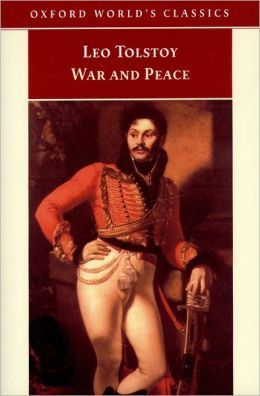
War and Peace Final Notes

carview.php?tsp=

I can’t believe I’m done with this year-long project! I am not one to favor huge books, and to read Russian classics with a lot of characters and complex names, so if you combine those two, I ended up well into my adulthood without ever feeling the pull to read War and Peace. But when in December 2024 I heard through Gretchen Rubin of a collective slow read of War and Peace, led by Simon Haisell at Footnotes and Tangents, I was tempted by the challenge, because I knew it would help to do it with a group rather than alone. Still, learning that there were 361 chapters, and therefore needed a commitment of reading one chapter every day, I wasn’t sure I would complete it.

So, here I am, 361 chapters later, I’m really proud of having finished (even the dreadful second epilogue) and grateful for the community and support from this Substack group. This book is so rich it would really warrant another close re-read (but not immediately, right?). It was also very different from what I expected, because there were a lot of parts where I could hardly stop myself from reading more than my daily chapter. I did not expect to have so many emotions mixed with theory and history and battlefield strategy. I did not expect Leo Tolstoy to be so full of argumentations – even maths equations (to the point that I wouldn’t have minded a stricter editor cutting some). I did not expect I would care so much for the characters. The slow read and the weekly podcasts let me think more deeply about the characters’ development, the themes and contexts.

Some scenes are still in my head:

  • The ride in the snow at night returning from the carnival with Natasha dancing at the uncle’s house
  • Pierre eating a potato with salt offered by Platon Karataev and that simple food never tasted better
  • The boy servant playing the piano with one finger in the deserted Rostov’s Moscow mansion after his masters have fled before the French invasion
  • Pierre saving a small girl from the fire of Moscow and the girl being dirty and ungrateful
  • Petya Rostov’s death
  • and so many others!

Tolstoy surprised me by being much more of a realist and theorist than I expected. I had thought the story quite lyric/romantic but it’s really not! He can describe a person through just a few details of an unforgettable scene, and then move on to a boring challenging chapter of theory. He alternates between the macro and micro level of history. He puts us with servant girls in the courtyard of an inn under attack but also aboard a flying drone above the battlefields with whole regiments marching against one another. He can stop a story in the middle of a sentence, spend dozen of chapters on a week or skip full years.

Someone in the Substack chat found the perfect movie quote to end with: “Nobody gets through War and Peace!” (from Get Smart Again). With the right motivation and support, this has been proven wrong!