


On Christmas Eve 2024, my Pre-Code Crazy/Film Noir Files/Dark Pages pal Kristina (author of the Speakeasy blog) invited me to participate in a cinematic scavenger hunt of sorts. Like the fellas (and lady) on TV’s Mission Impossible, it was my mission, if I chose to accept it, to select 12 movies from categories created by Kristina, and then write about them here at Shadows and Satin.
I accepted this challenge – of course! – and as of early December, I’d written about four of the 12 films from the scavenger hunt. But I watched the calendar zoom toward the end of the year, I found my scrambling to fulfill my mission!
I’m happy to say that in the last few weeks, I managed to watch the remaining films – but between preparing for my annual Christmas holiday, completing my holiday gift shopping, and wrapping up the annual giant Dark Pages, I hadn’t been able to carve out a single free minute to write about them. (Wow, that was some sentence!) But the party is now over, Christmas 2025 is in the books, and the end-of-year giant Dark Pages is in the hands of the USPS, so I’m finally getting around to this post, where I’m going to cover all eight of the films I have left to finish up the hunt. Here goes!
ONE NON-HORROR HAMMER FILM: Hell is a City (1960)

In case you didn’t know, a Hammer film – according to the World Wide Web – is a movie from Hammer Film Productions, a British studio famous for its influential, vibrant, and often bloody gothic horror films from the 1950s to 1970s. If you know me – and Kristina definitely does – you’ll know that I’m no horror film fan, but I am a big lover of British films, so this category was right up my alley. I have to share that, in April of this year, as an assignment for the Classic Movie Meetup group of which I’m a member, I watched Cash on Demand (1961), a first-rate British crime drama. It wasn’t until much later that I realized this was a Hammer film and, therefore, could count toward fulfilling the requirement for this category. But in the last day or so, I decided that this was cheating, since I hadn’t sought out the movie as part of the scavenger hunt. So, I started searching and came up with Hell is a City – and, boy, am I glad I did.

In a nutshell, the film tells the tale of convicted criminal Don Starling (John Crawford), who escapes from prison intent on getting his mitts on the stolen jewels he’d hidden before his arrest – no matter what he has to do to get them. What he does involves a number of people from his past, including his former criminal comrades, a pair of old flames, and the owner of a furniture store he’d broken into shortly before his capture. Hot on his trail is inspector Harry Martineau (Stanley Baker), a highly intuitive, take-no-prisoners veteran of the police force, who just happens to have ties with Starling that date back to their childhood days.
Of all my discoveries during this year’s scavenger extravaganza, this film was my favorite. It’s tensely riveting and undoubtedly noir – I was practically on the edge of my seat and there was more than one scene that had me muffling a gasp with my hand (or letting out an audible, “Dayum!”). Also, while it’s definitely a straightforward story illustrating a case to be solved and criminals to be nabbed, there are numerous circumstances and characters that make it so much more interesting than a cut-and-dried procedural. There’s the depiction of Martineau’s home life – he wants to start a family, but his unhappy wife, Julia (Maxine Audley), is not a fan of the idea and shrewishly berates him on a regular basis for his late nights and never-calls. Meanwhile, Martineau is attracted to a local barmaid (Vanda Godsell), who makes no secret of the fact that she’s got the hots for him. And Martineau’s young partner, Devery (Geoffrey Frederick), is drawn to the deaf-mute granddaughter of the furniture store owner, a white-haired fellow whose Geppetto-like appearance belies his steely and courageous persona. (“Anyone around here will tell you I’m a man of my word,” he says when Starling calls him, looking for a place to stay. “I’ve got a gun and I’m not too old to use it. So you keep away from here!”)

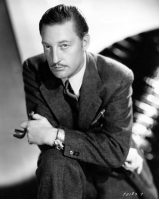
This one is free on YouTube. Treat yourself. (And one more thing I just had to share – when I watched the end credits, I saw that Donald Pleasance was a member of the cast, and I couldn’t figure out who he was. Even when I saw his character’s name – Gus Hawkins – I was clueless. It wasn’t until I saw Gus’s wife (Chloe) in the credits that I knew exactly who he was, and I couldn’t believe I’d gone through the entire movie without recognizing him! He’s in the photo on the right, by the way.)

TWO MARGARET LOCKWOOD MOVIES:
Bedelia (1946)
I happened across this one in a roundabout way; I was doing some research on a different project and I spotted the movie section from a 1940s newspaper – back when the many theater options were laid out like a patchwork quilt. One movie in particular stood out, and that was Bedelia – and based solely on that ad, I was determined to see the movie. The fact that it starred Lockwood was a serendipitous bonus!
Lockwood plays the title role, and the entire story is a flashback, narrated by Ben Chaney (Barry K. Barnes), an American artist who likens Bedelia to a “poisonous flower.” The tale begins in Monte Carlo, where Bedelia is honeymooning with her new husband, Charlie Carrington (Ian Hunter). All is sweetness and light, sunshine and buttercups – but it doesn’t take long for red flags to start popping up, showing us that Bedelia isn’t the charming, happy-go-lucky newlywed that she first appears to be. And as the story unfolds, and Chaney digs deeper and deeper into Bedelia’s past, we learn that she’s not only a smooth and calculating liar – but something far more sinister, as well. (Incidentally, the film is based on a 1945 novel by Vera Caspary, who was also the author of the source material for the 1945 film noir, Laura.)

This one held my interest from start to finish, if only because I wanted to find out what Bedelia had done and what would happen to her as a result – but, overall, it didn’t quite live up to the promise I’d gleaned from the newspaper advertisement. I haven’t seen Lockwood in many films, but I was a definite fan of her work in The Lady Vanishes (1938), Night Train to Munich (1940), and Cast a Dark Shadow (1955). I liked her, as well, in Bedelia – she is, in fact, the best thing about the film – but there was something about the pacing of the story (or perhaps just the story itself) that kept me from loving it like the previous Lockwood films I mentioned.
Man of the Moment (1935)

For my second Lockwood film, I’d wanted to watch The Wicked Lady (1945), which had been recommended to me several years ago, but it was only available via rental, and at the time, I wasn’t in the mood for forking over the fee. Instead, I wound up with one of the actress’s earliest films, Man of the Moment, a 1935 comedy where she played the second lead. Outside of the Lockwood factor, I selected this feature because it starred Douglas Fairbanks, Jr., who I’d enjoyed in pre-Codes like Little Caesar (1931) and Love is a Racket (1932), and Laura LaPlante, the subject of a lovely pair of photos I received a few years back from my pal, Dail. (It’s worth noting that this film is one of LaPlante’s last movies and shows her in her final starring role.)

The film’s rather unusual plot centers on LaPlante’s character, Mary Briany, a secretary in love with her boss (who, frankly, seems like a jerk to me). Near the start of the film, Mary learns that she’s being demoted and replaced by another woman in the office, and literally the next thing we know, she’s trying to drown herself in a nearby pond. Luckily, before she can complete the deed, she is saved by Tony Woodward (Fairbanks), a handsome young man who is deep in debt, despite (or maybe because of) the fact that he drives a sporty roadster and lives in a mansion. (And has a dog named Fredrick Ainsworth Chumlee Stone Martin and a butler named Godfrey, in case you’re interested.) Tony is scheduled, the following day, to marry heiress Vera Barton (Lockwood), but if you can’t guess that those nuptials never come to pass, and Tony eventually winds up in the arms of Mary, you just don’t know your 1930s comedies.

I labeled the film’s plot as unusual because the topic of suicide (first on Mary’s part and then on Tony’s) is an overarching theme – yet the picture is a screwball comedy. I didn’t find it very funny, though – and, unfortunately, Lockwood’s character was the least appealing part of the proceedings. In one of her first scenes, we learn that she plans to “surprise” Tony by completely reforming him after their marriage: “I’m going to treat him like a small boy. A very naughty, adorable little boy,” she explains in a childish tone to a friend of Tony’s. “And he’ll have to do everything I tell him, or I shall be very cross, and then he’ll be sorry, won’t he?” This turns out to be the high point of Lockwood’s performance in the film – in every other scene, her Vera is engaged in an annoying, over-the-top (I mean REALLY over-the-top) series of crying jags. Blecch.
Skip this one, y’all. You only owe it to yourself.
TWO “NEW TO YOU” MOVIES FROM 1939

Young Mr. Lincoln
I chose this Henry Fonda starrer because it was a previous selection of my Classic Movie Meetup group. The film was highly praised by the other members during our discussion, but I kept mum about the fact that I didn’t care for it and, what’s more, didn’t even get past the first 15 minutes. During my scavenging for films that would fit this category, I realized that this one was released in 1939, so I decided to give it another try. The film covers a span of less than 10 years in the early adulthood of the future president, showing his introduction to the field of law; the death of his first love, Ann Rutledge (Pauline Moore); and his relocation from New Salem, Illinois, to Springfield, where he opens his first law practice and defends a pair of brothers accused of murder. (The mother of the two young men was played by Alice Brady in her last screen role; she died at the age of 46, just four months after the film’s release.)

While it’s not necessarily one of those movies I plan to see again, I did enjoy it – once I got past the effect of Henry Fonda’s voice coming out of this character with a prosthetic nose and modified hairline. I’ve always been fond of courtroom scenes (in my previous life as a reporter in Michigan, one of my beats was the 52-1 District Court in Novi), so I was especially interested in the court proceedings, and even more fascinated to learn that they were inspired by a real-life case. I’m glad I decided to revisit this one – it was worth the time.
Golden Boy

Speaking of revisiting, my second movie from 1939 was another one that I’d tried to watch more than once before but gave up after the first few minutes. It stars William Holden in the title role of Joe Bonaparte, a young man from a New York Italian immigrant family, who possesses a talent for the violin but longs to become a prize fighter. Others in the cast are Adolphe Menjou, as Joe’s manager, Tom Moody; Barbara Stanwyck as Lorna Moon, Tom’s fiancée who falls in love with Joe; Lee J. Cobb as Joe’s father; and Joseph Calleia as the ruthless gangster who takes over Joe’s career.

Golden Boy was Holden’s first credited big screen role and famously, he was so inept that he was almost fired from the production. Co-star Stanwyck convinced the head of Columbia Studios, Harry Cohn, to give the young performer another chance, and she committed to working with Holden on his lines. This story was in my mind throughout the film and it was interesting to think of Holden in films like Sunset Blvd. (1950) and Stalag 17 (1953), and compare these with his performance in Golden Boy. All things considered, the film didn’t knock me off my feet, but I’m glad I finally saw it. (BTW, I just learned, while working on this post, that Lee J. Cobb was only 27 years old when he played Joe’s father in the film.)

Bonus 1939 film: Mad Youth
I’m not sure why I started watching this exploitation film, but once I started, I just couldn’t stop. And since it was released in 1939, I figured, why not include it here? It begins with a focus on Marian Morgan (Mary Ainslee), a rebellious teen, and her divorced mother, Lucy (Betty Compson), who spends her money on escort services as part of her quest to recapture her youth. But after several scenes relaying the antics of the young people and Lucy’s growing attachment to her latest paid escort (Willy Castello – who’s kind of a cross between Ricardo Cortez and George Brent), the film takes a turn. Instead of strip poker and entertaining jitterbug exhibitions, we’re abruptly treated to a creepy tale of white slavery! It’s typically low-budget and neither the acting nor the script are anything to write home about, but with a running time of only 64 minutes, it’s worth checking out – just because. If you dig movies like Reefer Madness (1936), you’ll want to give this one a look. It’s a hoot.

ONE MOVIE WITH MUSIC BY ENNIO MORRICONE: Days of Heaven (1978)
Whenever I hear the name Ennio Morricone, I automatically think of his music in the Sergio Leone-directed spaghetti westerns like For a Few Dollars More (1965) and The Good, the Bad and the Ugly (1966). Until I got this scavenger hunt assignment, I had no idea that he’d scored more than 400 movies, including The Untouchables (1987), Cinema Paradiso (1988), and Quentin Tarantino’s The Hateful Eight (2015). He also did the score for Terence Malick’s Days of Heaven (1978), earning the first of his six Academy Award nominations. Because I’d heard good things about this film, I decided to watch it for this category.

Set in the Texas Panhandle near the beginning of World War I, the film shines the spotlight on Bill (Richard Gere), Abby (Brooke Adams), and Bill’s younger sister (Linda Manz), who are itinerant migrant workers. Bill and Abby are lovers, but they pose as siblings while working on the land owned by “the farmer,” played by Sam Shepard – and when Bill learns that the farmer has a fatal illness, he convinces Abby to marry the farmer for his money, resulting in a tragic ending for all concerned.

Throughout my viewing of this film, I felt like I was constantly waiting for something to happen (literally, more than once, I said aloud, “Oh my gosh, come ON!!!!”). There was little dialogue and not very much going on until the last 20 minutes or so. It just wasn’t my cup of tea. I can’t deny, though, that the cinematography by Oscar winner Néstor Almendros was absolutely amazing, and Morricone’s lilting, variegated score was a perfect accompaniment to the visual delights on the screen, so there was that. Also, just scant moments before writing this sentence, I learned that Days of Heaven will be screened at the 2026 TCM film festival, and I might just try to see it. Now that I know what to expect, perhaps I’ll be able to appreciate it more on the big screen. Maybe.
TWO POWELL AND PRESSBURGER MOVIES:
I Know Where I’m Going (1945)

This is the third film of which I’d previously seen at least a part. Unlike the other two, though, I actually reached the end of this film, but I wasn’t actively watching it. It was playing while I was working on a blog post earlier this year, but I really wasn’t paying attention. And it just so happens that a few weeks ago, I was in a Zoom meetup for classic movie bloggers and one of the members spoke so highly of this film that I decided then and there to give it another try. The film stars Wendy Hiller as Joan Webster, a purpose-driven young woman who we meet shortly before she departs on a journey to Scotland to marry her fiancé, a wealthy businessman. However, her journey is not as straightforward as she’d intended. Early on, she encounters naval officer Torquil MacNeil (Roger Livesey), and when the last leg of her trip is delayed by inclement weather, she is not only increasingly drawn to Torquil, but also to the various characters and locales she comes across. Although she’s more determined than ever to reach her fiancé, we have to wonder: is that what she really wants?

I was unexpectedly charmed by this movie, and it makes me smile even now when I think of it. Because I’d missed so much of it on my initial viewing, I had no idea what to expect – except I did know what happened at the very end. Even knowing that, however, did not spoil my enjoyment of the film throughout. I have to admit that I’m not a big fan of Powell and Pressburger, an influential British filmmaking team that produced a series of highly acclaimed films during the 1940s and 1950s. (Michael Powell was the director and Emeric Pressburger was director/producer.) Although I’ve seen Black Narcissus (1947) and The Red Shoes (1948), I wasn’t that wild about either one, so I was delighted that I liked I Know Where I’m Going as much as I did.
49th Parallel (1941)
Just when you thought it was safe to go back into the water . . . .

I simply must share that my original coverage of the scavenger hunt assignment ended with I Know Where I’m Going, and I actually published my write-up last night, but for some (fortuitous) reason, I decided to go back and count the movies. And I found that I’d only watched 11 (not counting the bonus exploitation film released in 1939)! I reviewed the emails from Kristina and found that I was assigned TWO Powell and Pressburger films, instead of only one. So it was back to the drawing board for me! Fortunately, I found a feature that I’d previously never heard of – 49th Parallel (1941), the third film from the director-writer team – and I decided to give it a try. And once again, I hit the jackpot!

Set in Canada at the start of World War II, this film follows the six survivors of a German submarine bombed by the Royal Canadian Air Force. Led by Lieutenant Hirth (Eric Portman), the men strive to cross the 49th Parallel, the dividing line between Canada and the United States, allowing them to seek sanctuary in the still-neutral U.S. The film is presented in an episodic format as the men meet with a variety of characters and situations – and their number decreases, one by one. The people they encounter include a French-Canadian trapper (Lawrence Olivier) at the Hudson Bay trading post; the members of the Hutterites religious sect; and an author (Leslie Howard) who seems to be completely oblivious to the war.

I was so unexpectedly pleased with this movie; after the first 10 minutes or so, I’d actually written in my notes that I didn’t know what the heck was going on, but scant moments later, I was totally on board, and I became more and more engaged as the story went on. The film – which won an Oscar for Best Story and was nominated for both Best Picture and Best Original Screenplay – was intended as a propaganda vehicle to encourage the United States to enter the war (although, ironically, by the time it was released in the U.S. in 1942 – under the name The Invaders – the country had already joined the Allies). I just really can’t say enough about this movie – it was so unique and so amazingly frank about the Nazis, their beliefs, and the importance of democracy. I was shocked by some of the dialogue, like when one of the Germans declared that Eskimos were “racially as low as Negroes,” who were “semi-apes – only one degree above the Jews.” And I was equally amazed by the scene where the leader of the Hutterites tells the Nazis, “You think we hate you, but we don’t. We only hate the power of evil which is spreading over the world. You and your Hitlerism are like the microbes of some filthy disease, filled with a longing to multiply yourselves until you destroy everything healthy in the world.” There’s so much more that I would love to share about the picture, and I don’t want to oversell it, but I hope that you’ll want to find for yourself why I found it to be one of the best movies I’ve seen in a while. (And it’s available for free on Tubi.)

And that’s it! (For real, this time!) If you’ve slogged through all of this, I can’t say anything but thank you! I try not to have these epically long posts, but I just had to do it this time to fulfill my mission – and I’m glad to say that I made it!
So, Kristina: I can’t thank you enough for extending this awesome challenge. I had so much fun identifying the movies and experiencing many that I would never otherwise have seen. It was the best! Bring on the hunt for 2026!
And happy new year everybody!









































































 shadowsandsatin