|

|
| CARVIEW |
By Kippy Marks—
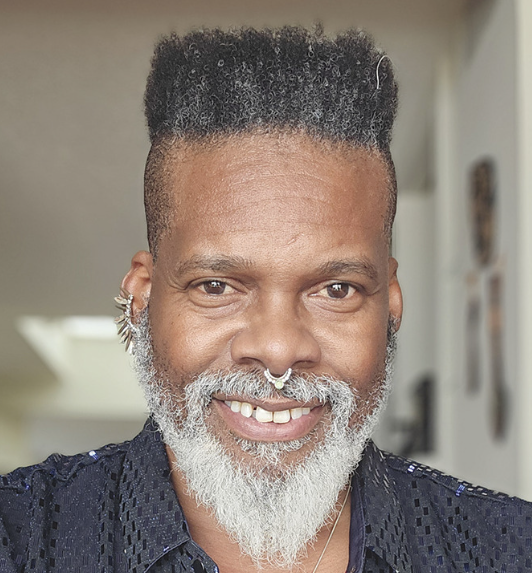
There are stories that shimmer because they are polished. Then there are stories that shine because they were once broken. Jacob Anthony Rose’s new memoir belongs to the latter—an offering carved from silence, glitter, and the long echo of a voice learning to trust itself again. That’s why I believe he is a true embodiment of Practice Makes Love Easy (PMLE), and I am proud to celebrate Rose as the 12th individual spotlighted in this column.
Rose grew up learning that silence was safer than truth. In his memoir, he describes a childhood where shrinking was a survival tactic, where dreams were loud, but his voice was not. For many of us, that kind of silence becomes a second skin. But his story reminds us that silence is not destiny; it is a starting point.
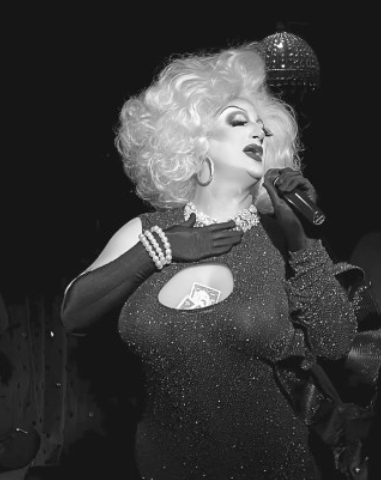
His discovery of drag became the first great act of PMLE in his life. Drag is not just performance; it is reclamation. It is the practice of stepping into a version of yourself that feels too bold, too bright, too honest for the world that raised you. Onstage, Rose found a language for the parts of himself that had been waiting for permission to breathe. For twenty years, he practiced joy, practiced presence, practiced being seen.

Then the world went quiet. The pandemic stripped away the applause, the lights, the community. And in that stillness, the old wounds returned—not as ghosts, but as invitations. Rose writes about this period with a vulnerability that feels like a hand extended to anyone who has ever felt undone by their own reflection. Healing, he shows us, is not a single moment. It is a practice, a daily choice, and a kind of love.
PMLE teaches that love becomes easier when we practice it, especially when we practice it with ourselves. Rose embodies this truth. His memoir is filled with moments where he chooses compassion over self-judgment, connection over isolation, and honesty over performance. He doesn’t pretend the journey is linear. He doesn’t pretend it’s pretty. But he shows up for it, again and again, and that is the essence of PMLE.
Rose’s story reminds us that the most radical act of love is returning to yourself after years of running. It is choosing to speak after a lifetime of silence. It is allowing your own voice to echo loud enough that others feel brave enough to raise theirs.
His memoir is not just a book; it is a companion for anyone learning to love themselves in real time. It is a reminder that survival is not the end of the story. Survival is the doorway. What comes next is the practice.
Kippy Marks: How long have you been involved with the practicing of PMLE values in your work?
Jacob Anthony Rose: I didn’t always have language for “Practice Makes Love Easy,” but I’ve been living those values for most of my adult life. For over twenty years, through my work as a drag performer, recording artist, and now as a memoirist, my intention has always been to lead with compassion, authenticity, and care for others. Whether I’m performing as Sheena Rose, telling my story through music, or sharing my life in my memoir, I’ve tried to create spaces where people feel seen, safe, and a little less alone. PMLE feels like a beautiful way to name what I’ve been practicing all along: choosing love, even when it isn’t easy.
Kippy Marks: Who or what motivated you to become the community activist you are today?
Jacob Anthony Rose: My life motivated me. I grew up in an environment filled with trauma, abuse, and silence, and for a long time I believed I had to carry everything alone. Finding drag, finding my queer community, and finding chosen family in San Francisco changed my life. The love and support I received from fellow performers, artists, and elders in the community taught me that healing happens in connection. I became an activist simply by surviving, by refusing to disappear, and by deciding to be visible and vulnerable so others wouldn’t feel as isolated as I once did.
Kippy Marks: How old were you when you made that decision?
Jacob Anthony Rose: I was in my late twenties when I really made that choice, when I stepped into drag and started telling my story publicly. But in truth, the deeper decision came later, in my forties, when I entered therapy, stopped relying on alcohol to manage my anxiety in social settings, and committed to healing. That’s when I realized my life itself could be an act of activism. I decided I didn’t just want to survive anymore. I wanted to live, to love, and to help others feel less broken and alone.
Kippy Marks: What advice would you give to others on how to practice love on the daily?
Jacob Anthony Rose: Start with yourself. Be gentle with your own heart. Speak kindly to yourself. Rest when you’re tired. Forgive yourself when you fall short. Love doesn’t have to be loud or performative. It can be quiet, steady, and consistent. It’s in the small moments: checking in on a friend, listening with compassion when someone is hurting, choosing empathy over judgment, and allowing people to be exactly who they are. Practice love the way you practice breathing, again and again, even when it feels hard.
Kippy Marks: If you were granted two universal wishes, what would you wish for?
Jacob Anthony Rose: My first wish would be for every child to grow up feeling safe, loved, and believed. No one should have to survive their childhood. My second wish would be for collective compassion, that we learn to truly see one another, across differences, with curiosity instead of fear. I believe the world changes when we remember our shared humanity.
Kippy Marks: Please share any current practices that our readers may find useful, and update us on what you are doing now.
Jacob Anthony Rose: Right now, my daily practices are simple but sacred: therapy, journaling, gratitude, medication, staying sober, and choosing rest without guilt. I check in with myself emotionally every day instead of pushing through pain the way I used to. I make space for creativity even when I feel afraid. I tell the truth, to myself and to others, as gently as I can.
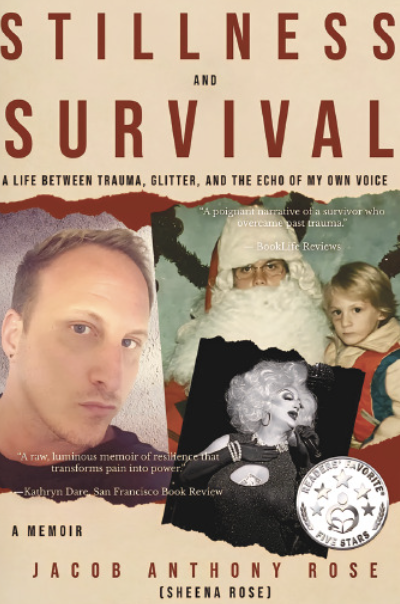
Professionally, I recently released my debut memoir, Stillness and Survival: A Life Between Trauma, Glitter, and the Echo of My Own Voice. It’s my story of surviving childhood abuse, finding drag, building a chosen family, and learning how to heal. I’m continuing to perform, currently recording the digital audio book, and do author events, all while working a day job that keeps me grounded. My life now is quieter, steadier, and fuller, and I’m proud of that.
I also recently held my debut author event at Books Inc. Opera Plaza here in San Francisco, which was a deeply meaningful milestone for me. Signed copies of the trade paperback are available there and at other independent bookstores throughout the Bay Area, as well as nationwide through distributor IngramSpark and online (https://bookshop.org/). The ebook edition is available on Amazon and exclusively through Kindle Unlimited.
Dubbed San Francisco’s “King of Strings,” Kippy Marks is a spirited entertainer whose shows are permeated with an infectious joy. His distinctive sound arises from his heart, through his 1822 violin consort, Izabella. Marks’ rare talent, broad smile, and radiant warmth will brighten any event and create a lasting impact. He is also Grand Duke XL of The Grand Ducal Council of San Francisco. He is the first ever elected African-American Grand Duke.
Practice Makes Love Easy
Published on January 29, 2026
The post Jacob Anthony Rose: Practicing Love in the Aftermath of Silence appeared first on San Francisco Bay Times.
]]>The post BEACONS at Queer Arts Featured Highlights Castro Theatre Blade and Other Iconic Neon Works appeared first on San Francisco Bay Times.
]]>
By Devlin Shand—
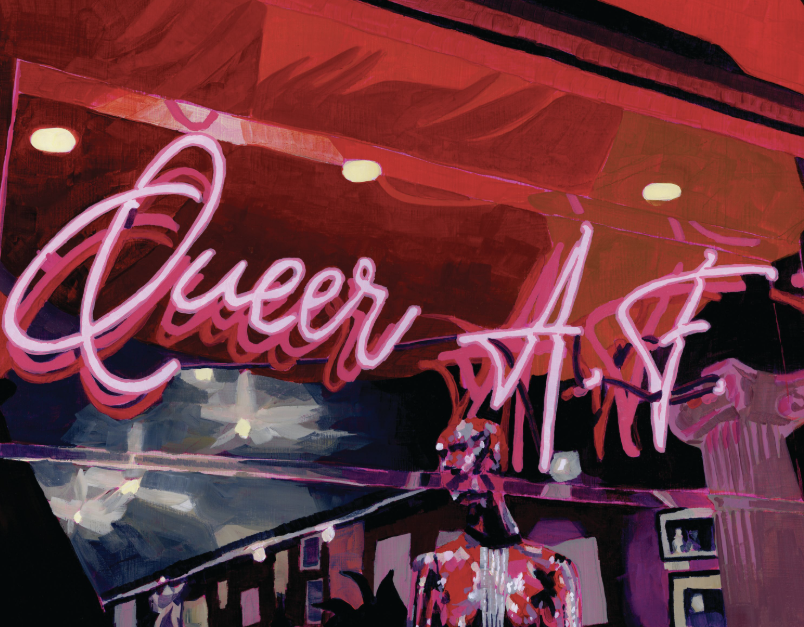
Queer Arts Featured will soon proudly display BEACONS, new paintings and the first ever solo exhibition by prolific San Francisco-based artist Nathaniel J. Bice. The exhibit will be on view from February 6–March 29, 2026. The public opening and artist’s reception will be on February 6 from 5–9 pm, in conjunction with the Castro Art Walk and the Community Opening of The Castro Theatre.

Nathaniel J. Bice
Having begun his career in theater, Bice came to San Francisco as a fellow at the American Conservatory Theater, and still assists production designer Nina Ball with set designs around the Bay Area. He shifted his focus to fine art in 2020, and his work has been shown in galleries and shops around the Bay Area, including STUDIO Gallery, änalog Gallery, Queer Arts Featured, Fleet Wood, The Drawing Room, Sanchez Art Center, and Gearbox Gallery. He also channels his scenic paint experience into murals for local businesses, including Tala Wine, Sour Cherry Comics, Mersea, and House of Tadu.
Well known for painting en plein air (outdoors, from direct observation) small scale works around San Francisco, Bice is diving into large studio paintings for his new series.
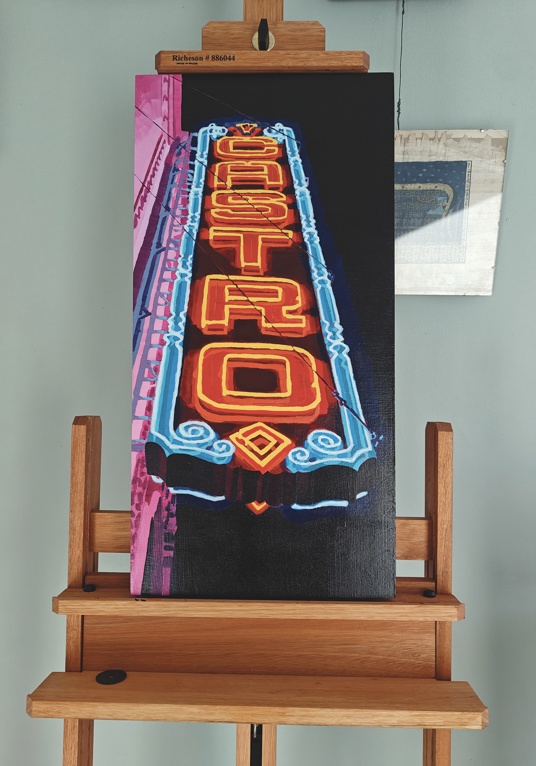
BEACONS Honors the Signage of Queer Spaces
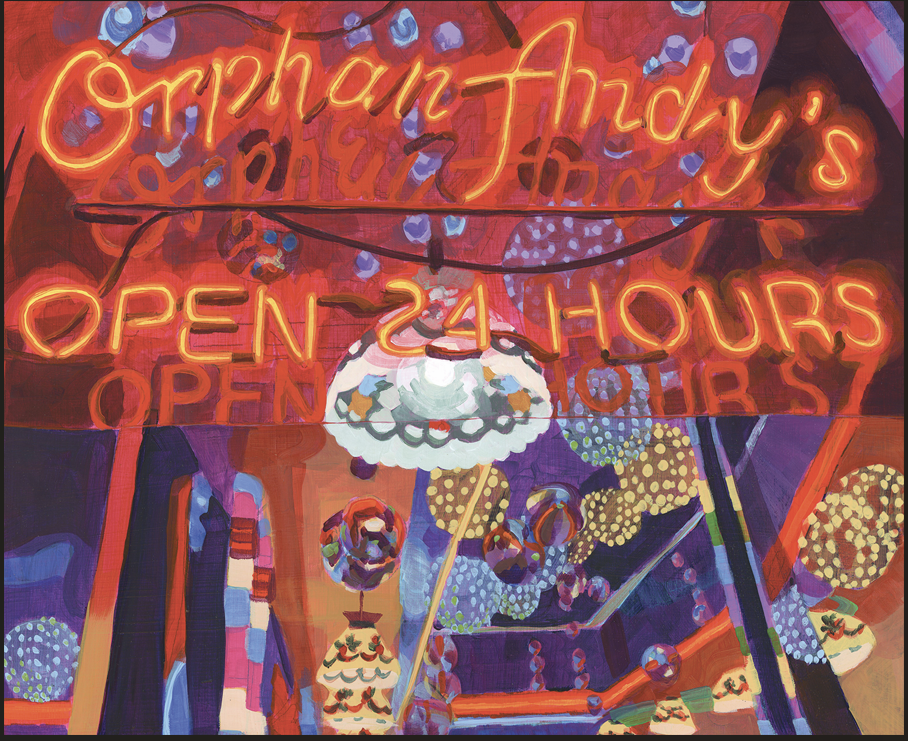
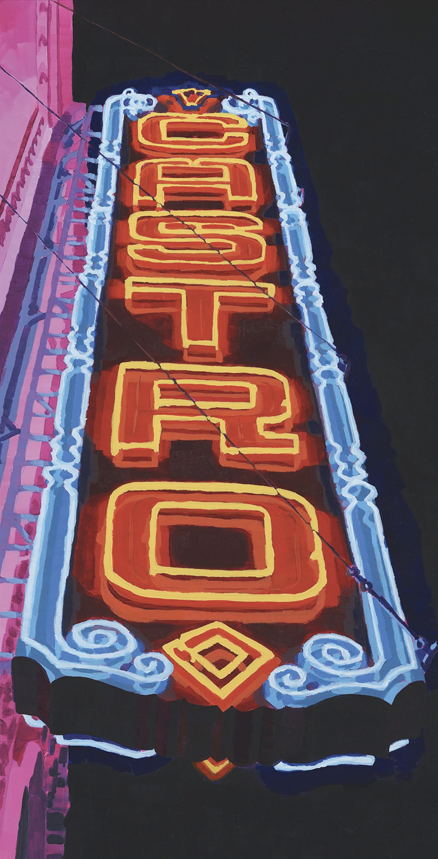
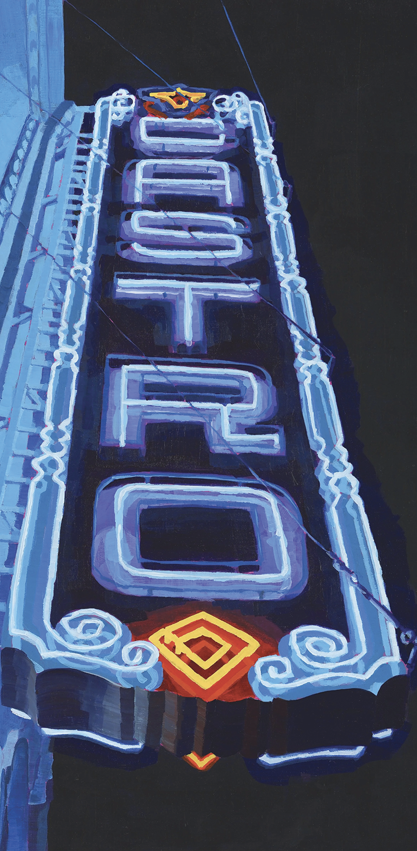
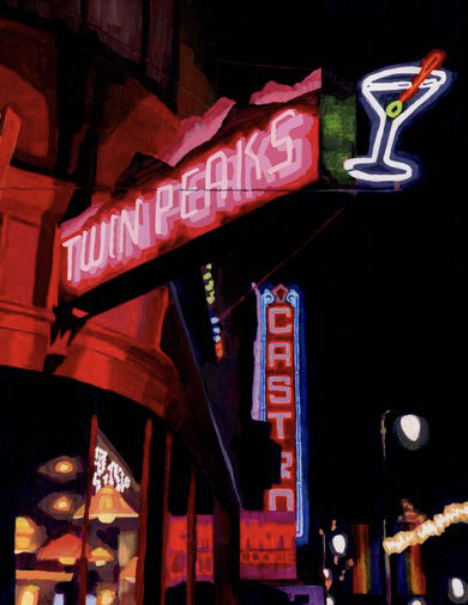
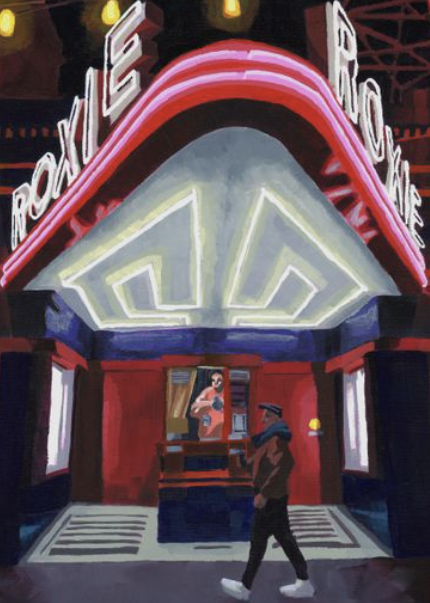
Inspired by the same love of the city that is evident in his smaller works, Bice’s exciting new direction for BEACONShonors the places that light up the streets and offer warmth, culture, and community. The works feature the signage, especially neon, of iconic queer spaces such as The Castro Theatre, Oasis, Orphan Andy’s, Martuni’s, Twin Peaks Tavern, Hot Cookie, and more.
His subject matter is an opportunity for Bice to explore high contrast, strong saturation, and extreme perspectives. The handmade nature of neon signs makes them, not just examples of typography and design, but also of craftsmanship. The rich glow of neon gas suffuses its surroundings, creating a unique lightscape and evoking the memories of the spaces they illuminate.
Just in time for the reopening of The Castro Theater, BEACONSalso grapples with mixed feelings around the restoration/renovation of the theater and Another Planet Entertainment’s management and neighborhood engagement. It is magical to see the sign glowing brightly and the interior details restored, but the loss of some historic features and the ongoing concern about the potential displacement of two local businesses cast some shadow on the celebration. The opening of the new exhibit will honor the legacy of both Castro Coffee and Castro Nail Salon.
Recently, I spoke with Bice for the San Francisco Bay Times about BEACON.
Devlin Shand: How did you get started as a painter?
Nathaniel J. Bice: I started off in theater, specifically in the scenic paint, prop, and design world, so I was doing a lot of urban sketching. I saw that as research for scenic design, and then I started taking that work seriously for its own sake and went to painting rather than sketching, the key difference being I started painting opaque instead of doing drawings and then coloring them with watercolors.
Devlin Shand: That makes sense. It is very in line with what this show is, because what I know of your work is that it is very much streetscape-based. Seeing this collection of work that is centered around neon, which is so theatrical, feels like an homage to your theater background. What inspired you to go for this particular subject matter and to go bigger? These are the biggest pieces we’ve ever seen from you.
Nathaniel J. Bice: From the painting perspective, it’s definitely in line with an exploration of light. I’ve been mostly painting daytime scenes, in person, en plein air, in the city, and exploring sunlight, but then this completely different nocturnal world became very interesting to me. I’m also interested in design and lettering, and I think neon is so beautiful.
Devlin Shand: What do you love about neon?
Nathaniel J. Bice: Neon signs are really unique because they are handcrafted. The tubes have to be bent by hand by extremely skilled craftspeople. It’s a long and difficult skill to learn, so every neon sign you see in the city is a handmade, beautiful work of craftsmanship. And, for the older ones, people would also spend a lot of time hand-designing the letters because nobody was able to just use existing typefaces. They would make them for that specific sign all the way from the ground up.
Devlin Shand: Why do you think that this old technology, neon, still captivates those of us in this tech-obsessed period?
Nathaniel J. Bice: Physically speaking, the glow of neon is a beautiful and unique thing. It’s the ignoble gases trapped in a tube and then you run the electricity through them and they just glow. And the gas never gets used up. It uses significantly less electricity than an incandescent light bulb, and it’s so, so bright. If you have a clear line of sight, you can see a neon sign from miles away. The colors that you can get are both more saturated and brighter than anything else. And it’s just stunning. It cannot possibly ever compare to LEDs. I think we react viscerally to the quality of light in our environment. We’re still staring at LED screens all day, so, even at night, a different quality of light is captivating to us. No matter how much time we all exist in the digital world and spend on the computer, we still have physical bodies and exist in space and should think about that more.
Devlin Shand: You’ve done so many beautiful pieces of the Castro Theatre before, and now also for this show.
Nathaniel J. Bice: A big part of that is the renovation and the reopening of the theater, and its deep history with San Francisco and with the gay and queer community in the city. Many of us know that the movie theater opened in 1922, but it was in the 1970s that the gay hub of San Francisco moved from Polk Street to the Castro because of the Market Street Railway. People could take the F line all the way to the end and that’s where they’d end up. And then there is this beautiful movie palace at the end, and they just started coming here, seeing movies, going to bars, making their own place and community in this existing neighborhood. The Twin Peaks Tavern in 1972 opened up their windows and made it so that people could see who is sitting inside, and people weren’t ashamed to be seen inside a gay bar. Gay bars started getting these beautiful neon signs, advertising where they are instead of being in unmarked storefronts with long, dark
hallways.
Devlin Shand: Your painting of The Castro Theatre blade is made on a piece of the old film projection screen from the theater, and it’s hung with some of the original old-growth pine floorboards from 1922 from the house of the theater. What’s your reflection on using those materials, and what it means to try and honor history amidst big changes?
Nathaniel J. Bice: I think getting to use these materials is a perfect metaphor for honoring, learning about, and respecting the queer history of the physical place, while finding ways to integrate that into our current lives and bring it forward to continue creating new queer history. It can be easy to get buried in nostalgia and forget that we have queer people who are living now, who are making amazing work—new shows and drag and artwork—in the city. And to use the screen is particularly exciting to me because I just think about the thousands and thousands of people in my community who sat in the theater and stared at this actual surface with different things being projected onto it, like everybody’s favorite campy gay culture films. Everyone was looking right at it, and now I’m putting the image of the Castro blade sign on there for people to keep looking at.
Devlin Shand: Tell me about some of your other favorite neon signs in the Bay Area.
Nathaniel J. Bice: Obviously, the Castro Theatre is at the top [of my list]. I also love the Aunt Charlie’s neon that’s inside the bar. The whole bar is lit up by it. It says Aunt Charlie’s in this beautiful, cursive script, and the neon actually runs all the way around the room so you get a ring light effect in pink neon. I adore the Twin Peaks sign, and I love the Martuni’s one: acid green with the red music note in the martini glass.
Devlin Shand: What inspired you to paint images of the signs instead of photographing them?
Nathaniel J. Bice: Photography is an art form and a skill that I admire, but I also believe that the human eyeball can do things that no camera can. And so for me to observe something and then do my best to record those observations by hand in a very difficult way is just going to do something more than photography can do. The color and brightness of a neon sign cannot be captured by photography or by paint, but I can have such fine control over saturation and value in paintings of neon signs that I can do more with my skill set to capture that as best I can.
BEACONS
February 6–March 29, 2026
Queer Arts Featured
575 Castro Street
https://www.queerartsfeatured.com/
Devlin Shand is the Co-Founder and Owner of Queer Arts Featured. He is a multidisciplinary artist and community builder who believes in creating vibrant barrier-free spaces for Queer Creatives struggling to survive in the Bay Area. https://www.devlinshand.com/
Arts & Entertainment
Published on January 29, 2026
The post BEACONS at Queer Arts Featured Highlights Castro Theatre Blade and Other Iconic Neon Works appeared first on San Francisco Bay Times.
]]>The post Queer Offerings at the Mostly British Film Festival appeared first on San Francisco Bay Times.
]]>
By Gary M. Kramer—
The Mostly British Film Festival, screening February 5–12 at the Vogue Theater in San Francisco, offers a cornucopia of films from the U.K., Ireland. Australia, India, South Africa, and New Zealand.
The festival provides a chance to see a few films prior to their upcoming theatrical release, including Emerald Fennell’s Wuthering Heights, starring Margot Robbie as Catherine and heartthrob Jacob Elordi as Heathcliff,and My Father’s Shadow, the U.K.’s official Oscar submission for Best International Feature.

Two classic films with queer talent will screen at the festival. The1964 Oscar-winning Tom Jones(February 7 at 4:45 pm),directed by bisexual filmmaker Tony Richardson, features Albert Finney in a fabulous performance as the lusty, titular scoundrel. Among the film’s highlights is its famous eating scene. The 1982 Oscar-winner Chariots of Fire(February 9 at 4:30 pm),costars Ben Cross and the late gay actor Ian Charleston as Harold Abrahams and Eric Liddell respectively, who represented Great Britian as runners in the 1924 Olympics. Queer icon John Gielgud appears in a supporting role.
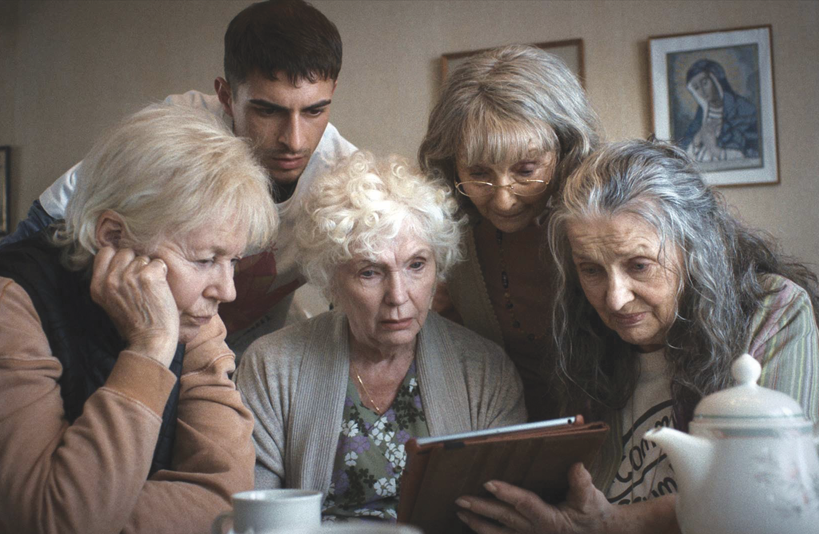
Among the newer films screening at the Mostly British Film Festival is the feel-good Irish comedy Four Mothers (February 8 at 3:15 pm),which hasharried gay YA novelist Edvard (James McArdle) caring for his ailing widowed mother, Alma (Fionnula Flanagan), who has been debilitated after a stroke. Although speechless, Alma can still manage to make demands of and chastise her adult son using a computer. When Edvard is asked to participate in a book tour in the states, he struggles with getting care for Alma. Making matters worse, his friends all head off to a Pride event, leaving theirmothers in Edvard’s care. Four Mothers is a bit farcical as Edvard tries to manage everyone’s needs but his own. He is given some assistance from his ex, Raf (Gaetan Garcia), a nurse, but what Edvard really needs is a backbone because he is taken advantage of too easily. Cue him denying the ladies a trip to Galway to see a medium—then getting on a bus to take them. The humor is gentle, and the emotions are sincere in this crowd-pleaser.
The festival also offers audiences a chance to see The History of Sound(February 6 at 7:30 pm) on thebig screen.This delicate romance has Lionel (Paul Mescal) and David (Josh O’Connor) meeting in 1917, when Lionel—who has the gift of being able to “see music”—attends a conservatory in Boston on a scholarship. Bonding over folk songs, the young men begin a tender romance that continues when they embark on a song collecting trip together in Maine.
Out gay director Oliver Hermanus’ film is full of aching restraint, which is why it is so moving. Mescal gives an incredibly internal performance; as Lionel stares at David, viewers can see him falling in love. David, too, admires Lionel, a man whose passion for music matches his. While the men are affectionate, they also must contend with uncertain futures. David is sent off to war, and Lionel must return to his family’s farm in Kentucky. Over the course of several years, Lionel and David navigate their lives, love, and loss. Hermanus films The History of Sound as a slow burn that builds quietly to an emotional conclusion.
Four films without queer content are worth seeking out at the fest.
Inside (February 12 at 4:30 pm), is a rock-solid Australian drama about Mel Blight (Vincent Miller), a young man relocated to an adult prison. In this dangerous environment, Mel encounters two very different men—Mark (Cosmo Jarvis), his cellmate who committed an unspeakable crime, and Warren Murfett (Guy Pearce) who may be using Mel for his own gain. Inside is a tough but engrossing film, and Jarvis gives a blistering performance.
The Mostly British Film Festivalalso provides a chance to catch two strong directorial debuts by actors from last year. Urchin(February 10 at 5 pm), helmed by Harris Dickinson, has Mike (Frank Dillane), a young homeless addict trying to improve his life but struggling in the process. Don’t Let’s Go to the Dogs Tonight (February 10 at 7:30 pm), directedby Embeth Davidtz, is a stunning adaptation of Alexandre Fuller’s memoir set in Rhodesia during the 1970s. This tactile film is told from the point of view of Bobo (Lexi Venter), an 8-year-old girl whose parents (Davidtz and Rob van Vuuren) are grappling with oncoming political change.
Lastly, Christy (February 8 at 5:15 pm) is an enjoyable—and enjoyably foul-mouthed—character study about the teenage Christy (Danny Power), who is forced to move in with his older brother Shane (Diarmuid Noyes) after a foster situation falls through. Christy slowly makes friends and finds purpose giving haircuts, but he is also tempted by the criminal ways of his cousins.
For tickets, a complete schedule, and additional information, visit https://mostlybritish.org/
© 2026 Gary M. Kramer
Gary M. Kramer is the author of “Independent Queer Cinema: Reviews and Interviews,” and the co-editor of “Directory of World Cinema: Argentina.” He teaches Short Attention Span Cinema at the Bryn Mawr Film Institute and is the moderator for Cinema Salon, a weekly film discussion group. Follow him on IG @garyemkramer
Film
Published on January 29, 2026
The post Queer Offerings at the Mostly British Film Festival appeared first on San Francisco Bay Times.
]]>The post Feelgood Romance? appeared first on San Francisco Bay Times.
]]>
By Jan Wahl—
Valentine’s Day is such a drag, and for me not in a good way. I used to be desperate for presents and attention. Now I just want to settle in with a feelgood romance (which leaves out the great Brokeback Mountain).
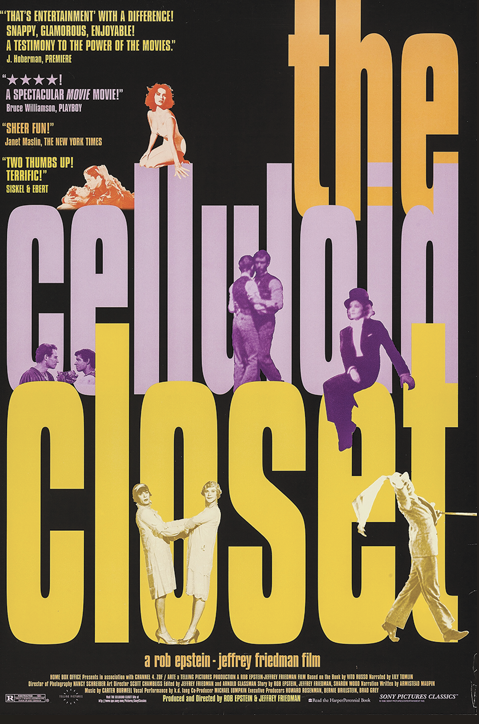
So many LGBTQ+ movies and TV shows seem to be sad, yet there is also joy involved in romance. The first queer flick that always comes to mind for me is one I have written about before. The Celluloid Closet needs viewing a few times. In one hour and 47 minutes, narrator Lily Tomlin, screenwriter Armistead Maupin, director Rob Epstein, and producer Jeffrey Friedman bring us the media’s screen depictions of queer Hollywood. Based on the 1981 book by Vito Russo, this is a fascinating classic film.
I recently watched a documentary that is not exactly feelgood but is still well worth seeing: The Fabulous Allan Carr (on Prime Video). It details the life of extravagant producer Carr, a man who chased his dreams and often made them happen. We get all the details about his producing Grease, Can’t Stop the Music, La Cage aux Folles, and the 1989 Academy Awards show. It is a real look at showbiz, but also at a remarkable man.

Our Castro Theatre is reopening with one of my favorite films. The Adventures of Priscilla, Queen of the Desert will be fabulous on the big screen once again. Two drag queens and a transsexual (should have won Terence Stamp an Oscar!) take their act on the road in outback Australia. Written and directed by Stephen Elliott, this remarkable film won the Oscar for Costume Design and a Bafta Award for hair and makeup. But it is more than the surface. It has tremendous heart. Do not miss a chance to see it at the newly renovated Castro.
Some people thought To Wong Foo, Thanks for Everything! Julie Newmar was a rip off of Priscilla, but I would disagree. It stands on its own as a wild comedy with thoughtful characters and slapstick moments. The unexpected cast is perfect: Patrick Swayze, Wesley Snipes, and John Leguizamo. Their road trip is in small town America. Both emotionally moving and upbeat, it is that rarity: a feelgood film.
2004 brought us Saving Face, a family dramedy about a lesbian trying to come out to her traditional widowed mother and her grandparents. The love affair between the two women at the center is nurturing and unusually happy. Set in multicultural New York City, Alice Wu’s film is endearing and enduring.
So, start with these, my dear readers. And stay happy during Valentine’s Day!
Jan Wahl is a Hollywood historian and film critic on various broadcast outlets. She has two Emmys and many awards for her longtime work on behalf of film buffs and the LGBTQ community. Learn more at www.janwahl.com
Off the Wahl by Jan Wahl
Published on January 29, 2026
The post Feelgood Romance? appeared first on San Francisco Bay Times.
]]>The post Sister Dana sez, “The Milan Olympics open on February 6…” appeared first on San Francisco Bay Times.
]]>
By Sister Dana Sez—
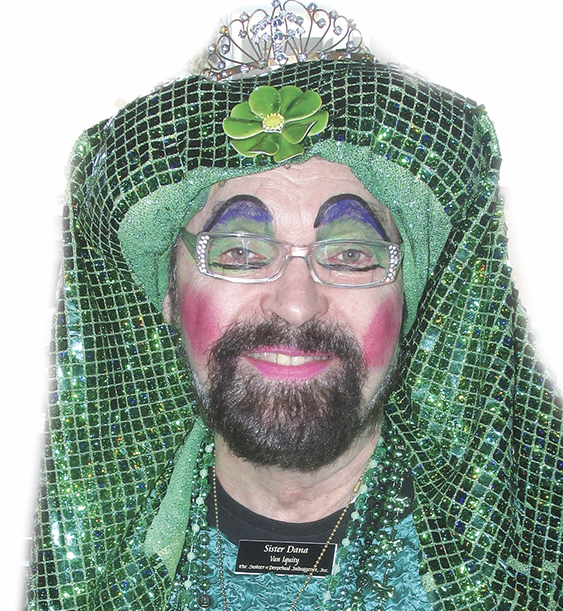
Sister Dana sez, “The Milan Olympics open on February 6, and closing ceremonies are February 22. Since Canada has already defined SAME-SEX PAIRS of ice dancers to be any two skaters regardless of sex, let’s hope other federations do the same!”
Fabulosa Books held a fascinating poetry reading by four writers—Tim Xonnelly, Maw Shein Win, Colleen Shoshana McKee, and Glenn Ingersoll—on January 13. Tim told us he was reflecting upon entering his seventh decade and explained the title of his book, The Invasion of Pantomime, as “an increasingly repressive and violent culture in works replete with dream imagery and queer pride.” Hopefully Fabulosa Books will have copies (there were none available for purchase) by the time this column is published. One of my fave lines from his “But I Need You” chapter is: “Does the world really need that one more song to say I can love you but I can’t stay?”
Transgender activists, including Santana Tapia, presented a proposal on January 21 to the San Francisco Historic Preservation Commission to designate the former Compton’s Cafeteria location in the Tenderloin as a historic site to be preserved intact—including the apartments above where trans people live.
While everyone I know celebrated MARTIN LUTHER KING, JR., DAY on January 19, the total complete opposite of such brave, bold, progressive action has been from the Repugnican MADministration making concerted efforts to erase MLK, Jr., from America by attempts to not acknowledge MLK’s holiday, Juneteenth, and African American history regarding MLK’s vitally important teachings. Meanwhile, ICE terrorists keep cruelly capturing and physically assaulting MLK’s people.
So, is everyone rushing to see the Melania rated-PG pic in theatres opening nationwide on January 29? The First Lady of Fascism? For that, I’ll take a hard pass, thank you!
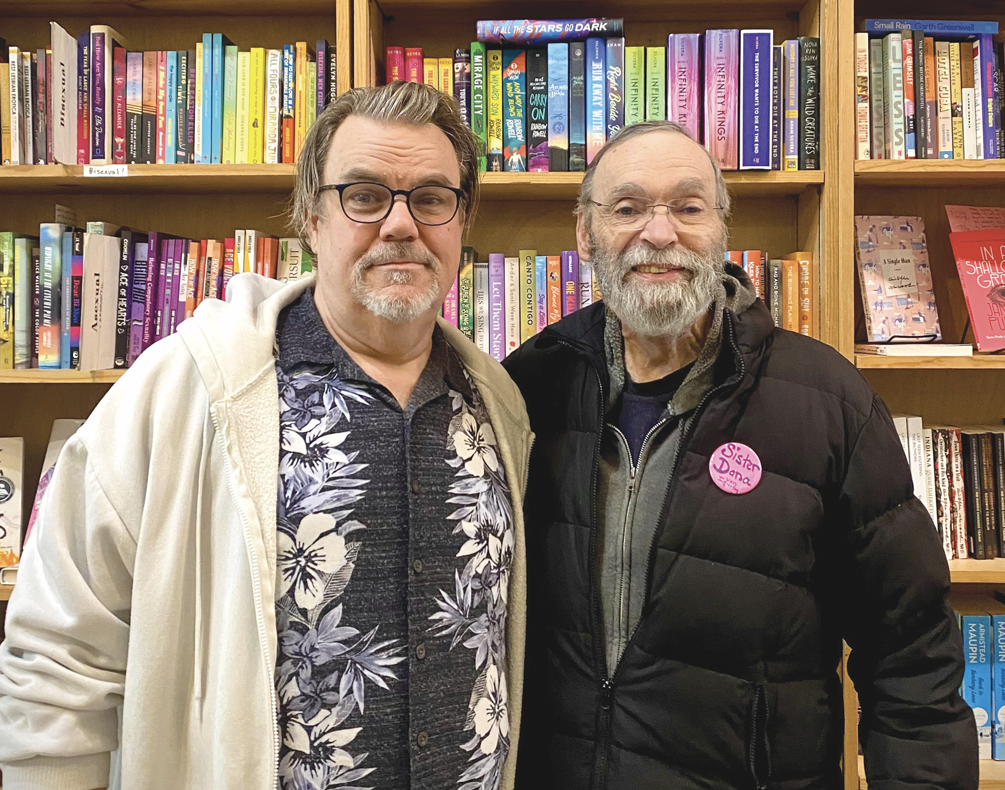
PHOTO BY DYLAN LALANNE-PERKINS
The CBS/Recording Academy will present the 2026 GRAMMY Awards ceremony on February 1, hosted by comedian Trevor Noah with broadcast on NBC for the final year there. Sister Dana sez, “Between you and me, I’m really hoping it’s as queer as it can be, or even queerer than ‘The Golden Globes’ was!”
In Minnesota and other blue states, thousands of ICE enforcers, National Guard, and other federal agents—all wearing masks over their eyes, like common criminals—have been breaking windows, knocking down doors, and physically attacking and dragging people away. All this abuse by THEM while claiming that THEY claim it’s the community that won’t leave them alone. Trump and his agents keep calling this community of legal protesters “domestic terrorists.” All these attacks are because Dictator Donald and hateful white nationalist Stephen Miller need to meet a minimum quota of 3,000 “illegal immigrants”—as promised to and cheered on by Trump campaign supporters viciously yelling, “MASS DEPORTATIONS!”
Sister Dana sez, “These masked FEDS are the domestic terrorists, causing unnecessary fear and terror among the peaceful protesters! ICE out! And stop sending more federal terrorists to our cities! Whatever happened to States’ Rights anyway?!”
Reminder: Homeland Security announced that a federal agent shot a Venezuelan immigrant who was resisting arrest on January 14. The shooting came just a week after an ICE agent fatally shot Renée Good, an innocent mother and out lesbian (whom the Trump administration is widely denigrating) in that very city, and the unjust DOJ has the nerve to investigate her widowed wife). There were already 2,000 federal agents there—with 1,500 more on the way. Also, in Minneapolis, an Oglala Sioux Tribe reports that ICE is holding four Native American tribal members. Sister Dana sez, “Christopher Columbus! That’s absurd if not utterly detestable!” And fascist Trump has been threatening to (wrongly) invoke the Insurrection Act (not properly used since 1992) to allow for even more feds invading Minnesota!
Sister Dana sez, “It truly warms my heart (usually ICE-illy freezing these days) that, on January 22, a group of ten local residents in Davos, Switzerland, climbed a mountain to stick 450 burning torches into the snow to dramatically spell out: ‘NO KINGS’!”
And more disgusting Minnesota news: The Department of (In)Justice is launching subpoenas for Minnesota Governor Tim Walz and Minnesota Mayor Jacob Frey—as well as two state prosecutors, State Attorney General Keith Ellison and Hennepin County Attorney Mary Moriarty, as part of an unnecessary investigation into their “impending law enforcement.”
On January 24, the feds shot ten rounds of guns and killed another person (an innocent ICU nurse at the VA Hospital (having been already wrongly pinned to the ground by seven agents). Note that ICE funding runs out on January 30, so Congress MUST refuse to fund it! And, on January 23, officially “No Ice Day” nationally, more than 20,000 Minneapolis residents protested, as did hundreds at SF City Hall. But next stop for ICE is Maine. Whaaat?!
On February 5, 6–8 pm, join the GLBT HISTORICAL SOCIETY MUSEUM at 4127 18th Street for In Their Own Words: Trans People of Color Speak from the Video Archives, an evening of rare archival footage spotlighting Black, Latinx, Asian, and Pacific Islander trans and gender-nonconforming people speaking about their lives, identities, and activism. This special program will feature excerpts from Screaming Queens: The Riot at Compton’s Cafeteria (including extended interviews with trailblazing figures featured in the film), highlights from genderqueer disco queen Sylvester’s Fabulous 40th Birthday Celebration, and candid clips capturing everyday trans and gender-nonconforming life in the SF Bay Area. Tix at https://www.glbthistory.org/
The CASTRO THEATRE will be back in February—having closed in February 2024. Upcoming events are designed to honor Castro Theatre’s historic role as an LGBTQ cultural hub. On February 6, the Castro Community Benefit District will host drag performances, a costume contest, dance party, and a 35-millimeter screening of the 1994 musical The Adventures of Priscilla, Queen of the Desert. And as the theater officially reopens, on February 10, there will be a 20-night residency by musician Sam Smith.
The Richmond/Ermet Aid Foundation (REAF) will present IF THIS IS LOVE: A Musical Celebration of the Month of Love on February 23, 7:30 pm at the Marines’ Memorial Theatre, 609 Sutter Street. The live cabaret cast members from the National Broadway Tour of THE NOTEBOOK will be featured with special guest singers Jason Brock and Leanne Borghesi, and ABC-TV news anchor Dan Ashley. This will be ideal if you happen to screw up on Valentine’s Day!
In Santa Ana, a federal judge has thrown out the U.S. Department of Injustice lawsuit that tried to pry loose California’s full, unredacted voter file, keeping sensitive data for roughly 23 million registered voters confidential. U.S. District Judge David O. Carter found that the feds’ demand put the privacy of millions at risk and was unprecedented in scope. The ruling is the first major courtroom setback for the administration’s nationwide push to force states to hand over detailed voter records, which was yet another autocratic attempt to rig the midterm elections.
Sister Dana sez, “Trump wants to take over Greenland (our NATO partner). In other words, he wants to make Greenland OrangeLand! Ridiculous!”
Poetry writers M.J. “Joe” Arcangelini, Scott Bird, Trebor Healey, and Arthur Tress were featured at Fabulosa Books at another of their amazing poetry readings on January 22, and I told Joe his works on urinary troubles and democracy were spot on!
Sister Dana sez, “Has anybody else noticed that, during almost every press conference, autocrat Trump narcissistically uses the word ‘I’ as opposed to past polite presidents who have usually spoken correctly as ‘we’ for America?!”
Sister Dana Sez Words of Wisdumb from a Fun Nun
Published on January 29, 2026
The post Sister Dana sez, “The Milan Olympics open on February 6…” appeared first on San Francisco Bay Times.
]]>The post Pet Peeves at Restaurants appeared first on San Francisco Bay Times.
]]>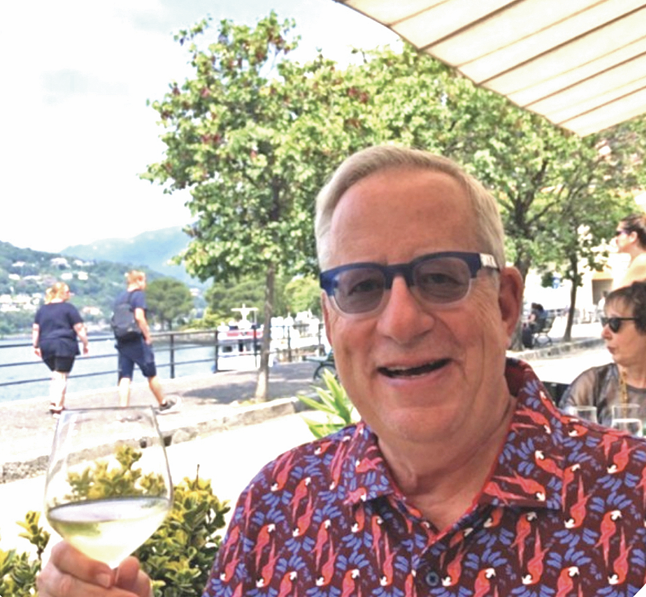
By David Landis, The Gay Gourmet—
As my loyal readers know, I’m generally a very positive guy—especially when it comes to restaurants. Unlike some critics, I generally try to find what I like about the dining experience, and share it with my readers. That said, there are some situations that just irk the you-know-what out of me. So, I’m embracing my inner grinch and sharing several of them, along with places here in the Bay Area that actually solve the issue brilliantly.
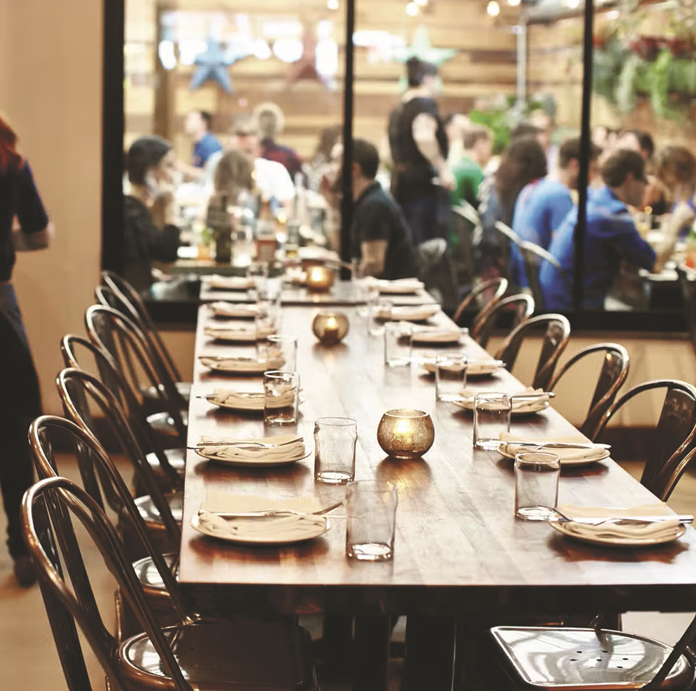
Pet Peeve #1: Trying to get a cocktail in this town when you sit down to dinner
Pretty much everywhere in San Francisco, when you sit down, you’re asked what kind of water you want. OK, but I prefer the waiters in New York who, when you sit down, ask you if you’d like a drink. Yes, some people don’t imbibe with alcohol, but most of us want something other than water to drink. And the waiter’s tip goes up accordingly. I’ve waited up to 30 minutes to get a drink, in some of the “best” places in town. So, why do restaurants do this (please, readers, let me know)?
Who Does It Right: Hillstone and Florio
When you are seated at Hillstone, they don’t just ask you what kind of water you want. They ask if you’d like something to drink. My shaken gin martini arrives within a minute. Another plus? When you’re halfway through your giant pour martini, they arrive with yet another chilled glass to finish off your cocktail. Bravo! A second place that does it right is Florio, but that could be because I’m a regular there. When I walk in the door, bartenders Peter and Craig are already mixing my drink, and it’s ready before I sit down. Now, that’s good service! (Hint: become a regular in at least one neighborhood place near you, and you’ll find you are rewarded with great service.)
Pet Peeve #2: No salt and pepper shakers on the table
I like to intone the famous words of the fictitious Miranda Priestly (from The Devil Wears Prada), when describing this circumstance. “I just don’t understand … ,” she would say, and I would add, “why restaurants don’t have their salt and pepper shakers on the table anymore.” Is it because the chef thinks their dish is perfect and requires no seasoning? Or is it because it costs too much money to keep clean shakers out on tables with grubby hands? Inquiring minds want to know. (Again, readers, please enlighten me!)
Who Does It Right: Balboa Café (hopefully after solving their recent rat infestation)
You’ll always find a salt and pepper shaker on your table from the moment you sit down. And, if you sit at the bar, they’ll deliver a salt and pepper shaker right after you get your cocktail, when you order your food. While you’re there, don’t forget to order their famous and delectable chicken paillard (available only on Wednesdays), and their infamous espresso martinis (the best and most potent in town).
Pet Peeve #3: Servers clearing dishes on the table before all parties have finished their meal
I admit it. I may be the slowest eater on the planet. I take that back: my brother John is still finishing his salmon dinner from 2024. But, as one of the slowest eaters (which I’m always told is “healthier”), others consistently finish before me. Waiters who haven’t been trained properly actually think it’s good service to clean the plates of diners who finish before other diners. But, here, I’m intoning former San Francisco Chronicle restaurant critic Michael Bauer, who would rail against such practices, and sometimes penalize a restaurant’s rating because of it. When a waiter clears the plates of other party members, it makes the slow eater feel guilty and/or pressure to finish the meal quickly. Dining should be an enjoyable, unwinding experience, not a rat race.
Who Does It Right: Starbelly (and Super Server Brooke)
I just had lunch at this Castro mainstay and was impressed with server Brooke who intentionally did not clear the place of my dining companion until I finished my meal. We had a conversation about it and she agrees: dining should be relaxing, and guests should take all the time they need to eat the way they want to.
Pet Peeve #4: Restaurants that are so loud you have to scream at your neighbor
This seems to be a common restaurant design mistake, in my humble opinion. I know that restaurants want to create a “buzzy” experience, but many of San Francisco’s restaurants are now so loud you have to yell at the person next to you to carry on a conversation. I’m glad, then, to see that the San Francisco Chronicle has reinstated its loudness barometer for reviews, so guests can take this into consideration when choosing a restaurant. Again, dining should be a restful experience, and one in which you can catch up with your dining pals without shouting.
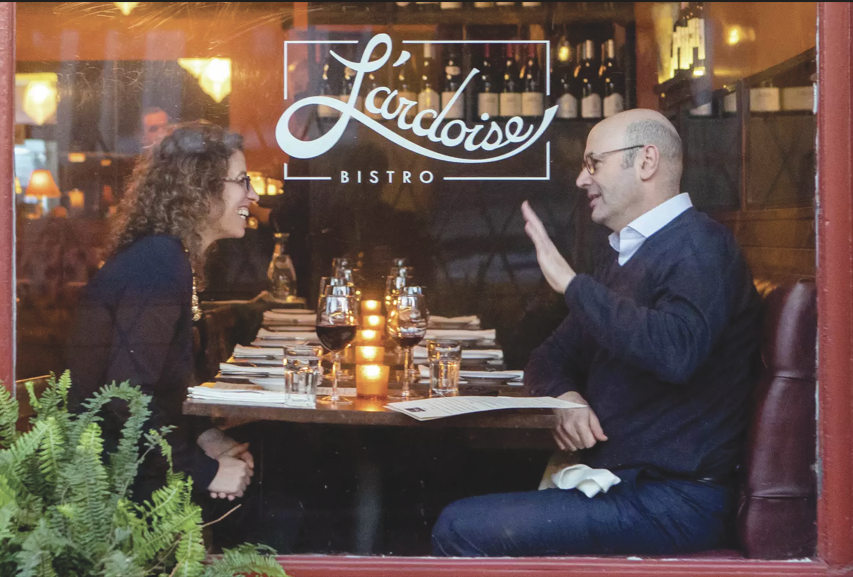
Who Does It Right: The Rotunda at Neiman Marcus and L’Ardoise Bistro in the Castro
The Rotunda at Neiman Marcus is a throwback to another era of elegance. Yes, you’ll be quaffing and noshing with the ladies who lunch, but that’s half the fun. You’ll be dining under the historic stained-glass dome, with views of Union Square at the perimeter. Insider’s tip: Go for lunch, ask for a window seat, and splurge with their oysters, caviar, and champagne. You’ll be making your mark with the society set, so dress the part. Another place that’s romantic and quiet is the French bistro L’Ardoise in the Castro. Traditional French fare dominates the menu. My favorite is to sit at the bar and watch the hot chef turn out amazing dishes, one after another. And, yes, you’ll be able to hear your date talk about how great you look, how they really want to get you home after the meal, and how they want to continue the romantic evening in the bedroom.
Pet Peeve #5: Kids who don’t behave at restaurants
I remember that my parents, John and LaVerne Shirley, would take us kids to some lovely restaurants growing up. But they were clear about one thing: you act up, and you’re leaving the restaurant—to not only be banished in the car, but you won’t be going out to fancy restaurants in the future. That lesson stayed with all 3 of us kids. So, I’m amazed at the parents these days who let their kids run around like maniacs.
Who Does It Right: My husband, Sean Dowdall
We were having lunch at Perry’s when a group of kids was so rambunctious that they actually ran into my husband’s chair and almost knocked him over. In the words of Bewitched’s Endora, “He had had it.” He calmly got up and told the two moms behind us that Perry’s is not McDonald’s. He said that, if they wanted their kids to run around, they could go to the Presidio to let off steam. Mission accomplished!

Plate at L’Ardoise 
Butter lettuce salad at L’Ardoise
Bits and Bites
Big news: there’s a new restaurant moving into the former Café Flore/Fisch & Flore space in the Castro, hopefully by Pride month. According to the San Francisco Standard, Parasol at Flore is set to take over the prominent location. Restaurateur Jacob Paronyan helms the project and his vitae includes stints at the esteemed Boulevard, as well as owning the well-regarded Roaming Goat. It’ll be a more casual dining experience, with counter service during the day and table service at night. We have high hopes!
Every year, I look forward to the Mostly British Film Festival, run by my pal Ruthe Stein. Often, I’m out of town, but I love examining the roster of films for, quelle surprise, something that highlights food and drink. So, here’s what Ruthe has to say about the upcoming Tom Jones feature, which screens February 7 at the Vogue Theatre:
“Can soup, dark bread, lobster claws, and mugs of beer be sexy? You bet they can. Just take a look at the famous (infamous?) eating scene in the great 1963 movie Tom Jones. Albert Finney as Tom and Joyce Redman as Jenny seduce each other over a meal of chicken thighs, lobster, and, of course, oysters on the half shell, all the while glaring at each other with that old come-hither stare, meaning there’s more where this came from. As the food courses arrive and disappear, Tom and Jenny get into a rhythm and eat faster and faster—you get the idea. They end with two juicy, lip-smacking pears, and then they slow down with a luscious after-dinner drink; for the modern audience, think cigarette. The whole time, you hear them smacking their lips and sucking their food. The eating scene is a gustatory orgy, which foreshadows the real thing that you never actually see in the movie. After all that mouth play, what’s the need?”
Hillstone: https://bit.ly/49Z4MqH
Florio: https://floriosf.com/
Balboa Café: https://www.balboacafesf.com/
Starbelly: https://www.starbellysf.com/
The Rotunda at Neiman Marcus: https://tinyurl.com/37398z3b
L’Ardoise Bistro: https://lardoisesf.com/
Perry’s on Union Street: https://www.perryssf.com/
Mostly British Film Festival at the Vogue: https://mostlybritish.org/
David Landis, aka “The Gay Gourmet,” is a foodie, a freelance writer, and a retired PR maven. You can email him at: davidlandissf@gmail.com Or visit him online at: www.gaygourmetsf.com
The Gay Gourmet
Published on January 29, 2026
The post Pet Peeves at Restaurants appeared first on San Francisco Bay Times.
]]>The post Beyond Dry January: How the Non-Alcoholic Movement Is Creating Space for Authentic Living appeared first on San Francisco Bay Times.
]]>
By Dina Novarr—
For many years, Dry January has represented a short break for folks to reset their lives and abstain from alcohol after the holidays. But, as the month comes to a close, it helps to remember that, for many, this is a lifetime commitment, not a one-month hiatus. Samantha Zatkoff-Batton is one such person. She stands behind the bar at the Berkeley Country Club with the confidence of someone who knows exactly what belongs in a French 75, and knows why she’ll never drink one again.
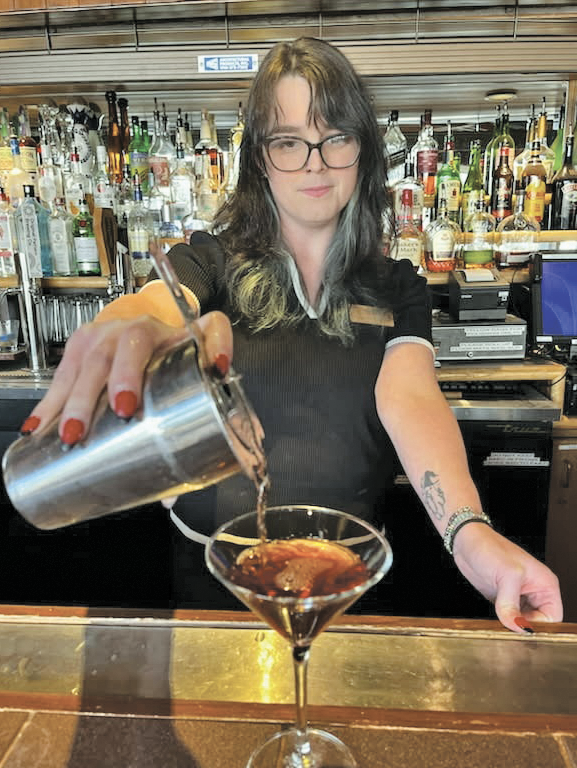
At 33, she’s the Food and Beverage Manager at one of California’s most prestigious country clubs. She is also a trans woman who came out at 30, a former Marine, and sober. She’s building a beverage program that authentically celebrates beverages: alcoholic, low alcoholic, and non-alcoholic.
Since entering the beverage industry in 2024, Samatha has risen faster than anyone I know. There is something inspiring about watching someone grow into a role that feels like a natural fit. Despite that, her path wasn’t linear. After leaving the Marines, she struggled with unemployment and depression, using alcohol to cope. It was during this time adrift that she decided to transition. She told me for the San Francisco Bay Times: “Even on that first day, I knew it was the right decision. But I still relied on alcohol to deal with stress.”
Meeting her partner Dean Cooper in February 2024 changed everything. “He helped me gain the confidence to be my authentic self and pushed me to better myself,” she said. “He helped me see who I was, even when I struggled to see it.” With that support, she achieved sobriety and found work, first as a bar cook, then as a server at the Berkeley Country Club, quickly moving into a bartender position, and two months later being promoted to Food and Beverage Manager on her 1-year anniversary at the club.
It was there that Samantha ascended into her true self. As she said before taking her first job at the country club, “no more boymoding” and instead living a life fulfilled by “talking to new and interesting people each day, [and] helping them in a small but meaningful way.” It was her dream job and it was terrifying. But now she’s using that position to make sure no one feels like an afterthought.
One of her signature cocktails is “The First Squeeze,” built around Abstinence Spirits
and Pathfinder. Abstinence Spirits is a non-alcoholic line founded by Ranwei Chiang. The cocktail showcases the botanical complexity quality non-alcoholic spirits can achieve. The name carries multiple meanings: the first juice pressed from fruit, the first embrace of a new way of being, and the first step toward authenticity. And what is serendipitous is that Samantha found her path through abstinence, and, in doing so, raised the bar on how she shows up. Her drink is the type of non-alcoholic option that makes you feel excited, not apologetic. It is a choice just as sophisticated as ordering a martini or a vintage Bordeaux.
Samantha choosing Abstinence Blood Orange Aperitif reveals something profound about sobriety and queer identity. Three years ago, right after Ranwei launched Abstinence Spirits, her partner Delta came out and began transitioning. They’ve been married for 13 years, and Delta’s journey coincided with building a business centered on helping people find themselves through moderation and sobriety.
“Through Abstinence Spirits, I realized what a wonderful space the NA world is for people, and especially queer people [like Delta],” Ranwei said. “We love hearing people’s stories and bringing great tasting alternatives to support their moderation or abstinence goals in their journey to find themselves.” That phrase “find themselves” echoes through both Samantha’s and Delta’s stories of coming out, getting sober. Both require being honest about who you are. Both require support and spaces where you can exist authentically.
Samantha came out at 30 and became sober that same year. Delta’s transition happened as her partner, Ranwei, created a business supporting transformation. Both understand that the journey to authenticity often requires letting go of alcohol, of pretending, or both. There is something powerful about the NA space for queer folks, Samantha and I reflected. When people spend years hiding who you are, drinking to cope, and then you come out, people should not have to trade one form of hiding for another. You want to show up fully. That includes being honest about sobriety, exactly what Samantha embodies.
The Berkeley Country Club might seem like an unlikely place for “sober curious” trends and queer visibility, but Samantha’s work proves that quality non-alcoholic options transcend demographics. Members in recovery, pregnant members, and those on medication all deserve the same hospitality. And, increasingly, the most innovative thinking comes from people who understand exclusion intimately. Real hospitality isn’t about what you serve. It’s about making everyone welcome at the table, especially when their glass honors exactly who they are and who they’re becoming.
The First Squeeze
1.5 oz Pathfinder
1.5 oz Abstinence Blood Orange Aperitif
1.5 oz tonic soda
Pour ingredients into a cocktail shaker with ice and shake vigorously. Strain into a chilled martini glass. Cut a 2-inch strip of orange peel using a paring knife or vegetable peeler. Rub the peel around the rim of the glass to add scent to every sip.
San Francisco-based Dina Novarr enjoys sharing her passion for fine wines, spirits, non-alcoholic craft beverages, and more with others.
Cocktails with Dina
Published on January 29, 2026
The post Beyond Dry January: How the Non-Alcoholic Movement Is Creating Space for Authentic Living appeared first on San Francisco Bay Times.
]]>The post Savor Sipping a Trio of Romantic Reds appeared first on San Francisco Bay Times.
]]>