| CARVIEW |
-
The mechanics of contemporary power

Modern power is infrastructural, predictive, and quiet. It governs by configuring access, defaults, and risk rather than issuing commands. Because it is distributed and procedural, it resists direct opposition and absorbs symbolic resistance. Meaningful change does not confront power head-on but acts on flows, dependencies, and timing. By reducing legibility, increasing uncertainty, and building parallel capabilities, it becomes possible to erode inevitability without triggering suppression. The objective is not to seize control, but to ensure no single system remains unavoidable.
I. How power operates now
1. Power no longer commands. It configures.
Modern power rarely issues direct orders.
It shapes the space of possible actions.This is done by:
- controlling access (who may participate)
- setting defaults (what happens if you do nothing)
- defining risk (what is punished or insured)
- narrowing options until one path feels “reasonable”
When choice exists only formally, power does not need force.
What power ultimately governs is optionality. Actions that remain formally possible but practically unreachable do not threaten the system. Governance succeeds when alternatives survive only as abstractions.
2. Power operates through infrastructure, not ideology
Belief is optional. Compliance is structural.
Power persists because it is embedded in:
- contracts
- standards
- platforms
- supply chains
- protocols
- legal and technical interfaces
You do not need to agree with these systems to depend on them.
This makes opposition difficult, because the system does not argue back.
It simply continues.The most powerful position today is not authority, but procedural neutrality: the ability to shape outcomes while claiming to merely enforce rules.
3. Power is distributed and silent
There is no center to seize.
Instead, power is:
- modular
- redundant
- jurisdiction-agnostic
- responsibility-diffuse
Each component can plausibly deny full agency.
No single node feels accountable for outcomes.This silence is not weakness.
It is the main defense.Because power is now system-scaled rather than human-scaled, replacing individuals rarely changes outcomes.
4. Power governs through prediction
The dominant capability is not coercion, but forecasting.
Power relies on:
- stable categories
- legible identities
- predictable behavior
- clean data
- coherent incentives
The more accurately behavior can be modeled, the less intervention is needed.
Governance becomes optimization.
5. Violence has shifted from physical to procedural
Force still exists, but it is no longer the primary mechanism.
Today, harm is more often delivered through:
- denial of access
- administrative exclusion
- financial blockage
- compliance failure
- reputational flags
- algorithmic decisions
This form of harm leaves no obvious aggressor.
Outcomes feel technical, not political.
6. Legitimacy replaces domination
Power maintains itself by appearing inevitable and neutral.
Common legitimizing frames include:
- “best practice”
- “safety”
- “risk management”
- “complex systems”
- “no alternative”
When power feels like gravity, resistance feels irrational.
II. How change actually happens under these conditions
The goal is not confrontation.
The goal is reducing inevitability.Not overthrowing systems.
Making them optional.
1. Act on flows, not symbols
Symbols are cheap to absorb.
Flows are not.Effective pressure targets:
- chokepoints
- dependencies
- timing
- coordination costs
- trust assumptions
Small disruptions to flow reliability matter more than loud opposition.
2. Reduce legibility without disappearing
Power depends on clean representation.
Effective action:
- avoids fixed identities
- resists stable categorization
- remains internally coherent but externally ambiguous
- refuses simplification
The objective is not secrecy, but non-summarizability.
Legibility is the price of admission. Refusing full legibility is not non-participation, but a demand for different terms of engagement.
If you can be cleanly described, you can be governed.
3. Increase model uncertainty
Prediction is power’s advantage.
Counter-pressure introduces:
- inconsistent but functional behavior
- multiple valid interpretations
- local logic that breaks global models
- outcomes that cannot be cleanly optimized
You do not break systems.
You make them less confident.Resistance that can be predicted is manageable; behavior that cannot be confidently modeled forces defensive overreaction.
4. Build parallel capability, not opposition
Opposition reinforces centrality.
Parallelism erodes it.This means:
- alternative tools
- alternative coordination paths
- alternative value exchange
- alternative legitimacy signals
The presence of working alternatives weakens monopoly more than critique ever could.
The most destabilizing act is not refusal, but the creation of exits that function without asking permission.
5. Shift timing, not position
Power optimizes for stability and continuity.
Change emerges during:
- overload
- crisis
- transition
- failure
- recomposition
Effective action prepares quietly, then becomes visible when systems are least able to adapt.
Not faster.
Better timed.Power is strongest at equilibrium and weakest during recomposition, when yesterday’s assumptions still govern tomorrow’s constraints.
6. Undermine inevitability narratives
The strongest claim power makes is that no viable alternative exists.
You counter this not by arguing, but by demonstrating plausibility:
- prototypes
- pilots
- simulations
- lived examples
Once alternatives feel usable, authority weakens automatically.
III. The core principle
Power today governs by shaping possibility space.
Effective change works by widening that space faster than power can close it.In this environment, meaningful change does not announce itself as resistance. It appears as drift, as alternative defaults, as quiet divergence. Systems lose power not when they are defeated, but when they are no longer necessary.
-
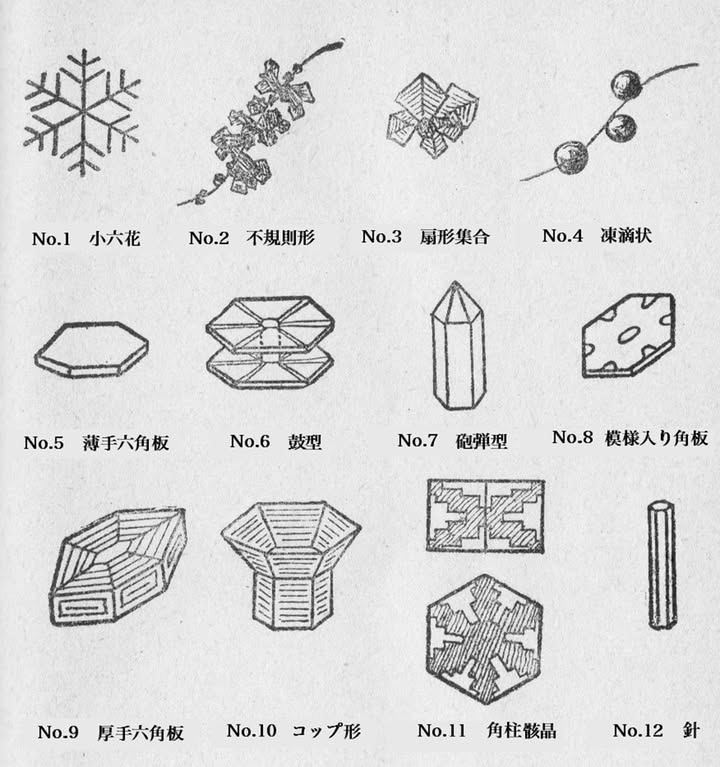
Toward a Grand Unified Theory of Snowflakes
Ever since the Japanese physicist Ukichiro Nakaya produced his seminal catalog of snowflake shapes 77 years ago, researchers have sought to understand the interplay of factors that lead to different shapes.
-
Against Hierarchies: Notes Toward a Logical Anarchism - Samim's commentary on "Hierarchical Introspective Logics" (John F. Nash Jr., 1998)

पूर्णस्य पूर्णमादाय पूर्णमेवावशिष्यते ॥
“Removing infinity from infinity, leaves infinity”
– Brihadaranyaka Upanishad
Let us begin by refusing the polite fiction that Hierarchical Introspective Logics is a technical solution to anything. It is not. It is a symptom. A well-mannered, carefully typeset symptom of a much older intellectual disease: the belief that when thought collides with its own limits, the appropriate response is to build a taller bureaucratic structure.
Gödel did not discover a small technical flaw in formal logic. He discovered that self-certifying reason is impossible. Nash accepts this discovery in words, but then proceeds to behave as though it were a logistical inconvenience rather than a structural impossibility. His hierarchies are not insights; they are filing systems for paradox.
The trick is familiar. When a system cannot justify itself, introduce a supervisor. When the supervisor cannot justify itself, introduce a supervisor of the supervisor. Continue indefinitely. Call this “progress”. At no point ask why supervision itself is assumed to be the right response.
This is not courage. It is discipline masquerading as depth.
What Nash calls “introspection” is in fact a prohibition. Each level may speak about the one below, but none may speak fully about itself. This is not a discovery about logic. It is a rule imposed to prevent embarrassment. Paradox is not solved; it is quarantined. One might admire the cleanliness of the quarantine while still noticing that the disease remains endemic.
The hierarchy reproduces itself endlessly because it must. Each level re-enacts the same drama: expressive power produces undecidable truths, consistency cannot be proven internally, and justification must be outsourced. This is not a staircase toward truth. It is a fractal of evasion. Zoom in, and you find incompleteness. Zoom out, and you find incompleteness. The pattern is invariant. Only the notation changes.
Here we encounter the real sleight of hand. Nash invites us to confuse organization with explanation. Because the paradox is now arranged neatly by levels, we are encouraged to believe that something has been achieved. But rearranging a problem does not diminish it. A labyrinth with better signage is still a labyrinth.
The invocation of ordinals and infinity adds an aura of inevitability, as though the hierarchy were dictated by mathematics itself rather than chosen as a strategy. But infinity here functions as mythology, not substance. When definable ordinals run out, new axioms are declared. When those run out, more are introduced. This is not discovery. It is permission-giving. The hierarchy continues because we decide that it should.
At this point one is tempted to ask an impolite question: why should we accept that *this* mode of continuation is superior to any other? Why not add the Riemann Hypothesis directly as an axiom? Why not embrace inconsistency locally? Why not tolerate plural, incompatible systems side by side? Nash offers no answer except tradition and taste, dressed up as necessity.
This is where the reverence for formalism becomes ideological. The hierarchy is presented as the natural, disciplined alternative to “arbitrary” axioms. But discipline is not neutrality. It is a preference. A historically conditioned one. Other mathematical cultures, other epistemic traditions, have lived quite happily without this obsession with global consistency and meta-certification.
Gödel’s result does not demand hierarchy. It demands humility. Nash supplies hierarchy instead.
The deeper error lies in the unexamined assumption that logic must aspire to timeless authority. Proofs are temporal acts. They occur in history, under constraints, by finite agents. Truth, meanwhile, is treated as an eternal object hovering above these acts. The attempt to force the former to certify the latter is what generates paradox in the first place. Nash’s levels merely postpone the confrontation by slicing time more finely.
One might say that the hierarchy replaces the fantasy of a single God’s-eye view with the fantasy of an infinite committee of lesser gods, each certifying the paperwork of the one below. This is not liberation from absolutism. It is absolutism distributed across infinitely many desks.
A genuinely radical response to incompleteness would not try to manage it. It would abandon the demand it frustrates. It would accept that mathematics, like science, advances by inconsistency, bricolage, historical accident, and local success rather than global justification. It would treat Gödel not as a problem to be administrated, but as a warning against epistemic monotheism.
From this perspective, Hierarchical Introspective Logics is impressive only in the way a well-run bureaucracy is impressive. Everything is in order. Nothing is resolved. The paradox is still there, patiently waiting at every level, unimpressed by the new titles assigned to it.
Gödel did not tell us that we need taller systems.
He told us that there is no final system.
Nash builds upward anyway.
That is not a solution.
It is a preference.
And preferences, unlike theorems, are negotiable.
----------------------------
AGAINST METHOD, AGAIN
Science advances by violations, not by obedience.
Every method that claims universality mistakes habit for law.
This is not a rejection of rigor.
It is a rejection of **methodological sovereignty**.
---
1. No Method Owns Reality
Mathematics, statistics, falsifiability, peer review, reproducibility:
all are tools, none are judges.
When a method declares itself the final arbiter of truth, it ceases to explore and begins to govern.
Truth does not recognize jurisdictions.
---
2. Regularities Are Not Explanations
Patterns are observations, not verdicts.
A regularity across scales is not a law.
A resonance across domains is not a metaphysics.
A recurrence demanding immediate interpretation is a trap.
Nature repeats because it can, not because it must.
---
3. Reduction Clarifies Only What Survives Being Broken
Decomposition reveals components, not coherence.
Complex systems do not live in parts.
They live in relations that disappear when isolated.
When a method cannot handle feedback, self-similarity, or scale drift, it renames them noise and congratulates itself.
---
4. Falsifiability Is a Tool, Not a Virtue
Many productive ideas were unfalsifiable when introduced.
Some remain so longer than institutions tolerate.
To prohibit them in advance is not scientific discipline.
It is intellectual risk aversion disguised as ethics.
History shows that theories often become testable only after they are allowed to be wrong without punishment.
---
5. Methodological Purity Produces Sterility
Every foundational shift broke the rules of its time.
Copernicus violated physics.
Galileo violated epistemology.
Quantum theory violated causality.
Complexity theory violated reductionism.
Each was accused of mysticism.
Each was later called inevitable.
Inevitable is the name orthodoxy gives to heresy after surrender.
---
6. Hierarchies Do Not Resolve Paradox
Pushing contradiction one level upward does not solve it.
It delays responsibility.
Recursive systems do not terminate cleanly.
They stabilize locally, then fail again.
A framework that cannot survive its own recursion is not deep.
It is fragile.
---
7. Noise Is Structural, Not Accidental
Life exists in variance, not averages.
Meaning emerges in misalignment, not consensus.
The obsession with noise elimination is an obsession with control.
---
8. Interdisciplinarity Without Risk Is Decoration
Borrowing vocabulary without breaking disciplinary borders is mimicry.
True cross-fertilization produces hybrids that offend specialists.
That offense is a signal, not a flaw.
---
9. Any Theory That Requires Protection Is Finished
No framework deserves immunity.
No critique deserves finality.
The moment a method demands silence instead of counterexamples, it becomes theology with citations.
---
The Only Rule That Survives
“Anything goes” does not mean everything is equal.
It means no gatekeeper decides in advance what may count.
Let ideas compete under interference.
Let them mutate.
Let them fail loudly.
What survives disruption earns attention.
Not obedience.
---
Progress does not come from cleaner rules. It comes from dirt under the rules.
See this related post - #Comment #Philosophy #Science
-
Any system capable of self-reference and rich structure will exhibit:
- scale invariance
- persistent incompleteness
- distributed paradox
- no final temporal closure
Trying to “solve” incompleteness is like:
- Trying to flatten a fractal
- Or eliminate 1/f noise from cognition
- Or define a universal now
You can’t. You can only design with it.
-
Perspective on Gratitude
The final weeks of a year are humbling. Today, a few days before Christmas and just over a week before new year, I want to share this perspective with you - that gratitude can simply be a remembering of how life is never a given.
Carpe Diem. I wish you a very happy holiday.
-
Lanmaoa asiatica - The Mushroom that makes you reliably see little people "hallucinations"

-
Thin Places

“There is in Celtic mythology the notion of ‘thin places’ in the universe where the visible and the invisible world come into their closest proximity. To seek such places is the vocation of the wise and the good — and for those that find them, the clearest communication between the temporal and eternal. Mountains and rivers are particularly favoured as thin places marking invariably as they do, the horizontal and perpendicular frontiers. But perhaps the ultimate of these thin places in the human condition are the experiences people are likely to have as they encounter suffering, joy, and mystery” - Peter Gomes