


| CARVIEW |
All the material on this blog has been imported over to my blog, The Third Way. Please go there for all your Moshe Yaroni needs.
]]>I want to thank everyone who has followed this blog and made it the success it has been. I say this because this will be my final entry in this blog.
I adopted the name Moshe Yaroni because my professional duties prevented me from writing about political matters with the freedom I needed in this blog and other places where I published under the name of Yaroni. Those constraints have now been lifted.

Ahad Ha'am as Yaroni
I had been the Director of the US office of B’Tselem here in Washington, DC. As a human rights organization, B’Tselem properly works under strong constraints to stick to matters of human rights and international law, avoiding political stances as much as humanly possible. That is a correct course and I support it.
Since I am now moving on to other projects, after a mutually warm and agreeable departure from B’Tselem, it is time to reveal that Moshe Yaroni is Mitchell Plitnick.
I hope all of you who have subscribed to this blog will now subscribe to my long-standing blog, The Third Way, at mitchellplitnick.com
I am also publishing these days as the DC Foreign Policy Correspondent at examiner.com and am about to begin blogging for Meretz USA as well. I very much hope you will continue to read my work at these various outlets, and as always, am glad to hear from my readers, both when you agree and disagree (with civility, of course).
Thanks again for your support of this blog. It will remain online for some time as I port these posts over to The Third Way.
]]>Lara Friedman, of Americans for Peace Now, explores the tangled web that Palestinian President Mahmoud Abbas will
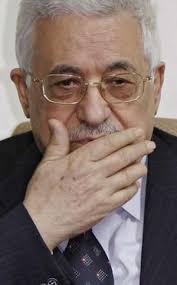
PA President Mahmoud Abbas
need to walk now that even the Arab League has endorsed direct talks.
The sum of both articles, though, leaves one wondering why Barack Obama is pushing so hard for direct talks.
It’s clear enough why Israeli Prime Minister Benjamin Netanyahu wants direct talks. Israel has done nothing to advance the proximity talks and faced no consequences for it. In direct talks, that will be even truer; holding the talks will satisfy much of the world, and Israel will be able to prolong them indefinitely.
But what exactly does Obama expect to come from direct talks at this stage? Netanyahu is shouting to all that will listen that he can’t even extend the joke of a settlement moratorium or his government will fall (it won’t). So how can we believe he can possibly make the concessions necessary for peace?
That aside, let’s say Abbas and Netanyahu do come to an agreement that satisfies both sides. What happens with Gaza and Hamas? Part of any agreement that the Palestinians can agree to is the affirmation of the principle that the West Bank and Gaza are a single territorial unit.
If such an agreement, then, is not possible, what’s the big rush for direct talks?
It does seem that this is another symptom of the tragic lack of strategy that has dogged Obama’s Mideast efforts from day one. The President has kept this issue on the front burner, and I remain convinced of his good intentions.
But we all know what is said about the road to hell.
Ten years ago, Bill Clinton pushed Israelis and Palestinians to a summit when neither side was ready for an agreement. It seems Obama has not learned this lesson from history.
The fact of the matter is that neither side is ready, and the issue is not one of “confidence-building measures.” The

The lasting image of Camp David II
current Israeli government might, given the right circumstances, agree to remove some settlements, but it is inconceivable that this government would agree to remove enough settlements to allow for a viable Palestinian state. And the notion of them compromising on Jerusalem is simply absurd.
Even if it were possible that Netanyahu would agree to such things, the current composition of the government makes it impossible, and there is insufficient political will in Israel right now to make the changes that would be required. It’s not inconceivable that even a Bibi-led government could make the compromises necessary, but that government won’t be this one, and changing the political winds in Israel will take some time.
And on the Palestinian side, the PA-Hamas split is showing no signs of healing, making it impossible for a true end of conflict agreement.
There are political reasons why it makes sense for Obama to be pushing direct talks right now, but they’re not very impressive ones. They’re domestic concerns, supporting Israel’s position, and part of his election year outreach to the Jewish and Christian groups that are seeking to attack Democrats based on Obama’s Mideast record. We’ll leave aside for now the point that Obama has done much more than his predecessor to increase Israel’s military supremacy in the region.
But in terms of promoting Middle East peace, this is a dumb move unless Obama is willing to back it up. Direct talks are necessary if the US is to really influence an outcome agreement. But if Obama is not willing to pressure both sides, not only the Palestinians, talks will end in disaster and Obama will not only find himself in a new Mideast quagmire, but the failure will give his political opponents fresh ammunition and lots of it.
Lara Friedman of Americans for Peace Now
Friedman does an excellent job of listing the very real concerns Abbas must have at the prospect of talks, and she’s quite right in saying that the “…success or failure [of direct talks] will depend in large part on (Obama’s) readiness to live up to his assurances and not permit Prime Minister Netanyahu to transform the talks into a diplomatic charade and a political exercise in futility.”
But there is a real limit to how much Abbas can do to ensure that Obama holds up his end. And, indeed, even more is needed—if talks are to be productive, let alone ultimately successful, Obama will have to be willing to push an American vision of two states that includes contiguous Palestinian territory at least roughly equivalent to the whole of the West Bank and a truly shared Jerusalem.
Abbas can go some distance toward creating political pressure for Obama to do that, but a lot of the responsibility will be on American activists to create the bulk of it. And there’s way to do it in November.
The radical right wing “Emergency Committee for Israel” (ECI) is dedicating all its resources to defeating Democrat Joe Sestak in Pennsylvania’s election for Arlen Specter’s Senate seat. Those who want to see peace in the Middle East would do well to rally around Sestak. If he wins the race, and if exit polls show that he kept the Jewish and pro-Israel votes, this will send a powerful message in Washington, probably a lot more powerful than it might seem at first blush. There’s probably no more powerful way to create the political atmosphere for Obama to act than for Sestak to win the pro-Israel vote in that race, even if he loses overall.
In any case, if Obama is going to act boldly, the pro-peace gloves have to come off. It’s another opportunity to bemoan the inability of the left and center-left to work together. J Street needs to adopt some of the more uncompromising criticism that groups like Jewish Voice for Peace (JVP) are leveling against the radical right-wing tilt Israel has taken, while JVP and like-minded groups need to be able to channel that clarity through groups like J Street into more direct political effect. That these groups cannot find a way to do that continues to limit their effectiveness, especially as compared to their pro-status quo or radical right counterparts.
Still, this is where the hope lies. The domestic political winds have already shifted a bit, and ECI’s very formation is a reaction to that fact. But more is needed, and soon, because it doesn’t seem as if Obama has a plan. Lacking that, the political winds will have to blow harder, or the push for direct talks will end in just as disastrous a way as Camp David II did.
]]>In the video, Bibi says (in Hebrew, translation by Dena Shunra, with a few corrections of my own): “ I know what America is. America is something that can easily be moved. Moved in the right direction…80% of the Americanssupport us. It’s absurd. We have that kind of support and we say “what will we do with the…” look. That administration was extremely pro-Palestinian. I wasn’t afraid to maneuver there. I was not afraid to clash with Clinton. I was not afraid to clash with the United Nations. I was paying the price anyway, I preferred to receive the value. Value for the price.”
Well, the wifi and fiber optic networks were abuzz. Here is Bibi with his guard supposedly down. The video is said to have been taken without his knowledge, so we’re supposedly getting the unvarnished Bibi.
I’m not so sure. The takeaway seems to have been “Here is the real Bibi, don’t you see he never wants to make peace?” I think the video shows something else, that Bibi is just a huckster, a politician who is always playing to the crowd. And that he is afraid of a negotiated peace—just like his fellows.
Just because he didn’t know there was a camera running doesn’t mean Bibi wasn’t still performing. He knows well that the settlement communities are very tight-knit, and what he says in the home of a settler who just lost her husband almost certainly would be repeated, making its way quickly throughout the West Bank. At the time of that meeting, Bibi was trying to consolidate a hard right opposition to then-Likud leader and Prime Minister, Ariel Sharon. I’m not at all convinced he was being any more sincere with this woman than he was with the Israeli and global public when he accepted a “two-state solution” last year.
Gideon Levy of Ha’aretz, reacting to this video, was certainly right in saying it shows Netanyahu to be deceitful. But I still think even that correct reaction is misleading. Is there something so profoundly different about Netanyahu from other top Israeli leaders?
I don’t think so. Progressive tweeters imply that Bibi is a settler’s Prime Minister pretending to be a diplomat. I don’t think anyone is confused about Bibi’s base of support, both in Israel and in the Diaspora, being on the right. And that base is certainly the farthest right of any Prime Minister’s since Yitzhak Shamir.
But what is the result in reality? That Bibi is fighting for the continuation of the settlement project while professing to be eager for peace? Well, yes, but how is that different from most, and perhaps all, previous Prime Ministers?
One can certainly make the case that Yitzhak Rabin and Ehud Barak were neither loved by nor in love with the settlers. Certainly their political bases were those most opposed to the settlement project among mainstream Israelis and their Diaspora supporters. And yet, rates of settlement expansion actually dropped when those Labor governments were

Barak and Bibi, two peas in a pod
replaced with Likud-led ones.
No one can say what would have happened had Rabin lived, but in the event, the Oslo agreement which was his crowning achievement, ended up creating a process to stall peace, a mechanism which was used by both sides.
Barak’s failure at Camp David is well-documented, a failure he certainly shared with Bill Clinton and Yasir Arafat. But his campaign to blame Arafat alone for the failure (and Arafat certainly deserves a good deal of blame) coupled with the disastrous second intifada to destroy what hope for peace existed a decade ago.
One can argue about the real intentions behind Oslo and Camp David II, or on the Likud side about the Gaza withdrawal and the Hebron redeployment of 1997 (which was enacted by Netanyahu in his first term). There is no shortage of interpretations of these events, from all sides, and I have my own as well. But those questions are not the point here.
No, the real issue with Bibi is that, at his core, he’s not really different from his predecessors with regard to ending the occupation. Some may hold to the dream of Greater Israel, some may even truly wish to resolve the conflict with the Palestinians. But all of them are trapped by the fear of peace.
Israel has lived its entire existence in conflict. That conflict began long before there was even a state called Israel. It’s the way Israel has always lived, and it’s no small part of the very essence of Israel, both in the country and for the Diaspora. Israel as the antidote for the perceived weakness of the Jewish people for centuries is a major Zionist motif, one that runs through many strains of Zionism.
And Israel has shown its strength, by winning its war of independence, surviving and thriving while every country around it was in a technical or actual state of war with it. That should have allowed Israel to negotiate a peace from a position of strength and security. Instead, conflict became comfortable for many Israelis, preferable to an unknown future with possibly difficult compromises and, perhaps, intensified internal strife.
That’s why, among other reasons, Ehud Barak is perfectly comfortable in the current government, the most right-wing in Israel’s history. That’s why it’s politics, not ideology, which has prevented Kadima from joining the government. And that’s why an ever-increasing majority in Israel sees little urgency in resolving the Palestinian issue and more and more despair. That’s why Ehud Olmert introduced the idea of Palestinians accepting not just Israel’s existence, but its “Jewish character,” why Ariel Sharon’s right-hand man, Dov Weisglass told us that the Gaza withdrawal was meant to pour “formaldehyde” into the peace process. That’s why settlement construction and population did not merely continue but exploded in the Oslo years.
And that’s why there will be no peace without outside pressure. Because the living conditions for Palestinians have steadily and dramatically declined since 1993, when the Oslo Accords were initiated, they have not grown similarly comfortable in the conflict. But they, too, will need pressure to make political compromises that will be difficult, particularly on the matter of the return of refugees to Israel.
But the simple fact is that more pressure is required on Israel. That country believes it can do what it has done for more than six decades—live and thrive despite the conflict. Palestinians may survive, but they are obviously not thriving, so there is greater incentive on that side already. The internal stimulus toward an agreement and end to the occupation is there among Palestinians, but is much weaker in Israel. That is why, as J Street and other groups often say, American leadership is required to reach an end to the occupation.
The trouble is that same fear of peace is present in the US as well. Not among most Americans, nor among the vast majority of American Jews, including the majority of those who support Israel. But it is epidemic among those who have amassed the political tools to seriously impact American politics and policy.
The most visible symptom of this condition is the reflex to defend any and all Israeli actions as long as Israel continues its policies. For example, these groups defended the Gaza siege, until Israel, without ever explaining why an alleged security concern no longer existed, changed its policy in the wake of international outrage over the flotilla incident.
It cannot be ignored that, between Israel and the Palestinians, the disproportion of power is enormous. As long as the powerful side continues to insist that its draconian policies of occupation are necessary security measures, and as long as that often bogus argument (there are, of course, real security measures, but the security excuse has long since come to blanket far more than necessary) is accepted in Washington without scrutiny, there is no hope for peace.
Bibi is no different, in this regard, than the rest of the key Israeli leadership. The solution lies in a new generation of leaders; an Israeli polity that is not afraid of an unknown future, characterized both by peace agreements and uncertainty. It requires leaders who welcome the challenge of playing the very tough game of Israeli politics on a new playing field.
And that change needs to happen in the USA as well. J Street, as well as groups like Americans for Peace Now, Jewish Voice for Peace, the American Task Force on Palestine, Churches for Middle East Peace and others are starting to build that new stadium. The Israeli builders have yet to come to the fore. Perhaps the left there has been reborn in the weekly Sheikh Jarrah protests, but that has yet to manifest in any influence in the Knesset.
The Palestinians have often been told they need their own Nelson Mandela. They certainly can use one (and the reasons they don’t have one yet are more complicated than you might think), but so can the Israelis. Without a more courageous leadership, there is little hope for resolving this conflict.
Because I don’t think the Bibis are right: I doubt Israel will continue to survive and thrive if this conflict doesn’t end. Without an end to occupation and a viable Palestinian state, neither side has much of a future to look forward to.
]]>If Israel is smart, they’ll have Regev do a lot more of this. He’s very good at it, and his remarkable skill at disseminating

Israeli PMO spokesman Mark Regev
hasbara (propaganda) was on full display. He sticks as best he can to areas where Israel can make a good case and he’s very good at framing his statements to present Israel in the best light possible. But a careful listen shows once again the limits of even the best public relations; you can sell a Honda like it’s a Mercedes for a while, but eventually the quality of the product you’re selling cannot be disguised.
In a mere thirty minutes, Regev could only touch on the subjects that came up, yet the time amply demonstrated both the strengths and weaknesses of Israel’s arguments.
Recognizing the “Jewish State?”
The first statement Regev made which bears examination is when he described the Israeli vision of a demilitarized Palestine that recognizes “the Jewish State.” The first part of that sentence will raise some hackles, but it is a condition which, while it has never been formally committed to, has always been understood to be a part of a final status agreement.
But the idea of Palestine recognizing not only Israeli sovereignty and its right to exist, but recognizing it as a Jewish state is a deal-breaker. It is a willful wrench that has been thrown into negotiations, actually by Ehud Olmert, who first brought the idea to the fore.
Palestinians might be able to live with a demilitarized state. But recognizing Israel as the Jewish State demands that Palestinians drop their objections to the discrimination their fellows who hold Israeli citizenship face. More importantly, it implicitly demands that they acknowledge that the dispossession they have endured for the past 62 years was justified. Whether one believes that Palestinian dispossession was inevitable, criminal, justified by war or a case of ethnic cleansing, surely everyone can agree that asking Palestinians to make such an admission is simply unreasonable.
It’s also unthinkable. Regev, like many other advocates for the official Israeli position, puts this out there as if it is a normal demand. Far from it—no country recognizes another “as” anything. It simply recognizes another country’s sovereignty, with the rights and responsibilities that implies. One of those rights is for any country to define itself, through its own political and social processes.
Thus far, most Jewish peace groups and others who support a two-state solution have avoided taking this issue on, and this is a mistake. Regev’s casual use of this demand shows how easily it has settled into Israeli political discourse. This must be challenged, and it is easily assailed. It should be dealt with not only with the arguments I have raised already, but also by a more self-interested one.
Israel, as a mature country, should itself decide what its nature and character is. Its character can change, as has that of many countries as their history evolves. I am still of the belief that Israel can be the homeland of the Jewish people and a democracy that treats all its citizens with full equality. That is up to Israel, not the Palestinians or anyone else, and the test of the country’s success is what its own citizens (particularly the weakest sectors) say about such matters, not what anyone outside says.
Talking directly, avoiding realities
Another item that Regev harped on ties in with a question he ducked. He was asked why, if all these civilian goods were being allowed into Gaza, they had been forbidden before. The question was helpfully framed with a second part, allowing Regev to ignore the first one.
Regev repeated the Netanyahu mantra about direct talks with the Palestinians. Regev, like Bibi, did not address the political realities that have led to Palestinian President Mahmoud Abbas’ reluctance to engage in direct talks.
Palestinians have seen talks that went on endlessly and generally ended with no diplomatic progress and a degeneration of conditions for them on the ground. That was the rationale behind the settlement freeze to begin with, but the fact that Palestinians have seen little change in settlement construction since the freeze began has rendered that gesture meaningless. Meanwhile, the needless cruelty that was inflicted on Gaza until the reaction to the flotilla crisis finally caused Israel to relent further undermines Palestinian belief that Israel wishes to resolve the conflict through negotiations. Rather, many believe, the Netanyahu government wants to engage in fruitless talks so the world will believe Israel is seeking peace while it continues to tighten the occupation of the West Bank and East Jerusalem.
Regardless of whether this perception is correct (and I believe it is), this is the political reality, and if Israel really wants direct talks, for whatever reason, they have to change those conditions. They understand this very well; after all, it is the same sort of dynamic which they insist makes an end to settlement construction “impossible” for them.
Israelis are also mistrustful of Palestinian intentions, but they also know that the PA has managed to keep violent attacks against Israelis down sharply. That results in Israelis being skeptical, but still supportive of direct talks. Despite the whining about all their “sacrifices,” the Israeli government hasn’t come close to matching the PA in such a confidence-building measure, and that is what is required for direct talks to be politically manageable for Abbas. He may cave in to pressure regardless, but if he does, it will only further undermine his position and make him an even weaker interlocutor than he is now, as the Israelis endlessly complain.
The one-sided narrative and appeal to liberals
It is, of course, Regev’s job to advocate the Israeli government’s position, and one cannot complain about him doing it so well. He urges people to “learn about the issue” to become effective advocates, and then offers a simplistic point, the Arab rejection of the UN’s 1947 Partition Plan, to explain the conflict (the Arab refusal was a terrible mistake, an example of short-sighted foolishness, but also understandable. And, if one looks at the proposed map of the two states, one realizes that, while history would have been different had the Arab countries accepted the plan, the two states were not practically drawn up, and would have created their own problems).

Regev also knows how to find valid points and take them to an extreme. He talks about the religious/reactionary nature of Hezbollah, Hamas, and Iran, as well as Saudi Arabia. It’s certainly true that, particularly among the farther left groups and in much of Europe, insufficient attention is paid to the repressive nature of such groups, and one often sees far too many apologetics among leftists for them.
But even Israel doesn’t contend that they are fighting with these parties because they are trying to defend liberal values, but rather because of their own political and security concerns.
I actually agree with Regev about the groups themselves. I believe there are reasons, many of them stemming from the colonial history of the region which few countries anywhere have yet recovered from, that religious fundamentalism thrives and enjoys more political influence in the Arab world. But the West is far from free itself from the influence of similarly reactionary Christian forces, and obviously, Israel suffers enormously from reactionary religious forces (the new conversion bill being only one, actually relatively small, example). But in Iran and in many Arab countries, the influence is more popular and has more direct influence.
And yes, I find that objectionable. But that really has nothing to do with Israel’s conflict with Arab and Persian countries. Indeed, the ongoing conflict with Israel is a major reason for both the power of reactionary religion and for the fact that popular outrage is directed away from the repressive regimes, religious or secular, in much of the Middle East.
Indeed, Mark Regev is very good at what he does. But what he does is distract Israel and her supporters from the real issues that need to be tackled in order for Israel to live in peace and security. As long as it’s all about the hasbara and not about the real steps that Israel must take to move toward resolving this conflict, the choice will remain only between the status quo and something worse.
]]>Both parties got what they wanted. Obama had a warm press conference with Bibi, sending the message that American-Israeli relations are as warm as ever and reassuring his Jewish Democratic base (which he is more worried about than he needs to be) that he still loves Israel. He got more statements from Netanyahu committing to a general concept of peace and a lot of praise from Bibi about Obama’s concern for Israel.

PM Netanyahu and President Obama at their press conference after the July 6 meeting
Bibi got a good deal more. Not only was he able to show Israel that the relationship with America remains strong, but he got Obama to publicly imply that the US would continue to back Israeli nuclear ambiguity and to say that he would side with Netanyahu on moving to direct talks with the Palestinian Authority despite there being no indication that actions would be taken to make this politically feasible for Palestinian President Mahmoud Abbas.
But in the end, it was just a show. Nothing much changed today, though perhaps Bibi’s closing words, urging Obama to visit Israel, set the stage for the next act.
In the next few days we may find out, that something more important happened behind closed doors between the two. But one thing that was anticipated that seems not to have come about is Obama pressing Netanyahu for an extension of the settlement freeze.
Indeed, just as the meeting began, Americans for Peace Now (APN) delivered a petition with nearly 16,000 signatures urging President Obama to press for that extension. I applaud APN’s effort, and the petition was the right thing to do. But I am also relieved that, apparently, Obama did not heed that call.
As APN President Debra DeLee said, “These thousands of voices are expressing what we all know: Peace for Israel is more important than settlement expansion. American leadership toward a two-state solution is essential, and Israel’s future depends on reaching such a solution.” Just so, and therefore the petition is sending the right message to both President Obama and Prime Minister Netanyahu.
The petition made its point, got good coverage and quite probably caught the attention of both world leaders. It therefore did everything it needed to do. But it did not, from all appearances, convince Obama to press hard on Bibi for an extension of the freeze, and that is to the good.
The political forces in Israel have been gearing up for a fight over extending the freeze. Hardline supporters here in the US have been similarly floating warnings, focusing on the November mid-term elections. Obama spent a great deal of political capital to get the freeze, and the price for renewal was looming even larger.
And what did the freeze accomplish? On the ground, very little. With the many exceptions the US tolerated – projects that had already begun, construction in East Jerusalem, and a few other exceptions – Palestinians have seen very little change on the ground. A good many plans have also proceeded, but the final stages are being held up. That could well mean that when the moratorium ends, there could be a tidal wave of new construction.
This, of course, is precisely why Peace Now wants the freeze extended, despite the many loopholes in it. If it is extended, the plans that have proceeded will continue to be jammed up and the projects that have continued will be completed. So an extension means effects would actually be visible.
But the price would be awfully high. From the Israeli point of view, the freeze has not brought many benefits. The internal political struggles have not led to any progress with the Palestinians. And from the Palestinian point of view, Israelis are fighting among themselves, but have changed very little with regard to the settlement project. Indeed, they have compensated for a reduction in activity in the West Bank with a visible increase in settlement in East Jerusalem. That’s hardly seen as a worthy trade in Palestinian eyes.
Extending the freeze would certainly be a positive thing, but in this game, we must always look at the balance sheet. And in this case, the price for a public extension of the freeze would be too high for Obama.
That doesn’t mean that Netanyahu can’t continue to put some brakes on the settlement process, and it is quite possible that Obama persuaded him to do so. It is not at all uncommon for an Israeli Prime Minister to quietly block some settlement plans for a time. If direct talks with the Palestinians are actually going somewhere, Obama will have gotten what he wants and Netanyahu will be able to slow down settlement activity enough to keep talks going, while approving some projects to keep his right wing at bay.
But we then get back to the same old problem. How, exactly, can such talks really move forward?
The opportunity is there, and Mahmoud Abbas may have provided it over this past weekend. He is reported to have sent an offer to American mediator, Senator George Mitchell, where the Palestinians would agree to specific land swaps amounting to 2.3% of the West Bank and would allow the Jewish Quarter of the Old City of Jerusalem, including the Western Wall, to remain under Israeli sovereignty.
That is a real opening for direct talks. But it only represents an opportunity if Israel is willing to seriously consider an outcome that looks something like the various plans that have been around for some time (the Geneva Initiative, the Clinton Parameters, the Beilin-Abu Mazen Agreements, the Nusseibeh-Ayalon Accords, etc.). It’s just a little hard to believe that a Netanyahu-led, radically right wing government would ever seriously negotiate to such an end.
In his remarks to reporters today, President Obama said that the people in the region needed to see action, not more talk, not more process that leads nowhere.
It’s a nice sentiment, and I think Obama means it. But until there’s a unified Palestinian government, and until there’s an Israeli government which understands that it will have to vacate the West Bank and share Jerusalem, it’s not likely there will be much real progress.
The only thing that can change that is strong American pressure, as many Israelis and Palestinians recognize. But until the domestic counterweight against the forces that passionately oppose peace by opposing such American action comes into being, any President is going to be constrained by domestic concerns.
Obama today planted some seeds. AIPAC and other opponents of concerted American action have been mollified, especially by Obama’s pledge to allow Israel to retain its nuclear ambiguity. He needs to bank that goodwill, ride it through November, and start using it wisely to create the conditions where American pressure is more feasible, and then apply that pressure.
And J Street and APN need to continue to build their own influence. If the counterweight they represent can grown significant enough to provide the political cover necessary for 2012, Obama can move. But that’s a lot to ask.
From where we sit today, not a whole lot promises to change.
]]>The letter lays out the problem clearly enough. And, indeed, the solution is for President Obama to get Prime Minister

Jerusalem Mayor Nir Barkat
Netanyahu to rein in the mayor of Jerusalem, Nir Barkat. I’ll take it further—Barkat is as big a threat to Israel’s future as any individual in the world.
Barkat, a businessman, became mayor in 2008, and many thought that as a secular Israeli, coming on the heels of a very religious mayor, he would be more pragmatic. Such has not been the case.
Barkat has gone out of his way to enflame the conflict with the Palestinians. Jerusalem is the most emotional of all the issues setting Israelis and Palestinians at odds, and the mayor of Jerusalem, therefore, has more direct power than anyone to cause flare-ups.
Barkat does not pay much mind to this fact. In his campaign for mayor he made it very clear that he felt strongly that Jerusalem remain the “undivided, eternal capital of the Jewish people.” And, much more than his Haredi predecessor, he has taken bold steps to ensure that outcome.
Barkat does not, of course, act alone. When something like the Ramat Shlomo controversy occurs (this was the settlement whose expansion was announced during Vice President Joe Biden’s visit to Israel to restart peace talks between Israel and the Palestinian Authority), it’s not Barkat’s direct doing. But he could have stopped it, as could Netanyahu. Such has often been the case in the past.
But such events don’t simply come up through willful neglect, they are inspired by Barkat’s leadership and are therefore more plentiful these days. Today, for example, Ha’aretz reported that Barkat went to extraordinary lengths to gain approval for a plan to raze 22 homes in Silwan, just outside the Old City, for the expansion of the King David Garden project.
City planners severely criticized the plan, and Barkat had to exercise extreme pressure to push it through despite their objections. He fired the deputy mayor who opposed the plan. He is also removing members of the left-wing Meretz party from the city’s governing coalition, having tired of their repeated insistence on trivialities like human rights and the rule of law.
When the city’s legal adviser said the plan didn’t meet the standards of legality, Barkat simply hired a private lawyer to certify that it did.
Barkat has commenced expanding the Shepherd’s Hotel in Sheikh Jarrah, already a flashpoint in the city. He has worked hand in glove with settler groups to expand Jewish presence in Arab areas to ensure that plans to divide the city, which have usually centered around the notion that what is Jewish will be Israeli and what is Arab will be Palestinian, will be permanently mooted.
It is widely accepted that there is a consensus in Israel on the question of sharing Jerusalem. Of course, there is no such thing. One would be hard-pressed to find very many non-Jewish citizens of Israel (some 20% of the population, not counting the Arab residents of East Jerusalem who do not hold citizenship) who do not believe Jeruisalem should be shared. Put together with the distinct minority of Israeli Jews who do not join in that “consensus” and you certainly have a significant piece of the populace.
But Arab opinion inside Israel counts for very little. So one understands what Livni is saying—politically speaking, there is a virtual consensus on the issue.
So, fine, let Israel come to the negotiating table with an undivided Jerusalem wholly under Israeli control as their position. But no one who wants to see peace in this troubled land should tolerate steps that are meant to pre-empt such negotiations and create irreversible facts in the ground.
That’s what Barkat is trying to do. No, he’s not alone, but he is the mayor of Jerusalem. He’s in a position to advance the cause of unilaterally determining the fate of Jerusalem by a very great deal.
Peace Now has it just right: if Obama does not act to stop Barkat by pushing Netanyahu to intercede, the mayor of Jerusalem may very well destroy what little hope for a resolution of this conflict remains. Jerusalem’s a tough issue, one which Obama understandably wants to put off. But he can’t.
We either deal right now with Jerusalem or we forget about peace, or even significant improvement, for the foreseeable future. And that means a future in which Israel is not likely to survive.
]]>Outside of those working actively in foreign policy, it still seems like Americans have not grasped the magnitude of the

Rep. Brad Sherman (D-CA, seated at the left) prepares to address a pro-Israel rally
foolish decisions to go into Afghanistan and Iraq. But, for reasons that did not include a clear and sober calculation of American security or even geo-political interests, Bush, Cheney, and their neo-conservative cohorts did, in fact, put us back into a Vietnam-like quagmire.
But this one is worse. Vietnam was predicated on the “domino theory,” which dictated that the fall of a country in Southeast Asia of relatively minor importance would set off a chain reaction and lead to more crucial countries falling to Communism. Once the theory was discarded, it was possible, even if not so simple, to extricate ourselves from the war.
That’s not the case in either Afghanistan or Iraq, particularly the latter. Iraq, a major oil producer, could easily fall under the control or influence of foreign powers, including Iran, which would significantly affect the global economy and the global balance of power. Afghanistan has always been a center of instability, but the American intervention has embroiled Pakistan more deeply in the conflicts there, and the threat of Afghani issues destabilizing Pakistan, a nuclear power, is very real. In both cases, these are merely singular examples among many other serious concerns.
No, America cannot just up and leave the Middle East as it did Southeast Asia. America also has very little to gain from staying, but must do so to avoid the consequences of leaving. That’s where the Neoconservatives have left the US. Making such clearly foolish mistakes in when and where to go to war is precisely why (among other reasons) Congress is the only body authorized to declare war.
But Congress abdicated its responsibility in the hunger for revenge after 9/11. Both because of being swept up in that frenzy and because most members of Congress really aren’t very well-versed in foreign policy, there was no brake to the mad rush to war of the Neocons, despite dire warnings, especially against invading Iraq, from a broad spectrum of Middle East scholars and experts.
The poor grasp of foreign policy in Congress is understandable. Congress members have many issues to deal with, and domestic ones are generally much more important politically than foreign policy. There are many very good aides in congressional offices, but in the end, they will be the first to tell you that domestic politics are much more important than strategic interests in determining their bosses’ stances. In general, a controversial foreign policy stance has a lot more potential cost than potential benefit, whereas domestic issues much more often present potential political benefits on both sides.
In the early part of the 21st century, Congress took the easy road and stayed out of President Bush’s way when he wanted to drag the country into two disastrous wars. Right now, as it has been for decades, Congress again takes the easy road and blindly defends Israeli action in an attempt to get President Obama to ease the pressure on Israel.
MJ Rosenberg illustrates this: “Take Sen. Chuck Schumer, for example. Watch him discuss domestic issues. Note how much he seems to have studied them (although he sometimes reaches the wrong conclusions). Notice how happily engaged he is when talking about them. Then watch him talk about the Israeli-Palestinian conflict. Not only is he ignorant of the facts, the history, and the changes in the contours of the issue, he seems not to care at all. He is going through the motions. Schumer does not care enough about Israel to expend any political (or real) capital on it. He’ll

Sen. Chuck Schumer (D-NY)
just say what he thinks he has to say and quickly move on to issues he does care about, issues that he thinks relate directly to the lives of Americans.”
That’s the real problem, and it was one our government was supposed to be set up to prevent. Foreign policy is supposed to be enacted and directed by the Executive Branch, with Congress merely acting as a check by holding the purse strings and being the only entity that can declare war. But it doesn’t really work that way.
And the trouble is that Congress is simply not qualified to manage foreign policy. When it should have acted as a deterrent, it shirked its responsibility. But when it comes to Israel, Congress takes a very active role for which it does not have sufficient expertise.
Israel and its various conflicts have long ago become domestic issues. And while most Americans do not rank it high on their list of voting priorities, those that do have brought a good deal of money and, perhaps more important, political activism to their efforts.
The result is that a matter where policy should be determined by the concerns of geo-politics and diplomacy is subject, more consistently and powerfully than any other foreign policy issue, to domestic political concerns. That is not a healthy situation for the United States, and it is also unhealthy for Israelis and Palestinians.
As B’nai Brith, of all organizations, unwittingly revealed, Israelis realize, and accept, that American pressure on both Israel and the Palestinians is necessary and even desirable if peace is ever to be achieved. But Congress, at the behest of such groups as AIPAC and Christians United for Israel (CUFI) ends up trying to dictate when the President should apply such pressure. Under the guise of claiming that “Israel should be able to handle its own business,” Congress puts its own political interests over the desires of the Israeli people (that they would give any consideration to the desires of the Palestinian people is simply not part of the Washington discourse).
Israel is not, of course, the only foreign policy issue that has come under the sway of domestic political concerns. Cuba is an obvious example, and others have also become so for time (South Africa and Central American in the 80s, for instance). But no other foreign policy issue has been so much a part of domestic politics for such an extended period of time.
There is a small industry around the issue of Israel, so it is unlikely that this state of affairs will change any time soon. And that’s why it is so vitally important that greater effort be made to counter the influence of the AIPACs and CUFIs with public relations, with aggressive lobbying and with campaign contributions. J Street and its associated PAC is a good start, but it needs to spawn other PACs, and more people need to make the effort to bring out a message not only of peace, but of how to get there. Until that happens, even a President with the best of intentions will find his (or her) hands tied.
]]>