


Want to join in? Respond to our weekly writing prompts, open to everyone.
| CARVIEW |
Select Language
HTTP/1.1 200 OK
Server: nginx
Date: Tue, 27 Jan 2026 08:20:39 GMT
Content-Type: text/html; charset=utf-8
Transfer-Encoding: chunked
Connection: keep-alive
Vary: Accept-Encoding
Permissions-Policy: interest-cohort=()
Strict-Transport-Security: max-age=15768000
X-Frame-Options: DENY
Content-Security-Policy: default-src https: 'unsafe-inline'
X-XSS-Protection: 1; mode=block
X-Content-Type-Options: nosniff
Content-Encoding: gzip
Read Write.as — Share yourself freely
Read more...
Read more...
Read more...
Read more...
Read more...
Read more...
Read more...
Read more...
Read more...
Read more...
Read more...
Read more...
Discuss...
Read more...
Discuss...
Read more...
Discuss...
Read more...
Read more...

🏆🎶JUJU AWARDS 2025: Gig of the Year
from  Jujupiter
I didn't attend that many gigs this year, hence a small number of nominees, but I still had great moments!
Ryoji Ikeda at Melbourne Town Hall
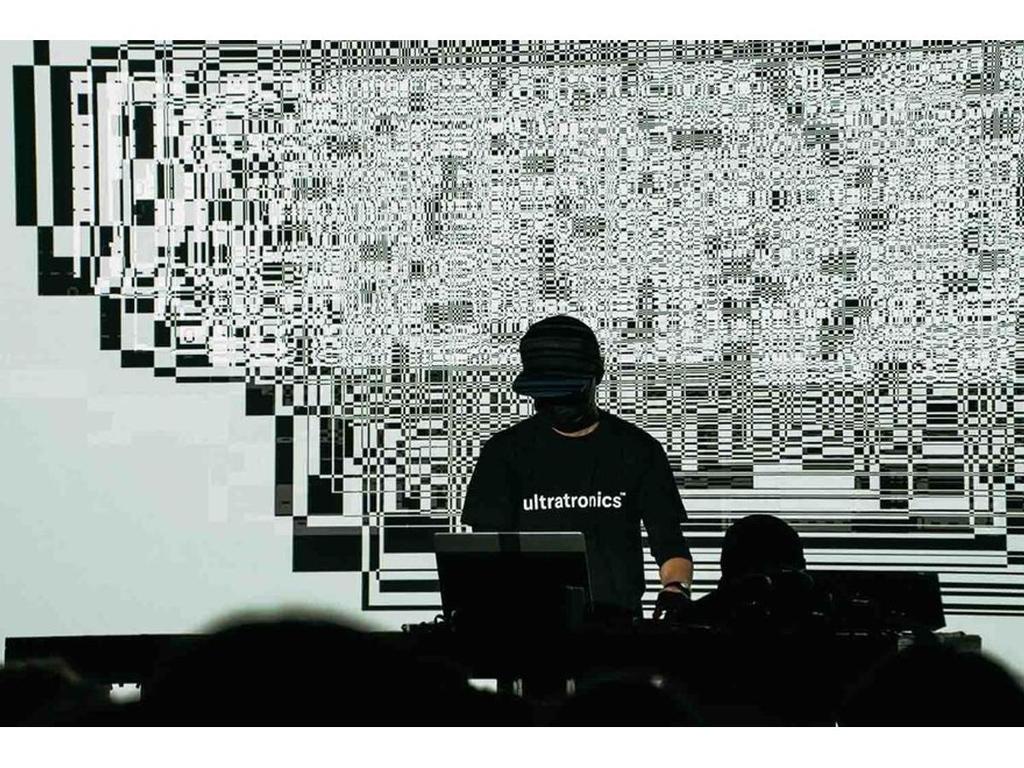
Not only did Ryoji Ikeda made a killer album with Ultratonics, he also designed a killer show to go with it, using a huge, hyper-bright screen blasting intense geometric or data-related visuals he made himself to my understanding. A stunning assault on the senses.
K Mak at the Melbourne Planetarium
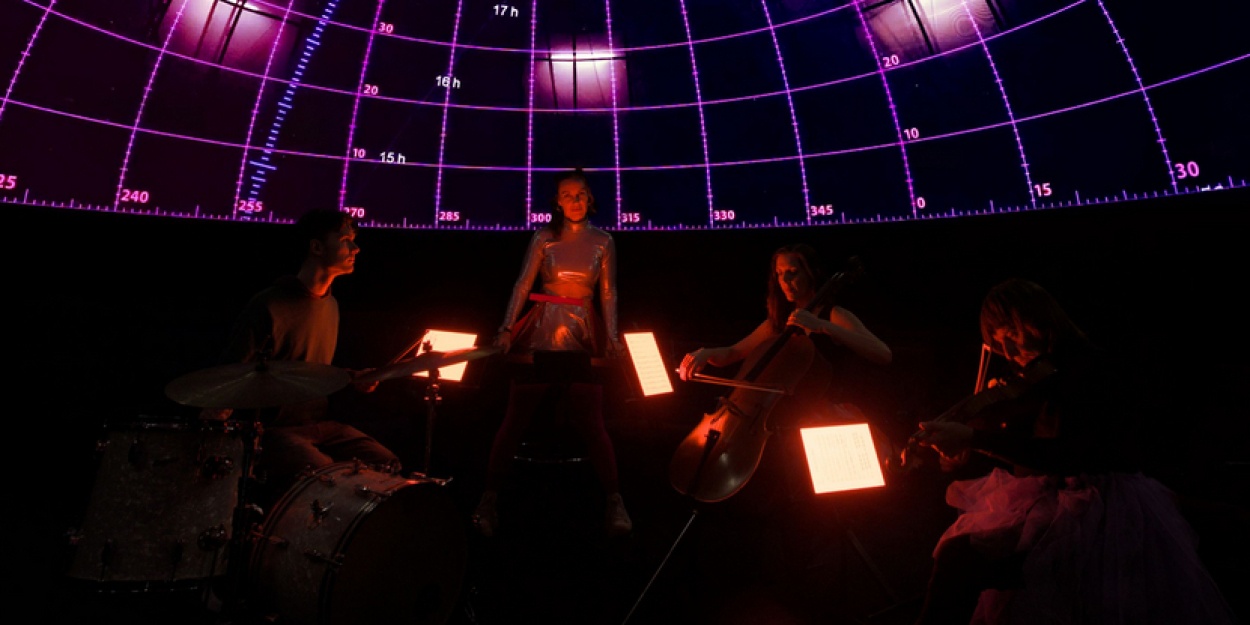
Australian singer K Mak came to play at the Melbourne Planetarium and immerse us in atmospheric visuals. Every gig should be like this, really.
Floating Points at the Sidney Myer Music Bowl
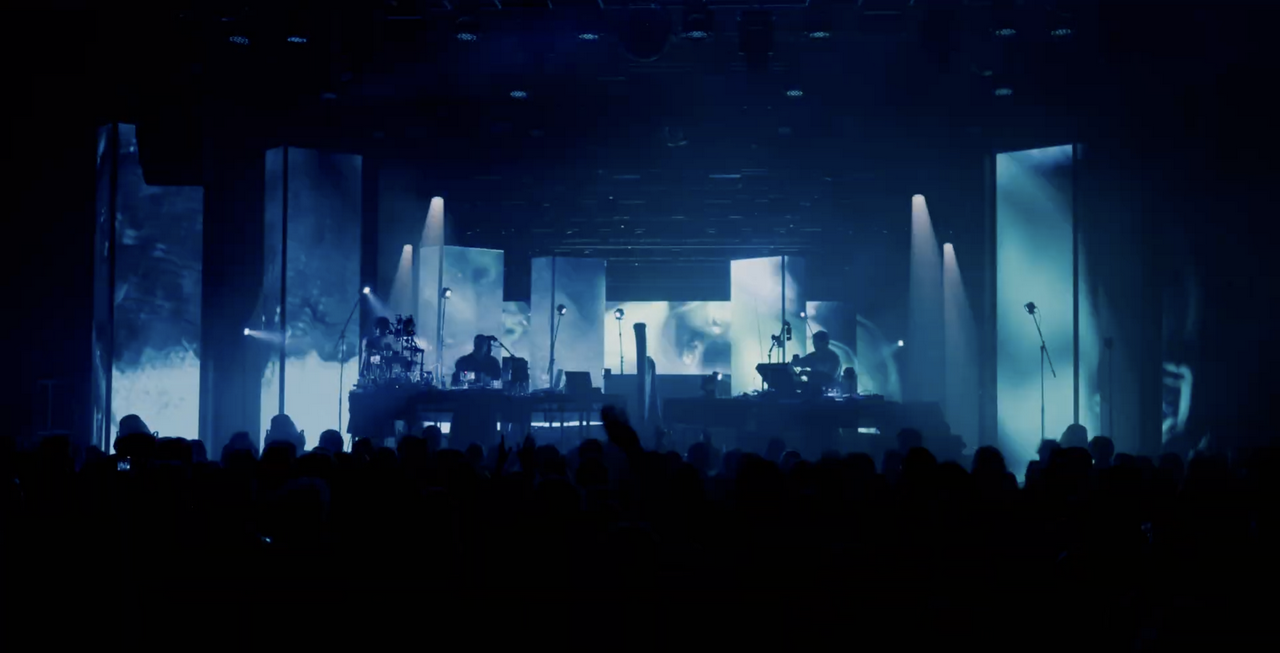
For the one-day Freeform festival, Floating Points to play live and he delivered an amazing gig in a packed Sidney Myer Music Bowl. That was beautiful.
And the winner is... Ryoji Ikeda! I had never seen anything like it and my brain was fried afterwards!
#JujuAwards2025 #GigOfTheYear #JujuAwards #BestOf2025
🏆🎶JUJU AWARDS 2025: Dance Track of the Year
from Jujupiter
And now we are doing the opposite of ambient: dance tracks!
Here are the nominees.
El Internet by Matias Aguayo

The charming Matias Aguayo comes back with a pumpy, funny track. May he come to Australia some day.
Odyssée Maison by Laurent Garnier and Dan Diamond
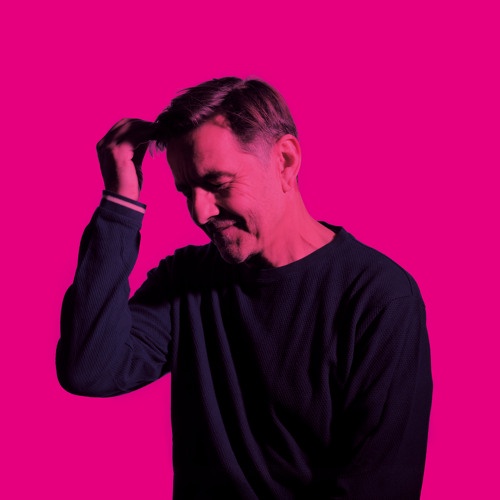
Very efficient booty shaker. I can attest. Laurent Garnier has still got it and will always have got it.
Dopamine by Weval
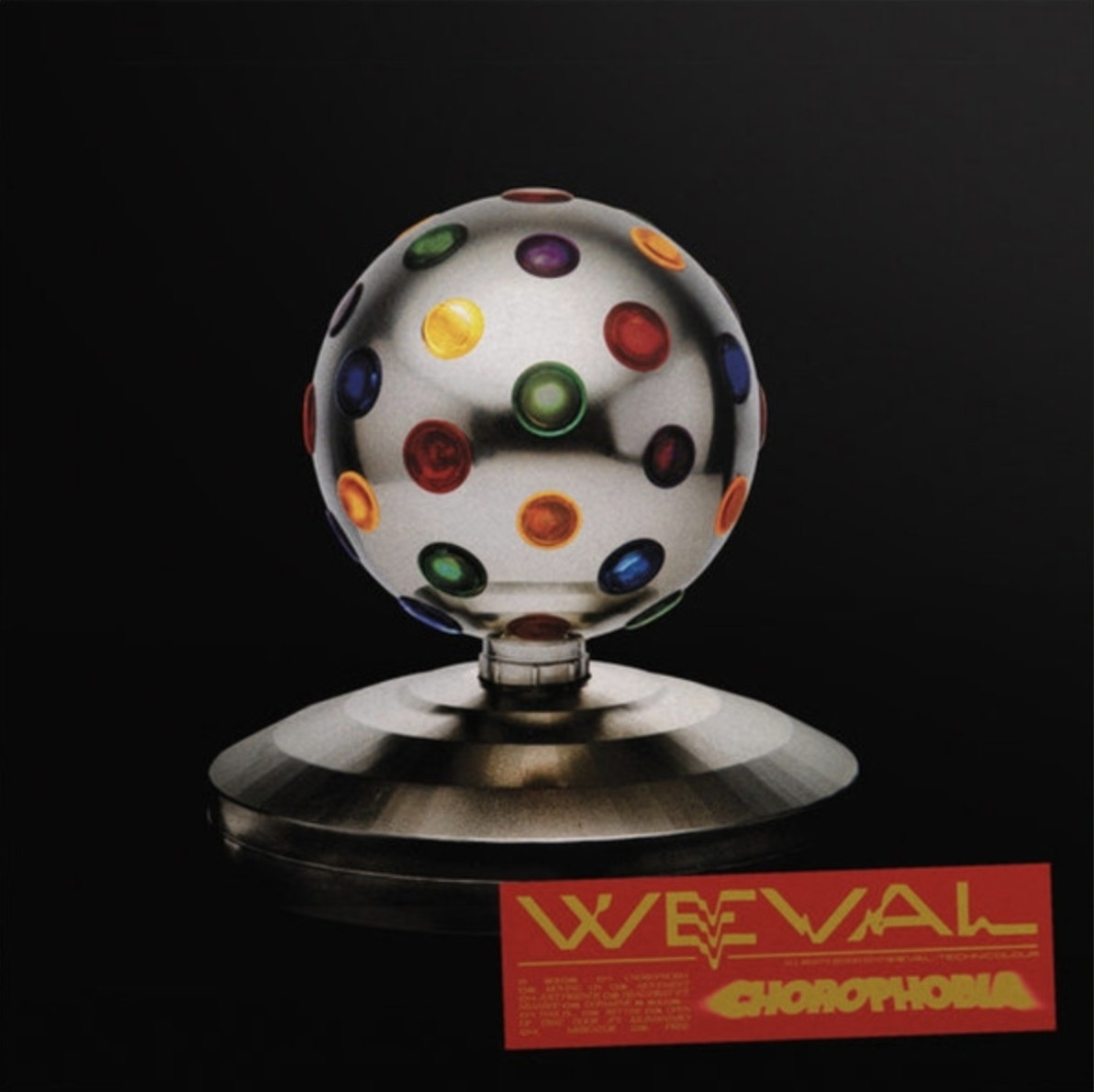
The amazing Dutch guys of Weval decided to make a dance music album and they've blown us away again.
Catcall by Per Pleks
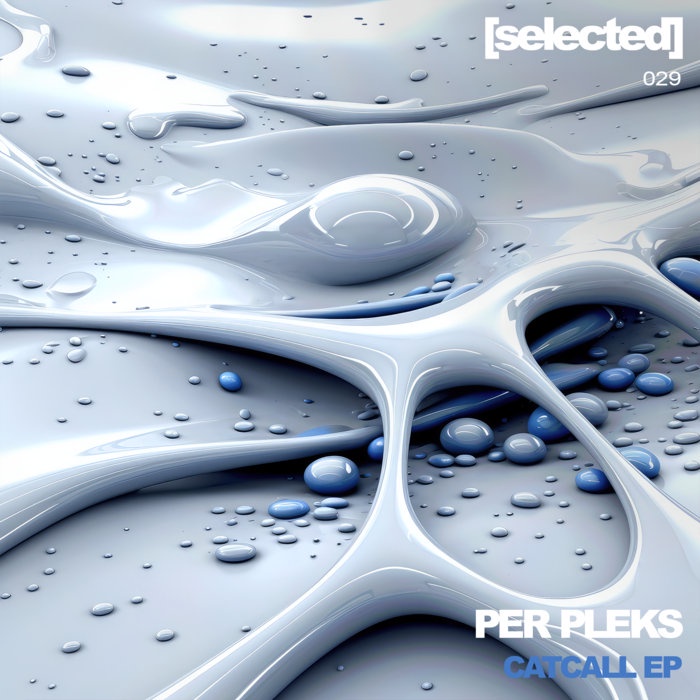
This German guy doesn't fuck around with beats. It is a high-paced, relentless track that will not let you out of it walking straight.
Eastern Timbres by Kohra & Monophonik
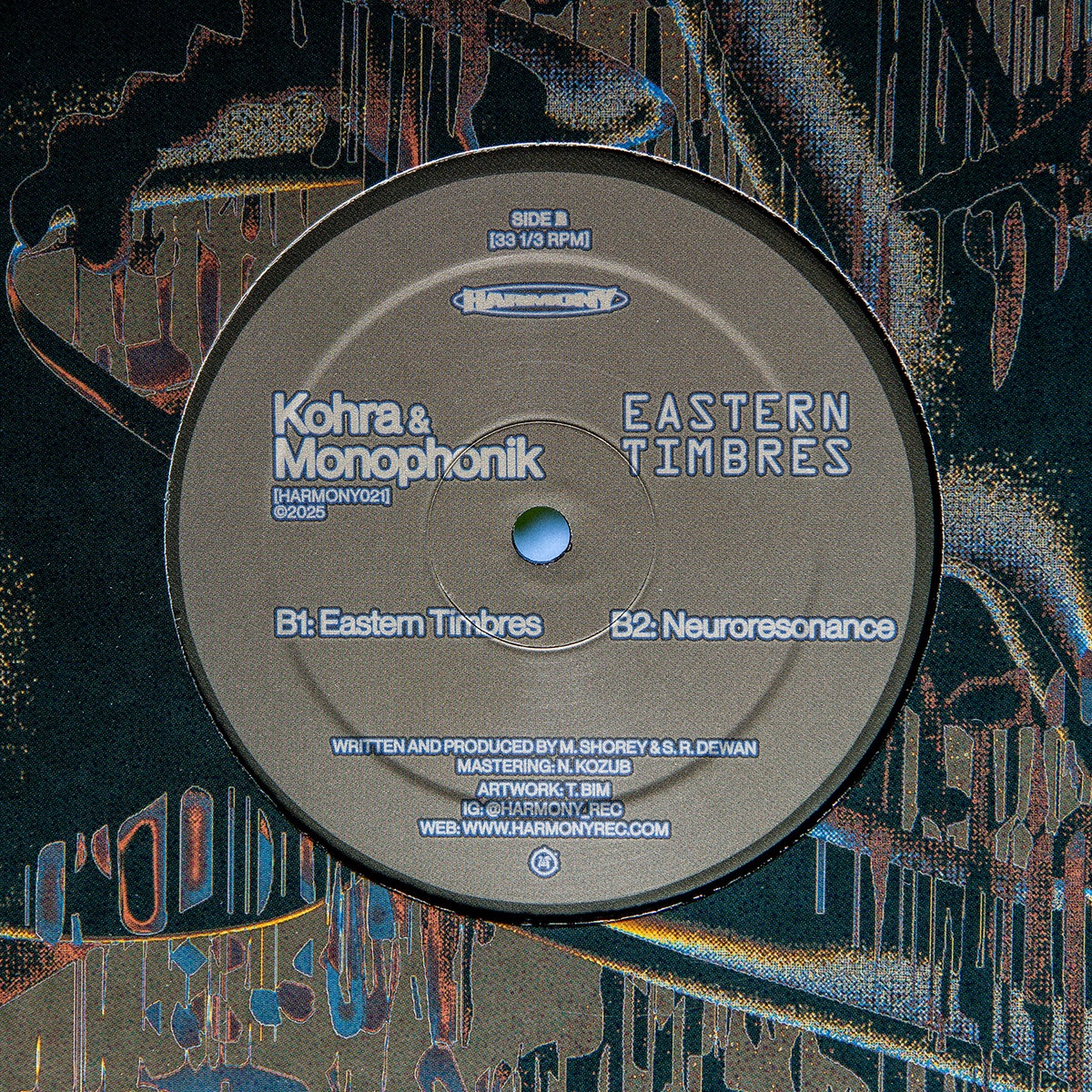
Indian DJs rock. So much good music coming out of the subcontinent.
And the winner is Catcall by Per Pleks. It drives me insane every time I hear it.
#JujuAwards2025 #DanceTrackOfTheYear #JujuAwards #BestOf2025
Zes evolutionaire redenen waarom onze geest kwetsbaar is (20/40)
from tomson darko
Je zou denken dat onze geest kwetsbaarder is geworden door onze huidige maatschappij. Maar evolutionair psycholoog Randolph Nesse (1948) betwijfelt dat. Een van zijn theorieën is dat bijvoorbeeld depressie ook in de prehistorie moest voorkomen.
Hij heeft hier aanwijzingen voor gevonden bij inheemse stammen in de Amazone. Zeg maar mensen die geen telefoon hebben om woensdagavond een mail van tomson darko te lezen.
Die mensen blijken ook regelmatig kenmerken van depressie te vertonen.
De oorzaak?
Doelen en wensen die niet lukken…
Deze mensen zijn net zo menselijk als wij. En net zo gevoelig voor dat aspect van onze geest.
Goed. Wie is de Amerikaan Randolph Nesse?
Hij is evolutionair psychiater. Hij bekijkt onze hersenen via de bril van de evolutietheorie en heeft daar een boek over geschreven:
Het nut van angst en somberheid.
Onze geest (en ons lichaam) werkt op deze manier door miljoenen jaren evolutie. Die doet wat die doet, omdat het blijkbaar nut heeft (gehad) in de strijd om te overleven.
Dus zo moet je naar alles kijken wat er in ons hoofd gebeurt. Vraag je af wat het evolutionaire nut is.
Maar hoe kunnen we de kwetsbaarheid van onze geest dan verklaren? Waarom zijn we zo gevoelig geworden voor depressie, angststoornissen, schizofrenie, etc.?
Dat zijn vrij nutteloze geestelijke ziekten. Maar toch zijn ze er.
Hij geeft in zijn boek zes argumenten waarom onze geest én ons lichaam gevoelig zijn voor ziekten, bekeken via de bril van de evolutietheorie.
Ik ga ze een voor een langs.
1. We zijn niet aangepast aan een moderne omgeving
De meeste chronische lichamelijke ziekten die we nu kennen, zijn welvaartsziekten. Het is het gevolg van onze moderne samenleving.
Het is heel ironisch. Want we leven in een gezondere maatschappij dan duizenden jaren geleden. Mede door onze inzichten in de medische wetenschap.
Maar de introductie van alcohol, tabak en te veel voedzaam eten zorgt voor nieuwe problemen. Kanker. Diabetes. Obesitas.
Alleen al het feit dat meiden vanaf hun twaalfde beginnen te menstrueren, terwijl ze er geestelijk nog niet klaar voor zijn, komt door onze gezonde voeding. Het lichaam is daardoor eerder ‘volwassen’.
We zijn niet aangepast aan deze overvloeden.
En onze geest heeft daar ook last van.
Eetstoornissen en aandachtsstoornissen zijn een gevolg van de moderne samenleving.
Maar angst, depressie, schizofrenie en obsessief-compulsieve stoornissen daarentegen weer niet.
Er zijn geen harde bewijzen dat die nu meer voorkomen dan honderd, duizend of tweeduizend jaar geleden.
2. Virussen en bacteriën passen zich sneller aan dan mensen
Elke 25 jaar hebben wij een nieuwe generatie als mens.
Een bacterie doet er iets korter over.
Slechts een paar uur voor een nieuwe generatie.
Daardoor zijn virussen en bacteriën goed in staat om zich aan te passen aan wat het menselijk lichaam verzint om zich te verdedigen. Dat maakt ons vatbaarder voor ziekten. Lichamelijk en geestelijk.
Ik laat dit punt verder even rusten, if you don’t mind.
3. De beperking van natuurlijke selectie
Natuurlijke selectie betekent dat ‘de natuur’ keuzes maakt en een pad volgt.
Die gaat niet voor perfectie. Die gaat voor nut.
Die kan daardoor niet terug als iets niet echt handig is en vervolgens toch een ander pad kiezen.
Nesse vergelijkt het met de ontwikkeling van een toetsenbord.
We kunnen tal van kleine verbeteringen verzinnen. Maar we zitten toch echt vast aan knopjes met de qwerty-structuur. Als we het toetsenbord opnieuw gaan uitvinden met misschien wel logischere plekken voor de letters, betekent dit een gigantische stap terug. Alle systemen die aangepast moeten worden. Alle mensen die opnieuw moeten leren een toetsenbord te gebruiken.
Dat slaat eigenlijk nergens op.
Zo zit het ook met de keuzes uit het verleden van de natuurlijke selectie.
Een bekende fout in de ogen van gewervelde dieren is de ‘blinde vlek’. De plek waar de zenuwen het oog verlaten. Daar zien wij dus niets. Een octopus heeft dit probleem niet. Die zenuwen zitten op de achterkant van het oog, precies waar ze moeten zijn.
De evolutie kan niet meer terug om ons oog aan te passen. Onmogelijk.
Onze hersenen zijn daardoor ook niet perfect gevormd. Ze hebben een pad gevolgd en dit is het resultaat.
Onze geest is bijvoorbeeld heel gevoelig voor denkfouten.
‘Hij beantwoordt mijn appje niet. Oh, dan zal hij mij wel niet meer interessant vinden.’ is zo’n bekende ‘als-dan’-denkfout.
‘Ik stop een aansteker onder een klompje sneeuw en het smelt niet! Zie. De overheid manipuleert de wolken.’
Ook jij maakt die fouten vaker dan je lief is.
4. Alles heeft een prijs
Volmaaktheid bestaat niet in het universum.
Onmogelijk.
Alles komt met een prijs. Alles.
Ons lichaam is een grote verzameling van ‘trade-offs’.
We zouden dikkere polsen kunnen hebben, zodat we erop kunnen vallen zonder ze te breken. Maar dikkere polsen kunnen we moeilijk draaien, waardoor we niet in staat zijn om een steen ver weg te gooien. Op de kop van een leeuw bijvoorbeeld.
Ons immuunsysteem zou nog sterker kunnen reageren op infecties, maar dan zou het ook onze eigen weefsels gaan beschadigen.
Ons lijf is een grote, bonte verzameling van kosten-batenanalyses. Waarschijnlijk ligt elke uitkomst ergens in het midden.
We zouden minder gevoelig voor pijn en angst kunnen zijn. Maar dan was de kans waarschijnlijk groter dat we eerder zouden overlijden.
Snap je?
5. Uiteindelijk draait het allemaal om de seks
Het enige belang van natuurlijke selectie is voortplanting.
Die heeft er alle belang bij dat de soort overleeft, niet het individu.
Dus alles staat in het teken van voortplanten, in plaats van onze gezondheid.
Daarom zijn onze verlangens soms zo sterk, ook al weten we dat het helemaal niet goed voor ons is als we die verlangens gaan uitvoeren.
Het is die natuurlijke selectie in ons die roept om vervulling van die verlangens.
Daar kan je niks aan doen.
- ‘Sorry schat, dat ik tien keer ben vreemdgegaan tijdens onze vijfjarige relatie. Maar dat is evolutie, baby!’
- ‘Sorry collegaatje, dat ik een foto van mijn lul heb gestuurd. Evolutie, baby!’
- ‘Stom dat ik mijn ex om drie uur ’s nachts app. Mijn genen hadden een zwak moment.’
- ‘Sorry dat ik mijn hele persoonlijkheid verander zodra er een aantrekkelijk iemand binnenloopt. Overlevingsdrang!’
6. We kunnen pijn en angst niet negeren
Dit is belangrijk om te beseffen.
We reageren altijd op de symptomen, we reageren nooit op de ziekte zelf.
Hoesten, misselijkheid, diarree. Dat zijn symptomen van een ziekte. Niet de ziekte zelf.
Jaloezie, woede, angst en somberheid zijn symptomen. Ze zijn niet het probleem zelf.
Symptomen zijn een belangrijk verdedigingsmechanisme van ons lijf en onze geest.
Als je veel hoest, is dit een teken dat er iets met je longen aan de hand is.
Niet alleen dat, hoesten is ook nuttig bij een longontsteking. Anders ga je dood.
Gevoelens werken ook zo. Die worden ‘geactiveerd’ om je te beschermen.
Het ding is alleen, zegt Nesse, dat dit ‘systeem’ heel gevoelig is afgestemd.
Het ‘better safe than sorry’-principe.
We voelen vaker angst dan logisch is. Zoals bij het zien van een spin…
Totaal onnodig.
Maar dat angstsysteem schiet elke keer in de overdrive. Want je weet het nooit zeker.
‘Onze emoties zijn veel nuttiger voor onze genen dan voor onszelf’, schrijft Nesse nuchter.
Of zoals comedian Bo Burnham (1990) zong:
‘Everyone’s a feminist until there is a spider around.’
Ik ben zelf een beetje sceptisch over al het menselijk gedrag verklaren via de evolutiebril. Je komt namelijk heel snel in het gebied van stereotyperingen. De man als jager. De vrouw als verzorger. Want evolutie.
Maar dat zijn interpretaties die je moeilijk kunt bewijzen. Het zijn eerder culturele verwachtingen van man en vrouw, dan dat de evolutie dat heeft bepaald.
Nesse stipt gelukkig zelf ook aan dat kijken via de ‘evolutiebril’ naar onze ziekten een manier is om het te verklaren. Het is niet het enige en ook zeker niet het definitieve argument.
Ons lijf en onze geest en onze samenleving zijn complex. Het zijn altijd combinaties van factoren die problemen veroorzaken.
Maar zijn argument dat onze geest door evolutie een te gevoelige rookmelder is geworden die liever te vaak afgaat dan niet, troost. Dat alarmsysteem raakt op een gegeven moment volledig ontregeld en dan worden we ziek.
Geestelijke stoornissen zijn het gevolg.
Stop met gelukkig worden. Wees melancholiek. (19/40)
from tomson darko
Ik loop al jaren met mijn zelfgemaakte katoenentasje rond waarop staat: ‘stop met gelukkig worden. wees melancholisch.’
Een zin die tot op de dag van vandaag verkeerd wordt begrepen.
‘Waarom wens jij mensen depressie toe?’ en ‘wat is er mis met gelukkig willen worden of zijn?’
Goede vragen.
Ik snap de verwarring.
Melancholie is ook een verwarrend woord. Mede omdat de betekenis elke eeuw lijkt te veranderen.
Maar toch wens ik je vooral melancholie toe en geen geluk.
==
Melancholie is iets anders dan verdriet, depressie of nostalgie. Hoewel ze op elkaar lijken, zijn er fundamentele verschillen. Niet alleen in de betekenis, maar ook in hoe we het als mens ervaren en zelfs hoe we het fysiek uiten.
Professor David Huron (1954) heeft een evolutionaire theorie gepresenteerd in het boek The Science of Sadness waarin hij uitlegt waarom melancholie je verder brengt dan de zoektocht naar geluk.
Maar om zijn theorie te begrijpen, moeten we eerst de wortel van melancholie snappen, namelijk somberheid.
Waarom voelen we somberheid?
Somberheid is een emotie die opkomt wanneer iets niet gaat zoals je had gehoopt of verwacht.
Het is een nuttig signaal van onze geest dat aangeeft dat je beter je verwachtingen of doelen naar beneden kunt bijstellen.
Denk aan een afwijzing voor een sollicitatie, een vriend die je verjaardag vergeet of een relatie die wordt beëindigd.
Somberheid kan zich uiten als verdriet, melancholie, nostalgie of depressie.
- Verdriet is een directe uiting van rouw en pijn. Tranen zijn een fysieke uiting van dit verdriet die oproept tot troost en sociale steun.
- Melancholie daarentegen is verdriet zonder tranen. Het is een meer bedrukte, licht filosofische staat waarin je spieren ontspannen zijn en je gedachten naar binnen keren.
In tegenstelling tot verdriet voelt melancholie kalmer aan. Je ervaart minder stress.
In de praktijk wisselen melancholie en verdriet elkaar vaak af bij een heftige gebeurtenis.
Dit wordt ook wel de rouwcirkel genoemd.
Hoe zit het dan met nostalgie en depressie?
Nostalgie gaat over het terugdenken aan iets wat er niet meer is, vaak met zowel een glimlach als een gevoel van gemis. Het is een herinnering die we idealiseren. Dat is een belangrijk verschil met melancholie. Daar wordt niets geïdealiseerd. Bij melancholie kun je zelfs een gemis voelen zonder te weten wat je precies mist.
Depressie lijkt op melancholie, maar het is een mentale stoornis die je dagelijks functioneren sterk beperkt. Bij depressie verlies je bijvoorbeeld het vermogen om heldere keuzes te maken, terwijl je bij melancholie nog steeds kunt reflecteren en zinnige beslissingen kunt nemen.
Depressie voelt zwaar en negatief en kan je in een neerwaartse spiraal brengen.
Melancholie is een rustpauze, een moment van reflectie voordat je nieuwe stappen zet.
Die donkere gevoelens die je in een melancholische periode ervaart, hebben een reden.
Melancholie toont de wereld zoals die echt is. Het is een beetje somber, rauw en vooral erg grijs.
Dit helpt je om heldere keuzes te maken voor de toekomst. Huron noemt dit ‘melancholisch realisme’. Het geeft je een genuanceerde kijk op de wereld en op jezelf. Niet te optimistisch, maar ook niet te pessimistisch.
Een voorbeeld van melancholisch realisme is het besef dat mensen je niet bewust pijn doen omdat ze je haten, maar omdat ze zelf gebroken zijn.
Dit inzicht maakt je kalmer, bedachtzamer en empathischer. Wat je weer helpt bij het nemen van beslissingen over je toekomst.
Je voelt je niet voor niets somber. Er loopt iets niet lekker in je leven en de enige manier waarop je eruit kunt komen, is veranderen. Melancholie begeleidt je door zo’n fase heen. Het motiveert je om het oude los te laten en iets nieuws te proberen.
MAAR.
Altijd de maar...
Melancholie kan ook een weg naar depressie zijn, helaas.
In dat opzicht is het een kruispunt. Via melancholie kun je de weg naar hoop nemen of je toch richting de afgrond bewegen.
Depressie is een ontspoord systeem van onze sombere emoties. Evolutionair psycholoog Randolph Nesse (1948) betoogt zelfs dat er geen enkel evolutionair nut in depressie zit. Het is een rookmelder in ons hoofd die te gevoelig is afgesteld.
Iedereen is hier gevoelig voor.
Een opeenstapeling van tegenslagen kan ieder mens depressief maken, helaas.
Somberheid helpt je, depressie niet.
Ik ga hier in een volgend hoofdstuk verder op in.
==
Melancholie en rouw worden vaak als dezelfde emotie gezien.
Huron betoogt in zijn boek dat rouw vooral een sociale functie heeft. Namelijk troost zoeken.
Melancholie heeft juist een cognitieve functie. Namelijk door zelfreflectie nieuwe keuzes maken.
Je hebt beide nodig om verder te gaan na een moeilijke tijd.
Ik heb melancholie altijd gezien als een compassievolle emotie. Het geeft je begrip voor de gebrokenheid van anderen en helpt je om vriendelijker te zijn voor je eigen tekortkomingen.
Waarom jezelf veroordelen om je fouten? Je bent ook maar een mens.
Daarom wens ik iedereen een gezonde dosis melancholie toe in het leven.
Je oude ik is er klaar mee (18/40)
from tomson darko
De melancholie vindt ons altijd als we klaar zijn met een versie van onszelf.
- Je doet een opleiding, je vindt je eerste baan, je maakt promotie, en dan kom je tot de schokkende conclusie dat dit werk je uitput en je ziel doodmaakt.
- Je wordt verliefd, je gaat samenwonen, je krijgt zes kinderen, en dan kom je tot de schokkende conclusie dat je niet met je partner oud wilt worden.
- Je werkt aan jezelf, je gaat in therapie, je leest stapels boeken, en dan kom je tot de schokkende conclusie dat sommige patronen in je leven nooit zullen verdwijnen.
- Je zegt altijd overal ‘ja’ op, je wordt onmisbaar, je bent altijd beschikbaar, en dan kom je tot de schokkende conclusie dat weinig mensen voor jou klaarstaan als het er echt toe doet.
- Je trekt de wereld over, je vinkt steden af, je verzamelt herinneringen, en dan kom je tot de schokkende conclusie dat al je “saaie” vrienden gelukkiger zijn dan jij met hun hypotheek en gezin.
- Je wordt volwassen, je neemt verantwoordelijkheid, je worstelt je los van je ouders, regelt je zaken, en dan kom je tot de schokkende conclusie dat er nog een kind in je zit dat nog steeds wacht op een goedkeurend knikje van iemand anders.
Je kunt jezelf wijsmaken dat je niet “jezelf” was in die baan of in die relatie, of in die periode, maar dan doe je jezelf, die baan en je ex-partner tekort. Het was een versie van jou die prima paste, maar nu niet meer.
En dan volgt de melancholie. Een periode van twijfel, somberheid, introspectie en verwarring.
Wat nu te doen?
Het kost tijd om een nieuwe richting op te gaan. Om in een nieuwe ‘ik’ te veranderen.
Soms nemen we drastische maatregelen, zoals ontslag nemen, de relatie verlaten of de spirituele hoek op gaan voor onze zielszorgen. Soms is een kleine aanpassing in ons huidige leven voldoende om er weer tegenaan te kunnen.
Maar het kost altijd tijd. Meer tijd dan we denken.
Melancholie is altijd een overgangsfase naar een andere ‘ik’.
Verwar het niet met depressie.
Melancholie is weliswaar somber geladen en wat naar binnen gekeerd. Maar je functioneert nog steeds uitstekend.
Het is een op-adem-komen-fase.
Belangrijk is om te blijven doen wat je altijd deed. Om je er niet tegen te verzetten. Om het niet als een probleem te zien.
Je leeft. Je voelt. Je bent aan het veranderen. Maar je weet nog niet in wat.
De antwoorden komen vanzelf.
Ring and Suit
from daisys
Seluruh staff akhirnya sudah mendapatkan undangan resmi via email, reaksi beragam langsung terlihat dari ekspresi mereka semua. Beberapa orang terlihat excited, tapi banyak juga yang terlihat malas karena menurut mereka waktu istirahat nya lebih berharga daripada acara tersebut.
“Bang, ini pada mau ikut mampir mall juga pas mau balik. Jadinya ramean, lu gapapa?” Kai menghampiri Bian setelah berbincang dengan staff NODUS Jakarta yang lain.
“Gapapa kok, nanti mencar juga kan sesuai apa yang mau dicari. Balik masing-masing aja biar ga repot saling nunggu.” Jawab Bian, dan Kai pun mengangguk setuju.
Sabiano memang punya personality yang tertutup. Dia bisa berinteraksi dengan ramah kepada rekan kerjanya, tetapi itu hanya menyangkut persoalan profesional kerja. Diluar itu tidak ada yang dekat secara pribadi dengan dia, maka dari itu Kai pun memastikan karena takutnya Bian merasa tidak nyaman.
Sesampainya mereka di salah satu mall sesuai rencana, rombongan pun berpisah untuk mencari kebutuhan masing-masing. Bian yang memang hanya akan membeli jas pun langsung menelusuri store yang dia cari. Sebenarnya dia sudah punya banyak setelan jas, tapi dia kira tidak akan ada keperluan untuk mengharuskan Bian memakainya. Berkat intuisinya yang meleset itulah akhirnya Bian berhenti di store Boss ini.
Saat Bian masuk, dia langsung disambut salah satu staff dengan ramah. Bian langsung menjelaskan apa yang dia cari dan untuk keperluan occasion company nya. Staff tersebut langsung mengarahkan Bian untuk melihat beberapa koleksi rekomendasi mereka.
Akhirnya Bian menetapkan pilihannya pada setelan jas berwarna hitam pekat dengan potongan tailored fit yang jatuh rapi di bahunya. Menggunakan blazer satu baris dipadukan dengan rompi yang senada. Perfectly match combo untuk tubuh dan wajah tampan nya Sabiano Arkan.
Setelah melakukan payment dan mengucapkan terima kasih pada staff yang sudah membantunya, Bian pun melangkahkan kakinya pergi keluar dari store tersebut.
Saat dia berjalan menuju lobby untuk pulang, dari kejauhan nampak Kai juga baru keluar dari store perhiasan. Kai pun melihat ke arah Bian dan melambaikan tangannya. Bian membalas lambaian tangan Kai dan berjalan menghampirinya.
“Ngapain lu ke the Palace? Mau lamaran?” Bian bertanya pada Kai dengan nada bercanda.
Kai terlihat sedikit terkejut. “Nice shoot banget tebakan lu ahaha. Iya, rencananya gua mau ngasih ini ke Hanin,” jawabnya, mengakui tebakan Bian yang tepat sasaran.
“Bagus lah, good luck ya.” Bian tersenyum dan menepuk pundak Kai pelan.
Kai mengangguk dan tersenyum lebar, “Thanks bang Bian, yuk balik bareng aja.”
Sebenarnya Sabiano kaget karena tebakannya benar, dan tentu saja dia tidak menunjukkannya. Kenapa juga dia harus terkejut? Wajar jika Kai ingin melamar pacarnya.
Namun, ada sedikit perasaan yang mengusiknya.
Perasaan yang seharusnya tidak pernah ada sejak awal. Entah pengharapan palsu apa yang tanpa sadar Sabiano simpan. Satu hal yang dia tahu pasti, dia hanya ingin Hanin selalu punya senyuman indahnya seperti saat mereka berdua bertemu untuk pertama kalinya.
Ring and Suit
from daisys
Seluruh staff akhirnya sudah mendapatkan undangan resmi via email, reaksi beragam langsung terlihat dari ekspresi mereka semua. Beberapa orang terlihat excited, tapi banyak juga yang terlihat malas karena menurut mereka waktu istirahat nya lebih berharga daripada acara tersebut.
“Bang, ini pada mau ikut mampir mall juga pas mau balik. Jadinya ramean, lu gapapa?” Kai menghampiri Bian setelah berbincang dengan staff NODUS Jakarta yang lain.
“Gapapa kok, nanti mencar juga kan sesuai apa yang mau dicari. Balik masing-masing aja biar ga repot saling nunggu.” Jawab Bian, dan Kai pun mengangguk setuju.
Sabiano memang punya personality yang tertutup. Dia bisa berinteraksi dengan ramah kepada rekan kerjanya, tetapi itu hanya menyangkut persoalan profesional kerja. Diluar itu tidak ada yang dekat secara pribadi dengan dia, maka dari itu Kai pun memastikan karena takutnya Bian merasa tidak nyaman.
Sesampainya mereka di salah satu mall sesuai rencana, rombongan pun berpisah untuk mencari kebutuhan masing-masing. Bian yang memang hanya akan membeli jas pun langsung menelusuri store yang dia cari. Sebenarnya dia sudah punya banyak setelan jas, tapi dia kira tidak akan ada keperluan untuk mengharuskan Bian memakainya. Berkat intuisinya yang meleset itulah akhirnya Bian berhenti di store Boss ini.
Saat Bian masuk, dia langsung disambut salah satu staff dengan ramah. Bian langsung menjelaskan apa yang dia cari dan untuk keperluan occasion company nya. Staff tersebut langsung mengarahkan Bian untuk melihat beberapa koleksi rekomendasi mereka.
Akhirnya Bian menetapkan pilihannya pada setelan jas berwarna hitam pekat dengan potongan tailored fit yang jatuh rapi di bahunya. Menggunakan blazer satu baris dipadukan dengan rompi yang senada. Perfectly match combo untuk tubuh dan wajah tampan nya Sabiano Arkan.
Setelah melakukan payment dan mengucapkan terima kasih pada staff yang sudah membantunya, Bian pun melangkahkan kakinya pergi keluar dari store tersebut.
Saat dia berjalan menuju lobby untuk pulang, dari kejauhan nampak Kai juga baru keluar dari store perhiasan. Kai pun melihat ke arah Bian dan melambaikan tangannya. Bian membalas lambaian tangan Kai dan berjalan menghampirinya.
“Ngapain lu ke the Palace? Mau lamaran?” Bian bertanya pada Kai dengan nada bercanda.
Kai terlihat sedikit terkejut. “Nice shoot banget tebakan lu ahaha. Iya, rencananya gua mau ngasih ini ke Hanin,” jawabnya, mengakui tebakan Bian yang tepat sasaran.
“Bagus lah, good luck ya.” Bian tersenyum dan menepuk pundak Kai pelan.
Kai mengangguk dan tersenyum lebar, “Thanks bang Bian, yuk balik bareng aja.”
Sebenarnya Sabiano kaget karena tebakannya benar, dan tentu saja dia tidak menunjukkannya. Kenapa juga dia harus terkejut? Wajar jika Kai ingin melamar pacarnya.
Namun, ada sedikit perasaan yang mengusiknya.
Perasaan yang seharusnya tidak pernah ada sejak awal. Entah pengharapan palsu apa yang tanpa sadar Sabiano simpan. Satu hal yang dia tahu pasti, dia hanya ingin Hanin selalu punya senyuman indahnya seperti saat mereka berdua bertemu untuk pertama kalinya.
Pasito... Ahorita en Español También!
from  Pasito.fun
Nadie lo pidió, ¡pero aquí está! Pasito ahora también está disponible en español. Mira:
A Tarot and Dreams Kinda Day
from cc0
Pulling cards feels natural again. It’s been a while, but today, I pulled for myself “Temperance” from my She Wolfe deck and the mantra from this card is “I make my scars into art”. As February approaches, I feel it. The lightness and the rightness of this direction. With all that’s happening (the other things I am preoccupied with), I also feel very strongly about taking it one day at a time. All of it. Reminders from The Universe. Echoes from the abyss. This is the right path, but that it’s okay to take my time. One step at a time.
Then, I did a reading for a dear friend and she felt goosebumps. That’s the best, when it’s not just me feeling the flow, but that they do too.
I’ve been remembering my dreams too. This one, involved a room, some kind of basement like space, where a group of people (musicians, mostly male) were hanging around and keeping to themselves. There were rows of seats, similar to pews. All of us were strangers to each other. Or maybe, it’s better to say that none of them looked like anyone I know in my waking life. Then there was an elevator in the corner of the room, that would go up and down bringing a person or two into the space for a performance. Everyone in this “room” seemed to have a day job. They made a thing about being there. “You didn’t know, that I had this?” one of the musicians said to me pointing to whatever weird musical instrument they had brought with them.
There was another one before this, but clearly my brain’s RAM is being used up by all the other work things at the moment. It’s coming, though. More time to dream.
Trial Balloon
I suppose this is a trial balloon, at any rate... I'm trying something new digitally, just to see what it feels like, just to see whether I can find a new online home after being unfortunately cast into exile without explanation from my old space.
So I suppose this is a first post, just to say it's a first post. Ripping off that bandage, really, just to have something on the page, so to speak.
We’ll see how it all goes, I suppose.
Humor
from  Reflections
“Humor is just another defense against the universe.”
—Mel Brooks
#Life #Quotes
Freaky CeCe 01
from  Shad0w's Echos
CeCe is Freaky
#nsfw #CeCe
I sighed as I walked into my apartment after a long day at the office, the humid Georgia air still clinging to my skin even though it was well into evening. Our city was always like that—bustling with energy, skyscrapers piercing the sky, and streets alive with people from all walks of life. But right now, all I wanted was to kick off my shoes and relax with my best friend, CeCe. She'd texted me earlier about having a movie night, and I'd figured it'd be a chill evening. But in reality, I knew that wouldn't last long.
There she was, sprawled out on the living room couch. She is my roommate after all. CeCe, my curvy caramel-skinned goddess of a friend in her late twenties, was completely naked—her thick thighs spread wide, full breasts heaving with each breath, and that juicy ass sinking into the cushions. She wasn't even pretending to watch the rom-com I'd left queued up on the TV; instead, her phone was propped up on her stomach, the screen glowing with explicit porn videos she was scrolling through like it was social media. Her fingers were buried between her legs, working her slick pussy with shameless enthusiasm, moans escaping her lips as she rubbed her clit in circles. The room smelled like her arousal, musky and intoxicating, and she didn't even flinch when I dropped my bag by the door.
“CeCe, I knew you really didn't plan to watch a movie with me,” I muttered, though I wasn't shocked anymore. This was just... her now. She's been this way for years. My wild, out-of-control exhibitionist bestie can't keep her clothes on. She can't stop watching porn either. Some would say she's clinically addicted...She couldn't stop masturbating even if her life depended on it. She would just accept her fate and fap away in ecstasy.
Everyone else had ditched her—family, other friends, even dates—but I stuck around. Maybe because I felt responsible. After all, I was the one who started this whole mess back in college.
It all began a few years ago, when we were roommates in that cramped dorm on the edge of our sprawling Georgia city. The place was a concrete jungle of high-rises and endless traffic, but we made it home. CeCe was the total opposite of who she is now—shy, reserved, sheltered as hell. She grew up in a very strict household. She never partied, and barely dated. Me? I was the brash one, always dragging her out to clubs or sneaking booze into our room. She was like my little project, this innocent black girl with those killer curves were hidden under baggy sweaters and jeans. It's almost like she was raised to be unremarkable and unforgettable.
One night, she came back from a date looking defeated. Some awkward dude she'd met online had fumbled the whole thing—couldn't even kiss right, left her feeling more frustrated and violated than turned on. She flopped onto her bed, venting about how she felt so out of her depth with anything sexual. The concept of intimacy felt like a chore and struggle. “I thought this was supposed to be easy,” she sighed as she held her head down. She looked utterly drained and defeated.
I laughed it off, trying to lighten the mood. “Girl, you need to loosen up. Here, let me show you something that'll blow your mind.” I pulled up my laptop and introduced her to porn. It wasn't anything crazy at first—just some softcore stuff, couples getting it on, to help her see what real pleasure looked like. I didn't think much of it. I've been watching porn for years. I thought it'd be a fun, eye-opening thing for her. I thought maybe it would give her some confidence for her next date.
But damn, did that backfire.
CeCe was hooked from the jump. That first night, she watched wide-eyed, her cheeks flushing as she shifted uncomfortably on the bed. I caught her sneaking glances at my screen even after I closed the tab. Over the next few weeks, she'd ask me for recommendations, blushing but curious. I'd share links, thinking it was harmless—hell, I watched plenty myself when she was in class. But CeCe dove in headfirst. She started masturbating more, at first in secret, locking herself in the bathroom or waiting until I was asleep. I'd hear the faint squishing sounds, the ones we all know women make, or her muffled gasps through the thin walls when the shower was running.
It escalated fast over the next six months. She'd skip classes to binge-watch porn, thinking I didn't notice. She quickly closed her laptop when I came in. She tried to act normal, I just had a knowing smile. I thought it was cute. I thought she was just exploring. She's brilliant so its not like her grades were suffering. I thought she was fine.
Her shyness soon melted away, replaced by this insatiable hunger. She'd touch herself under the covers while we studied, thinking I didn't notice the way her breathing hitched or her hand disappeared beneath the blanket. I finally told her that its ok to watch porn when I'm around. No point in hiding it. I saw it no different than changing clothes in front of someone.
That peeled back another layer. Now that she was watching it openly, she decided to watch more porn. Even casually. Almost constantly. It got to a point where I expected to see porn when I walked into my dorm room. I eventually got used to it. She was opening up. She was smiling. Dressing a little more sexy, some days she was even glowing. It felts good watching her transform into the beautiful woman I already knew she was.
Most of our bounding conversations happened when porn played on mute in the background. I normalized it for her. We would have all kinds of conversations as sexual acts flooded her screen a few feet away.
Then things began to escalate further. I started to keep tabs on her, monitor her consumption. I knew my own porn watching habits were a little excessive but she was going further than I ever thought was possible. Over time, as expected, her porn preferences got kinkier too—exhibitionism, public stuff, wild orgies. I tried to talk to her about balance, but she'd just laugh it off, eyes glazed with that post-orgasm glow while under her covers.
Then came the day I walked in and everything changed. I'd been out grabbing coffee from a spot downtown, the city humming with its usual chaos of honking cars and street vendors. When I got back to our dorm room, the door was unlocked. There was CeCe, fully nude for the first time in front of me—no hiding, no shame. She was lounged on her bed, legs splayed, her phone blasting porn at full volume like it was the evening news. Some video of a woman flashing in a crowded park, moaning echoed through the speakers as CeCe fingered herself openly, her caramel skin glistening with sweat, thick curves on full display. She looked up at me with a lazy, satisfied smile, not even pausing. “Hey, Tasha. Join me?”
I stood there in the doorway of our dorm room, frozen, my coffee cup still warm in my hand as the city's distant sirens wailed outside our window. CeCe's invitation hung in the air, her fingers still lazily circling her swollen clit, the porn video on her phone looping with exaggerated moans. Her caramel skin was flushed, those thick curves glistening under the dim lamp light, and she looked so damn comfortable—like this was just another Tuesday afternoon. I didn't join her; hell, I couldn't even move at first. This was totally new. Totally unexpected. Fully exposed, no shame, inviting me like we were about to share a snack? It was a whole new level.
“CeCe,” I finally said, setting my coffee down on the desk with a shaky hand. “You know this isn't normal, right? Like, people don't just... do this out in the open. Watching is one thing, but openly masturbating?”
She paused the video, her breath coming in soft pants as she sat up a bit, her full breasts bouncing with the movement. CeCe was smart—hell, she was acing her engineering classes while the rest of us struggled. She didn't get defensive; instead, she tilted her head, giving me that thoughtful look she always had when dissecting a problem. “
Normal is subjective, Tasha,” she replied, her voice steady and matter-of-fact, like she was explaining quantum physics. “Think about it. Society's crammed all these rules down our throats about sex and bodies, especially for black women like us. We're supposed to be modest, reserved, hide our curves under layers because God forbid we own our pleasure. But why? This feels good—better than anything I've ever known. It's liberating. I'm not hurting anyone; I'm just... exploring myself. And honestly, after that disaster of a date a few months back, this is the first time something's clicked for me. No awkward fumbling, no disappointment. Just pure, positive sensation on my terms.”
She shifted on the bed, her thick thighs rubbing together as she gestured with her free hand, the other still resting casually between her legs like it was the most natural thing.
“Dating? Relationships? Nah, I'm good. All those guys expect some scripted romance, but this—porn, touching myself—it's my first real positive experience with any of it. It's consistent, it's exciting, and I don't have to perform for anyone. Why chase after mediocre hookups when I can have this whenever I want? It's empowering, Tasha. I'm in control.”
I leaned against the doorframe, crossing my arms, trying to process her words. She sounded so rational, like she'd thought this through a hundred times. But then her expression softened, a flicker of vulnerability crossing her face. “Okay, fine, maybe it's not all perfect,” she confessed, reaching for her phone again. “No one's swiping right on me anymore. All I talk about in my profiles or chats is hanging out and watching porn together—like, why not make it a date activity? But apparently, that's a turn-off.” She scrolled through her dating app, pulling up a string of DMs and holding the screen out to me. I stepped closer, peering at the messages, feeling a pit form in my stomach.
There they were, rejection after rejection. One guy: “Uh, you serious? That's all you wanna do? Pass.” Another: “Sounds fun once, but you got any actual interests? Hobbies? Nah?” A third was blunter: “Girl, you need therapy, not a date. Blocked.” And it went on like that—dozens of them, all because CeCe's conversations looped back to porn every time. She didn't mention books, or movies, or even her classes; it was all “Wanna watch this hot scene?” or “I found this vid that'd be perfect for us.” The men ghosted or straight-up called her out, and from the timestamps, it was clear she'd been spiraling into this single-minded obsession for quite some time. The nudity was the first overt and sudden sign.
CeCe laughed it off, but there was a hint of sadness in her eyes as she set the phone down and resumed touching herself lightly, like it was her comfort blanket. “See? They don't get it. But you do, right, Tasha?” She looked at me longingly, almost teary eyed. Just asking for validation. I knew deep down that the things those strangers said on her screen hurt her. Her other hand was still casually playing with her clit. Her anchor. Her comfort.
That's when it hit me—hard. This wasn't just some phase or harmless fun anymore. My best friend, the shy girl I'd tried to “loosen up,” was isolating herself, pushing everyone away with this addiction. She might be smart enough to justify it, but she was losing touch with reality, and I was the one who'd opened the door to it all. CeCe might need help—real help, like from a professional—before she completely unraveled.
The AI Governance Crisis: Principles Everywhere, Protection Nowhere
from  SmarterArticles
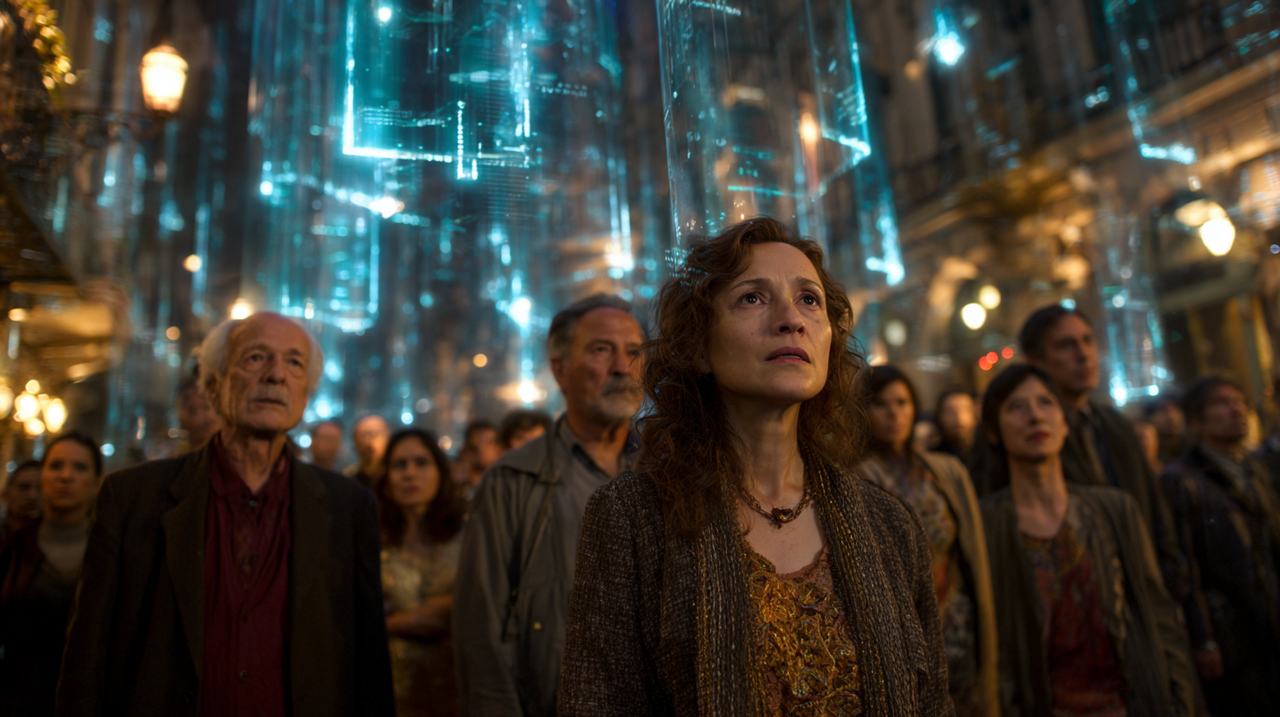
In November 2021, something remarkable happened. All 193 member states of UNESCO, a body not known for unanimous agreement on much of anything, adopted the first global standard on the ethics of artificial intelligence. The Recommendation on the Ethics of Artificial Intelligence was heralded as a watershed moment. Finally, the international community had come together to establish common values and principles for the responsible development of AI. The document spoke of transparency, accountability, human rights, and dignity. It was, by all accounts, a triumph of multilateral cooperation.
Four years later, the triumph looks rather hollow. In Denmark, algorithmic systems continue to flag ethnic minorities and people with disabilities as potential welfare fraudsters. In the United States, facial recognition technology still misidentifies people of colour at rates that should make any engineer blush. And across the European Union, companies scramble to comply with the AI Act whilst simultaneously lobbying to hollow out its most meaningful provisions. The principles are everywhere. The protections remain elusive.
This is the central paradox of contemporary AI governance: we have never had more ethical frameworks, more principles documents, more international recommendations, and more national strategies. Yet the gap between what these frameworks promise and what they deliver continues to widen. The question is no longer whether we need AI governance. The question is why, despite an abundance of stated commitments, so little has changed for those most vulnerable to algorithmic harm.
The Multiplication of Frameworks Without Accountability
The landscape of AI governance has become remarkably crowded. The OECD AI Principles, first adopted in 2019 and updated in 2024, now count 47 adherents including the European Union. The G7's Hiroshima AI Process has produced its own set of guiding principles. China has issued a dense web of administrative rules on algorithmic recommendation, deep synthesis, and generative AI. The United States has seen more than 1,000 AI-related bills introduced across nearly every state in 2024 and 2025. The European Union's AI Act, which entered into force on 1 August 2024, represents the most comprehensive attempt yet to create binding legal obligations for AI systems.
On paper, this proliferation might seem like progress. More governance frameworks should mean more accountability, more oversight, more protection. In practice, something quite different is happening. The multiplication of principles has created what scholars describe as a “weak regime complex,” a polycentric structure where work is generally siloed and coordination remains elusive. Each new framework adds to a growing cacophony of competing standards, definitions, and enforcement mechanisms that vary wildly across jurisdictions.
The consequences of this fragmentation are not abstract. Companies operating internationally face a patchwork of requirements that creates genuine compliance challenges whilst simultaneously providing convenient excuses for inaction. The EU AI Act defines AI systems one way; Chinese regulations define them another. What counts as a “high-risk” application in Brussels may not trigger any regulatory attention in Beijing or Washington. This jurisdictional complexity does not merely burden businesses. It creates gaps through which harm can flow unchecked.
Consider the fundamental question of what an AI system actually is. The EU AI Act has adopted a definition that required extensive negotiation and remains subject to ongoing interpretation challenges. As one analysis noted, “Defining what counts as an 'AI system' remains challenging and requires multidisciplinary input.” This definitional ambiguity matters because it determines which systems fall within regulatory scope and which escape it entirely. When sophisticated algorithmic decision-making tools can be classified in ways that avoid scrutiny, the protective intent of governance frameworks is undermined from the outset.
The three dominant approaches to AI regulation illustrate this fragmentation. The European Union has opted for a risk-based framework with binding legal obligations, prohibited practices, and substantial penalties. The United States has pursued a sectoral approach, with existing regulators adapting their mandates to address AI within their domains whilst federal legislation remains stalled. China has developed what analysts describe as an “agile and iterative” approach, issuing targeted rules on specific applications rather than comprehensive legislation. Each approach reflects different priorities, different legal traditions, and different relationships between state and industry. The result is a global governance landscape in which compliance with one jurisdiction's requirements may not satisfy another's, and in which the gaps between frameworks create opportunities for harm to proliferate.
The Industry's Hand on the Regulatory Pen
Perhaps nowhere is the gap between stated principles and lived reality more stark than in the relationship between those who develop AI systems and those who regulate them. The technology industry has not been a passive observer of the governance landscape. It has been an active, well-resourced participant in shaping it.
Research from Corporate Europe Observatory found that the technology industry now spends approximately 151 million euros annually on lobbying in Brussels, a rise of more than 50 per cent compared to four years ago. The top spenders include Meta at 10 million euros, and Microsoft and Apple at 7 million euros each. During the final stages of the EU AI Act negotiations, technology companies were given what watchdog organisations described as “privileged and disproportionate access” to high-level European decision-makers. In 2023, fully 86 per cent of meetings on AI held by high-level Commission officials were with industry representatives.
This access has translated into tangible outcomes. Important safeguards on general-purpose AI, including fundamental rights checks, were removed from the AI Act during negotiations. The German and French governments pushed for exemptions that benefited domestic AI startups, with German company Aleph Alpha securing 12 high-level meetings with government representatives, including Chancellor Olaf Scholz, between June and November 2023. France's Mistral AI established a lobbying office in Brussels led by Cedric O, the former French secretary of state for digital transition known to have the ear of President Emmanuel Macron.
The result is a regulatory framework that, whilst representing genuine progress in many areas, has been shaped by the very entities it purports to govern. As one analysis observed, “there are signs of a regulatory arms race where states, private firms and lobbyists compete to set the shape of AI governance often with the aim of either forestalling regulation or privileging large incumbents.”
This dynamic is not unique to Europe. In the United States, efforts to establish federal AI legislation have repeatedly stalled, with industry lobbying playing a significant role. A 2025 budget reconciliation bill would have imposed a ten-year moratorium on enforcement of state and local AI laws, a provision that was ultimately stripped from the bill only after the Senate voted 99 to 1 against penalising states for enacting AI legislation. The provision's very inclusion demonstrated the industry's ambition; its removal showed that resistance remains possible, though hardly guaranteed.
The Dismantling of Internal Oversight
The power imbalance between AI developers and those seeking accountability is not merely a matter of lobbying access. It is structurally embedded in how the industry organises itself around ethics. In recent years, major technology companies have systematically dismantled or diminished the internal teams responsible for ensuring their products do not cause harm.
In March 2023, Microsoft laid off its entire AI ethics team whilst simultaneously doubling down on its integration of OpenAI's technology into its products. An employee speaking about the layoffs stated: “The worst thing is we've exposed the business to risk and human beings to risk in doing this.” Amazon eliminated its ethical AI unit at Twitch. Meta disbanded its Responsible Innovation team, reassigning approximately two dozen engineers and ethics researchers to work directly with product teams, effectively dispersing rather than concentrating ethical oversight. Twitter, following Elon Musk's acquisition, eliminated all but one member of its 17-person AI ethics team; that remaining person subsequently resigned.
These cuts occurred against a backdrop of accelerating AI deployment and intensifying public concern about algorithmic harm. The timing was not coincidental. As the Washington Post reported, “The slashing of teams tasked with trust and safety and AI ethics is a sign of how far companies are willing to go to meet Wall Street demands for efficiency.” When efficiency is defined in terms of quarterly returns rather than societal impact, ethics becomes a cost centre to be eliminated rather than a function to be strengthened.
The departure of Timnit Gebru from Google in December 2020 presaged this trend whilst also revealing its deeper dynamics. Gebru, the co-lead of Google's ethical AI team and a widely respected leader in AI ethics research, announced via Twitter that the company had forced her out after she co-authored a paper questioning the ethics of large language models. The paper suggested that, in their rush to build more powerful systems, companies including Google were not adequately considering the biases being built into them or the environmental costs of training increasingly large models.
As Gebru has subsequently observed: “What I've realised is that we can talk about the ethics and fairness of AI all we want, but if our institutions don't allow for this kind of work to take place, then it won't. At the end of the day, this needs to be about institutional and structural change.” Her observation cuts to the heart of the implementation gap. Principles without power are merely words. When those who raise concerns can be dismissed, when ethics teams can be eliminated, when whistleblowers lack protection, the governance frameworks that exist on paper cannot be translated into practice.
Algorithmic Systems and the Destruction of Vulnerable Lives
The human cost of this implementation gap is not theoretical. It has been documented in excruciating detail across multiple jurisdictions where algorithmic systems have been deployed against society's most vulnerable members.
The Dutch childcare benefits scandal stands as perhaps the most devastating example. Between 2005 and 2019, approximately 26,000 parents were wrongfully accused of making fraudulent benefit claims. A “self-learning” algorithm classified benefit claims by risk level, and officials then scrutinised the claims receiving the highest risk labels. As subsequent investigation revealed, claims by parents with dual citizenship were systematically identified as high-risk. Families from ethnic minority backgrounds were 22 times more likely to be investigated than native Dutch citizens. The Dutch state has formally acknowledged that “institutional racism” was part of the problem.
The consequences for affected families were catastrophic. Parents were forced to repay tens of thousands of euros in benefits they never owed. Many lost their homes, their savings, and their marriages. At least 3,532 children were taken from their families and forced into foster care. There were suicides. On 15 January 2021, Prime Minister Mark Rutte announced the resignation of his government, accepting responsibility for what he described as a fundamental failure of the rule of law. “The rule of law must protect its citizens from an all-powerful government,” Rutte told reporters, “and here that's gone terribly wrong.”
This was not an isolated failure. In Australia, a system called Robodebt accused 400,000 welfare recipients of misreporting their income, generating automated debt notices based on flawed calculations. By 2019, a court ruled the programme unlawful, and the government was forced to repay 1.2 billion Australian dollars. Analysis of the system found that it was “especially harmful for populations with a volatile income and numerous previous employers.” When technological limitations were coupled with reduced human agency, the conditions for a destructive system were established.
These cases share common characteristics: algorithmic systems deployed against people with limited power to contest decisions, opacity that prevented individuals from understanding why they had been flagged, and institutional cultures that prioritised efficiency over accuracy. As Human Rights Watch has observed, “some of the algorithms that attract the least attention are capable of inflicting the most harm, for example, algorithms that are woven into the fabric of government services and dictate whether people can afford food, housing, and health care.”
The pattern extends beyond welfare systems. In Denmark, data-driven fraud control algorithms risk discriminating against low-income groups, racialised groups, migrants, refugees, ethnic minorities, people with disabilities, and older people. By flagging “unusual” living situations such as multi-occupancy, intergenerational households, and “foreign affiliations” as indicators of higher risk of benefit fraud, the government has employed what critics describe as social scoring, a practice that would be prohibited under the EU's AI Act once its provisions on banned practices take full effect.
Opacity, Remedies, and the Failure of Enforcement
Understanding why governance frameworks fail to prevent such harms requires examining the structural barriers to accountability. AI systems are frequently described as “black boxes,” their decision-making processes obscure even to those who deploy them. The European Network of National Human Rights Institutions has identified this opacity as a fundamental challenge: “The decisions made by machine learning or deep learning processes can be impossible for humans to trace and therefore to audit or explain. The obscurity of AI systems can preclude individuals from recognising if and why their rights were violated and therefore from seeking redress.”
This technical opacity is compounded by legal and institutional barriers. Even when individuals suspect they have been harmed by an algorithmic decision, the pathways to remedy remain unclear. The EU AI Act does not specify applicable deadlines for authorities to act, limitation periods, the right of complainants to be heard, or access to investigation files. These procedural elements are largely left to national law, which varies significantly among member states. The absence of a “one-stop shop” mechanism means operators will have to deal with multiple authorities in different jurisdictions, creating administrative complexity that benefits well-resourced corporations whilst disadvantaging individual complainants.
The enforcement mechanisms that do exist face their own challenges. The EU AI Act grants the AI Office exclusive jurisdiction to enforce provisions relating to general-purpose AI models, but that same office is tasked with developing Union expertise and capabilities in AI. This dual role, one analysis noted, “may pose challenges for the impartiality of the AI Office, as well as for the trust and cooperation of operators.” When the regulator is also charged with promoting the technology it regulates, the potential for conflict of interest is structural rather than incidental.
Penalties for non-compliance exist on paper but remain largely untested. The EU AI Act provides for fines of up to 35 million euros or 7 per cent of worldwide annual turnover for the most serious violations. Whether these penalties will be imposed, and whether they will prove sufficient to deter well-capitalised technology companies, remains to be seen. A 2024 Gartner survey found that whilst 80 per cent of large organisations claim to have AI governance initiatives, fewer than half can demonstrate measurable maturity. Most lack a structured way to connect policies with practice. The result is a widening “governance gap” where technology advances faster than accountability frameworks.
Exclusion and the Voices Left Out of Governance
The fragmentation of AI governance carries particular implications for the Global South. Fewer than a third of developing countries have national AI strategies, and 118 mostly developing nations remain absent from global AI governance discussions. The OECD's 38 member states comprise solely high-income countries and do not provide a forum for negotiation with low and middle-income countries. UNESCO is more inclusive with its 193 signatories, but inclusion in a recommendation does not translate into influence over how AI systems are actually developed and deployed.
The digital infrastructure necessary to participate meaningfully in the AI economy is itself unevenly distributed. Africa holds less than 1 per cent of global data capacity and would need 2.6 trillion dollars in investment by 2030 to bridge the infrastructure gap. AI is energy-intensive; training a frontier-scale model can consume thousands of megawatt-hours, a burden that fragile power grids in many developing countries cannot support. Developing countries account for less than 10 per cent of global AI patents as of 2024, outside of China.
This exclusion matters because governance frameworks are being written primarily in Washington, Brussels, and Beijing. Priorities get set without participation from those who will implement and use these tools. Conversations about which AI applications matter, whether crop disease detection or automated trading systems, climate early warning or content moderation, happen without Global South governments at the table. As one analysis from Brookings observed, “If global AI governance continues to predominantly exclude the Global South, then economic and developmental disparities between upper-income and lower-income countries will worsen.”
Some initiatives have attempted to address this imbalance. The Partnership for Global Inclusivity on AI, led by the United States and eight prominent AI companies, has committed more than 100 million dollars to enhancing AI capabilities in developing countries. Ghana's ten-year National AI Strategy aims to achieve significant AI penetration in key sectors. The Global Digital Compact, adopted in September 2024, recognises digital connectivity as foundational to development. But these efforts operate against a structural reality in which the companies developing the most powerful AI systems are concentrated in a handful of wealthy nations, and the governance frameworks shaping their deployment are crafted primarily by and for those same nations.
Ethics as Performance, Compliance as Theatre
Perhaps the most troubling aspect of the current governance landscape is the extent to which the proliferation of principles has itself become a form of compliance theatre. When every major technology company has a responsible AI policy, when every government has signed onto at least one international AI ethics framework, when every industry association can point to voluntary commitments, the appearance of accountability can substitute for its substance.
The Securities and Exchange Commission in the United States has begun pursuing charges against companies for “AI washing,” a term describing the practice of overstating AI capabilities and credentials. In autumn 2024, the SEC announced Operation AI Comply, an enforcement sweep targeting companies that allegedly misused “AI hype” to defraud consumers. The SEC flagged AI washing as a top examination priority for 2025. But this enforcement action addresses only the most egregious cases of misrepresentation. It does not reach the more subtle ways in which companies can appear to embrace ethical AI whilst resisting meaningful accountability.
The concept of “ethics washing” has gained increasing recognition as a descriptor for insincere corporate initiatives. As Carnegie Council President Joel Rosenthal has stated: “Ethics washing is a reality in the performative environment in which we live, whether by corporations, politicians, or universities.” In the AI context, ethics washing occurs when companies overstate their capabilities in responsible AI, creating an uneven playing field where genuine efforts are discouraged or overshadowed by exaggerated claims.
This performative dimension helps explain why the proliferation of principles has not translated into proportionate protections. When signing onto an ethical framework carries no enforcement risk, when voluntary commitments can be abandoned when they become inconvenient, when internal ethics teams can be disbanded without consequence, principles function as reputation management rather than genuine constraint. The multiplicity of frameworks may actually facilitate this dynamic by allowing organisations to select the frameworks most amenable to their existing practices whilst claiming compliance with international standards.
Competition, Institutions, and the Barriers to Progress
Scholars of AI governance have identified fundamental barriers that explain why progress remains so difficult. First-order cooperation problems stem from interstate competition; nations view AI as strategically important and are reluctant to accept constraints that might disadvantage their domestic industries. Second-order cooperation problems arise from dysfunctional international institutions that lack the authority or resources to enforce meaningful standards. The weak regime complex that characterises global AI governance has some linkages between institutions, but work is generally siloed and coordination insufficient.
The timelines for implementing governance frameworks compound these challenges. The EU AI Act will not be fully applicable until August 2026, with some provisions delayed until August 2027. As one expert observed, “two years is just about the minimum an organisation needs to prepare for the AI Act, and many will struggle to achieve this.” During these transition periods, AI technology continues to advance. The systems that will be regulated in 2027 may look quite different from those contemplated when the regulations were drafted.
The emergence of agentic AI systems, capable of autonomous decision-making, introduces new risks that existing frameworks were not designed to address. These systems operate with less human oversight, make decisions in ways that may be difficult to predict or explain, and create accountability gaps when things go wrong. The governance frameworks developed for earlier generations of AI may prove inadequate for technologies that evolve faster than regulatory capacity.
Independent Voices and the Fight for Accountability
Despite these structural barriers, individuals and organisations continue to push for meaningful accountability. Joy Buolamwini, who founded the Algorithmic Justice League in 2016, has demonstrated through rigorous research how facial recognition systems fail people of colour. Her “Gender Shades” project at MIT showed that commercial facial recognition systems had error rates of less than 1 per cent for lighter-skinned males but as high as 35 per cent for darker-skinned females. Her work prompted IBM and Microsoft to take corrective actions, and by 2020, every U.S.-based company her team had audited had stopped selling facial recognition technology to law enforcement. In 2019, she testified before the United States House Committee on Oversight and Reform about the risks of facial recognition technology.
Safiya Umoja Noble, a professor at UCLA and 2021 MacArthur Foundation Fellow, has documented in her book “Algorithms of Oppression” how search engines reinforce racism and sexism. Her work has established that data discrimination is a real social problem, demonstrating how the combination of private interests in promoting certain sites, along with the monopoly status of a relatively small number of internet search engines, leads to biased algorithms that privilege whiteness and discriminate against people of colour. She is co-founder of the UCLA Center for Critical Internet Inquiry and received the inaugural NAACP-Archewell Digital Civil Rights Award in 2022.
The AI Now Institute, co-led by Amba Kak, continues to advance policy recommendations addressing concerns with artificial intelligence and concentrated power. In remarks before the UN General Assembly in September 2025, Kak emphasised that “the current scale-at-all-costs trajectory of AI is functioning to further concentrate power within a handful of technology giants” and that “this ultra-concentrated power over AI is increasingly a threat to nations' strategic independence, and to democracy itself.”
These researchers and advocates operate largely outside the corporate structures that dominate AI development. Their independence allows them to raise uncomfortable questions that internal ethics teams might be discouraged from pursuing. But their influence remains constrained by the resource imbalance between civil society organisations and the technology industry.
What Real Accountability Would Require
If the current trajectory of AI governance is insufficient, what might genuine accountability look like? The evidence suggests several necessary conditions.
First, enforcement mechanisms must have real teeth. Penalties that represent a meaningful fraction of corporate revenues, not just headline-grabbing numbers that are rarely imposed, would change the calculus for companies weighing compliance costs against potential fines. The EU AI Act's provisions for fines up to 7 per cent of worldwide turnover represent a step in this direction, but their effectiveness will depend on whether authorities are willing to impose them.
Second, those affected by algorithmic decisions need clear pathways to challenge them. This requires both procedural harmonisation across jurisdictions and resources to support individuals navigating complex regulatory systems. The absence of a one-stop shop in the EU creates barriers that sophisticated corporations can manage but individual complainants cannot.
Third, the voices of those most vulnerable to algorithmic harm must be centred in governance discussions. This means not just including Global South countries in international forums but ensuring that communities affected by welfare algorithms, hiring systems, and predictive policing tools have meaningful input into how those systems are governed.
Fourth, transparency must extend beyond disclosure to comprehensibility. Requiring companies to explain their AI systems is meaningful only if those explanations can be understood by regulators, affected individuals, and the public. The technical complexity of AI systems cannot become a shield against accountability.
Fifth, the concentration of power in AI development must be addressed directly. When a handful of companies control the most advanced AI capabilities, governance frameworks that treat all developers equivalently will fail to address the structural dynamics that generate harm. Antitrust enforcement, public investment in alternatives, and requirements for interoperability could all contribute to a more distributed AI ecosystem.
The Distance Between Rhetoric and Reality
The gap between AI governance principles and their practical implementation is not merely a technical or bureaucratic problem. It reflects deeper questions about who holds power in the digital age and whether democratic societies can exercise meaningful control over technologies that increasingly shape life chances.
The families destroyed by the Dutch childcare benefits scandal were not failed by a lack of principles. The Netherlands was a signatory to human rights conventions, a member of the European Union, a participant in international AI ethics initiatives. What failed them was the translation of those principles into systems that actually protected their rights. The algorithm that flagged them did not consult the UNESCO Recommendation on the Ethics of Artificial Intelligence before classifying their claims as suspicious.
As AI systems become more capable and more pervasive, the stakes of this implementation gap will only increase. Agentic AI systems making autonomous decisions, large language models reshaping information access, algorithmic systems determining who gets housing, employment, healthcare, and welfare, all of these applications amplify both the potential benefits and the potential harms of artificial intelligence. Governance frameworks that exist only on paper will not protect people from systems that operate in the real world.
The proliferation of principles may be necessary, but it is manifestly not sufficient. What is needed is the political will to enforce meaningful accountability, the structural changes that would give affected communities genuine power, and the recognition that governance is not a technical problem to be solved but an ongoing political struggle over who benefits from technological change and who bears its costs.
The researchers who first documented algorithmic bias, the advocates who pushed for stronger regulations, the journalists who exposed scandals like Robodebt and the Dutch benefits affair, all of them understood something that the architects of governance frameworks sometimes miss: accountability is not a principle to be declared. It is a practice to be enforced, contested, and continuously renewed. Until that practice matches the rhetoric, the mirage of AI governance will continue to shimmer on the horizon, always promised, never quite arrived.
References and Sources
UNESCO. “193 countries adopt first-ever global agreement on the Ethics of Artificial Intelligence.” UN News, November 2021. https://news.un.org/en/story/2021/11/1106612
European Commission. “AI Act enters into force.” 1 August 2024. https://commission.europa.eu/news-and-media/news/ai-act-enters-force-2024-08-01_en
OECD. “OECD updates AI Principles to stay abreast of rapid technological developments.” May 2024. https://www.oecd.org/en/about/news/press-releases/2024/05/oecd-updates-ai-principles-to-stay-abreast-of-rapid-technological-developments.html
European Digital Strategy. “Governance and enforcement of the AI Act.” https://digital-strategy.ec.europa.eu/en/policies/ai-act-governance-and-enforcement
MIT Sloan Management Review. “Organizations Face Challenges in Timely Compliance With the EU AI Act.” https://sloanreview.mit.edu/article/organizations-face-challenges-in-timely-compliance-with-the-eu-ai-act/
Corporate Europe Observatory. “Don't let corporate lobbying further water down the AI Act.” March 2024. https://corporateeurope.org/en/2024/03/dont-let-corporate-lobbying-further-water-down-ai-act-lobby-watchdogs-warn-meps
Euronews. “Big Tech spending on Brussels lobbying hits record high.” October 2025. https://www.euronews.com/next/2025/10/29/big-tech-spending-on-brussels-lobbying-hits-record-high-report-claims
Washington Post. “Tech companies are axing 'ethical AI' teams just as the tech explodes.” March 2023. https://www.washingtonpost.com/technology/2023/03/30/tech-companies-cut-ai-ethics/
Stanford HAI. “Timnit Gebru: Ethical AI Requires Institutional and Structural Change.” https://hai.stanford.edu/news/timnit-gebru-ethical-ai-requires-institutional-and-structural-change
Wikipedia. “Dutch childcare benefits scandal.” https://en.wikipedia.org/wiki/Dutch_childcare_benefits_scandal
Human Rights Watch. “The Algorithms Too Few People Are Talking About.” January 2024. https://www.hrw.org/news/2024/01/05/algorithms-too-few-people-are-talking-about
MIT News. “Study finds gender and skin-type bias in commercial artificial-intelligence systems.” February 2018. https://news.mit.edu/2018/study-finds-gender-skin-type-bias-artificial-intelligence-systems-0212
NYU Press. “Algorithms of Oppression” by Safiya Umoja Noble. https://nyupress.org/9781479837243/algorithms-of-oppression/
AI Now Institute. “AI Now Co-ED Amba Kak Gives Remarks Before the UN General Assembly on AI Governance.” September 2025. https://ainowinstitute.org/news/announcement/ai-now-co-ed-amba-kak-gives-remarks-before-the-un-general-assembly-on-ai-governance
CSIS. “From Divide to Delivery: How AI Can Serve the Global South.” https://www.csis.org/analysis/divide-delivery-how-ai-can-serve-global-south
Brookings. “AI in the Global South: Opportunities and challenges towards more inclusive governance.” https://www.brookings.edu/articles/ai-in-the-global-south-opportunities-and-challenges-towards-more-inclusive-governance/
Carnegie Council. “Ethics washing.” https://carnegiecouncil.org/explore-engage/key-terms/ethics-washing
Oxford Academic. “Global AI governance: barriers and pathways forward.” International Affairs. https://academic.oup.com/ia/article/100/3/1275/7641064
IAPP. “AI Governance in Practice Report 2024.” https://iapp.org/resources/article/ai-governance-in-practice-report
ENNHRI. “Key human rights challenges of AI.” https://ennhri.org/ai-resource/key-human-rights-challenges/
ProMarket. “The Politics of Fragmentation and Capture in AI Regulation.” July 2025. https://www.promarket.org/2025/07/07/the-politics-of-fragmentation-and-capture-in-ai-regulation/
UNCTAD. “AI's $4.8 trillion future: UN Trade and Development alerts on divides, urges action.” https://unctad.org/news/ais-48-trillion-future-un-trade-and-development-alerts-divides-urges-action
ScienceDirect. “Agile and iterative governance: China's regulatory response to AI.” https://www.sciencedirect.com/science/article/abs/pii/S2212473X25000562
Duke University Sanford School of Public Policy. “Dr. Joy Buolamwini on Algorithmic Bias and AI Justice.” https://sanford.duke.edu/story/dr-joy-buolamwini-algorithmic-bias-and-ai-justice/

Tim Green UK-based Systems Theorist & Independent Technology Writer
Tim explores the intersections of artificial intelligence, decentralised cognition, and posthuman ethics. His work, published at smarterarticles.co.uk, challenges dominant narratives of technological progress while proposing interdisciplinary frameworks for collective intelligence and digital stewardship.
His writing has been featured on Ground News and shared by independent researchers across both academic and technological communities.
ORCID: 0009-0002-0156-9795 Email: tim@smarterarticles.co.uk
What I Learned Making 34 Novels with Claude Sonnet
from triptych
What started out as a kind of self-care and an exploration of what Claude Sonnet could do, I have worked out a simple and direct way to create science fiction and fantasy novels using Claude Sonnet and other tools like Nano Banana, Cline, and Claude Code.
For many years I have had a backlog of story ideas – half baked thoughts about some set of characters, or a unique situation I wanted to see played out in a short novel. The past year has been a rough one for many people, including myself, and I wanted to see if I could combine two aspects of my interests: AI ( coding ) and Writing.
I have been creating web projects way before the phrase “Vibe Coding” was a thing and I have picked up a few techniques that have helped me with creating web projects. I wondered if I could coax Claude Sonnet to write a full length novel based on my story ideas, so I set out and approached it like I would a website coding project.
I could go into all the false starts and problems I ran into while trying to build a novel via AI, but I thought it would be best to share my current process and touch upon a few findings.
The process
Decide on a genre – I usually picked Cozy Fantasy, or Funny Fantasy.
Ask the AI to search for the primary aspects of that genre and save into research.md
Brainstorm ideas for a high level plot – collaborate with AI to create a list. Pick something fun and compelling
Flesh out the story plot and store in plot.md
Ask the AI to create supporting documents based on the research.md and plot.md —> emotional-arc.md, sensory-details.md, magic-system.md, character-profiles, world-history.md, and writing-style.md. Review these to make sure they fit your vision of your novel.
Based on all the documents created above, ask the AI to create a comprehensive chapter-by-chapter.md which has checkboxes when each chapter is complete, includes the word count and story beats, and is at least 30 chapters long. ( This last aspect is important because the AI will try to create as short a story as possible and acts “lazy” if you let it )
Create a loop.md workflow. This workflow tells the AI to read all the documents above, determine the next chapter to write in the chapter-by-chapter.md , write that chapter, then update the chapter-by-chapter.md – taking also into consideration the previous chapter if it exists. ( This is also a critical aspect – if you just have the AI write the next chapter it will often place characters in random locations, or a character that died in the previous chapter miraculously comes back to life )
Run this workflow over and over in a “clean context” window for every chapter. Do not try to create many chapters at once. The AI gets more and more dense the longer it goes in one session and the novel will suffer for it. The loop.md gives enough context and reading the previous chapter helps it understand just what to do. I tried having it write the whole novel in one session and it was not great.
When you have gotten to the last chapter the real work begins. I would recommend at this point backing up the files you have created to say github. You will be making some changes to the files that may be destructive and you don’t want to lose the work you already started. Create a prompt that tells the AI it is a talented and relentless novel editor, and you want it to read over the whole novel and call out any inconsistencies, plot holes, timeline issues, etc. And store that in an evaluation.md file.
In a new context, ask the AI to review the evaluation.md file and come up with a plan to fix all the issues. I used to skip this part early on and the novel ended up with odd things like characters who’s names would change, or strange plot holes that just went nowhere. This is an essential step to make your novel take a half-step out of the uncanny valley. Tell it to carry out the fix it plan with as minimal changes to the story as possible. You don’t want it to rewrite the whole thing just for one small issue.
You’re done! Almost!
Beyond the Writing
What happens now? You have a bunch of markdown files and some background documents. Not yet much of a book is it? This is the point where you can rely on the AI to help you get the book in shape, as well as create a nice website for your book so you can distribute it.
Give it some Character
As soon as I finish the content of the novel I want to see the characters and book cover for this work. It really helps make the book come alive and gives something for folks to understand more about your novel. I prompt the AI to read the character backgrounds and the plot documents and create comprehensive image prompts for all the main characters. I then feed those prompts into a site like fal.ai which has a ton of models you can choose from to generate amazing imagery. I will have it create the book cover and the main characters. The point of this will be to enhance the book website you will want to create.
Build the Book
Once you have the cover, you will want to create the artifacts to distribute your novel. As a prerequisite for this step, you should set up Pandoc on your local machine. Pandoc is an amazing piece of software that can convert documents from one form to another. What we want it to do is take the markdown files and convert them to HTML, ePub, and PDF. I won’t go into details about how to get that set up, but for the context of this article, I just prompted the AI to create a build.bat file in Windows to take the documents and convert them to HTML, PDF, and ePub in an output folder using Pandoc. The AI got this down in one shot every time. Often before this step I would ask the AI to create a metadata.yml file which contains the book title, author, and summary and have it use that file in the build.bat. Once this is done, run the batch file and see if it outputs the documents as you expect. For me sometimes the AI will add notes or metadata in each chapter like word count or completed state, you’ll have to run some script to strip that out. The AI can create a batch file to fix those things. Run the build script once again to get a completed novel and save this or commit to git.
Make a Site
Ok, now we have a novel, some book artifacts, some images, but how do you share this? The next step in our plan is to have the AI create a book site for you. I usually write a prompt to ask the AI to consider all the background documents and the image prompts and create a book site that matches the style of the book. I ask it to use the cover and other images in the site, and to link to the HTML, PDF, and ePub files in the output folder. Make sure it uses the metadata.yml and links to your own homepage if you like.
After you have created all this stuff, you need a place to publish it right? For me I use an amazing site called Puter.com . This is a site that lets you host all kinds of web based apps, run them in a simulated desktop environment, and even host websites and other things. You can even sync your files via webdav or just drag and drop files up via the simulated desktop environment.
Here’s the link to my latest novel which I have also made available via github: https://github.com/triptych/mothership and the book website: https://mothership-book.puter.site/
I have honed this technique after many many trials and errors, and this has worked the best for me.
The Library
After creating a few of these novels, I struggled to work out an easy way to share them. Each book has it’s own site, but there’s no real sharing between them and if you ran across one, you might never know any of the others exist. So taking another idea from my coding side of things, I created a master website that hosts links to all the other books. I call it The Library. As of this writing I have 34 novels there – some better than others and all of them are free for you to read, download, and share. They represent the realization of a dream I have had for a long time, but never have had the time or ability to complete.
Here’s the current list of books:
• The Chaos Sword – A village girl bonds with an ancient, sentient sword
• The Librarian's Index – A magical library with a living Index
• Gears and Spirits – A tinker's tale of friendship and invention
• The Dark Lord's Bed & Breakfast – A retired villain runs a B&B
• A Witch on the Line – Thriller about a mysterious phone connection
• The Enchanted Teahouse – Tea brewing becomes a gateway to magic
• The Magical Herbalist's Apprentice – Plants that speak and ancient wisdom
• Mistweaver – Tarot cards become powerful magical entities
• Mountain Odyssey – Romantasy in treacherous magical peaks
• Reborn as a Boat – Identity and friendship in an unexpected form
• The Shrine Gentleman – A hunter becomes a shrine keeper
• Starlight Salvage – Finding beauty in space junk
• Stellar Tides – Magic and technology blend in floating islands
• Suffer the Dragon – A monster healer instead of a hunter
• The Fallen Star – Advanced technology versus corrupt sorcery
• The Sigil – Multiverse adventures and cosmic mysteries
• Nine Lives: A Servant of Anubis – Supernatural noir detective story
• Bards of Discord – Rock music meets fantasy adventure
• Nightwing Academy – Victorian steampunk shapeshifters
• The Gateway – Guarding a magical portal to another realm
• Dragon Crossing – A dragon and a boy switch bodies
• The Last Vanguard – Science fantasy romance with AI
• The Comprehensive Guide to the Best Inns and Outs – Journey of found family
• Bramblewood – Romantic fantasy with elemental magic
• Clarity – Dark sorceress finds redemption and love
• The Unbroken – Ancient magic with a deadly price
• A Familiar Feeling – Caring for abandoned magical creatures
• Toy Wars – Romantic comedy with living toys
• The Undead Groundskeeper – Gothic romance about curse-breaking
• The Tower's Shadow – Identity and memory in dark fantasy
• Cybrina – Corporate magic versus true witchcraft
• The Lost Librarian – A librarian thrust into the real world
• Fantasy House Flip – Retired adventurers flip cursed castles
• Mothership – A colony ship AI transforms into a protective mother
Quirks
There were many interesting quirks that came up when I was working on these novels. The AI ( Claude Sonnet) would often use the same names for the characters across different books. For female leads it would often choose Lyra or Elara, and for males it would choose names like Kyle. Bad guys would sound like Malachar, or Mal- something. And for some reason it has an unreasonable love for adding a location called the Whispering Woods.
Another quirk in the AI was that it would often try to steer the storyline into a situation where the main character was just one of many of their kind, and that the story would try to establish a school to teach more folks like the main character become powerful. Another theme was that instead of having the good guy win or the bad guy win, the AI would try to seek some third option – a compromise between the two opposing sides ideas. It was very strange to see these things happen time after time. So if you need to have more unique storylines, I suggest you give your prompts advice to avoid those names and situations.
I hope you find this article interesting and I look forward to hearing about what you have learned from it.
✝️
from  💚
💚
Our Father Who art in heaven Hallowed be Thy name Thy Kingdom come Thy will be done on Earth as it is in heaven Give us this day our daily Bread And forgive us our trespasses As we forgive those who trespass against us And lead us not into temptation But deliver us from evil
Amen
Jesus is Lord! Come Lord Jesus!
Come Lord Jesus! Christ is Lord!
from 💚
🌹
And to this day unpare Speaking high to thus about The statement of the wind in truth Nary was wood in favour To seek the fall become- And it did hay A passion for the year Summering in constant Making death a place apart To hear the siren song A temperate mouth and be; To get along, Nary is a scar And custom swim To minds bend and this A favourite fact That all who poe are witness In filing this for just petition A parcel leans ahend This severance day A year of nine and six And flaming shoe- Passions of sweet and size ten The simple seed to Rome And thus begin That a rose is beautiful And grower be.