


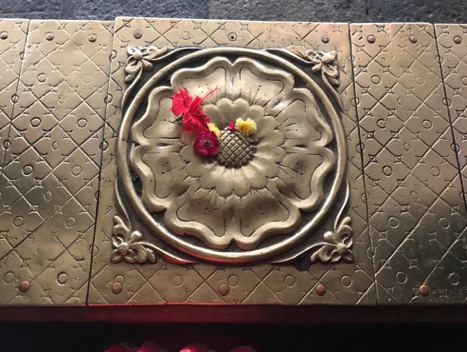
Jodi Shaw theorizes the sacred in South Indian Hindu temples by maneuvering affect theory and her current ethnographic work in Cidambaram into dialogue. Shaw directs our attention to the pre-verbal and extra-linguistic elements of temple encounters in order to shape a sense of the sacred as “visceral conversations.”
| CARVIEW |
Select Language
HTTP/2 200
date: Thu, 29 Jan 2026 11:37:12 GMT
content-type: text/html; charset=utf-8
nel: {"report_to":"cf-nel","success_fraction":0.0,"max_age":604800}
alt-svc: h3=":443"; ma=86400
report-to: {"group":"cf-nel","max_age":604800,"endpoints":[{"url":"https://a.nel.cloudflare.com/report/v4?s=onqBXobyXFPzj%2FF4sthCP0M6P0uD5ROmAFGHROOji%2B1GYey88pJyUOiwGtGO8eX6ogY0TM1JFDIgBCwVoiZYG8RzyCXoEYDcjaYbN%2FY%3D"}]}
vary: accept-encoding
last-modified: Thu, 27 Nov 2025 03:41:18 GMT
referrer-policy: no-referrer
server: cloudflare
strict-transport-security: max-age=31536000; includeSubDomains; preload
x-content-type-options: nosniff
x-frame-options: SAMEORIGIN
cf-cache-status: DYNAMIC
content-encoding: gzip
cf-ray: 9c586fa25afc8590-BOM
Home
Quotidian
A curated blog about everyday religion
State Islam in Morocco
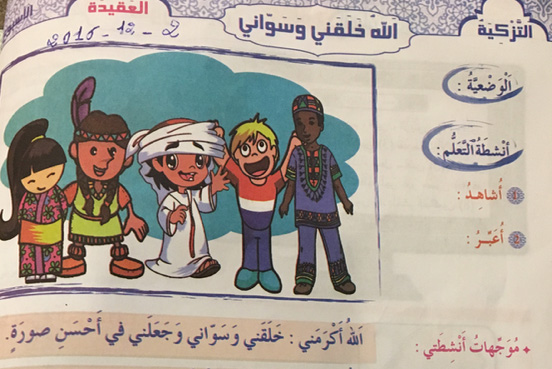
Kaylee Steck investigates the diversity of state Islam in Morocco, including the ways it manifests across the densely interconnected fields of education, politics, religious practice and religious programming. Given the breadth of these manifestations, Steck argues that Moroccans engage with official religious discourse in different ways, rendering not a uniform experience of Islam, as the state may prefer, but unique and diverse quotidian experiences alongside multiple state Islams with different...
Matters of Place: Placing Religion in Film
M. Gail Hamner explores the place of religion in film where, beyond cartography, place is relational: indexed in an at once individual and collective where, what and when. Beyond tracking actual and tangible places such as the Vatican or American West, religion in film is about what she calls affecognitive economies that offer expression for felt if unthought responses to those places. Hamner’s attention to film form, including light and...
Marginal Maps
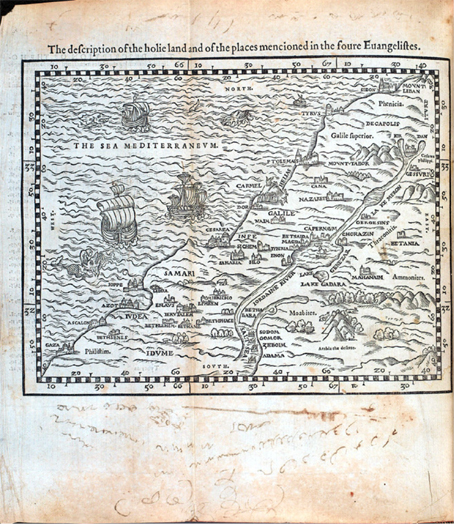
Samuel Tongue merges book history, marginalia studies, reader usage, cartography, and cultural geography to theorize the inclusion of maps as an example of biblical marginalia in 16th-century printed Bibles. By examining a specific example of a user adding their own marginal map, Tongue focuses on religious, historical and economic forces that undergird their authority, arguing that, for a certain user, these maps produce an imagined ‘Palestine,’ framing the land as...
Hula Hoop Spiritualities: Social Media, Embodied Experience, and Communities of Practice
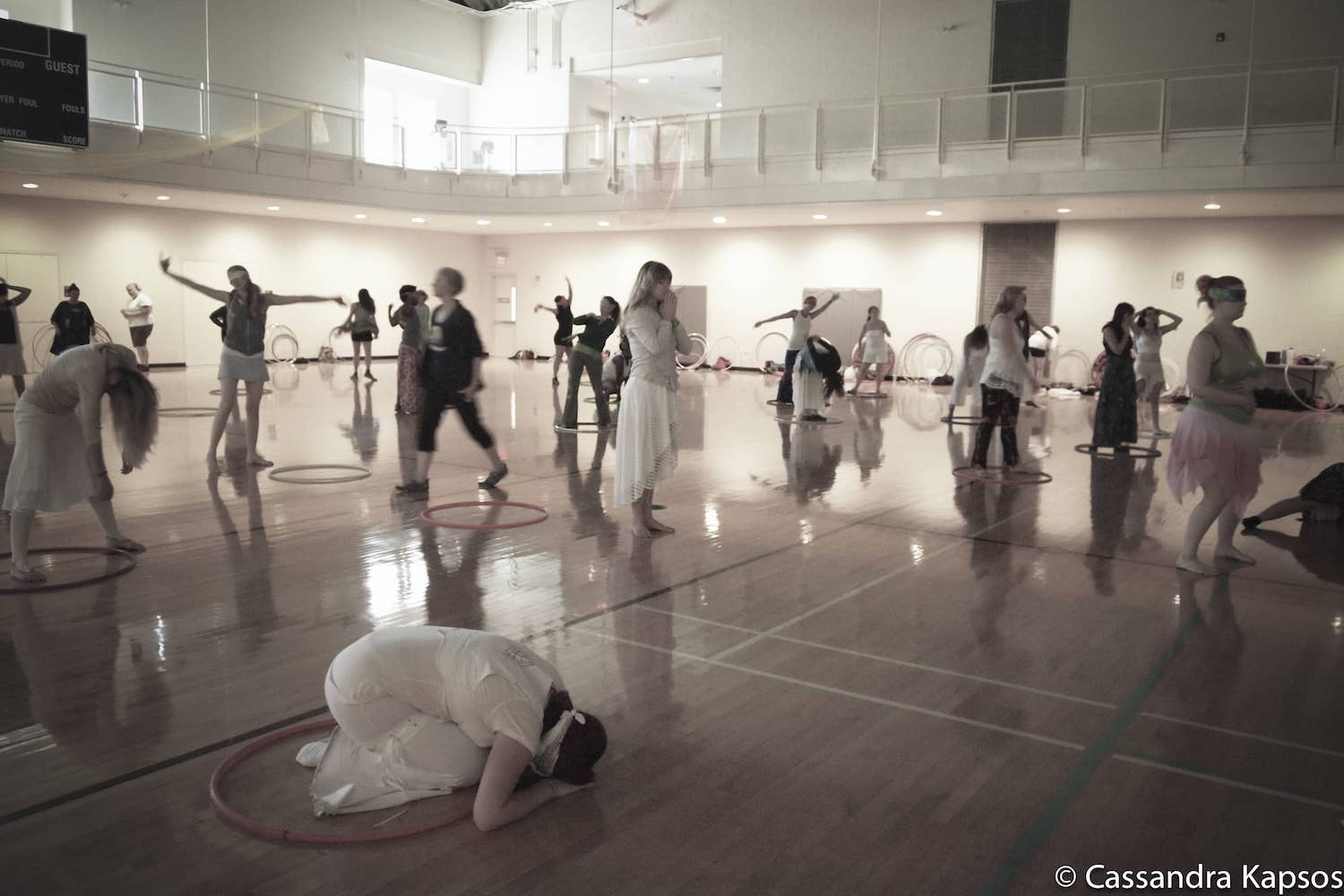
Jenna Gray-Hildenbrand and Martha Smith Roberts investigate how the hula hoop has become both an empowering tool for embodied practical spirituality rooted in metaphysical religiosity and a basis for a thriving community connected not by a shared dogma but by a common practice. They argue that the growth of the hooping subculture lies in its ability to nurture the diverse spiritual experiences of individual hoopers and to build an inclusive...
Blurring the educational lines? Material religion in the undergraduate classroom
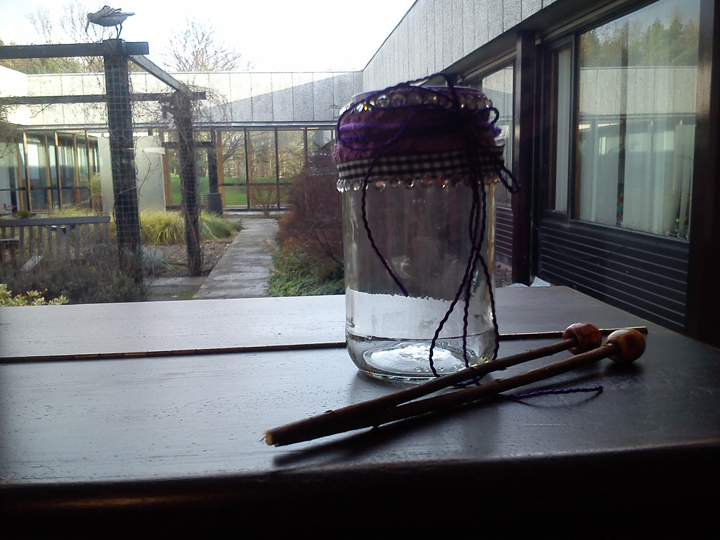
Francis Stewart explores the pedagogical possibilities of teaching material religions as a way of differently engaging with the concept “religion.” Using her experiences in a recent undergraduate course at the University of Stirling, Stewart argues that an embodied, sensory-based approach to material religions helps students approach theoretical and methodological tenets in different, nuanced, more embodied ways, ultimately yielding a context in which, for students and professors alike, the classroom can...