


Minuteman at Lexington, Massachusetts
“On the eighteenth of April, in Seventy-five; Hardly a man is now alive, Who remembers that famous day and year….” ~~Henry Wadsworth Longfellow
| CARVIEW |
Minuteman at Lexington, Massachusetts
“On the eighteenth of April, in Seventy-five; Hardly a man is now alive, Who remembers that famous day and year….” ~~Henry Wadsworth Longfellow
 Leave a Comment » |
  Revolution |
  Permalink
 Posted by Neddy
Constitution Hall, Washington DC
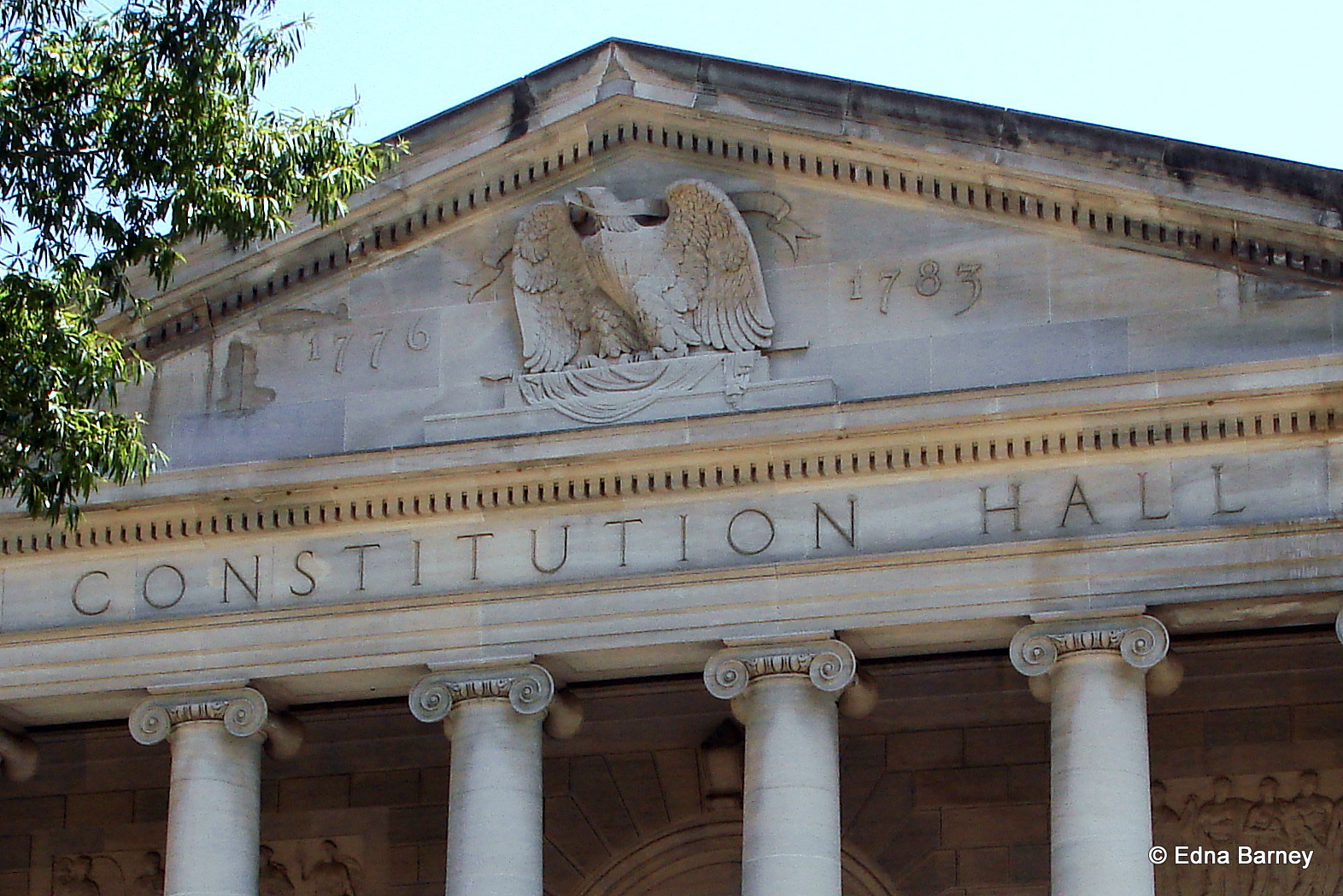
I suspect that there are a large number of thoughtful Americans who believe the US Constitution to be divinely inspired. It was the first written constitution in the world. Since then, most nations of the world have themselves adopted written Constitutions and our US Constitution was a model for almost all of them. Those facts alone are awe-inspiring. However, it was George Washington who described its drafting in a 1788 letter to General Lafayette, as “little short of a miracle.”
“It appears to me, then, little short of a miracle, that the delegates from so many different states (which states you know are also different from each other in their manners, circumstances, and prejudices) should unite in forming a system of national Government, so little liable to well-founded objections.”
Leave a Comment » | George Washington, US Constitution, Washington DC | Permalink
Posted by Neddy

GEORGE FISHLEY was “a soldier in the Continental army. When the British army evacuated Philadelphia and raced toward New York City, his unit participated in the Battle of Monmouth. He was part the genocidal attack on Indians who had sided with the British, a march led by General John Sullivan through ‘Indian country,’ parts of New York and Pennsylvania. Fishley was a famous character after the war in Portsmouth, New Hampshire, where he lived and was known as ‘the last of our cocked hats.‘
See more: Faces of the American Revolution
Leave a Comment » | Revolution | Tagged: patriot, Revolution, the Continental army | Permalink
Posted by Daughter of Revolution
Few Americans understand how prevalent were blacks or “colored” soldiers amongst those serving in George Washington’s Continental Army.
“During the winter of 1777-78, dozens of black Virginians served in every one of the state regiments, freezing, starving, and dying at Valley Forge. By February 1778, the survivors were marching with white comrades through the snow, practicing Baron von Steuben’s as yet unfamiliar drill. When the Steuben-trained army proved its mettle at Monmouth in June, about 700 blacks fought side-by-side with whites. Eight weeks later, an army report listed 755 blacks in the Continental Army, including 138 Blacks in the Virginia Line. During the winter of 1777-78, dozens of black Virginians served in every one of the state regiments, freezing, starving, and dying at Valley Forge. By February 1778, the survivors were marching with white comrades through the snow, practicing Baron von Steuben’s as yet unfamiliar drill. When the Steuben-trained army proved its mettle at Monmouth in June, about 700 blacks fought side-by-side with whites. Eight weeks later, an army report listed 755 blacks in the Continental Army, including 138 Blacks in the Virginia Line.” (“The Revolution’s Black Soldiers” by Robert Selig)
Leave a Comment » | Revolution | Tagged: american revolution, soldiers | Permalink
Posted by Neddy

On the eve of the Battle of Brandywine, George Washington established his headquarters in the home of a Quaker farmer and miller, Benjamin Ring. The house was near Chadd’s Ford where the British were expected to cross the river. With superior tacts and knowledge of the terrain, the British easily outwitted General Washington and the Americans lost the battle September 11th, 1777.
Slide Show of my Photographs, December 2011
The image, Washington’s Headquarters – Benjamin Ring House, is subject to copyright by Edna Barney. It is posted here with permission via the Flickr API by barneykin, an administrator of “The Revolution  ed” pool.
Leave a Comment » | Revolution | Tagged: 1777, americanrevolution, Brandywine, Pennsylvania | Permalink
Posted by Daughter of Revolution
Leave a Comment » | patriots, Revolution, Virginia | Tagged: first virginia regiment, revolutionary war | Permalink
Posted by Neddy

The portrait here is of General Lafayette of Revolutionary War fame. I snapped the portrait hanging on a wall at Bassett Hall in Williamsburg, Virginia.
I recently came upon a story relating to General Lafayette’s servant James. James was an enslaved man of Mr. William Armistead of New Kent County, Virginia. With his master’s consent, James joined the Continental Army and was assigned to serve the Marquis de Lafayette. At the risk of his life, James entered British camps and brought back information to the Marquis. After the war was won, a petition was offered to gain James his freedom and to compensate his master. Adopting the the patronymic of General Lafayette, James Armistead Lafayette began his new life as a free man.
James’s story was found in “Forgotten Patriots.”
The image, Portrait of General Lafayette, is subject to copyright by Edna Barney. It is posted here with permission via the Flickr API by barneykin, an administrator of “The Revolution ed” pool.
Leave a Comment » | Revolution | Tagged: american revolution, Revolution, Virginia | Permalink
Posted by Daughter of Revolution

Francis Lightfoot Lee was a signer of the Declaration of Independence. A sketch of the character and life of this Virginian reveals the material that was used in the construction of congressmen in his day. To sketch him is to sketch the average congressman of his time, the time of the Founding Fathers.
He came of an old and excellent family; a family which had borne an unsullied name, and held honorable place on both sides of the water; a family with a reputation to preserve and traditions to perpetuate; a family which could not afford to soil itself with political trickery, or do base things for party or for hire; a family which was able to shed as much honor upon official station as it received from it.
He dealt in no shams; he had no ostentations of dress or equipage; for he was, as one may say, inured to wealth. He had always been used to it. His own ample means were inherited. He was educated. He was more than that – he was finely cultivated. He loved books; he had a good library, and no place had so great a charm for him as that. The old Virginia mansion which was his home was also the home of that old-time Virginian hospitality which hoary men still hold in mellow memory. Over their port and walnuts he and his friends of the gentry discussed a literature which is dead and forgotten now, and political matters which were drowsy with the absence of corruption and “investigations.” Sundays he and they drove to church in their lumbering coaches, with a due degree of grave and seemly pomp. Week-days they inspected their domains, ordered their affairs, attended to the needs of their dependents, consulted with their overseers and tenants, busied themselves with active benevolences. They were justices of the peace, and performed their unpaid duties with arduous and honest diligence, and with serene, unhampered impartiality toward a society to which they were not beholden for their official stations. In short, Francis Lightfoot Lee was a gentleman – a word which meant a great deal in his day, though it means nothing whatever n ours.
Mr. Lee defiled himself with no juggling, or wire-pulling, or begging, to acquire a place in the provincial legislature, but went thither when he was called, and went reluctantly. He wrought there industriously during four years, never seeking his own ends, but only the public’s. His course was purity itself, and he retired unblemished when his work was done. He retired gladly, and sought his home and its superior allurements. No one dreamed of such a thing as “investigating” him.
“Francis Lightfoot Lee” by Mark Twain, 1877 (The Pennsylvania Magazine of History and Biography, I, no. 3).
The image, Menokin, is subject to copyright by Edna Barney. It is posted here with permission via the Flickr API by barneykin, an administrator of “The Revolution ed” pool.
Leave a Comment » | Revolution, Washington DC | Tagged: congress, congressmen, Declaration of Independence, Lee, Virginia | Permalink
Posted by Daughter of Revolution
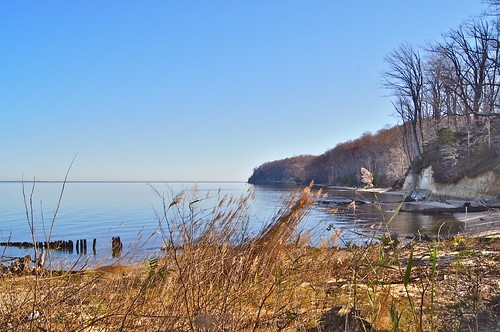
On 30 March 1781, two hundred thirty years ago, British sailors from armed vessels anchored in the Potomac River near Saint Clement’s [Blackistone] Island, and attempted to land at Stratford Landing as part of a mission to destroy and loot the plantation houses along both sides of the river. From his home Chantilly, which had a good view of the island, Richard Henry Lee, Lieutenant of the Westmoreland militia, watched the movements of the ships. The British launched smaller craft to approach the shoreline while the large ships fired cannons to cover the attack. Richard Henry Lee met them with a small, ill-armed group of local citizens. In the skirmish that followed, the Westmoreland militia repelled the attackers, killing one British sailor who was buried on Stratford beach.

The image, Lee’s Stratford Landing, is subject to copyright by Edna Barney. It is posted here with permission via the Flickr API by barneykin, an administrator of “The Revolution ed” pool.
Leave a Comment » | militia, patriots, Revolution, Virginia | Tagged: 1781 virginia | Permalink
Posted by Daughter of Revolution
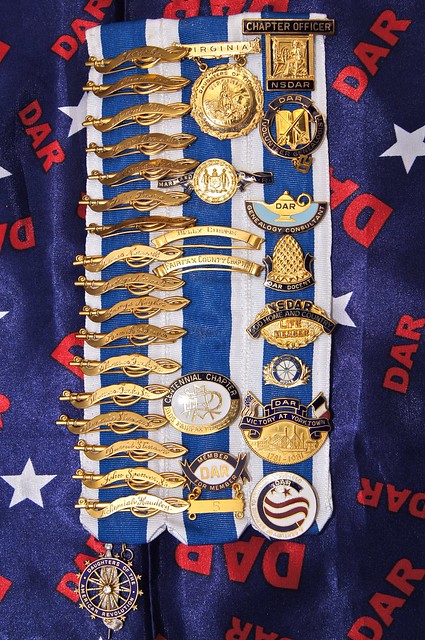
The image, Insignia, is subject to copyright by Edna Barney. It is posted here with permission via the Flickr API by barneykin, an administrator of “The Revolution ed” pool.
Leave a Comment » | Revolution | Permalink
Posted by Neddy
| Dixie Harding on George Stapleton, Senior | |
 | Melodee on Joshua Younger, Patriot |
 | Donna Duwe on Albemarle County Patriots |
 | Randy Maged on Betsy Ross House |


 Patriot Graves of 1776
 Blogging the Revolution