Read the full article online at BBC News
| CARVIEW |
Select Language
HTTP/2 200
content-type: text/html; charset=UTF-8
expires: Wed, 21 Jan 2026 04:14:52 GMT
date: Wed, 21 Jan 2026 04:14:52 GMT
cache-control: private, max-age=0
last-modified: Sat, 05 Oct 2024 02:14:29 GMT
etag: W/"b5caae1827fe15f83f57c65f47e4fae646f77c83b91b0572e443ae38a7579e4e"
content-encoding: gzip
x-content-type-options: nosniff
x-xss-protection: 1; mode=block
content-length: 11396
server: GSE
alt-svc: h3=":443"; ma=2592000,h3-29=":443"; ma=2592000
Παλαιός βίος
skip to main |
skip to sidebar
"The sabretooth tiger may have looked a fearsome sight with its massive canines but its reputation takes something of a knock with a new piece of research. Scientists who have studied the extinct creature's skull in detail say it had a relatively weak bite - compared with, say, a modern lion."
Read the full article online at BBC News
Παλαιός βίος
A Paleontology Blog
Saturday, October 06, 2007
Sabretooth's surprising weak bite
Read the full article online at BBC News
Saturday, September 29, 2007
Paleontology Photography
See these pictures and more at my new photography portfolio.
https://palaeo_portfolio.carbonmade.com/


https://palaeo_portfolio.carbonmade.com/


Thursday, September 20, 2007
Velociraptor had feathers
Feathers aren't usually fossilized, but there are other clues that would indicate whether or not an animal had feathers. Apparently, Velociraptor is among those now. Someone call Spielberg!
https://www.sciencedaily.com/releases/2007/09/070920145402.htm
Science Daily — A new look at some old bones have shown that velociraptor, the dinosaur made famous in the movie Jurassic Park, had feathers. The discovery was made by paleontologists at the American Museum of Natural History and the Field Museum of Natural History.
https://www.sciencedaily.com/releases/2007/09/070920145402.htm
Wednesday, January 24, 2007
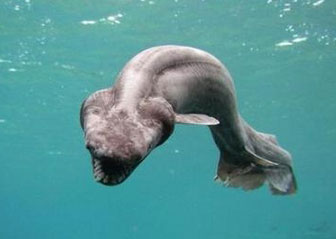
Unusual prehistoric shark beast captured in Japan
Article from mongabay.com
January 24, 20007

A rare frilled shark was captured live by fishermen off the coast of Japan. The toothy eel-like creature was taken to Awashima Marine Park in Shizuoka where it later died according to Reuters.
The 5-foot (1.6 meter) long beast was believed to be ill because it was found in shallow waters. Generally the species, known as Chlamydoselachus anguineus, lives at a depth of 488-4550 feet (150-1400 m). It is considered a primitive shark, largely unchanged since prehistoric times.
"We believe moving pictures of a live specimen are extremely rare," Reuters quoted an official at the park as saying. "They live between 600 and 1000 metres under the water, which is deeper than humans can go. We think it may have come close to the surface because it was sick, or else it was weakened because it was in shallow waters."
January 24, 20007
A rare frilled shark was captured live by fishermen off the coast of Japan. The toothy eel-like creature was taken to Awashima Marine Park in Shizuoka where it later died according to Reuters.
The 5-foot (1.6 meter) long beast was believed to be ill because it was found in shallow waters. Generally the species, known as Chlamydoselachus anguineus, lives at a depth of 488-4550 feet (150-1400 m). It is considered a primitive shark, largely unchanged since prehistoric times.
"We believe moving pictures of a live specimen are extremely rare," Reuters quoted an official at the park as saying. "They live between 600 and 1000 metres under the water, which is deeper than humans can go. We think it may have come close to the surface because it was sick, or else it was weakened because it was in shallow waters."
Monday, January 15, 2007
New dig boots!
Went to the army-navy surplus store the other day and bought meself some new boots for the upcoming dig season and beyond. They're good looking and are comfortable. They also sport these interesting ridges on the bottom of the shoe, which will hopefully help me climb up steep ledges with loose sediment.
Subscribe to:
Comments (Atom)
About the Blogger
Mission Statement:
To advocate the scientific discipline of paleontology through education of the public and promoting awareness of the importance of fossils both scientifically and economically.
Blog Archive
Paleontology Journals
Clubs and Societies
Paleontology Museums
Fossil Commerce and Casts
Evolution
Links for rock hounds
Regional Fossil Locales
This blog is not responsible for the content of external sites
Illustrations and photographs are copyright by their respective owners