


| CARVIEW |
Select Language
HTTP/2 301
server: GitHub.com
content-type: text/html
location: https://origen-workshop.github.io/2025/organizers/
access-control-allow-origin: *
strict-transport-security: max-age=31556952
expires: Wed, 31 Dec 2025 00:07:06 GMT
cache-control: max-age=600
x-proxy-cache: MISS
x-github-request-id: 689B:2B0FD4:A986E3:BE86CE:695466CE
accept-ranges: bytes
age: 0
date: Tue, 30 Dec 2025 23:57:06 GMT
via: 1.1 varnish
x-served-by: cache-bom-vanm7210030-BOM
x-cache: MISS
x-cache-hits: 0
x-timer: S1767139026.229866,VS0,VE220
vary: Accept-Encoding
x-fastly-request-id: 2cf1b71c2e15163bb91b5ababa2016960d108a64
content-length: 162
HTTP/2 200
server: GitHub.com
content-type: text/html; charset=utf-8
last-modified: Mon, 03 Nov 2025 02:35:56 GMT
access-control-allow-origin: *
strict-transport-security: max-age=31556952
etag: W/"6908150c-42a1"
expires: Wed, 31 Dec 2025 00:07:06 GMT
cache-control: max-age=600
content-encoding: gzip
x-proxy-cache: MISS
x-github-request-id: CE34:3655F2:A9F254:BEF3A7:695466D2
accept-ranges: bytes
age: 0
date: Tue, 30 Dec 2025 23:57:06 GMT
via: 1.1 varnish
x-served-by: cache-bom-vanm7210030-BOM
x-cache: MISS
x-cache-hits: 0
x-timer: S1767139026.463744,VS0,VE218
vary: Accept-Encoding
x-fastly-request-id: 311c4f1e504b82952701fc4d179806ef742c4cf6
content-length: 4537
Organizers 
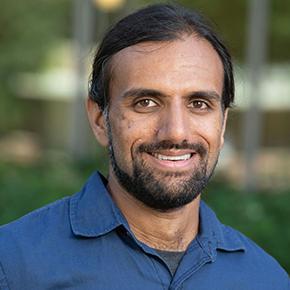
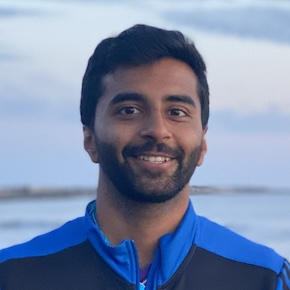
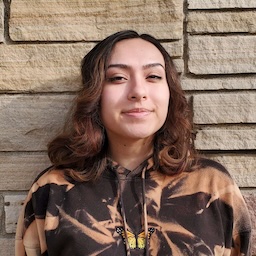
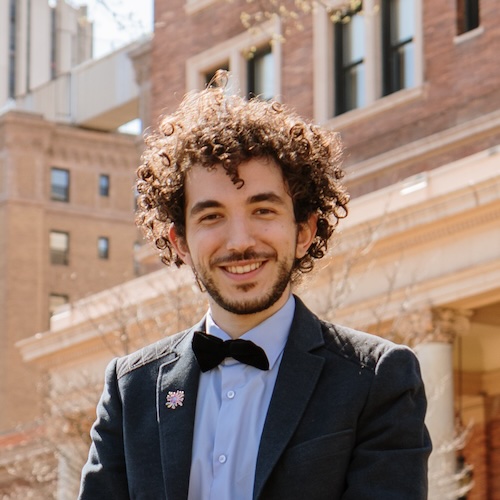
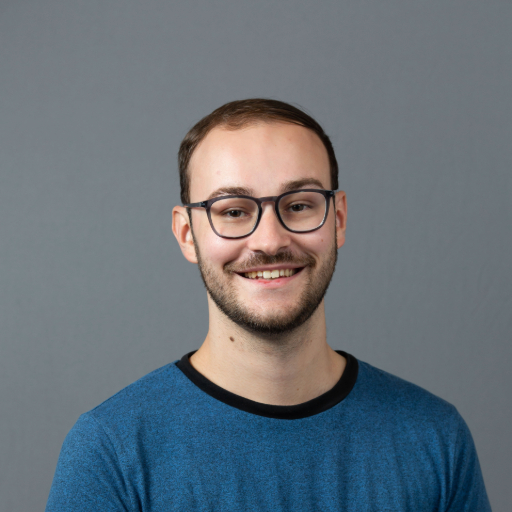
Nikhil Krishnaswamy
Colorado State University
Nikhil Krishnaswamy is an Assistant Professor of Computer Science at Colorado State University, and director of the Situated Grounding and Natural Language (SIGNAL) Lab. His research focuses on diverse forms of natural language and multimodal understanding in human-AI collaboration, and on the mathematical and logical properties of AI models. He is the author of over 90 peer-reviewed publications across the fields of NLP, AI/machine learning, human-computer/human-agent interaction, and cognitive science, and has received multiple best paper or outstanding paper awards for research on interactive systems, human-AI teaming, HCI, and NLP in education. His research has been funded by NSF, DARPA, ARPA-H, and ARO, and he has been featured in national outlets such as NPR and the Wall Street Journal.
More ›
More ›
Dilek Hakkani-Tür
University of Illinois Urbana-Champaign
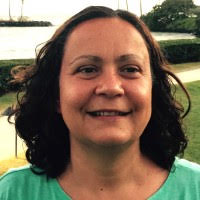
Dilek Hakkani-Tür is a Professor of Computer Science at University of Illinois Urbana-Champaign and an Amazon Scholar (at Amazon Health Science). Her research interests include conversational AI, natural language and speech processing, spoken dialogue systems, and machine learning for language processing. She has over 100 patents that were granted and co-authored more than 300 papers in natural language and speech processing. She received several best paper awards for publications she co-authored on conversational systems, including her earlier work on active learning for dialogue systems, from IEEE Signal Processing Society, ISCA and EURASIP. She also served as the Editor-in-Chief of the IEEE/ACM Transactions on Audio, Speech and Language Processing (2019-2021), and an IEEE Distinguished Industry Speaker (2021). Currently, she serves as the SigDial President, co-Editor-in-Chief of Transactions of ACL (TACL) and a NAACL board member. She is a fellow of the IEEE (2014), ISCA (2014) and ACL (2024).
More ›
More ›
James Pustejovsky
Brandeis University
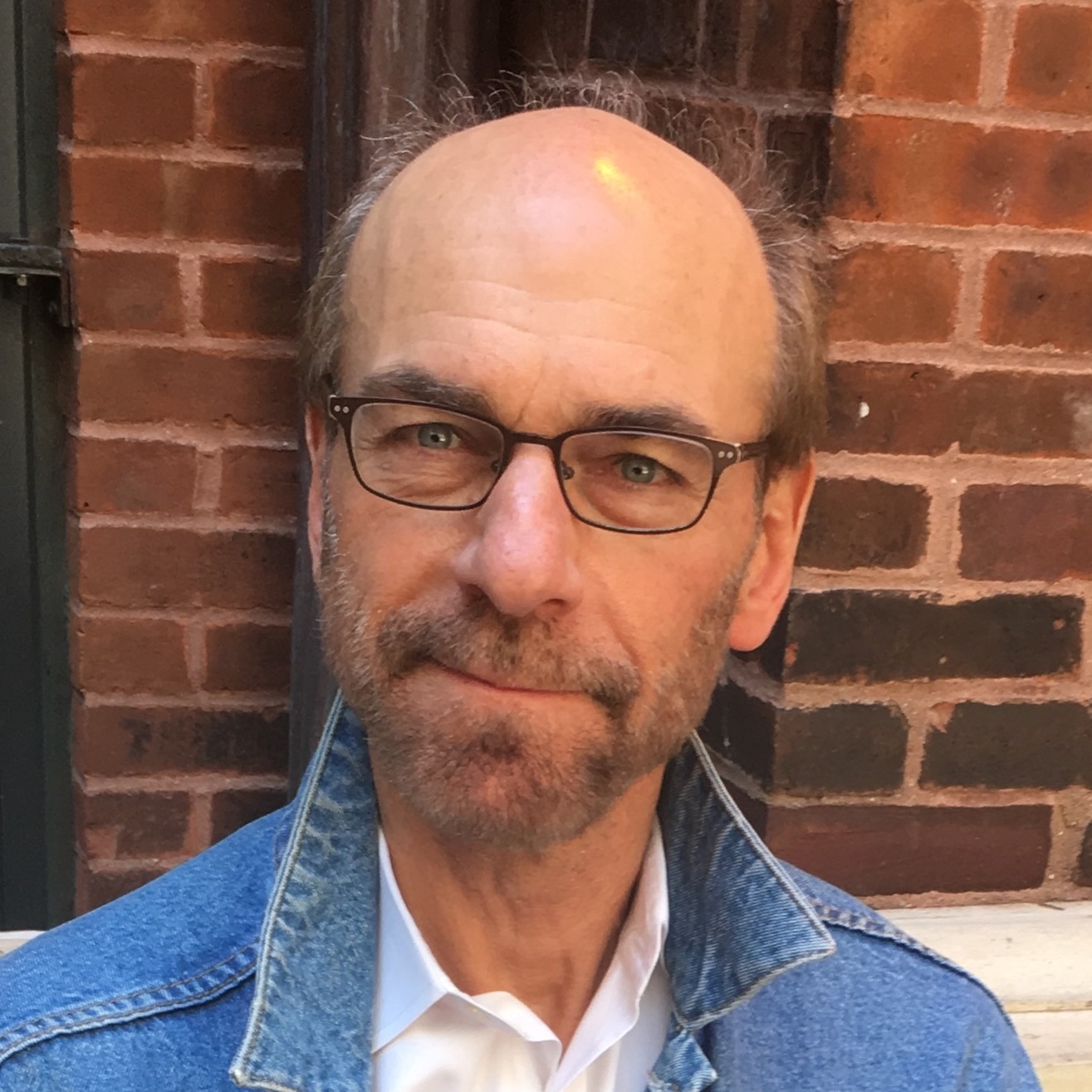
James Pustejovsky is the TJX Feldberg Endowed Chair in Computer Science at Brandeis University, where he is also Chair of the Linguistics Program, Chair of the Computational Linguistics M.S. Program, and Director of the Lab for Linguistics and Computation (LLC). He has authored numerous books on lexical and computational semantics, linguistic annotation, and temporal and spatial reasoning, including Spatial Language Understanding (with P. Kordjamshidi and M.-F. Moens, Springer 2025) and Generative Lexicon Theory: A Modern Introduction (with E. Jezek, Oxford University Press, 2026). He conducts research in computational linguistics, lexical semantics, multimodal interactions and reasoning, situated grounding, and developing standards and annotated datasets for machine learning. He was elected an ACL Fellow in 2024.
More ›
More ›
Vasanth Sarathy
Tufts University
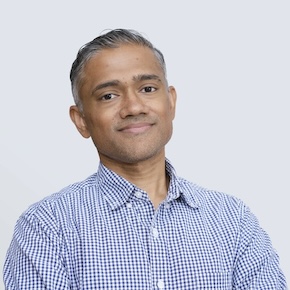
Vasanth Sarathy is a Research Assistant Professor of Computer Science at Tufts University and Director of the Creative Intelligence Lab. His research lies at the intersection of artificial intelligence, cognitive science, and philosophy, with a focus on socially intelligent agents, neurosymbolic reasoning, and the dynamics of representational coherence. He has published across AI safety, interpretability, and argumentation, and his work has been supported by DARPA, NSF, and IARPA. Prior to academia, he practiced law and brings a multidisciplinary perspective to questions of intelligence, communication, and normative alignment in AI systems.
More ›
More ›
Tejas Srinivasan
University of Southern California
Tejas Srinivasan is a Computer Science Ph.D. student at the University of Southern California. His research is centered on building AI systems that can be used by humans reliably. His work has been published at NeurIPS, *CL venues and speech conferences, spanning topics such as human-AI interaction, reliable multimodal systems, continual learning and multimodal speech recognition. He is a recipient of the Amazon ML Fellowship.
More ›
More ›
Mariah Bradford
Colorado State University
Mariah Bradford is a Ph.D. student and graduate research assistant in the Situated Grounding and Natural Language Lab at Colorado State University, where she works on human-centered AI. Her research focuses on understanding group interactions and collaborative tasks, individual and group belief tracking from multimodal signals, and analysis of small group and hybrid human-AI task-based discussions. Her research has appeared in diverse AI and education venues including AIED, EDM, LREC-COLING, and EMNLP. She has served on the program committees for conferences such as LREC, COLING, and AIED, and is a recipient of an AIVO AI4ED Fellowship, sponsored by Google.org.
More ›
More ›
Mert İnan
Northeastern University
Mert İnan is a Computer Science Ph.D. candidate at Northeastern University. His research focus is at the intersection of multimodality, dialogue, and cognitive science. He has published at ACL venues. Notably, he has worked on signed languages, detecting uncertainty, and discourse through eye gaze and visio-linguistic data. He has been a part of organizing committees of multiple workshops, such as WMT-SLT23, SpLU-RoboNLP23-24 at EMNLP, *SEM 2023 at ACL, and Dialogue with Robots by NSF.
More ›
More ›
Tim Obiso
Brandeis University
Tim Obiso is a Ph.D. student and graduate research assistant in the Lab for Linguistics and Computation at Brandeis University, where he works on natural language processing with a focus on multimodal semantics, human-AI collaboration, epistemic and doxastic modeling, and representation learning with various architectures. This experience informs his understanding of communication and collaboration and managing the various states of open-ended tasks.
More ›
More ›