Interview with Annise Parker

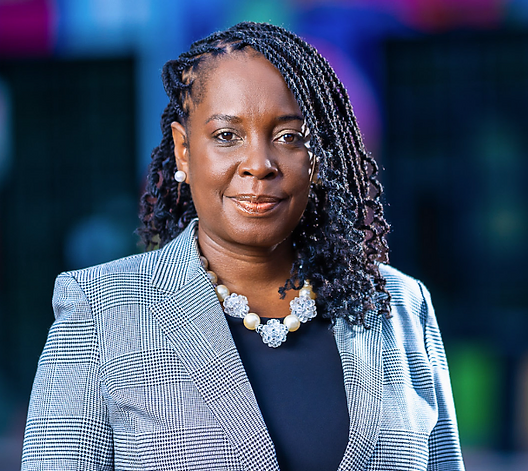
Annise Parker

This week and next week we move into county races, starting with the primary for Harris County Judge. Our first candidate needs no introduction, and that’s Annise Parker. She served six years (the maximum allowed at the time) on Houston City Council, as Controller, and of course as Houston’s Mayor. Since then she has served as Senior Vice President and Chief Strategy Officer for BakerRipley and spent seven years as CEO and President of the LGBTQ+ Victory Fund and Leadership Institute. She was the first person to announce her candidacy for the Democratic nomination for County Judge, before Judge Hidalgo announced her intention to not run again. I’ve interviewed her multiple times, most recently at the end of her last term as Mayor. Here’s what we talked about this time:

PREVIOUSLY:

Terry Virts – CD09
Leticia Gutierrez – CD09
Melissa McDonough – CD38
Theresa Courts – CD38
Marvalette Hunter – CD38

You can find links to all my interviews and Q&As at the world famous Erik Manning spreadsheet, which has other information about candidates and races. I have two more interviews for County Judge this week and will then have interviews for County Attorney. Let me know what you think.

Posted in Election 2026 | Tagged Annise Parker, Democratic primary, Election 2026, Harris County, Harris County Judge, interviews | Leave a comment

Put Spring ISD on the TEA takeover watch

Didn’t see this coming.

Dekaney High School is one failing accountability grade away from a state takeover of Spring ISD, and district leaders told trustees Tuesday that they are pursuing aggressive turnaround efforts at the north Harris County campus.

The pressure comes after Dekaney posted four consecutive years of failing academic accountability ratings. Under state law, that streak puts the district and its 33,500 students at risk of losing local control if the campus fails again.

Takeovers were once rare in Texas, but they have become more frequent under a 2015 state law that allows the Texas Education Commissioner to oust an elected board and replace them with a board of managers as well as a state-appointed superintendent if one campus has five years of failing grades. Most recently, the Texas Education Agency announced it was taking over districts in Beaumont, Connally and Lake Worth. That follows its intervention in Fort Worth ISD and its historic takeover of the Houston Independent School District, the largest in the state.

At Dekaney, administrators have rolled out tighter instructional supports such as standardized lesson plans and slide decks, increased feedback for staff, and exit tickets that require students to answer STAAR-aligned questions at the end of class.

At Tuesday’s board meeting, Dekaney Principal Connie Smith said that the campus had increased the number of weekly assessments for students, revamped how they track academic performance data, and started holding professional learning groups for teachers every school day.

“The data is showing that we’re pushing in the right direction,” Smith said. “We’re not perfect, and I don’t think anyone standing in any space would be, but our heart is in the place.”

On top of unit tests and exit tickets, Dekaney students take an additional English language arts assessment every week and a math assessment biweekly. Smith said this gives administrators more frequent data points on how students are doing in core subjects.

The school is also tracking each student’s learning using past academic performance and benchmarks such as weekly assessments.

“We utilize that triangulation of data to determine the needs not only of our students, but also our teachers,” Smith said. “We also meet with our instructional specialists as well so we can understand what our goals are as a campus, what’s going on there, identify the concerns and the gaps and create a plan of action.”

Smith said that school officials have also started to track student performance on exit tickets by individual performance rather than the whole average of the class. Smith said it keeps teachers from getting a “false sense of where students are” and shows them which students need targeted help and where to adjust curriculum.

This Chron story from October, linked in the first paragraph above, described the situation going into the 2025-26 academic year.

Dekaney has already received four consecutive years of failing academic accountability scores and, according to a Sept. 3 letter from the Texas Education Agency, “has not earned an acceptable academic accountability rating since the 2015–16 school year.”

District and campus administrators have just this school year left to improve that score, and they’re banking on its state-mandated turnaround plan.

[…]

Spring ISD leaders acknowledge that academics have flatlined at not just Dekaney High School, but all over Spring ISD over the last three years.

The percentage of students in Spring who met the grade-level standard on the reading STAAR has stayed around 38% since 2022. For math, it’s remained at 30% or lower for three years. That doesn’t include students in the “approaching” grade level standard, which is considered passing in the state’s eyes.

“We need to have exponential growth for us to exceedingly close the gap between us and the region and the state,” Superintendent Kregg Cuellar said at a work session last month.

In 2024, 49% of Dekaney students were at approaching or above grade level for reading and 54% for math.

At a Sept. 9 board meeting, district and school officials linked the school’s low rating to weak math and reading scores, poor readiness for college, career, and military and persistent gaps among students retaking tests — factors that all line up with the state’s key accountability metrics.

However, in that same meeting, Tracey Walker, assistant superintendent of high schools, said she believed preliminary data indicated that the campus could receive a C rating for last school year’s college and career preparedness.

Just over half of the school’s student population is Hispanic, and about 40% are Black. More than 79% of students are considered economically disadvantaged while about 32% are emergent bilingual students and English learners.

Toni Templeton, a senior research scientist at the University of Houston Education Research Center, said that Dekaney’s low graduation rates also stood out.

“(The accountability rating system) gives you the better of your fourth year, fifth year or sixth year graduation rates,” Templeton said. “So you have six years to graduate students, and it’s really interesting to me that the graduation rates are so low.

In 2024, Dekaney had a 76.9% graduation rate for students who finished in four years, compared with the statewide average of 90.7%. Spring ISD’s overall rate was 83.6%.

Michelle Williams, a teachers union leader recently terminated by HISD and a Spring resident for over two decades, has been trying to raise the alarm about Spring ISD’s autonomy, speaking out at board meetings and drawing parallels between Dekaney and Wheatley high schools. She said Dekaney’s first F rating should have raised a red flag.

“(The state) took over the largest school district in the state of Texas. That should have been urgency enough,” Williams said. “And the turnaround plan should have been done in year one or year two of getting an F.”

I’m rooting for them, I wouldn’t wish this experience on anyone. Spring ISD has more data to work with as well as the HISD experience to guide and motivate them, so perhaps they will pull themselves out in time. They’re certainly borrowing from the Mike Miles playbook in their mitigation efforts, and if they’d like to borrow the man himself to oversee it all I’m sure we could make a deal. All that said, HISD could and arguably should have avoided this fate as well, and they didn’t. Good luck, but don’t rest easy. Until that law is changed, the threat will loom.

Posted in School days | Tagged HISD, Kregg Cuellar, Mike Miles, Mike Morath, schools, Spring ISD, Texas, Texas Education Agency, The Lege | Leave a comment

A brief note about the latest Cook Political Report House race ratings

I was struck by what seems to be an omission as I read this Daily Kos post about the state of the 2026 election.

As Trump tries to shore up the GOP’s fragile House majority through norms-busting mid-decade redistricting, the Cook Political Report has shifted its race ratings for 18 seats toward Democrats. The new ratings, published Thursday, look tough for Republicans.

Republicans are favored to take only three Democratic-held seats (North Carolina’s 1st, Maine’s 2nd, and Texas’ 35th districts). Beyond that, Republicans have few offensive opportunities, while some of the seats they tried to steal via redistricting remain highly competitive or still lean Democratic.

The pressure is even clearer on the Republican side. One GOP-held seat has moved to “Lean Democrat” and should flip in this environment: Nebraska’s 2nd District. And in the “tossup” category, the imbalance is striking: Just four Democratic seats are considered shaky, compared with 14 Republican seats.

This follows 11 rating changes in early November—10 shifting toward Democrats—and another four Democratic shifts later in the month. Virginia’s redistricting fight is still ahead, suggesting that Republicans’ exposure may grow.

Here’s the full Cook report. What is missing from this Daily Kos post, authored by Kos himself, is that it doesn’t take into account the current seats affected by redistricting that are now considered to be solid for the opposing party. If you click on the “Solid Republican” part of the bar, that includes Texas’ CD09 and CD32. And on the “Solid Democratic” side it includes two currently red districts from California. What may yet happen in Virginia, and also maybe Florida, remains to be seen.

You may say so what, that all cancels out, and Kos’ main point remains valid. Except that as we have noted before, CD09 and the now considered to be “Likely Republican” CD35 performed vastly differently in 2018 than they did in 2024, with a big part of the difference being the Latino shift towards Trump in 2024. If all those gains have eroded, as polls say they have been, then CD09 and CD35 are better classified as tossups, with CD32 being more Likely Republican than Solid. I won’t quibble too much on that latter rating because I don’t think there’s a notable Dem candidate in that race, and if you wanted to hedge and call CDs 09 and 35 Lean Republican that’s okay too. I’m just saying, don’t forget about those seats, and the upside for Dems in a wave year adds to the disparity that Kos highlights.

Indeed, a true best case scenario for Dems this year is not only holding onto CDs 28 (Cook rating “Lean Dem”) and 34 (“Dem Tossup”) but also CDs 09 and 35, and flipping CD15 (“Likely Republican”) to make up for losing CD32. It’s not crazy to imagine given how those districts performed in 2018. I wouldn’t bet my own money on it yet – I’d like to see things get at least a little worse for Republicans nationally, and I’d like to see both non-Senate Democrats and the non-incumbent Dem candidates in these races raise some real money first – but it’s in the conversation. The SD09 runoff could stoke this fire, or it could toss some cold water on it, or we could argue it either way afterwards. All I’m saying for now is, it’s in the conversation.

Posted in Election 2026 | Tagged California, CD09, CD15, CD28, CD32, CD34, CD35, Congress, Election 2018, Election 2024, Election 2026, Florida, redistricting, Texas, Virginia | Leave a comment

Weekend link dump for January 18

“Here is a sentence I am pleased to be able to write in 2026: I like the new Amy Grant song.”

“Well, it turns out that some genius dogs can learn a brand new word, like the name of an unfamiliar toy, by just overhearing brief interactions between two people.”

“I am, I think, writing this for myself more than for anyone else, but for all of the yelling you do on Twitter at people who are nakedly wrong about things, the house always wins. You can’t meaningfully fight disgusting ideologies on a platform that has been redesigned from the ground up around amplifying said ideologies.”

“[A recent study] found that climate policies aimed at forcing lifestyle changes — such as bans on driving in urban centers — can backfire by weakening people’s existing pro-environmental values and triggering political backlash, even among those who already care about climate change. The findings suggest that how climate policy is designed may matter as much as how aggressive it is.”

“At present, there are 15 women in general manager positions across Minor League Baseball. When most fans think of the GMs in baseball, they likely assume the job is all about building a roster. Minor League GMs have nothing to do with rosters, but everything to do with a team’s financial stability and community impact, and the gameday experience of everybody — from fans to players and coaches to employees — who comes out to the ballpark.”

RIP, Bob Weir, guitarist, songwriter, founding member of the Grateful Dead.

“How IVF has led to a record number of single moms in their 40s”. I don’t know about you, but I can feel the rage emanating from certain corners of the Internet at that headline.

“Democratic Sen. Mark Kelly sued the Pentagon on Monday over attempts to punish him for his warnings about illegal orders.”

“When we think about how to understand Trumpism and what to do about it, we need to be thinking way beyond the literal and technicalities. It’s really about how we got to be like conquered territories in our own country and how we un-get there. That requires thinking beyond the narrow technicalities of civilian and military laws and life.”

“Rather than offer a traditional “how to fight book bans in 2026” guide, I’ve compiled a massive list of ideas for things you can do not only effectively to fight against book censorship but that also will increase your own knowledge, vocabulary, and fluency in the world of censorship as it is right now.”

“That heaviness you feel, that drag on your mental health, that drain on your emotional energy and lethargy in the face of world events, like [when Renee Nicole Good was murdered], is real. We are all carrying a lot of new weight in the era of Trumpism. It’s the weight of non-zero.”

Having an asteroid named after you, especially unprompted, is pretty damn cool.

“Malaysia and Indonesia have become the first countries to block Grok, the artificial intelligence chatbot developed by Elon Musk’s company xAI, as concerns grow among global authorities that it is being misused to generate sexually explicit and nonconsensual images.” I hope they’re not the last.

RIP, Scott Adams, “Dilbert” cartoonist.

RIP, Claudette Colvin, civil rights activist whose arrest for refusing to give up seat on a segregated bus preceded Rosa Parks’ by nine months. I knew there were others besides Parks who had done this but I didn’t know any of their names before now. Her arrest was finally expunged in 2021, with an African-American judge granting it to her. Rest in peace, Claudette Colvin.

“Anyway, please note that it bothers Bari Weiss when people publicly make fun of her bad decisions and utter lack of journalistic acumen, like the internet is always doing, and like Nikki Glaser did at the Golden Globes.”

“Your Data Center Is Either Closer Than You Think or Much Farther Away”.

“If you swear an oath while placing your hand on the Bible, you’re swearing an oath on a book that forbids you to do that.”

“Joe Rogan’s Harsh New Takedown of Trump ICE Raids Hands Dems a Weapon”.

“Inflation might be cooling down, but “Streamflation” is real, per new data from the U.S. government.”

“The only predicate here is winning power. And this is why I think it’s so important for both activists and politicians alike to approach the ICE challenge differently than they did in the past—with activists offering more generosity and specificity to Democrats trying to win elections, and Democrats earning that generosity by giving their voters reason to believe they won’t tuck tail.”

“I’m tempted to offer a lecture on how the 2017 Women’s March was about liberal women correctly understanding that a man accused by over a dozen women of sexual abuse was throwing up red flags about how he’ll govern, but there’s no reason to gild the lily here. What matters now is that resistance moms were the vanguard then, and they are the vanguard now.”

RIP, Professor Renfrew Christie, anti-apartheid hero who helped derail South Africa’s nuclear weapons program and was tortured in prison for that and for other acts of resistance to the apartheid regime. Read his story and be inspired by it – if you’re like me, you did not know who Renfrew Christie was before now – and remember that today’s Christian nationalists are the descendants of the men who were buying and telling others to buy krugerrands in the 70s and 80s. (Hint: One of their names rhymes with “Schmerry Schmalwell”.)

“Whether Minnesota ultimately prosecutes Ross remains to be seen, and state officials’ decisions will depend on careful legal and evidentiary analysis. Without predicting outcomes, however, it’s worth both clarifying the state of the law—especially in the face of false claims from the Trump administration—and identifying some of the key issues Minnesota prosecutors will have to consider.”

More resignations of federal prosecutors are expected at the US Attorney’s Office in Minnesota amid ongoing frustration over the Trump administration’s response to the fatal shooting of Renée Good by an ICE officer in Minneapolis.”

Posted in Blog stuff | Tagged linkdump | 1 Comment

January 2026 campaign finance reports – Harris County offices

New year, new finance reports. You know the drill. This is the busiest report of the cycle, the one that shows who’s who in the primaries. I’ll be doing the usual with the other offices as well. The July 2025 reports for Harris County are here and the January reports are here.

Lina Hidalgo – Harris County Judge
Annise Parker – Harris County Judge
Letitia Plummer (Authorization for filing) – Harris County Judge
Matthew Salazar – Harris County Judge
Aliza Dutt – Harris County Judge
Oscar Gonzales – Harris County Judge
Marty Lancton – Harris County Judge
Warren Howell – Harris County Judge

Rodney Ellis – Commissioner, Precinct 1
Adrian Garcia – Commissioner, Precinct 2
Richard Vega – Precinct 2
Raquel Boujourne – Precinct 2
Tom Ramsey – Commissioner, Precinct 4
Lesley Briones – Commissioner, Precinct 4

Audrie Lawton Evans – Harris County Attorney
Abbie Kamin – Harris County Attorney
Jacqueline Lucci Smith – Harris County Attorney

Teneshia Hudspeth – Harris County Clerk
Michael Wolfe – Harris County Clerk
Lynda Sanchez – Harris County Clerk

Carla Wyatt – Harris County Treasurer
Hayley Hagan – Harris County Treasurer

Marilyn Burgess – District Clerk
Jose Maldonado – District Clerk
Darrell Jordan – District Clerk
Pernell Davis – District Clerk
Rozzy Shorter – District Clerk
Desiree Broadnax – District Clerk
Donna Glover – District Clerk
Chris Daniel SPAC – District Clerk
Chris Daniel – District Clerk
Angellia Dozier – District Clerk
Carlis Lollie – District Clerk

Sean Teare – District Attorney
Ed Gonzalez – Harris County Sheriff
Annette Ramirez – Harris County Tax Assessor


Candidate     Raised       Spent       Loan     On Hand
=======================================================
Hidalgo        1,888     284,086          0     344,873
Parker       416,172     156,657          0     332,475
Plummer
Salazar            0       2,496          0           0
Dutt          42,500     183,247    118,200     161,942
Gonzales       2,235       4,289      1,650         107
Lancton      501,628     119,658        200     362,202
Howell         4,439      82,825    173,150     106,156

Ellis        137,313     253,326          0   7,783,681
Garcia       249,110     403,620          0   2,544,776
Vega          70,380      11,480      2,000      59,395
Boujourne      4,364      70,962    140,000     139,432
Ramsey       550,800      84,056          0   2,032,612
Briones    1,322,486     477,520          0   4,058,292

L Evans      101,810       9,857          0      76,562
Kamin        587,041       7,751          0     572,019
L Smith        4,500       2,840     25,000       1,708

Hudspeth      29,285      12,654          0      17,147
Wolfe              0       1,250          0           0
Sanchez        1,000         913          0       1,000

Wyatt
Hagan            665       1,534      1,317         524

Burgess        1,025      16,087      5,207      26,240
Maldonado        578          75          0           0
Jordan        60,040      50,948     39,500       9,091
Davis         38,305       3,499          0      33,317
Shorter       21,790      14,449      2,000       7,341
Broadnax       9,755       2,298          0       1,462
Glover         2,405       2,017          0         388
Daniel SPAC   22,425       9,927     25,000      12,833
Daniel             0       3,469          0           0
Dozier         3,115       3,728      1,000           0
Lollie         2,695       4,369          0         796

Teare         71,243      70,857          0      14,291
Gonzalez       1,804      10,493          0      90,573
Ramirez        1,275       3,896          0       5,775

Outgoing Harris County Judge Lina Hidalgo is spending down her cash. I didn’t see any single big expenditure, but there were a number of entries totaling at least five figures each for consulting, polling (?), and travel. Annise Parker had a good but not overwhelming haul, well above her previous amount with more time to do the raising. In a continuation of the most puzzling and annoying trend in local politics, I still have no idea what Letitia Plummer’s campaign finances look like. She stopped filing city reports in 2023, and somehow only got around to filing an authorization for electronic filing on January 12. What the hell, man? I do not understand this and I do not like it.

Aliza Dutt’s fundraising dropped off considerably from July. My assumption is that it’s because Marty Lancton is the new shiny object for Republicans. About $120K of his haul, nearly a quarter of the total, came from various firefighter PACs, including $50K from the HPFFA, of which he had been the leader. Dutt and Warren Howell have enough money thanks to their loans to keep Lancton occupied. We’ll see if he can avoid a runoff.

Lesley Briones is the top dog this cycle, with Tom Ramsey the runnerup. The main difference is that Briones and Adrian Garcia are spending a lot more money. Neither Ramsey nor Rodney Ellis are on the ballot but Ellis is also spending. I suspect Ramsey will join in after March.

About $468K of Abbie Kamin’s contributions are a transfer from her City Council campaign fund, so she and Audrie Lawton Evans raised similar amounts. I’ve seen some online ads for Kamin and a couple of judges, so far that’s the bulk of campaign spending I’m seeing.

I’ve gotta say, there’s more money in the District Clerk races than I’d have expected. Former County Court Judge Darrell Jordan received $10K from Rodney Ellis, but it looks to me like he counted his loan money in with his contribution total. Pernell Davis got $5K from Adrian Garcia, so a little intra-Court competition there. He also got $2500 from State Rep. Ron Reynolds. Rozzy Shorter collected $18K from six individuals, but none of them were names I recognized. I’ve lost track of how many times Chris Daniel has run for District Clerk – he did serve two terms in that office, winning in 2010 and 2014 before being wiped out in 2018. The expenditure from his non-“Friends of” account came from personal funds. His PAC received $10K from two women with the surname Beck in Sugar Land, and another $5K from a retired person in Florida whose name was not listed in the report.

Harris County Treasurer Carla Wyatt did not have a report in the system. Candidates for that office seldom raise much money, but maybe now would be a good time for her to go out of her way to follow all the rules.

And that’s all I’ve got for now. I’ll be going through federal and city reports soon, and will do something with state candidate reports. As always, let me know what you think.

Posted in Election 2026 | Tagged Abbie Kamin, Adrian Garcia, Aliza Dutt, Angellia Dozier, Annette Ramirez, Annise Parker, Audrie Lawton, campaign finance reports, Carla Wyatt, Carlis Lollie, Commissioners Court, Darrell Jordan, Democratic primary, Desiree Broadnax, District Attorney, District Clerk, Donna Glover, Ed Gonzalez, Election 2026, Harris County, Harris County Attorney, Harris County Clerk, Harris County Judge, Harris County Sheriff, Harris County Tax Assessor, Harris County Treasurer, Hayley Hagan, Jacqueline Lucci Smith, Jose Maldonado, Lesley Briones, Letitia Plummer, Lina Hidalgo, Lynda Sanchez, Marilyn Burgess, Marty Lancton, Matt Salazar, Michael Wolfe, Oscar Gonzales, Pernell Davis, Raquel Boujourne, Richard Vega, Rodney Ellis, Rozzy Shorter, Sean Teare, Teneshia Hudspeth, Texas, Tom Ramsey, Warren Howell | 1 Comment

Three abortion stories

Two of them at least have the potential to be positive. That’s good, right?

Texas court clears path for Planned Parenthood lawsuit challenging state abortion law

A Texas appeals court has allowed three Texas Planned Parenthood affiliates to move forward with a lawsuit challenging the state’s “heartbeat” abortion law, rejecting an effort by Texas Right to Life to shut the case down.

The Third Court of Appeals on Friday said Planned Parenthood and other abortion providers have the right to sue over the Texas Heartbeat Act, the 2021 law that bans abortions after cardiac activity is detected and is enforced not by the state, but by private citizens through civil lawsuits.

Judges said the providers face a credible and ongoing threat of enforcement that has already chilled their work, even as they comply with the law. The court found the groups “established an imminent threat of injury traceable to the threatened conduct of Texas Right to Life,” pointing to its efforts to encourage private citizens to file lawsuits and submit tips about suspected violations.

“Stating ‘we won’t sue you as long as you obey the law’ is still a threat of litigation,” the Friday court filing read. Planned Parenthood didn’t respond to a request for comment.

Texas Right to Life could appeal to the Texas Supreme Court. The group didn’t immediately respond to a request for comment on Friday.

The lawsuit was filed shortly before the law took effect in September 2021. At the time, a judge granted a restraining order blocking Texas Right to Life from suing the clinics under the new statute. Providers argued the law’s private enforcement system exposed them and their supporters to unlimited lawsuits and effectively shut down reproductive care through fear of legal retaliation.

See here for some background. I’d forgotten this was a thing, it was so long ago and as noted there are so many other issues to deal with following the Dobbs debacle. SCOTx may yet block the suit, and even if they eventually rule that it can go forward, that 2021 ruling will surely stay blocked as the case is fully litigated. You’ve seen how long it has taken to get to this point. It’s not crazy to think that if Dems have trifecta control again in 2029 they will actually pass a new national law overturning Dobbs and affirming a right to abortion, which would render all of this moot. Which is a great outcome, to be sure, just one that took an awfully long time to happen. And if the national law doesn’t happen then and this lawsuit eventually succeeds, there will still be other state laws in place to ban abortion. It’s just that the bounty hunter part of it will have been knocked down. Which would still be something.

Speaking of which…

Texas Supreme Court hears arguments in case tied to state’s bounty hunter abortion law

The Texas Supreme Court heard oral arguments Wednesday in Sadie Weldon v. The Lilith Fund, a case that pertains to Senate Bill 8, the 2021 law that banned abortions after around six weeks.

The landscape of abortion law has changed since SB 8 — also called the Texas Heartbeat Act — passed, with Texas enacting more comprehensive abortion bans after the U.S. Supreme Court overturned Roe v. Wade in 2022. But SB 8’s novel “bounty hunter” provision, which allows private citizens to sue anyone who “aids or abets” an abortion after cardiac activity is detected in a fetus, has continued to drive legal questions.

The Texas Supreme court’s decision in Sadie Weldon v. The Lilith Fund would not decide the constitutionality of SB 8, though challenges to the law still persist. It could, however, impact whether a challenge to the law has a path forward.

The case has wound through the courts since 2022, when Weldon, a private Texas citizen, sought to depose Neesha Davé, the deputy director of the Lilith Fund, a nonprofit that provides support to people seeking abortions. In a sworn affidavit for a separate legal proceeding, Davé acknowledged that the Lilith Fund had helped at least one Texas woman pursue an abortion, a potential violation of SB 8. Weldon filed a Rule 202 petition to try to glean more information about the potential violation without officially filing a lawsuit.

“We wanted to find out exactly who was involved, the extent of the violation and what else we could investigate,” said Jonathan Mitchell, Weldon’s attorney, in arguments presented Wednesday. Mitchell, who was a key figure in the drafting of SB 8, has represented a number of clients filing Rule 202 petitions pertaining to suspected abortion law violations.

However, the Lilith Fund countersued Weldon, asking a judge to both declare SB 8 unconstitutional and prevent Weldon from suing the organization under the statute. Weldon asked the courts to dismiss that countersuit, invoking the Texas Citizens Participation Act — a law intended to prevent retaliatory suits aimed at silencing “matters of public concern.” A Jack County court and the Second Court of Appeals ruled that the TCPA does not apply to declaratory judgment claims of this nature.

Now, the Texas Supreme Court must decide whether to uphold those rulings. If the high court rules against Weldon, it could result in the case being sent back to a lower court to decide the merits of the Lilith Fund’s request for SB 8 to be declared unconstitutional.

The Jack County district judge also denied Weldon’s 202 petition, and Weldon chose not to pursue the petition further — meaning it’s only the Lilith Fund’s countersuit and Weldon’s motion to dismiss it that remain active.

See here and here for some background, and here for a copy of the Second Court of Appeals’ ruling, which is technical and wonky but largely boils down to saying no, the Lilith Fund did not file this action “based on or in response to Weldon’s exercise of the rights of free speech, to petition, or of association”. Again, if the good guys win here then there will be another lawsuit back in the pipeline to overturn SB8, the vigilante bounty hunter law. Which, it occurs to me, if it succeeds might weaken or even kill the underpinnings of multiple other bounty hunter-style laws that the Lege has passed since then. That’s far from a guarantee, in the still seemingly unlikely event of success in the lawsuit itself, as the ruling would have to be at least somewhat broad for that to happen. But it’s in play, and that would be a good thing in so many ways. Tune in again in a few years and we’ll see where it’s at. Slate and The Center Square have more.

I hate to end on a buzz kill, but here we are: Louisiana Seeks to Extradite California Abortion Provider. Take some calming breaths before you read on.

In September, Abortion, Every Day broke the news that Louisiana Attorney General Liz Murrill had signed an arrest warrant for California abortion provider Dr. Remy Coeytaux, accusing him of illegally mailing abortion pills into the state. Today, the Republican AG ramped up her efforts—making a splashy social media announcement that she’s signed an extradition request for Coeytaux.

“This is not healthcare; it’s drug dealing,” she said. Coeytaux is charged with violating a Louisiana statute banning “criminal abortion by means of abortion-inducing drugs,” and faces up to 50 years of hard labor.

Coeytaux is the second abortion provider Louisiana has targeted with criminal charges and extradition. In January 2025, a grand jury indicted New York provider Dr. Maggie Carpenter on felony abortion charges, with Murrill signing an extradition order a few weeks later:

At the time, New York Gov. Kathy Hochul said “there’s no way in hell” she would extradite Carpenter. We’re awaiting comment from California Gov. Gavin Newsom’s office on Louisiana’s extradition request; but like New York, California has shield laws that protect abortion providers from out-of-state prosecution and extradition.

Last year, attorney Alejandra Caraballo, co-author of the 2023 CUNY law review article Extradition in Post-Roe Americatold me that abortion-related extradition requests take us into uncharted territory—and could wind up at the Supreme Court:

“We haven’t really seen this kind of disparity in state laws around human rights since the Civil War, where, what constitutes a human right in one state, constitutes a capital crime in another. The federal Constitution is not set up to manage that. The last time we had this kind of disparity led to the full breakdown of calamity of the states, to the Civil War.”

There’s been a race among conservative attorneys general to get shield laws in front of SCOTUS, so this is exactly what Murrill wants. That’s why she isn’t just targeting providers: in a video posted on X today, Murrill promised that her office would “pursue actions against those states that are shielding those doctors and are illegally trying to nullify our laws.”

The timing of all of this couldn’t be better for Murrill, who’s set to testify before the Senate on Wednesday about the supposed danger of abortion pills and telehealth access.

See here and here for some background, and remember that Texas is also a player in this game, though so far only on the civil side. We could do better in the rhetoric department in pushing back against deranged sociopaths like Liz Murrill, but that’s a conversation for another day. That 2029 Dem trifecta I talked about above? It would help a lot here, too.

Posted in Legal matters | Tagged abortion, Abortion Coalition for Telemedicine, Aid Access, Ashley Maxwell, Bryan Hughes, California, Gavin Newsom, Jack County, Kamyon Conner, Kathy Hochul, Ken Paxton, lawsuit, Letitia James, Lilith Fund, Liz Merrill, Louisiana, Margaret Carpenter, mifepristone, Neesha Dave, New York, Planned Parenthood, Remy Coeytaux, Sadie Weldon, SCOTUS, Second Court of Appeals, Supreme Court, telemedicine, Texas, Texas Equal Access Fund, Texas Right to Life, The Lege, Third Court of Appeals, Whole Woman’s Health Alliance | Leave a comment

We sure have a lot of mass shooting memorials

Good Lord. This is some upsetting stuff, so stop reading now if this is not something you want to face today.

On May 18, 2018, a student entered Santa Fe High School, between Houston and Galveston, and opened fire with two guns, killing eight students and two teachers.

Exactly four years later, an 18-year-old entered his former school, Robb Elementary, in Uvalde, fatally shooting 19 students and two teachers, while only yards away dozens of police milled about in a hallway for more than an hour awaiting instructions to confront him.

Just one week after that, a convicted murderer in the custody of the Texas Department of Criminal Justice took advantage of a cascade of security lapses, slipping out of his handcuffs and leg shackles, knifing a guard and hijacking a prison bus. After three weeks on the run, he entered a cabin in Centerville and murdered a man and four of his grandchildren, aged 11 to 18.

Apart from being appalling acts of mass murder, what unites the three events is that this year the Texas Legislature quietly voted to pay for separate memorials honoring the victims of each. Buried in the state’s massive 2026-2027 spending plan is $1.6 million in Gov. Greg Abbott’s budget for a memorial honoring the Collins family members killed by the escaped convict; $2.7 million in the Texas Education Agency to create the Santa Fe memorial; and $10 million for the Texas Parks and Wildlife Department to install a tribute to the Uvalde victims.

Experts say that for families and loved ones of the victims, survivors and members of the local communities where the crimes occurred, planning and constructing a physical monument acknowledging such tragedies can be an important part of the healing process.

“Most communities do end up having some permanent memorial,” said Alyssa Rheingold, who as director of Response, Recovery, & Resilience at the University of South Carolina’s National Mass Violence Center, has consulted on memorials at more than 20 sites of mass violence.

[…]

“There are too many victims now, and there are bound to be more in the future,” said state Rep. Joe Moody. In 2023, the El Paso Democrat introduced a bill to build a single monument to Texas mass shooting victims on the Capitol complex in Austin, where he hoped it would both honor victims and confront state lawmakers.

The measure failed to gain support, he said, because most would rather not address the obvious role of firearms: “My point was to continue to shine a light on mass shootings and gun violence.”

So individual Texas communities keep adding their own. When completed, the memorials in Uvalde, Santa Fe and Centerville will bring to at least 13 the number of permanent structures that together display the engraved names of more than 150 Texans killed. It is a tour no one wants to take.

I’m going to stop here because I’m already seething. The story lists what I think are all of the currently existing memorials, beginning with the one at the UT bell tower from the Whitman massacre in the 60s. Read on if you want but take some deep breaths first. It is wholly appropriate and worthwhile to memorialize these people that we have lost. They deserve it, their families and friends and neighbors and classmates and coworkers and everyone else affected by their loss deserve it. They also deserve a real effort to make these horrific events less frequent. That is very much not in the works.

Posted in Crime and Punishment | Tagged gun control, guns, Joe Moody, Santa Fe, Texas, Texas Department of Criminal Justice, The Lege, Uvalde | Leave a comment

Emerson primary poll: Talarico 47, Crockett 38

Noted for the record.

Rep. James Talarico

A new poll of Texas’ Senate primaries shows state Rep. James Talarico leading U.S. Rep. Jasmine Crockett by 9 percentage points among likely Democratic voters, marking a significant shift from a December survey that found Crockett leading by a similar margin.

In a sample of 413 statewide voters conducted earlier this week, Talarico, D-Austin, led Crockett, D-Dallas, with 47% to 38%. Another 15% were undecided ahead of the March 3 primary.

The poll, conducted by Emerson College, comes about a month after a Texas Southern University survey found Crockett leading by an 8-point margin. The TSU poll was conducted in the days after Crockett’s last-minute entry into the Democratic primary.

In both polls, Talarico leads among Latino and white voters, while Crockett has overwhelming support among Black voters.

[…]

On the Republican side, the poll shows Attorney General Ken Paxton and U.S. Sen. John Cornyn locked in a close race that is likely to head to a runoff, with neither able to garner even 30% of the vote. If no candidate reaches 50% in the March election, the contest will be decided by a May runoff between the top two finishers.

No Senate GOP candidate has come close to majority support in recent public polls.

The Emerson survey found the two front-runners essentially in a dead heat, with Paxton at 27% and Cornyn at 26%. Houston U.S. Rep. Wesley Hunt trailed with 16% support. The poll included 550 voters and has a margin of error of 4.1 percentage points.

The result is largely unchanged from when Emerson polled the Senate GOP primary in August, before Hunt entered the race, and found Cornyn leading Paxton, 30% to 29%. In between those two surveys, Cornyn allies have poured over $40 million into advertising to bolster the senior senator’s image. Paxton, meanwhile, has barely spent.

Democrats have hotly debated whether Crockett or Talarico would be better positioned to break their party’s three-decade losing streak in Texas statewide elections. The Emerson poll found Talarico performing marginally better against the Republican field.

In head-to-head matchups measured by the poll, both Cornyn and Hunt lead Crockett by 5 percentage points and Talarico by 3 points.

The Emerson poll also adds fuel to the longstanding argument, advanced by Cornyn and his allies, that Paxton would put Texas’ Senate seat in danger for Republicans — or, at the very least, force the party to spend money in Texas that would otherwise be used in traditional battleground states.

Paxton is tied with either Democrat, 46% to 46%, in hypothetical matchups polled by Emerson.

Elsewhere on the ballot, the survey found Texas Gov. Greg Abbott leading Democratic state Rep. Gina Hinojosa, 50% to 42%, in his bid for a fourth term.

I noted that TSU poll here, but just for the gubernatorial primary. You can see the Emerson poll information here. Cornyn and Hunt both led Talarico 47-44 and Crockett 48-43. Emerson’s kind of a weird pollster, and their approval ratings for both Trump (48-46) and Abbott (47-47) are both better than what the UT-Texas Politics Project has for them, by a fair amount in Trump’s case. It’s a little hard for me to see how these races could be this close without those guys under water, but I’m not going to spend too much energy on this. I’m mostly interested in collecting a few data points so we can see how accurate or not these pollsters were for the primary.

Posted in Election 2026 | Tagged Democratic primary, Donald Trump, Election 2026, Gina Hinojosa, Greg Abbott, James Talarico, Jasmine Crockett, Ken Paxton, polls, Senate, Texas, Wesley Hunt | Leave a comment

The effect of the Kerrville flood on the riparian areas

The bad news is that the massive flooding on July 4 of the Guadalupe River did a lot of environmental damage to the river and its immediate surrounding area, the riparian area. The good news is that this was still a fairly normal event in terms of the river’s natural cycle, and it should recover just fine in the next few years.

Anna Neale and Lois Fields walked slowly through Flatrock Park, tossing handfuls of seed on the ground along the Guadalupe River.

At their feet, the flood-ravaged soil was mostly bare. Above their heads, there was little evidence of the thick canopy of trees that guarded the river’s banks just a few months ago.

Neale paused to examine a small mountain laurel that was determinedly rising from the ground.

“He’s beat up, but he’s trying to survive,” Neale said. “This is nature doing nature.”

Before July 4, when the Guadalupe River turned into a raging, deadly torrent, this section of the riverbank was shaded by trees, with so much dense vegetation that you couldn’t leave the paved walking path, Neale said.

The flood was catastrophic to Kerr County’s human population — killing 119 people and sweeping away homes, RVs, cars and anything else in its path — but it was also devastating to the environment.

The floodwaters damaged or destroyed thousands of trees and wiped away acres of vegetation, altering the river and its surrounding ecosystems. An analysis found that more than half the vegetation along the river’s floodway was lost, based on aerial images from before and after the flood. Those scars are easily visible along the Guadalupe. In some areas, trees are bent at 45-degree angles. In others, nothing is left behind but stumps and bare ground. The river banks were scoured clean in some spots, while mounds of gravel and other debris were deposited elsewhere.

It’s also not yet fully clear how much of an effect the flooding had on fish, mussels and other creatures that live in and around the river.

But the river — and the wildlife that depends on it — will recover, experts said, given time, patience and intentional restoration efforts.

Floods “are part of the natural climate, part of the natural hydrology,” said Steve Nelle, a retired natural resource specialist and wildlife biologist with the federal Natural Resources Conservation Service.

“It won’t look exactly like it did before; it’s going to look a little different,” he told Kerr County landowners at a recent recovery workshop. “But this river will heal.”

[…]

The riparian area refers to land along a stream or lake, where the water and land meet. It’s a key area for providing wildlife habitat and for maintaining water quality by catching sediment and creating a buffer between the land and water to filter pollutants from runoff.

The river’s riparian area helps stabilize the banks and channels, and during a flood, it can help dissipate energy, slowing the water flow down, Nelle said. It also holds water in the ground — acting as a “riparian sponge,” he said, which is helpful both for temporary flood retention in less-severe flooding and for holding water in the ground during dry times.

A functioning riparian area with vegetation, including groundcover and intermediate layers, can help slow floodwaters, Meitzen said. When those lower levels are removed, leaving only the tree canopy above — as is often seen in the Hill Country — those benefits are reduced. The same goes for other clearing and building along the riparian area.

“The less the amount of developed floodplain, the more natural flood mitigation the riparian area can provide,” she said.

That means restoring the riparian area of the Guadalupe can play a key role in not only helping it recover, but helping it be more resilient in the future.

It’s a long story and a good read. It was in the Express News (published on December 15) so I can’t give you a gift link, but I was able to view it by accessing the story link in Incognito mode in Chrome. It was in the print edition of the Chronicle – front page, in fact – on December 29.

Anyway, the bottom line is that everyone expects the river to recover; multiple people pointed to the Blanco River flood from 2015, which had similar environmental effects but which is largely unnoticeable now. The main thing people can do to help is to plant seeds for native flora, to help speed up that part of the recovery and to ensure that the river has solid natural borders and drainage. The San Antonio Botanical Garden is spearheading such an effort, to plant over 250K native seeds in the hope of growing the 50K replacement trees that are needed. The Texas Parks & Wildlife Department (TPWD) and the Upper Guadalupe River Authority have a joint project to work with the landowners along the river – about 94% of the riparian area is privately owned – to ensure that they do their part as well. All in all, I got a good feeling from this that while the Guadalupe River has changed due to the flood, it will still be what it has always been.

Posted in The great state of Texas | Tagged flooding, Guadalupe River, Kerr County, Kerrville, San Antonio Botanical Garden, Texas, Texas Parks and Wildlife Department, trees, Upper Guadalupe River Authority | Leave a comment

Ashby 2.0 is now open

And boy howdy is it expensive.

It’s how much per month?

A long-anticipated apartment tower rising on the former Ashby high-rise site is set to open next month with rents that could set a new ceiling for luxury apartments in Houston.

Residents are expected to begin moving in February into The Langley, a 20-story apartment tower in Boulevard Oaks at 1717 Bissonnet. The project sits on the same site where the Ashby high-rise was first pitched in 2007, sparking one of the biggest land-use controversies in Houston history.

After years of opposition and legal battles, the owners hired StreetLights Residential in 2022 to introduce a new, revised design with fewer units. Despite some continued neighborhood resistance, the developer secured the permits needed to break ground in 2023.

“The Langley represents the thoughtful evolution of a long-term vision — one carefully refined to align with the character and scale of its surrounding neighborhood,” said Stephen Meek, senior vice president of development at StreetLights Residential, in a statement.

Monthly rents start at $9,100, but StreetLights declined to name an upper limit. However, Meek said one unit currently listed on multiple listing services are priced at about $19,000 a month. He added that those units aren’t the most expensive in the building. Another nearly 3,400-square-foot residence is being marketed for about $17,500, according to data from the Houston Association of Realtors.

Pricing has not yet been released for the project’s eight penthouses on the top level, Meek said.

Overall, the Langley’s average asking rent is about $13,215 per month, the highest average in the metro, according to CoStar data. That figure exceeds rent averages at recently opened projects such as 1 Riva Row in The Woodlands and Hanover Buffalo Bayou in Montrose, CoStar data shows.

Yowza. See here for the previous update. It was always clear this was going to be high-end, I just had no idea how high. As a certified Old Person who attended a few parties in the cheap student apartments and duplexes that existed just a few blocks away from where this now is back in the day, my mind is boggled. You’ll get some spacious apartments with luxury fittings and a number of sweet amenities for that price, and by “you” I mean “someone who probably has a lot more money than you and definitely has a lot more money than me”. At least we have the memories and this one picture of a silly homemade sign someone tacked to a telephone pole on Shepherd just north of Bissonet that I was fortunate enough to take before it was removed. Which is almost the same thing.

Posted in Elsewhere in Houston | Tagged Ashby highrise, Boulevard Oaks Civic Association, construction, density, Houston, Langley, lawsuit, Southampton Civic Club, Street Lights Residential, urbanism | 2 Comments

Interview with Marvalette Hunter

Marvalette Hunter

We wrap up our tour of CD38 with a familiar name from Houston politics. Marvalette Hunter was the Chief of Staff for the late Sylvester Turner both for his eight years as Houston’s Mayor and his regrettably short term in Congress for CD18; she continued to serve in that role through the end of 2025. Before that, she served as Vice President of Community Lending for a Seattle-based bank that was later acquired by JPMorgan Chase, and as the Chief Development Officer for Harris County Housing Authority. She also owns a real estate development firm that builds apartment communities. Here’s what we talked about:

PREVIOUSLY:

Terry Virts – CD09
Leticia Gutierrez – CD09
Melissa McDonough – CD38
Theresa Courts – CD38

You can find links to all my interviews and Q&As at the world famous Erik Manning spreadsheet, which has other information about candidates and races. Next up will be interviews with candidates for Harris County Judge. Let me know what you think.

Posted in Election 2026 | Tagged CD38, Congress, Democratic primary, Election 2026, interviews, Marvalette Hunter, Texas | Leave a comment

A Taylor Rehmet check-in

I’m still not sure what to expect in this runoff.

Taylor Rehmet

Even some of his most passionate supporters were surprised by the number of votes Democrat Taylor Rehmet received in the November special election for Texas Senate District 9.

His competitors, Republicans Leigh Wambsganss and John Huffman, each had mountains of cash and the backing of major PACs and political players across Texas. Even so, Rehmet, an Air Force Veteran and president of the state’s International Association of Machinists and Aerospace Workers chapter, won nearly 48 percent of the vote—nearly enough for an outright win.

The Tarrant County seat, which covers the suburbs of Keller, North Richland Hills, and Southlake, plus part of Fort Worth, was left open by longtime Republican state Senator Kelly Hancock, who resigned earlier this year to become the acting state comptroller. Last year, President Trump won that same district by 17 points.

“That is not something you might’ve seen as recently as two cycles ago,” said Jason Villalba, a former North Texas Republican legislator who now runs a think tank focused on Latino voters, citing the area’s growing diversity. Backlash to the right-wing Republican candidates was another reason, experts say.

Now, the January 31 runoff pits Rehmet against Wambsganss, a conservative activist and executive with Patriot Mobile, the Christian nationalist cell phone carrier in North Texas. It’s a race that encapsulates the most turbulent political storylines in Tarrant County, statewide and nationally. The special election in a solid-red district is the sort of off-cycle contest that, in the Trump era, serves as a bellwether for the national political climate. That’s especially so in this district, smack dab in the largest battleground county in Texas.

“As Tarrant County goes, so goes Texas,” former Trump consigliere Steve Bannon, who is stumping for Wambsganss, recently said on his podcast. “And as Texas goes, so goes the world.”

EJ Carrion, a progressive activist based in Fort Worth, was chilled by those words from the one-time Trump strategist. He was also motivated. “If Tarrant County is the battleground for a democracy, then Fort Worth is the front lines,” he said.

[…]

Wambsganss’ politics are part of an increasingly powerful hardline faction in Tarrant County Republican politics, which has long been a hotbed for right-wingers. In the November election, she bested Southlake Mayor John Huffman, who had backing from more establishment elements of the state GOP as well as with big-money casino interests. The True Texas Project, whose endorsement Wambsganss lists on her website, is an influential Tarrant County-based organization that once claimed there is a “war on white America.”

Brian Mayes, a local Republican strategist, said Wambsganss’ failure to best Rehmet and secure the 50 percent necessary to avoid a runoff shows that people, including some GOP voters, are fed up with the school board controversies that have dominated North Texas politics in recent years. Candidates backed by Patriot Mobile’s PAC suffered big losses in the May 2025 elections, Mayes pointed out.

“I think their policies were so extreme, they caused so much trouble on the school board, that in just a short time period, voters were like, ‘Okay, yeah, we’ve seen enough. We’re done,’” Mayes said.

That’s the main bit of analysis we get, the rest of it is pretty vibes-based. I figure we’ll get some more coverage of this runoff, perhaps with some more data or at least speculation on data, as we get closer. It really would resonate if Rehmet won, even if he subsequently lost in November and never got to cast a vote in the Senate as a result. (See Dan Barrett’s HD97 special election win in December 2007, which did presage big Democratic gains in 2008 even as he failed to retain his seat, for an analog.) And if all he can muster is a normal-sized 42 percent or so, well, we’ll need to understand what that means, too. The Texan, not my favorite news outlet but here they are, has more.

UPDATE: And now the Fort Worth Report weighs in.

The Democrat’s near-win in November is a telling indicator for Texas and the nation, said Keith Gaddie, a political professor at Texas Christian University.

Such a gain in Tarrant County, which is commonly regarded as one of the nation’s largest Republican counties, does not bode well for the GOP this November and beyond, Gaddie said.

He said Democrats hope Tarrant’s changing demographics with its fast-growth and urbanization — coupled with what they see as a fracturing Republican Party and national unrest over President Donald Trump’s handling of the economy, immigration and international relations — could tip the county in their favor.

“Whoever wins will declare that it’s a bellwether, and they will declare they’ve got a mandate,” Gaddie said. “But, irrespective of who wins this runoff, if I were the Republicans, I’d be looking at what’s happened in Tarrant County, and I’d be worried.”

[…]

The runoff results will largely depend on candidates’ ability to mobilize voters, although statistically, Rehmet has the upper hand, said Gaddie, who has published studies on the science of runoff elections.

“If you get a candidate that breaks 40% and leads by 10-percentage points (in the initial election), there’s a 19 in 20 chance they’re gonna win the runoff,” he said. “Rehmet met both of these criteria — 48% of the vote, and he led by 12 points.”

The crunch point is a candidate’s ability to mobilize voters, which could prove difficult, he said. Tarrant County runoffs typically see about 20,000 fewer voters than the main election, and elections are very rarely held in January, he said.

I’ll be honest, that kind of talk makes me a little nervous, like we’re tempting fate. All I can say is that I hope this is more of a typical runoff.

Posted in Election 2026 | Tagged Dan Barrett, Donald Trump, Election 2007, Election 2008, Election 2018, Election 2024, Election 2025, Election 2026, HD97, John Huffman, Leigh Wambsganss, runoff, SD09, Senate, special election, Taylor Rehmet, Texas, turnout | Leave a comment

From the “Do unto them as they would do to us” department

From The Downballot:

Republican Rep. Doug LaMalfa died unexpectedly [last] Tuesday at the age of 65, a development that both narrows the House GOP’s already slim majority and will set off a special election to succeed him.

LaMalfa, who Politico reports experienced an aneurysm and a heart attack, had no known serious health problems before his death. The congressman even told NOTUS last month that he would seek an eighth term in Northern California’s 1st Congressional District, which just became dramatically bluer following the state’s adoption of a new House map in November.

Despite the major changes made to his district, LaMalfa said the revamped map “makes me more invigorated to run” and was preparing for what would have been his first competitive race since he was first elected to Congress in 2012.

[…]

Following the most recent census, LaMalfa’s district remained safe for Republicans even after California’s redistricting commission redrew the lines to account for population shifts. But the congressman’s standing shifted abruptly after Gov. Gavin Newsom and fellow Democrats began plotting an unexpectedly potent response to the new gerrymander that Texas Republicans had drawn at Donald Trump’s insistence.

Lawmakers swiftly passed a new map, which voters approved in a 64-36 landslide last fall, that dramatically overhauled LaMalfa’s constituency. While LaMalfa had easily secured his most recent term as Trump was carrying his district 61-36, Kamala Harris would have won the new-look 1st District by a 54-42 spread.

Mapmakers accomplished this transformation by shifting conservative rural communities between Chico and Sacramento that had been in the 1st into neighboring Democratic districts. In exchange, LaMalfa’s district took in portions of two deep blue counties, Mendocino and Sonoma, that are located in the state’s wine country region north of San Francisco.

[…]

Because of LaMalfa’s death, though, a special election will take place first, as required by the Constitution. Newsom has 14 days to schedule the contest, which must then be held between 126 and 140 days later. That would put the election sometime between mid-May and early June, with a primary nine weeks earlier.

Ordinarily, special elections that take place after redistricting but before the next general election use old district lines—but not always. A 2022 special election for Nebraska’s 1st District was held using the state’s new map that had been adopted the previous year, a move that did not face a legal challenge.

One legal commentator, Slate’s Mark Joseph Stern, argued that Newsom should nonetheless order that the new boundaries be deployed.

“It’s the map adopted by the people of California, and on top of being democratically defensible, it’s the kind of hardball that [Ron] DeSantis or [Greg] Abbott would obviously pull in the converse scenario,” he wrote on social media, referring to the Republican governors of Florida and Texas.

My sincere condolences to Rep. LaMalfa’s family and friends. May he rest in peace.

The effect of Rep. LaMalfa’s death plus the resignation of Rep. Marjorie Taylor Greene, means that the Republicans now have 218 members in Congress, the smallest possible number for a majority. They also now have another member in the hospital following a car crash, and they can hardly count on the vote of Rep. Thomas Massie, one of the leaders of the push to release the Epstein files. I’d say “poor Mike Johnson”, but we’d all know I don’t mean it.

I have no idea if Gavin Newsom will go all out and say that the special election will use the new map instead of the current one. There is precedent for it, as noted, though as pointed out in the post Mark Joseph Stern was replying to, it didn’t involve a party flip. Taking this action would of course result in a lawsuit, which would surely make its way to SCOTUS, and I’m sure they’ll find some way to rule in the Republicans’ favor. I don’t think there’s any doubt about what Abbott would do in the same position. He could have scheduled the CD18 special election in May if he had really wanted to. I’m not sure I endorse this approach, but I’m happy to bandy it about. Let the rationalizing begin! Daily Kos has more.

Posted in Election 2026 | Tagged California, Congress, Doug LaMalfa, Election 2026, Gavin Newsom, Marjorie Taylor Greene, redistricting, special election | 1 Comment

Judicial Q&A: Judge James Horwitz

(Note: As I have done in past elections, I am running a series of Q&As for judicial candidates in contested Democratic primaries. This is intended to help introduce the candidates and their experiences to those who plan to vote in March. I am running these responses in the order that I receive them from the candidates. Much more information about Democratic primary candidates, including links to the interviews and judicial Q&As, can be found on Erik Manning’s spreadsheet.

Judge James Horwitz

1. Who are you and in which court do you preside?

Judge James Horwitz, Presiding Judge for Harris County Probate Court # 4 and current (2025) Administrative Judge for all five probate courts in Harris County, Texas

2. What kind of cases does this court hear?

Jurisdictions involving (a) Probate of Wills (both contested and uncontested); (b) Heirship Determinations when one dies without a Will (both contested and uncontested); (c) Guardianships (both contested and uncontested); (d) trusts involving estates for both decedents and guardianship wards (both uncontested and contested) and (e) a special jurisdiction over mental health commitments with only one other Harris County judge.

3. What have been your main accomplishments during your time on this bench?

I have been on this bench since January 1. 2019. I have been instrumental in coordinating the same processes in all five probate courts to accomplish goals such as the probate of Wills, heirship determinations, and guardianships. Before 2019, it was common for attorneys to have to learn four different ways to accomplish the completion of their case, always depending on which court their case was in. In 2019 I saw that court reporters working in the Harris County Courthouses were vastly underpaid compared to the salaries of reporters in all the other major metropolitan areas and successfully petitioned the Harris County Commissioners to increase their salaries.

In 2020 as covid enveloped the world, as the administrative judge for all the probate courts, I oversaw the introduction of zoom to handle our dockets (Probate Courts were the first to use zoom) so that justice involving probate was never interrupted.

In 2022 I discovered that approx. 20% of the ad litem attorneys (who are the lifeblood of probate courts) were not getting paid after the completion of their respective cases. After trying in vain for almost two years to get the clerk’s office to make applicants be required to deposit a set amount of money into the court registry for the payment of ad litem fees,

I decided in Oct, 2024 to make it a requirement in my court for all applicants in cases requiring an ad litem appointment to deposit money in their own trust account and send me affidavits stating the same before they got a hearing date. Six months later the clerk’s office finally followed suit so now all the probate courts can guarantee the ad litems can get paid.

Through 2025 I have reduced our caseload by having our eleven person staff work more efficiently.

4. What do you hope to accomplish in your courtroom going forward?

In regard to this Court’s mental health jurisdiction, more intensive interactions with the staff at the Harris County psychiatric hospitals will in my opinion result in more out-patient commitments thereby freeing up bed space for more severe cases. Additionally, I would like to see Harris County require private hospitals (that receive insurance money for mental health commitments) pay filing fees for seeking such commitments from the county. This court continues to process probate cases to resolution more quickly and needs to do more. I would like to begin a training program for attorneys in mediation techniques that can assist them in helping families resolve their differences. Because this Court has so many regularly scheduled dockets on a recurring weekly basis, the scheduled trials (both bench and jury) which dominate the court’s time can be lessened through resolution.

5. Why is this race important?

A person may never need to sue anyone in civil court or be sued by someone else, or never be involved in a divorce, child custody, visitation and support issues in a family law court. That person may never be a victim of a crime or be charged as a criminal defendant in a criminal court, but everyone comes to probate court eventually as either a decedent and/or an heir. We need experienced empathic probate judges that can provide families with the proper procedures that guarantee that equitable justice can prevail.

6. Why should people vote for you in March?

Over my long career as an attorney and as a probate judge, I have demonstrated my sound judgement and wisdom in providing the proper way to help Harris County families solve their difficult family matters. I have cared deeply about public service throughout my entire career, and I do not want to see this court fall into inexperienced hands to the detriment of our community.

PREVIOUSLY:

Judge Jim Kovach, Harris County Civil Court at Law No. 2
Jimmie L. J. Brown, Jr, 270th Civil District Court
Ebony Williams, Harris County Civil Court at Law No. 2
Julia Maldonado, 183rd Criminal District Court

Posted in Election 2026 | Tagged Democratic primary, Election 2026, Harris County, James Horwitz, judicial races, Q&A | Leave a comment

California redistricting map upheld

Good news for Democrats.

A federal court Wednesday ruled against a Republican challenge to California’s redistricting plan, rejecting the GOP claim that the state had engaged in illegal racial gerrymandering when drawing up its new congressional map.

The three-judge panel denied the GOP’s motion to block the map, finding there was no basis for a preliminary injunction.

California Democrats redrew their congressional map last year in response to President Donald Trump’s push for Republican-controlled states to conduct unprecedented mid-decade redistricting in favor of the GOP. Golden State voters overwhelmingly voted for the plan, which aimed to create five more Democratic congressional seats to balance out Trump’s efforts to pick up five seats in Texas.

But Republicans quickly challenged it, asking a federal court to block the California map because it was allegedly drawn “to favor Hispanic voters” in violation of the Fourteenth and Fifteenth Amendments. They argued that Paul Mitchell, the California mapmaker, said his work on the legislature’s plan was guided by racial considerations and that the “number one thing that [he] first started thinking about” was “drawing a replacement Latino majority/minority district in the middle of Los Angeles.”

In the ruling, the court noted that Republicans didn’t express racial gerrymandering concerns during the legislative debate on the map.

“No one on either side of that debate characterized the map as a racial gerrymander,” the court wrote, adding that Republicans repeatedly described it as a political power grab.

Since the U.S. Supreme Court greenlit partisan gerrymandering in 2019, Republicans “abandoned the argument they made to the voters” and called it a racial gerrymander instead, the court concluded.

See here, here, and here for the background. A copy of the ruling is here. The judges who sided with the plaintiffs were Obama and Biden appointees, while the one who dissented was a Trump appointee. Go figure. Because of the nature of redistricting litigation, if this is appealed it will go straight to SCOTUS, and we know what happened the last time. I do expect there will be an appeal, and I think it’s more likely than not that SCOTUS bats it away, mostly on the grounds that they don’t want to be bothered with it. I’ve been wrong before, so we’ll see. If SCOTUS does uphold the map, it should at the least cancel out the gains that Texas Republicans hope to get with their new map. Give credit to the Democratic caucus of the Texas House if that happens, because none of it would have happened without their quorum break. Politico, Mother Jones, The Hill, and KCRA have more.

Posted in Legal matters | Tagged California, Congress, Donald Trump, Election 2026, Gavin Newsom, Justice Department, lawsuit, redistricting, SCOTUS, Texas | Leave a comment

That’s a lot of ballot challenges

First there was this.

Tarrant County Republican Chairman Tim Davis wants seven Democratic judicial candidates running in the March 3 primary election removed from the ballot, saying their candidate filings had several errors.

Davis formally challenged the ballot applications and petition filings on Wednesday, asking the Tarrant County Democratic Party to review the candidates and declare them ineligible to run.

Davis also deemed Republican candidate Zee Wilcox ineligible to run for the Texas House. Late Friday, she filed a lawsuit challenging his decision.

Under state law, local parties are responsible for reviewing applications for compliance. They have the authority to reject filings that do not meet procedural requirements.

All seven judicial candidates are running unopposed in the Democratic primary, meaning if they are not removed from the ballot, they will be on the ballot in the November general elections.

However, if they are removed, the judicial seat likely will go to the Republican nominee by default.

“We are committed to reviewing (Davis’) concerns carefully and in accordance with the Texas Election Code,” read a statement from the Tarrant County Democratic Party. “Additionally, we question many of the assertions made, and in those cases, we will be standing strong to keep our candidates on the ballot.”

My initial response was that this was annoying, and possibly a sign of some concern in Tarrant County by the ruling Republican Party that they will have their hands full this fall, but I didn’t think much more about it than that. Until I saw this.

The Tarrant County Democratic Party challenged the eligibility of all 41 Republican judicial candidates and two for Texas House in the March 3 primary election, seeking to remove all 43 from the ballot.

Democrats announced they formally challenged the filings Tuesday morning, alleging that the candidates submitted applications with multiple errors. The action came roughly a week after local Republican Party chairman Tim Davis challenged seven Democratic candidates.

“These aren’t minor errors,” Allison Campolo, chair of the Tarrant County Democratic Party, said in a press release. “We’re talking about petitions that don’t meet basic legal requirements, even though it’s very clear about what is needed for a candidate to appear on the ballot.”

To run for a judicial position in Tarrant County, candidates must collect at least 250 voters’ signatures on a petition in support of their candidacy. In lieu of paying a filing fee, candidates can collect a total of 750 signatures.

Campolo alleged some GOP election applications had altered candidate information, incomplete or missing voter signature information and missing details as well as redacted public information such as signers’ birthdays.

Davis, the GOP chair, said in a statement that Republicans received the challenges and are beginning their review.

“From the first pass, it appears the Democrats were about as sloppy with their challenge as they were with their original filings,” Davis wrote, adding that he noticed several typos, formatting issues and legal errors in the Democrats’ challenges.

The majority of the challenged candidates are running for the 39 judicial and justice of the peace positions in Tarrant County up for grabs in November. One seat has multiple Republican candidates contending, and all but three of those positions are held by Republican incumbents. Democrats have 17 candidates running for those spots.

If any of either party’s candidates are removed from the March ballot, leaving them without a November nomination, the parties’ executive committees can select replacement nominees.

Those wishing to appear on the November ballot can file as a write-in candidate in races that saw candidates declared ineligible.

The Tarrant Dems didn’t mess around here. We had our own judicial petition issues here, but on a much smaller scale. Given that the parties could replace disqualified nominees on the ballot, it’s not clear to me how big a deal any of these challenges might be if they’re successful. Probably a bigger deal for the Republicans in that many of the challenged candidates are incumbents, but it might be harder for Dems to find suitable replacements who could get up to speed on fundraising quickly. It’s all hypothetical for now. I can’t recall seeing anything quite as big as this before, so I will definitely keep an eye on what happens. Lone Star Left has more.

Posted in Election 2026 | Tagged Democratic primary, Election 2026, HD92, HD94, HD98, judicial races, petitions, primaries, Salman Bhojani, Tarrant County, Texas, The Lege, Tony Tinderholt, Zee Wilcox | Leave a comment

Texas blog roundup for the week of January 12

The Texas Progressive Alliance mourns the murder of Renee Nicole Good and urges everyone to join in the fight against fascism as it brings you this week’s roundup.

Off the Kuff published interviews with CD09 candidates Terry Virts and Leticia Gutierrez.

SocraticGadfly talked about how Leqaa Kordia remains a political prisoner here in Texas over Palestine, even as some progressives ignore her.

Neil at Houston Democracy Project noted the strong crowd for the John Cornyn Houston Office Protest on the 5th anniversary of the Jan. 6 insurrection attempt. We must have the capacity to organize ourselves.

=======================

And here are some posts of interest from other Texas blogs.

Steve Vladeck asks five questions about the Maduro arrest process.

The Dallas Observer lists Texas’ eleven worst serial killers.

Evil MoPac thinks some people need to chill about the Stranger Things finale.

Your Local Epidemiologist breaks down the latest anti-vaxx madness from RFK Jr.

The Barbed Wire asks why only two of the hundreds of officers who responded to the Uvalde shooting and then did nothing are being criminally charged.

The Current reports that MAGA Congressperson Monica de la Cruz is in her “finding out” era.

The TPA bids a sad farewell to Reform Austin, which made the decision to cease operations.

Posted in Blog stuff | Tagged blog roundup, TPA | Leave a comment

Interview with Theresa Courts

Theresa Courts

Next up in CD38 is a first-time candidate, Theresa Courts. Courts is a school counselor who was a teacher for seven years before getting her Master’s in Education and becoming a school counselor. The youngest child of a single mother, she experienced poverty and a home foreclosure as a child and enlisted in the US National Guard to help pay for her education. Her service in the National Guard was a relevant topic for our conversation, which you can listen to here:

PREVIOUSLY:

Terry Virts – CD09
Leticia Gutierrez – CD09
Melissa McDonough – CD38

You can find links to all my interviews and Q&As at the world famous Erik Manning spreadsheet, which has other information about candidates and races. I have one more interview to go in CD38 this week. Let me know what you think.

Posted in Election 2026 | Tagged CD38, Congress, Democratic primary, Election 2026, interviews, Texas, Theresa Courts | Leave a comment

DNC threatens to sue over surrendered voter files

We’ll see.

Still the only voter ID anyone should need

Democrats warned 10 states Friday that they may have violated federal election law after entering into an agreement with the U.S. Department of Justice (DOJ) to share sensitive voter data.

In response, Harmeet Dhillon, head of the DOJ’s Civil Rights Division, advised Democrats to “think twice before interfering in a federal investigation,” arguing that such actions could amount to obstruction of justice.

“Organizations should think twice before interfering in a federal investigation and encouraging the obstruction of justice,” Dhillon posted on social media. “Unless they’d like to join the dozens of states that are learning their lesson in federal court.”

In letters to election leaders in each of these states — which include Alabama, Mississippi, Missouri, Montana, Nebraska, South Carolina, South Dakota, Tennessee, Texas, and Utah — Democratic National Committee (DNC) litigation director Daniel Freeman warned that entering into such an agreement “appears to require violations of the [National Voter Registration Act]” — most notably a provision that bars states from removing voters from their rolls within 90 days of an election.

For months the DOJ has sought sensitive voter data from every state — at first sending threatening letters demanding data, then escalating their campaign to a series of lawsuits to obtain access to state voter rolls. So far the DOJ has sued 23 states and Washington, D.C.

Amidst the DOJ’s hunt to obtain access to private voter data from every state, the department also sent each state a formal agreement — or a memorandum of understanding (MOU) — to share sensitive data from their individual voter rolls with the federal government. During a December court hearing tied to one of the department’s voter roll lawsuits, a DOJ attorney indicated that at least 11 states were in talks to sign the agreement to share voter data with the department.

Specifically, Freeman outlined that the DOJ’s MOU tells states who sign the agreement that they must remove any voters from their rolls within 45 days of receiving notice from DOJ of “issues, insufficiencies, inadequacies, deficiencies, anomalies, or concerns.”

That agreement, Freeman said, could violate the NVRA’s “notice and waiting provision” — which bars states from removing the names of registered voters who may have switched residences until those voters confirm an address change in writing — along with the “quiet period provision.”

It’s unclear at the moment if all of these states have actually signed an MOU with the DOJ, but at least eight states have voluntarily handed over access to their voter rolls to the DOJ — the latest being Texas.

See here for the background. Harmeet Dhillon’s thuggish “warning” is both par for the course with this administration and also the sort of thing that would have been a career-ending gaffe and an endless source of fodder for the op-ed pages once upon a time. I’d gladly read a daily lecture on civility and etiquette from George Will to get back to those times. That’s not going to happen, but this litigation might. How it ends I have no idea, but it’s a fight that needs to be engaged as well as a checklist item for the to-do list when we have a real government again. Axios and the Current have more.

Posted in Legal matters | Tagged Alabama, DNC, Donald Trump, Election 2026, Justice Department, lawsuit, Mississippi, Missouri, Montana, Nebraska, Secretary of State, South Carolina, South Dakota, Tennessee, Texas, Utah, voter registration, voter suppression | Leave a comment

Falkenberg says what we all know about Mike Miles

He’s a terrible leader, and as a result the changes he’s implemented will probably not last beyond his tenure.

Something clicked as I listened to former Louisiana state schools superintendent John White talk about how he built support for his controversial education reforms a decade ago.

It wasn’t just that he had taken the time to visit every parish to meet with teachers who were skeptical of the youngish outsider pushing tectonic shifts in rigor, quality and accountability.

It wasn’t how he gathered their input, enlisted them to review curriculum or helped assemble thousands for a state conference that still empowers teachers as leaders and evangelists for high quality in their own communities.

What struck me was how White talked about the teachers.

“You would meet people out there in the middle of Louisiana who, you’re just like, ‘my God, you’re so freaking smart,’ and they literally would tell you exactly what’s needed,” said White, now CEO of a public benefit corporation that makes high-quality curricula.

As he described how he got grassroots buy-in from teachers for reforms that have garnered national attention for maintaining student progress, I felt inspiration – and then a pang of sadness.

I couldn’t imagine Houston ISD’s state-appointed superintendent Mike Miles talking about teachers that way.

And that, I believe after months of reporting, illustrates the key flaw of Miles’ approach in the state takeover of HISD. Anyone can impose mandates, especially with practically a free hand by the state. Only leaders can get others to follow and sustain changes long after the change agent is gone.

For all Miles’ well-intended haste, and his remarkable early results in performance on state tests that reduced the district’s 56 “F” campuses to zero, I wonder if the superintendent has considered how enduring his revolution will be.

All these shifts in curriculum, instruction, teacher evaluations and pay won’t be tectonic in Houston – only temporary, as long as so many teachers and parents don’t actually believe in them.

Given the mass exodus of more than 13,000 students and thousands more teachers over two-and-a-half years, I don’t see much believing or staying power.

It’s a gift link, so read the rest. I’ve been saying this since very early on in Miles’ tenure, as it became painfully obvious that he had no interest in getting buy-in to his ideas or earning the trust of the people he was imposed upon. I’ve pointed to the number of prominent supporters who are now critics, the mass exodus of students, which continues apace this year, and of course the failed 2024 bond referendum. I’m a multi-decade veteran of the corporate world, and I’m here to tell you, you don’t achieve lasting change if the people was are being asked to change don’t believe in it. Way too many people don’t believe in Mike Miles, because he has actively and at every opportunity refused to give them a reason to believe in him. And that is 100% on him.

It’s a gift article, and Falkenberg has a lot of receipts, so read the rest. She recently wrote about his self-ballyhooed yet unvetted curriculum, which is another example of his arrogance and indifference to anyone who isn’t one of his toadies. We will be singing “Ding Dong The Witch Is Dead” on his last day here, and I hope it makes him mad.

Posted in School days | Tagged HISD, Houston, Mike Miles, Mike Morath, schools, Texas Education Agency | 5 Comments

Judicial Q&A: Julia Maldonado

(Note: As I have done in past elections, I am running a series of Q&As for judicial candidates in contested Democratic primaries. This is intended to help introduce the candidates and their experiences to those who plan to vote in March. I am running these responses in the order that I receive them from the candidates. Much more information about Democratic primary candidates, including links to the interviews and judicial Q&As, can be found on Erik Manning’s spreadsheet.

Julia Maldonado

1. Who are you and what are you running for?

My name is Julia Maldonado, I am seeking election to serve as Judge of the 183rd District Court in Harris County, Texas.

I am a licensed attorney in the State of Texas with more than twenty-seven years of legal experience. I have been board certified in family law since 2012, reflecting my depth of knowledge and commitment to the profession. For the first eighteen years of my career, I operated my own firm, the J. Maldonado Law Firm, PC, where I served as a solo practitioner, focusing primarily on criminal and family law matters. During this time, I represented clients throughout Texas, gaining extensive experience in both areas of law and developing a comprehensive understanding of the issues facing individuals and families in our community. My legal practice in Harris County has provided me with substantial experience in criminal defense, having handled over two thousand cases in this jurisdiction.

My trial work encompasses a wide range of criminal matters, from assault and driving while intoxicated to complex and serious offenses such as continuous sexual conduct of a child and murder. In my most recent jury trial, in Liberty County, Texas, involved charges of continuous sexual conduct of a child, which carried a potential sentence of 25 to 99 years, I prepared and advocated thoroughly, tried the case to a jury, resulting in a verdict of not guilty. Additionally, I have successfully petitioned for relief in a bond matter by filing a Writ of Habeas Corpus with the First Court of Appeals. The appellate court reversed the decision of the trial court and ordered that the bond be reduced to $10,000.00.

In November 2016, I was elected to serve as the presiding judge of the 507th District Court of Harris County. My term began on January 1, 2017, and continued through December 31, 2024, providing me with eight years of direct judicial experience. During this time, I developed and implemented policies and procedures essential to the efficient operation of the court. My responsibilities included managing dockets, managing the court’s inventory of cases, overseeing thousands of cases tried before the bench, conducting numerous jury trials, and supervising court personnel to ensure the smooth functioning of the judicial process. Beginning in January 2025 and continuing to the present, I have remained dedicated to serving the Harris County community by taking on the role of Visiting Judge. In this capacity, I have provided vital support to my fellow Harris County judges whenever they have requested a visiting judge.

In addition to my judicial duties, I have worked as a mediator and arbitrator, helping to resolve legal disputes outside of the courtroom. Over the past year, I have successfully settled well over one hundred cases, further demonstrating my commitment to resolving matters efficiently and fairly for the benefit of the community. My career has been firmly rooted in public service, and I have consistently worked to ensure that justice is administered thoughtfully, efficiently, and with an appreciation for the real-world impact of judicial decisions on individuals, families, and the broader community. I am running for Judge of the 183rd Criminal District Court in Harris county to bring my experience, sound judgment, and compassion to the bench, without any predetermined stance on any case, and to further strengthen public confidence in our judicial system.

2. What kind of cases does this court hear?

The 183rd Criminal District Court in Harris County is one of the felony courts that has original jurisdiction in criminal cases of the grade of felony, of all misdemeanors involving official misconduct, and of misdemeanor cases transferred to the district court under Article 4.17 of the Code of Criminal Procedure. These types of cases are described as follows:

(1) Felony Criminal Cases are the most serious criminal charges under Texas law. This includes all levels of felonies—from state jail felonies to first-degree and capital murder cases—whether resolved by plea or by jury trial. Examples include murder, aggravated assault, sexual assault, robbery, drug trafficking, and other serious violent and non-violent felonies.

(2) Misdemeanors Involving Official Misconduct- although most misdemeanor cases are handled in county or municipal courts, in Texas a criminal district court has original jurisdiction to hear misdemeanor offenses that involve official misconduct by public officers.

(3) Other misdemeanor cases that the District Court has jurisdiction and that are relatively rare in Harris County are those that are properly transferred under Texas Code of Criminal Procedure Art. 4.17, which is a plea of not guilty to a misdemeanor offense punishable by confinement in jail, entered in a county court of a judge who is not a licensed attorney. This type of case is relatively rare in Harris County because our county judges are licensed attorneys before becoming judges.

In summary, most of the cases that would be heard by the 183rd Criminal District Court are felonies and misdemeanor official misconduct cases; however, it does have jurisdiction on cases transferred under C.C P. Art 4.17.

3. Why are you running for this particular bench?

I am seeking election to the 183rd Criminal District Court because I am dedicated to ensuring that everyone receives equal treatment under the law. My approach to judging is guided by fairness, integrity, and respect for every individual who appears before the court. Drawing on my extensive experience as a Criminal Defense Attorney, Presiding Judge of the 507th District Court, and as Administrative Judge of the Family Law Division, I offer strong judicial leadership and a comprehensive understanding of the law. My expertise in both criminal and family law prepares me to address the complex issues that arise in a criminal district court. Harris County deserves a judge who not only decides cases according to the law but also recognizes the real-life effects that judicial decisions have on families and communities. Harris County deserves a Judge that treats everyone with fairness, integrity and according to the law. I am committed to making sure that justice is both served and clearly demonstrated, helping to build trust between the court and the community.

4. What are your qualifications for this job?

I am a licensed attorney in the State of Texas with more than twenty-seven years of legal experience. I have been board certified in family law since 2012, reflecting my depth of knowledge and commitment to the profession. For the first eighteen years of my career, I operated my own firm, the J. Maldonado Law Firm, PC, where I served as a solo practitioner, focusing primarily on criminal and family law matters. During this time, I represented clients throughout Texas, gaining extensive experience in both areas of law and developing a comprehensive understanding of the issues facing individuals and families in our community. My legal practice in Harris County has provided me with substantial experience in criminal defense, having handled over two thousand cases in this jurisdiction.

My trial work encompasses a wide range of criminal matters, from assault and driving while intoxicated to complex and serious offenses such as continuous sexual conduct of a child and murder. In my most recent jury trial, in Liberty County, Texas, involved charges of continuous sexual conduct of a child, which carried a potential sentence of 25 to 99 years, I prepared and advocated thoroughly, tried the case to a jury, resulting in a verdict of not guilty.

Additionally, I have successfully petitioned for relief in a bond matter by filing a Writ of Habeas Corpus with the First Court of Appeals. The appellate court reversed the decision of the trial court and ordered that the bond be reduced to $10,000.00. In November 2016, I was elected to serve as the presiding judge of the 507th District Court of Harris County. My term began on January 1, 2017, and continued through December 31, 2024, providing me with eight years of direct judicial experience. During this time, I developed and implemented policies and procedures essential to the efficient operation of the court. My responsibilities included managing dockets, managing the court’s inventory of cases, overseeing thousands of cases tried before the bench, conducting numerous jury trials, and supervising court personnel to ensure the smooth functioning of the judicial process.

Beginning in January 2025 and continuing to the present, I have remained dedicated to serving the Harris County community by taking on the role of Visiting Judge. In this capacity, I have provided vital support to my fellow Harris County judges whenever they have requested a visiting judge. In addition to my judicial duties, I have worked as a mediator and arbitrator, helping to resolve legal disputes outside of the courtroom. Over the past year, I have successfully settled well over one hundred cases, further demonstrating my commitment to resolving matters efficiently and fairly for the benefit of the community. These qualifications reflect my commitment to justice, my thorough understanding of the law, and my unwavering dedication to upholding the rights of all individuals who come before the court. I am prepared to serve with fairness, impartiality, and respect for the rule of law.

5. Why is this race important?

This race is important because criminal district court judges are responsible for making decisions on serious criminal cases and other legal matters that directly and routinely affect people’s lives every day. The daily impact of these rulings means that the individual who serves as judge can shape the course of justice in the community in tangible ways. Harris County stands to benefit from a judge who reviews each case impartially, without any predetermined stance on any case—particularly when it comes to complex issues like capital punishment. Fair and unbiased consideration is vital to maintaining public confidence in the legal system. Voters have significant power in these elections, as their choices determine how justice is administered at the local level.

The outcome of this race will influence decisions on criminal sentencing, the protection of civil rights, and other fundamental aspects of the legal process. The judge who presides over the 183rd District Court also shapes the interpretation and application of laws, affecting areas such as criminal justice reform, civil liberties, and bail practices. For the Democratic Party, especially in a diverse and urban county like Harris, it is important to have judges who embody party values and commitments. When judicial decisions are made with integrity and a steadfast adherence to the law, community trust in the legal system is strengthened.

6. Why should people vote for you in March?

Voters should support my candidacy for the 183rd Criminal District Court because I bring experience, fairness, and a deep commitment to justice that serves both public safety and due process. I have dedicated my legal career to upholding the rule of law while ensuring that every person who enters the courtroom is treated with dignity and are afforded their constitutional rights. I understand the complexities of Harris County’s criminal justice system and the importance of managing a busy felony docket efficiently, ethically, and impartially. As judge, I will be firm but fair, guided by the law, the facts, and a respect for all parties—victims, defendants, attorneys, and the community, without any predetermined stance in any case. I believe in accountability, judicial independence, and thoughtful decision-making that promotes safety, fairness, and confidence in our courts. In March 2026, voters can trust that I will serve the people of Harris County with integrity, professionalism, and an unwavering commitment to justice.

PREVIOUSLY:

Judge Jim Kovach, Harris County Civil Court at Law No. 2
Jimmie L. J. Brown, Jr, 270th Civil District Court
Ebony Williams, Harris County Civil Court at Law No. 2

Posted in Election 2026 | Tagged Democratic primary, Election 2026, Harris County, judicial races, Julia Maldonado, Q&A | Leave a comment

Slightly better but still bad

That’s how one would describe the latest UT/Texas Politics Project poll numbers for Donald Trump and Texas Republicans.

The dominant political narrative for much of the past year has been that Democrats are sitting pretty heading into the 2026 midterms, while Republicans will be swimming against an upstream current, weighed down by the heavy millstone of President Donald Trump strapped tightly around their necks.

But a newly released poll of Texas voters suggests that while Republicans have more reason for worry than celebration 11 months before the November election, there is a largely buried — and perhaps unrecognized — glimmer of hope that they might catch a break in the fall.

Let’s get the GOP’s bad news out of the way first in the poll of 1,200 self-identified registered voters conducted by the Texas Politics Project and released Friday. Trump’s approval rating in Republican-led Texas is underwater. So are those of pretty much every Republican holding statewide office and those running for statewide office.

On a dozen issues state leaders tackled in the 2025 Legislature, respondents in the poll, taken Dec. 9-13, gave failing marks to 10. And on eight of them, the disapproval-to-approval ratio hovered close to 2-1.

Ironically, even that faint ray of sunshine for Texas Republicans looks, at first blush, like another cloud. It has to do with the economy, both at the national and personal levels, and the overall direction of the state and the nation.

More than one-third of respondents said the national economy was in poor shape, and only 24% said they themselves were doing OK financially. And that, paradoxically, is the good news.

Here’s why. In February, only 20% of Texans said they were happy with their own financial well-being. That survey came one month into Trump’s return to the White House and represented a 5-point drop from when Democratic President Joe Biden was still in charge. Confidence in the national economy had been dropping since April, falling to 27% in August. The latest poll shows a 7-point rebound.

[…]

Also, the poll suggests that, as in the 2018 midterms, Trump may once again be a gift to Democrats — given that midterm elections are often a referendum on the current occupant of the White House. Not only does he have a 44% approval to 50% disapproval rating, Trump’s standing among Texas Republicans is down 10 points since returning to power.

To be fair, that drop was from 92% to 82%. But in each of the six polls taken by the Texas Politics project over the past year, Trump’s approval rating among his own party has been lower than in the one before.

See here for our last visit to this polling data. I’m interested in this as a way to possibly gauge what the November electoral environment might be like. As noted in that earlier post, Greg Abbott and Dan Patrick recorded their lowest ever approval ratings in that September poll, for which quarterly data goes back over a decade, while Ken Paxton had his second-worst showing. All three had declined in each of the three quarters following a strong result in December 2024. Would that continue, and if so how far would it go? Here, from the linked poll summary page, is a roundup of the relevant approval results:

Gov Greg Abbott: 43% approve; 46% disapprove
Lt. Gov. Dan Patrick:  31% approve; 42% disapprove
Attorney General Ken Paxton: 29% approve; 46% disapprove
U.S. Senator John Cornyn: 25% approve; 46% disapprove
President Donald Trump
Overall: 44% approve; 50% disapprove
Republicans: 82% approve; 11% disapprove
Democrats: 5% approve; 93% disapprove
Independents: 24% approve; 63% disapprove

The short answer is that Abbott and Patrick both bounced back a bit, Abbott more than Patrick, while Paxton‘s disapproval number ticked up a point and his approval number stayed the same; he’s now tied for his highest-ever disapproval rate while still second-worst on approval. Trump’s numbers remain in a tight band, though the steady drip-drip-drip of his approval rating among Republicans continues to fascinate me. I feel like if anything is going to contribute to dampened Republican turnout, it will be that.

So now we wait for the March numbers to see if Abbott and Patrick bounce back some more – Abbott is not used to being in negative territory in this poll – or if that was a blip. My thesis is that these low numbers among the Texas leaders, especially for Abbott, is a key difference from the environment in 2018. How much of a factor that may be, I can’t say. I’m just noting it for the record. And I will keep an eye on it.

Posted in Election 2026 | Tagged Dan Patrick, Donald Trump, Election 2024, Election 2026, Greg Abbott, immigration, Ken Paxton, polls, Texas | Leave a comment

Dems call on Paxton to investigate Grok

That’s what I’m talking about.

Texas House Democrats on Monday dared Attorney General Ken Paxton to take on Elon Musk.

Led by Rep. Mihaela Plesa of Dallas, more than 40 Democrats demanded an inquiry into allegations that Musk’s social media platform X has been used to churn out explicit, sexualized images without consent.

[…]

Plesa said she became concerned with Grok, Musk’s chatbot tool, after encountering a sexualized image of Renee Nicole Good, the Minnesota woman fatally shot by an Immigration and Customs Enforcement agent last week.

“I was horrified when I saw what I saw on X, and I’m sure that parents are horrified to see this, too,” she said.

[…]

“We are asking the attorney general to focus on our kids, on women in the state who have experienced this and have become victims of this,” she said. “We are asking for clear pathways as to if you are a victim, how to resolve this, how to get legal action, how to get these images removed from the internet.”

Plesa, a two-term Democrat who represents a Collin County district that includes part of far North Dallas and Plano, said she encountered images while scrolling on X, began researching and found numerous Grok-created sexualized images.

Her call for an investigation adds Texas lawmakers to a growing set of officials across in the U.S. and beyond seeking government scrutiny of X. Several Democratic U.S. senators have called for a review of Grok, and the European Union ordered X to retain documents related to the AI chatbot.

Grok limited requests for AI-generated images to paid subscribers on Thursday.

Plesa said Texas lawmakers enacted tools that can hold Musk’s company accountable for the sexualized images.

Last year, the Legislature created the Texas Responsible Artificial Intelligence Governance Act, making it illegal to create an AI tool solely for the creation of child pornography and deep fake videos. The law took effect on Jan. 1.

Paxton “has the authority to ask X to shut down until we figure out what’s going on,” Plesa said.

See here for the background. My only quibble is that every single Dem in both chambers should have signed on to this; I expect that timing and not everyone being easily available played a role in the smaller number. Hopefully the rest will join in. If there was a letter sent to Paxton I didn’t find it out there – having one that can be linked to would be helpful, Rep. Plesa. And everyone else, please keep talking about this. This is a layup. More like this, please.

UPDATE: Texas Public Radio has more, and there is a letter, which can be seen here. Well done.

UPDATE: And here’s the Chron story.

Posted in Legal matters, Technology, science, and math | Tagged artificial intelligence, Attorney General, Election 2026, Elon Musk, Grok, Ken Paxton, lawsuit, Mihaela Plesa, pornography, Texas, Twitter | Leave a comment

Interview with Melissa McDonough

Melissa McDonough

We move now to CD38, the new district from the 2021 redistricting cycle. I will have three interviews with candidates for CD38 this week, starting with the candidate who was the Democratic nominee in 2024, Melissa McDonough. McDonough is a realtor of over 30 years and has been an owner or manager or a real estate brokerage for 20 years. She has served as an election judge, including service on the Signature Verification Committee and Early Voting Ballot Board. She got 37.2% of the vote in 2024, about a point and a half less than Kamala Harris did in the district. You can listen to the interview I did with her for the 2024 primary here, and you can listen to the interview I did with her for this year’s below:

PREVIOUSLY:

Terry Virts – CD09
Leticia Gutierrez – CD09

You can find links to all my interviews and Q&As at the world famous Erik Manning spreadsheet, which has other information about candidates and races. I have two more interviews with candidates from CD38 this week. Let me know what you think.

Posted in Election 2026 | Tagged CD38, Congress, Democratic primary, Election 2026, interviews, Melissa McDonough, Texas | Leave a comment

SOS hands over voter roll to Trump DOJ

Surrender time.

Still the only voter ID anyone should need

Texas officials have turned over the state’s voter roll to the U.S. Justice Department, according to a spokesperson for the Texas Secretary of State’s Office, complying with the Trump administration’s demands for access to data on millions of voters across the country.

The Justice Department last fall began asking all 50 states for their voter rolls — massive lists containing significant identifying information on every registered voter in each state — and other election-related data. The Justice Department has said the effort is central to its mission of enforcing election law requiring states to regularly maintain voter lists by searching for and removing ineligible voters.

Alicia Pierce, a spokesperson for the Texas Secretary of State’s Office, told Votebeat and The Texas Tribune that the state had sent its voter roll, which includes information on the approximately 18.4 million voters registered in Texas, to the Justice Department on Dec. 23.

The state included identifiable information about voters, including dates of birth, driver’s license numbers and the last four digits of their Social Security numbers, Pierce said.

Experts and state officials around the country have raised concerns over the legality of the Justice Department’s effort to obtain states’ voter rolls and whether it could compromise voter privacy protections. The Justice Department has said it is entitled to the data under federal law, and withholding it interferes with its ability to exercise oversight and enforce federal election laws.

The department has now sued 23 states and Washington, D.C., for declining to voluntarily turn over their voter rolls. Those states, which include some led by officials of both political parties, have generally argued that states are responsible for voter registration and are barred by state and federal law from sharing certain private information about voters. In an interview with “The Charlie Kirk Show” last month, Assistant Attorney General Harmeet K. Dhillon said 13 states, including Texas, had voluntarily agreed to turn over their voter rolls.

In a letter to Nelson dated Friday and obtained by Votebeat and The Texas Tribune, the Democratic National Committee said the move to hand over the voter roll could violate federal election law.

DNC Chair Ken Martin said the turnover of such data is tantamount to a “big government power grab” and would invite privacy violations and could result in eligible voters being kicked off the rolls. The DNC, he said in a statement, “won’t stand idly by as the Trump DOJ tries to get access to Texas voters’ sensitive information.”

In its letter, Daniel Freeman, the DNC’s litigation director, requested records related to the Justice Department’s request, and warned the party could take further action.

Some election officials and voting rights watchdog groups have raised concerns about what the Justice Department intends to do with the information provided by the states, with some suggesting it may be used to create a national database of voters.

There may be litigation, for which the outcome is hard to predict. We’ll see what happens with the lawsuit filed against the states that have refused to comply. There’s no reason to believe anything but bad intent on the part of Pam Bondi and her minions, it’s just a question of how much they’ll try to do. One is always tempted to roll out the “if a Democratic President had tried this” trope, but it’s hard to do in this case because I can’t imagine a Democratic President or their Justice Department being anywhere near as malevolent and untrustworthy. For sure, though, if a Democratic President and their Justice Department had requested access to the state’s voter roll for some seemingly innocent or good-government reason, we all know that Greg Abbott and Ken Paxton and everyone else in their orbit would be screaming like banshees who just hit their thumbs with a hammer, and the rest of us would be scrambling around in response to that. This is yet another example of a related trope, the “It’s OK If You’re A Republican” trope, because, well, there’s no banshee screaming to be heard. Let’s all remember that for the next time.

Posted in Show Business for Ugly People | Tagged DNC, Donald Trump, Election 2026, Justice Department, lawsuit, Secretary of State, Texas, voter registration, voter suppression | Leave a comment

Is there an Astrodome decision coming soon?

Maybe. But probably not.

Ready and waiting

The fate of the Astrodome — a beloved Houston landmark that’s sat largely unused for more than 20 years — could soon be decided.

Commissioners are expected to discuss options for the 1 million square-foot building at Thursday’s meeting. The move came after the Office of County Administration released December cost estimates for demolishing the building and renovating it. Demolition would cost nearly $55 million, according to OCA, while renovating the Astrodome would require a staggering $752 million.

Interim County Administrator Jesse Dickerman said in a Dec. 19 release that renovating the Astrodome would not be feasible without outside investment.

“These cost estimates illustrate that it will not be financially feasible for Harris County to renovate the Astrodome without significant private investment,” Dickerman said.

[…]

The Astrodome — which, along with NRG Stadium, is owned by Harris County — has become a political hot potato as the years have rolled by with its doors padlocked. The property is located directly adjacent to NRG Stadium — proximity that largely undermines any potential for the Astrodome to reopen as a stadium. The price tag for renovating the building is likely to also put off any private developers seeking to transform it into a mixed-use or commercial property.

That leaves demolition as the most viable solution, but many Houstonians have fond memories of the Astrodome, and demolition would likely carry political ramifications, Beth Wiedower Jackson, executive director of the Astrodome Conservancy previously told the Houston Chronicle.

“No elected official wants the Astrodome’s blood on their hands,” Jackson said.

Although demolition costs just a fraction of renovating the Astrodome, the county could also face roadblocks set by the Texas Historical Commission. The commission designated the stadium a state antiquities landmark in January 2017, which protects the Astrodome from being “removed, altered, damaged, salvaged or excavated” without prior approval.

The county is spending millions insuring and securing the “Eighth Wonder of the World,” as it serves as a glorified storage container. The county spends upwards of $5.5 million per year to insure NRG Park, which includes both the Astrodome and NRG Stadium.

See here and here for the most recent bits of Astrodome news. If there is any movement towards demolition, I feel like it would be more likely to come with a County Judge who is not running for re-election. I agree that this is a legacy-defining decision, however, and I can’t speak to where Judge Hidalgo may be on that. The various groups that want to Do Something with the Astrodome still need to come up with the money and a plan that would take into account the fact that unlike, say, the Alamo, which is in the middle of San Antonio’s downtown and easily accessible by pedestrians who have plenty of other things nearby to visit, the Dome is an island in sea of asphalt abutting a freeway. Any NewDomeThing would have to be a real destination and not just something people would drop by because there won’t be any ambient people to do the drop-by-ing.

That’s the Conservancy’s problem, not mine. The truth is that the simplest solution for now and likely for the foreseeable future is to do nothing. The insurance cost is small – that $5.5 million is for the entire NRG property; surely the Astrodome is a minor piece of that price tag – and until such time as there is a financed and viable Plan for the Dome and/or the Texans and the Rodeo draw a line in the sand of “demolish it so we can make more parking spaces or else”, there’s no compelling reason to do anything else. It’s not going anywhere, it’s not hurting anything, it’s not costing much money, it can be something for Future Commissioners Court to deal with.

Posted in Elsewhere in Houston | Tagged Astrodome, Astrodome Conservancy, Beth Wiedower Jackson, Commissioners Court, demolition, Harris County, Harris County Sports & Convention Corp, Houston, Houston Livestock Show and Rodeo, Houston Texans, Lina Hidalgo, preservation, Reliant Arena, Reliant Stadium, Texas Historical Commission | 7 Comments

Weekend link dump for January 11

“But it ought to be pretty plain to people that when a new administration comes to Washington, it is not the ordinary and appropriate thing to start filling your own pockets, your friends’ pockets, your political allies’ pockets with public goods.”

“In an era when many species are declining because of multipronged, seemingly intractable problems, the solution to protecting loons is relatively straightforward. Anglers simply need to swap their old lead jigs and sinkers for tackle made from tungsten, steel, tin, or bismuth. Given loons’ immense popularity, you might think that would be an easy sell.” Spoiler alert: There’s a villain of this story, and it’s the NRA.

“In our own time, regrowing democratic habits requires that we first identify what some of those habits are. Let me name a few of them here.”

Don’t trust billionaires. They don’t get rich by finding that money on the side of the road, brother!”

A very happy retirement to Patrick Nielsen Hayden, who was one of the first “big name” bloggers to put me on his blogroll a million years ago when that meant something. Also, I’m a big fan of the Scalzi books, so thanks for publishing those as well.

“The bottom line is, unlike the boat strikes the U.S. military has carried out to date that have occurred in international waters against stateless vessels, this operation, striking Venezuela and abducting its president, is clearly a violation of the prohibition on the use of force in Article 2(4) of the UN Charter. That prohibition is the bedrock rule of the international system that separates the rule of law from anarchy, safeguards small States from their more powerful neighbors, and protects civilians from the devastation of war. The consequences of flouting this rule so brazenly are likely to extend well beyond the case of Maduro’s forcible ouster.”

“Two people close to the White House said the president’s lack of interest in boosting Machado, despite her recent efforts to flatter Trump, stemmed from her decision to accept the Nobel Peace Prize, an award the president has openly coveted.”

“America’s Bourbon Industry On The Rocks Due To Unforced Error”.

“A woman so notorious that she had been a character in the Stephen Sondheim musical “Assassins,” alongside John Wilkes Booth and Lee Harvey Oswald, was now the stepmother to Suzy and Cru.” A truly wild story.

“But there are ways to disguise yourself from facial recognition systems in your everyday life, and it doesn’t require owning clothes with a special design, or high-tech anti-surveillance gear.”

“Way back then, just before Thanksgiving, these MAGA evangelicals — Sean Feucht, Tom Buck, Andrew Walker, Mike Huckabee, Franklin Graham, Greg Laurie, Gary Bauer (still alive!), Johnnie Moore, Eric Metaxas, Jenna Ellis, Todd Starnes, et. al. — would have told you that as loyal, obedient MAGA footsoldiers, they were opposed to interventionist adventurism because it violated the sacred principle of America First.”

“Wyoming’s constitutional amendment, while passed as a rebuke to a Democratic president’s signature legislation, has inadvertently become a similarly effective shield against abortion restrictions in the state.”

“Five years after January 6, dozens of pardoned insurrectionists have been arrested again“.

“2 police officers relive Jan. 6 through their own bodycam footage”.

Why was the Trump Justice Department tracking Julie K. Brown, the journalist who has done the most work reporting on Jeffrey Epstein and his victims?

“Wildfire smoke is an emerging nationwide crisis for the United States. Supercharged by climate change, blazes are swelling into monsters that consume vast landscapes and entire towns. A growing body of evidence reveals that these conflagrations are killing far more people than previously known, as smoke travels hundreds or even thousands of miles, aggravating conditions like asthma and heart disease. One study, for instance, estimated that last January’s infernos in Los Angeles didn’t kill 30 people, as the official tally reckons, but 440 or more once you factor in the smoke. Another recent study estimated that wildfire haze already kills 40,000 Americans a year, which could increase to 71,000 by 2050.”

Aldrich Ames, CIA turncoat, has died, in prison.

“In the hours since U.S. military forces captured Venezuelan president Nicolás Maduro in a pre-dawn raid Saturday, officials across the landscape of Major League Baseball have scrambled to check on the safety of players, coaches and scouts throughout the country, while trying to understand how the raid and its aftermath might affect the upcoming baseball season and World Baseball Classic.”

“Even so, whatever it is we’re doing in Venezuela isn’t really a war for oil. It is, instead, a war for oil fantasies. The vast wealth Trump imagines is waiting there to be taken doesn’t exist.”

States have a long history of prosecuting federal officials for allegedly using excessive force on the job. And when federal courts agree that the force may not have been legally justified, they have allowed the state prosecution to proceed.” You know what needs to be done, Minneapolis.

“No matter: MAGA never allows truth to get in the way of their self-pitying narrative. On the contrary, it was darkly funny how much the self-appointed tough guys of the right whine like spoiled brats.”

“Which is why it’s long past time not only to treat an American move on Greenland as a theoretical exercise but a real likelihood—one that would be not only a morally reprehensible crime, but a national security crisis of a sort the United States has not seen in decades. There’s good reason to think it would be the greatest foreign-policy blunder since at least the Vietnam War.”

RIP, Jon Lindsay, longtime Harris County Judge and former State Senator.

Posted in Blog stuff | Tagged linkdump | 1 Comment

The Republican non-turnout problem

Simon Rosenberg flags something of interest, about how MAGA voters are unhappy with the way things are going.

Of course this represents an extraordinary betrayal of what the flim-flam confidence man promised the American people when he ran last year. This sense of betrayal is captured in a new and truly remarkable Washington Post story this morning, MAGA leaders warn Trump the base is checking out. Will he listen? A passage (gift link):

a growing chorus of faithful MAGA supporters who have begun raising concerns over what they see as Trump’s second-term shortcomings. In recent weeks, pockets of the president’s base — well-known for its unwavering dedication to Trump and his MAGA agenda — have accused the president of focusing too much on foreign affairs, failing to address the cost of living issues he pledged to fix, aligning himself too closely with billionaires and tech moguls, and resisting the release of more investigative files on the deceased sexual predator Jeffrey Epstein.

Across the conservative spectrum, a steady drumbeat of commentators have warned that Trump’s coalition is weakened, and the party is headed for defeat in November’s midterms elections. There are concerns that the base won’t show up over frustrations that Trump hasn’t pursued the MAGA agenda aggressively enough. And others worry economic concerns could threaten his standing with the independent voters key in next year’s midterms.

Now let’s spend time with the comments for this story from Mark Mitchell, the lead pollster for Rasmussen, the most important of the right-aligned red wave pollsters, a man whose blood flows as MAGA red as anyone in America:

As Donald Trump ate his crab cake lunch inside the White House last month, conservative pollster Mark Mitchell tried to explain that there was a disconnect between what the administration seemed to be focused on, and what Trump’s passionate base of supporters want to see.

“Sir, you got shot at the Butler rally,” Mitchell said, invoking the “really strong optics” of Trump raising his fist in defiance after the attempted assassination in July 2024.

“You said, ‘Fight, fight, fight.’ But nobody ever clarified what that means,” Mitchell continued. “And right now, you’re fight-fight-fighting Marjorie Taylor Greene, and not actually fight-fight-fighting for Americans.”

The head pollster at Rasmussen Reports warned Trump that many of his supporters believe he hasn’t “drained the swamp” in Washington, and suggested the president refocus with a plan to embrace “pragmatic economic populism.”

“To the extent to which we were talking about the economic populism message, he wasn’t as interested as I would have hoped,” Mitchell said, adding that it was a “long-ranging conversation.”

And…..

Mitchell was invited to the White House by Vice President JD Vance, who follows him on X and has communicated with Mitchell about polling in recent months. Before lunch with Trump, Mitchell met with Vance, White House chief of staff Susie Wiles and Secretary of State Marco Rubio. Mitchell is not part of the president’s political operation, but Trump’s advisers were interested in hearing his outside perspective, a White House official told The Post.

Mitchell said Trump listened to his concerns and asked questions, but eventually pivoted to one of his favorite conversation topics: golf. He gushed about two of his golf partners, Sen. Lindsey Graham (R-South Carolina) and Fox News host Bret Baier, both of whom are the subject of MAGA-faction ire. Trump also bragged about how much money he had raised during a golf fundraiser for Graham the weekend before, a day after he declared he was rescinding his support for Greene.

In an interview, Mitchell suggested that it would have been better for the administration to acknowledge early on that repairing the economy would take significant changes and would not occur overnight.

“The very first thing they shouldn’t have done is lower gas prices one dollar and then say, ‘The Golden Age is here,’ ” he said.

And……

Many supporters like her have been turned off seeing what was once a full calendar of rallies in Middle America replaced with opulent events with business leaders, deal-signings with billionaires and travel to other continents. While meeting with Trump, Mitchell told the president his base of supporters wanted to see him “smash the oligarchy, not be the oligarchy.”

“Building billionaire-funded ballrooms and jet-setting around the world and trillion-dollar investment deals looks a lot like oligarchy stuff,” Mitchell told The Post.

Crab cakes, golf outings, fundraising, gilded ballrooms and oligarchy – just OMFG!!!!!!!!!!!!!!!!!!!!!!!!!!!!!!!!!!!!

Let me start by saying that I drafted this during Christmas week, which is to say before Venezuela and the brutal murder of Renee Nicole Good. Whatever might have been true then is almost certainly more so now. Hearing these comments is of course political crack for those of us who are viewing next year with something between hope and wild-eyed optimism/desperation. There’s a point I want to make about this but first have a look at this Politico piece, cut from a similar cloth.

The road to the tiny hamlet of Marion in northwest Montana is lined with the thick trees of the Flathead National Forest, with modern homesteads of trailers and modest homes dotting clearings here and there. Outside a timber frame café called the Hilltop Hitching Post, one of the only gathering spots for Marion’s population of less than 1,200, hunter Terry Zink pulled up in a dusty, well-used F-150 pickup and got out wearing a camo jacket against the early September chill, and a ball cap atop wire-rimmed glasses.

Zink, 57, is a third-generation houndsman who hunts big game, including mountain lions and bears. He also owns an archery target business. He’s a rural Montanan whose way of life and livelihood depend on public lands.

He led me into the Hilltop, where half the people inside knew his name, to a corner where we sat drinking diner coffee. “You won’t meet anyone more conservative than me, and I didn’t vote for this,” Zink said.

“This” is the Trump administration’s Department of Government Efficiency (DOGE) deep cuts earlier this year to federal public lands agencies’ funding, and to the staff at those agencies who administer that funding and steward public lands and wildlife.

Zink voted for Trump but said he doesn’t agree with everything the president does. Zink clarifies he calls himself a “conservative” over calling himself a “Republican.” He doesn’t like Trump’s inflammatory rhetoric. “I prefer common sense in the middle,” he said.

He believes wolves need to be hunted to manage their numbers; abortion should only be legal in cases of rape, incest and to protect the mother’s life; and he’s an ardent Second Amendment supporter. He’s also a passionate advocate for public lands and wildlife. And the cuts have, frankly, ticked him off.

He is vocal not just about protecting public lands, but also about protecting the staff at those agencies. “We have to listen to our wildlife biologists. We have to be strong advocates for those people,” Zink said.

Hunting season had yet to open when we spoke, but Zink was already hearing from fellow hunters who had to cut their own way into trails to hunting camps after Forest Service trail crews were laid off en masse. He worries about wildlife management with agency scientists also terminated.

Zink’s story is just one example of how the DOGE cuts to public lands agencies are hitting rural, conservative communities — one of this administration’s strongest voting bases — the hardest. Starting in February, an estimated 5,200 people have been terminated from the agencies that manage the 640 million acres of federal public lands in the U.S. That number doesn’t include the many who took the administration’s buyout or early retirement offers also meant to cut staff. Further, Trump’s 2026 budget proposes more budget cuts and a reduction of nearly 18,500 more public lands employees.

We’ve all read enough “I didn’t vote for this” pieces to have a certain level of skepticism about them, but I found this one to be nuanced and engaging enough to cut it some slack. What both of them have in common is the notion that all of the Trumpian bullshit this time around may have a real dampening effect on Republican turnout in 2026, which combined with Democratic engagement and Latino retrenchment is another big problem for Republicans. And again, the awful and terrifying events since then magnify all that. What I would note is that Republicans didn’t have a turnout problem in 2018, at least not here in Texas. They went and set a record for off-year turnout as well, which was enough for them to hold onto statewide offices. But some backsliding, or even just softening, of their base turnout next year could mean the difference between yet another “better luck next time” and history being made.

Again, it’s early and all that. And Lord knows, we’ve clung to this kind of hope for longer than I can remember. All I’m saying is that this is another dimension to the picture for this year. We have very little control over it, much less than we have over turning out our people or convincing the persuadables to switch or come home. But it’s there and we should be aware of it. If nothing else, it may tell us we should be going bigger as we get closer to next November.

Posted in Election 2026 | Tagged Congress, DOGE, Donald Trump, Election 2018, Election 2024, Election 2026, Latino voting, Montana, polls, redistricting, Texas, turnout | Leave a comment

Will Carla Wyatt be removed from office?

Maybe, but too soon to say.

Carla Wyatt

It’s too early to consider removing Harris County Treasurer Carla Wyatt from office or reducing her duties following her arrest, Harris County Judge Lina Hidalgo said Thursday.

The embattled treasurer was arrested and charged with misdemeanor burglary of a vehicle Dec. 28. She was previously charged with driving under the influence and twice violated her bond conditions. Wyatt, in both instances, blew above the limit into an ignition interlock device that a judge ordered be installed in her vehicle following her DWI offense.

“It’s a very concerning situation. Of course, the allegations are concerning. But the fact of the matter is, voters elected Treasurer Wyatt,” Hidalgo said. “A lot of elected officials cope with things in different ways, but as far as a revision of her duties or any kind of removal — not right now, we need to wait and see what the court says.”

Commissioners discussed potentially reassigning duties Wyatt’s office is responsible for in executive session, which is not open to the public. While the details of their discussion were not made public, commissioners did not take action on the item.

Wyatt was first elected in 2022, and is running for re-election this year. One of the two Republican candidates who have filed for the position, Marc Cowart, said at Thursday’s meeting that her arrest constituted a “disturbing pattern.”

“The issues reported in the media transcend party and politics. The recent arrest of Harris County Treasurer Carla Wyatt is deeply disturbing, especially following her prior arrest,” Cowart said. “Carla Wyatt’s behavior is growing into a disturbing pattern that has broken the public’s trust. Restoring trust begins with acknowledging when it has been compromised and taking appropriate action to ensure that it does not happen again.”

Wyatt’s DWI charge was dismissed in August after she completed a pretrial diversion program. As Harris County treasurer, she sits on the Harris County Bail Bond Board, which adjudicates bail disputes, violations committed by bondsmen and assists in guiding county bail policy. Wyatt is scheduled to go before a judge for a probable cause hearing Jan. 26. Should the judge determine there was no probable cause for the charge, the case will not proceed.

Wyatt’s attorney, Christopher Downey, told the Houston Chronicle that, although Wyatt was charged with burglary, she was simply sitting in an unoccupied vehicle and had no intent to steal.

“If, for example, you get into a vehicle thinking it’s your Uber and it turns out not to be, that’s not burglary,” Downey said.

Although Wyatt has twice been charged with criminal offenses, as an independently elected official, commissioners lack the authority to directly reprimand her or remove her from office. They can, however, reassign duties from her office to other county departments.

See here and here for the background. Judge Hidalgo’s statement is perfectly reasonable – Carla Wyatt is innocent until proven guilty. If she is ultimately convicted, then action up to and including removal may be warranted, and if she’s not – if the charges get dismissed, for example – then there’s nothing to address. We’ll know more after the January 26 hearing. I should note that removing her from office, if it comes to that, is not the same thing as removing her from the ballot. Wyatt would have to do that herself, again if it came to it.

Posted in Crime and Punishment | Tagged Carla Wyatt, Commissioners Court, Election 2026, Harris County, Harris County Treasurer, Lina Hidalgo | 1 Comment

The restaurants are going through it

Support your favorite places, they may be more fragile than you think.

In a time when people are grappling with their own economic pressures and chasing the latest food trends on social media, it’s easy to overlook the hardships felt by restaurants. But restaurants are what make Houston a cultural haven. And the ones owned by our hardworking neighbors are worth supporting.

From the outside, a restaurant can look like a far sexier business than it is. In reality, it’s grimy and dirty — words real restaurant owners used with me — and it requires relentless passion to keep one alive, now more than ever.

So why was this year so challenging? Here’s a recap of the hurdles.

Many restaurants came into the year still hurting from the expenses and loss of business from a derecho and hurricane in 2024. Multiple restaurants, including Waffle Bus, told me their insurance didn’t help them because of fine print that disqualified them from a payout. Two weeks closed in the Heights for Waffle Bus meant tens of thousands of lost revenue, not including bills to fix refrigerators and outside signs; that’s where the problems started.

Dry January kicked off the year with what felt like record participation as health-conscious lifestyles gained momentum. Alcohol sales dropped across the industry, a major blow for restaurants where alcohol often drives profit.

At the same time, the widespread use of GLP-1 medications like Ozempic changed consumer habits by curbing appetite and interest in drinking.

Valentine’s Day could’ve helped business, but then the three-week stretch of the rodeo in March halted momentum. It was a tough time for restaurants not near NRG Stadium. Both Riel and Auden shared their business concerns due to the rodeo, despite personally loving the event. Auden closed in April; Riel in August.

April brought the most uncertainty, and the anxiety lingered for months. President Donald Trump announced sweeping tariffs on nearly all imports. While some of those plans were later rolled back, the announcement spooked restaurateurs and customers alike.

“The couple days where the stock market dipped like crazy because of the tariffs, we were instantly slower,” said Johnny Cheung, owner of Hong Kong Food Street. “People see the bad news and they either don’t want to go out or they’re worried so they don’t want to spend money.”

Cheung saw prices from vendors rise by 10 percent overnight. The impact varied by cuisine and sourcing, but food costs were one of the most persistent issues I heard about all year. Eggs and beef were particularly affected.

Food prices have been high and rising since the pandemic, and owners told me they rarely come back down. When costs rise, menu prices follow. But recently, restaurants have hit a ceiling. A James Beard Foundation survey found that restaurants raising prices by 15 percent or more in 2024 experienced declining profits, fewer customers and poorer perception of overall performance. If costs keep climbing and prices can’t, restaurants bleed money. That can only go on for so long.

Rent was another pressure point. Landlords are asking for more, and many restaurants without deep-pocketed investors can’t sustain it. In the Heights, a 2,500-square-foot space was going for more than $20,000 a month.

New immigration policies also contributed to fewer diners. Andy’s Cafe believes it saw a drop in customers in early summer due to fear of ICE raids; the restaurant is located in a predominantly Hispanic neighborhood.

All these issues collided at a time when the number of restaurants had ballooned in recent years. The Texas Restaurant Association confirmed earlier this year the Houston restaurant scene was oversaturated after a surge of openings post-pandemic.

Tariffs, labor shortages due to insane immigration crackdowns, higher insurance costs due to the effects of climate change – boy, what do all of those things have in common? For as great a food town as Houston is, I tend to eat in the same handful of places in my neighborhood. That’s partly because I’m not that adventurous palate-wise and partly because I don’t want to do more driving than I have to, but mostly because I want to help keep those places in business in my neighborhood, because they make my neighborhood a better place. Maybe when I’m retired and have more free time I’ll roam around more. But for now at least, I’m just trying to help maintain the character of my neighborhood.

Posted in Food, glorious food | Tagged coronavirus, derecho, Donald Trump, economy, Heights, Houston, Hurricane Beryl, inflation, restaurants, tariffs | 1 Comment

Dallas and Williamson forced to abandon voting centers for Primary Day

I have three things to say about this.

In an about-face, Dallas County Republicans last week decided against hand-counting ballots in Texas’ March primary, saying they weren’t able to line up enough workers, among other hurdles.

That leaves just two counties where Republicans will hand-count their primary ballots: Gillespie County, west of Austin, and Eastland County, southwest of Fort Worth.

But Republicans in Dallas and Williamson counties are planning another major change for the March 3 primary election that will also require more election workers, and will affect how voters cast their ballots: They intend to eliminate the use of countywide voting sites on Election Day.

That means voters in these counties — Republicans and Democrats — would be required to cast ballots at assigned neighborhood polling places instead of at more centralized polling locations that can accommodate any voter from anywhere in the county.

Under state law, the parties have wide authority to decide how to run their primaries, but they must agree on whether to use countywide voting. If the Republicans don’t want to offer it, Democrats can’t offer it either.

Michelle Evans, the chair of the Williamson County GOP, said that having voters cast ballots at their assigned polling location brings “a higher level of confidence that the people that are coming in are people that are registered voters in that area, because that is their community.”

Democrats in those counties say they’re struggling to find enough locations to support neighborhood-level voting. “We don’t even have all the locations locked down,” said Kim Gilby, the Democratic Party chair in Williamson County. “To me, this is going to be a nightmare.”

Democrats also worry the change will confuse voters from both parties who have for years been used to countywide sites on Election Day. The move, they say, could potentially disenfranchise voters who go to the wrong location and aren’t able to cast a ballot.

In response to questions, Dallas County Republican Party Chairman Allen West said all voters receive registration cards that list their precinct. “I would hate to believe that we have devolved to a point where we feel the voting electorate is too incompetent to read their own voter registration card,” West told Votebeat in a text message.

See here for some background. My three things:

1. It really doesn’t sit right with me that one party gets to change the norm of voting centers that are used all throughout early voting just for Primary Day, while the other party has to accept it. I say there should be more of a burden on the party that wants to break the norm in that fashion, maybe by bearing more of the cost or by having to run that election separately. I don’t know what the best approach is, but it shouldn’t be that easy to make the other guys do it your special way on that one day.

And on a side note, to address the idiot Allen West’s ridiculous justification and as someone who remembers when voting was all precinct-based, what made it confusing was precisely that you didn’t know going in whether your precinct location would be where you’d vote. That’s because due to reasons such as turnout, cost, and variable demand depending on your location – even in a contested Presidential primary, there are only going to be so many Republicans voting in, say, Acres Homes, and only so many Democrats in Baytown – your actual location might have been consolidated with one or more other precincts. It was on you to look it up and figure out where you actually voted. Sure it’s not that hard to do, but it did always confuse some people. Some of those confused people, who may end up not getting to vote or voting in the wrong place as a result, will be Republicans.

2. The strategy for Dallas and Williamson County Democrats really has to be “Vote Early”. Vote early, vote early, vote early, because you can still vote wherever you want, wherever is most convenient for you. (Again, some of the people who will be voting on Primary Day for whom it would have been easier and more convenient to vote near where they work or on their way to or from work or where they’re picking their kids up or who knows what, will be Republicans. Does no one making this decision in Dallas or Williamson care about that?) The goal should be to get at least 80% of the vote to turn out early, to minimize the risk of votes getting lost.

3. And Harris County and Travis County and Bexar County and everywhere else, start thinking about how you would handle it if the GOP in your town tries this in 2028. Because unless the Lege takes action to discourage this – which they won’t – then you have no power to stop them if they’re hell-bent on it. You know what the risk is now. You’ll be able to learn from Dallas and WilCo’s experiences. Use that time wisely, just in case.

Posted in Election 2026 | Tagged Allen West, Dallas County, Democratic primary, early voting, Election 2026, electronic voting machines, hand counting, primaries, Republican Party, Secretary of State, Texas, The Lege, voting centers, Williamson County | Leave a comment

San Antonio to install rainbow sidewalks

Can’t have rainbow crosswalks, so this will have to do.

Photo: Sanford Nowlin

The City of San Antonio has started preparing the sidewalks on N. Main Avenue to be painted in rainbow colors.

The decision comes after the city was forced to remove a rainbow crosswalk at Evergreen and Main by the Texas Department of Transportation. The directive came from Gov. Greg Abbott’s plan to eliminate what he calls symbols of “political ideologies.”

Contractors began blocking off two blocks of sidewalk in front of some of the city’s LGBTQ+ bars along Main between Laurel St. and Park Avenue this week. The project is expected to last into February and cost around $170,000 for the installation. Removal of the Rainbow Crosswalk will start around Monday, Jan. 12.

In a memo to the San Antonio City Council, City Manager Erik Walsh said the project was being funded by existing money within the city’s public works department. Since the city is using a contractor previously approved by the council, a further council vote is not needed.

“The intersection will first be resurfaced, which includes the removal of the existing crosswalk, followed by the installation of a standard black-and-white crosswalk in accordance with City of San Antonio specifications which conform to TxDOT Pavement Marking Standards,” the memo said. “Prior to the resurfacing, pieces of the rainbow-colored crosswalks will be saved for possible future art installations.”

The rainbow crosswalk was installed in 2018 with about $19,0000 of donated funds collected by Pride San Antonio, the organizer of the city’s pride parade. Pride San Antonio had also raised the funding for regular cleanings. The crosswalk has been replaced at least once after a portion was damaged during an underground pipe repair by the San Antonio Water System last year.

The crosswalk has served as a defining marker for what is now recognized as the Pride Cultural Heritage District by the city as of last June. It’s been the site of many of San Antonio’s LGBTQIA establishments.

District 1 Councilwoman Sukh Kaur said she was “sad” to see the removal of the crosswalk but is “encouraged” that the city worked with the council to ensure pride is still shown.

“I love that the design created with input from the LGBTQ+ Advisory Board features the modern Pride flag, helping ensure that the Pride Cultural Heritage District remains a vital and inclusive space in our city,” she said.

Ben Harrell, the District 1 appointee on the city’s LGBTQIA Advisory Commission told TPR on Wednesday that although the LGBT community is losing the crosswalk, the addition of the sidewalks is a win.

“The state handed us an impossible situation here, and I think what the city is doing now with the rainbow sidewalks is the best of a bad situation, and in some ways it’s even better, because we’re going from having a single crosswalk to four city blocks of rainbow sidewalks,” he said. “It’s more gay and obnoxious than ever.”

I like the sound of that. San Antonio lost its appeal of the order to de-rainbow itself, and the sidewalk idea was floated shortly thereafter. As there’s no state or federal funding at risk for sidewalks, that was considered to be the best workaround. I appreciate that the city has refused to take this nonsense lying down. May the rainbow sidewalks be a bridge to the next time we have a sane and functional government again and can get back to where we ought to be. The San Antonio Report and the Current have more.

UPDATE: Hold on there a minute.

Talk about strange bedfellows.

The city’s plan to install rainbow sidewalks in the heart of its queer nightlife district is on hold after Pride San Antonio, organizer of the Pride Bigger Than Texas Parade, and the Texas Conservative Liberty Forum (TCLF), a group known for supporting anti-LGBTQ+ legislation, sued over the project’s funding.

In a lawsuit filed Thursday in Bexar County District Court, the two groups accuse the city unlawfully allocating $170,000 in taxpayer money to remove the crosswalks and paint the sidewalks in the city’s Pride Cultural Heritage District. Pride San Antonio had raised the funds to install the rainbow crosswalk seven years ago.

The suit asserts that city officials have deprived the plaintiffs and residents to have the plans “deliberated in a public forum, have their elected representatives take a public vote on same, and hold them accountable (or at least know where they stand. Instead, the City has hatched a cockamamie plan to summarily circumvent the entire legislative process and unilaterally expended large sums of taxpayers’ money.”

You can read on for Pride San Antonio’s (weak) justification for winding up in the sack with the TCLF. All I know is there isn’t enough soap in the world to make me feel clean after that experience, but hey, you do you. Hopefully this will be dispensed with quickly.

UPDATE: Never mind.

A Bexar County judge on Friday denied a lawsuit that sought to temporarily block the City of San Antonio from installing rainbow-themed sidewalk art and removing the rainbow crosswalks in the city’s Pride Cultural Heritage District.

After a preliminary hearing, Judge Christine Vasquez-Hortick of the 225th District Court denied a request from plaintiffs — including Pride San Antonio and the Texas Conservative Liberty Forum — for a temporary restraining order that would have paused the city’s plans.

The lawsuit, filed Thursday, argued the city lacked authority to proceed without additional City Council approval, asserting that Public Works funds may not be used for what plaintiffs described as expressive or artistic projects rather than construction, maintenance or repair.

“If you do not approve the temporary restraining order today, the rainbow crosswalk at Main and Evergreen will be destroyed on Monday,” Attorney Justin P. Nichols, representing the plaintiffs, told the judge.

City attorneys countered that Public Works is authorized to proceed through appropriations already approved in the FY 2026 budget and through existing task-order contracts, and that no separate council action was required.

City officials also said they must bring the crosswalks into compliance after the Texas Department of Transportation determined the markings do not meet state standards. Failure to act, they said, could put roughly $80 million in transportation funding tied to about 20 projects at risk.

“Everyone in this room might agree that this is a functional crosswalk,” Bonnie Kirkland an attorney retained by the city said. “The state has said it’s not, and we have to bring it into compliance.”

Vasquez-Hortick said she did not find evidence the city violated a statute, ordinance or funding requirement by proceeding under its existing budget authority.

“Based on what I have in front of me today, I don’t see that there was any additional requirement that the City of San Antonio needed to comply with that they did not,” she said. “So I respectfully deny your request.”

Sponsors help underwrite our nonprofit journalism. Sponsor today.

In denying the request, Vasquez-Hortick said the court’s role was limited to determining whether the plaintiffs identified a specific legal requirement the city failed to weigh in on the political merits of the situation.

“This is a political mess that’s been brought into this city,” she said. “But it is not the job of this court or any other court to involve itself in political issues.”

After the ruling, the plaintiffs’ attorney Nichols said he respected the judge’s decision and that it remained to be seen whether his clients would pursue further legal action.

Nichols said the denial of the temporary restraining order does not necessarily end the case, noting plaintiffs could still request a temporary injunction hearing with additional notice. But he acknowledged the timeline may limit those options as the city moves forward with its plans.

That certainly counts as a quick dispensation. The work will nonetheless be paused for a couple of days because two Council members had also raised questions about the funding source, and there will be a briefing to Council before it begins.

Posted in Planes, Trains, and Automobiles | Tagged crosswalks, Donald Trump, gay rights, Greg Abbott, lawsuit, Pride San Antonio, San Antonio, sidewalks, TxDOT, US Department of Transportation | Leave a comment

Who wants to take a “luxury commuter van” ride?

I dunno.

Houstonians now have a new way to hop between cities, and it comes with Wi-Fi, leather seats, and a guaranteed Buc-ee’s stop. On November 17, mobility startup Shutto launched its luxury van service connecting San Antonio, Austin, and Houston, offering travelers a more comfortable alternative to flying or long-haul rideshare.

Bookings are now available Monday through Saturday with departure times in the morning and evening. One-way fares range from $47-$87, positioning Shutto in a similar lane to Dallas-based Vonlane, which also offers routes from Houston to Austin and San Antonio.

Unlike other regional transit options, Shutto builds Texas road-trip culture into every journey. Each route includes a pit stop at Buc-ee’s so riders can stock up on kolaches, Beaver Nuggets, and drinks.

[…]

Shutto enters the market at a time when highway congestion is a hotter topic than ever. With high-speed rail still years in the future, its model aims to provide fast, predictable service at commuter prices. The startup touts an on-time departure guarantee and a relaxed ride. Only 12 passengers fit inside each Mercedes Sprinter van.

Beyond the scheduled routes, Shutto offers private, customizable trips anywhere in the country, a service the company expects will appeal to corporate retreat planners, wedding parties, and tourists wanting to make a day of crawling Hill Country wineries and breweries.

That last paragraph sounds like the more promising angle to me. On the plus side, you’re not driving, and those vans do look nice. But it’s not any faster than driving, and you’ll still get stuck in traffic, and those prices are similar to a Southwest flight. For sure, Greyhound or Megabus would be far cheaper, though obviously not as plush. I’m still mad that Texas Central hasn’t laid any tracks yet, but that and $47-$87 will get me a ride on Shutto, so.

Posted in Planes, Trains, and Automobiles | Tagged Austin, Houston, luxury vans, San Antonio, Shutto, Texas | Leave a comment

Judicial Q&A: Ebony Williams

(Note: As I have done in past elections, I am running a series of Q&As for judicial candidates in contested Democratic primaries. This is intended to help introduce the candidates and their experiences to those who plan to vote in March. I am running these responses in the order that I receive them from the candidates. Much more information about Democratic primary candidates, including links to the interviews and judicial Q&As, can be found on Erik Manning’s spreadsheet.

Ebony Williams

1. Who are you and what are you running for?

My name is Ebony Williams and I am running for Judge of Harris County Civil Court at Law #2.

2. What kind of cases does this court hear?

This particular court hears a broad range of civil matters such as civil cases involving monetary disputes within the court’s statutory jurisdictional limits. Examples would be contract disputes, personal injury cases, and property-related claims. Other matters would include but are not limited to landlord tenant matters, evictions, cases involving collections, and injunctions and writs as authorized by law.

3. Why are you running for this particular bench?

I chose this particular bench because it was one of the 4 civil court at law benches that were up for re-election and I knew that I wanted to seek a civil judicial bench in 2026.

4. What are your qualifications for this job?

My qualifications for this job are simple but effective, I have been a licensed attorney for over 14 years and I have practiced law all over the state of Texas handling various matters. My legal experience includes personal injury related matters, family law matters, mediations, just to name a few.

5. Why is this race important?

This race is very important because this Court directly affects the everyday lives of thousands of Harris County residents. The decisions made in civil courts have immediate and long-lasting consequences for families, small businesses, renters, and homeowners across this county.

This court is where people come during some of the most stressful moments of their lives, when they may be facing the loss of housing, financial hardship, or legal uncertainty. How those cases are managed matters.

6. Why should people vote for you in March?

People should vote for me because I know I will bring the right combination of experience, fairness, efficiency, and respect for the community to a court that impacts the daily lives of Harris county residents. I understand why civil courts are needed and necessary and the role they play during moments of uncertainty and stress. I am committed to running an efficient courtroom so cases can be heard in a timely manner giving every litigant the fair opportunity to be heard. Kindness and accountability can exist on the bench, the law will be applied consistently and fairly with impartiality while treating everyone who appears in my courtroom with dignity and respect.

PREVIOUSLY:

Judge Jim Kovach, Harris County Civil Court at Law No. 2
Jimmie L. J. Brown, Jr, 270th Civil District Court

Posted in Election 2026 | Tagged Democratic primary, Ebony Williams, Election 2026, Harris County, judicial races, Q&A | 1 Comment