| CARVIEW |
Happy?
acrylic on board, 36 × 36 in., 2025
Do you want fries with that?
This painting is the culmination of several years of working on restoring my mental health. It was a 100+ hour task of reproducing dozens of vintage Happy Meal toys in a jumble. Consumerism, conspicuous consumption, nostalgia – the detritus of our culture and the filter through which I observe the world. So, are we all happy yet?


(detail)

(detail)

(detail)

(detail)
Crisp
36 × 48 in., acrylic & stickers on panel, 2025
This is the final piece in my series about the mental health journey I've been on since 2021, when I fall into a cycle of depression and anxiety during the COVID-19 pandemic, which manifested in overwhelming rumination.

![[detail]](https://images.squarespace-cdn.com/content/v1/54988796e4b0fde326987095/1745439075928-R8LBGY28VLDO5BQSU2IQ/CrispDetail1.jpg)
of America: Great Auk
stickers on panel, 36 x 58 in., 2024
of America is an intentionally unfinished sentence. It questions what defines being an American today and how it impacts the rest of the world.
Do you recognize the images on these stickers? We’ve committed countless numbers of fictions to memory and we can recount their stories in detail. But do you recognize these birds? The great auk existed for over 100,000 years and had a population that once numbered in the millions, until humans hunted them to extinction in 1844. People knew that the auk was endangered as far back as the 16th century, but warnings and laws couldn't protect them from human greed.
Can we awaken to the warning signs of humanity's peril today? What will it take for our society to prioritize the crisis of climate change before it's too late for us too?
It's so easy to get caught up in day- to-day distractions and let the big picture slip away. That's why I’m driven to make work about the human impact on the environment. Ultimately it's an underlying factor to so much of the injustice that people are experiencing everywhere on Earth and it will be an increasing issue if we don't point a spotlight on it now.
I use commercially produced stickers to represent the cacophony of our modern American culture. We’re constantly bombarded with images and information and rather than feeling more informed and connected, it seems we’re ever more confused and isolated. My goal is to organize this noise into recognizable signals – ones that illuminate the things we should be prioritizing when we’re so easily distracted by the spectacle of our society.


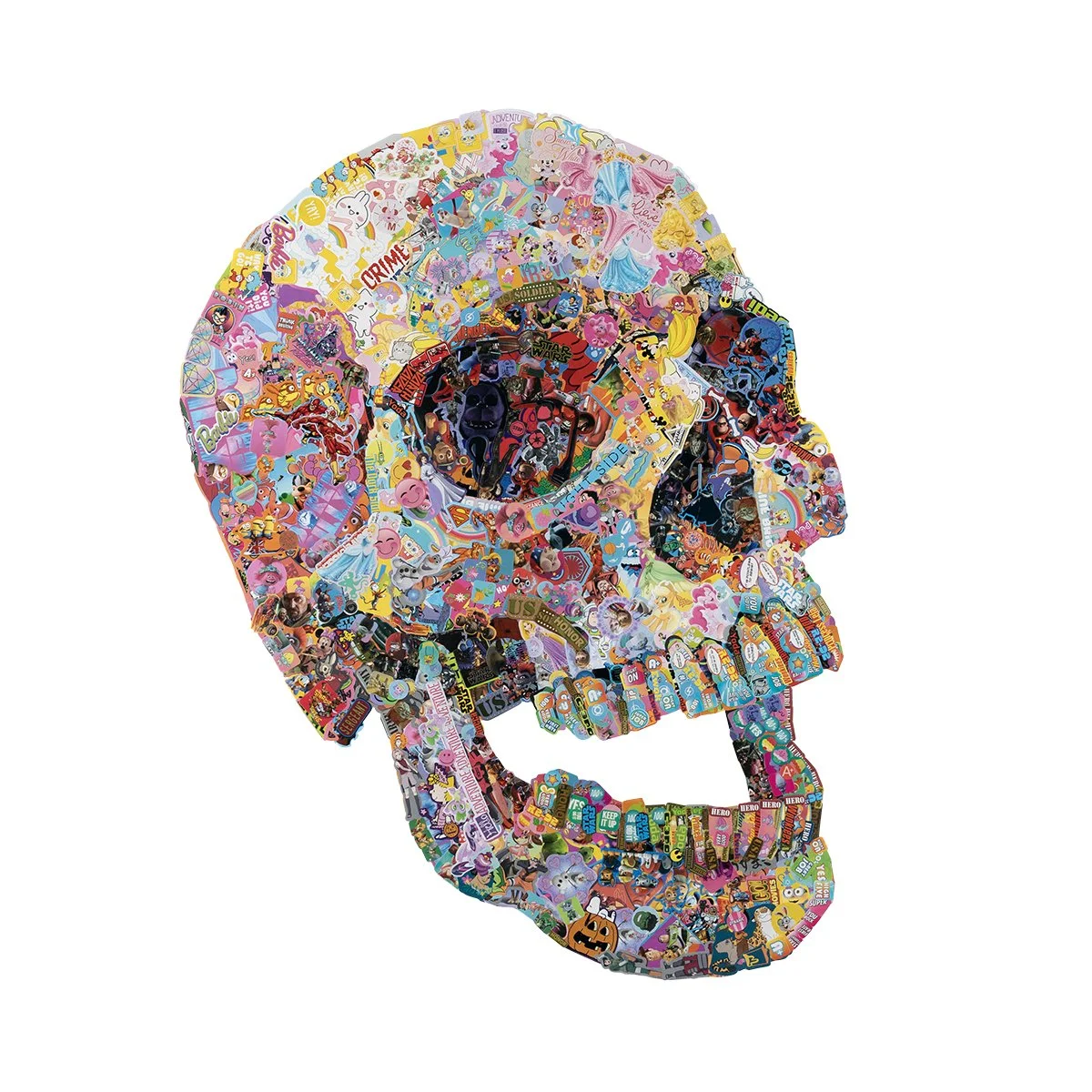
Lauging/Screaming
stickers and acrylic on panel, 24 × 24, 2025
Part I of a trilogy in progress, representing the cognitive dissonance of the current moment in America
![[detail]](https://images.squarespace-cdn.com/content/v1/54988796e4b0fde326987095/1759260255321-DYLI1VZKXMD1ZG0CHU1E/LaughingScreamingDETAIL.jpg)
of America: Bachman's Warbler
stickers & acrylic on panel, 36 x 48 in., 2024
of America is an intentionally unfinished sentence. It questions what defines being an American today and how it impacts the rest of the world.
Inspired by a plate from John James Audubon’s The Birds of America, the Bachman's Warbler was listed as extinct in 2023 (though there had been no confirmed sighting since 1988).
When I started this series in 2018 I was interested in exploring the human impact on the natural world and I liked the contrast of these familiar and beautiful images with the modern pop culture noise of the stickers I used to create them.
It says so much about our culture that many of us can instantly identify the characters from movies & TV shows that populate children's stickers, but aren't nearly as familiar with the nature that surround us.
Now, however, these works resonate on an additional level as they connect to the history of both Black people and women in America.
Recently organizations have begun distancing themselves from the Audubon name as he was both a keeper of enslaved people and an opponent of abolition. In addition this specific bird was named after John Bachman, a vocal supporter of slavery.
The art itself featured the uncredited work of a woman. The background plant is a Franklina tree painted by Maria Martin, John Bachman's sister-in-law and one the first female natural history illustrators.
I use commercially produced stickers to represent the cacophony of our modern American culture. We’re constantly bombarded with images and information and rather than feeling more informed and connected, it seems we’re ever more confused and isolated. My goal is to organize this noise into recognizable signals – ones that illuminate the things we should be prioritizing when we’re so easily distracted by the spectacle of our society.


of America: Ivory-billed Woodpecker
stickers & acrylic on panel, 36 x 48 in., 2023
of America is an intentionally unfinished sentence. It questions what defines being an American today and how it impacts the rest of the world.
Inspired by a plate from John James Audubon’s seminal Birds of America, the Ivory-billed Woodpecker is cipher. It is may or may not be extinct, an ambiguity that exists because there are periodic Bigfoot-like sightings of this elusive bird. However the last definitive sighting was in the US was in 1944. One of the largest woodpeckers in the world, the population of this species was devastated in the late 19th century due to habitat destruction and hunting. Because many hold onto hope that this bird still exists it’s status remains in limbo, while in this year alone 21 other species are removed from the endangered list (and are now considered extinct) by the US Fish and Wildlife Service.
I use commercially produced stickers to represent the cacophony of our modern American culture. We’re constantly bombarded with images and information and rather than feeling more informed and connected, it seems we’re ever more confused and isolated. My goal is to organize this noise into recognizable signals – ones that illuminate the things we should be prioritizing when we’re so easily distracted by the spectacle of our society.


Trust Building/s: Empatía
Collaborative mural created with artist Alfonso Perez Acosta in partnership with Mending Walls & One Small Step (a StoryCorps project). Completed October 2025 in Richmond, Virginia.
Trust Building/s is a four-part collaborative community mural project about the power of interdependence & intersectionality inspired by Alfonso & Noah’s experience working together on the 2020 Mending Walls mural Together We Rise.
Each mural in this series represents one of four pillars of trust: Consistency, Reliability, Honesty & Empathy and features real people who have had conversions across divides as part of the One Small Step project.
For this mural the artists based their work on a conversation that Afonso himself had with Wayne Dementi. Wayne has a long family history with Richmond, Virginia whereas Alfonso immigrated recently from Cali, Colombia.
Working with photographer Katrina Hecksher Jones, Wayne & Alfonso performed a series of trust building poses together and then had a follow-up conversation about their experiences together and what the term EMPATHY/EMPATÍA means to them. The documentation of this interaction became the source material for this mural.


Trust Building/s: Reliability
Collaborative mural created with artist Alfonso Perez Acosta in partnership with Mending Walls & One Small Step (a StoryCorps project). Completed May 2025 in Richmond, Virginia.
Trust Building/s is a four-part collaborative community mural project about the power of interdependence & intersectionality inspired by Alfonso & Noah’s experience working together on the 2020 Mending Walls mural Together We Rise.
Each mural in this series represents one of four pillars of trust: Consistency, Reliability, Honesty & Empathy and features real people who have had conversions across divides as part of the One Small Step project.
For this mural Acosta & Scalin worked with Kate Johnston and Torski Dobson-Arnold whose 2024 conversation created a deep friendship between these two women of very different faith backgrounds.
Working with photographer Katrina Hecksher Jones, the artists had Kate & Torski perform a series of trust building poses together and then have a follow-up conversation about their experiences together and what the term reliability means to them. The documentation of this interaction became the source material for this mural.
video by 19Red


Perfect Dream Home
acrylic on panel, 24 × 24 in., 2025
The naive packaging of mid-century dime store toys provides look at how social norms were crafted through childhood consumption that formed the culture into which I was born in the early 70s.

Teen Age Boy
acrylic on panel, 24 × 24 in., 2025
The naive packaging of mid-century dime store toys provides look at how social norms were crafted through childhood consumption that formed the culture into which I was born in the early 70s.

We're Doomed
stickers on panel, 12 × 12 in., 2025

![[detail]](https://images.squarespace-cdn.com/content/v1/54988796e4b0fde326987095/1762187123333-2T2PWY1CPPQWXR9SZZDK/WereDoomedDetail1.jpg)
Touch
stickers on panel, 12 × 12 in, 2025


Carry That Weight
stickers on panel, 12 × 12 in., 2025


Puppets
stickers on panel, 12 x 12 in., 2024


Are We Not Men?
stickers on panel, 12 x 12 in., 2024
The band DEVO was formed in the wake of the Kent State massacre by a group of art students at Kent State University who were creating work around the idea of the de-evolution of American culture/society.
Their music, which is generally classified as new wave really comes more from the punk world with its sharp critique of American culture through satire. Q: Are We Not Men A: We Are Devo is their first album, which was released in 1978 and it includes their sardonic take on the Rolling Stones, I Can't Get No (Satisfaction).
As with my other sticker pieces that reference historical moments & objects, this piece is about revisiting the relevance of their message in the modern moment. Created from corporate pop culture images that saturate our current world, and the blithe feel good statements of teachers' motivational stickers, it's a reminder that what we're dealing with right now is not new, but we must sort through the noise to find the information that will help us move forward.


Pulse (Revisited): Glock
acrylic, match burn carbon on wood panel, 30 x 40 in. 2016/2023
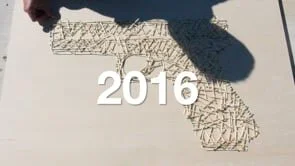
In 2016 I created a series of effigies of guns used in mass shootings by burning matches on wooden panels. The end result was an indelible mark on the wood, much like the indelible mark that overwhelming gun violence has on American society.
In 2023 I decided to revisit these works, by painting on top of them. Based on my Anatomy of War sculptures from 2015/2016, I have dissected the gun revealing its internal organs. This is the fragile anatomy of the humans that are on both ends of that weapon. The life of the person holding the gun and the person the gun is aimed at are both consumed by this seemingly endless cycle of violence.
What do we prioritize in our culture? What matters to us most to us? The flesh and blood of our families and neighbors or the cold hard metal of a tool designed for killing?


Pulse (Revisited): MCX Altar
match burn and acrylic on panels, school desk, pencils, note cards, 92 x 70 x 24 in., 2023
What are we willing to sacrifice for our ideals?
Too often the discussion about guns in America gets wrapped up in emotional terms around the 2nd Amendment. With this piece I want to bring the discussion back to an individual human level.
In 2016 I began addressing the indelible stain that gun violence has made on American society by creating a match burn effigy of the weapon used in the Pulse nightclub shooting in Orlando, FL.
Frustrated by the increasing ideological polarization of our country and lack of nuanced conversation about gun violence since then I have revisited this work by painting on top of it.
I have dissected the gun revealing its internal organs. This is the fragile anatomy of the humans that are on both ends of the weapon.
With the addition of the school desk I’m asking you to come closer and respond to this image as a child might.
Paper and pencils are provided for viewers to share their own thoughts and feelings about where we go from here.


Fashion Face: Masks Included
stickers and acrylic on panel, 36 x 48 in., 2023
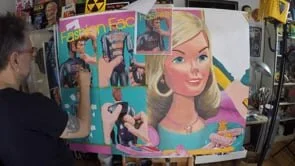
Fueled by overwhelming anxiety and depression, which I developed during the height of the COVID-19 pandemic, I tapped into my obsessive ruminations and a need for nostalgic distraction to create works that mine my childhood joys and traumas and overlay them with the fears of the modern era.

![[detail]](https://images.squarespace-cdn.com/content/v1/54988796e4b0fde326987095/1686064904743-RC1S68Q16PQS9412UY88/FashionFaceFinalDETAIL1.jpg)
![[detail]](https://images.squarespace-cdn.com/content/v1/54988796e4b0fde326987095/1686064904999-KZYB7CMGIY621NLOBCRX/FashionFaceFinalDETAIL2.jpg)
![[detail]](https://images.squarespace-cdn.com/content/v1/54988796e4b0fde326987095/1686064905922-D3M95NUF6QJ4491L92AU/FashionFaceFinalDETAIL3.jpg)
He Almost Comes Alive
stickers and acrylic on panel, 36 x 48 in., 2023
Fueled by overwhelming anxiety and depression, which I developed during the height of the COVID-19 pandemic, I tapped into my obsessive ruminations and a need for nostalgic distraction to create works that mine my childhood joys and traumas and overlay them with the fears of the modern era. These densely layered works feature brightly colored pop culture imagery competing for attention and hinting at the darkness just below the surface.


Funky Wonder
acrylic on panel, 18 x 24in., 2024

Secret Scamp
acrylic on panel, 18 x 24in., 2024

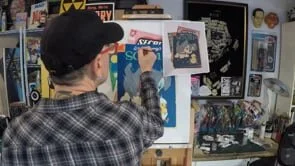
Titans
acrylic on panel, 18 x 24 in., 2023
A meditation on nostalgia and the distortion of memory over time.
Based on the Teen Titans cover artwork of artist George Perez.

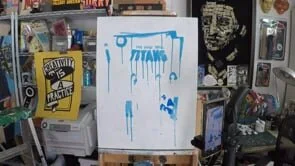
Wind-Up Baby
acrylic on panel, 18x24, 2024
We are packaged and labeled from birth. How do we become aware of the system in which we've been born and fight back against it to forge a better future?

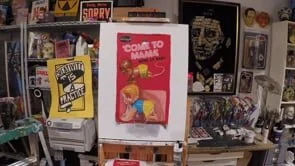
Babies
acrylic on panel, 18x24, 2023
We are packaged and labeled from birth. How do we become aware of the system in which we've been born and fight back against it to forge our own paths?

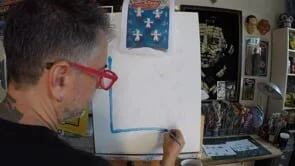
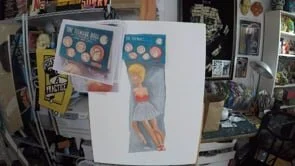
Teenage Doll
acrylic on panel, 18x24, 2023
How are our personalities packaged and sold to us? An investigation of our plastic world through vintage toys.

GenERAtions
stickers and acrylic, 24 x 36in., 2023
Created for Artists4ERA exhibition at Virginia Museum of History and Culture, February 17–April 2, 2023
My mother brought me to ERA marches as a child. I remember being so excited to participate and also so frustrated to discover that our actions didn't turn into immediate change. It was a sobering lesson, but one that helped me understand that the real work of activism is an incremental process and that it's important to keep standing up for what's right no matter what.
For this piece I wanted to bridge the gap between my own childhood and that of my daughter who is now 9. I see my daughter emerging already as a strong, independent girl who has an extremely well-defined sense of what is right and wrong. The children of her generation are inheriting this world and we have an obligation to do our best to make it a better place for them.


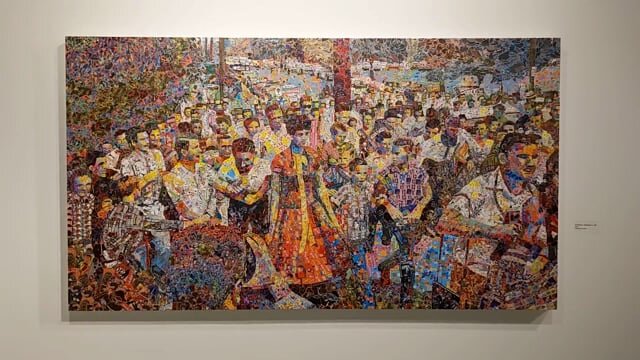
of America: September 4, 1957
stickers on panel, 70 x 40 in., 2021
based on a photograph by Don Sturkey, in the collection of the University of North Carolina at Chapel Hill Library
Growing up in Virginia in the 1970s I was completely unaware of the history of the public educational system in which I was enrolled. Only a few decades earlier young activists like Dorothy Counts took the brunt of abuse by racist community members who resisted school integration in North Carolina. I wasn’t introduced to the powerful images of her difficult journey to school until just a few years ago and was so moved by her stoicism and bravery in the face of the sheer mass of resistance. It feels important to revisit this image today, in light of the continued need to uproot the racist foundations of America. As some people still try to erase or whitewash our unpleasant past it's ever more important to look closely at inspiring moments of resistance like this one.
I use commercially produced stickers to represent the cacophony of our modern American culture. We’re constantly bombarded with images and information and rather than feeling more informed and connected, it seems we’re ever more confused and isolated. My goal is to organize this noise into recognizable signals – ones that illuminate the things we should be prioritizing when we’re so easily distracted by the spectacle of our society.
An excellent article about the original photo can be read in the Charlotte Observer HERE.


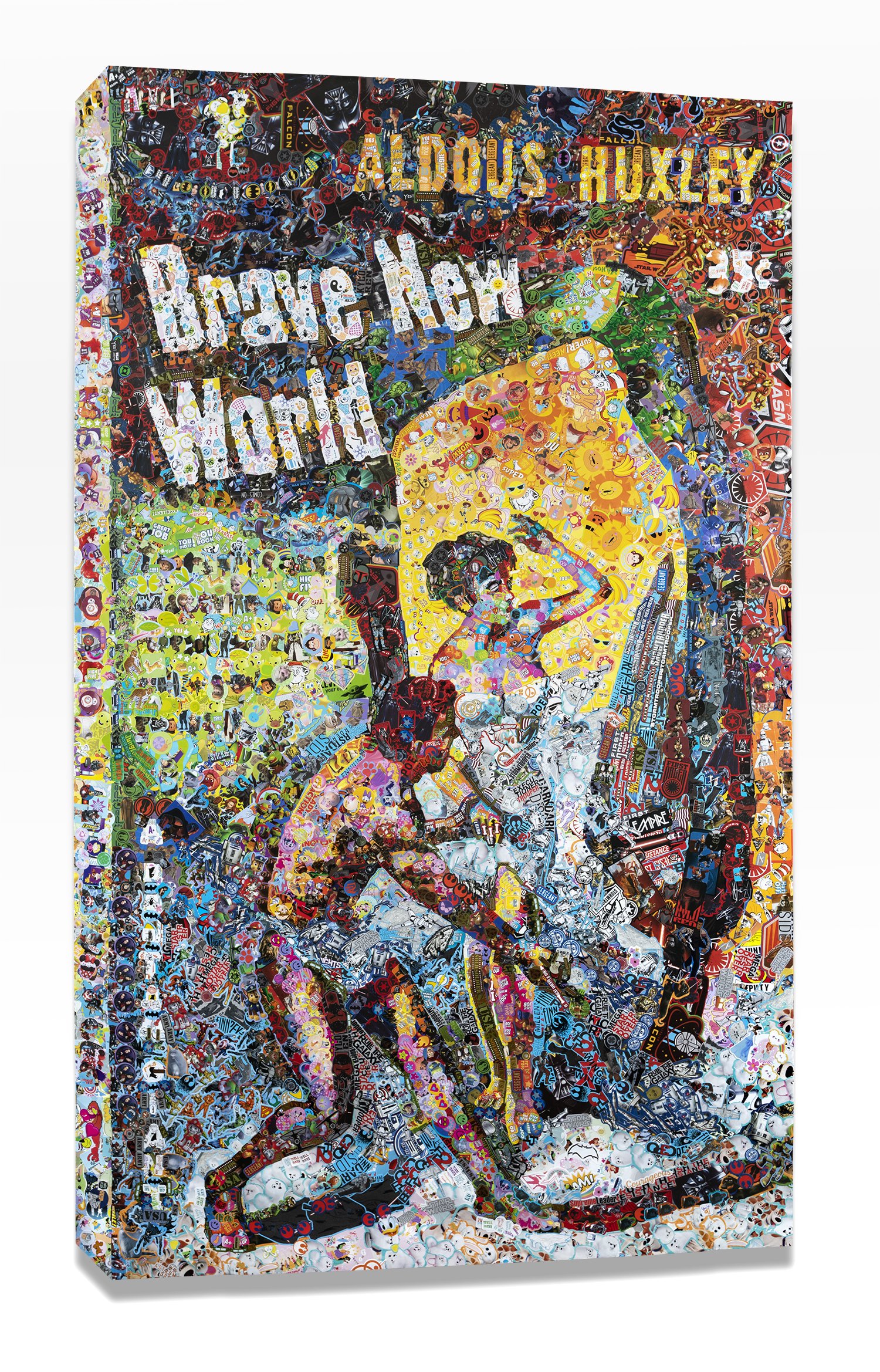
Soma
stickers on shaped panel, 28 x 48 in., 2022
I'm a passionate reader, but I feel like in our current age of distraction the time it takes to discover what's contained in a book requires an even greater effort. I'm particularly drawn to old mass market paperbacks as they were the books I grew up reading. Designed for quick consumption, they're cheaply made and feature eye-catching art. Their cracked spines and yellowing pages are the opposite of the pristine hardcover books that I often end up reading now.
Brave New World has a clear message about the dangers of how we allow ourselves to be distracted from reality. I feel myself wanting to pull ever further away from endless scroll of modern social media, even as it provides a lifeline of connection to people who like and want to support my art. But the dark side, the damaging effects it has on our psyche, on my psyche, is problematic to say the least.
My sticker work is about grappling with that dissonance. It's about taking the pop culture images printed on stickers (pop culture that I admit I readily consume as well) and turning it into reminders of what we need to prioritize. In this case asking what is the Soma (the mind numbing drug of Brave New World) that we're consuming today and how do we see through its veil?


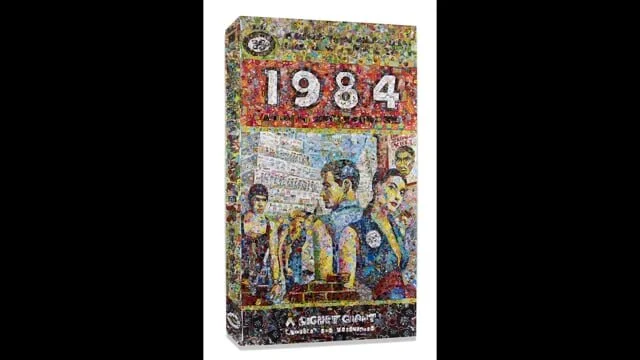
For The Love of Big Brother
stickers on panel, 28 x 48 in., 2021
Made in the wake of the 2020 election and amidst the ongoing claims of fraud and the resulting insurrection of the Capitol. Like many people, I've been thinking a lot lately about 1984 and its dystopian vision of a future of misinformation, ever-present surveillance, and a totalitarian government bent on absolute control over hearts and minds.
As I watched people believe wholeheartedly in lies that had been manifest through doublespeak and turn that belief into violent action the last words of the book resonated more than ever before: "He had won the victory over himself. He loved Big Brother."
The book makes it clear: “Who controls the past controls the future. Who controls the present controls the past.” How will we be able to move forward as a country if a large portion of the populace has embraced their love of authoritarian rule under the banner of false history and rejected democracy in the process.
Is this the last popular election we hold before we collapse as a society or are we going to be able to reject being told that 2+2=5?
I use commercially produced stickers to represent the cacophony of our modern American culture. We’re constantly bombarded with images and information and rather than feeling more informed and connected, it seems we’re ever more confused and isolated. My goal is to organize this noise into recognizable signals – ones that illuminate the things we should be prioritizing when we’re so easily distracted by the spectacle of our society.


Your Favorite Monster
stickers and acrylic on panel, 36 x 48 in, 2022
Imagery from commercial packaging and consumer items from my childhood are an externalization of the deep anxiety and overwhelming rumination that I experienced after two years of living in isolation during the a pandemic.

![[detail]](https://images.squarespace-cdn.com/content/v1/54988796e4b0fde326987095/1655751625689-KQXFDRLGVC6RRDJ1B2KJ/YourFavoriteMonsterDETAIL.jpg)
![[detail]](https://images.squarespace-cdn.com/content/v1/54988796e4b0fde326987095/1655751624765-DRXMW1F55UETDQ0P1VNB/YourFavoriteMonsterDETAIL2.jpg)
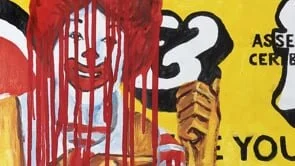
Solitude
stickers and acrylic on panel, 36 x 48 in, 2021
Imagery from commercial packaging and consumer items from my childhood represent the overwhelming thoughts filling my head after two years of living through a pandemic.


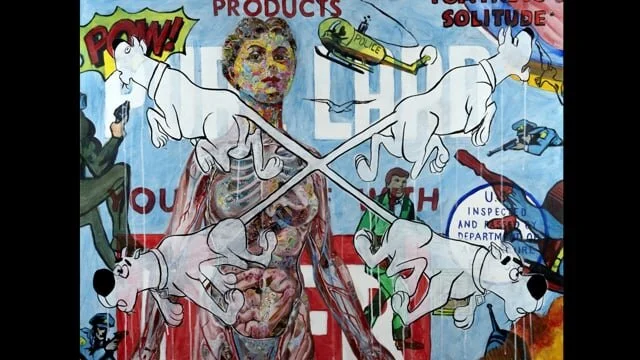
Surrender
stickers and acrylic on panel, 36 x 48 in, 2021
The messages of popular culture that we grow up with help shape our worldview. I feel lucky that I lived through the relatively progressive 70s and had parents that encouraged activism. But still, outdated messages about violence, women, police, and race were ubiquitous and normalized. I've been thinking a lot about those messages as I watch my daughter encounter the commercialized world and think about the toxicity that still lingers. It feels like a lot of progress is being made right now, which is exciting to consider, but so much of it is built on the horrible things that are continuing to happen – things that we, as a society, should have moved past decades, if not centuries ago.


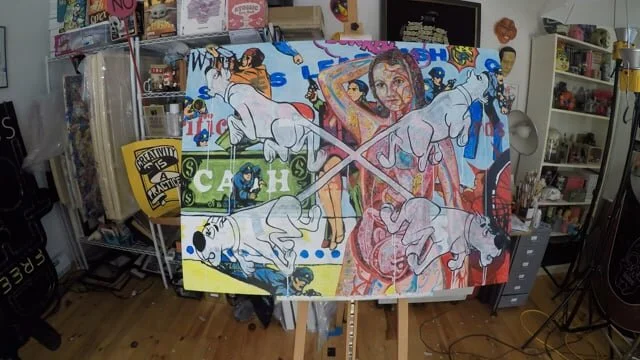
Realistic
acrylic on panel, 24 x 36 in., 2021
What do we retain and remember over time? A continuation of my series based on memory and nostalgia in the wake of a pandemic and its effects on my own mental health.

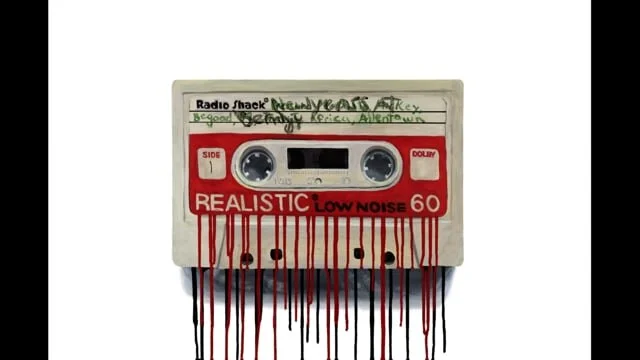
Fresh Rock
acrylic on panel, 24 x 36 in., 2021
What do we retain and remember over time? A continuation of my series based on memory and nostalgia in the wake of a pandemic and its effects on my own mental health.

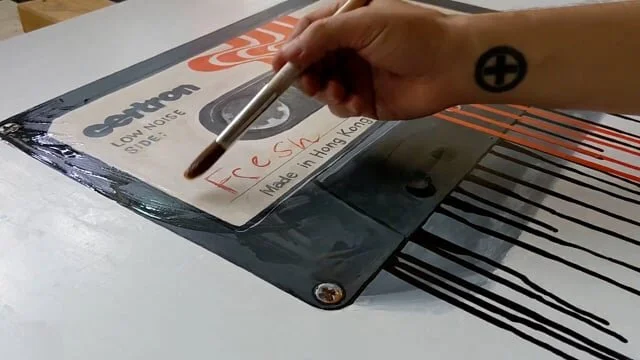
Horror Film
18 x 24 in. acrylic on panel. 2021
An experimental still life based on the last remaining VHS videotapes from my youth. A meditation on the distortions of time and the effects on mental health after of over a year of isolation.

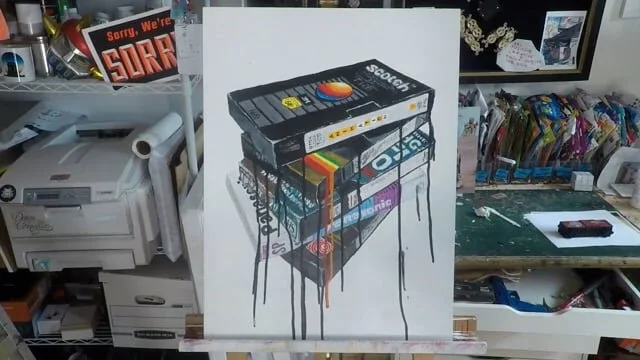
You Grow So Fast
acrylic, stickers, vintage paper goods on panel, 30 x 40 in. 2021
An exploration of the way that popular culture shaped my sense of self and how that is resonating as I navigate my own mental health struggles during second year of the global pandemic.


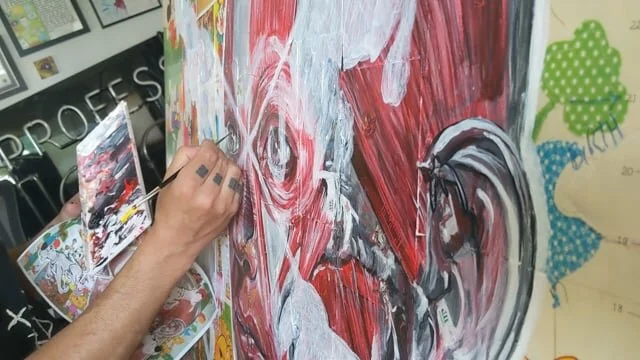
Atomic
acrylic on panel, 30 x 40 in., 2021
Existential dread was the undercurrent of growing up in Generation X and I am only realizing now how much it's colored my worldview today.


The Visible Heart
acrylic on panel, 30 x 40 in., 2021
The layers of the detritus of a life, viewed through the lens of the anxiety – anxiety that has been amplified by more than a year of living through a pandemic.


of America: Passenger Pigeon
stickers and acrylic on panel, 36 x 48in., 2021
of America is an intentionally unfinished sentence. It questions what defines being an American today and how it impacts the rest of the world.
Inspired by a plate from John James Audubon’s seminal Birds of America, the Passenger Pigeon was at one point one of the most common birds in America, making up an estimated 25-40 percent of all birds in the country. While prosperous at the time it was documented by Audubon, it went extinct over the course of just a few decades due to mass destruction by humans. The last living Passenger Pigeon, named Martha died at 1 p.m., on September 1, 1914 at age 29, in the Cincinnati Zoological Garden. While it couldn’t be saved by laws that were enacted to protect it, the plight of the Passenger Pigeon served to bolster public support of stronger conservation efforts for endangered species.
I use commercially produced stickers to represent the cacophony of our modern American culture. We’re constantly bombarded with images and information and rather than feeling more informed and connected, it seems we’re ever more confused and isolated. My goal is to organize this noise into recognizable signals – ones that illuminate the things we should be prioritizing when we’re so easily distracted by the spectacle of our society.


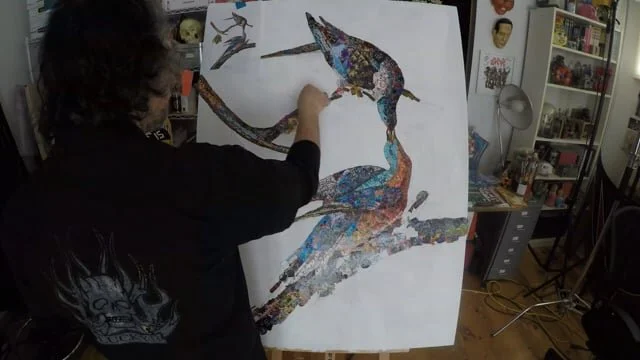
#Still_Life
stickers and acrylic on panel, 20 x 20 in., 2021
The never ending demands of social media and the artifice that it presents of other people’s lives has a devastating effect on mental health. My former love-hate relationship with social media now leans more towards hate, but I feel obliged to stay, fearing I will become forgotten/obsolete without a presence online.


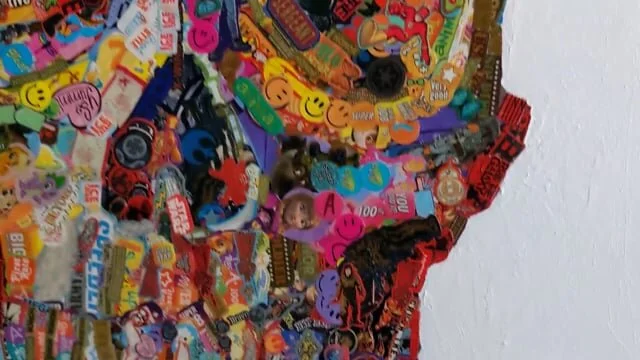
Hitchhiker
stickers & acrylic on panel, 18 x 24 in., 2021
I use commercially produced stickers to represent the cacophony of our modern American culture. We’re constantly bombarded with images and information and rather than feeling more informed and connected, it seems we’re ever more confused and isolated. My goal is to organize this noise into recognizable signals – ones that illuminate the things we should be prioritizing when we’re so easily distracted by the spectacle of our society.


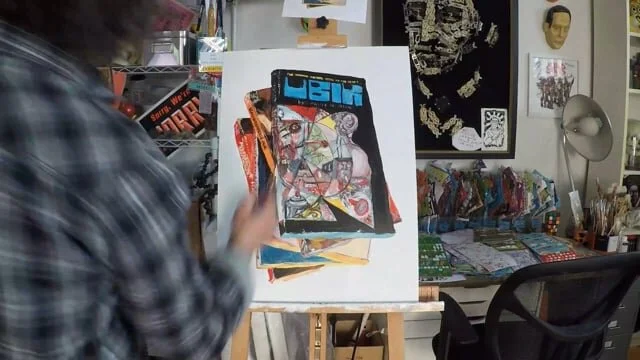
UBIK
stickers & acrylic on panel, 18 x 24 in., 2021
The first in a new experimental series.
I use commercially produced stickers to represent the cacophony of our modern American culture. We’re constantly bombarded with images and information and rather than feeling more informed and connected, it seems we’re ever more confused and isolated. My goal is to organize this noise into recognizable signals – ones that illuminate the things we should be prioritizing when we’re so easily distracted by the spectacle of our society.


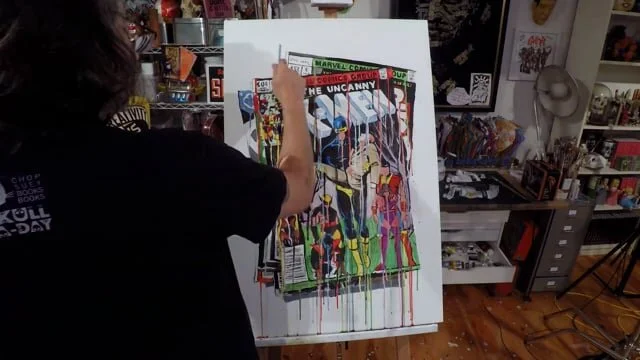
Uncanny
24 x 36 in., acrylic on panel, 2021
An experimental still life based on a childhood comic book collection. A meditation on the distortions of time and the effects on mental health after of over a year of isolation.
Based on the X-Men cover artwork of artist Paul Smith.

The Revolution Will Not Be Televised
stickers on television, 14.5 x 15.5 x 14 in., 2021
I use commercially produced stickers to represent the cacophony of our modern American culture. We’re constantly bombarded with images and information and rather than feeling more informed and connected, it seems we’re ever more confused and isolated. My goal is to organize this noise into recognizable signals – ones that illuminate the things we should be prioritizing when we’re so easily distracted by the spectacle of our society.


Wildfire
Temporary Lego installation, single channel projection.
Created for Micro Galleries: Project / Forward: 2047, projection festival, December 11-13, 2020
Our future is built on the past, but to successfully move forward we need to know what really happened in our history. Edmonia Lewis was the first Black/Ojibwe artist to achieve international renown in the late 19th century, but by the 20th century she was all but forgotten. Built from a common children’s material her portrait was filmed being dismantled one piece at a time – the way that women, people of color, and indigenous people have been systematically erased from history. When it is run in reverse, however, the final product shows how we can resurrect and recreate their stories to inform a more inclusive and diverse future that recognizes the inherent value of all people.


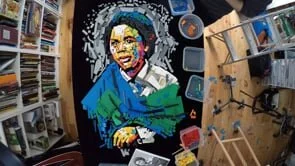
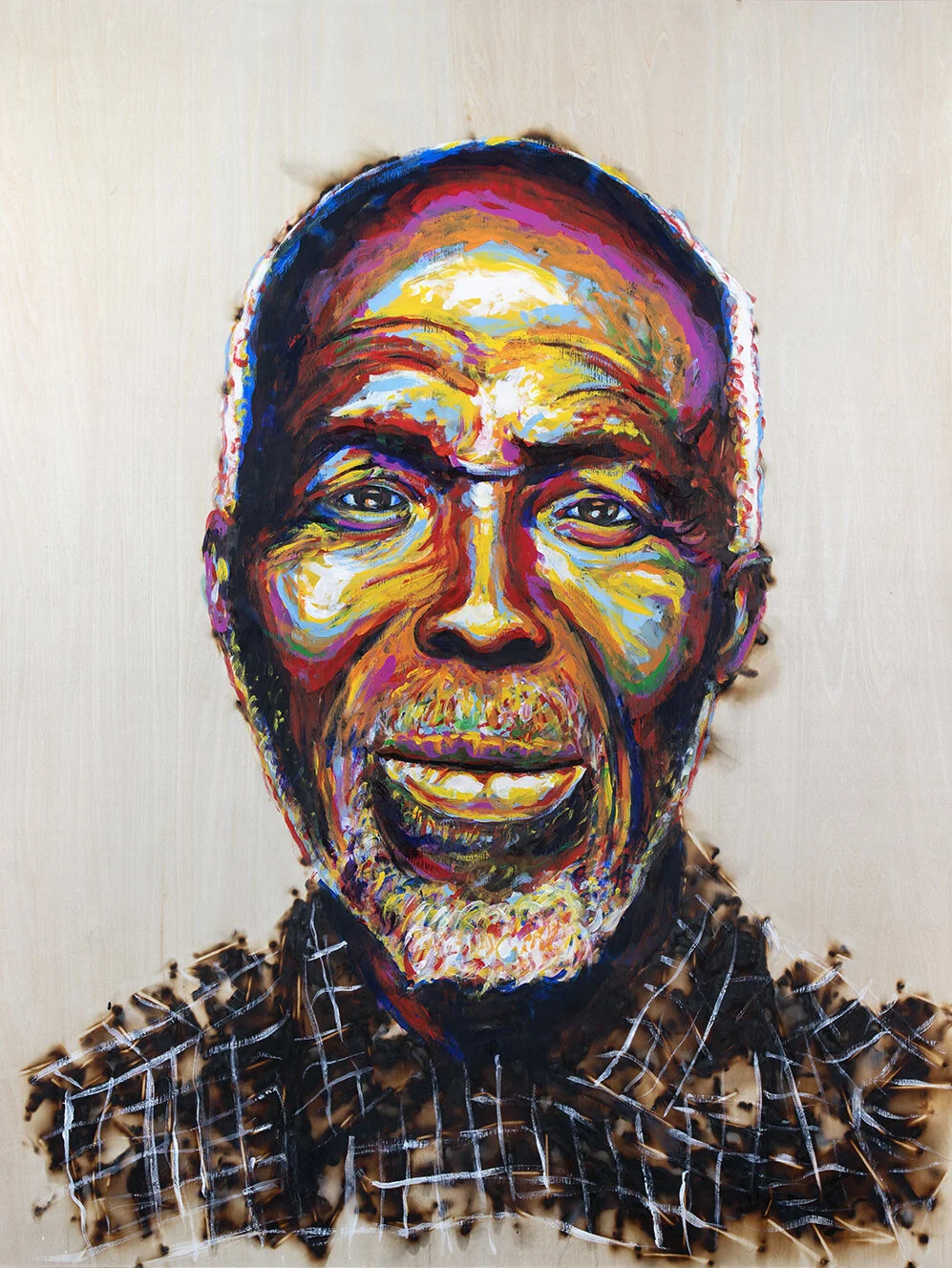
The Fire Next Time: Cudjo Lewis
Cudjo Lewis (Oluale Kossola) c. 1841 – July 17, 1935
carbon & acrylic on wood panel, 30 x 40 in., 2020
Born Oluale Kossola, Cudjo Lewis was one of the last known survivors of the Atlantic Slave Trade. In 1860 he was brought to Mobile, Alabama with over 100 other African captives on a ship called the Clotilda, 50 years after the importation of slaves into the United States had been banned by Congress.
Following the abolition of slavery, Lewis, along with the other freed survivors of the Clotilda enslavement raised money to buy land and developed an independent all-Black community in Alabama called Africatown, which still exists today.
Lewis lived into his 90s and raised six-children with his wife Abile, who was also a survivor of the Clotilda. In his later years Lewis became a storyteller, helping many historians and authors to preserve the history of the enslaved Africans of the Clotilda, including Zora Neal Hurston, who wrote the book Barracoon based on interviews with him. Barracoon remained unpublished until 2018, which is when I first saw this image of Lewis and knew that I would someday make his portrait.
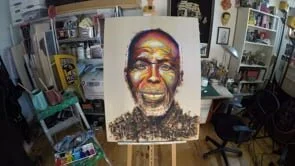
The image is initially created using lit matches, to make an indelible burn on the wooden panel beneath to represent the rawness, intensity and violence of this history. The portrait is then recreated in vibrant colors to show the intensity of the human spirit of the subject and give a holistic representation of the person, rather than defining them only by the pain & struggles they experienced.
The Fire Next Time series, named after the James Baldwin book published in 1963, is about the history of Black people in America, the injustices they have fought against over the past 400 years, and the ongoing fight for civil rights and true justice for all.


The Fire Next Time: Olivia Hooker
Oliva Hooker, February 12, 1915 – November 21, 2018
carbon & acrylic on wood panel, 30 x 40 in., 2020
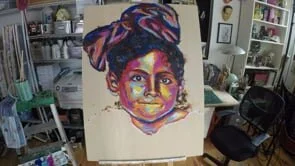
Dr. Olivia Hooker was a psychologist and professor, as well as the first Black woman to enter the U.S. Coast Guard. She was also one of the last surviving witnesses of the Tulsa Race Massacre.
This piece was inspired by a photograph of Dr. Hooker at age 6, which was taken in 1921, the same year as the brutal destruction of the Black Wall Street, by racist white residents of Tulsa.
The image is initially created using lit matches, to make an indelible burn on the wooden panel beneath to represent the rawness, intensity and violence of this history. The portrait is then recreated in vibrant colors to show the intensity of the human spirit of the subject and give a holistic representation of the person, rather than defining her only by the pain & struggles she experienced.
The Fire Next Time series, named after the James Baldwin book published in 1963, is about the history of Black people in America, the injustices they have fought against over the past 400 years, and the ongoing fight for civil rights and true justice for all.


of America: Huddled Masses (series)
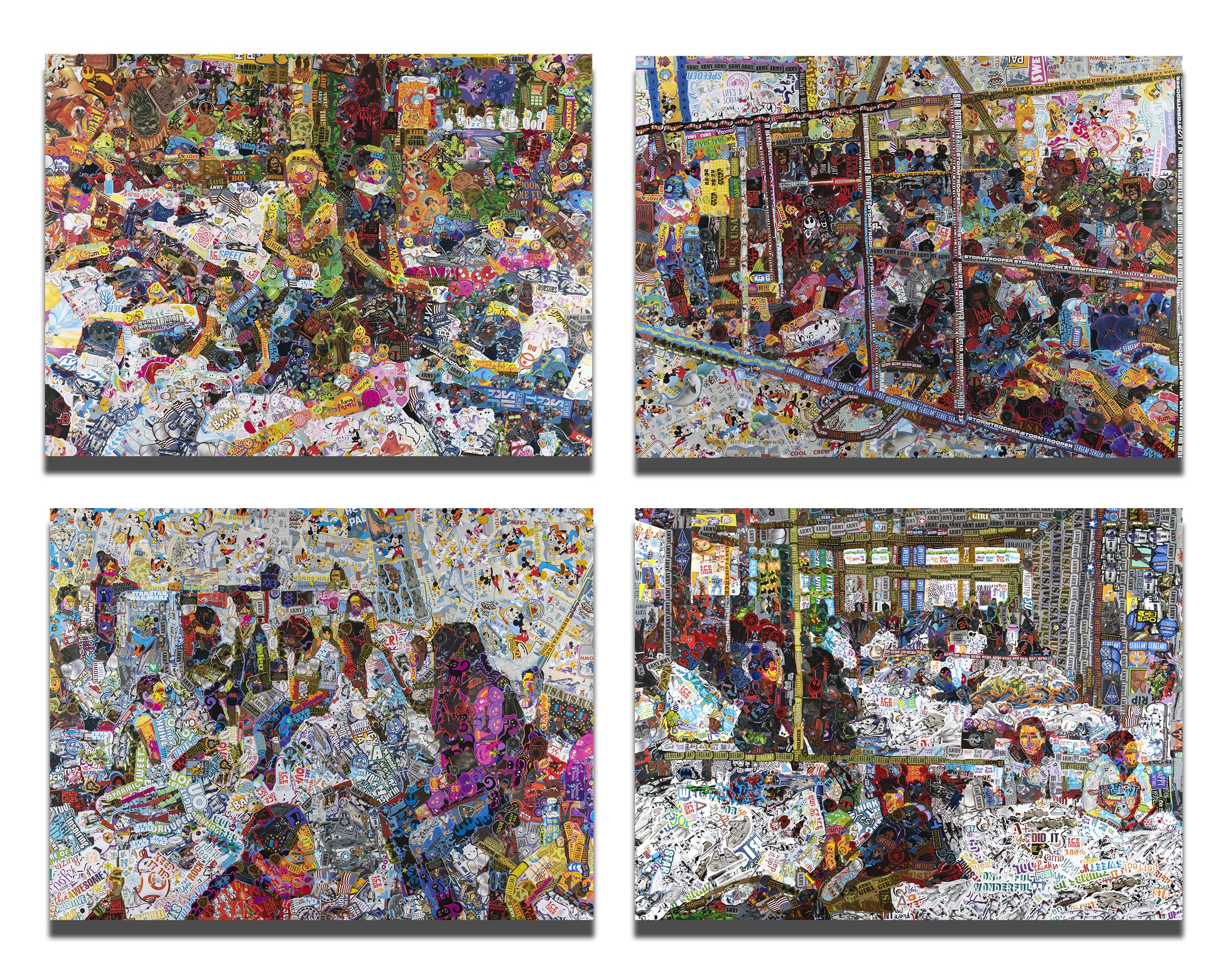
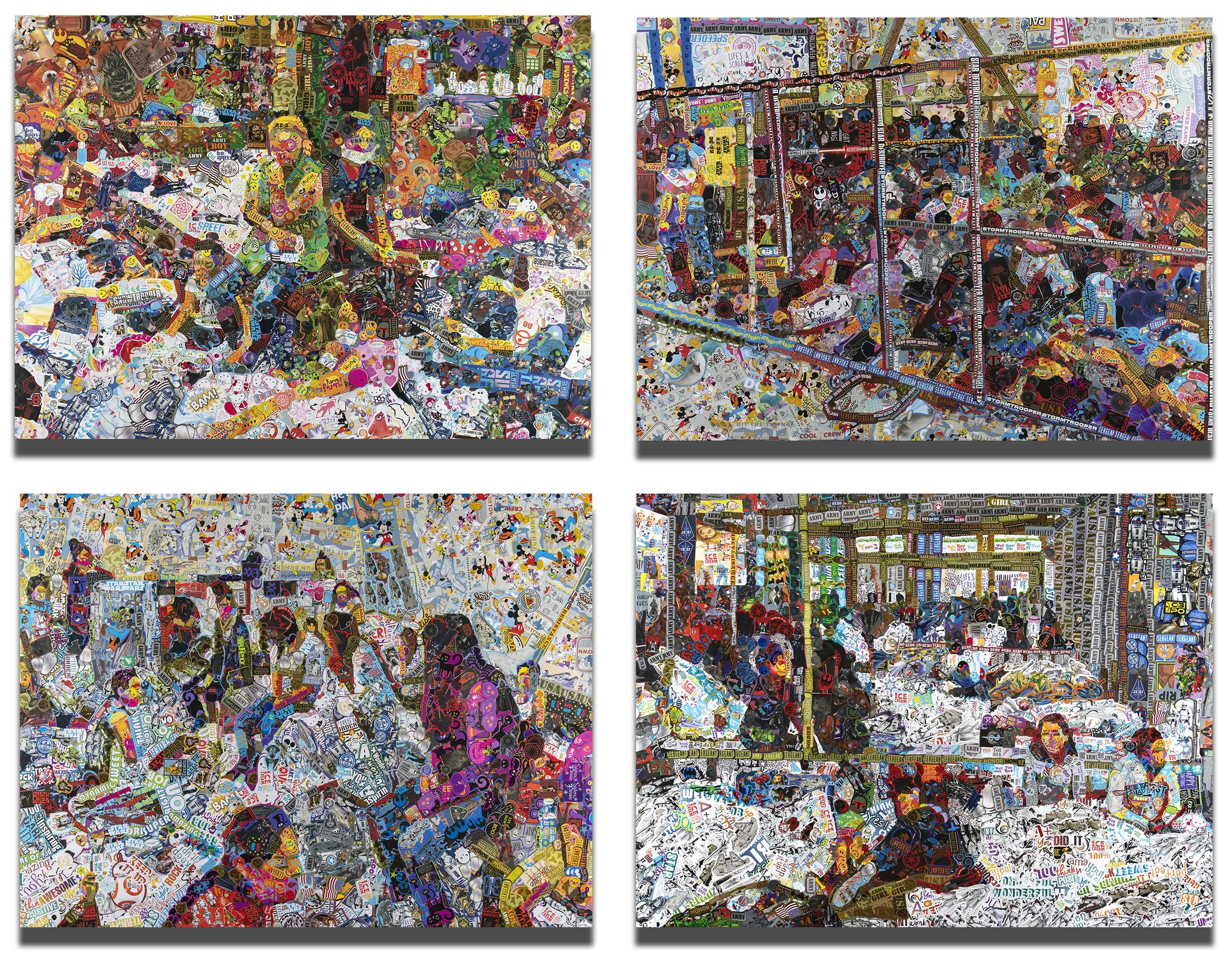
"Huddled Masses I–IV”, stickers on panel, 4 - 18 x 24 in pieces, 2020
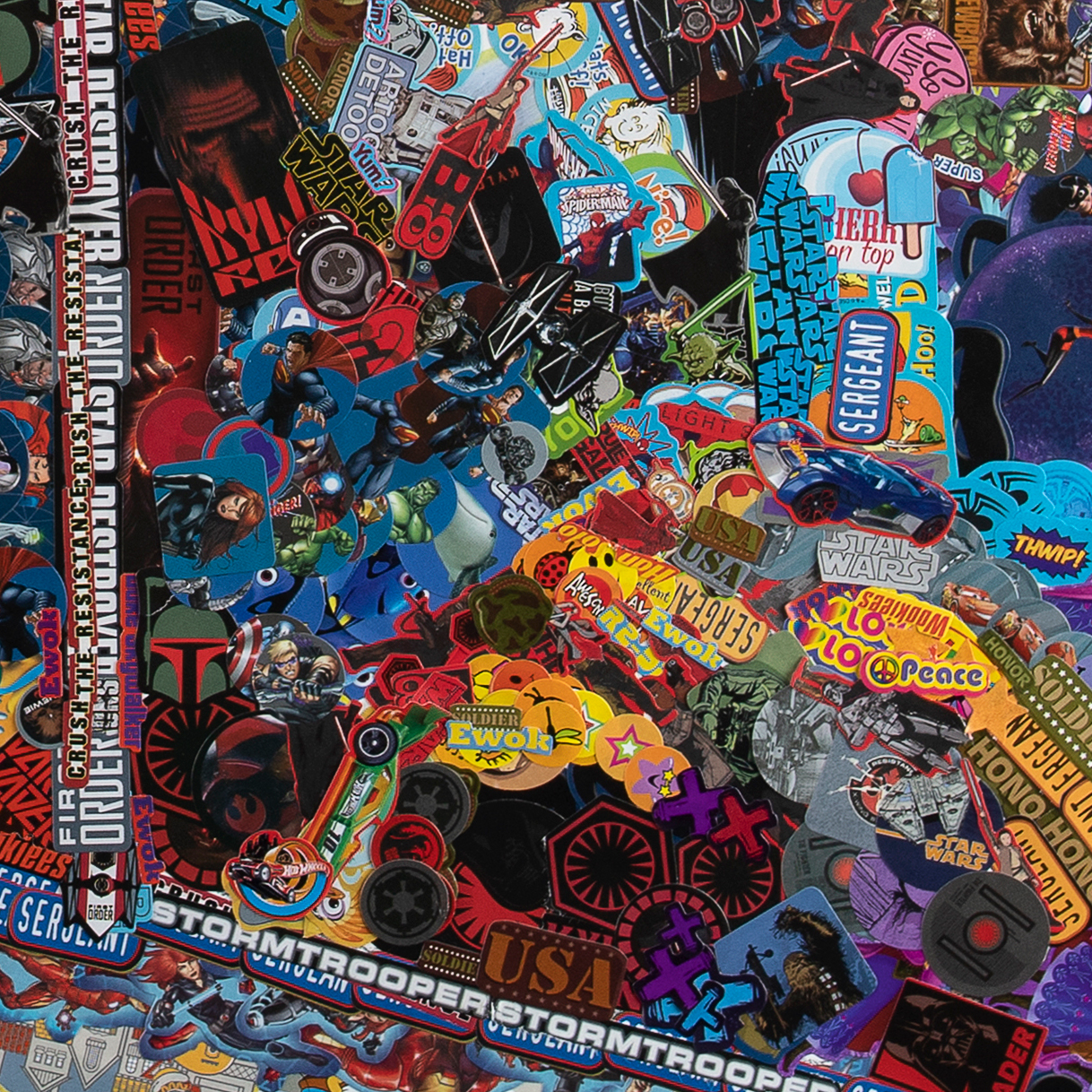
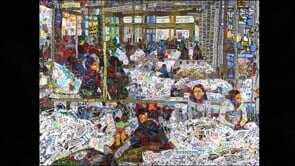
This series is based on the images that were published in the US Department of Homeland Security report on overcrowding and prolonged detention at Customs and Border Protection facilities in Texas released to the public in July of 2019. These are some of the most difficult pieces I’ve created using stickers both from a technical and emotional standpoint. When translating an image this way I have to study it intently, and I discover more and more detail within. Something I may have previously just casually glanced at is now investigated deeply and it becomes that much more real (and upsetting).
I use commercially produced stickers to represent the cacophony of our modern American culture. We’re constantly bombarded with images and information and rather than feeling more informed and connected, it seems we’re ever more confused and isolated. My goal is to organize this noise into recognizable signals – ones that illuminate the things we should be prioritizing when we’re so easily distracted by the spectacle of our society.
A portion of sales of these pieces will be donated to RACIES.




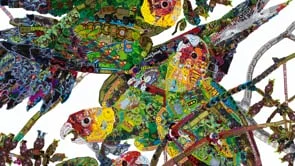
of America: Carolina Parakeet
stickers and acrylic on panel, 36 x 48in., 2019
Commissioned for Capital One’s collection.
of America is an intentionally unfinished sentence. It questions what defines being an American today and how it impacts the rest of the world.
Inspired by a plate from John James Audubon’s seminal Birds of America, the Carolina Parakeet (the only parrot species native to the eastern US) was once prosperous, but it went extinct in the years following the publication due to large scale destruction by humans.
I use commercially produced stickers to represent the cacophony of our modern American culture. We’re constantly bombarded with images and information and rather than feeling more informed and connected, it seems we’re ever more confused and isolated. My goal is to organize this noise into recognizable signals – ones that illuminate the things we should be prioritizing when we’re so easily distracted by the spectacle of our society.


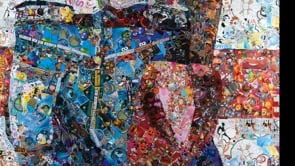
of America: Born
stickers on panel, 36 x 36 in., 2019
Bruce Springsteen’s Born In The USA (from the album of the same title) is possibly the most misunderstood song in history. While frequently used for jingoistic political rallies of the right, the song actually outlines a much darker vision of America, “Born down in a dead man town, The first kick I took was when I hit the ground,You end up like a dog that's been beat too much, Till you spend half your life just covering up”.
The image on the cover (photographed by Annie Liebowitz) shows Springsteen as the American everyman, but today a red cap (like the one seen in his pocket) now represents aggressive xenophobia & racism and the image of the flag similarly has been coopted to represent only a narrow view of American values, while people who protest the status quo and speak up for the marginalized are branded as unpatriotic.
I use commercially produced stickers to represent the cacophony of our modern American culture. We’re constantly bombarded with images and information and rather than feeling more informed and connected, it seems we’re more confused and separated. My goal is to organize this noise into a recognizable signal, one that can be a guidepost for us, when it feels like there are no good messages to be found. There are historical antecedents that give us an inspiring way forward if we can focus our attention on them and not be distracted by the spectacle.


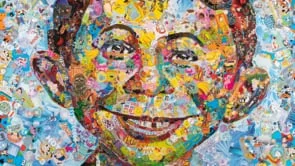
Of America: What, Me Worry?
stickers on panel, 24 x 36, 2019
Part of my ongoing series of America in which I use commercially produced stickers to represent the cacophony of our modern American culture and media. We’re constantly bombarded with images and information; and rather than feeling more informed and connected, it seems we’re more confused and separated than ever. My goal is to organize this noise into a recognizable signal, one that can be a guidepost for us when it feels like there are no good messages to be found. There are historical antecedents that give us an inspiring way forward, if we can focus our attention on them and not be distracted by the spectacle.


CTRL/Command
Commissioned by Spring/Break Art Show & Times Square Arts
for Times Square Immersive @ 2019 Spring Break Art Show
March 5–31, 2019, Father Duffy Square, Times Square, NYC
Curated by Dawne Langford
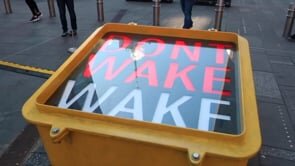
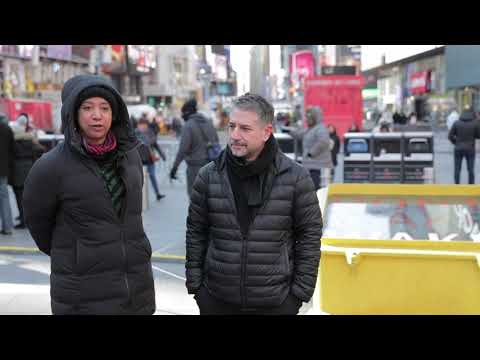
CTRL/Command (2019) riffs on the classic New York City icon of pedestrian traffic signals in an outlandishly oversized format. The colors blink from red to white, keeping with the traditional color coding seen on New York City’s text-based street crossing signals, which were installed in the 1930s and replaced with pictograms starting in 2000. Scalin replaces “WALK” and “DONT WALK” with new messages, “WAKE,” and, “DONT WAKE.” The work asks us to consider the commands and transactions that we passively encounter throughout the day via a constant flow of subliminally transmitted information, all while our data is collected, sometimes without our knowledge or consent. We provide and consume this information — our credit card numbers, tastes, spending habits, thoughts, ideas, locations, and ideologies — through digital and personal interactions.
Fabrication by Arthur Brill
Electronics by Bob Castelvecchi


Mending Walls: Together We Rise collaboration with Alfonso Pérez Acosta
Created for the Mending Walls project in collaboration with artist Alfonso Pérez Acosta, 2020
One of the tricky things about merging two artists' work is figuring out how to make the finished product feel like a complete whole and not two separate things overlaid or side-by-side. Alfonso had suggested a concept of two figures back to back, helping each other to stand up, which seemed like it would make a striking & clear image of what we felt was necessary for our community to do to make steps forward from our current moment. It made sense to have Alfonso make that image in his existing illustration style, which meant I needed to think about how my work could then interact with that image.
One thing we decided early on was that we wanted to include several messages from the current moment: "Black Lives Matter", so it was clear what the origin of this project was (and where we stood); "We Need To Talk", the motto of the Mending Walls Project and something we believe is necessary for compassion and empathy to be grown; and "Mi Casa Es Su Casa", a phrase that Alfonso suggested. What I love about that last phrase, is that it is well known enough by English speakers, to be easily understood, but it creates a more inclusive conversation with the immigrant communities that are also a part of our city, and who experience racist oppression as well. In addition, the sentiment of "my house is your house" seems a perfect response to the question of how we, as a culture, can think differently about the racial injustice that has been a part of America since its founding.
I am very inspired by the faded, historical painted advertising that is on many of the old buildings here in Richmond, Virginia and I liked the idea of translating these modern phrases into the vernacular of late 19th century advertising – essentially making them seem like something that was actually here all along. The Confederate statues that have recently been removed from our Monument Avenue came from the same era, a time when there was a serious effort made to erase the progress of African-Americans. Oddly enough the wall we ended up working on actually had a few "ghost ads" already on it, so the aesthetic fit in more than we could've imagined.
The final element of the ribbon was originally going to be something more akin to the stylized ribbon art I make with text on it. However in working on a mock-up of the mural I experimented with making the ribbon yellow, to contrast with the background color & other visual elements. At that moment the idea of it actually being a take on police caution tape came to me and the whole piece snapped together. Rather than "police line do not cross" the text is replaced with a small number of the names of Black people that have been murdered by police, including George Floyd, whose death sparked the most recent round of protests and Marcus-David Peters, who was a Richmond man, whose life was taken in 2018.
The finished mural is a story about the history that has led to where we are today, the conversations we need to be having right now, and the opportunity we have to move forward into a better future. It will require effort and we absolutely can't do it alone, but hopefully this piece offers a vision of how we might start to work on this together.


Micro Galleries collaboration with Ika Vantiani
stickers and acrylic on panel, 30 x 40 in., 2020
Created in collaboration with Indonesian artist Ika Vantiani as part of the Micro Galleries collective.
Ika and I both work with collage and stickers in our practices, so we decided to exchange some of our leftover materials to see what it might spark each of us to make in response. Since portraiture is my current focus I also asked Ika if she would suggest someone from her community for me to create an image of. She sent me a stack of amazing large scale stickers of her collages and gave me the wonderful suggestion of Indonesian illustrator Nadiyah Rizki.
As for the subject, I'll let Ika explain in her words: "This piece is a tribute for Nadiyah Rizki, a fellow female artist from Indonesia, that has been fighting really hard after she experienced violence against her freedom of expression, especially through her Twitter account, after she held a celebgram accountable for posting other artist's work for this celebgrams' own personal branding. Though this happened last year, the learning and inspiration that Nadiyah has shown on the importance of standing up for other artists is something that will stay important forever. Thank you Nadiyah!"

New Atlantis/Old Dominion collaboration with Daniel Calder
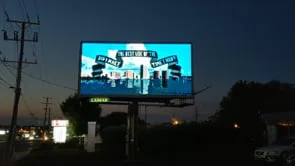
digital billboard, 2019
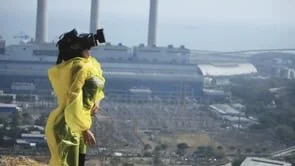
A collaboration with Daniel Calder for Micro Galleries Disrupting Climate Disruption: Global Day of Creative Action on September 21, 2019 in Richmond, Virginia.
It features a portion of a quote from Richmond’s hometown sports hero and activist Arthur Ashe, "The best way to judge a life is to ask yourself, 'Did I make the best use of the time I had?'"


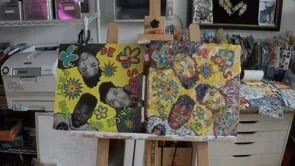
3 Feet High And Rising
stickers on panel, 12 x 12 in, 2020
Released by De La Soul in 1989, one of the best albums of all time is not on any streaming services because of disagreements with their label stemming from issues around sampling.
I use commercially produced stickers to represent the cacophony of our modern American culture. We’re constantly bombarded with images and information and rather than feeling more informed and connected, it seems we’re more confused and separated. My goal is to organize this noise into a recognizable signal, one that can be a guidepost for us when it feels like there are no good messages to be found. There are historical antecedents that give us an inspiring way forward if we can focus our attention on them and not be distracted by the spectacle.


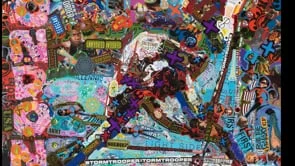
London Calling
stickers on panel, 12 x 12 in., 2019
An experiment in creating a life size recreation of a seminal punk rock album. The messages on it are as powerful and moving today as when it came out in 1979. How can we reorganize the numbing bombardment of modern pop culture to remind us of our individual agency and ability to fight back against the systems that we were born into.

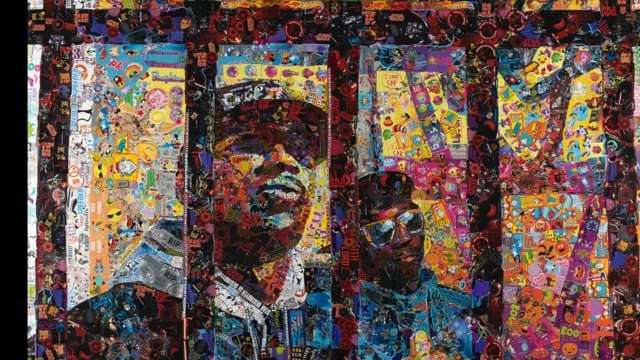
It Takes A Nation of Millions...
stickers on panel, 36 x 36 in, 2019
The seminal album It Takes A Nation of Millions To Hold Us Back by Public Enemy came out in 1988, 30 years later it’s messages and themes remain as powerful and necessary as when it was released.
I use commercially produced stickers to represent the cacophony of our modern American culture. We’re constantly bombarded with images and information and rather than feeling more informed and connected, it seems we’re more confused and separated. My goal is to organize this noise into a recognizable signal, one that can be a guidepost for us when it feels like there are no good messages to be found. There are historical antecedents that give us an inspiring way forward if we can focus our attention on them and not be distracted by the spectacle.


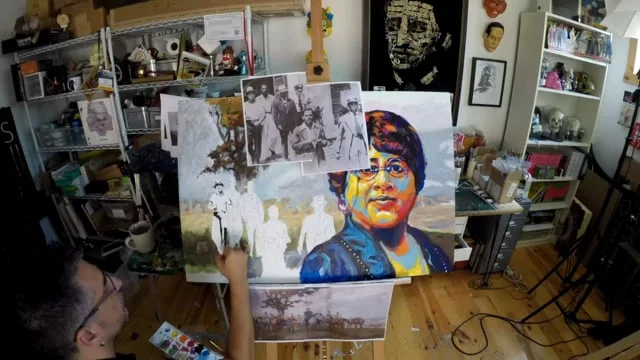
The Readjusters
Fresh Paint: Murals Inspired by the Story of Virginia, The Virginia Museum of History and Culture
October 27, 2018 – April 19, 2019
acrylic, 25 x 10 ft ,created in three phases between September 11 and October 12, 2018
Ten artists were asked to create new murals inside the museum inspired by objects from the collection.
The Readjusters is a story of hope and inspiration. It’s a story about how even during our darkest times there have always been people who have risen up, spoken out and worked tirelessly to make sure that this country truly lived up to the values it proclaims. It’s the story of educator and social reformer Janie Porter Barrett, who created a school in Hampton to help incarcerated African-American girls escape the prison system. It’s the story of the men, organized by pioneering social justice lawyer Samuel W.Tucker, who were part of the first civil rights sit-in protest in Alexandria in 1939. It’s the story of the interracial Readjuster Party that seized political power during the turbulent Reconstruction era and made education for African-Americans in Virginia a priority. It’s a story of the “readjusters” who exist today who are fighting to tell a new story about our priorities as a state and a nation.
I first encountered The Readjuster Party in the museum and it was indicative of the education that I received growing up in Richmond in the 70s/80s that this was a piece of history I missed. For this piece I wanted to extrapolate out from the term Readjuster which could easily be applied to both the African-Americans who were trying to remove the yolk of slavery and oppression to become full citizens of this country post Civil War as well as the white Southerners who chose to reframe their failure as a lost cause worth celebrating and their ongoing attempt to stem the flow of progress. For this image I have stripped the people and symbols of the Confederacy from the centerpiece of Charles Hoffbauer’s Military Murals (painted in the museum between 1913–1920) and in turn replaced them with images of early civil rights activists who laid the groundwork for the civil rights movement to come and inspire us as we continue to fight against injustice today.


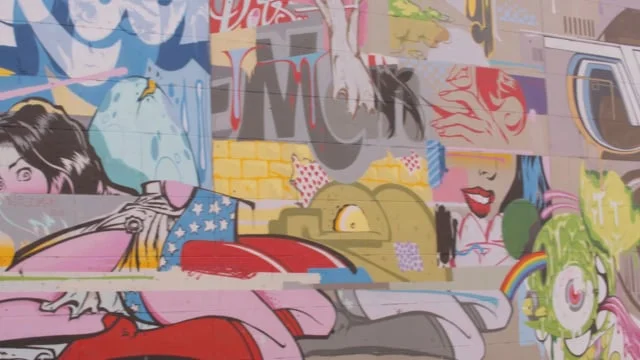
Vanitas
stickers on panel, 20 x 20 in., 2018
Inspired by the 17th century Dutch painting genre of the same name. I like to think of this technique as a manual version of the Google neural network's dreamlike surreal image translations.


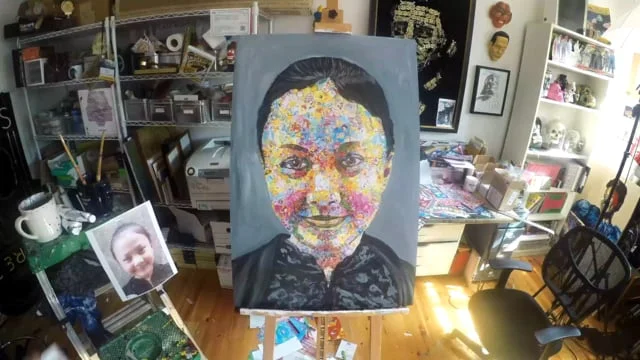
Witness: Kathmandu
Stickers & acrylic on board. 24 x 36 in. (and wheatpaste on wall) 2018
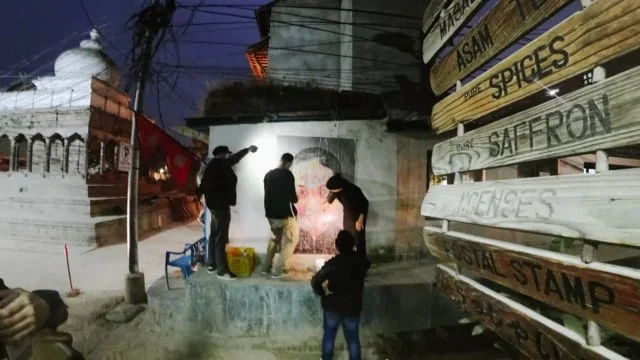
This portrait of a young girl from Kathmandu, Nepal was created in collaboration with Micro Galleries. The work was made in my studio in Richmond, Virginia and then sent digitally to be printed and wheatpased by the Micro Galleries crew in the same town where this girl is from.
The Witness sticker portrait series asks viewers to rethink the endless barrage of messages that mass & social media tell us about ourselves and each other on a daily basis. Commercially produced stickers provide a perfect medium to represent the swirling din of cultural noise that attempts to define us. Layered in a technique inspired by the work of my own daughter at age two, the chaotic interplay of pop culture elements becomes the tapestry out of which I’m trying to form images of what’s truly worth looking at. The subjects are children who represent the real diversity of our world – faces that have been viewed with suspicion, fear, and aggression by tyrannical leaders and xenophobic governments. These works emphasize the need to turn our attention away from what we’re being told about each other and instead focus on looking at each other directly, recognizing the humanity within us and considering the ways we can connect with each other more and work together to create our own new shared vision of the world.


of America: The Choice of A New Generation
stickers on panel, 3 x 4 feet, 2018
Inspired by a photo of activist Iesha Evans taken in 2016 at a Black Lives Matter protest in Baton Rouge by photographer Jonathan Bachman.
The title is a reference to an advertising slogan by Pepsi, who recontextualized images like this one into a roundly vilified commercial for their product,
of America is an intentionally unfinished sentence. It questions what defines being an American today and how the rest of the world perceives this country.
Commercially produced stickers provide a perfect medium for expressing the overwhelming visual noise of American culture. Layered, in a technique inspired by my daughter’s own explorations with stickers as a two-year-old, the chaotic interplay of familiar pop culture elements becomes the tapestry out which I’m trying to form the counterpoint to the chaos.


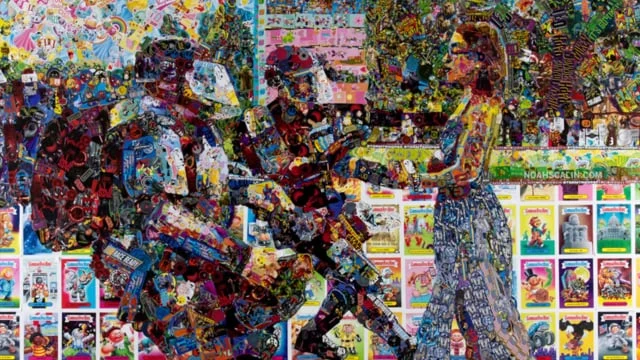
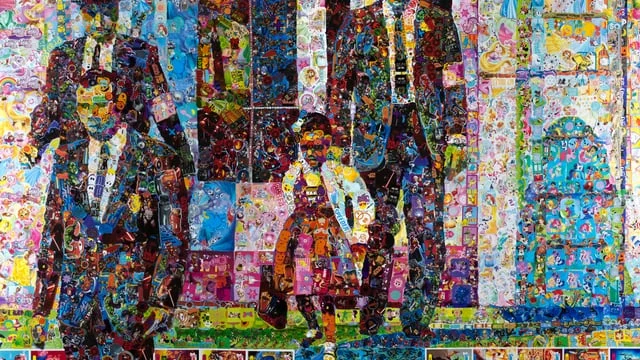
of America: The Problem We All Still Live With
stickers on panel, 48 x 36 in. 2018
Based on the famous photo of civil rights activist Ruby Bridges being escorted from school by federal marshals, after she became the first black child to attend the all-white elementary school in her hometown in 1960. Her bravery inspired the Norman Rockwell painting The Problem We All Live With. My interpretation of this photo, made with thousands of commercially produced stickers, places this powerful image into our modern context, where sadly it remains as relevant today as it was then.
This work is part of "of America" my solo show at at Krause Gallery, May 12-June 5, 2018.


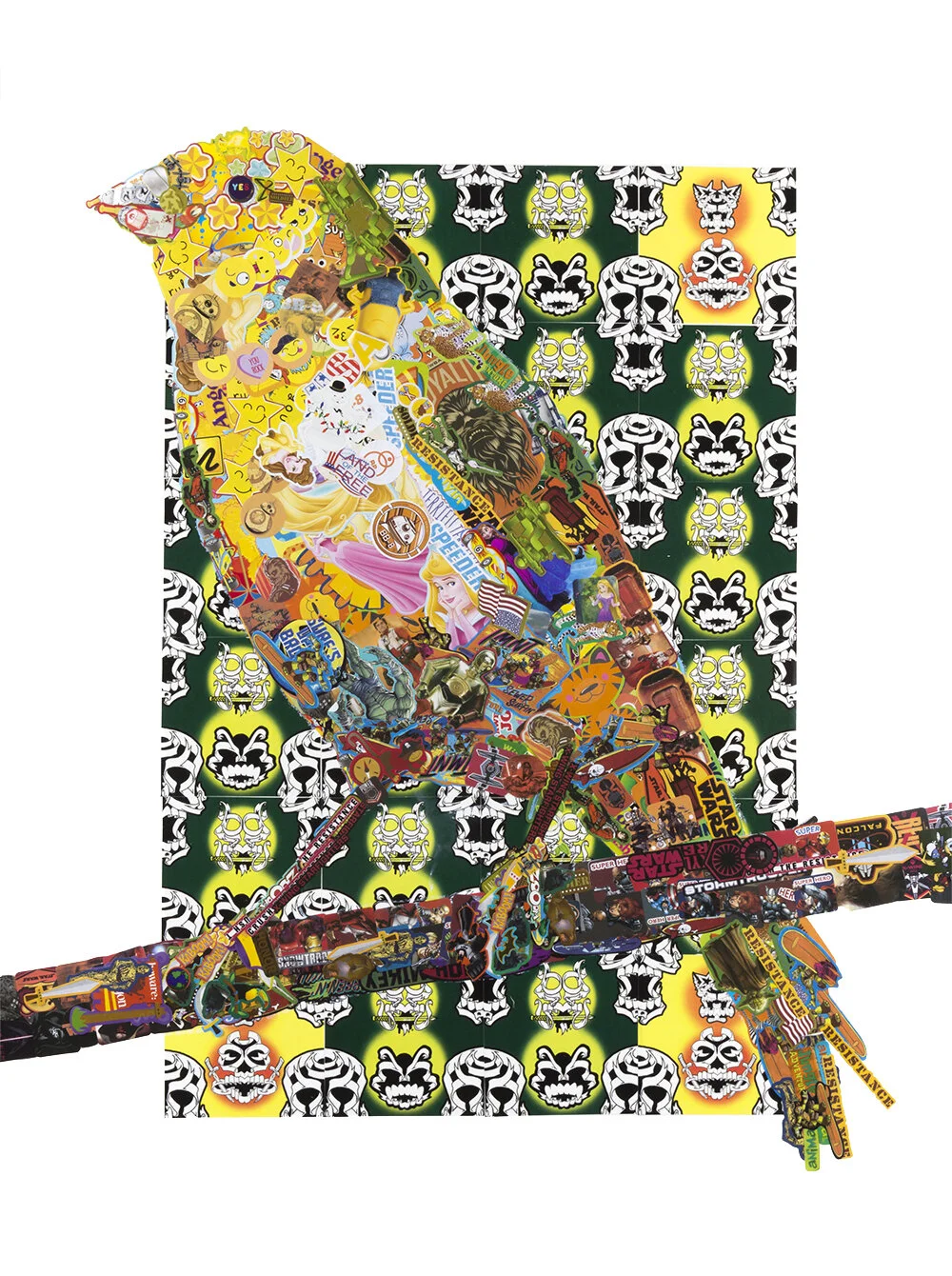
of America: Birds (series)
“of America: Carbonated Swamp Warbler”, 18 x 24 in. stickers & acrylic on panel, 2018
“of America: Blue Mountain Warbler”, 18 x 24 in. stickers & acrylic on panel, 2018
“of America: Small-Headed Flycatcher”, 18 x 24 in. stickers & acrylic on panel, 2018
of America is an intentionally unfinished sentence. It questions what defines being an American today and how the rest of the world perceives this country.
Commercially produced stickers provide a perfect medium for expressing the overwhelming visual noise of American culture. Layered, in a technique inspired by my daughter’s own explorations with stickers as a two-year-old, the chaotic interplay of familiar pop culture elements with the generic expressions of what it is to be a child in the 21st century becomes the tapestry out which I’m trying to form the counterpoint to the chaos.
These images are inspired by plates from John James Audubon's famous tome Birds of America. Birds are unaware of borders, they freely fly over the tallest walls we build without any consideration for their meaning. From state birds to our national symbol of the Bald Eagle, America understands the power of the bird as a symbol of freedom.
However these birds don’t exist. They either went extinct before they were cataloged again or they were a mistake on the part of Audubon and they never existed at all.
These pieces are part of “of America” my solo show at Krause Gallery, NYC. On display May 12-June 5, 2018.


In A Coal Mine collaboration with Jason Mitchell
stickers on panel, 18 x 24 in., 2017
Collaboration with artist Jason Mitchell
Witness: Denpasar
Stickers & acrylic on board. 24 x 36 in. 2018
This portrait of Robbie, a young boy from Denpasar, Bali was created in collaboration with Micro Galleries. The work was created in my studio in Richmond, Virginia and then sent digitally to be printed and wheatpased by the Micro Galleries crew in the same town where this boy is from. Here’s more information about Robbie from founder of Micro Galleries:
“Robbie was a street kid (Bali is full of them) who emerged from the market in Denpasar the second we arrived, snotty nosed, dirty and begging. We have a policy to not give money to kids so instead told him if he helped us stir the glue we would buy him lunch. This kid ended up staying with us for an entire week. He became one of the team, mixing glue, helping us paste up, directing traffic. The artists started to get to know him and he would appear every now and then with a pair of shoes, or a clean shirt, that one of our people had quietly taken him to get. He became extremely interested in the artworks and would ask us questions about them. One day, after I ran a tour about the art, we look up and there is Robbie with a tonne of street kids following him as he gives his own art tour! Some of the artists started to teach him how to take photos etc and he really took to it. We were all besotted with him by the end of it. We discovered his family had left a drought-ridden part of Bali to come to Denpasar. They were working at the market and them and his two sisters would sleep outside. They couldn't go to school as they didn't have papers for the kids or money for uniforms. We began the process of working all of this out for them and paying for their kids to go to school. One day, our contact person went back there to continue to process, and the whole market had burnt down, and they had disappeared. We haven't been able to find him since.”
The Witness sticker portrait series asks viewers to rethink the endless barrage of messages that mass & social media tell us about ourselves and each other on a daily basis. Commercially produced stickers provide a perfect medium to represent the swirling din of cultural noise that attempts to define us. Layered in a technique inspired by the work of my own daughter at age two, the chaotic interplay of pop culture elements becomes the tapestry out of which I’m trying to form images of what’s truly worth looking at. The subjects are children who represent the real diversity of our world – faces that have been viewed with suspicion, fear, and aggression by tyrannical leaders and xenophobic governments. These works emphasize the need to turn our attention away from what we’re being told about each other and instead focus on looking at each other directly, recognizing the humanity within us and considering the ways we can connect with each other more and work together to create our own new shared vision of the world.


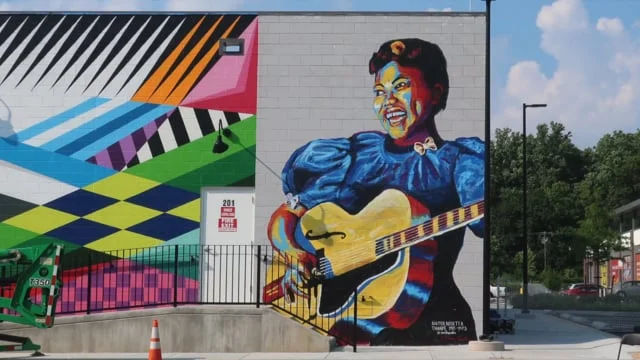
Portrait of Innovation: Sister Rosetta Tharpe
Created for the 2018 Greengate Festival, Short Pump, VA
Sister Rosetta Tharpe, the godmother of rock-n-roll, lived in my hometown for a decade, but there’s been no formal acknowledgement of her contribution to our community. This is my way of paying tribute to her here.


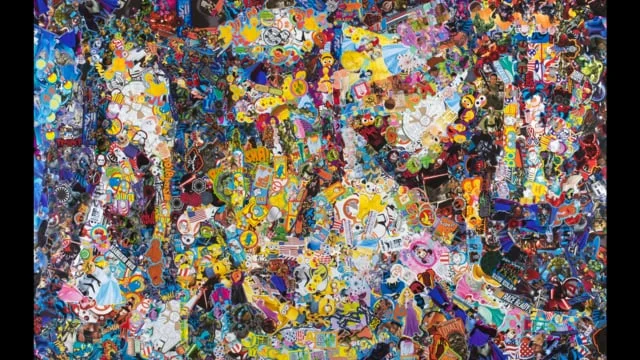
Witness: Cape Town
Stickers & acrylic on board. 24 x 36 in. 2018
This portrait of a young girl from Cape Town was created in collaboration with Micro Galleries. The work was created in my studio in Richmond, Virginia and then sent digitally to be printed and wheatpased by the Micro Galleries crew in the same town where this girl is from.
The Witness sticker portrait series asks viewers to rethink the endless barrage of messages that mass & social media tell us about ourselves and each other on a daily basis. Commercially produced stickers provide a perfect medium to represent the swirling din of cultural noise that attempts to define us. Layered in a technique inspired by the work of my own daughter at age two, the chaotic interplay of pop culture elements becomes the tapestry out of which I’m trying to form images of what’s truly worth looking at. The subjects are children who represent the real diversity of our world – faces that have been viewed with suspicion, fear, and aggression by tyrannical leaders and xenophobic governments. These works emphasize the need to turn our attention away from what we’re being told about each other and instead focus on looking at each other directly, recognizing the humanity within us and considering the ways we can connect with each other more and work together to create our own new shared vision of the world.


of America: Disillusioned (series)
Disillusioned III (after Guernica)
24 x 36 in. stickers on panel, 2018
Disillusioned II
24 x 36 in. stickers on panel, 2018
Disillusioned I
12 x 16 in. stickers on panel, 2018


Sight Specific
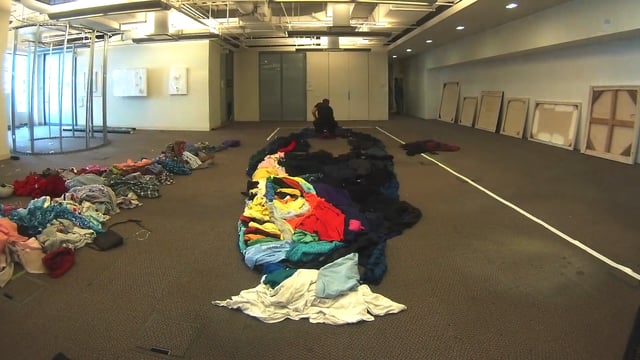
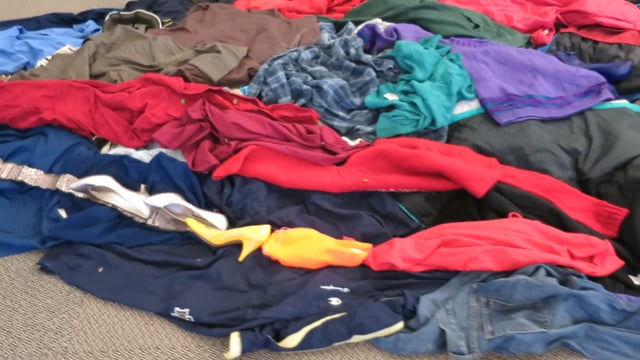
A portrait of Helen Keller made from arranged clothing [donated by Dusty Rose Vintage] 2017
Created for the Spring Break Art Show, 4 Times Square, NYC. Curated by Dawne Langford.
While most people are familiar with Helen Keller's story of childhood triumph, few are aware of her activism as an adult. As an outspoken advocate for disabled rights, an anti-war activist, a Socialist and one of the founders of the ACLU, the media turned on their former darling child, claiming that she was impaired in her mental facilities because of her other disabilities. She spent her entire life trying to control her own narrative.


Witness: Jakarta
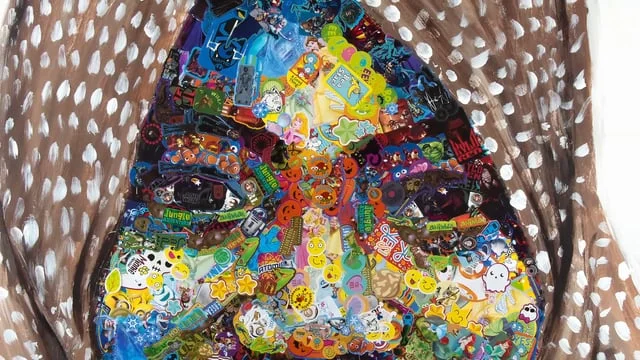
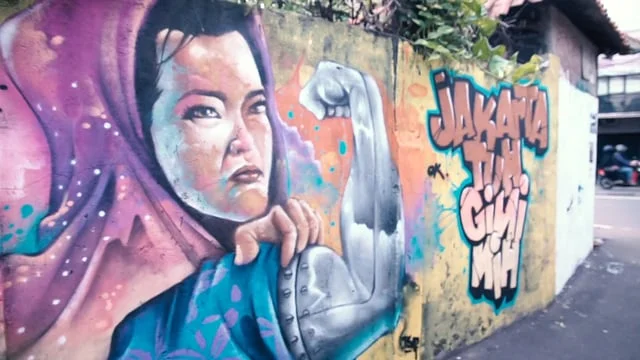
Stickers & acrylic on board. 24 x 36 in. 2017
This portrait of a young girl from Jarkata was created for the Micro Galleries: Jakarta exhibition a street art installation from October 6–21, 2018. The work was created in my studio in Richmond, Virginia and then sent digitally to be printed in Indonesia where it was wheatpased by the Micro Galleries crew in the same village where this girl is from.
The Witness sticker portrait series asks viewers to rethink the endless barrage of messages that mass & social media tell us about ourselves and each other on a daily basis. Commercially produced stickers provide a perfect medium to represent the swirling din of cultural noise that attempts to define us. Layered in a technique inspired by the work of my own daughter at age two, the chaotic interplay of pop culture elements becomes the tapestry out of which I’m trying to form images of what’s truly worth looking at. The subjects are children who represent the real diversity of our world – faces that have been viewed with suspicion, fear, and aggression by tyrannical leaders and xenophobic governments. These works emphasize the need to turn our attention away from what we’re being told about each other and instead focus on looking at each other directly, recognizing the humanity within us and considering the ways we can connect with each other more and work together to create our own new shared vision of the world.
Jakarta photos courtesy of credit Teresa Schebiella and Micro Galleries.


of America: Californian Turkey Vulture
18 x 24 in. Stickers on panel. 2018
This work is part of "of America" my solo show at at Krause Gallery, May 12-June 5, 2018.


Witness: Richmond, VA (series)
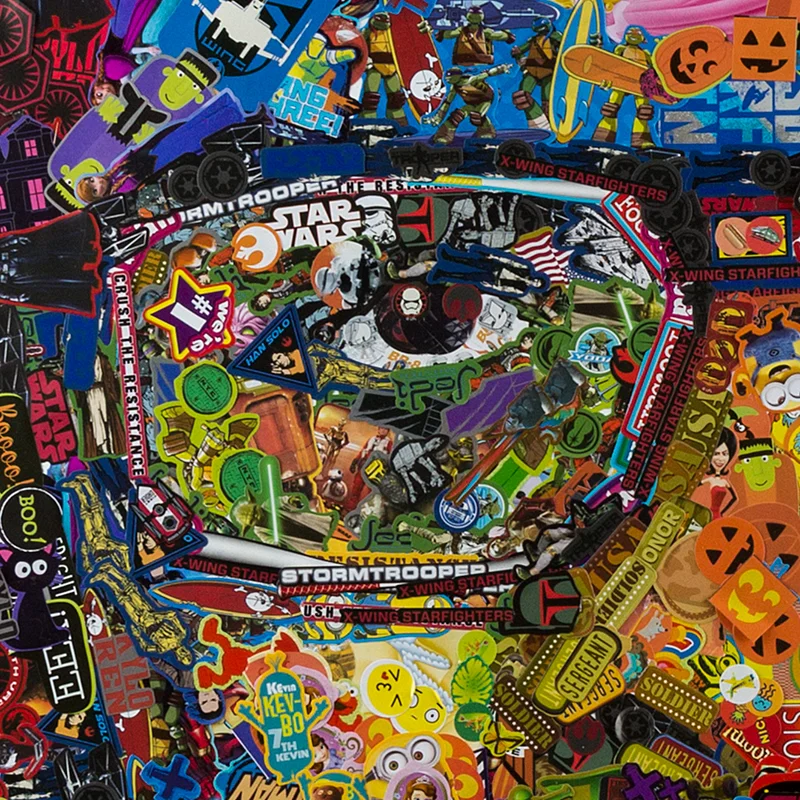
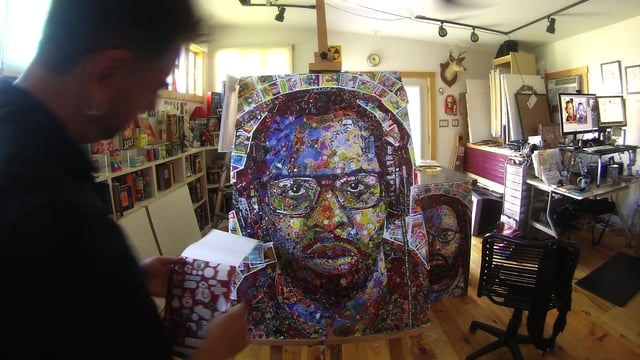
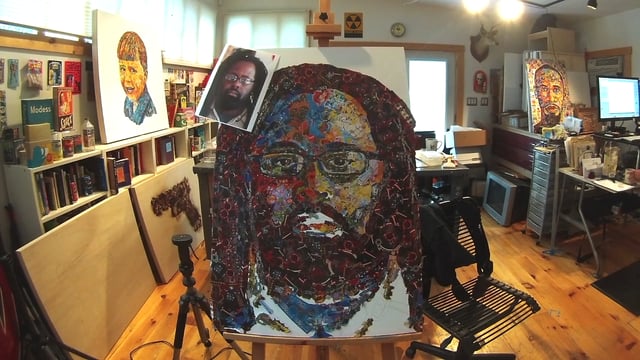
"Mikemetic" (2017)
"Keith Ramsey" (2017)
"Hamilton Glass" (2016)
Stickers on panel. 24 x 36 in.
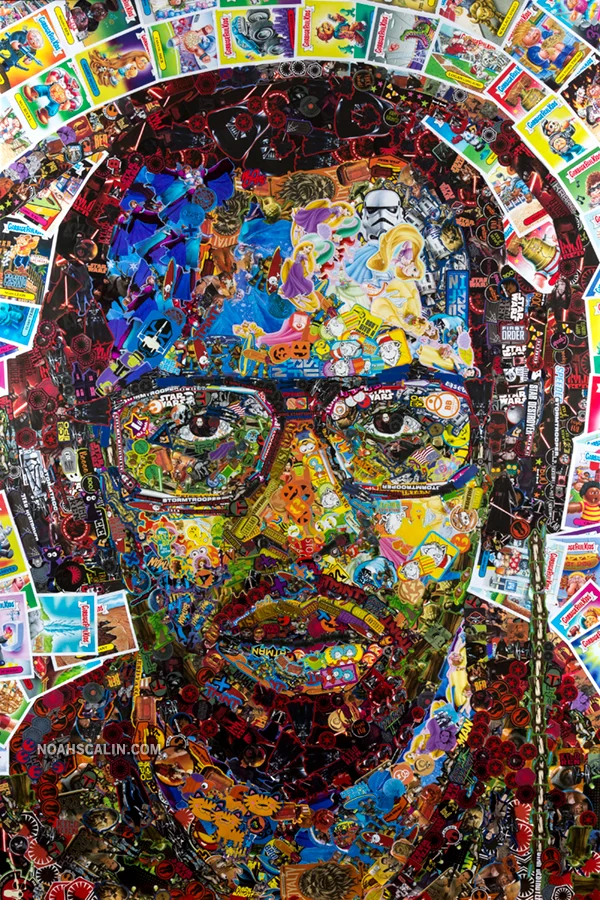


detail

detail


detail

detail
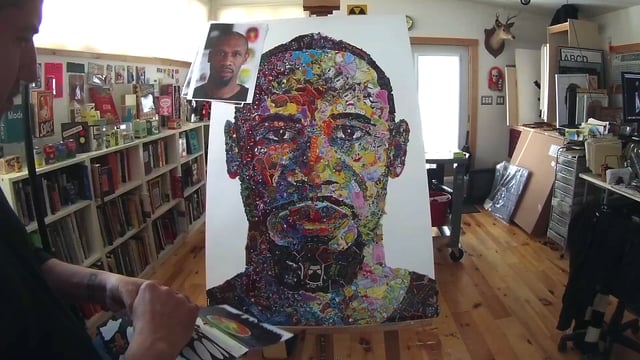
Portrait of Innovation: John Mitchell Jr.
Portrait of civil rights activist John Mitchell Jr. the "fighting editor" of the Richmond Planet.
Painted at the RVA Street Art Festival 2017, The Diamond, Richmond, VA, September 22-24, 2017


Portrait of Innovation: Maggie L. Walker
Arranged clothing. 10 x 30 feet approx. 2016
Created as part of my role as the first artist-in-residence at Virginia Commonwealth University's School of Business, Richmond, VA.
As a successful businesswoman of color, Maggie L. Walker represents the diverse students who are currently enrolled at the School of Business. As the first black woman to charter a bank in America, she was a true pioneer in her time and the embodiment of the values the school wants to instill in its students. She was also a resident of the neighborhood that abuts VCU, so recognizing her importance helps the school show that it is thoughtfully connected to its community.
Clothing was collected by students, faculty & staff and donated after the piece is disassembled.


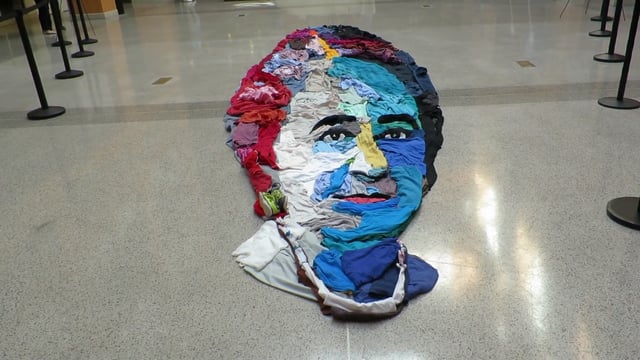
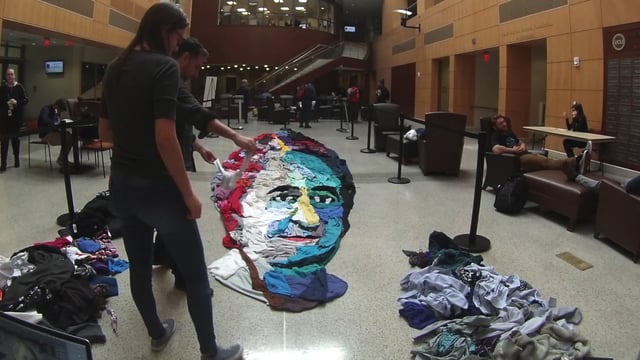
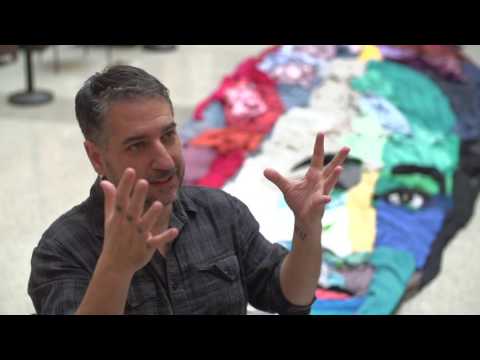
Portrait of Innovation: James Conway Farley
Arranged clothing.
Site specific installation at the Virginia Museum of Fine Arts, Richmond, VA, June 2016
Based on a photograph of an anonymous Richmonder by James Conway Farley, the first prominent African-American photographer in America, from the collection of The Valentine, utilizing clothing from Diversity Thrift.


Portrait of Innovation: Grace Arents
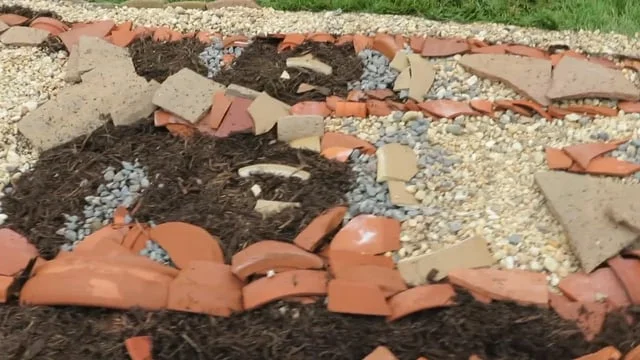
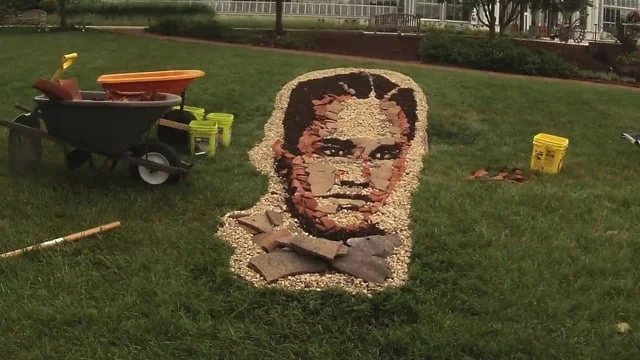
Arranged gravel, mulch & broken pottery, 27 x 8 feet (approx.), 2017
Commissioned for Lewis Ginter Botanical Garden's Wild Art exhibition. Installed June 16–17, 2017
While named for Lewis Ginter, few people know that the land for the Botanical Garden was actually bequeathed to the city by the shy benefactor Grace Arents. She had inherited Ginter's fortune and used it for philanthropic works throughout the city of Richmond, including opening the first public baths in Oregon Hill, the first free library and the first playground with recreation instruction. She also funded the first low income housing in the area. Arents' preferred not to be photographed or have her portrait painted, so images of her are rare. A photo of her as a young woman, used as reference for this piece, is from the collection of the garden.


Portrait of Innovation: Frances Lewis
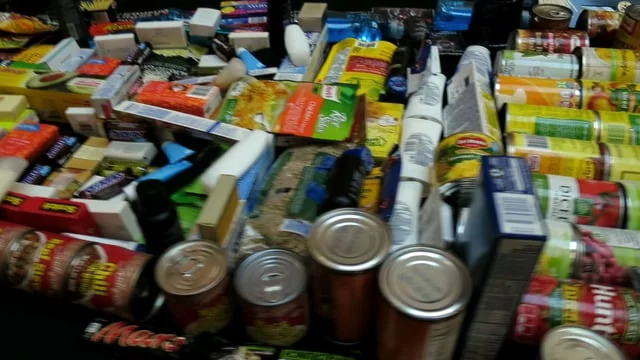
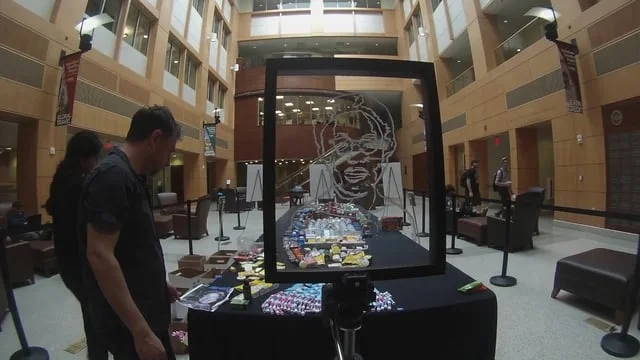
Arranged non-perishable food items and toiletries. 4 x 18 feet approx. 2017
Created as part of my role as the first artist-in-residence at Virginia Commonwealth University's School of Business, Richmond, VA.
As a follow-up to my first installation in the building's atrium it was decided to focus on a living figure from Richmond's combined business and art history. Frances Lewis was a pioneer in business creating the BEST Products chain store with her husband Sydney. The stores were housed in innovative buildings that were standalone works of art created by the SITE architecture firm. Lewis has been a longtime supporter of the arts and her philanthropy in the Richmond community and beyond is widespread.
The items used in this piece were donated by the students & faculty of the VCU School of Business and in turn were donated to two non-profit organizations: VCU RAM Pantry, which serves students dealing with food insecurity & Forgotten Soldiers, which supports both active military members and their families.


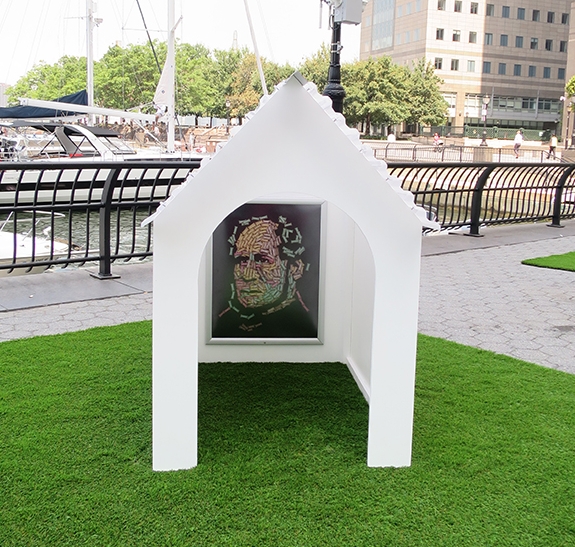
The Hand That Feeds
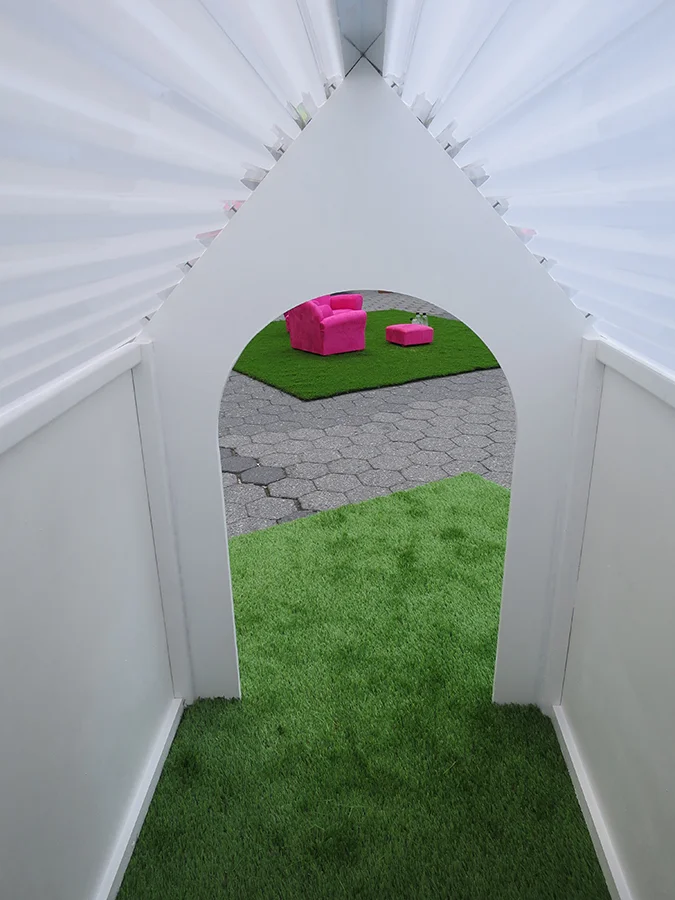
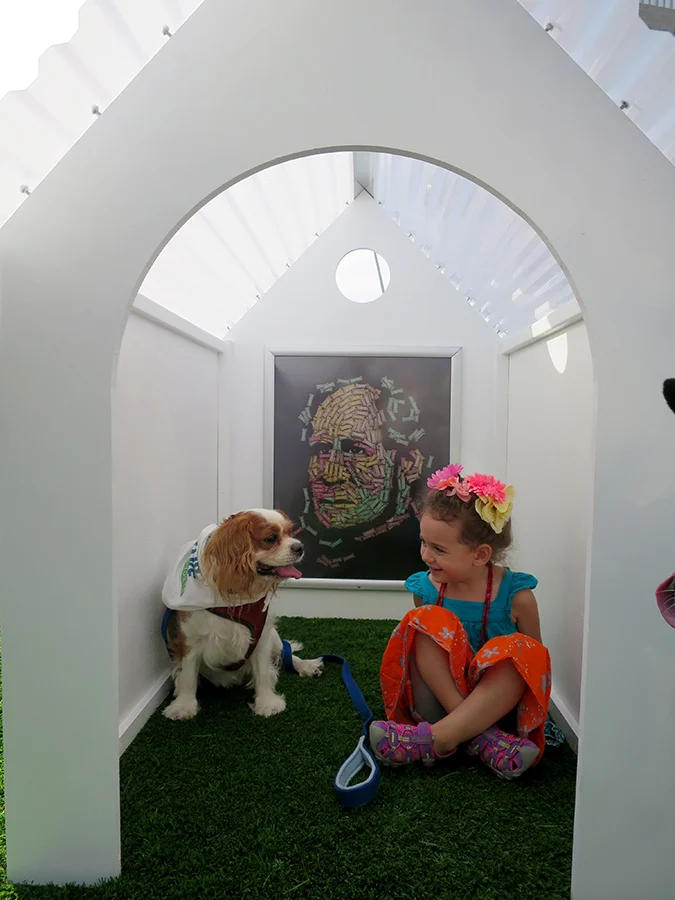
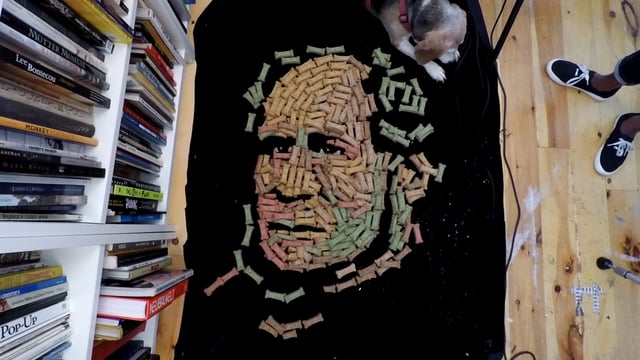
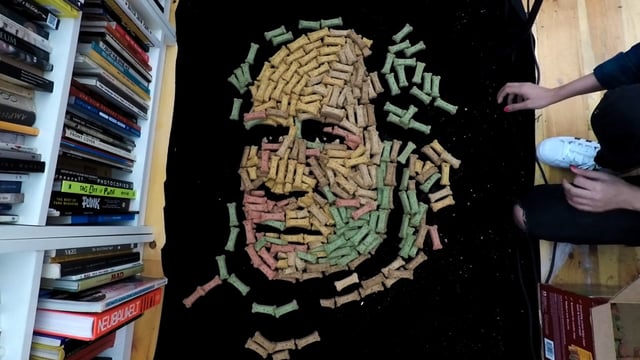
Arranged dog biscuits. Digital print, wood, acrylic, plastic, aluminum.
Installation created for Dogumenta: America's First Art Show for Dogs. August 11-13, 2017, Brookfield Place, NYC
A photograph of a portrait made entirely of dog treats depicting James Spratt, the 19th century inventor of the dog biscuit, is installed inside a chapel-like doghouse. The image is only viewable only from a dog's perspective; humans will need to lower themselves to their dog's level to appreciate it. Within the space, dogs and humans are invited to contemplate their relationship as feeder and fed.


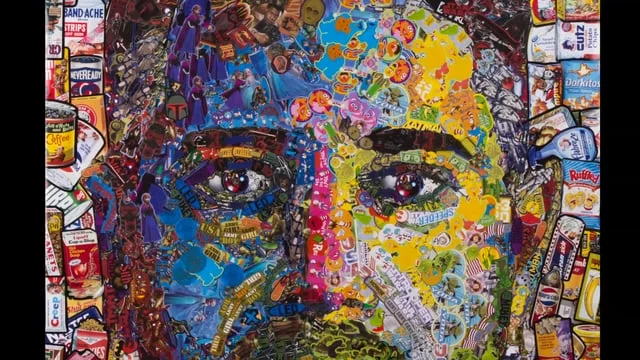
Self Portrait "11-8-16"
Stickers on panel. 24 x 36 in. 2016
Inspired by the overwhelming 2016 election I created this self portrait using commercially produced stickers that represent the worldview we share with our children.
The background is made from the Wacky Packages product parody stickers that I grew up with. Alongside Mad Magazine, those stickers were one of the first ways I saw how people could creatively react to the culture in which we're mired in the US.


American Dream: Glock
Gaston Glock (2016) 24 x 36 in.
Skull (2016) 24 x 36 in.
Glock 19 (2016) 24 x 18 in.
Stickers on wood panel, varnish.
Gaston Glock is the Austrian-born inventor of one of the most popular guns in America.
Glock's portrait, invention and skull have been created out of commercially produced stickers that feature images from popular culture as well as generic messages aimed at children. Most feature some element of modern or historical violence or stylized reminders of how boys and girls should behave. The technique was inspired by the layered collages of stickers that were initiated by my two-year-old daughter.
The conflict between the rights of gun owners and the fears of gun violence has created a great chasm in American culture. There seems to be little common ground on which advocates from each side can share a common vision for the future. And yet the need for a space to have a civil conversation and thoughtful resolution has never been more desperately needed.
American Dream asks people to consider the value that is placed on the entire range of American freedoms and how best to prioritize them.


Pulse
Pule: MCX [triptych] (2016) 3 - 30 x 40 in. panels,
Pulse: Walther (2017) 30 x 40 in.
Pulse: Glock (2016) 30 x 40 in.
carbon on wood & video documentation
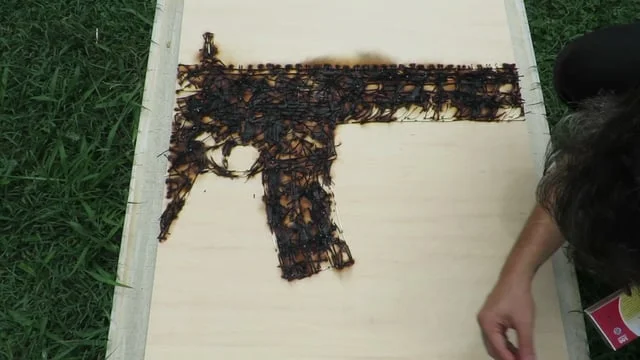
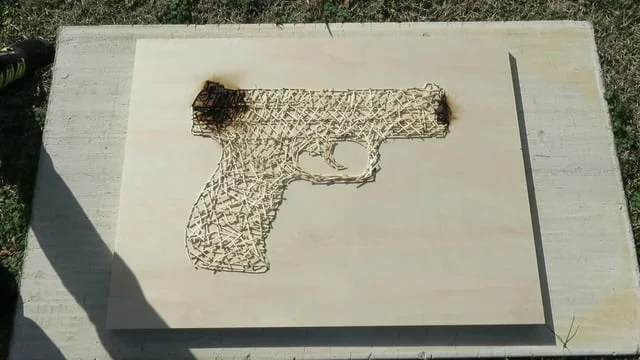
These are effigies of guns created from common household matches. They are lit on fire and the resulting image is captured in carbon, like the permanent shadows that remained after the bombings of Hiroshima and Nagasaki. I wanted to talk about gun violence in America, but the incendiary responses on both sides of the issue have make it extremely difficult to have thoughtful discussions about how to move forward. I’m both fascinated and repulsed by guns. I have friends who have experienced loss because of them and I have friends who feel safer because of them. The fact that they cause such intense emotional responses in Americans is important to explore if we’re to move forward as a nation.
Pulse: MCX was specifically inspired by the shooting at the Pulse nightclub in Florida, considered the deadliest terrorist attack in the United States since the 9-11. The weapon used in the attack was a Sig Saur MCX, which has a remarkably skeletal appearance.
A Walther 9mm was used in the January 2017 shooting at the Fort Lauderdale airport.
The Glock is one of the most commonly used guns in the United States.


Anatomy of War: AK-47
AK-47 Anatomy I & II (2015) 39 x 11 x 2 in. polymer clay, polymer resin, acrylic, enamel, epoxy.
AK-47 Anatomy Usage Chart & Production Chart (2015) archival prints
It Was A Good Day collaboration with Anthony Hall (2015) archival print
These guns have been clinically dissected revealing a remarkably human set of internal organs – rather than the cold steel and bullets normally found within. The objects becomes as fragile as the lives that they can potentially take. In addition the gun become a physical extension of the body of the user of the weapon, albeit one with a conspicuously absent brain.
It’s impossible to separate the violence of the ongoing wars around the globe from the weapons that fuel them – specifically the countless numbers of small arms that are endlessly in circulation passing hand-to-hand. However, too often the discussion around guns in America gets wrapped up in emotional terms around the 2nd Amendment. Anatomy of War brings the discussion back to the individual human level.
In constant use since its creation in 1946, it is estimated that there are nearly 100 million AK-47 style assault rifles currently in circulation around the globe. Because of its resilience and ease of use this weapon can be found in the hands of military personnel, terrorists, freedom fighters, and child soldiers alike. It has become an iconic image – a symbol that is found on album covers & jewelry and in photos of the famous & infamous. It’s also the only modern weapon to appear on a national flag (Mozambique).
Mikhail Kalashnikov created the design of the AK-47 while a soldier in the Russian army, but his relationship to the weapon he created remained ambivalent throughout his life. While never outright denouncing it he often made statements that showed his unease with its proliferation, “I'm proud of my invention, but I'm sad that it is used by terrorists. I would prefer to have invented a machine that people could use and that would help farmers with their work - for example a lawnmower.” And he ultimately reached out to the leader of the Russian Orthodox Church seeking absolution for his contribution to the deaths of untold numbers of people, shortly before his death in 2013 at 94 years old.
On display September 9 through October 13 2015 @ Krause Gallery, NYC
3-D printing by Third Surface.


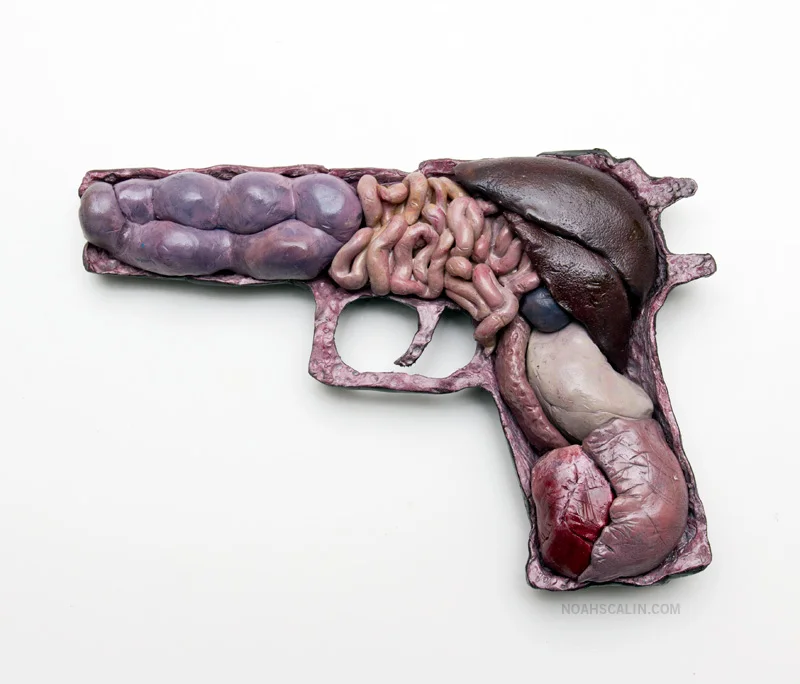
Anatomy of War: Smith & Wesson
Anatomy of War: Smith & Wesson
(8.5 x 5.75 x 1.5 in.) Polymer clay, acrylic, enamel
It’s impossible to separate the violence of the ongoing wars around the globe from the weapons that fuel them. Specifically the countless numbers of small arms that are endlessly in circulation passing hand-to-hand. Too often the discussion around guns in America gets wrapped up in emotional terms around the 2nd Amendment. The idea behind The Anatomy of War series is to bring the discussion back to the individual human level.
The gun has been clinically dissected revealing a remarkably human set of internal organs – rather than the cold steel and bullets normally found within. The object becomes as fragile as the lives that it can potentially take. In addition the gun become a physical extension of the body of the user of the weapon, albeit one with a conspicuously absent brain.


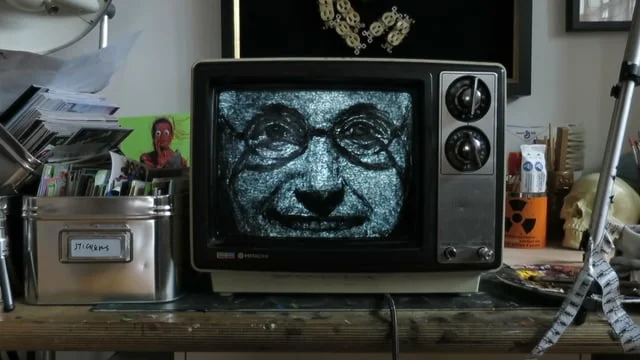
Family Room
Family Room: Mim, Mica, Noah, Chuck
Oil paint on televisions. Various sizes (2017)
Created for the Family Room group show featuring works by two generations of the Scalin family.
Glavé Kocen Gallery, Richmond, VA February 3-25, 2017


Cut Paper Memorials (ongoing project)
Created in the spirit of the Mexican papel picado decorations, which are often used as part of the Dia de los Muertos celebrations.


Anatomy of War: Bullets
Bullet Kalashnikov (2015) 30 x 40 in. bullet holes, acrylic & gunshot residue on wood panel.
Bullet Skull II (2015) 30 x 40 in. bullet holes, acrylic & gunshot residue on wood panel.
Bullet Kalashnikov II (2015) 30 x 40 in. bullet holes & gunshot residue on wood panel.
Bullet Skull III (2015) 30 x 40 in. bullet holes & gunshot residue on wood panel.
Portraits of Mikhail Kalashnikov & his skull created by shooting real bullets into a wooden panel and capturing and preserving the resulting gunshot residue.
It’s impossible to separate the violence of the ongoing wars around the globe from the weapons that fuel them – specifically the countless numbers of small arms that are endlessly in circulation passing hand-to-hand. However, too often the discussion around guns in America gets wrapped up in emotional terms around the 2nd Amendment. Anatomy of War brings the discussion back to the individual human level.
In constant use since its creation in 1946, it is estimated that there are nearly 100 million AK-47 style assault rifles currently in circulation around the globe. Because of its resilience and ease of use this weapon can be found in the hands of military personnel, terrorists, freedom fighters, and child soldiers alike. It has become an iconic image – a symbol that is found on album covers & jewelry and in photos of the famous & infamous. It’s also the only modern weapon to appear on a national flag (Mozambique).
Mikhail Kalashnikov created the design of the AK-47 while a soldier in the Russian army, but his relationship to the weapon he created remained ambivalent throughout his life. While never outright denouncing it he often made statements that showed his unease with its proliferation, “I'm proud of my invention, but I'm sad that it is used by terrorists. I would prefer to have invented a machine that people could use and that would help farmers with their work - for example a lawnmower.” And he ultimately reached out to the leader of the Russian Orthodox Church seeking absolution for his contribution to the deaths of untold numbers of people, shortly before his death in 2013 at 94 years old.
On display September 9 through October 13 2015 @ Krause Gallery, NYC


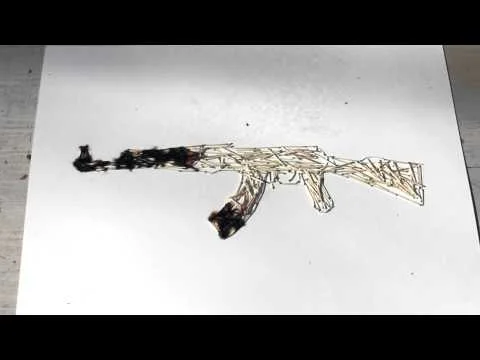
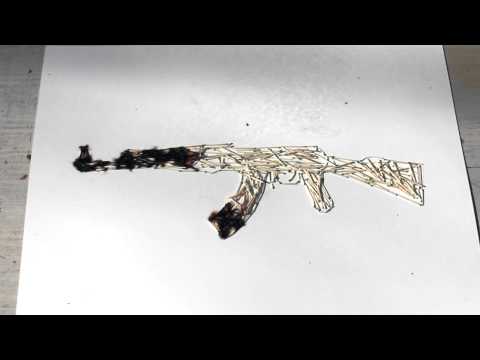
Anatomy of War: Matches
Match AK-47 I (2015) 40 x 30 in. carbon and matches on paper.
Match AK-47 II (2015) 40 x 30 in. carbon and matches on paper.
Match Kalashnikov (2015) 30 x 40 in. carbon and matches on paper.
Match Skull (2015) 30 x 40 in. carbon and matches on paper.
These works are effigies created from common household matches. They are lit on fire and the resulting image is captured in carbon, like the permanent shadows that remained after the bombings of Hiroshima and Nagasaki.
It’s impossible to separate the violence of the ongoing wars around the globe from the weapons that fuel them – specifically the countless numbers of small arms that are endlessly in circulation passing hand-to-hand. However, too often the discussion around guns in America gets wrapped up in emotional terms around the 2nd Amendment. Anatomy of War brings the discussion back to the individual human level.
In constant use since its creation in 1946, it is estimated that there are nearly 100 million AK-47 style assault rifles currently in circulation around the globe. Because of its resilence and ease of use this weapon can be found in the hands of military personnel, terrorists, freedom fighters, and child soldiers alike. It has become an iconic image – a symbol that is found on album covers & jewelry and in photos of the famous & infamous. It’s also the only modern weapon to appear on a national flag (Mozambique).
Mikhail Kalashnikov created the design of the AK-47 while a soldier in the Russian army, but his relationship to the weapon he created remained ambivalent throughout his life. While never outright denouncing it he often made statements that showed his unease with its proliferation, “I'm proud of my invention, but I'm sad that it is used by terrorists. I would prefer to have invented a machine that people could use and that would help farmers with their work - for example a lawnmower.” And he ultimately reached out to the leader of the Russian Orthodox Church seeking absolution for his contribution to the deaths of untold numbers of people, shortly before his death in 2013 at 94 years old.
On display September 9 through October 13 2015 @ Krause Gallery, NYC


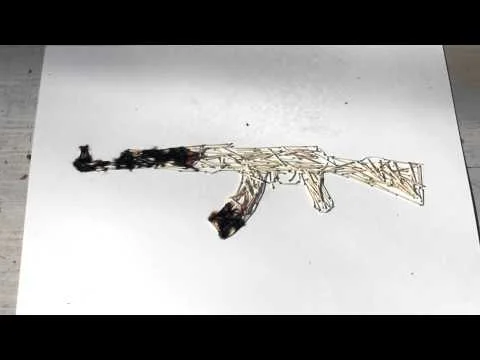
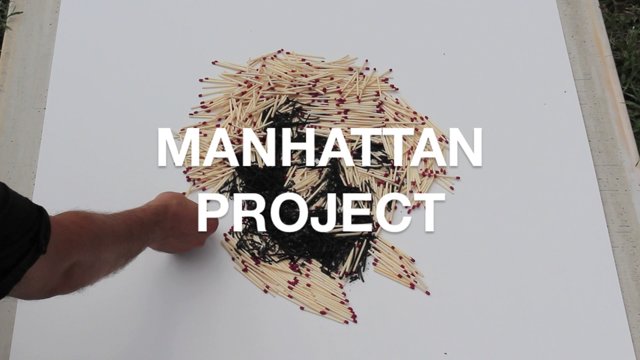
Manhattan Project
The Manhattan Project portrait series features scientists who were fundamental in the creation of the world’s first nuclear weapon. Each piece was meticulously created out of one thousand of wooden matches and then set on fire. The resulting burned afterimages are reminiscent of the permanent nuclear shadows of the victims of the atomic bombing in Hiroshima. Also included are silhouettes of Fat Man and Little Boy, the first two atomic bombs, which were dropped on Japan.
The series deals with the dissonance between the good intentions of scientists who believed they were preventing Hitler from winning World War with the devastating long-term reality of their work. It also deals with the childhood fears of death and destruction, often first encountered with household matches burning fingers and sometimes much more.


Natural Selection
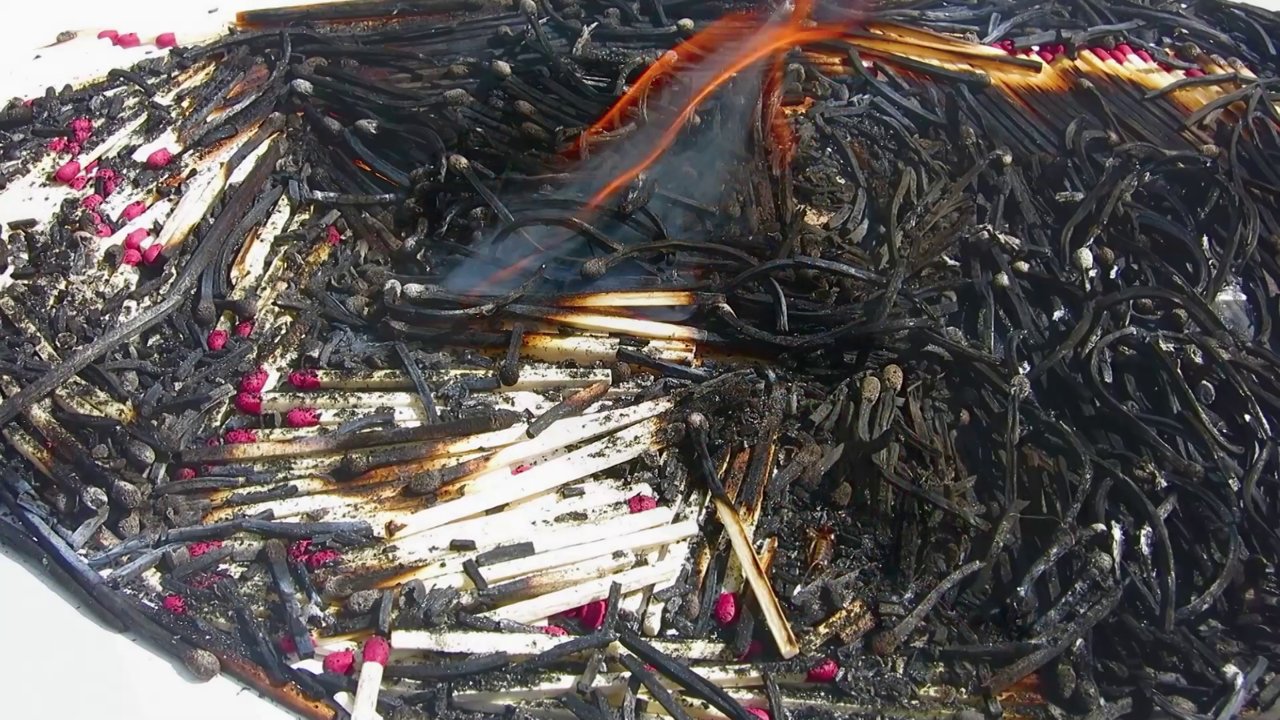
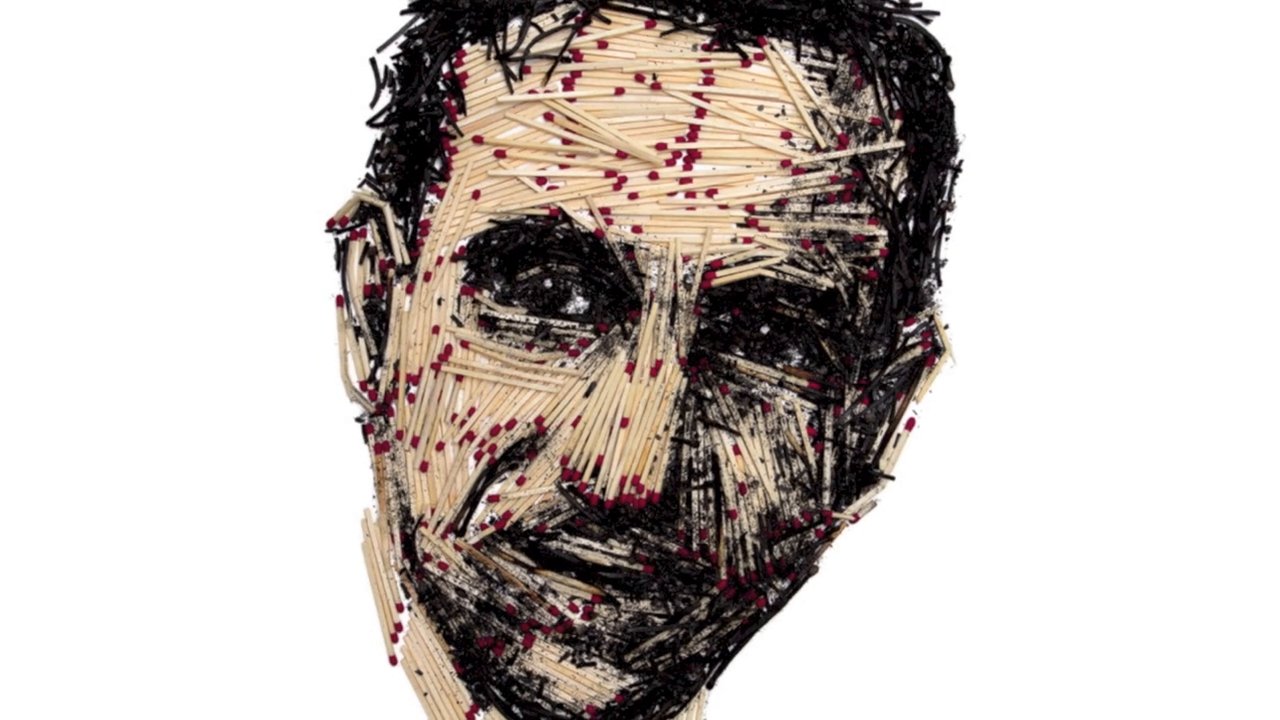
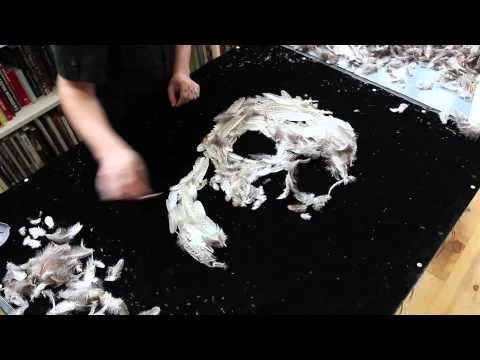
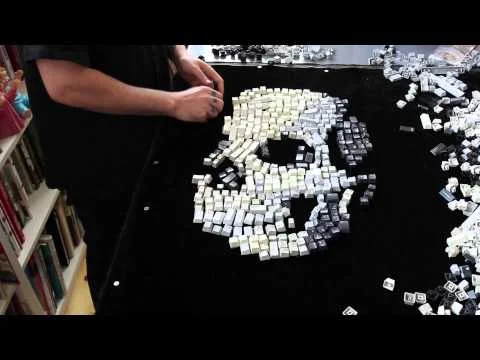
The Natural Selection portrait series specifically explores the lives of great scientists whose work has had an incredible impact on the world. Each diptych is made up of the portrait of a deceased scientist and a representation of his/her skull. The skull is made by literally rearranging the elements used in the portrait, thus destroying that original creation in the spirit of the traditional sand mandalas of Tibetan Buddhism. The scientists represented are all great thinkers whose creations had an impact on our lives today, but also serious repercussions for their own lives (and deaths).
Inspired by the work of 16th century Italian painter Giuseppe Arcimboldo, the images are intentionally created at a scale that allows the faces/skulls and the objects that are used to make them to be visible at the same time, thus creating a visible vibration – an oscillation between form and symbol – in the viewers’ minds.


Madame Zoe's
Installation co-created with Thea Duskin.
@ Chop Suey Books, Richmond, VA
April – October 2016
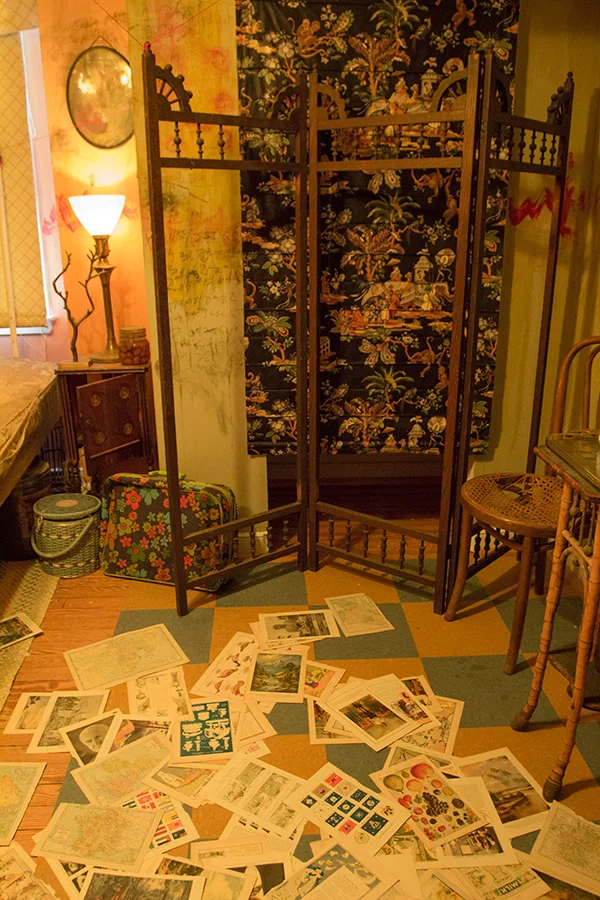
Madame Zoe’s is a historical recreation of the home & parlor of Madame Zoe (neé Elizabeth Arnold Hopkins) who was a psychic advisor and palmist working on Hull Street Road in Richmond’s Southside from the 1940s until her death in 1976.
Fans of author Tom Robbins (who lived in Richmond in the late 1950’s) may recognize Madame Zoe’s name from her fictionalized version featured in his book Even Cowgirls Get The Blues.
Working with researchers Alane Cameron Miles & Phil D. Ford, Duskin & Scalin poured over historical documents and photographs to create a highly accurate recreation of Zoe’s work & living space, featuring several authentic artifacts provided by her living descendants.
In addition, Circe Moss Mallory, a disciple of Zoe’s agreed to a residency in the space, providing readings free of charge at various times throughout the length of the installation. Her companion Jake “Pepper” Malloy accompanies her, providing more detail regarding the installation.




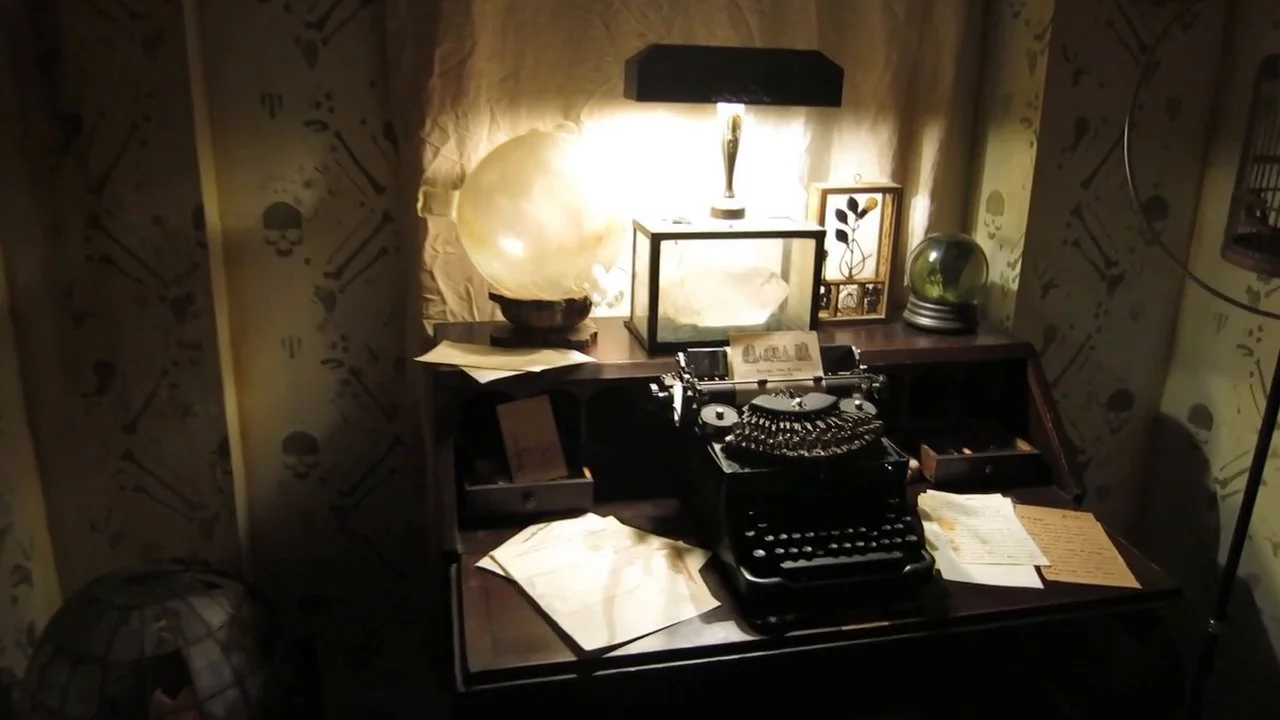
The Memorial Library of Kenton J. Stanfield
Installation co-curated with Thea Duskin @ Chop Suey Books, Richmond, VA.
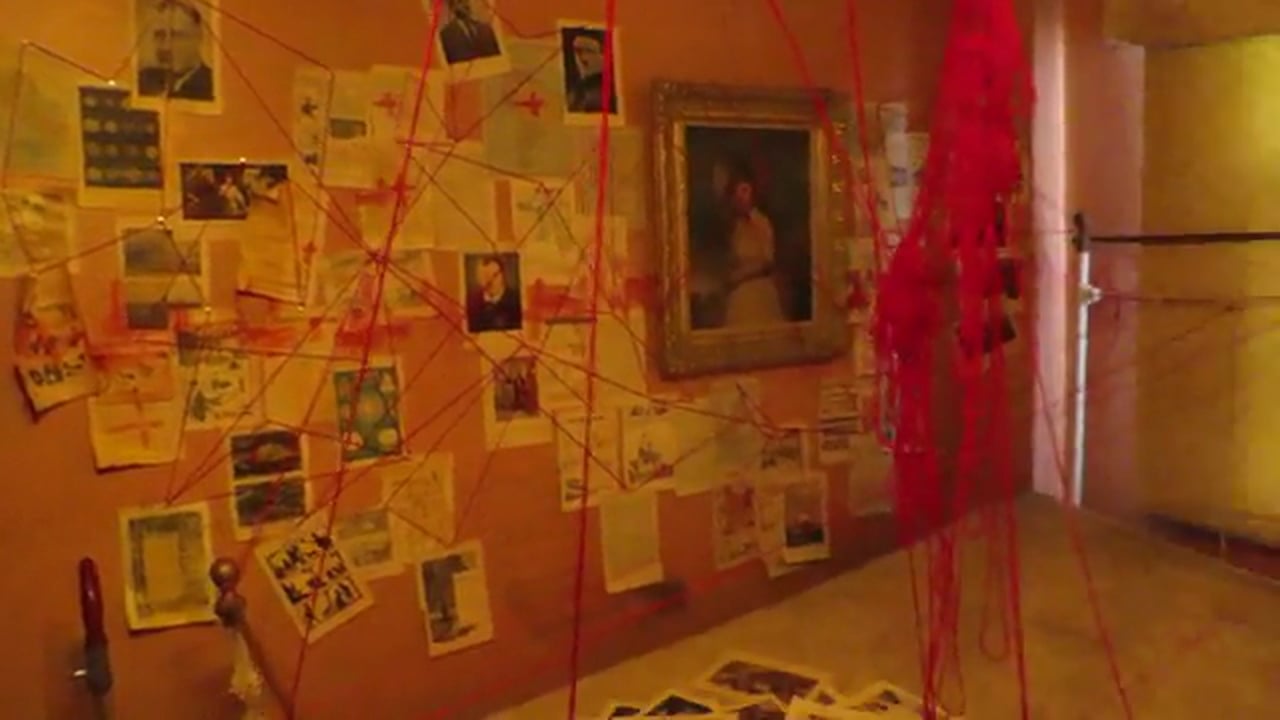
A recreation of the study of Kenton J. Stanfield (1890 – 1937?) displaying unusual artifacts from his collection, as well as the enigmatic state it was in at the time of his disappearance. While mostly forgotten today, the native Richmonder was known in his lifetime as an intrepid world traveler, an expert in gemology, and writer of some renown. After his unexplained disappearance in March of 1937 Stanfield’s home (at 5317 Marshall Street) was preserved intact until its destruction in the 1980s. Luckily the contents were saved by the son of a former student of Stanfield, who recently provided them to Duskin & Scalin. Thanks to the work of researchers Phil Ford & Alane Miles, the curators have managed to produce an accurate representation of what Stanfield’s study looked like at the time of his disappearance.
About Kenton J. Stanfield (courtesy of Alane Miles & Phil Ford)
Kenton J. Stanfield was born August 20, 1890 in Richmond, Virginia. His formal studies included the College of William and Mary and Drexel University in geological science and astronomy, but he was primarily an autodidact, learning through his travels and sponsored expeditions. His field studies took him to exotic locales around the world not limited to the jungles of South America, the Isle of Skye in Scotland and the Danforth Mountains of Antarctica.
After college he returned to Richmond where he tutored upper class youth in geology and astronomy. He was a trader of indigenous goods and fossils as a side business. By 1926 he had gained a reputation for gem seam detection as well as publishing with famous biologist Dr. William Beebe. Soon thereafter business ventures in gemology, propulsion science, and fossil hunting took him from Virginia for extended expeditions.
When home in the beloved capital of Virginia he catalogued his extensive collection of gems, fossils, and curios and wrote articles on his findings from his travels. Stanfield wrote on a variety of topics for scholarly journals, travel magazines, newspapers, and adventure serials.
A lifelong bachelor and socialite among the local political and social classes, he had been a member of the Commonwealth Club and owned at least five properties around Richmond’s West End at one time in the late 1920’s. Stanfield disappeared on March 15, 1937. After a lengthy search, without any evidence of his whereabouts, he is presumed to be dead.


Punk Rocket
Audio cassettes, zip ties, caution tape, acrylic.
Created for InFinite Futures a building-wide exhibition.
@ ABC NO Rio, NYC, June 2016
Asked to consider the future of the Lower East Side – the neighborhood in which this venerable icon of art & activist culture has been located since its founding in 1980 – I imagined a DIY rocket created to colonize a new planet in the spirit of ABC No Rio.
Built from the detritus of our civilization, its components harken to the activists & punks that kept the squatted space alive as the city transformed around it. 300 audio cassettes were donated to the the project and include many from my personal collection of tapes made by friends that introduced me to punk rock music in high school. The zip ties speak to the cheap, disposable handcuffs used on protesters in the last few decades & the police line tape is a familiar element from life in the rapidly transforming NYC.
with
Kevin Caplicki with Alexander Drywall, Peter Cramer + Jack Waters, Barrie Cline with Paul Vance, Jody Culkin + Christy Rupp, Mike Estabrook, Fly, Brian George + Kelly Savage, Julie Hair with Douglas Landau, Takashi Horisaki, Becky Howland, Vandana Jain, Mac McGill, Max Schumann, Amy Westpfahl, and Zero Boy.


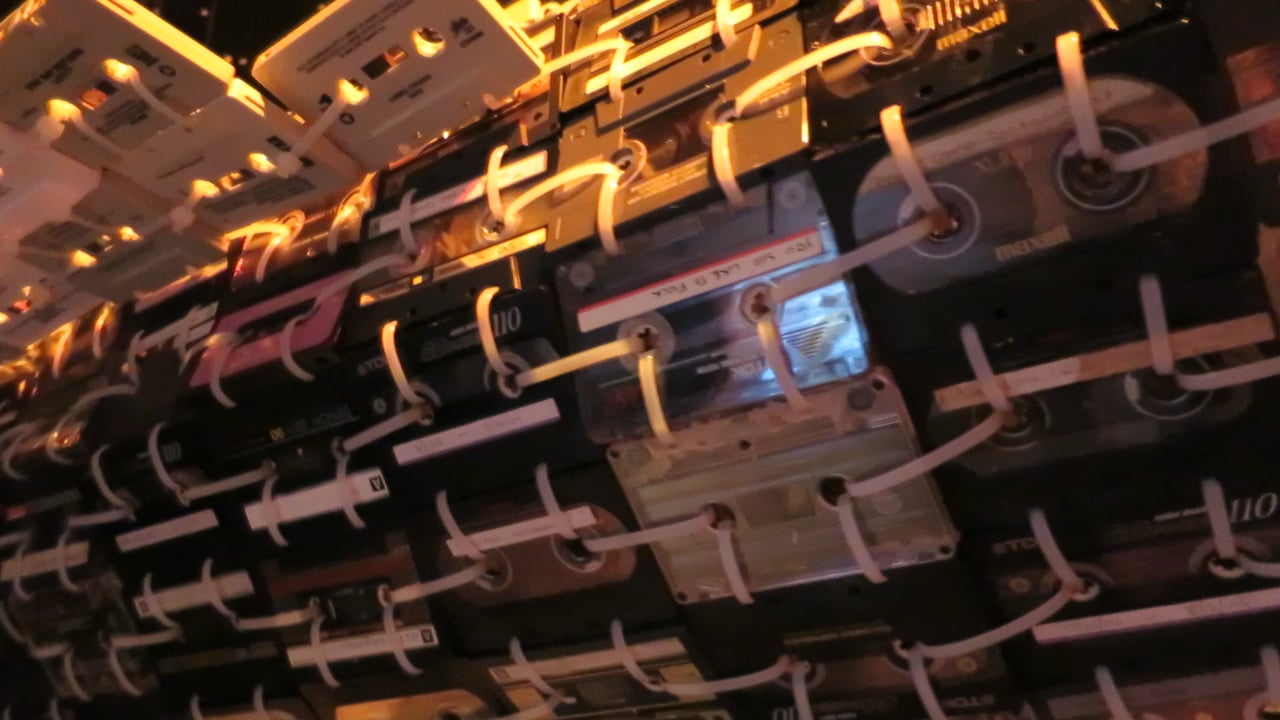
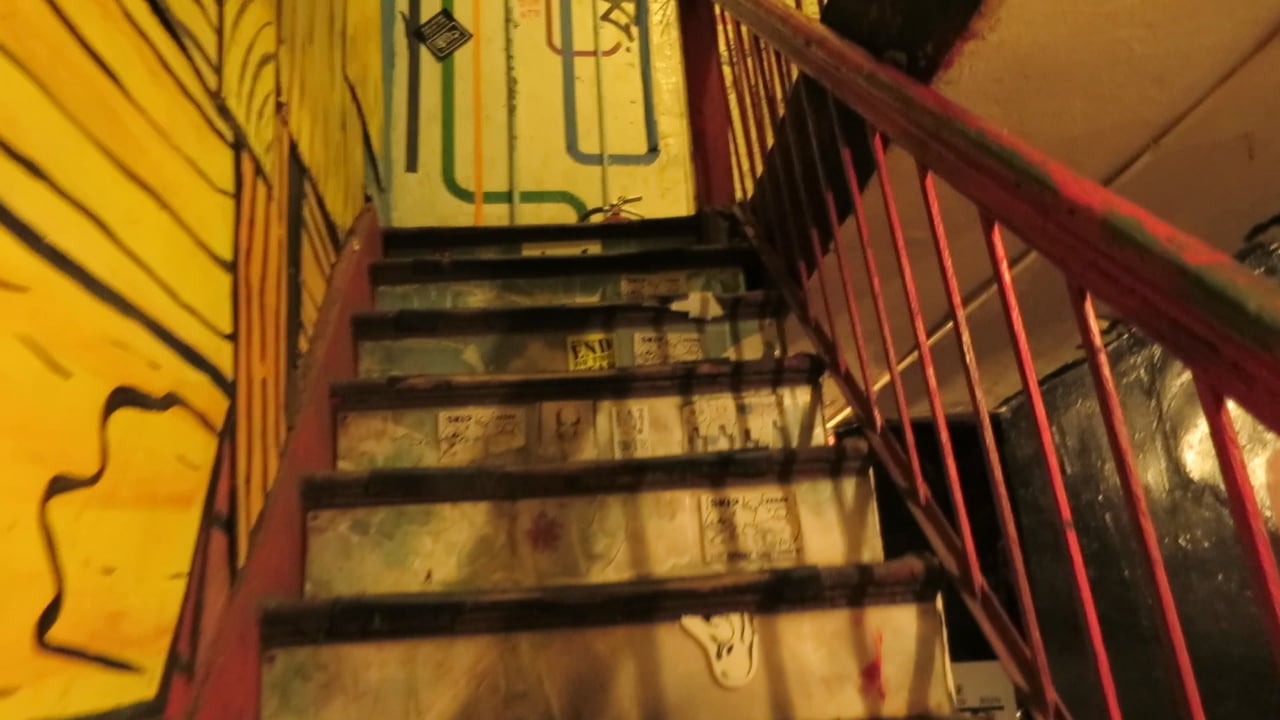
Dead Media 5
Arranged newspapers. 12ft 6in x 39 ft 8 in. x 14 in
Site specific installation created with design students at Wichita State University, Wichita, Kansas. March 2016.
In this modern era of digital communication and cloud storage, the physical formats for storing data are rapidly becoming extinct. What happens to the massive amounts of stuff we've created once they serve no functional purpose?
The specific newspapers used in this installation were particularly appropriate since they were from the Wichita Eagle, which had just announced that it would no longer be printed locally, but was shifting operations to another city. In addition it was planning on moving towards a digital only format in the near future.


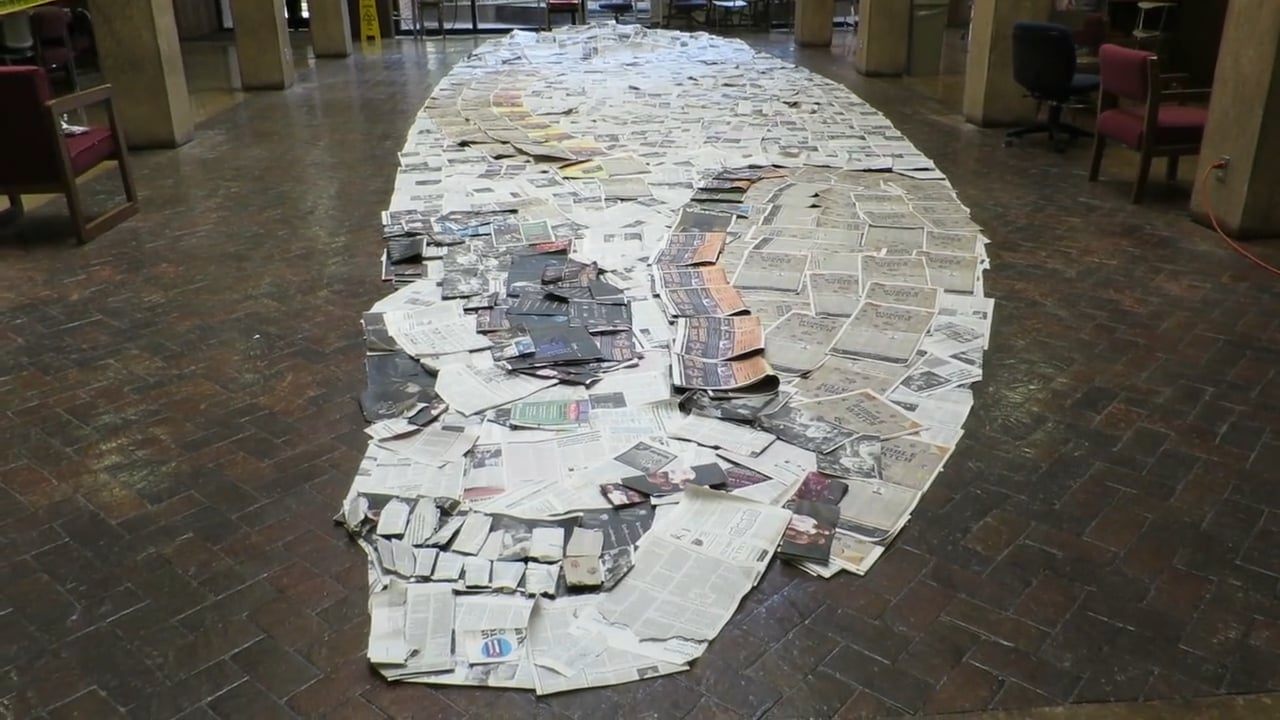
Dead Media 4
Arranged CDs
Site specific installation at Science Museum of Virginia for the RVA MakerFest, October 2015
In this modern era of digital communication and cloud storage, the physical formats for storing data are rapidly becoming extinct. What happens to the massive amounts of stuff we've created once they serve no functional purpose?


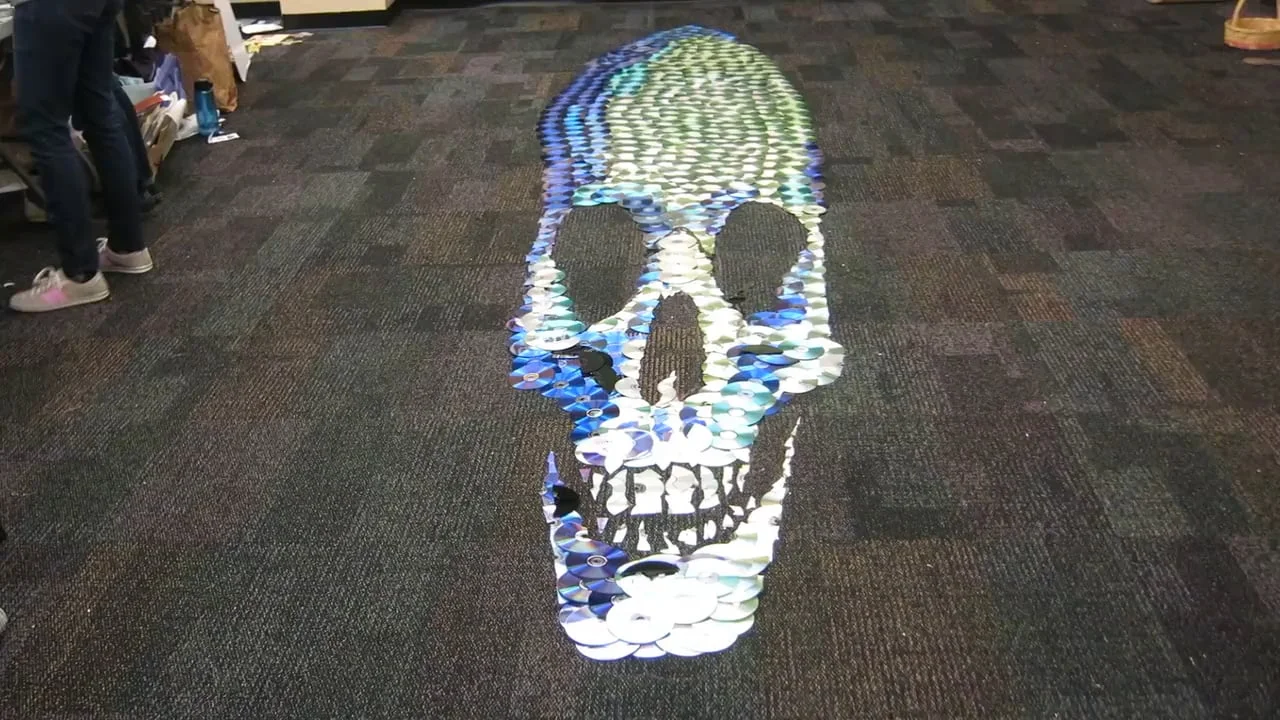
Dead Media 3
Arranged vinyl records. 8 x 16 ft (2.4 x 4.8 m)
Site specific installation at Austin Peay University, Clarksville, TN, April 2015
In this modern era of digital communication and cloud storage, the physical formats for storing data are rapidly becoming extinct. What happens to the massive amounts of stuff we've created once they serve no functional purpose?


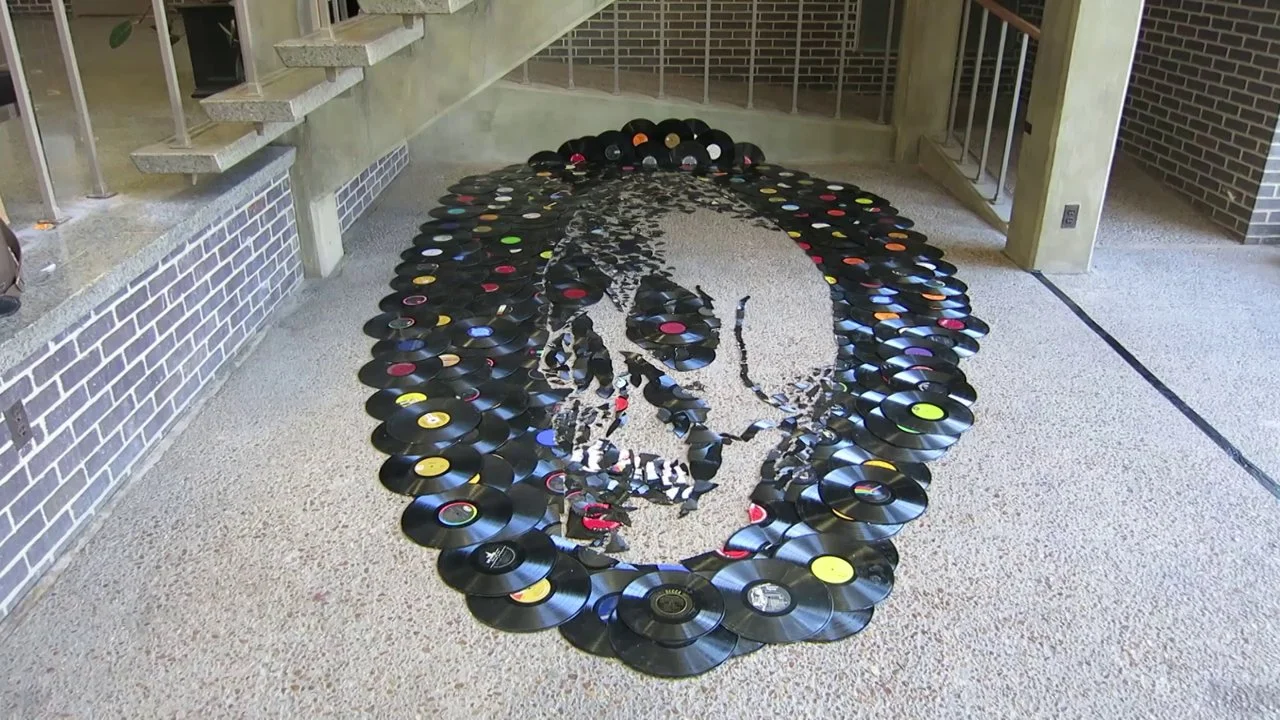
Dead Media 2
Arranged books. 175 x 85 in (445 x 216 cm). Site-specific anamorphic installation for the Darkmatters pop-up exhibition by Alchemy NFK in Norfolk, Virginia. January 30, 2015
In this modern era of digital communication and cloud storage, the physical formats for storing data are rapidly becoming extinct. What happens to the massive amounts of stuff we've created once they serve no functional purpose?


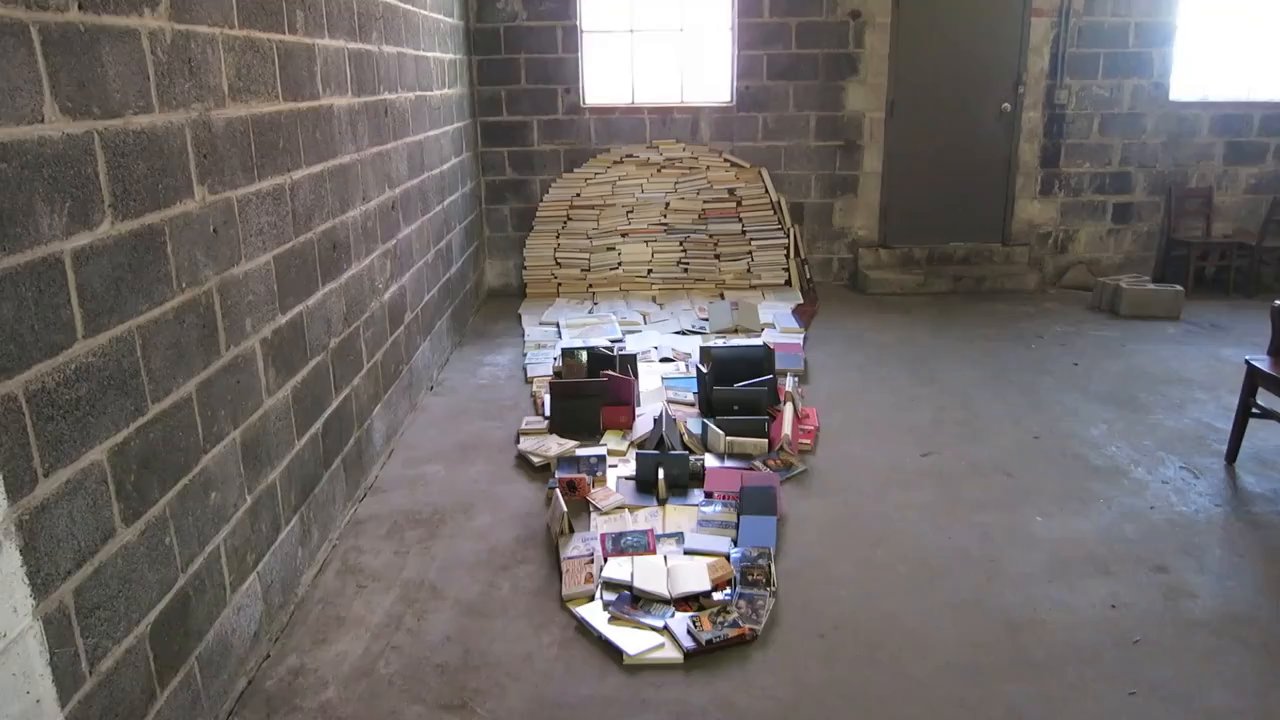
Dead Media
Arranged VHS videocassettes. 20′-8″ x 8′-11″ (6.29 x 2.71 meters). Site-specific anamorphic installation at TCC Visual Arts Center in Tidewater Virginia.
In this modern era of digital communication and cloud storage, the physical formats for storing data are rapidly becoming extinct. What happens to the massive amounts of stuff we've created once they serve no functional purpose?


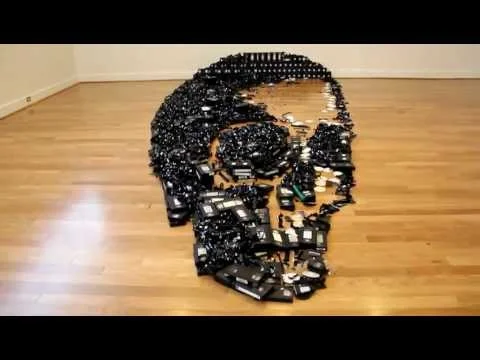
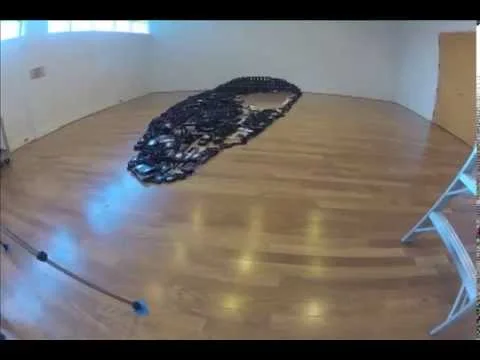
Mütter's Skull of Brains
Arranged human brain slices, encased in acrylic. Site-specific anamorphic installation at the College of Physicians of Philadelphia’s Mütter Museum.

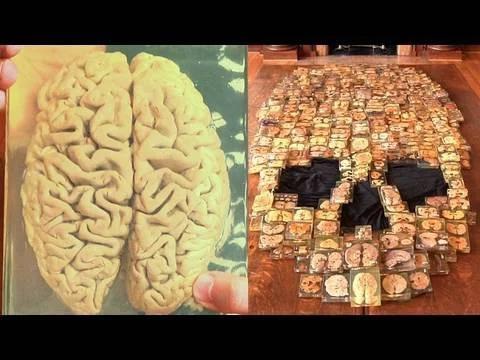
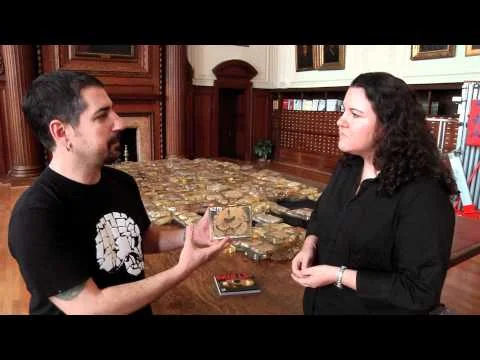
Skull-A-Day
366 images created for the year-long daily art project Skull-A-Day. 2007-2008
Also shown: images from the 2009 After Life installation at Quirk Gallery, in Richmond, Virginia. The installation including the majority of the physical pieces from the project, as well as several new objects created specifically for the exhibition.