Wednesday 28 January, 2026

A rose by any other name…

… is still a rose. Amazing what one can do with the right lens.


Quote of the Day

”The alarming fact is that everyone on this earth has an enormous stake in how the United States chooses to be and act in this world.”

  • Swedish diplomatic historian Anders Stephanson in his book American Imperatives.

Yep. Which is why we need to learn from what is happening there now.


Musical alternative to the morning’s radio news

Paul Simon | Train In The Distance

Link


Long Read of the Day

Using generative AI to learn is like Odysseus untying himself from the mast

Lovely, thoughtful essay by David Deming on why students (and their teachers) should beware of using ChatGPT et al as crutches for the mind.

The Sirens are often portrayed as sexual temptresses in art and popular culture. But Homer never describes the Sirens bodies or gives any sense that their physical allure. Here is a translated excerpt from the 12th book of the Odyssey (emphasis mine) – “For never yet has any man rowed past this isle in his black ship until he has heard the sweet voice from our lips. Nay, he has joy of it, and goes his way a wiser man. For we know all the toils that in wide Troy the Argives and Trojans endured through the will of the gods, and we know all things that come to pass upon the fruitful earth.”

The Sirens offer Odysseus the promise of unlimited knowledge and wisdom without effort. He survives not by resisting his curiosity, but by restricting its scope and constraining his own ability to operate. The Sirens possess all the knowledge that Odysseus seeks, but he realizes he must earn it. There are no shortcuts. This is the perfect metaphor for learning in the age of superintelligence.

“Learning is hard work”, Deming concludes. “And there is now lots of evidence that people will offload it if given the chance, even if it isn’t in their long-run interest. After nearly two decades of teaching, I’ve realized that my classroom is more than just a place where knowledge is transmitted. It’s also a community where we tie ourselves to the mast together to overcome the suffering of learning hard things”.

The problem is that the temptation to rely on AI to just get the essay done and get the grade you need is often overwhelming for students who need to get the credentials for a job that will help them pay off their debts.


Books, etc.
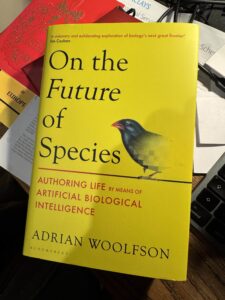
A while back, Mustafa Suleyman, a co-founder of Deep Mind, published an interesting book with the title “The Coming Wave.” In it, he argued that the looming problem facing humanity is how to manage two “uncontainable technologies”: — AI and ‘synthetic biology’. At the moment we are spending a lot of time fretting about the former, and perhaps not thinking enough about the latter.

And now, along comes a new book from a molecular biologist which basically argues that the two can — and will — work together. “With the assistance of AI,” Woolfson writes, “which has the potential to decode life’s generative grammar and the agency of a chemical printing press capable of rendering the genome sequences of species as if they were the texts of books, our ability to manipulate life’s structures could become virtually limitless. Free from the constraints of chance and natural selection, we would no longer need to reference nature’s blueprints. We could instead begin to narrate new designs – equipped with the pen, paper and creativity necessary to rewrite life’s story. In so doing, we would become the authors of species.”

The book’s title neatly gives the game away. Darwin was concerned with the origins of species; Woolfson thinks that we will eventually be in a position to design entirely new species from scratch. You might well ask: why would we want to do that? And you know the answer: we humans are a weird species.


My commonplace booklet
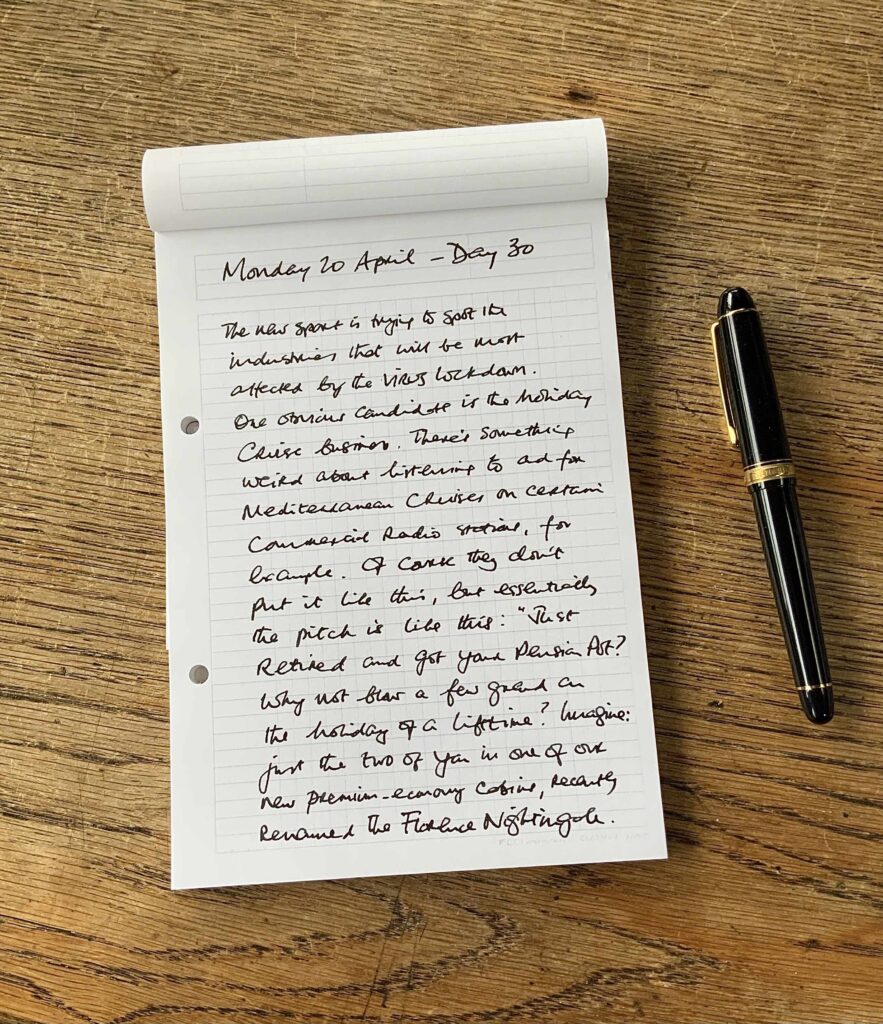
For the first 100 days of the COVID lockdown I kept an audio diary on this substack — transcripts of which I eventually published as a Kindle book, 100 Not Out. Searching through my files the other day, I came on one of the notebooks I used at the time. This is the entry for Day 30 — Monday 20th of April, 2020.


Linkblog

Something I noticed, while drinking from the Internet firehose.

BIC penlight

Just what you’ve always wanted. Not.

Source

h/t Charles Arthur


This Blog is also available as an email three days a week. If you think that might suit you better, why not subscribe? One email on Mondays, Wednesdays and Fridays delivered to your inbox at 5am UK time. It’s free, and you can always unsubscribe if you conclude your inbox is full enough already!



Monday 26 January, 2026

Galatea

Matthew Darbyshire’s lovely sculpture of Galatea greets one on embarking from the London train at Cambridge North station.

On Friday, which was a miserable day, some kind soul had the nice idea of giving her a wooly hat. Which of course made me wonder if I should wrap her in my winter overcoat. Fortunately, wiser counsels prevailed.


Quote of the Day

”The notion that a radical is one who hates his country is naïve and usually idiotic. He is, more likely, one who likes his country more than the rest of us, and is thus more disturbed than the rest of us when he sees it debauched. He is not a bad citizen turning to crime; he is a good citizen driven to despair.”

H.L. Mencken


Musical alternative to the morning’s radio news

Thea Gilmore’s Midwinter Toast

Link


Long Read of the Day

So what really went on in Davos last week?

There’s an absolute torrent of reportage, speculation and opinionated commentary about Trump, Greenland, Mark Carney’s speech, whether we’ve now reached ‘Peak Trump’, etc. I’ve read more of this than is good for me, trying to find some nuggets of real insight, and I think I’ve found a gem — “Davos is a rational ritual” by Henry Farrell (Whom God Preserve). The title indicates that he was struck by Michael Suk-Young Chwe’s book on ‘rational ritual’ which argues that in order to coordinate its actions, a group of people must form “common knowledge.” Each person wants to participate only if others also participate. From Chwe’s perspective, Henry writes,

what is more important than the vision of the past and future is where Carney said it and how he framed it. If you are planning a grand coronation ceremony, which is supposed to create collective knowledge that you are in charge, what happens when someone stands up to express their dissent in forceful terms?

The answer is that collective knowledge turns into disagreement. By giving the speech at Davos, Carney disrupted the performance of ritual, turning the Trumpian exercise in building common knowledge into a moment of conflict over whose narrative ought prevail.

Trump’s planned descent on Davos this year was an example of royal progress:

Swooping into Davos, and making the world’s business and political elite bend their knees, would have created collective knowledge that there was a new political order, with Trump reigning above it all.

Business elites would be broken and cowed into submission, through the methods that Adam [Tooze] describes. The Europeans would be forced to recognize their place, having contempt heaped on them, while being obliged to show their gratitude for whatever scraps the monarch deigned to throw onto the floor beneath the table. The “Board of Peace” – an alarmingly vaguely defined organization whose main purpose seems to be to exact fealty and tribute to Trump – would emerge as a replacement for the multilateral arrangements that Trump wants to sweep away. And all this would be broadcast to the world.

So what Carney did was to break the ritual protocol.

Do read it.


Guess who the US military just recruited? Private AI

My most recent Observer column

On 12 January, Pete Hegseth, an ex-TV “personality” with big hair who is now the US secretary for war (nee defence), bounded on to a podium in Elon Musk’s SpaceX headquarters in Texas. He was there to announce his plans for reforming the American war machine’s bureaucratic engine, the Pentagon. In a long and surprisingly compelling speech, he made it clear that he’s embarked on a radical effort to reshape the bureaucracy of the war department, and to break up its cosy relationships with what Dwight Eisenhower called the “military-industrial complex” – the handful of bloated defence contractors that have assiduously milked the US government for decades while never delivering anything that was on time and within budget.

Predictably, one of the tools that Hegseth had chosen for his demolition job was AI, and to that end, three companies – Anthropic, Google and OpenAI – had already been given $200m contracts by the Pentagon to develop AI “agents” across different military areas. Given the venue and his host for the day, it came as no surprise to those present when Hegseth announced that Musk’s AI model, Grok, was also going to be deployed on this radical mission.

This did come as a surprise, though, to those outside the SpaceX hangar. Did it mean, mused the mainstream media commentariat, that this AI tool, which was mired in outrage and controversy for enabling people to create sexualised images of children, would be empowered to roam freely through all the archives – classified as well as unclassified – of the US war department?

Answer: yes…

Do read the whole piece. If you can’t access it, there’s a pdf here

My commonplace booklet

I’ve only been to Davos once, long before it was famous. I was on a walking holiday in Switzerland, and one day found myself in a nondescript town called Davos with nothing much going on. I bought myself a big Swiss Army penknife (which I still possess and use) and a pair of red walking socks, and thought no more of the place.

I was once invited to the gabfest, but declined the invitation, on the grounds that (a) I detested the people who attended it and (b) had no desire to go around dressed like an Eskimo in daylight while being expected to dress for dinner in the evening. Best decision I ever made.


Errata

Many thanks to the readers who pointed out that Mark Carney’s speech at Davos on January 20 preceded Donald Trump’s on the following day instead of (as I had it) the other way round.


This Blog is also available as an email three days a week. If you think that might suit you better, why not subscribe? One email on Mondays, Wednesdays and Fridays delivered to your inbox at 5am UK time. It’s free, and you can always unsubscribe if you conclude your inbox is full enough already!


Friday 23 January, 2026

Figures in a cloister

Cluny, Burgundy.


Quote of the Day

” The loneliest moment in someone’s life is when they are watching their whole world fall apart, and all they can do is stare blankly.”

  • F. Scott Fitzgerald

Good description of what liberals have been doing in 2025.


Musical alternative to the morning’s radio news

Morten Lauridsen | O Magnum Mysterium | VOCES8

Link


Long Read of the Day

Mark Carney’s speech at Davos

Coming in the afternoon after Trump’s rambling, shambolic speech, Carney’s was an electrifying demonstration of what beautifully crafted rhetoric can do.

You can watch it here, but I recommend reading it in full here.

Today I will talk about a rupture in the world order, the end of a pleasant fiction and beginning of a harsh reality, where the geopolitics of the great powers is not subject to any constraints.

But I will say, on the other hand, that other countries, especially middle powers like Canada, are not powerless. They have the capacity to build a new order that encompasses our values, such as respect for human rights, sustainable development, solidarity, sovereignty and territorial integrity of states.

The power of the less powerful starts with honesty.

It seems that every day we’re reminded that we live in an era of great power rivalry, that the rules-based order is fading, that the strong can do what they can, and the weak must suffer what they must.

And this aphorism of Thucydides is presented as inevitable, as the natural logic of international relations reasserting itself.

And faced with this logic, there is a strong tendency for countries to go along to get along, to accommodate, to avoid trouble, to hope that compliance will buy safety.

Well, it won’t.

So, what are our options?

In 1978, the Czech dissident Václav Havel, later president, wrote an essay called The Power of the Powerless, and in it, he asked a simple question: how did the communist system sustain itself?

And his answer began with a greengrocer…

Do read it.

And, if you’re interested in the Havel essay, you can find it here.


My commonplace booklet

The Morning After the Tantrum Before

The wittiest response to Trump’s rambling and incoherent Davos speech came from comedian Andy Borowitz, who specialises in a witty spoof headline every morning. Yesterday’s said it all:

Denmark Offers Trump Ownership of Room in Assisted Living Facility in Greenland

Tom Nichols of The Atlantic wrote that,

”No one can be watching this Davos speech and reach any conclusion but that the President of the United States is mentally disturbed and that something is deeply wrong with him. This is both embarrassing and deeply dangerous.”

It is. But it sparks another thought — about Joe Biden. For at least six months before the 2024 election we know that the people around him in the White House knew that his mental frailty was such that they should protect him from external scrutiny as much as possible. And in that they were mostly successful.

Now, Trump’s minders and enablers know that they have exactly the same problem with their boss. Because of his personality, though, they cannot keep him out of the public eye: his chronic narcissism makes that impossible. And the Davos shambles demonstrates the consequences of that. There will be more of this as the year progresses and the mid-term elections loom. This could mean that the MAGA strategy will now be to sabotage those elections, probably by using ICE to foment so much chaos that they have to be postponed on the grounds of a national emergency.


This Blog is also available as an email three days a week. If you think that might suit you better, why not subscribe? One email on Mondays, Wednesdays and Fridays delivered to your inbox at 5am UK time. It’s free, and you can always unsubscribe if you conclude your inbox is full enough already!

The Morning After the Tantrum Before

The wittiest response to Trump’s rambling and incoherent Davos speech came from comedian Andy Borowitz, who specialises in a witty spoof headline every morning. Today’s said it all:

Denmark Offers Trump Ownership of Room in Assisted Living Facility in Greenland

Tom Nichols of The Atlantic wrote that

”No one can be watching this Davos speech and reach any conclusion but that the President of the United States is mentally disturbed and that something is deeply wrong with him. This is both embarrassing and deeply dangerous.”

It is. But it sparks another thought — about Joe Biden. For at least six months before the 2024 election we know that the people around him in the White House knew that his mental frailty was such that they should protect him from external scrutiny as much as possible. And in that they were mostly successful.

Now, Trump’s minders and enablers know that they have exactly the same problem with their boss. Because of his personality, though, they cannot keep him out of the public eye: his chronic narcissism makes that impossible. And the Davos shambles demonstrates the consequences of that. There will be more of this as the year progresses and the mid-term elections loom. This could mean that the MAGA strategy will now be to sabotage those elections, probably by using ICE to foment so much chaos that they have to be postponed on the grounds of a national emergency.

Wednesday 21 January, 2026

Fontenay on an August evening.

The Abbey of Fontenay in Burgundy is one of the most peaceful and serene places I’ve ever visited. Last time I was here was in 1988 and it hasn’t changed. It was closed by the time we reached it, so we climbed a bank in the wood to get this shot over the wall.


Quote of the Day

”On some great and glorious day the plain folks of the land will reach their heart’s desire at last, and the White House will be adorned by a downright moron.”

  • H. L. Mencken

Musical alternative to the morning’s radio news

Bob Dylan | Like A Rolling Stone (Live at Newport 1965)

Link


Long Read of the Day

A property developer’s view of Greenland

Heather Cox Richardson’s Substack is an unfailing source of historically-informed sanity. Her edition for January 16 contained a particularly revealing report on a conversation between Trump and some journalists.

Sample:

In an interview with New York Times reporters on January 7, Trump explained that he wants not simply to work with Greenland, as the U.S. has done successfully for decades, but to own it. “Ownership is very important,” he told David E. Sanger.

“Why is ownership important here?” Sanger asked.

“Because that’s what I feel is psychologically needed for success,” Trump answered. “I think that ownership gives you a thing that you can’t do, whether you’re talking about a lease or a treaty. Ownership gives you things and elements that you can’t get from just signing a document, that you can have a base.”

Katie Rogers asked: “Psychologically important to you or to the United States?”

Trump answered: “Psychologically important for me. Now, maybe another president would feel differently, but so far I’ve been right about everything.”

In a different part of the interview, Rogers asked Trump: “Do you see any checks on your power on the world stage? Is there anything that could stop you if you wanted to?” Trump answered: “Yeah, there is one thing. My own morality. My own mind. It’s the only thing that can stop me, and that’s very good.”

“Not international law?” asked Zolan Kanno-Youngs. “I don’t need international law,” Trump answered. “I’m not looking to hurt people. I’m not looking to kill people. I’ve ended—remember this, I’ve ended eight wars. Nobody else has ever done that. I’ve ended eight wars and didn’t get the Nobel Peace Prize. Pretty amazing.” After more discussion of his fantasy that he has ended eight wars,” Kanno-Youngs followed up: “But do you feel your administration needs to abide by international law on the global stage?”

“Yeah, I do,” Trump said. “You know, I do, but it depends what your definition of international law is.”

My question: how did the republic get to this: a toddler as president?


My commonplace booklet

When I launched this newsletter in 2020 — at the beginning of the Covid lockdown — I guessed (correctly) that the daily news would be dispiriting and I stopped listening to Radio 4’s Today programme. And I decided that the newsletter should always have a musical alternative to the morning’s news as a kind of antidote.

It turned out to have been a good idea: the musical link is — still — often the most popular item on a day’s edition. In 2025, being hooked on mainstream media has definitely been bad for one’s mental equilibrium: it leaves one with a warped view of humanity.

This point was cogently argued by Martin Kettle, the Guardian columnist, in his final column for the paper, in which he relates what happened when he lost his wallet on a train.

There is no way around the fact that the media – traditional and social alike – are sleepless drivers of our reflexive collective pessimism. We live in a country where failure, risk and danger are deemed ever present and on the increase. Our media endlessly reports terrible cases of cruelty, exploitation, greed and anger. As a result, no one in my profession would ever think my wallet story was worth sharing, except perhaps at Christmas.

I think that description of mainstream media as the “sleepless drivers of our reflexive collective pessimism” is spot on. It’s a big problem for contemporary democracies.

(Many thanks to John Seeley for alerting me to Kettle’s column.)


Feedback

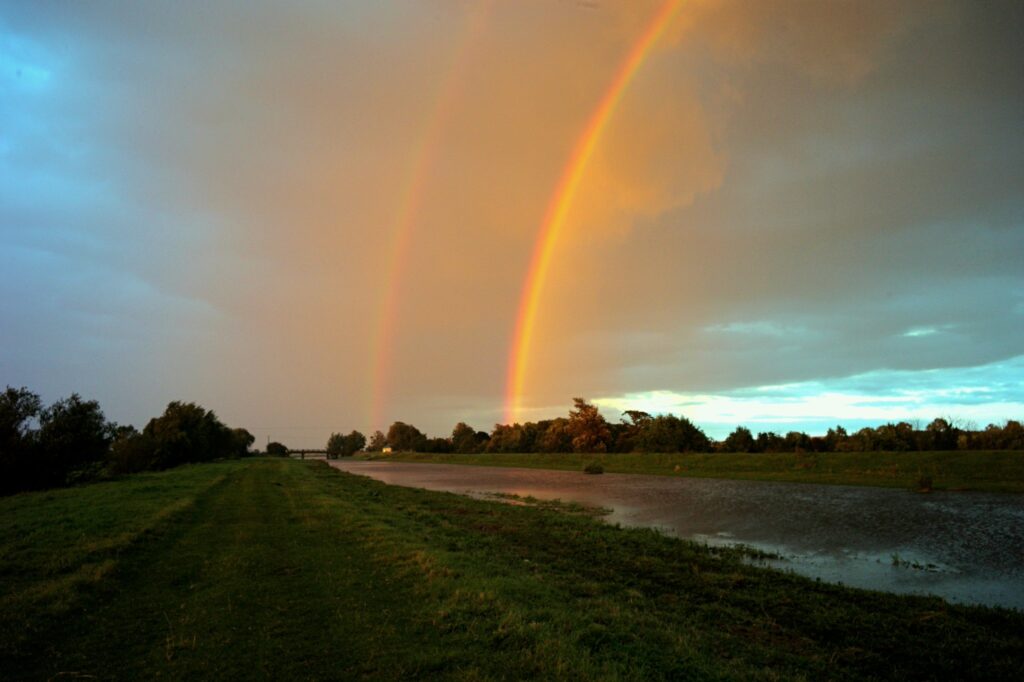
The East Anglian double rainbow in Monday’s edition prompted Don Higgins to go “snap!” and attach this photograph he had taken at Hawkes Bay, New Zealand. “I hadn’t realised until I took this pic,” he writes, “that the colours in the outer rainbow are in the reverse order to the main one”.

I hadn’t ever noticed that, so asked ChatGPT about it.

The two rainbows are formed by different numbers of internal reflections inside raindrops: * The primary rainbow comes from one internal reflection. * The secondary rainbow comes from two internal reflections, which flips the order of the colours and also makes the rainbow dimmer (more light escapes the drop).


  This Blog is also available as an email three days a week. If you think that might suit you better, why not subscribe? One email on Mondays, Wednesdays and Fridays delivered to your inbox at 5am UK time. It’s free, and you can always unsubscribe if you conclude your inbox is full enough already!


Monday 19 January, 2026

Doubling Up

A rare sight in the fens of East Anglia.


Quote of the Day

”Did you know that Mozart had no arms and no legs? I’ve seen statues of him on people’s pianos.”

Viktor Borge


Musical alternative to the morning’s radio news

Handel | Ombra mai fu | Andreas Scholl

Link

I still remember the moment when I first heard this. It was in September 1972 when my wife and I and our young son were on holiday in the Valais region of Switzerland. One afternoon, on impulse, we decided to drive through the Simplon pass to Italy. We wound up in Domodossola, a small town near the border. My wife wanted to explore the town and so she and our son went off while I sought refuge in the local church. (I was tired after doing the long drive). The church was beautifully peaceful, illuminated by shafts of the evening sun coming through two of its windows, and I settled down on a pew to think and perhaps to doze.

And then I noticed that I was not alone. Up in the organ loft an elderly man and a teenage boy with a violin were engaged in a lively conversation. Turned out that I was sitting in on a music lesson. The piece that they were rehearsing was Ombra mai fu. I had never heard it before, and I listened entranced as the pupil played it maybe 20 times, with his teacher commenting after every performance about vibrato and expressiveness and tone. It was a magical moment — what James Joyce might have called an epiphany. And it still comes back to me whenever I hear the tune.


Long Read of the Day

 The Work Behind the Writing: On Writers and Their Day Jobs

Nice elegant essay by Ed Simon on how writers often (usually?) have to to suffer unrelated toil just to be able to pay the bills.

”Writing is tiring, stressful, and often disappointing, like any job. There is, for us lucky few, a remunerative quality to the craft which identifies it as labor, with Stephen King arguing in On Writing that if you “wrote something for which someone sent you a check, if you cashed the check and it didn’t bounce and if you then paid the light bill with the money” then you are a genuine writer. Even though how we think about the literary life is gauzy and sentimental, it’s still a job where you put your hours in.

But, if writing is work, there is also the vocation about it, the sense that should never be forgotten that it’s not just labor, but a privilege. To put some words after the other and then have another human being spend a few minutes with those words, whether in agreement or disagreement, is an incomparable honor. To be able to arrange these blocks of words, engineer those sentences, and build those paragraphs so that an order emerges, no matter how shoddy, is the closest thing to mysticism that I can imagine, so that to merely call it a “job” seems a diminishment (though I appreciate the checks).”

Hope you enjoy it as much as I did.


The UK is wedded to US tech. Time for a divorce

My most recent Observer column

Over several decades, we Europeans constructed a way of living that is totally dependent on technologies run by corporations that describe themselves as “global” but are all, in fact, American. It’s as if, having abolished feudalism, we reintroduced it in the cloud; we diligently tilled our data, while Silicon Valley collected the rent. And for a long time, although we might have had occasional qualms, it seemed like a manageable deal. After all, the US was an ally that – as Winston Churchill allegedly said – could always be relied on to do the right thing, after it had exhausted all the alternatives.

Until now. The Ofcom investigation into X isn’t just a regulatory issue; it could also be a test case to see if we can hold tech platforms accountable when doing so will enrage the regime in Washington. The answer will reveal whether we’re still sovereign nations capable of protecting our citizens, or whether we’ve essentially become digital client states where US corporate interests trump our own laws. Kissinger’s quip about friendship being fatal wasn’t meant as a technology policy prediction. But as we acknowledge how comprehensively we’ve embedded US tech into our critical infrastructure, it’s clear that we should have been paying more attention to the implications of where we were headed…

Read on

If you need a pdf version, you can find it here


Errata

Tom Roper emailed to point out that wasn’t Gramsci who originated the motto “pessimism of the intellect, optimism of the will” but Romain Rolland. According to a scholarly article by Francesca Antonini published in 2019, Gramsci explicitly attributed it to Rolland in an article published in L’Ordine Nuovo, 3–10 April 1920.

Brooding on the depressing tsunami of authoritarian madness emanating from the US, I felt that ‘pessimism’ was the wrong sentiment, because it’s intrinsically disabling. What’s needed now in Europe is realism of the intellect as well as optimism of the will. And a good place to start is by accepting that we now inhabit a radically changed world; lamenting the disintegration of the US-crafted post-war order is a fruitless, indulgent waste of time. What was once ‘unthinkable’ is now happening, day by day by day.


This Blog is also available as an email three days a week. If you think that might suit you better, why not subscribe? One email on Mondays, Wednesdays and Fridays delivered to your inbox at 5am UK time. It’s free, and you can always unsubscribe if you conclude your inbox is full enough already!

Friday 16 January, 2026

S&M Footwear?


Quote of the Day

”Only Donald Trump could make us miss hypocrisy. “

  • Jeremy Shapiro, former US official now research director of the European Council on Foreign Relations.

Musical alternative to the morning’s radio news

Elvis Costello | I Felt The Chill Before The Winter Came

Link


Long Read of the Day

Can UK Health Trust US Tech?

Rory Cellan-Jones, the former BBC Technology correspondent and now a gifted podcaster and campaigner for healthcare for Parkinson’s (from which he suffers), was spurred to write this blog post after reading Quentin’s “Living without America” essay the other day.

It would not take more than a few hours for us to realise how totally dependent we are – at home and at work – on American technology. Tens of thousands of my photos and videos would be trapped in the iCloud, my email account, provided by Google, would become inaccessible, even this Substack would sputter to a halt – Google’s AI Overview (something else I wouldn’t be able to access) tells me most of Substack’s servers are located in the United States.

This set me thinking about the digital revolution finally happening in UK healthcare and how reliant on American technology it is. Just a few years ago, a rift with the US would not have been a big problem – so glacial was the pace of change that most medical records were still on paper.

But now the big hospitals are moving to electronic patient records and the supplier of choice for many is Epic, a huge, quite quirky American company whose EPR systems receive lots of praise but not for their openness. Sign up to Epic and it wants everything in your hospital to work on its software, not someone else’s…

He’s right about the improvements we’re seeing in the NHS because of electronic patient records (I can personally testify to that), but there is a downside that we’re just beginning to appreciate. My forthcoming Observer column contains more on that subject.


Books, etc.

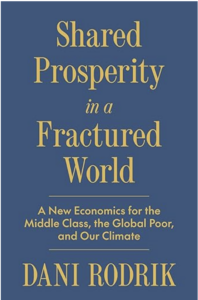
I went to a great talk last night by the Harvard economist Dani Rodrik about his latest book, which addresses the three great challenges that face us:

  • Climate change;
  • Creating meaningful jobs that will ensure the continuation of the stable middle class that’s essential if liberal democracies are to endure;
  • Reducing global poverty.

Despite the grim times we’re currently living through, he said that it was basically an optimistic book because he saw lots of good things happening across the world which lie below the radar of politics-obsessed mainstream media. His goal, he said, was to try and persuade us that his optimism was not deluded.

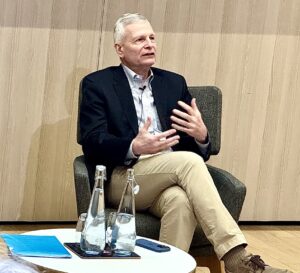
To judge from the Q&A with a sizeable cohort of Cambridge academia, I’d say he had 85% success. But for me the really useful and memorable takeaway was his powerful argument that relying on manufacturing for a renewal of a sustainable middle class is now a pipe-dream. It is possible, he argued, to create new, meaningful jobs for people, but they won’t be in manufacturing. Even China, the manufacturing centre of the world, is discovering this unpalatable truth.

Rodrik, fielding audience questions

I loved his talk and have ordered the book. As he was talking I kept thinking of Gramsci’s famous mantra — that what we need is “pessimism of the intellect and optimism of the will”. I’ve been trying to replace “pessimism” with “realism” (because pessimism is so disabling) and it occurred to me that his book might fit that bill nicely.


  This Blog is also available as an email three days a week. If you think that might suit you better, why not subscribe? One email on Mondays, Wednesdays and Fridays delivered to your inbox at 5am UK time. It’s free, and you can always unsubscribe if you conclude your inbox is full enough already!

Wednesday 14 January, 2026

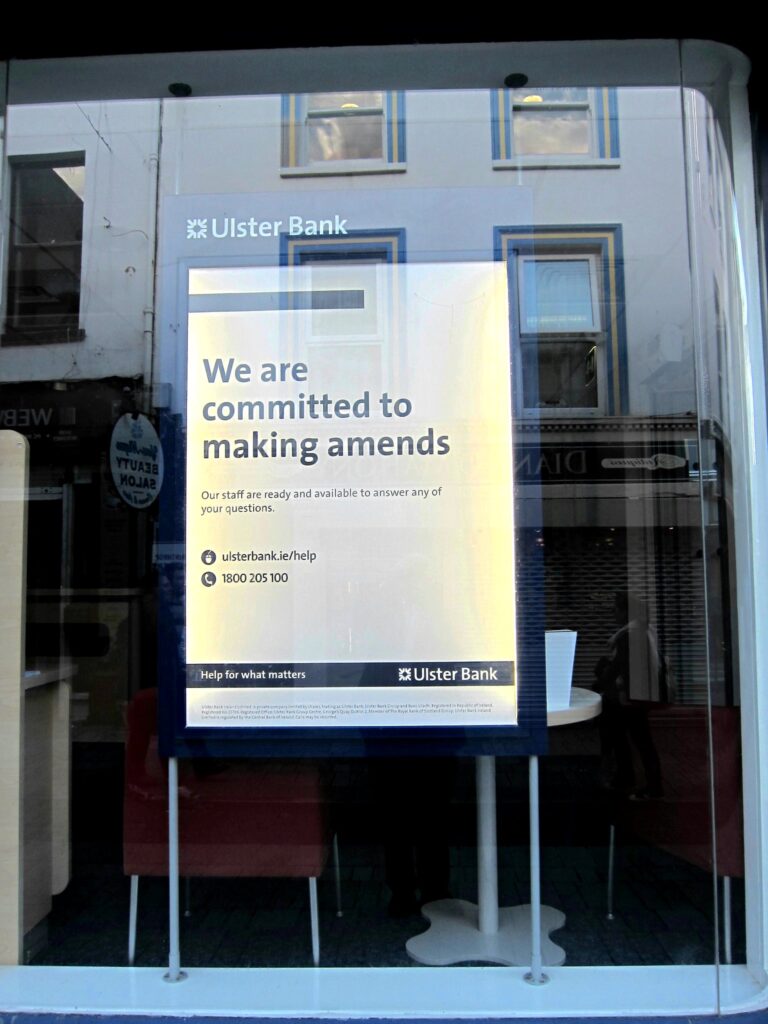
Oh yeah?

Seen in Cork City sometime after the Irish banking crash.


Quote of the Day

”There are only two businesses that call their clients users—drug dealers and Internet businesses. The East India Company is a role model for both.”

  • Ted Gioia

Musical alternative to the morning’s radio news

Emmylou Harris & Alison Krauss | “All I Have to Do Is Dream”

Link

Their joint tribute to the Everly Brothers, who were a big deal for kids who grew up in the 1950s.

Thanks to John Darch for the link.


Long Read of the Day

My Third Winter of War

This is a memorable dispatch from Kyiv by Kateryna Kibarova, a Ukrainian economist and resident of Bucha. It conveys something of what Ukrainian civilians are living through.

We have special Telegram groups, “Ukrainian Power Grids,” with subgroups for each region. You receive an updated list and a schedule. In the evening when I go to bed, I check the schedule to understand what time I need to get up to get ready for work. You adjust your schedule if, for example, there will be no power from 6am to 11am. I’ll get up at 4am to get ready for work, dry my hair. But these schedules are often unpredictable, and I have to go to work with a wet head.

A difficult stage has begun, because it is winter and there is very little gas and electricity. The state can’t cope. This year, they didn’t even start the heating season on time. Usually the radiators in apartment buildings begin to warm up when the temperature drops below 59 degrees. The first sectors to be launched are kindergartens, hospitals, schools. We had a very cold summer and the fall was also very cold. By mid-October, the heating season would normally have been launched. It’s one thing when you walk along the street if the sun is shining on a 45-degree day. When you sit in an apartment, you just freeze…

And, of course,

scammers are also very busy here. They steal money from card accounts overnight. I fell for a scam, so I decided to save money and travel on public transport. One day an air alert began and all transport stopped. When this happens you cannot move anywhere, you are simply dropped off, stand in huge lines, and you don’t know what to do. I just started crying. People are frozen in horror. You don’t know if a rocket is coming, you have nowhere to hide, there is no bomb shelter anywhere nearby. It’s cold outside, and you are trying to somehow think about what to do next and how to save yourself.

In a way, it’s WW2 redux, with Trump and Putin playing games.


Books, etc.

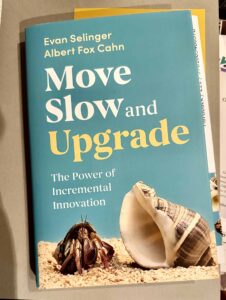
This arrived today. It’s a neat riposte to Zuckerberg’s fatuous mantra to “Move Fast and Break Things”.

Comes out in the UK on March 5. I’m hoping to go to the launch on February 5.


My commonplace booklet

Nick Carr on datification of the body

A few months ago, as part of my annual physical exam, I had blood drawn for a routine panel of tests. Late the next day, my phone vibrated to let me know the results were available through my doctor’s “patient portal” app. I signed in (entering a six-digit code to authenticate myself), clicked on the Results tab, and was greeted by a long list of numbers. There must have been two dozen of them, each a measure of some important metabolic function, each occupying a point within a range of points. Blood, that most vital and visceral of substances, had been turned into an array of data on a computer screen. Blood had been rendered bloodless. Maybe I was in a morbid mood—medical tests will do that to you—but as I scrolled through the numbers, I couldn’t help feeling I was looking at a metaphor for something larger, something central to the human condition today. What is datafication but a process for transforming the living into the dead?

From All the Little Data .


This Blog is also available as an email three days a week. If you think that might suit you better, why not subscribe? One email on Mondays, Wednesdays and Fridays delivered to your inbox at 5am UK time. It’s free, and you can always unsubscribe if you conclude your inbox is full enough already!

Friday 9 January, 2026

No smoke without …

On the other hand, it might just be letting off steam.


Quote of the Day

”AI is the asbestos we’re shoveling into the walls of our high-tech society.”

  • Cory Doctorow

Nice metaphor.


Musical alternative to the morning’s radio news

Haydn | Symphony nº 33 Hob. I: 22 Der Philosoph 1st movement: Adagio

Link


Long Read of the Day

Living without America

If you think that what’s going on in the US is nothing to do with you then can I respectfully request that you think again. Reading this remarkable blog post by my friend Quentin Stafford-Fraser would be a good place to start.

Quentin sees a big problem looming on our horizons now:

Microsoft, Apple, Google and Meta are all American companies. And (as the recent minor AWS outages demonstrated), a very great number of other organisations depend on infrastructure which is either physically in the USA, or is owned by companies which are.

And as Donald Trump seems ever more keen to become the new Putin, this may be a problem, and it may affect you. Sooner than you think.

There was a scare earlier this year when Trump regime imposed sanctions against the International Criminal Court because he didn’t like them criticising Israel, and shortly afterwards the ICC prosecutor who was his main target lost access to his Microsoft services. Later, Microsoft denied that these were in any way connected, but further information has been scarce, and the thing that really worried people was not whether it actually happened, but the fact that it now seems totally plausible that it might. In October, the ICC announced that it was ditching Microsoft Office in favour of an Open Source alternative. Mmm.

This is a pattern that is starting to become more common, as the idea of ‘digital sovereignty’ becomes ever more desirable. The German State of Schleswig-Holstein moving 30,000 PCs to Linux and LibreOffice is one recent example. A ministry in Denmark has been doing the same thing. The Austrian Ministry of Economy started the adoption of Nextcloud, hosted on its own hardware, when its licence for Teams and Sharepoint expired. And just last month the main Belgian DNS registrar announced that it was leaving AWS, and put out a request for proposals from European alternative platforms. “The geopolitical reality is forcing us to think more carefully about our infrastructure”, they said. “Ten years ago, we made the decision to switch to AWS, which has certainly benefited our services. But the world has changed, and those benefits no longer outweigh the risk we run if the US suddenly imposes restrictions or tariffs on cloud usage.”

So let’s imagine that Trump decides to invade Greenland…

Do read on.


How the media made Nick Fuentes

My recent Observer column

Nicholas Joseph Fuentes is an American political commentator, far-right white nationalist, activist and livestreamer. He hosts America First, a YouTube livestream. Like most of the far-right crowd, he specialises in provocation. One source reports a few choice examples of his rage-bait: describing Hitler as “awesome” is one, while calling interracial marriage “degenerate” is another, as is claiming marital rape is “impossible”. Also, describing women as “fundamentally lower” in intelligence and insisting that Jim Crow segregation benefitted black Americans.

His misogyny is pathological. In May 2023, he said that he wanted a 16-year-old wife when he is 30, “when the milk is fresh”. In November 2024, immediately after Donald Trump’s victory, he tweeted “Your body, my choice. Forever” on X, mocking the pro-choice slogan “My body, my choice” adopted by protesters before (and after) the US supreme court’s reversal of Roe v Wade in June 2022. Predictably, it went viral with 100m-plus views.

Basically, then, Fuentes is an equal-opportunity dog-whistler, so much so that many social media platforms have excluded him (but YouTube has had no qualms about hosting America First). His big break came in 2024, when Elon Musk let him back on X, where he now has more than 1 million followers.

Given the number of rightwing fanatics on X, you’d have thought that just adding one more might not be such a big deal. Big mistake. Fuentes is suddenly ubiquitous in American political discourse…

Read on.

PDF How the media made Nick Fuentes | The Observer


My commonplace booklet

Apropos Quentin’s piece above, for years I’d thought about Silicon Valley as a contemporary manifestation of what Joe Nye called ’soft power’ — the ability of a country to influence others through attraction and persuasion rather than coercion. Think Hollywood in the post-war period.

The way Silicon Valley lined up behind Trump after the election should have alerted me to a seismic shift. The commercial interests of the tech industry are now inextricably linked to US national interests — as defined by Trump. First signs of that were his warnings that European attempts to regulate ‘American’ companies like X and Meta would be interpreted as acts of economic warfare and dealt with accordingly. He has already imposed travel restrictions on five officials of the European Commission for “organized efforts to coerce American platforms to censor, demonetize, and suppress American viewpoints they oppose.”

And then (as Quentin says) there was his sanctions on the International Criminal Court for, among other things, “issuing baseless arrest warrants targeting Israeli Prime Minister Benjamin Netanyahu and Former Minister of Defense Yoav Gallant”. Shortly afterwards the ICC prosecutor who was his main target mysteriously lost access to his Microsoft services. Microsoft denial that they were in any way responsible for singling out this individual. But their statement says only that “at no point did Microsoft cease or suspend its services to the ICC” while carefully avoiding the case of the individual prosecutor.

The new reality we have to contend with is not only that the US is no longer a reliable ally, but also that it is currently governed by a capricious and vengeful president who perceives no limits on his authority and can do what he likes. And if anyone doubts that if he were to instruct Microsoft to pull the kill switch on an individual — or an institution — I bet they would comply.

Which is a sobering thought when one works in a university that has handed over management of all its email services to, er, Microsoft.

In the meantime I’ve just figured out out to download and safely archive all of my Gmails, and am wondering if I should activate my Proton email account.


  This Blog is also available as an email three days a week. If you think that might suit you better, why not subscribe? One email on Mondays, Wednesdays and Fridays delivered to your inbox at 5am UK time. It’s free, and you can always unsubscribe if you conclude your inbox is full enough already!

Wednesday 7 January, 2026

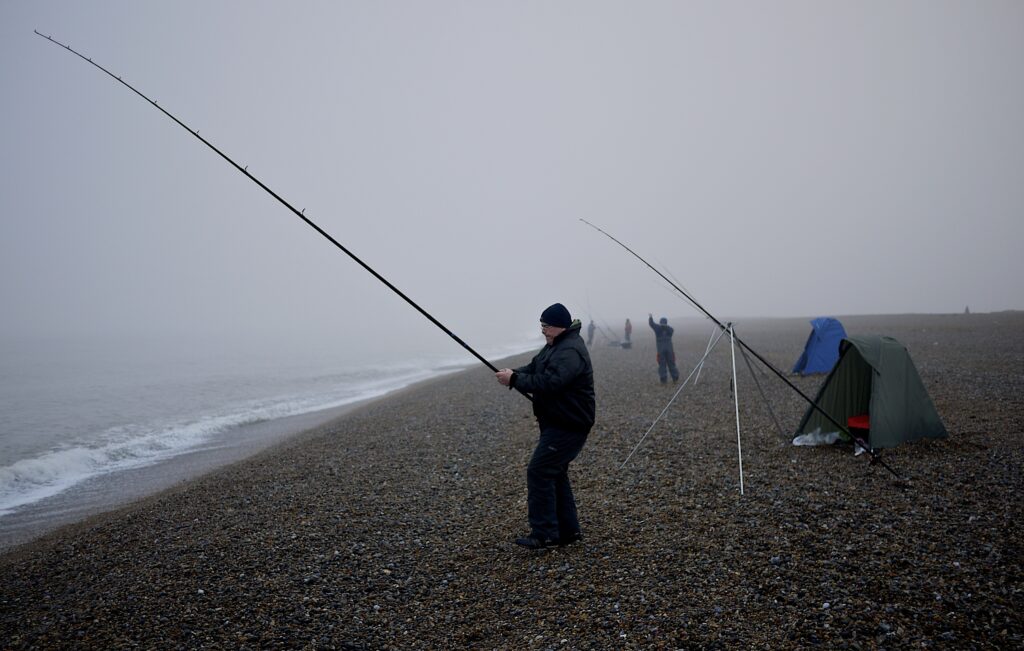
Hoping for a bite

I’ve always been impressed by the phlegmatic endurance of these fishermen on the beach at Cley-next-the-Sea in North Norfolk.


Quote of the Day

”To be an enemy of America can be dangerous, but to be a friend is fatal.”

  • Henry Kissinger

I wonder if Keir Starmer has got the message.


Musical alternative to the morning’s radio news

Tom Waits | Waltzing Matilda )

Link


Long Read of the Day

 America’s world turned upside down

Bill Emmott’s reflections on 2025.

It has been a dark and stormy year, although not in as benign a sense as the much-mocked melodrama by Edward Bulwer-Litton from which this paraphrase of his opening line derives, nor as funny as the Peanuts cartoons that played on it. The year has blended dangerous geopolitical turmoil and extraordinary political destructiveness with a powerful surge of technological development that could presage either prosperity or calamity – or perhaps both.

As such, for this author the year’s principal themes are best evoked not by the purple prose of Victorian gothic fiction but by one famous quotation from an Ancient Greek historian and two famous book titles from past eras.

The Greek historian is Thucydides (who else?) and the quotation his poignant description of the might-is-right era of the Peloponnesian War, nearly 2,500 years ago. That was a time, as he wrote, when some felt that ‘the strong do what they can and the weak suffer what they must’.

This, certainly, is how the great powers of our time, Russia, China and, most shockingly, now the United States have been behaving. They believe that their strength and size entitles them to behave in ways smaller fry cannot. The rest of the world, they think, just has to put up with it.

Until 2025, it was generally believed that, for all its faults and occasional bullying behaviour, the United States had stood behind the international laws and norms that since the 1945 United Nations Charter have sought to protect the weak and constrain the strong. But in his second term in office President Donald Trump has shown no interest in laws or norms…

Great essay. Do make time for it.


Books, etc.

It’s that time of year when publishers persuade literary editors to highlight books that are coming out soon-ish. I usually approach these with a jaundiced eye, but some one in the FT’s list looked interesting.

January:

  1. The Elements of Power: A Story of War, Technology and the Dirtiest Supply Chain on Earth by Nicholas Niarchos, Penguin Press
  2. Billionaire Backlash: The Age of Corporate Scandal and How It Could Save Democracy by Pepper Culpepper and Taeku Lee.

March:

  1. The Coming Storm: Power, Conflict and Warnings from History by Odd Arne Westad (Allen Lane).
  2. Muskism : A Guide for the Perplexed by Quinn Slobodian and Ben Tarnoff (Allen Lane).
  3. The Infinity Machine: Demis Hassabis, DeepMind, and the Quest for Superintelligence by Sebastian Mallaby (Allen Lane)

June:

Land by Maggie O’Farrell, (Knopf). Particularly interesting to me because it’s a novel about the Ordnance Survey mapping of Ireland during the Great Famine.


My commonplace booklet

Birdlife and death

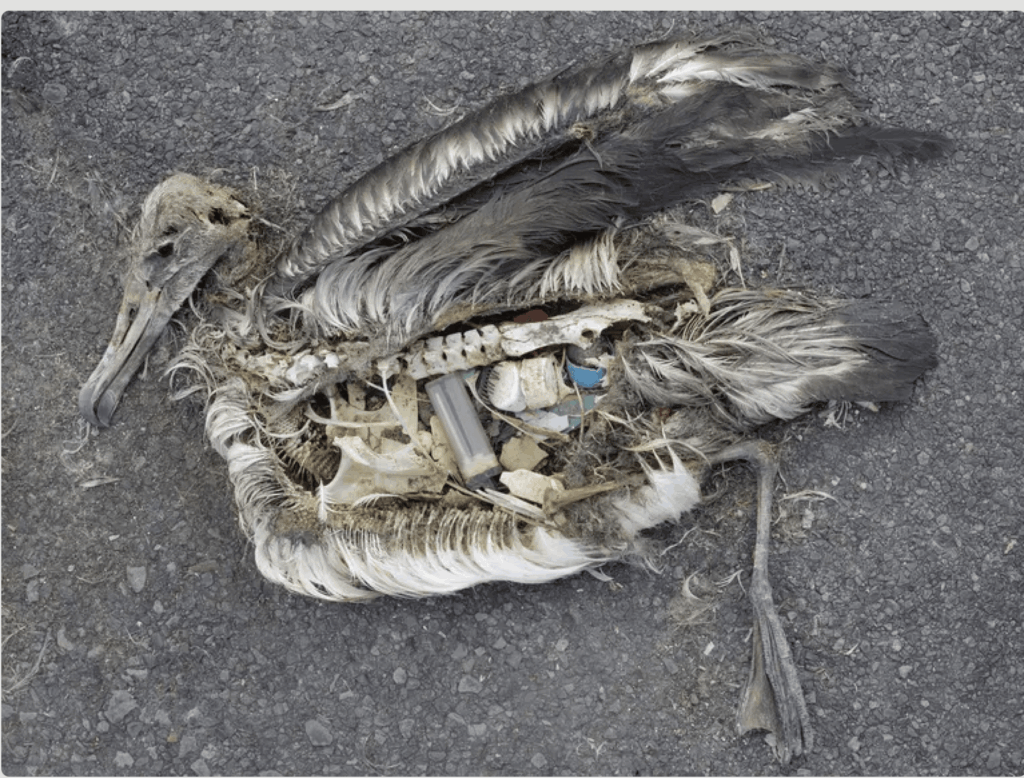
What a dead Albatross chick ingested.

Remember Coleridge’s poem — The Rime of the Ancient Mariner? An albatross starts following his ship. The sailors see it as a good omen because it seems to bring a following wind, but the Ancient Mariner suddenly and inexplicably kills the bird with his crossbow. Afterwards, when disaster strikes the ship, the crew force the Mariner to wear the dead albatross round his neck. The symbolism: the bird represents the natural world and something holy or even divine. Killing it was an act of spiritual transgression for which the killer should — and did — feel guilt. It’s great poem, with a contemporary resonance evoked by the photograph.

Source


Linkblog

Something I noticed, while drinking from the Internet firehose.

  • The world’s largest accounting body has decided to scrap remote exams to combat a rise in students cheating when sitting tests remotely

The Association of Chartered Certified Accountants, which has 257,900 members, will end its online exams from March, requiring candidates to sit assessments in person unless there are exceptional circumstances, its chief executive Helen Brand told the Financial Times.

Remote invigilation was introduced during the Covid-19 pandemic to allow students to continue qualifying into the profession during lockdowns.

But the ACCA has concluded that online tests have become too difficult to police, particularly as artificial intelligence has made cheating more difficult to combat.

Link


  This Blog is also available as an email three days a week. If you think that might suit you better, why not subscribe? One email on Mondays, Wednesdays and Fridays delivered to your inbox at 5am UK time. It’s free, and you can always unsubscribe if you conclude your inbox is full enough already!