


| CARVIEW |
Sat Dec 9th, 8.30AM-6.30PM
Learning with Limited Labeled Data: Weak Supervision and Beyond
This webpage is outdated! Please check https://lld-workshop.github.io to reach the new website!
NIPS 2017
Overview
Modern representation learning techniques like deep neural networks have had a major impact both within and beyond the field of machine learning, achieving new state-of-the-art performances with little or no feature engineering on a vast array of tasks. However, these gains are often difficult to translate into real-world settings as they require massive hand-labeled training sets. And in the vast majority of real-world settings, collecting such training sets by hand is infeasible due to the cost of labeling data or the paucity of data in a given domain (e.g. rare diseases in medical applications). In this workshop we focus on techniques for few sample learning and using weaker supervision when large unlabeled datasets are available, as well as theory associated with both.
One increasingly popular approach is to use weaker forms of supervision—i.e. supervision that is potentially noisier, biased, and/or less precise. An overarching goal of such approaches is to use domain knowledge and resources from subject matter experts, but to solicit it in higher-level, lower-fidelity, or more opportunistic ways. Examples include higher-level abstractions such as heuristic labeling rules, feature annotations, constraints, expected distributions, and generalized expectation criteria; noisier or biased labels from distant supervision, crowd workers, and weak classifiers; data augmentation strategies to express class invariances; and potentially mismatched training data such as in multitask and transfer learning settings.
Along with practical methods and techniques for dealing with limited labeled data settings, this workshop will also focus on the theory of learning in this general setting. Although several classic techniques in the statistical learning theory exist which handle the case of few samples and high dimensions, extending these results for example to the recent success of deep learning is still a challenge. How can the theory or the techniques that have gained success in deep learning be adapted to the case of limited labeled data? How can systems designed (and potentially deployed) for large scale learning be adapted to small data settings? What are efficient and practical ways to incorporate prior knowledge? This workshop will focus on highlighting both practical and theoretical aspects of learning with limited labeled data, including but not limited to topics such as:
- Learning from noisy labels
- Distant or heuristic supervision
- Non-standard labels such as feature annotations, distributions, and constraints
- Zero-shot, one-shot, transfer, and multi-task learning
- Data augmentation and/or the use of simulated data
- Frameworks that can tackle both very few samples and settings with more data without extensive intervention
- Effective and practical techniques for incorporating domain knowledge
- Applications of machine learning for small data problems in medical images and industry.
December 9 2017
Location Grand Ballroom B
890 Seats
10 Speakers
Speakers

Andrew McCallum
University of Massachusetts Amherst
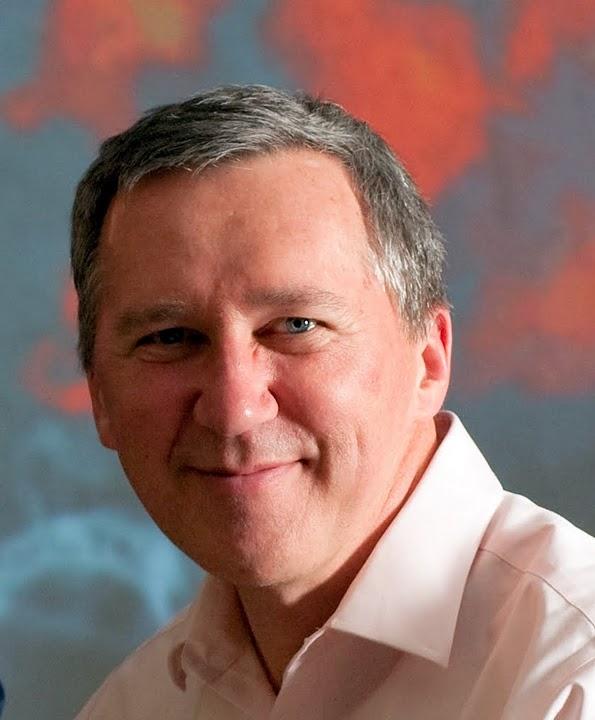
Tom Mitchell
Carnegie Mellon University

Gaël Varoquaux
INRIA

Ian Goodfellow
Google Brain

Sebastian Riedel
University College London/Bloomsbury AI.

Sameer Singh
University of California, Irvine
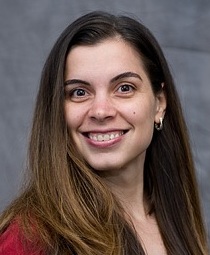
Nina Balcan
Carnegie Mellon University

Alan Ritter
The Ohio State University.
Daniel Rubin
Stanford
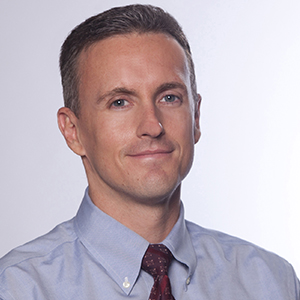
Matthew Lungren
Stanford

Ina Fiterau
Stanford
Submit a Contribution
Please format your papers using the standard NIPS 2017 style files. The page limit is 5 pages (excluding references).
Please do not include author information, submissions must be made anonymous. All accepted papers will be presented as posters(poster dimensions: 36 x 48 in. (91cm x 122cm)), with exceptional submissions also presented as oral talks.
We are pleased to announce that our sponsors, Owkin (2 awards of $500 each) and CFM (2 awards of $500 each), will provide best paper awards.
- Submission site: https://easychair.org/conferences/?conf=lld2017
- Style files: https://nips.cc/Conferences/2017/PaperInformation/StyleFiles
- Submissions are reviewed through a confidential double-blind process.
- Cross-submissions are allowed, yet please clearly indicate if the submitted work has been presented somewhere else. Accepted papers will not be archived, thus submission does not preclude publications in other venues.
- We strongly encourage at least one author per submission to attend the workshop to present in person, however due to registration difficulties this year, submissions with no attending authors will still be considered.
- Email organizing chairs: lld2017[at]googlegroups[dot]com
Important dates
- Submission deadline:
November 3, 2017, 23:59 EST - Notification of acceptance:
November 15, 2017 - Camera-ready Due:
December 1, 2017 - Workshop: December 9, 2017
Event Schedule
8:30 AM: Welcome (pdf) 8:40 AM: Invited Talk: Gaël Varoquaux, Tales from fMRI: Learning from limited labeled data (pdf) 9:10 AM: Invited Talk: Tom Mitchell, Learning from Limited Labeled Data (But a Lot of Unlabeled Data) (pdf) 9:40 AM: Contributed Talk 1: Yucen Luo, Smooth Neighbors on Teacher Graphs for Semi-supervised Learning 9:55 AM: 1-minute poster spotlights 10:15 AM: Poster Session 1/ Coffee Break 11:00 AM: Invited Talk: Andrew McCallum, Light Supervision of Structured Prediction Energy Networks (pdf) 11:30 AM: Invited Talk: Sebastian Riedel, Forcing Neural Link Predictors to Play by the Rules (pdf) 12:00 PM: Lunch 2:00 PM: Panel: Daniel Rubin, Matt Lungren, Ina Fiterau, Limited Labeled Data in Medical Imaging (pdf) 2:30 PM: 1-minute poster spotlights 2:50 PM: Poster Session 2 / Coffee Break 3:30 PM: Invited Talk: Nina Balcan, Sample and Computationally Efficient Active Learning Algorithms (pdf) 4:00 PM: Contributed Talk 2: Maxim Grechkin, EZLearn: Exploiting Organic Supervision in Large-Scale Data Annotation 4:15 PM: Invited Talk: Sameer Singh, That Doesn't Make Sense! A Case Study in Actively Annotating Model Explanations (pdf) 4:45 PM: Invited Talk: Ian Goodfellow, Overcoming Limited Data with GANs (pdf) 5:15 PM: Contributed Talk 3, Tatjana Chavdarova (on behalf of Suraj Srinivas), Local Affine Approximators of Deep Neural Nets for Improving Knowledge Transfer 5:30 PM: Contributed Talk 4, Elaheh Raisi, Co-trained Ensemble Models for Weakly Supervised Cyberbullying Detection 5:45 PM: Invited Talk: Alan Ritter, What’s so Hard About Natural Language Understanding? (pdf) 6:15 PM: Award ceremony 6:25 PM: Closing Remarks (pdf)Accepted papers
(*) Award! (*)Runner up for best paper awards!Session Poster 1
Session Poster 2
People
Organizers
- Isabelle Augenstein, University of Copenhagen, Denmark
- Stephen Bach, Stanford University, USA
- Eugene Belilovsky, KU Leuven and University of Paris-Saclay
- Matthew Blaschko, KU Leuven, Belgium
- Christoph Lampert, IST Austria, Austria
- Edouard Oyallon, ENS -> INRIA Lille, France
- Emmanouil Antonios Platanios, Carnegie Mellon University, USA
- Alexander Ratner, Stanford University, USA
- Chris Ré, Stanford University, USA
Reviewers
- Mathieu Andreux, ENS
- Maruan Al-Shedivat, CMU
- Maria Barrett, University of Copenhagen
- Maxim Berman, KU Leuven
- Joachim Bingel, University of Copenhagen
- Johannes Bjerva, University of Copenhagen,
- Brian Cheung, UC Berkeley
- Bogdan Cirstea, Télécom ParisTech
- Christoph Dann, CMU
- Tri Dao, Stanford
- Laurent Dinh, Université de Montréal
- Elvis Dohmatob, INRIA
- Jared Dunnmon, Stanford
- Henry Ehrenberg, Facebook
- Michael Eickenberg, UC Berkeley
- Georgios Exarchakis, ENS
- Enzo Ferrante, CONICET/UNL
- Lucie Flekova, Amazon
- Aina Frau-Pascual, Massachusetts General Hospital
- Ronan Fruit, INRIA
- Aditya Grover, Stanford
- Arthur Guillon, LIP6
- Braden Hancock, Stanford
- Bryan He, Stanford
- Chin-Wei Huang, Université de Montréal
- Jörn Jacobsen, University of Amsterdam
- Katharina Kann, University of Munich
- Kyle Kastner, Université de Montréal
- Ravi Kiran, Uncanny Vision
- Géraud Le Falher, INRIA
- Joël Legrand, INRIA
- Vincent Lostanlen, Cornell Lab
- José Ignacio Orlando, UNCPBA, Argentina
- Mohammad Pezeshki, Université de Montréal
- Thomas Pumir, Princeton
- Amal Rannen, KU Leuven
- Mengye Ren, University of Toronto
- Xiang Ren, University of Southern California
- Stéphane Rivaud, Sony
- Sebastian Ruder, Insight Research Centre for Data Analytics
- Abulhair Saparov, CMU
- Naomi Saphra, University of Edinburgh
- Damien Scieur, INRIA
- Daniel Selsam, Stanford
- Konstantinos Skianis, Ecole Polytechnique
- Louis Thiry, ENS
- Mariya Toneva, CMU
- Eleni Triantafillou, University of Toronto
- Stavros Tsogkas, University of Toronto
- Jonathan Vacher, Albert Einstein College of Medicine
- Paroma Varma, Stanford
- Claire Vernade, Télécom ParisTech
- Irene Waldspurger, CNRS
- Johannes Welbl, University College London
- Jian Zhang, Louisiana State University
- Sixin Zhang, ENS