O’Hare back as the busiest American airport

New data from 2025 suggests O’Hare Airport is again the busiest airport in the country:

carview.php?tsp=
Photo by Zulie D on Pexels.com

Preliminary federal data posted Tuesday shows 857,392 flights occurred at O’Hare in 2025 compared with archrival Hartsfield-Jackson Atlanta International Airport’s 807,625 operations…

The last time O’Hare came first was in 2019. Since then, Hartsfield-Jackson led the pack.

Why did this happen?

“O’Hare is America’s hottest connecting hub right now due to concurrent expansion by American and United, plus new international flying.”

Why might it matter?

“It was a blow to our reputation as the country’s premier transportation hub when O’Hare lost this distinction,” Schwieterman noted.

What does it take for a city to be considered a transportation hub? Here are some factors that might fit. Multiple modes of transportation. An advantageous location. Some recognizable transportation centers. And lots of people and goods moving into and out of a city and region.

Chicago fits that bill without necessarily having the busiest airport. From its beginning it has been a railroad and waterways hub and then added roads and airports.

Does the busiest airport help? Probably because then the city can claim to be #1 and people tend to remember what is at the top of the list rather who is in third or fifth place.

This could also be a situation where losing the #1 busiest airport ranking would go without comment while reaching the top spot is worth celebrating and noting. What leader wants to be responsible in a drop in status?

It is also interesting to consider how the busyness of airport data lines up with the satisfaction of passengers and airlines using those airports. Should a city aim for busy airports or well-liked airports?


Who is affected by unusual sports champions like Indiana in college football or Leicester City in the Premier League?

Sports leagues often have a set of consistent winners who regularly contend for championships. They may have a history and resources. They are known by all in the sport. They may be disliked by plenty of others whose teams do not have regular success or do not challenge for championships.

carview.php?tsp=
Photo by Wallace Chuck on Pexels.com

Sometimes these hierarchies are upset. Last night was one such occurrence with Indiana University beating Miami to cap the college football playoff. Indiana is the football champion for the first time ever. A basketball school won the football championship. As one commentator summed up how it happened, they concluded that it may never happen again:

All of which makes this a singular moment in the sport. The Indiana football program still has the third most losses of any team in FBS history, and I’m not sensing that Northwestern or Wake Forest is all that close to hanging a championship banner. Maybe, though. College football was a static sport for a long time. The last year a team won its program’s first national title was 1996, when the Florida Gators did it. A new economic structure will create new first-time champs on a quicker timeline than that going forward. It will just never, ever yield a two-year flip job like the one Indiana just put on.

In the recent past, I also remember Leicester City winning the Premier League in 2016. This team had finished second in the top tier once in the distant past (late 1920s) and had fluctuated between the top tier and second tier for decades. But 2015-2016 was a magical season where the team overcame great odds to win the league. Ten years later, they are back in the second tier.

Who is affected by these unusual championship victories? Certainly it is good for supporters of these teams. They will remember this forever. Their team won it all when they typically are not even competing for the top spot. The teams will enjoy this success for years, perhaps with new fans and resources, and with a higher status legacy.

What about the broader public? Perhaps some others will join in for the exciting ride of the unusual championship. How many college football fans joined the Indiana bandwagon from their success the previous year through their just-completed undefeated year? How many fans enjoyed Leicester City beating the top teams that tend to dominate the Premier League?

At the same time, this success does not last forever. Do sports championships change people’s day to day lives? Will the regular powers in the sport reassert their dominance?

Maybe the most enduring legacy will be the hope that any team may have that they too could have these unusual seasons. Get the right coach. Attract the right star player. The top teams might falter. It could all come together for one season. It probably won’t – there can only be one champion each year – but it could. Remember when Indiana or Leicester City or other unexpected champions won it all? The great outlier season could happen. The odds that another unexpected champion could arise have to be greater than 0%, right?

(The 2016 World Series victory by the Chicago Cubs might be a similar unexpected championship – see one comparison to Indiana’s win here. The Cubs’ win led to a large public celebration. For multiple reasons, I did not include them in this post.)

“So goes Amazon/social media discourse/better schools/job growth/affordable housing, so goes the United States”

In 1953, the CEO of General Motors was in a congressional nomination hearing as he had been appointed by President Eisenhower to be Secretary of Defense. Did he see think that holding the government job would be a conflict of interest given his large holdings of GM stock?

carview.php?tsp=
Photo by 500photos.com on Pexels.com

I cannot conceive of one because for years I thought what was good for our country was good for General Motors, and vice versa. The difference did not exist. Our company is too big. It goes with the welfare of the country. Our contribution to the Nation is quite considerable.

This quote ties the fate of one company to the fate of the country. Since 1953, this might fit numerous large corporations that employed many people and generated large revenues. Today, this might be Amazon or Walmart or Nvidia or other influential corporations.

At the same time, people in the United States focus on particular social issues that they think require attention. Address conversation and participation on social media and life would get better. Improve schools and education and future generations have a brighter future. Add more jobs in exciting industries and people will be excited. Provide decent or good housing at affordable prices and this can lead to other opportunities. The issue of the moment might have been different years ago and it could change in the future but there are always conversations about what should be done.

Both sets of statements are reductionistic. No single company determines the fate of the United States. One social issue could affect many yet other issues might have a broader reach or have larger effects.

Companies and social problems do evolve and change over time. A number of the companies that led the way in the United States decades ago are no more. Certain social issues vexed the country years ago but may have receded from view today or the effects were ameliorated.

In other words, the conversations of today may not be the most helpful if they limit focus to just one company or social problem and even broader conversations will change in the future. This does not mean that the conversations of now are not valuable; rather, we should seek to have a broad field of vision and a sense of the current scene even as we discuss specific firms and social concerns.

Will there be another Colorado Springs/”Jesus Springs”?

In recently reading Jesus Springs by historian William J. Schultz, I was reminded of the social factors that contributed to the city becoming an evangelical center by the 1990s. As Ben Norquist and I found about Colorado Springs and several other evangelical centers in Chapter 6 of Sanctifying Suburbia, these centers could come together over time – and the evangelical center could change over time. For example, some of the evangelical organizations that ended up in Colorado Springs came from other places with lots of evangelical organizations like Wheaton and the suburbs east of Los Angeles.

carview.php?tsp=
Photo by Jacob Moore on Pexels.com

Since multiple evangelical clusters have arisen, will another place become the Colorado Springs of the 2030s? Could a similar process happen in another location?

There are several ways to think about this. What places now have conditions that evangelical organizations would find favorable? Perhaps it is a particular political climate or an influential local evangelical institution or an offer for land or a building.

Or what might occur in Colorado Springs that would prompt organizations to leave for somewhere else? A new evangelical center could emerge from organizations leaving a place they no longer consider hospitable.

Or maybe this is about whether physical proximity matters as much in today’s world. Technology enables organizations to be located all over or employees to be located all over. Will organizations continue to value a possible face-to-face interaction and synergy with like-minded people and organizations?

Or this might be connected to broader religious patterns. What happens to the number of evangelical Americans in the coming years and what effect does this have on evangelical organizations?

A lot would have to happen for another a Colorado Springs like place to emerge as an evangelical center.

Trying to explain the magic of The Beatles – in children’s books

Many have tried to explain what made The Beatles great. Was it the relationships between the members, the time they spent honing their craft in Hamburg, their songwriting, their musical and recording innovations, or their being in the right spot at the right time?

Whatever the answer is, how does one explain this in children’s books? I read a recent example in We are The Beatles, an entry in the “Ordinary People Change the World” series.

carview.php?tsp=

As someone who has read plenty of books about The Beatles, I appreciate seeing opportunities for kids to learn about the group. With an overview of the group’s members and their career (plus some lively illustrations), this might give kids a sense of what the group was and what they accomplished. Just complete the line implied at the end of the second page depicted above: “with a little help from my friends.” (I’ve also read Who Were The Beatles? in the “Who Was” series.)

But it may be just as hard to explain to kids as it is to explain to adults. I also recently read The Genius Myth which has an extended discussion of The Beatles. If “genius” is not about a lone innovator, does this musical group help us see the relational and social alchemy that leads to genius?

As The Beatles and their music continue to age (Paul and Ringo can’t live forever, can they?), it will be interesting to see if the narratives about their success change. What might kids and adults think in 2060, one hundred years after the group worked hard to establish themselves?

Pledges from tech companies enough to quiet local opposition to data centers?

Microsoft announced multiple “policy pledges” intended to address concerns residents have about nearby data centers:

carview.php?tsp=
Photo by Pixabay on Pexels.com

The tech giant said Tuesday it was making five policy pledges to ensure that its data centers are not a burden on people living nearby. The measures include replenishing water supplies, not asking for property tax breaks and making sure that Microsoft’s data centers don’t drive up electricity rates.

The plan “reflects our sense of civic responsibility as well as a broad and long-term view of what it will take to run a successful AI infrastructure business,” Microsoft President Brad Smith said in a company blog post…

The community anger crosses the partisan divide. Conservative activists in ruby-red towns in Oklahoma have been circulating petitions demanding the firing of officials who sign nondisclosure agreements to negotiate terms with tech companies. And progressive groups such as the Democratic Socialists of America and the NAACP have rallied around data center opposition…

Between April and June of last year, 20 projects valued at some $98 billion of planned data center projects were derailed in communities across the country, according to a report by Data Center Watch, a tracking project by the nonpartisan research firm 10a Labs. More projects were derailed in those three months than in the past two years.

Are these the primary or only concerns residents have? Imagine that Microsoft or other tech companies could make good on these pledges: no higher electricity rates, reasonable water usage, and so on. Would the concerns of residents fade away?

Maybe. I wonder if several other concerns might then pop up. Do residents trust tech companies? They might not like tech companies building much of anything. Or they might argue the land could be put to better uses. From what I can gather, data centers provide some longer-term but not many longer-term jobs. Perhaps a different kind land use could provide bigger economic opportunities for people living nearby?

Or is the primary issue in many of these cases that they are located close to residences? Homeowners, in particular, often react negatively to any nearby land use that could threaten their day-to-day life and/or housing values. Zoning is meant to help keep homeowners away from undesirable land uses. And undesirable can be interpreted very broadly.

Perhaps all of this will fade away with time. Data centers are popping up all over the place and many communities are facing this issue. Will this building pace continue or will it slow soon?

I also suspect there will be some communities that approve and/or welcome data centers even as others turn them away. A single metropolitan area can have dozens or hundreds of communities that companies can try to work with. Whether the communities that do approve data centers see long-term benefits remains to be seen.

A former suburban grocery store vacant for over 12 years

When the Dominick’s grocery chain closed in the Chicago area, it left numerous vacant properties in the suburbs. One property in Buffalo Grove that has been empty for over 12 years will soon be renovated:

carview.php?tsp=
Photo by Pixabay on Pexels.com

The first phase will involve the long-vacant Dominick’s site. In its place will be a 34,000-square-foot Club Studio, a high-end fitness center operated by Fitness International LLC, the parent company of LA Fitness. About 27,000 square feet will be reserved for general retail use.

The renovation will include the complete demolition and reconstruction of the building’s front facade, a new roof and loading dock, a redesigned parking lot and replacement of the existing monument sign.

Shorewood’s Louis Schriber III said his firm intends to close on the Dominick’s site Jan. 29. The physical work on the site will begin in the next 45-90 days.

Dominick’s closed its locations in 2013 and the last Google Street View image with Dominick’s at this site was September 2012. This is a long time for a sizable commercial property to be empty. Suburbs do not like having such vacant properties for multiple reasons. It could be generating more tax revenue if a business was operating there. Empty properties do not look as desirable. Local residents can like having more grocery options.

Finding a taker for a larger property can be hard as can finding brick and mortar businesses in the today’s world of online shopping. Fitness clubs have moved into some big retail spaces as they require lots of space. New entertainment options have moved into others.

I wonder if there is a predictable point when communities and developers give up on such properties. How long can they wait? On the other hand, shopping developments are often located along major roadways and/or at major intersections where the volume of traffic and the purchasing power of nearby residents mean it is a good potential spot.

Rise of luxury housing in the Sun Belt

South Florida and other Sun Belt locations are joining the upper ranks of places with luxury housing:

carview.php?tsp=
Photo by Bradley Hook on Pexels.com

Luxury homes in the South Florida metro sold for a median of $4.04 million in October, up 187.3% from a decade ago—more than double the national rise of 82.5%, and the fastest growth of any major metro…

Over the past five years, luxury prices in the metro rose 105%, the second-fastest increase among major U.S. metros and only slightly behind Miami. West Palm Beach has also been the nation’s fastest-growing luxury market for most of the past year, posting the highest annual price growth in nine of the past 12 months…

Eight of the 10 major metros with the fastest growth in luxury home prices since 2015 are in the Sun Belt, reflecting a broader, decade-long shift in where high-end homebuyers are choosing to put down roots.

Following West Palm Beach in the top five are Nashville (+171%), Phoenix (+165.7%), Las Vegas (+161%) and Miami (+148%).

The report cites two factors driving this luxury housing growth: changes related to COVID-19 and remote work plus changes in taxes in coastal states.

I wonder if several other factors are at play:

  1. More housing construction in Sun Belt locations than other places. For example, if there is more space available and/or fewer obstacles to building expensive housing in one place compared to another, it could help increase luxury housing.
  2. Certain scenes or communities are cool. Could some of this be about wanting to be in up-and-coming places? Are there certain amenities or quality of life options available in these Sun Belt locations that are harder to obtain elsewhere?
  3. Even with remote work, personal connections matter. Are certain companies and/or jobs located in the Sun Belt? Could this be about living near certain other wealthy people or particular social networks?
  4. Incentives offered by certain locations. We know communities and states give tax breaks to corporations. Are these options available to organizations connected to wealthy residents who then also move? Or are there any incentives for residential construction?

While these luxury housing shifts are underway, it does not sound like any of the traditional centers of the most expensive housing are disappearing soon – they are just not growing as much.

DuPage County the first Illinois county to adopt zoning

DuPage County, Illinois had 91,998 residents in the 1930 Census. Suburban growth had begun as the county had more than doubled in population since 1920. The county soon added another mark of suburbanization:

carview.php?tsp=
Photo by Jeswin Thomas on Pexels.com

In 1933 the Chicago Regional Planning Association induced Du Page County to adopt a zoning resolution. First county in Illinois to pass such legislation, Du Page was influential in getting the State legislature to pass a county zoning act in 1935. Gaining thereby the legal means to enforce its own ordinance, Du Page County revised its law and made it more strict. Through the zoning ordinance, the use of both buildings and land is regulated to prevent the encroachment of business and industry upon residential areas outside the limits of incorporated cities and villages and to keep the highways free from unsightly dumps and automobile “graveyards.” (Knoblauch, 1951, Du Page County Guide, 4)

This passage highlights the perceived advantages of zoning: it limits what can be near single-family homes. Homeowners and residents do not want to be next to businesses, industry, dumps, and lots filled by old vehicles. This is a primary focus of zoning throughout the United States. A quiet residential setting with certain appearances, neighbors, and noise levels should be protected.

Even as the county would experience much more growth, topping 900,000 residents in the 2000 Census, the region had plenty of non-residential land use in the suburbs. In addition to farms and small communities, the areas in the region outside of Chicago had plenty of industry. Locating factories and plants out in the suburbs could make sense with cheap land and fewer concerns from neighbors. This could be in communities like Lake Township that were later annexed into Chicago or in industrial suburbs like Gary and Aurora that were further from the city that benefited from access to water and had railroad connections.

Today, it would be hard to imagine American suburbs without zoning. Would the reasons Americans love suburbs still exist or be the same if the valued single-family homes were next to undesirable land uses? DuPage County and many other suburban counties and communities depend on zoning to help create the day-to-day suburban experience Americans prize.

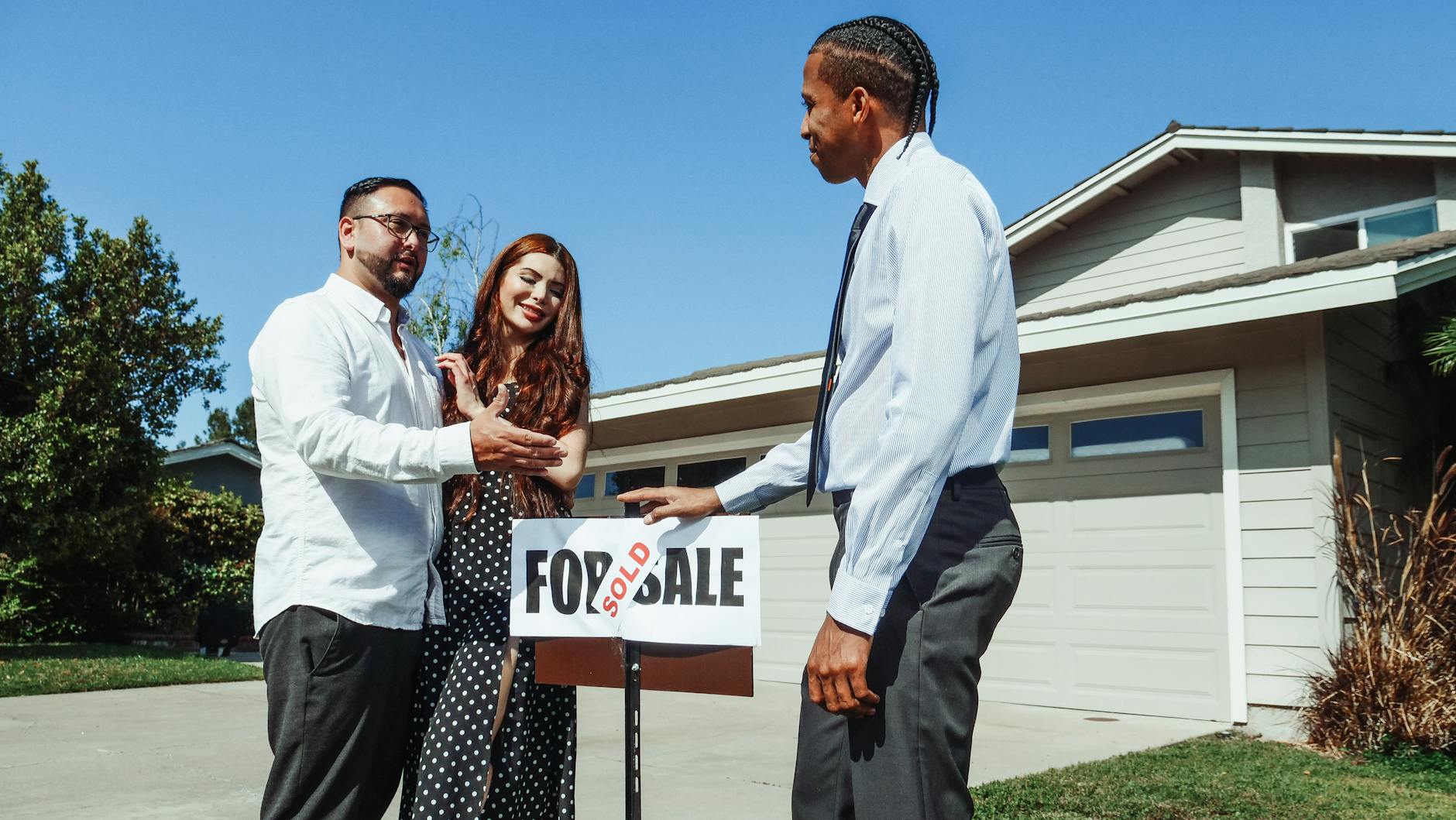
Zillow makes the majority of its money from real estate agents

Zillow changed how many people find and view real estate but it makes more of its money from real estate agents:

carview.php?tsp=
Photo by Kindel Media on Pexels.com

Not everyone agrees Zillow is good. Like Uber, the company has weathered a barrage of industry resistance, naysayers and litigation in its conquest. But its dominance is unquestionable. Arizona’s Kris Mayes, one of five state attorneys general suing Zillow over alleged anticompetitive practices, has called it “a gorilla-sized company.” In 2024, Zillow reported annual revenue of $2.2 billion; analysts estimate it will be even higher in 2025 and 2026.

People associate Zillow with homebuyers, but it actually makes around 70% of its revenue from agents, who pay the company for customer leads. Wacksman thinks a lot about how to keep the agents happy (hence tonight’s Musgraves concert). He knows many of them have reason to loathe Zillow, which has empowered consumers with market data and property history previously known only to licensed agents. Many of these “information arbiters,” as Wacksman describes pre-internet agents, were ruined during Zillow’s rise. “Our original mission statement was ‘power to the people,’ because it was about giving the nonprofessional access to data that only the professionals had,” he says. “It obviously worked.”

So Zillow opened up possibilities for potential homebuyers but then makes its money by providing their information back to the people who used to exclusively have this information? I am trying to think how this might work in other industries. Car listing sites that then provide leads to dealers looking for buyers or sellers? Ride sharing companies selling info to taxis for riders? Online marketplace sites selling user info to sellers?

If anything, this is a reminder of one of the revenue drivers of the online/social media world: data and information about users. Websites and platforms have information about users. What they see and linger on. What they engage with. Personal information they offer as part of accounts and profiles. How they interact with other actors. This is valuable for companies and organizations who have products or services to offer.

At the same time, is this revenue model similar to how other real estate websites operate? Does realtor.com make money off customer leads? Or Redfin? Are there other ways to make money off real estate listings available to a broad audience?