

|

|
| CARVIEW |


By Tad Tietze
This post is dedicated to the memory of the essayist and blogger The Piping Shrike, who passed away suddenly and unexpectedly on 15 July this year. A dear friend and a key inspiration for this blog’s “anti-politics” analysis, as well as my thinking on race and the Constitution.
Strip away the rancour that has characterised debate leading up to this weekend’s referendum on a Voice to Parliament and a near-certain majority No vote will go down as the latest in a long line of failures to resolve the contradictions faced by the Australian state in addressing the “Indigenous problem” that bedevils its legitimacy.
That legitimacy is one which has been undermined by having its origins in the colonial dispossession of the continent’s original inhabitants, and which — to date — has been managed in explicitly racial terms.
Credible opinion polls have converged on the harsh reality that the campaign to entrench an Aboriginal and Torres Strait Islander advisory body in the nation’s Constitution is destined to fail, most likely by a wide margin. So stark are the trends that, as of this writing just days before the vote, only some combination of the biggest polling failure and the biggest late swing in Australian electoral history could deliver a victory for the Yes campaign.
A TORTURED PROPOSAL
The proposed constitutional amendment demands the formation of a new “body, to be called the Aboriginal and Torres Strait Islander Voice” to “make representations to the Parliament and the Executive Government of the Commonwealth on matters relating to Aboriginal and Torres Strait Islander peoples”.
Paradoxically, the “solution” embodied by the Voice leaves intact the racially discriminatory aspects of the Constitution, especially the “race power” of Section 51(xxvi), which was originally included to allow discrimination against “coloured races”, especially Asians, and which underpinned the nation’s infamous White Australia Policy.
Leading Voice supporter and constitutional law expert George Williams has argued that the Voice is seen by Indigenous leaders as a way of advising on the use of the race power to “move away from negative, race-based interventions to laws that drive better outcomes for our First Peoples”.[1] It’s probably for this reason that the Voice will have not only its own Section but its own Chapter in the Constitution; to give it sufficient weight to impact on racially discriminatory powers that have in the past been used against (as well as for) Aboriginal people.
Notably, however, the proposed amendment includes nothing about the Voice having to be representative or act in the interests of Aboriginal and Torres Strait Islander people, nor that it needs to be democratic in any way. And besides, the details of how it would work are left to the Parliament, which would retain the “power to make laws with respect to matters relating to the Aboriginal and Torres Strait Islander Voice, including its composition, functions, powers and procedures.”
In the past I’ve written about the racialised nature of the Australian Constitution, as well as attempts by the official “Recognition” process to find a way to remove its offending sections and replace them with pro-Indigenous and/or anti-racial-discrimination powers.[2] Contrary to popular mythology, the 1967 referendum didn’t deliver equal rights for Aboriginal people, but instead brought them under the race power, from which they had been excluded. This allowed the Commonwealth to make legislation about them as a racial group, whether this took the form of “positive” discrimination (granting land rights or native title, protecting cultural rights, implementing Aboriginal-only health and social programs, etc.) or “negative” discrimination (overriding cultural rights in favour of development in the Hindmarsh Island Bridge case, the Northern Territory Intervention, multiple suspensions of the Racial Discrimination Act, etc.).
Because significant post-1967 gains for Indigenous people had occurred under the aegis the race power, most Indigenous leaders — as well as supportive legal experts and politicians — were nervous that any attempt to remove racially discriminatory provisions needed to be balanced by creating a new constitutional power for Aboriginal advancement. This proposal ran aground after it provoked acrimonious splits on the conservative side of politics, with opposition to positive discrimination based on Aboriginality taking a similar form to more recent right-wing hostility to the Voice.
With the constitutional change process stalled, Aboriginal leaders were next infuriated by Prime Minister Tony Abbott ramming through major changes to the funding of Indigenous programs without bothering to go through the usual consultations, in May 2014. From this time on they warmed to the idea that they needed a permanent place within the state so as not to be shut out of influence over government decision-making again. In July 2015 a meeting between 39 leading activists, Tony Abbott, and then Opposition Leader Bill Shorten led to the drafting of the “Kirribilli Statement”, with one of the options canvassed being “a new advisory body established under the Constitution”.[3] This was based on an idea for a Voice first floated by Noel Pearson in his 2014 Quarterly Essay, “A Rightful Place”, although at that time Pearson still wanted the race power removed.[4]
While the 2017 “Uluru Statement from the Heart” is often portrayed as a plea to the Australian people from the grassroots of Indigenous communities, the Uluru Dialogues whose decisions it summarised were in fact official consultations carefully curated and tightly managed from above, as described by one of those who led them, constitutional law expert Megan Davis:
The dialogues were led by an Aboriginal and Torres Strait Islander subcommittee of the referendum council that I chaired. We sought advice from a sample of Nations and communities via a structured, deliberative process that walked representatives, chosen by local Indigenous community organisations, through a tightly structured, intensive civics program and an assessment of legal options for reform from the expert panel and the joint select parliamentary committee. Prior to the dialogues we spent a year in communities seeking permission, refining the process and running a trial dialogue. This was a very serious constitutional process. The question of meaningful recognition led to the Voice to Parliament being the primary reform across all dialogues. Agreement-making or treaty and truth-telling were non-constitutional but highly regarded as meaningful recognition. They were included in a framework of change known as Voice Makarrata.[5]
Little wonder that the Uluru Statement ended up with proposals so closely aligned with the direction that the most prominent Indigenous leaders had already been moving towards in the Kirribilli Statement. Most importantly, the Dialogues treated the need to remove or replace the race power as an issue of lesser importance.
Suffice to say, it shouldn’t be surprising that the Yes campaign has found it so hard to sell the Voice as a blow against racism when it rests on the continuation of the race power. Or to claim that a special permanent state body based on “Indigeneity” (which is in part defined by shared ancestry) is different to one based on racial distinctions (also usually defined by shared ancestry). Or to speak of how it will address Indigenous disadvantage when it doesn’t have to act in Indigenous interests. Or how it won’t override claims of “never ceded” black sovereignty while at the same time as being incorporated into the Constitution of the state, the sole sovereign lawmaker of the land.
Or to call the Voice “representative” or “an enhancement of democracy” when it has not been proposed to be either. Or to tell people there is “plenty of detail” (“just Google it!”) available about what it will look like, such as the Calma-Langton Report, but then not want to debate those details because Parliament might decide on a different model.
And that’s leaving aside the multitude of mixed messages made by various Voice advocates about its role in future policies, treaties, and reparation claims.

‘NO PLAN B’
The failure of the Voice referendum will have a major impact on how Indigenous and mainstream politics relate to each other, a secondary consequence of which is likely to be a significant shake-up of power relations within the small but influential Aboriginal and Torres Strait Islander political class, as well as its relationship to the Indigenous people it purports to represent.
In this sense Noel Pearson has been truthful that “there is no Plan B” by the current crop of Aboriginal leaders if the Voice fails. His promise to leave politics if that happens reflects that this has been their last-gasp effort to secure a permanent place within governance at the national level. Or as he formulates it, “Without a constant voice in the ear of the government and the parliament of the day, the myriad of issues that need to be tackled won’t be in the consciousness of the decision makers and the people who are allocating funding from Canberra.”[6]
Ironically, the push for a Voice locked into the structure of the state has come just as Aboriginal representation in Federal Parliament has reached its highest ever level, a greater share of parliamentary seats than the proportion of Indigenous people within the Australian population. This has led to the spectacle of supporters of an Indigenous “Voice” (singular) having to downplay the breakthrough of 11 Indigenous “Voices” (plural) being able to speak and vote. They’ve also attacked those Indigenous voices — like Jacinta Nampijinpa Price’s on the right and Lidia Thorpe’s on the left — that have refused to toe the line and support the Voice.
Similarly, No campaigners like Nyunggai Warren Mundine have argued that a single national Voice would force a false homogeneity onto the diversity of Indigenous interests, including traditional owners who identify with specific first nations, or individuals who are not connected with existing Indigenous organisations.
Perhaps predictably, a survey by the reputable pollster Resolve found that support for the Voice among Indigenous voters was running at just 59 percent a week out from the referendum, much lower than the 80 percent that polls had been showing at the beginning of the year.[7]
With a failure to corral it behind one state body — constitutionally enshrined and thereby given inordinate political weight not just in relation to government but to Aboriginal people — the fragmented and often bitterly divided nature of Indigenous politics will now be more obviously out in the open.
Much like non-Indigenous politics already is.
A POLITICAL ECHO CHAMBER
Meanwhile, Anthony Albanese’s decision to run hard on the Voice will have consequences for intra-ALP and wider left politics. It is hard to imagine a more dramatic squandering of popular good will, weighed down by a poorly judged campaign that showed all the signs of having been hatched in a political echo chamber convinced of its own ability to drive social progress by telling voters to simply trust its good moral intentions.
That has been exacerbated by Labor’s decision to play hardball politics, seeking early on to wedge the Opposition by refusing to make concessions in delivering on a “polite, modest request” that had come directly from the Indigenous authors of the Uluru Statement from the Heart. After all, who would want to question the proposal unless they were racists or reactionaries? However, this guaranteed — after a brief period of disorientation on the right — that the Voice would be a partisan issue.
Maybe Albanese was still on a sugar high from the Coalition’s historic thrashing at the last federal election, in which it lost formerly rusted-on urban bourgeois voters and seats to Teal independents and Greens, but his tactic also destroyed any illusory moment of national political consensus. Perhaps Labor tacticians should’ve spent longer pondering the fact that they’d won majority government with a primary vote of just 32.6 percent; hardly a firm base for such hubristic politics, even if it was cheered on by their press gallery fans at the time.
Just as importantly, by advocating for a significant Constitutional change while purposely revealing a minimum of detail on how it would be implemented, the government set up a situation in which voters are being told to “trust politicians” in whom public trust has been on a downward trend for decades.
The long-run decline of social institutions on which politicians and parties had relied for authority also bedevilled the Yes campaign’s claims to be garnering civil society support for the Voice. While not as pronounced as distrust for Canberra politicians, public wariness regarding the media, large banks and corporations, trade unions, and even organised religions meant that admonitions from these bodies to vote Yes could easily become a poisoned chalice.[8] This came to a head with Qantas, which had gone all-in on the Voice, being exposed for its lousy treatment of its workers and gross profiteering during the pandemic as well as the possibility it had gotten special favours from government on keeping competitors out of Australian airspace.
The contrast with ordinary voters’ own lack of influence on government decision-making around issues affecting their lives could not have been starker in the middle of a cost-of-living crisis.
With detail not on offer, the Yes campaign has alternated between, on the one hand, claiming that the Voice is no more than a modest reform that bestows minimal additional rights on a small minority of the population and, on the other hand, claiming it will produce dramatic changes in how government deals with Aboriginal people that will lead to positive social, economic, health, and cultural benefits where in the past there have only been failures. This has resulted in the curious phenomenon of Labor politicians in government — including Albanese himself — unable to explain why they can’t simply listen to Aboriginal people and implement policies beneficial to them now, given they all say they want to, as if the lack of a Voice was the only thing holding them back.
Given the shambolic state of the No side, its lack of consistent and coherent messaging, and the federal Coalition continuing to be in disarray from last year’s election, it seems implausible to credit much of the collapse in support for the Voice — as some on the left have — to the No campaigners’ Svengali-like ability to deploy fake news, fear, and division. What’s more, polls show that there has been only a small narrowing between the major parties since the referendum bill was debated and passed in May, and that the Coalition is still tracking below its disastrous 2022 primary vote, not what one would expect if the centre right was on the political upswing.[9] Similarly, while Albanese’s approval has declined considerably since the election, Dutton’s has essentially remained flat or even declined a little.[10] And the most detailed polling done on people’s attitudes to the Voice, from the very pro-Voice RedBridge group, suggests that once the Voice started to wobble in the polls it was among traditional Labor voters, those who had stuck with the party even as its core support slowly evaporated over recent decades.[11]
In the meantime, much of the left beyond Labor has fallen in behind the push by Albanese and Indigenous leaders, unable to offer a position on Indigenous self-determination independent of the narrow framework set by mainstream political elites.
For the Greens this involved dropping their clearly stated pre-election policy of putting Treaty and Truth before any Voice, so that they lined up with the Yes campaign and with where most of their voters were leaning on the issue, resulting in their First Nations spokesperson Lidia Thorpe quitting the party.[12] Far left groups, meanwhile, have mostly run the somewhat circular line that while there is nothing in the Voice for Indigenous people, supporting it is nevertheless essential to fight the racist right, which would be emboldened by the failure of Yes now that a referendum has been called.[13]
A BITTER DIVIDE
This last position has also crept into mainstream discussion, as attacks on the No campaign have become more prominent than trying to positively explain how the Voice is meant to work or how it might produce better outcomes. The bitterness of prominent Yes campaigners — implying or openly stating that the No vote is driven by some combination of racism and misinformation — was perhaps best expressed by Marcia Langton:
Every time the No case raises one of their arguments, if you start pulling it apart, you get down to base racism. I’m sorry to say it, but that’s where it lands – or just sheer stupidity.
If you look at any reputable fact-checker, every one of them says the No case is substantially false, they are lying to you.[14]
Despite claims that such criticisms have only been directed at the leaders of the No side, they are in line with the dim view that many Voice advocates have of voters as easily taken in by such appeals. Indeed, for some Yes supporters this referendum is fast becoming Australia’s “Brexit moment”.[15] For Noel Pearson it goes even deeper:
“It’s time to talk about the morality of the choices facing us as Australians. One choice will bring us pride and hope and a belief in one another. And the other will, I think, turn us backwards and bring shame to the country.[16]
Given the significant voter disengagement with the politics of the Voice that has been noted by pollsters, the attempt to apply such narratives to a public unsure about the merits of a constitutional change and worried that it might exacerbate social divisions risks reproducing one element of the UK’s unhinging over Brexit, in which “enlightened” politically engaged people turned on their “backward” fellow voters.
Because cost of living pressures have been preoccupying voters more than the Voice, the outlines of the post-referendum narrative from the left will likely involve addressing economic concerns while bitterly remarking how narrow-minded and self-interested No voters were for foregrounding these. No voters are already being characterised similarly to Hillary Clinton’s infamous description of Trump voters as a basket of deplorables and desperates — on the one hand susceptible to reactionary impulses and on the other driven to vote No by their difficult economic circumstances.
The size of the No vote and the public’s relative detachment mean that the post-referendum polarisation is not likely to be as extreme as that which followed the Brexit and Trump shocks of 2016. However, Yes advocates’ pronunciations of moral failure and contempt for the public are not a formula that can heal more fundamental rifts between a self-absorbed political class and a wary, fractious electorate.
[1] https://www.theaustralian.com.au/commentary/racial-divide-has-always-been-part-of-our-constitution/news-story/2fd0411184d3305e68284f46f375e98a
[2] https://left-flank.org/2015/06/11/australias-racial-state-indigenous-recognition-the-left/
[3] https://www.referendumcouncil.org.au/sites/default/files/report_attachments/Appendix%20G%20-%20Kirribilli%20Statement.pdf
[4] https://www.quarterlyessay.com.au/essay/2014/09/a-rightful-place
[5] https://www.thesaturdaypaper.com.au/comment/topic/2022/08/06/what-happens-next-the-voice
[6] https://www.3aw.com.au/there-is-no-plan-b-noel-pearsons-strong-message-for-the-no-side-in-the-voice/
[7] https://www.smh.com.au/politics/federal/indigenous-support-for-voice-falls-but-keeps-majority-20231010-p5eb19.html
[8] https://theconversation.com/5-charts-show-how-trust-in-australias-leaders-and-institutions-has-collapsed-183441
[9] https://www.pollbludger.net/fed2025/bludgertrack/
[10] https://www.theaustralian.com.au/nation/newspoll
[11] https://x.com/KosSamaras/status/1706214900199276696
[12] https://www.theguardian.com/australia-news/2023/feb/06/senator-lidia-thorpe-to-quit-australian-greens-party-independent-black-sovereignty-indigenous-voice-to-parliament
[13] https://redflag.org.au/article/why-left-should-vote-yes-referendum
[14] https://www.abc.net.au/news/2023-09-13/marcia-langton-clarifies-no-camp-racism-comments/102848644
[15] https://www.thesaturdaypaper.com.au/comment/topic/2023/09/16/the-voice-our-brexit-moment
[16] https://www.news.com.au/national/politics/noel-pearson-says-a-no-result-will-bring-shame-to-australia/news-story/6cdc09d53fd79f2e69d58b4a2dbb3d26
The post Fractured voice, fractured nation? appeared first on Left Flank.
]]>The post COVID-19: A political crisis, not an existential crisis for society appeared first on Left Flank.
]]>
A guest post from Ireland by ALYS ROWE
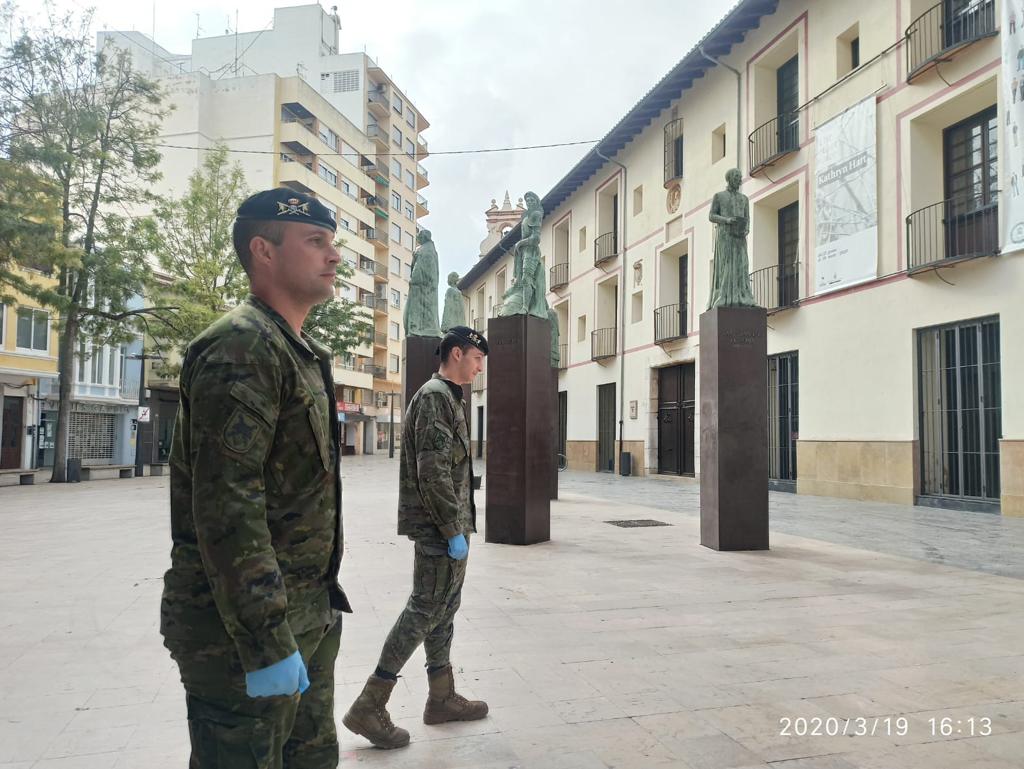
Ok, I’ve seen enough of my friends calling for the army to be sent onto the streets at this point that I’m just going to say clearly what I think and let the chips fall where they may.
First of all, let’s be clear about what putting the army on the streets actually means. It means that a few weeks down the line we may be reading about the death of some young lad from Tallaght or Ballymun or O’Deavaney Gardens who had his head split open with a rubber bullet for throwing rocks at squaddies trying to impose a curfew or trying to rob a pair of trainers out of a shuttered up shop. And unlike the rest of the deaths that are going to happen over the coming period, that one will be your fault because it will be as a result of measures you agitated for. Because that’s what happens when militaries are employed to control civilians — they kill people. The police, bad as they are, at least are extensively trained to control volatile crowds, and they still manage to maim and kill people from time to time. The army are not, and they will be worse, and people will be hurt, and people might die, and all of the people currently casually propagandising for this outcome will be to blame, because while there is much that is outside of our control here no one is forcing you to do that.
And besides that, it means men with guns are going to be put onto the streets to take away our freedoms and corral us into our homes for god knows how long and with no guarantee of the measures being lifted. Because while it’s absolutely true that “commitment to democracy” might result in the speedy return of our civil rights if this virus is ever contained (big if), it is also true that while we’ve all been obsessing about a virus that has thus far killed a whopping 0.0002 percent of the world’s population (rounding up) the reaction of political states has driven the global economy into a crisis almost certain to be far worse than the crisis of 2008, the kind that threatens the stability of states and brings populations onto the streets to demonstrate and riot.
Absolutely nothing guarantees that the police state currently being rapidly assembled before our eyes will just voluntarily disassemble itself rather than being maintained to enforce the death grip of the failing capitalist system on our lives. Capitalism likes democracy when it effectively ensures the smooth running of business by convincing us (or enough of us) that we’re actually the ones deciding what happens, but that is the extent of capitalist commitment to democracy: when it functions as the more sophisticated means of maintaining the regime of exploitation and the political domination that manages it. Absolutely nothing says the state of emergency doesn’t become permanent as we become habituated to it, and you only need to look at the aftermath of the last mass panic of this kind, 9/11 and the “War on Terror”, to see that that is true.
That economic crisis, by the way, means millions of people will die, just not all at once, spectacularly, of the same thing in the same way, to streams of headlines and our rapt attention, but gradually and invisibly in a thousand different ways over the coming years. As much as I enjoy edgy memes about stonks going down and the like (gallows humour has gotten me through an awful lot) the economy is not (only) an abstraction, it is the means by which we produce the means of our survival and (maybe) thriving, and when it crashes it means mass suffering and death, not just rich people’s share portfolios being wiped out (though also that). And while it’s true that a recession of some kind was inevitable in the near future due to the poor health of the economic system (which is why there’s going to be no bounce back “once this is over”) the depth and extent of the crisis that’s coming was not baked in, but is the effect of the state actions currently playing themselves out which will determine the quality and viability of our lives for years to come.
This was never a question of pulling out all the stops to save as many lives as possible, that’s sentimental bullshit, but of who dies and in what manner and, crucially, with what political consequences. I’d call it irrational (and there’s clearly a level to which panic is driving things) but there’s a cold and cynical calculus to this (on which more later).
The failure of the social distancing policy — i.e. the fact that the entire population isn’t willing to completely abandon their social lives because the government tells them to — does not mean that people are selfish and bad and don’t deserve freedom. It means that the policy is wrong and doesn’t do what it’s supposed to do. That the models that purport to show that it’s possible to “flatten the curve” through social distancing are wrong and fail to represent reality. A model of a phenomenon is not a fact about that phenomenon; it’s an idea about how that phenomenon works expressed in an abstract mathematical form. What happens in reality is what tells you whether the model is good or bad. When you start reasoning the other way around and treat some model as a standard against which to test reality and decide things like whether or not human beings deserve freedom then you’re no longer in the realm of science but of ideology. You’re no longer treating the model as a scientific hypothesis that can be right or wrong but as a piece of political philosophy expressing ideas about what would have to be true about human beings in order for them to be allowed their basic freedoms.
The question we should be asking at this point is not whether we are now unworthy of freedom because we have failed to make a bad policy work but why the response to this pandemic relies so heavily on a bad policy with a weak evidence base behind it (a claim I’m making based on a 2011 meta-analysis of non-medical epidemic interventions) that, to be honest, a dog on the street could have told you would not be complied with.
Let’s run a couple of thought experiments.
Imagine you are sitting in a room years out from this with all the world’s health ministers discussing the inevitability of a global pandemic of this nature (because the experts have always been in agreement that it is not a question of “if” but “when”) and the preparations that are necessary for such a scenario and you heard it being said that the central plank of the strategy would be to tell people they weren’t to see their friends for months on end and expect everyone to do it. What would you have said about that idea? And what would you have recommended they do instead? Because there absolutely are policies that could have been implemented that would not rely on attributing miraculous powers to a state PR campaign. If states had prepared for the known inevitability of this situation by stockpiling critical supplies and perhaps employing a larger number of doctors and nurses (working less time individually and enjoying a greater quality of life in ordinary circumstances), backed by PR campaigns centring interventions more strongly indicated by the data like hygiene measures, plus perhaps the possibility of progressive implementation of social distancing as a failsafe, the death rate for clinical cases would be closer to 1 percent (the actual population rate is clearly much lower, though also much higher than the flu). The mortality rates of 4-6 percent in some countries are entirely down to the failure of states to adequately prepare for this inevitability, not the characteristics of the virus, and express precisely the difference between what we are currently being told about how motivated the state is to preserve our lives and what is actually true.
Now imagine you’re a senior politician who’s facing down an imminent pandemic that you know you haven’t prepared for and that will result in a level of avoidable death that will cause a legitimation crisis for your regime and you know you will likely have to resort to authoritarian measures in order to cover for your own mistake and look like you’re willing to do whatever it takes to protect people by dramatically “pulling out all the stops” to get the numbers down. You know if you came straight out and said “everyone has to lock themselves in their homes for months because I fucked up and if you don’t we’ll send in the army to force you to do so” you’d be fucked, but you want to essentially do that but call it scientifically-backed medical policy and you’re wondering if you can foreground an intervention strategy that would have essentially that effect. What would such a policy have to do in the population? Wouldn’t a good candidate be a measure that involves bombarding people with messaging that effectively says that they are individually responsible for the deaths that you caused, and that causes people to direct their fear into obsessively monitoring the behaviour of others against a standard that there’s no way in hell they’re ever going to meet until they conclude that human beings don’t actually care about one another and need to be forced in some way to do the right thing?
I’m not saying the social distancing policy is secretly a propaganda campaign aimed at getting the army out. I’m sure Leo Varadkar and every other world leader is desperately hoping they can avoid that outcome. But I am saying if your aim were to get the population to somehow convert their instincts for compassion and solidarity into clamour for a police state you could hardly have chosen better. And I am saying that the mentality that has built up around this and through which many people seem to be doing their reasoning is the product of being continuously and monotonously bombarded with messaging that does have precisely that effect —¬ that the supposedly neutral medical advice that is being continuously pumped out does contain an implicit ideological message about who is responsible for this and what a good person looks like and what is a reasonable burden for a state to impose on its population.
If you weren’t being panicked and made to constantly feel like your every least action could lead to the death of millions of people and everyone you love and maybe yourself, if you were sitting in a lecture room listening to a political philosophy professor say that if a state can’t get basically its entire population to voluntarily lock themselves away from everyone they know and everything they like to do for weeks (or months) on end in the event that there’s a new severe flu-like illness in order that for the rest of the time the state doesn’t have to invest in the healthcare system beyond what’s necessary to run it on a shoestring that means the people are weak and stupid and bad and the state should send out people with guns to force them to do it because they don’t really deserve their freedoms anyway, would you say, “Yeah, that sounds reasonable”? Or would you say, “Why the fuck is that the policy?”
To be clear: I’m not advocating that people stop trying to implement social distancing. I think — given that this is the situation we’re in — we should, by ourselves as free and mutually-responsible people, make a reasonable effort to limit the damage for a limited period of time, because I do think, as a general moral principle, we have some kind of responsibility to compensate for the failings of our states in order to protect one another’s lives.
But that responsibility stops at the point that people want to start pointing guns at us in order to force us into our homes. It’s not the responsibility of random teenagers in the park to prevent a pandemic. The state does not have a right to a population that will spontaneously comply with whatever mad, self-destructive, anti-social thing it demands of us, and it does not have the right to turn our homes into prisons if it doesn’t get one. I mean, we have precious little agency over whether or not that happens, but the least we can do, as a matter of solidarity, and responsibility, and mutual defence from the convulsions of a state in panic is not to fan the flames while that still makes some kind of difference to what happens.
Keep in mind: China did not suppress the virus with social distancing, they did it by barricading people inside their homes and hauling them off to concentration camps. (For anyone who thinks I’m being hysterical: a concentration camp is not an extermination camp, it was not invented by the Nazis, it means a camp where a state forcibly concentrates some portion of the population; a refugee camp is a concentration camp, the immigrant detention centres in the United States are concentration camps, and a quarantine camp is a concentration camp. They are not only dangerous when there’s a Hitler in power, but because they represent human beings at the highest degree of powerlessness in relation to the state and its functionaries. Any version that will ever be implemented will be rife with violence and sexual abuse at a minimum.)
The United States is already building, or has built by now, its own such camps, lest anyone think that’s merely a feature of Chinese authoritarianism that couldn’t be replicated in Western contexts. It remains to be seen whether European states will follow suit. It may be the case that European politics is sufficiently different that states wouldn’t countenance such measures, or that our health systems are sufficiently strong that it won’t reach that point, but I wouldn’t bet against it.
And in any case, who’s to stop them? The population that’s trapped in their homes with no ability to assemble in the streets, and which is, in any case, by this point so terrified and convinced of its own unworthiness that it’s willingly egged on that state of affairs? We don’t know where this goes once the state has already committed to widescale repression, but the political calculus of that situation is such that once that line is crossed they’re likely to just keep doubling down because the political regime that locks us in our homes and fails to suppress the virus by doing it is absolutely finished and they’ll know this. Once you’re that far down the road you have to come out the other end at least being able to say the measure worked, and that’s a logic that leads to piling repression upon repression.
So: whoever it is you’re worried about dying a horrible death in an overwhelmed ICU, you need to also picture that person being forced into some dreadful camp and balance those two risks against one-another before you speak.
This is not happening due to humanitarian concerns among our leaders and it is not happening due to the objective threat posed by the virus. It’s happening because the pandemic is going to kill a sufficiently large proportion of a politically significant sector of the population and show up the failures of states to adequately prepare for a predictable threat, and so will threaten the legitimacy not only of the particular parties currently in government but the form of governance they represent. Unlike all the other rolling humanitarian crises we just accept as a feature of life because they happen to people who don’t matter politically, this one is new, and happening all at once, and everyone’s paying attention, and affecting the kind of people the state is supposed to be for. And it’s revealing what it means to run a social service like healthcare on market principles of efficiency; i.e. constantly near capacity with little to no surplus capacity for dealing with unpredictable but expected surges of this kind. Rather than allow the story to be that neoliberalised healthcare means that many people will die unnecessarily in a pandemic because the hospitals that are perpetually almost in crisis as a matter of policy can’t take the strain, the story is one of national emergency, a deadly virus, strong leadership, extraordinary times, robust measures.
And so, we all have to panic and have our lives suspended in limbo like everyone’s about to die when they just aren’t. The projections I’ve found, which are highly speculative as the key facts about this illness are not known, put the number of people expected to die worldwide from this this year somewhere between the number who will die from stroke and the number who will die from heart disease, the two biggest killers annually, or slightly higher. That’s a bad thing, and tragic, but not something that requires the army on the streets by a long way, nor something that really justifies an extended shutdown of social and economic life beyond perhaps giving them fair go at containing the disease to the point that it goes away entirely, which is definitely not going to happen now that it’s everywhere, and particularly given that it’s made its way to poorly-resourced and badly-organised states that stand zero chance of achieving containment.
“Millions will die!” and “a flu-like illness will kill a comparable number of people to heart disease this year” are two equally valid descriptions of precisely the same fact about this virus but give wildly different senses of the imperatives that follow from it. This is a crisis of the health system and a political crisis for those in power, but it is not an existential crisis for the population. This is not a situation that shows that in some ultimate sense when the chips are really down the state is there to protect us from harm, it’s a situation that demonstrates the irrationality and cynicism and capriciousness of political states that will attack their populations and treat our lives as inconsequential stuff to be thrown about according to their whim. As evidenced clearly by the willingness of the Italian authorities to deny the dead from this virus the dignity of a proper burial with no fucking justification whatsoever.
It’s easy to get the impression that the coronavirus is the only thing that’s happening in the world, or the only thing that matters, given the way we are being bombarded with information about it, and given that the entirety of public social and economic life has presently been subordinated to it. But it isn’t. And it’s understandable to see stories of people dying and grieving loved ones going through terrible heartache and trauma, and to connect it to your own loved ones and to spiral into a headspace where nothing else matters and everything is acceptable to avoid the horror of their death. If anyone I loved were to die from this or any other cause it would be the only fact in the universe and I would absolutely sacrifice millions of peoples quality of life and freedoms to prevent it, if that were a thing that it was actually possible to do. But that’s because there’s something fundamentally anti-social about loving another person. You raise them above general society so that they, and their life and happiness become a unique and precious and incomparable good. The problem is when everyone’s doing that about the exact same thing and the political sphere is feeding off it, all sorts of destructive and dangerous measures become possible.
There’s a thought experiment about AI, about what it would take to write an AI that could wipe out humanity. It’s called a “paperclip maximiser”, and the idea is that it doesn’t have to be written for a purpose that is overtly evil. All it takes is for it to try to carry out some seemingly innocuous command like “make as many paperclips as possible” with insufficiently defined boundaries and to be connected to enough power to do what it wants, and it will wipe out humanity by turning everything in the world into paperclips. That’s like what’s happening here. It’s like a runaway algorithm has taken control of the world and all anything is about now is keeping one number as low as possible no matter the cost.
No, we absolutely should not bring in the army to keep the coronavirus death tolls as low as possible because it’s not a big enough threat to warrant it. No, we should not, as some people are suggesting, keep everything locked down for months or in waves for years, because it also matters whether we get to live our lives or not. We absolutely should not do everything it is possible to do to make sure as few people die of coronavirus as possible because that’s an inferno of madness that will consume everything else in the world that matters. More people are going to die than usual this year, and flu season is probably going to become more dangerous for the sick and elderly and that’s just that and we can’t remain morbidly obsessed with it with everything shut forever.
Like, if we don’t care about what it’s like to be alive why do we care if people die? Seriously. Isn’t what’s good about life, and what’s tragic about it having to end, that it contains the possibility of joy and love and friendship and connection and fun and adventure and exploration and experience? In other words that there is freedom, a freedom to give life content and meaning, to do things with it.
It is terrible that people will die, but is it not also terrible that everyone who will die between now and the time these measures are lifted will have all of that stolen from them? At a certain point, isn’t this just piling a crime on top of a tragedy? That not only are people to die, but they are to be forced to spend the remainder of their lives trapped in their homes trying to avoid death whether they want to or not, because we have decided that all that matters about their lives is that they are not dead? How many of the sick and elderly would rather take their chances and live their lives, and are their lives not theirs to risk?
And do we all not, at a certain point, get to say that a terrible thing is happening, and it is sad, but we have done enough, and we want our lives back?
Alys Rowe is a writer from Dublin, Ireland. A version of this post originally appeared on Facebook.
The post COVID-19: A political crisis, not an existential crisis for society appeared first on Left Flank.
]]>The post Anti-politics & the last gasp of British Labourism appeared first on Left Flank.
]]>
By Tad Tietze
The significance of the Labour Party’s defeat in the UK election goes well beyond the scale of the electoral drubbing it received, holding onto fewer seats than in its 1983 catastrophe. A long series of heartland working class Labour seats fell for the first time in many decades (or ever) to the Tories: Blyth Valley, Sedgefield, Bolsover, and many more. Put in a broader historical context this election confirms the terminal condition of British Labourism just as much as bigger electoral setbacks signalled the deaths of once-powerful parties claiming to represent the working classes in the last 10 years — from Greece’s PASOK to France’s Socialist Party and even Germany’s once-mighty SPD. There is no coming back from this one in any meaningful sense.
The outcome confirmed how the 2016 Brexit referendum had driven realignment of UK politics on whether the Leave vote would be delivered by the political class, with Labour losing heavily in traditional, working-class strongholds outside London where the Leave vote had been strong, mostly to the Tories. Meanwhile in Scotland, which had voted strongly against Brexit, Labour was reduced in what was once a heartland to just a single seat, down from 56 in Tony Blair’s historic 1997 victory and 41 as recently as 2010.
Perhaps most painfully for the UK left, which almost unanimously threw itself headlong in the controversial radical left-wing Corbyn experiment (even if formally standing outside it, as some radical groups did), the disaster comes after the false dawn of 2017. In that election Labour did much better than expected in what looked like a revival of the old two-party, class-based British electoral set-up (their combined vote was the highest since 1970), and in which the Conservatives under Theresa May lost their majority and were forced to govern in alliance with Northern Irish Unionists. Relatively unknown to the public, Jeremy Corbyn’s campaigning energy allowed him to appear as an agent of change. In 2019 virtually every voter knew who Corbyn was, and they didn’t much like him, as indicated by record negative net satisfaction ratings in opinion polls.
The problems for Labour are three-fold. First was its positioning around Brexit. To understand this a bit of background is needed. The 2016 referendum was called by Tory prime minister David Cameron to solve what he considered a “party management” issue. The Tories had been bedevilled by internal ructions over EU membership since the 1990s, with the issue standing as an avatar for the party’s identity crisis in an era where the end of the Cold War and the decline of the trade unions had robbed Tories of historic coordinates with which to define themselves. Rising support for the right-wing, anti-EU UK Independence Party (UKIP) in the early 2010s had emboldened a series of backbench revolts over Europe in the context of the Tories being unable to recover their former electoral strength even with Labour’s loss in 2010 and while driving through unpopular austerity measures. The Leave result, unexpected in elite circles, was a shattering popular rebuff of the Westminster political class, over three quarters of which wanted to remain in the EU. Perhaps just as importantly, the vote was seen by most Leave voters as “taking back control” of politics. It is this slogan, formulated by Leave strategist (and now top Boris Johnson adviser) Dominic Cummings, that underpinned a surge in turnout for the referendum in working class areas where abstention had grown during the Tony Blair years.
The political class reacted with a series of attempts to — covertly or overtly — re-establish its authority. This included the mobilisation of nasty, condescending tropes against Leave voters, court cases to establish the legal supremacy of Parliament over any government trying to implement the vote, and Theresa May’s negotiation of a watered-down Brexit deal with the EU that would have left the UK under many EU rules while having no power to change them. All these were part a concerted effort to smother and perhaps even overturn the referendum result. Almost all the parties, including Labour, had gone to the polls in 2017 promising to deliver Brexit, and yet very soon all kinds of provisos and doubts were being raised by MPs across partisan divides, and a “People’s Vote” campaign was pushing for a second referendum to “reconfirm” (but in reality reverse) the 2016 result. Politicians’ insistence on the right of Parliament to veto any deal led to a series of catastrophic defeats for May’s deal in the House of Commons, as well as “indicative votes” that showed that while majorities of MPs could be found to oppose any number of permutations, there was majority support for pretty much nothing on offer.
Opinion polls showed that Brexit became the key polarising political issue in the country, and this drove substantial realignment in 2017 with the Tories making inroads into traditional working class Labour seats and Labour making gains in better-off constituencies that had voted Remain in part because it was offering a softer version of Brexit.
After its unexpectedly strong showing in 2017, the Labour leadership started to edge closer to becoming a force for stopping Brexit, despite Corbyn’s inner circle and a series of key backers in the union bureaucracy resisting the tide on the entirely reasonable basis that the party’s electorate was far more split on the issue than its overwhelmingly Remainer membership and activist layer. The result was the sense of betrayal over Brexit was especially acute among many “rusted on” working class voters who had seen in the referendum a chance to reassert some control over politics, precisely because their traditional party now seemed to be part of the charge to deny their popular sovereignty. The alienation could not be more extreme.
Labour’s second problem was in the contradictions of the Corbyn project. Corbyn won the party leadership in 2015 thanks to changed rules that gave members and paying supporters exclusive control over the choice. His campaign and victory produced a growth surge for the party, making it (at around half a million members) the largest political party in Europe. In the context of despair over the Tory win in 2015, a victory for a previously marginal hard-left candidate infamous for sticking to his principles was seen by most of the left — including its most radical elements — as indicative of a potentially momentous left-wing revival in British politics. Large numbers of self-identifying revolutionaries and Marxists threw their support behind Corbynism in one way or another, many joining the Labour Party after having in the past been highly critical of “parliamentary reformism”. The reality, however, was that while the radical left could win outsize influence in a party that was a husk of its former self, it had no means to overcome the social vacuum at the heart of a decayed Labourism.
This configuration set up a dynamic in which Corbyn was reviled by most Labour MPs but supported by a large majority of members, most of the party’s committed activists and several key union leaders. Between 2015 and the 2017 election he was the subject of white-anting and coup attempts but held on because he had the numbers where they counted most. After 2017 his parliamentary foes largely resigned themselves to working with what seemed to be an electorally credible leader.
For all of the left’s enthusiasm for Corbynism it had no ability to deliver on dreams of fundamentally transforming UK politics (let alone society) in a radical direction. Talk of Corbyn Labour being a social movement in gestation was not matched by any significant revival of social struggle in the UK. Indeed, levels of industrial action have been at lows not seen since the late nineteenth century, and there has been no evidence that Labour has driven a rise in on-the-ground campaigning separate from official politics. The tensions in the party have meant that high levels of activist energy have been pulled towards internal wrangling and, later, purely electoral work, rather than any kind of “movement building”.
Internal tensions were perhaps most acutely expressed in the party’s anti-Semitism crisis. Despite a large number of serious allegations being made by Labour MPs, staffers and members, Corbyn failed to decisively admit (or for that matter deny) the problem and then seemed to drag his feet on making serious change to party processes to deal with it. His defensiveness on the issue, not helped by evidence he and his inner circle had repeatedly intervened to protect factional allies accused of anti-Semitic statements and behaviour, was like an albatross around Labour’s neck. This stance was encouraged by activists and social media warriors who saw in every accusation another “right-wing smear” in a conspiracy to undermine the Labour leader. Talking up Corbyn’s record as an anti-racist campaigner or exposing Tory Islamophobia only made it look like the party was trying to change the subject. Any look at some of the language described in reports on the problem speaks more than anything to Labour’s bizarre internal world, where “Zionist” was thought to be a reasonable epithet to direct against those you politically disagree with. For voters not privy to the febrile Labour bubble this must have seemed as at best bizarre and at worst clear evidence of a lack of seriousness in stamping out anti-Jewish prejudice.
While many on the left saw in Labour’s relatively radical (for the UK) big-spending statist programme a serious rupture with “neoliberalism” and “austerity”, full of policies that were in themselves popular with the public, in fact the program looked unrealistic to many voters, who would have been sceptical of Labour being able to deliver it given the constrained realities of state finances. It also seems likely to me that public scepticism was exacerbated both by the policy program’s “created by central office” feel and Labour’s inability to deliver on Brexit, making its other promises seem even less plausible. Finally, there is the simple fact that the radicalisation of Labour has not happened at a time of radical change in public attitudes, making Corbynism look ideologically very far out of step with the vast bulk of voters who still hold more moderate views. These are similar contradictions to those which have humbled other left projects in recent years, most catastrophically SYRIZA’s decision to implement harsh austerity in Greece when it had no social base to do otherwise.
In the end, though, the contradiction at the heart of Corbynism was its inability to address Labour’s third problem, the long-term loss of its former social base, a decline that — ironically — had created the possibility for a radical left-wing Labour leader to be elected in the first place. Labourism’s base was in the bureaucracy of a mass, powerful but relatively conservative trade union movement, one that by WWII was deeply integrated within the political structures of British capitalism. Union leaders and Labour MPs dominated the party, with the constituency members a relatively weak component until more recently. The more recent change in that balance has been driven by the decline of the unions as a social force, which was accelerated by their wage-cutting Social Contract with the Labour government of 1974-1979. Despite the subsequent mythology about Thatcher successfully practicing “hegemonic neoliberalism”, she really mainly depended on Labour’s travails during the 1980s to protect her from her own unpopularity.
With the Tories bereft of an agenda and losing their reputation for good economic management after the currency crisis of 1992, they lost to Tony Blair’s New Labour, a project leveraging public discontent with the now hollowed-out left-right politics of the past. This was Labour discarding core aspects of Labourism but while Blair comfortably won three elections, helped by the Tories’ identity crisis and internal ructions, his modernising project did nothing to overcome the decline of Labour’s former bases. While Blair made much of reforms to manage public withdrawal from engagement with a disliked political system — e.g. electoral reforms, devolution, a greater reliance on technocratic decision-making and greater integration into the EU — all of these measures only worsened popular anti-political sentiment. As the UK Democratic Audit grimly concluded in 2012:
Almost all available indicators suggest that representative democracy is in longterm, terminal decline, but no viable alternative model of democracy currently exists. All measures of popular engagement with, and attitudes towards, representative democracy show a clear decline since the 1970s. Whether the measures we adopt are turnout in elections, membership of political parties, voter identification with political parties, or public faith in the system of government, the pattern is the same.
These processes were driving the possibility of realignment and fragmentation of entrenched political arrangements, something that was presaged in Labour’s 2015 collapse in Scotland, exacerbated by its decision to line up with the Westminster establishment to oppose Scottish independence in the 2014 referendum. Moreover, the old markers of social class were becoming less important in voting patterns, with Labour losing working-class voters in 2015 and 2017 and the Conservatives sweeping up significant numbers of them in 2017 especially.
The great irony was that Corbynism, a left-wing project drawing on the historic image of Labour as being the party of the working class, the poor and oppressed minorities, controlled a party that was more disconnected than ever from its historic base of support in the electorate. For all the talk on the left that Corbyn Labour was about “rebuilding class solidarity”, organised class solidarity in British society has been at historic lows with the decline of the unions and other civil society organisations. Labour electioneering was never about solidarity, but about getting atomised voters to support its political project. Labour’s membership surge also blinded activists as to how these numbers couldn’t even begin to make up for the loss of bases in a once-powerful mass union movement in terms of giving the party social weight and relevance. Neither could any “radical manifesto” substitute for social institutions that are long gone.
Finally, it is worth considering Boris Johnson’s achievement here. When the two-party system fell off a cliff in 2019 and briefly became a four-party system because of voter discontent with its handling of Brexit — with the Tories, Labour, the Liberal Democrats and Nigel Farage’s newly formed Brexit Party all on about 20 percent in the polls and the Tories beaten into fifth place in the EU Parliament elections in late May — Johnson ran for the Tory leadership clearly stating that only by delivering Brexit could the party beat back an “existential” threat posed by the Brexit Party. So bad was the crisis that large numbers of Tory members were willing to see Farage lead the Tories or for the UK break up in order to get Brexit done.
Ideologically amorphous, a socially-liberal “One Nation” Tory, a provocateur whose trolling left him exposed to overheated claims he was a racist or homophobe, Johnson was no “right-wing populist” (nor even an anti-politician) despite the desperation of opponents and commentators to squeeze him (and the Leave vote) into their preferred narrative of the age. Johnson was a political insider seeking to restore the authority of politics by ruthlessly delivering on a democratic mandate, and not a firebrand trying to tear down the political class in the name of the will of the people. He was certainly chaotic in style, yet in fact was trying to restore political order in a situation where it had imploded because of its own detachment from society.
Johnson positioned Brexit as not just something that he had to deliver because the public had voted for it but because getting it done would both end the paralysis afflicting Westminster and unleash the potential for politics to deliver for society more generally. Meanwhile the majority-Remain political class had only a negative agenda, of trying to delay, hold back, smother and even overturn Brexit. They did this by using a series of unorthodox parliamentary manoeuvres in which they trapped Johnson in government but without a majority to pursue his agenda, unable to call an election, in the name of preventing a “no deal” Brexit. In this they had the support of the overwhelming bulk of the left, with many radicals twisting themselves into knots to extoll EU membership and some of them joining in the denigration of the “racist” “left behind” voters who had voted for Brexit and were now abandoning Labour.
Johnson upended their expectations by securing a deal with EU leaders, thereby exposing their parliamentary games as an attempt to overturn the popular mandate. This political approach meant that his deal, only a bit more “Brexity” than Theresa May’s, was welcomed by voters in a way that hers had been rejected. This further allowed Johnson to outmanoeuvre a real anti-politician, Nigel Farage, whose Brexit Party went rapidly from existential threat to irrelevancy. Finally, the Tories pushed a relatively high spending, pro public services agenda, seeking to attract working class Labour voters who might once have seen the Tories’ pro-market and pro-austerity image as a bridge too far. Of course, many on the left will say this is all smoke and mirrors, but that distracts from the fact that this was an election far more about a massive rejection of Labour in its former heartlands than widespread enthusiasm for the Tory alternative.
Tory electoral vulnerability was laid bare when the party’s vote collapsed earlier in 2019 and there is no reason to believe that Johnson’s government can reverse the long-term decline of the Tory social base. We live in an era where declining social bases have led to socially weightless parties, new and old. Despite winning a crushing landslide, beyond a popular mandate to “Get Brexit Done” Johnson relies mainly on the implosion of his opponents. Even with Labourism effectively over, further political crack-up and realignment in the coming years will be virtually impossible for the Tories to side-step.
What I think is very clear is that Labour will find itself unable to benefit from the conflagrations ahead, its contradictions having now caught up with it and left it in terminal condition, after having dragged much of what counts for the left in Britain with it.
Tad Tietze is currently in the late stages of writing The Great Derangement: Political Crisis and the Rise of Anti-Politics for Verso Books.
The post Anti-politics & the last gasp of British Labourism appeared first on Left Flank.
]]>The post Viktor Orbán: Unpleasant nationalist? Yes. Anti-democrat? No appeared first on Left Flank.
]]>
I know this is not a popular opinion in progressive circles but the attacks on Hungarian leader Viktor Orbán as “anti-democratic” are overblown rubbish. It has gotten to the point where op-ed writers in The Guardian claim that “Hungary today is on the verge of full-blown autocracy” and “the war on democracy in Hungary is a war on democracy everywhere”, and where The Atlantic has called Orbán “the most dangerous man in the European Union”.
The level of concern about his autocratic tendencies has been so great that one political scientist — Cas Mudde, who is considered a world expert on the rise of right-wing populism — has called for centrist opposition groups to ally with the quasi-fascist Jobbik party to stop Orban’s ruling Fidesz party.
Dig through the main claims being used to justify calling Orbán an autocrat, however, and you’ll find:
- His changes to the electoral system which favour large parties (a) still leave it considerably more proportional than the UK’s first-past-the-post system and (b) only help him because the rest of the Hungarian political class is so fragmented and dysfunctional (a fact that allowed him to get elected in the first place, on the old rules).
- His “control of all civil institutions” has actually meant mainly verbal attacks on NGOs, more recently combined with new laws forcing them to register their assets and declare foreign funding. This is not just part of Orbán’s openly-declared nationalist posture, but intentionally upsetting to EU politicians and bureaucrats — and expatriate Hungarian billionaire George Soros — who want to find ways to influence Hungarian politics.
- His “having the main opposition newspaper shut down” for exposing a government scandal is more likely the paper’s private owners shutting it down for commercial reasons, in the lead-up to selling it off to new owners who happened to be Fidesz-friendly.
- His “attacks on media independence” basically come down to getting an easier ride in state media — as if politicisation of state media is not a thing in lots of liberal democracies (both sides of politics in Australia put pressure on the state broadcaster all the time) — and a more complex story of encouraging his corporate allies to buy a larger share of a shrinking market in a period of declining traditional media.
- Orbán himself has made much of wanting to turn Hungary into an “illiberal state” based on national foundations because the global financial crisis showed that “liberal democratic states cannot remain globally competitive.” But this is rhetoric which upsets an EU that demands fidelity to a model of political organisation that is driven by its most powerful nations.
What we do have in Orbán is a right-wing leader who is happy to play (often nasty) nationalist, anti-EU, anti-immigrant and social conservative cards, and whose party is undoubtedly guilty of nepotism and histrionic attacks on enemies (as if those aren’t common features of many liberal democracies) but whose moves to secure political advantage are far from being outside liberal democratic norms, especially in the current period of political breakdown.
Overheated talk of the destruction of democracy by a ruling party that wins elections fair and square is part of a political class backlash against voters who won’t submit to the dominant political class line. It is no coincidence that commentators frequently cite Orbán as a warning against ever allowing the public to deliver Brexit or Trump victories.
I would contend that the main thing making Orbán look “autocratic” is that he is the beneficiary of the weakness and disunity of the Hungarian opposition, itself a product of the longer-run hollowing out of post-communist political arrangements — a process affecting a range of Eastern European countries in various forms.
By making exaggerated claims of the destruction of democracy itself, rather than taking him on over his substantive political positions, Orbán’s opponents only feed into his ability to accuse them of wanting to subvert the public will. Meanwhile, the fact that Orbán felt the need to step up his histrionics recently when his party unexpectedly lost to an independent in a local election within its own strongholds suggests that democracy is far from over in Hungary.
—Tad Tietze
The post Viktor Orbán: Unpleasant nationalist? Yes. Anti-democrat? No appeared first on Left Flank.
]]>The post Podcast: A rough guide to anti-politics appeared first on Left Flank.
]]>I recently appeared on the Living The Dream podcast hosted by Jon Piccini (@jonpiccini) and Dave Eden (@withsobersenses), talking about the concept of anti-politics that Elizabeth Humphrys (@liz_beths) and I developed over the last five years here at Left Flank. I also responded to some of the misunderstandings and criticisms of the concept.
As Jon and Dave wrote on the blog The Word From Struggle Street, “Tad argues that politics is increasingly detached from society and what this means and how communism as ‘the real movement’ can and should related to politics. Tad argues that this analysis has serious and devastating implications for what we call The Left and Activism. We debate if there is any role, before the emergence of social movements, for the agency of anticapitalists.”
You can listen here Download this episode (right click and save)
Or subscribe via iTunes here.
Jon and Dave are currently trying to raise some cash to improve their recording capabilities. You can donate here.
Suggested further reading:
- On anti-politics in general (with Liz Humphrys): https://leftflank.wpengine.com/2013/10/31/anti-politics-elephant-room/
- On anti-politics and neoliberalism (with Liz Humphrys): https://oxfordleftreview.com/olr-issue-14/tad-tietze-and-elizabeth-hymphreys-anti-politics-and-the-illusions-of-neoliberalism/
- On Greece: https://www.jacobinmag.com/2015/08/syriza-referendum-podemos-austerity/
- On Australia: https://www.jacobinmag.com/2015/09/labor-tony-abbott-rudd-gillard-shorten/
- On Trump: https://leftflank.wpengine.com/2016/01/25/the-trump-paradox-a-rough-guide-for-the-left/
- On recuperating politics: https://leftflank.wpengine.com/2017/02/03/why-better-politics-cant-make-anti-politics-go-away/
- The Piping Shrike on Corbyn: https://www.pipingshrike.com/2017/06/the-confusions-of-anti-politics-uk-edition-an-update.html
The post Podcast: A rough guide to anti-politics appeared first on Left Flank.
]]>The post Living the Dream Under the Accord (podcast) appeared first on Left Flank.
]]>
Australian Labor led centre-left parties into neoliberalism. Can they lead it out?
Labour has a chance if it replaces Corbyn. Look at Australia in 1983
The Hawke-Keating agenda was Laborism, not neoliberalism, and is still a guiding light
The post Living the Dream Under the Accord (podcast) appeared first on Left Flank.
]]>