


| CARVIEW |
Select Language
HTTP/2 200
date: Tue, 20 Jan 2026 19:06:50 GMT
content-type: text/html; charset=UTF-8
x-powered-by: PHP/8.3.27
expires: Thu, 19 Nov 1981 08:52:00 GMT
cache-control: no-store, no-cache, must-revalidate
pragma: no-cache
x-frame-options: SAMEORIGIN
x-content-type-options: nosniff
set-cookie: PHPSESSID=eg142o3bckofuepira6a012tam; path=/; HttpOnly; Secure
access-control-allow-credentials: true
content-security-policy-report-only: default-src 'self' bard.edu www.bard.edu inside.bard.edu tools.bard.edu maps.bard.edu opensocietyuniversitynetwork.org ghea21.org; form-action 'self' bard.edu www.bard.edu tools.bard.edu connect.bard.edu opensocietyuniversitynetwork.org ghea21.org; base-uri 'self' bard.edu www.bard.edu tools.bard.edu opensocietyuniversitynetwork.org ghea21.org; font-src 'self' data: www.bard.edu opensocietyuniversitynetwork.org ghea21.org fonts.gstatic.com *.fontawesome.com cdnjs.cloudflare.com; style-src 'self' 'unsafe-inline' www.bard.edu tools.bard.edu opensocietyuniversitynetwork.org ghea21.org fonts.googleapis.com *.fontawesome.com tagmanager.google.com www.google.com *.technolutions.net static.ctctcdn.com cdnjs.cloudflare.com *.curator.io; script-src 'self' 'unsafe-inline' 'report-sample' www.bard.edu tools.bard.edu connect.bard.edu explore.bard.edu opensocietyuniversitynetwork.org ghea21.org code.jquery.com player.vimeo.com *.fontawesome.com www.google-analytics.com ssl.google-analytics.com *.googletagmanager.com tagmanager.google.com www.google.com cse.google.com googleads.g.doubleclick.net connect.facebook.net consent.cookiebot.com cdn.unibuddy.co www.youvisit.com *.technolutions.net analytics.tiktok.com *.curator.io; img-src 'self' data: bard.edu www.bard.edu inside.bard.edu tools.bard.edu opensocietyuniversitynetwork.org ghea21.org www.facebook.com trck.youvisit.com ssl.gstatic.com www.gstatic.com www.google.com *.google-analytics.com *.googletagmanager.com curator-assets.b-cdn.net; connect-src 'self' www.bard.edu tools.bard.edu opensocietyuniversitynetwork.org ghea21.org *.google-analytics.com *.analytics.google.com analytics.google.com www.google.com *.googletagmanager.com *.doubleclick.net *.technolutions.net analytics.tiktok.com *.curator.io; media-src 'self' www.bard.edu tools.bard.edu opensocietyuniversitynetwork.org ghea21.org player.vimeo.com *.vimeocdn.com www.buzzsprout.com curator-assets.b-cdn.net; object-src 'self' www.bard.edu tools.bard.edu maps.bard.edu opensocietyuniversitynetwork.org ghea21.org; child-src 'self' www.bard.edu tools.bard.edu maps.bard.edu opensocietyuniversitynetwork.org ghea21.org www.youtube.com www.youtube-nocookie.com player.vimeo.com unibuddy.co popcard.unibuddy.co cdn.youvisit.com e.issuu.com; frame-src 'self' www.bard.edu tools.bard.edu maps.bard.edu opensocietyuniversitynetwork.org ghea21.org www.youtube.com www.youtube-nocookie.com player.vimeo.com *.googletagmanager.com *.doubleclick.net unibuddy.co popcard.unibuddy.co cdn.youvisit.com e.issuu.com; frame-ancestors 'self' www.bard.edu tools.bard.edu opensocietyuniversitynetwork.org ghea21.org;
server: cloudflare
cf-cache-status: DYNAMIC
strict-transport-security: max-age=2592000; includeSubDomains
content-encoding: gzip
cf-ray: 9c10d9ebdf0bcf00-BLR
Bard Division of Languages and Literature


Bard Translation and
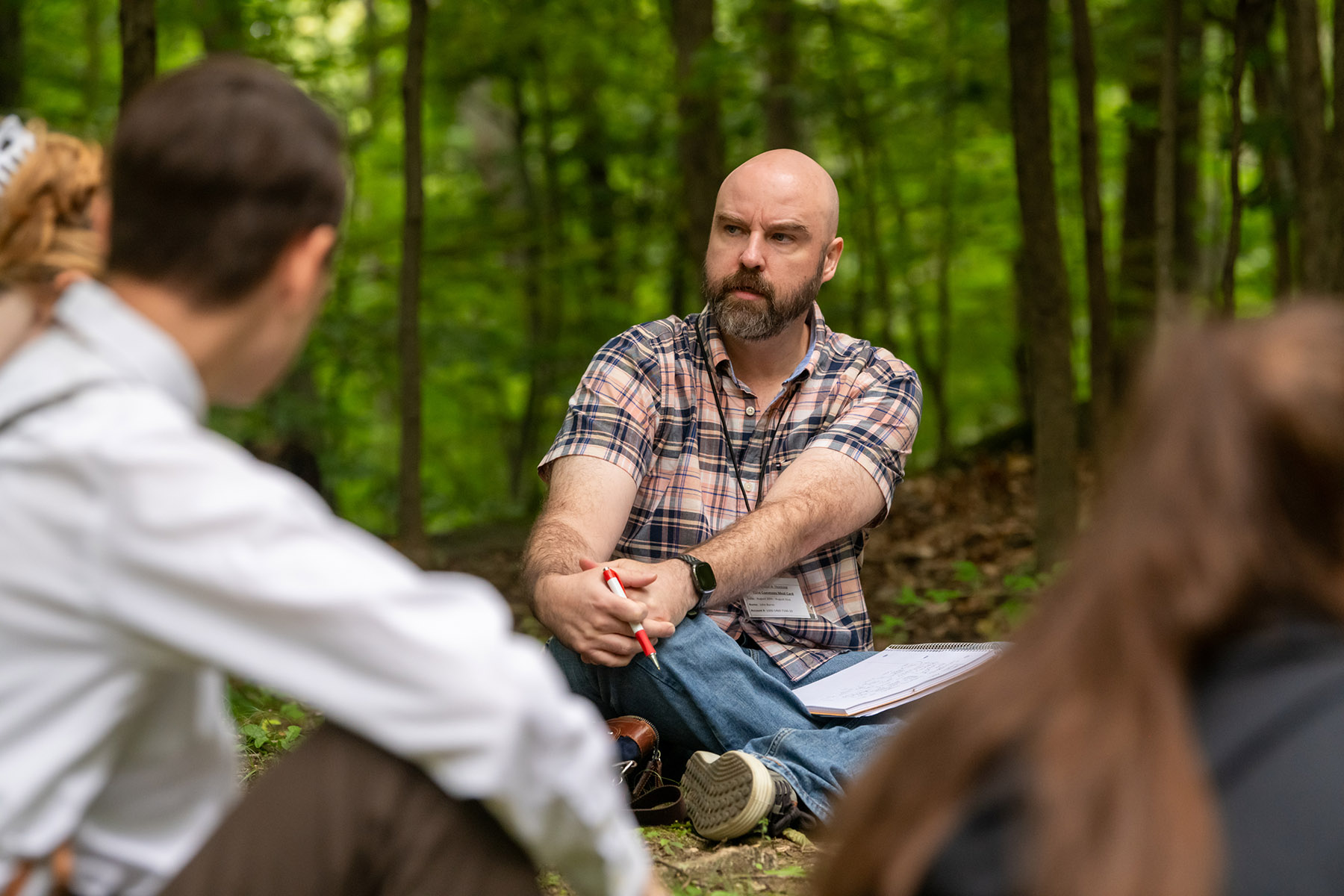
 Beginning February 3, Bard College is offering its first Spanish-speaking Clemente Course, a free college-level introduction to the humanities. Focusing on Spanish and Latin American literature, this class, conducted entirely in Spanish, invites students to explore the power of the written word and the joy of reading. Students attend at no cost, with tuition and books provided, and those who successfully complete the semester-long course will earn 3 college credits from Bard College transferable to any higher educational institution upon completion.
This class will run every Tuesday from February 3 through May 26, from 6–8 pm, at 7 Grand Street, Kingston, NY, 12401. John Burns, associate professor of Spanish at Bard College, will be leading the course. Burns is an educator, poet, translator, and the author, among other works, of Contemporary Hispanic Poets: Cultural Production in the Global, Digital Age (Cambria Press, 2015). Applicants should write to professor Burns ([email protected]) to express their interest.
The Clemente Course in the Humanities provides a transformative educational experience for adults facing economic hardship and adverse circumstances. The free humanities courses empower students to further their education and careers, become effective advocates for themselves and their families, and engage actively in the cultural and political lives of their communities.
Post Date: 01-13-2026
Photo by Karl Rabe
Division of Languages and Literature
The Division of Languages and Literature offers majors in the areas of literature; written arts; and foreign languages, cultures, and literatures. All students in the division are encouraged to study languages other than English; foreign language instruction currently offered includes American Sign Language, Arabic, Chinese, French, German, Hebrew, Italian, Japanese, Korean, Russian, Spanish, Yiddish, and ancient Greek and Latin. Interdisciplinary majors are also offered in Asian studies, classical studies, French studies, German studies, Italian studies, Middle Eastern studies, Russian and Eurasian studies, and Spanish studies (see Interdivisional Programs and Concentrations).
Photo by Karl Rabe
Our Programs
The Division of Languages and Literature includes the following academic programs:
Foreign Languages, Cultures, and Literatures
Literature
Written Arts
Alex Benson, Division Chair; Associate Professor of Literature
Foreign Languages, Cultures, and Literatures
Literature
Written Arts
Alex Benson, Division Chair; Associate Professor of Literature
Coursework and Requirements
Coursework and Requirements
Several special interdisciplinary initiatives offer series of courses that are clustered thematically. Racial Justice Initiative (RJI) courses critically analyze systems of racial hierarchy and power from multiple disciplinary perspectives; Engaged Liberal Arts and Sciences (ELAS) courses link academic work with civic engagement; Courage to Be seminars address the practice of courageous action in the 21st century; Hate Studies Initiative (HSI) courses examine the human capacity to define and dehumanize an “other”; Calderwood Seminars help Upper College students think about translating discipline-specific writing to a general audience; and OSUN online and collaborative courses are taught by faculty at Bard and at partner institutions throughout the world and enroll students from across the Bard Network. Other course clusters include the Thinking Animals Initiative (TAI), Migration Initiative, Asian Diasporic Initiative, and Disability and Accessibility Studies Initiative (DASI).-
LiteratureBard students who make the study of literature the central focus of their work explore specific periods (such as medieval or Renaissance Europe), relations among national literatures (in forms such as lyric poetry or the novel), or literature within the context of culture, history, or literary theory.
Literature
Bard students who make the study of literature the central focus of their work explore specific periods (such as medieval or Renaissance Europe), relations among national literatures (in forms such as lyric poetry or the novel), or literature within the context of culture, history, or literary theory.
Comparative studies of literature, other arts, and theories of literature are a regular part of course offerings. The curriculum emphasizes cultural, linguistic, and geographic diversity, and it is vitally engaged with interdisciplinary fields such as Africana studies, American and Indigenous studies, Asian studies, environmental studies, experimental humanities, gender and sexuality studies, human rights, Latin American and Iberian studies, medieval studies, Middle Eastern studies, and theology. -
Written ArtsStudents in the Written Arts Program take workshops and tutorials in prose fiction or poetry and study a foreign language, in addition to completing the same course requirements as literature majors. Those who choose foreign languages can explore a range of interests and develop courses of study that bring together work in culture, history, and other fields.
-
Senior ProjectSeniors must summon up imagination, knowledge, discipline, and independence for the Senior Project. Each student usually decides on a topic in the spring of their junior year and is matched with a faculty member to serve as their Senior Project adviser at that time.
Senior Project
Seniors must summon up imagination, knowledge, discipline, and independence for the Senior Project. Each student usually decides on a topic in the spring of their junior year and is matched with a faculty member to serve as their Senior Project adviser at that time.
During their senior year, students generally meet with their advisers for an hour each week. Over the years, students have translated works of poetry and fiction; written critical studies of texts from across the world, spanning from the ancient past to the present day; and produced original works, including novellas, book-length poems, and short story collections. With faculty permission, Senior Projects may take the form of a novel, poem sequence, play, or collection of short stories.
Discover More
Bard Translation and
Translatability Initiative
BTTI encourages curricular initiatives that promote translation, particularly from a multicultural or multidisciplinary perspective, and aims to bring together scholars, teachers, writers, and artists from the United States and other countries. BTTI also works with Bard faculty members to elicit new interdisciplinary insights, develop new curricula, strengthen communication, and stimulate experimentation among the College’s four divisions and across its network of international liberal arts and graduate studies programs. Among other events throughout the academic year, BTTI hosts an annual translation symposium at Bard.
Languages and Literature News and Events
Featured News
Bard College Clemente Course Now Accepting Applicants for Its First Curriculum Taught in Spanish
Conducted entirely in Spanish and led by Associate Professor of Spanish John Burns, the free course invites students to explore the power of the written word and the joy of reading.
Bard College Clemente Course Now Accepting Applicants for Its First Curriculum Taught in Spanish
John Burns, associate professor of Spanish. Photo by Karl Rabe
This class will run every Tuesday from February 3 through May 26, from 6–8 pm, at 7 Grand Street, Kingston, NY, 12401. John Burns, associate professor of Spanish at Bard College, will be leading the course. Burns is an educator, poet, translator, and the author, among other works, of Contemporary Hispanic Poets: Cultural Production in the Global, Digital Age (Cambria Press, 2015). Applicants should write to professor Burns ([email protected]) to express their interest.
The Clemente Course in the Humanities provides a transformative educational experience for adults facing economic hardship and adverse circumstances. The free humanities courses empower students to further their education and careers, become effective advocates for themselves and their families, and engage actively in the cultural and political lives of their communities.
Post Date: 01-13-2026
Recent News
-
Author Adam Shatz Awarded Grace Dudley Prize for Arts Writing
Author Adam Shatz Awarded Grace Dudley Prize for Arts Writing
Adam Shatz, visiting professor of the humanities at Bard College, has been awarded the 2026 Grace Dudley Prize for Arts Writing bestowed by the Robert B. Silvers Foundation, in recognition of outstanding achievement in critical writing on the fine and performing arts or on cultural history. Shatz is also the US editor of the London Review of Books and a contributor to the New York Times magazine, the New York Review of Books, the New Yorker, and other publications. The Robert B. Silvers Foundation is an organization that aims to support writers working in the fields of long-form literary and arts criticism, intellectual essays, political analysis, and social reportage.Adam Shatz, visiting professor of the humanities.
Post Date: 01-13-2026
-
Professor Karen Raizen Discusses New Italian Cinema on Radio Kingston
Professor Karen Raizen Discusses New Italian Cinema on Radio Kingston
Karen Raizen, director of Italian Studies and assistant professor of Italian and music at Bard College, appeared on Tutto Italiano “Everything Italian” hosted by Radio Kingston. Raizen discusses her involvement with the Ulster County Italian American Foundation (UCIAF) and organizing an upcoming UCIAF New Italian Cinema Showcase this spring, in collaboration with Bard College, Marist University, and Vassar college. The showcase, screening at Upstate Films in Saugerties and Rhinebeck from April 24–26, focuses on “new Italian cinema, because I think everybody knows old Italian cinema and is excited about it,” Kaizen says. “But there’s a lot happening in Italy that’s really exciting right now … What does it mean to be Italian today? That’s all changed and is still changing, and who is giving this new version of Italy life?”Karen Raizen, director of Italian Studies at Bard.
Italian Studies at Bard College focuses on the acquisition of fluency in speaking, reading, and translating Italian. Students can improve their understanding of Italian culture by focusing on language and translation, literature, art, film, music, and Italian cultural studies, which encompasses transnational history, human rights and media.
Post Date: 01-13-2026
-
Joseph Luzzi’s The Innocents of Florence Featured in the New Yorker and the Guardian
Joseph Luzzi’s The Innocents of Florence Featured in the New Yorker and the Guardian
The newest book by Joseph Luzzi, professor of comparative literature at Bard College, has been included in a roundup list of “The Best Books of 2025” by the New Yorker and was reviewed in the Guardian. In The Innocents of Florence, Luzzi details the formation of what came to be known as the Innocenti in 15th-century Florence, the first orphanage in Europe devoted exclusively to abandoned children and would go on to care for nearly 400,000 children throughout its duration. The institution, while groundbreaking, carried a tragic and complex history that would ultimately shape education and childcare for centuries to come. “Luzzi’s slender and compelling book, with its accounts of forced pregnancy, family separation, and child labor, feels surprisingly and unsettlingly of the moment,” the New Yorker writes.L–R: Joseph Luzzi, professor of comparative literature at Bard; The Innocents of Florence.
The Literature Program at Bard challenges national, cultural, and disciplinary boundaries that have often dictated the terms by which we understand the meaning and value of the written word, and has a long-standing commitment to fostering the work of writers and thinkers who expand the parameters of public discourse.
Post Date: 12-16-2025
-
The Innocents of Florence by Professor Joseph Luzzi Reviewed in the New Yorker
The Innocents of Florence by Professor Joseph Luzzi Reviewed in the New Yorker
A new book by Joseph Luzzi, professor of comparative literature at Bard College, has been reviewed in the New Yorker. The Innocents of Florence chronicles the formation of what came to be known as the Innocenti in 15th-century Florence, which was the first orphanage in Europe devoted exclusively to abandoned children and would go on to care for nearly 400,000 young lives over the next five centuries. Luzzi examines the tragic and complex history of the groundbreaking humanitarian institution, that ultimately—in recognizing poor and abandoned children as worthy of nurture—would shape education and childcare for generations to come. Harrowing accounts of “sexual violence, family separation, child abuse, and mass death” are examined alongside the “historic Tuscan superbloom of human creativity and innovation,” writes Jessica Winter for the New Yorker. It also, Winter notes, contains distressing echoes of the present: “Since the Dobbs decision abolished the constitutional right to abortion, in 2022, at least ten states have passed new or expanded ‘safe haven’ laws for relinquishing infants, and hundreds of temperature-controlled ‘baby boxes’ have cropped up in Indiana, Kentucky, and elsewhere—the contemporary equivalent of the Innocenti’s holy-water font.”L–R: Joseph Luzzi, professor of comparative literature at Bard; The Innocents of Florence.
The Literature Program at Bard challenges national, cultural, and disciplinary boundaries that have often dictated the terms by which we understand the meaning and value of the written word, and has a long-standing commitment to fostering the work of writers and thinkers who expand the parameters of public discourse.
Post Date: 11-11-2025
-
Francine Prose Reviews a 19th Century Novella That Merges Creationism and Evolution for the New York Review of Books
Francine Prose Reviews a 19th Century Novella That Merges Creationism and Evolution for the New York Review of Books
“Eça de Queirós is hardly the first writer to ask whether we would be better off without the blessing and curse of our complex consciousness,” writes Distinguished Writer in Residence Francine Prose of Adam and Eve in Paradise, a 19th-century novella in which, among other things, Adam fights a dinosaur and Eve is praised for eating the forbidden fruit. Prose, reading the novella over the course of one afternoon (and then again the next day), found herself moved by it. “Despite the book’s short length, there’s room for startling plot turns, inspired details, violent drama, and a thoughtful consideration of what it means to be human,” she writes in the New York Review of Books. As Prose found herself delighted, in 2025, by the novella’s humor and humanity, she felt a sense of gratitude to Eça de Queirós. “What pure pleasure it is, in these dark times,” she writes, “to read a bright fantasy about Adam and Eve and evolution, about the necessity of loving the poisonous roots, the scattered nebulae, and even one another without any expectation of being loved in return.”Distinguished Writer in Residence Francine Prose. Photo by Chris Kayden
Prose has taught in the Literature Program since 2005, which challenges cultural and disciplinary boundaries that have often dictated the terms by which we understand the meaning of the written word. She is also affiliated faculty in the Written Arts Program at Bard, which encourages students to experiment with their own writing in a context sensitive to intellectual, historical, and social realities.
Post Date: 11-05-2025
-
The Naming Song by Jedediah Berry ’99 Wins Massachusetts Book Award for Fiction
The Naming Song by Jedediah Berry ’99 Wins Massachusetts Book Award for Fiction
The Naming Song, the newest novel by author and Bard alumnus Jedediah Berry ’99, was awarded the 2025 Massachusetts Book Award for fiction. The Massachusetts Book Awards recognize works by current Commonwealth residents in multiple categories. “I was so pleased to see my book included among a list of so many extraordinary writers’ works who I admire,” Berry said to the Daily Hampshire Gazette. “Winning it was just an astonishing thing. I felt incredibly grateful.”Jedediah Berry ’99. Photo by Tristan Morgan Chambers
The Naming Song, also a finalist for the Los Angeles Times Book Prize, is a fabulist novel that takes place after an apocalyptic event makes names disappear. The novel’s protagonist works for “the Names Committee” as a courier, delivering names to their proper places. “I came to love these characters and the strange journey that they’re on in the book,” Berry said. “Living with that for so long and knowing that it’s finally out of the world is kind of a strange experience. It’s like finally introducing people to these old friends.”
Post Date: 10-07-2025
Upcoming Events
-
1/26Monday6:00 pm – 7:00 pm EST/GMT-5
Kline, College Room
Spanish Table
Monday, January 26, 2026 | 6:00 pm – 7:00 pm EST/GMT-5 | Kline, College RoomPlease join us weekly. Stay for as long as you like.
Language tables are held at Kline and entail about an hour of casual discussion during meal times, where students interested in a language get to know each other and practice colloquial conversations. They are held by the tutor of the language, and although sometimes professors join the table, it is a very low-stakes and fun setting to immerse yourself in a language, its culture and the foreign language community at Bard. Contact: Patricia Lopez-Gay
E-mail: [email protected]
-
1/27Tuesday1:00 pm – 2:30 pm EST/GMT-5
Kline, College Room
Italian Table
Tuesday, January 27, 2026 | 1:00 pm – 2:30 pm EST/GMT-5 | Kline, College RoomPlease join us weekly. Stay for as long as you like.
Language tables are held at Kline and entail about an hour of casual discussion during meal times, where students interested in a language get to know each other and practice colloquial conversations. They are held by the tutor of the language, and although sometimes professors join the table, it is a very low-stakes and fun setting to immerse yourself in a language, its culture and the foreign language community at Bard. Contact: Karen Raizen
E-mail: [email protected]
-
1/27Tuesday1:30 pm – 2:30 pm EST/GMT-5
Kline Commons
Jewish Languages Table
Tuesday, January 27, 2026 | 1:30 pm – 2:30 pm EST/GMT-5 | Kline CommonsPlease join us weekly and stay as long as you like.
Language tables are held at Kline and entail about an hour of casual discussion during meal times, where students interested in a language get to know each other and practice colloquial conversations. They are held by the tutor of the language, and although sometimes professors join the table, it is a very low-stakes and fun setting to immerse yourself in a language, its culture and the foreign language community at Bard. Contact: Andrew Atwell
E-mail: [email protected]
-
1/27Tuesday5:00 pm – 6:00 pm EST/GMT-5
Kline, College Room
Korean Table
Tuesday, January 27, 2026 | 5:00 pm – 6:00 pm EST/GMT-5 | Kline, College RoomPlease join us weekly. Stay for as long as you like.
Language tables are held at Kline and entail about an hour of casual discussion during meal times, where students interested in a language get to know each other and practice colloquial conversations. They are held by the tutor of the language, and although sometimes professors join the table, it is a very low-stakes and fun setting to immerse yourself in a language, its culture, and the foreign language community at Bard. Contact: Soonyoung Lee
E-mail: [email protected]