


| CARVIEW |
TikTok is a social media platform used by people of all ages. TikTok is where people can post videos of themselves sharing content, singing/dancing to music, and more. People can watch videos and interact with the creator by “commenting” or “duetting” the video (responding via video to their post). TikTok grew increasingly more popular throughout the COVID-19 pandemic when everyone was quarantined at home. TikTok allowed people to share stories or post videos to make people laugh and feel less alone while at home. Similar to Twitter or Instagram, people’s accounts can be followed. Users can search different people, topics, and hashtags to find information or people that interest them.
As an educator, I can use TikTok in a variety of ways. First, I can simply use it to search for information that I may be looking for. Some things that I could search for would include classroom management tips, classroom setup ideas, lesson plans or games for a variety of subjects, and more. There are many educators on TikTok in a wide range of areas of expertise and a variety of grade levels that would be able to provide me with specific information that I may be looking for. I can also use TikTok to post my own content. For example, if I came up with a great game or lesson plan or found a great resource that I wanted to share with others I would be able to post it on TikTok for others to find. I can also show my students certain TikTok posts that may be relevant to what we are discussing in class.
To grow my professional learning network through TikTok I would need to post videos that are relevant to the education field. By using captions and hashtags that are relevant to the education field, other educators would be able to find my posts and engage with them. I would also need to ensure that I “like” and “comment” on a variety of educators’ posts. By engaging with other educators’ posts I would be able to find a community that supports my learning journey and that enables me to be authentic and learn for life.
Overall, TikTok is a great learning tool. It is not only great for my own personal learning but for others and my students as well.
]]>
References:
Introduction to cyberbullying: Avatars and identity – lesson. MediaSmarts. (2019, March 29). Retrieved July 15, 2022, from https://mediasmarts.ca/lessonplan/introduction-cyberbullying-avatars-and-identity-lesson
]]> ]]>
]]>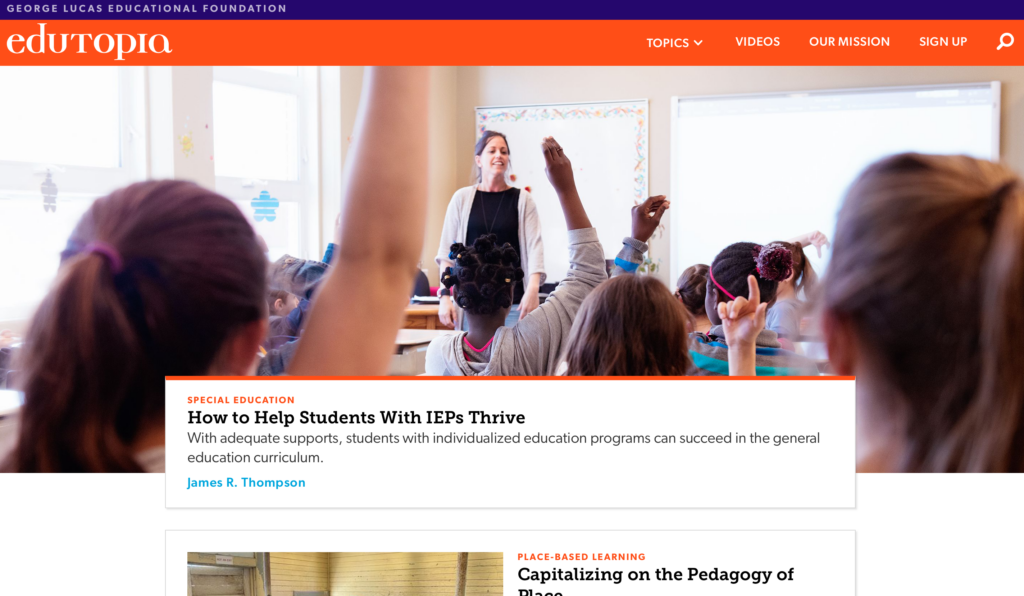
Edutopia is the first blog that I would suggest visiting. This blog contains an abundance of different topics within the education field. Some of the topics included in this blog are assessment, project-based learning, and social and emotional learning. These three topics specifically are very prevalent in education today and are definitely worth checking out. If you do not like reading blog post after blog post there is also the option to watch videos that describe different concepts and show you how they work.
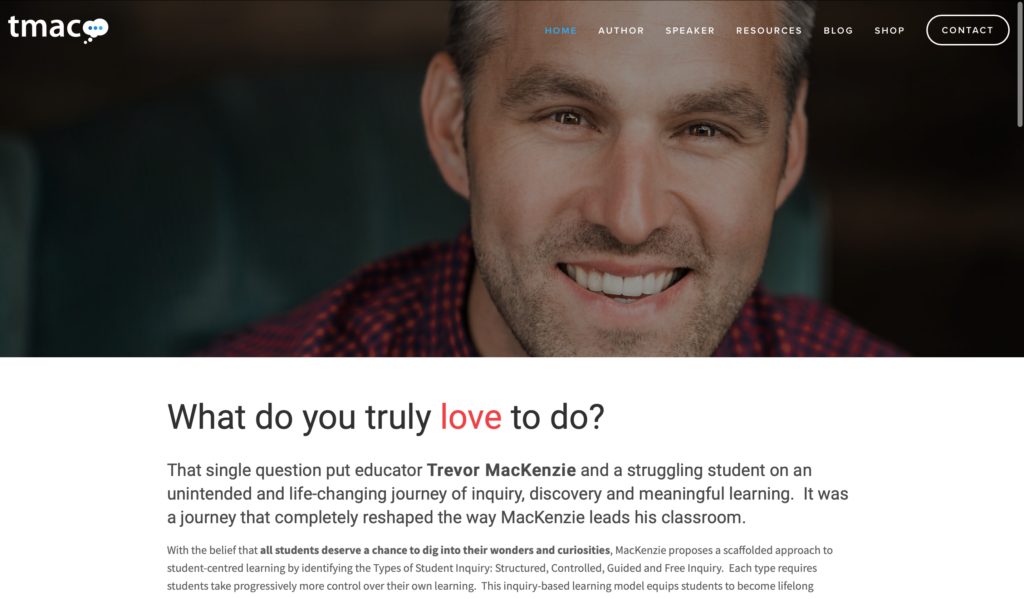
tmac is the second blog that I would suggest visiting. Trevor MacKenzie has a plethora of resources on this blog. You may have heard of his books Inquiry Mindset or Diving into Inquiry, as this is how I learned more about who he is. He writes books to help teachers learn how to incorporate inquiry into the classroom and talks about them on his blog. He also has a blog section on his page where he expands on different ideas relating to inquiry and anything else he has been learning about. I would highly suggest this blog and/or his books if you are considering using inquiry within your classroom.
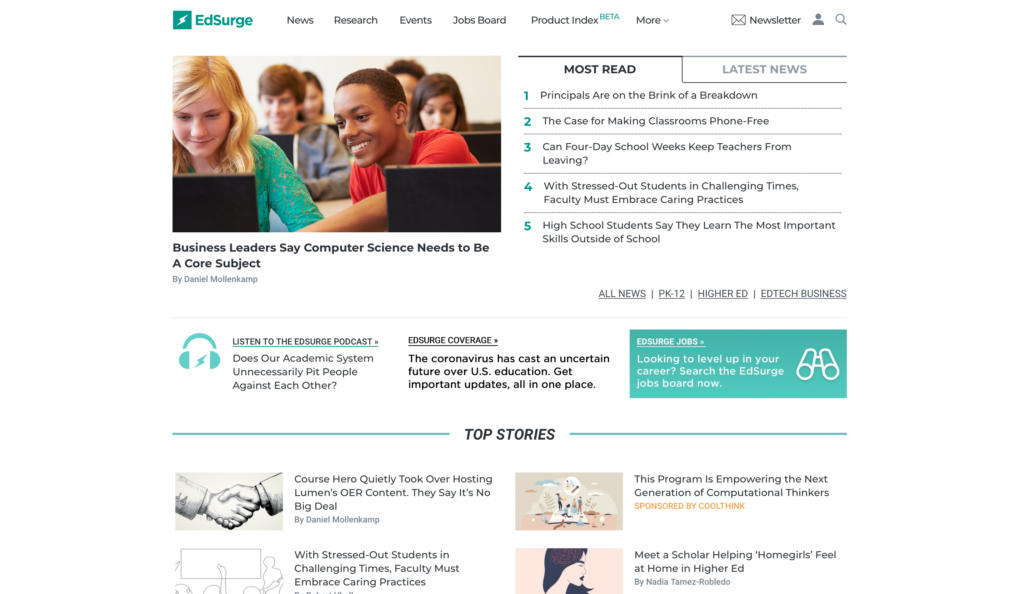
EdSurge is the final blog that I would suggest visiting. My favourite sections would have to be the “most read” and “latest news” sections. These allow you to see what has been viewed the most and might be worth reading, as well as what is the most recent on the blog and within the education field. This blog includes various guides and age ranges as well. It varies from how to deal with the pandemic in the PK-12 school system, while also covering how to help higher education students transform into scholars.
Overall, I would highly suggest checking out all of these blogs. They have helped me throughout my Bachelor of Education degree immensely. There is also value in them as a non-education student or as a parent because it gives insight into a variety of topics that could still be prevalent in different areas as work or as a parent of a student in the school system.
]]>Link to Google Slides Interactive Learning Resource: https://docs.google.com/presentation/d/1vSAjuc5lCOyfb7yrVt5S_uksHL3tIZq32Cojfj1q2kY/edit?usp=sharing
]]>
My first star is the overall organization of this resource. I love how the resource is made into different parts. The topic is introduced in the “course overview” and “unit 1” sections. This allows the learners to understand what the resource is about and practice time before they start to create drawings. The “unit 2” section allows the learners to practice, apply, and reflect on their learning throughout the resource. I also appreciate that the activities put into each section relate to what has just been learned. If I were to give one suggestion for this star, it would just be to put the video that is in “additional resources” at the start as that is where it is stated that it would be in the overview.
My second star is the various types of assessment used. Learners are provided with multiple opportunities to showcase their learning. The short answer questions allow learners to explain what they know on the technical side of drawing. This challenges the knowledge of the learners and provides them with the opportunity to explain their new knowledge. In the reflection, the learners are given the opportunity to explain what they think are their strongest and weakest drawings, their approach to drawing, and what they have learned. It is important to challenge learners on why they answered a question a certain way, which was done in this section. If I were to give one suggestion for this star, it would be to be careful with the overall assessment of this resource and choose the wording carefully. For example, simply saying “good drawings” could be left up to interpretation. Try saying “a drawing that includes a clear attempt at ______”. This will allow learners to understand exactly what is expected for that drawing.

My one wish is more types of media built-in throughout the resource. Some learners may be very visual, so it could help to have a short video clip of an artist doing an activity or certain skill throughout. Another alternative would be to have links to artists who do a certain type of artwork or skill well that the learners could refer to if they needed inspiration or ideas. Another suggestion would be to have written instructions on how to do a certain skill. This may help some learners who do not know where to start or the process in which a certain type of artwork is often done. With this being said, one thing that I did like in terms of the media built-in was the inclusion of examples throughout the slideshow.
Overall, I enjoyed your resource and thought that it is great for learners who are looking to build on pre-existing skills or who want to learn more about the specific topics covered in your resource.
]]>Hi Kirby! I loved your post on interaction. The point you make about how we are inherently making decisions when on applications made me think. I never really thought about how even the “pointless” act of scrolling through TikTok is engaging my brain to make decisions based on what I like or find interesting. On another note, I absolutely love the video that you included in your post! That brain break would even keep me entertained as an adult, let alone as a kid. The video is very user-friendly with the options to either see the questions and actions or hear them. This allows all different types of learners to engage in the brain break. This video could also be useful to show in an interactive learning resource as an example. I believe that it is a very good example of what an active brain break could look like.
]]>