


| CARVIEW |
I read 63 books (at least—sometimes I’m not so good about remembering to write them down) in 2025. This is more than last year’s 52, but still far fewer than I would like. Here is a list of my “most memorable books” in no particular order. Though some of them were new books, this list will include books previously released that I just happened to read this year.
Poetry

Ruins of the Heart by Kristjana Gunnars. Gunnars is a longtime favourite of mine, and a big influence on my own poetry. I actually took a class with her as a young person, but that was before I read her work (maybe just as well!). It’s been a while since a new poetry book from her, and I just realized that she came out with this one with a small press in the U.S. a couple years ago. It did not disappoint; her voice is just as I remember it.
A couple other poetry books I’ll mention without comment:
Wellwater: Poems by Karen Solie
Love Language by Nasser Hussain
Fiction

All Fours by Miranda July. While I didn’t fall over myself about this book quite the way some of my slightly younger friends did (my child on a Miranda July video I made them watch: “I see. It’s Millennial humour”), and even stalled for a while in the middle, in the end it’s nothing if not memorable (look up “the tampon scene”—or don’t). For the record, I preferred the story much more after I came back to the second half. What happens after the motel for me was much more interesting than the parts that happened in it.

We Do Not Part by Han Kang. Kang is a Nobel Prize– and Booker Prize–winning South Korean author. We Do Not Part chronicles atrocities of the Korean War through the experiences of a writer who learns more about them through her friend’s family history. But that’s the pedestrian way to describe it. It’s a book with many layers of ghosts and darknesses—of snowstorms, of night, of unconsciousness, of guttering candles, of black paint, of mine shafts, of the ocean, of mass graves.
Nonfiction

A Truce that is Not Peace by Miriam Toews. I peripherally know Miriam Toews, though I haven’t spoken to her in a long time (but she babysat my newborn once when I went to the dentist near her house!). I’ve met some of the secondary characters who feature in this memoir. All that adds a layer for me, but it doesn’t really matter: this book is brilliant in how it refuses to be a “memoir” and just is what it is. I don’t really believe in genre anyway, and this reads like a book that also doesn’t believe in genre. I don’t think a writer without the kind of track record she has could publish this with a major press. But publish it they did, and it’s making a tonne of best-of lists for 2025, so I don’t need to say much more.

Peggy and Balmer by Tom Radford. Radford, a documentary filmmaker, writes a history based on the lives of his grandparents, pioneering journalists in Alberta who literally arrived the day that Wilfrid Laurier spoke in Edmonton to mark the province’s entry into Confederation. It’s a fascinating take on journalism history, including its troubled relationship with business interests, and also a look at how Alberta got to be… Alberta. (I grew up in the Alberta. I have an unusually high tolerance for wacky governments. Things are getting a bit too much even for me out there these days, though.)

Of Floating Isles: On Growing Pains and Video Games by Kawika Guillermo. I read a lot of memoirs this year, and though Toews’s is the obvious star player, this one is a dark horse for my favourite book of the year. Some people who know me may know that I get a bit wrapped up in video games. Unusually only one game at a time, until I’ve spent so much time on it, perhaps over years, that I just have to delete it from my computer. Until the next time a game takes over my life. Guillermo is a video games scholar, so brings a lot of deep thought and receipts to this long reflection on their life in video games (I’ve already been following up on their bibliography). It’s pretty dark in the middle (darker than the marketing bumpf would let on), but the darkness is important. Games ground the memoir and the at-times turbulent—and queer, racialized, and neurodivergent–life inside it.

Dear Da-Lê: A Father’s Memoir of the Vietnam War and the Iranian Revolution by Anh Duong. The writing in this one is serviceable, not literary fireworks like some of the other books here (my usual fare). But this guy’s life story brings it: he comes of age in Vietnam during the war and as a young man manages to get out of dodge on an international scholarship to… Iran. Where he has to get out of dodge a second time.
A couple more honourable mentions in the nonfiction category:
Linguaphile: A Life of Language Love by Julie Sedivy
All Our Ordinary Stories: A Multigenerational Family Odyssey by Teresa Wong
On to 2026!
]]>
nothing 3 months into each school term – March and October. (Though it may not have been actually nothing – I only track the day I finish a book, not the day I start it, and I tend to read several books at once, so sometimes several end up being “read” on the same day.)
Here is my habitual annual list of “most memorable books of the year,” which just means that they are the books I find myself thinking about and/or recommending the most often! These are derived from the books I read this year, not from books that came out this year—in most cases, I’m a little behind the times. I actually had more than 10 on my first list, so I have a little honourable mention section at the end just to keep the list manageable!
Nonfiction
- Andrew McConnell Stott, The Poet and the Vampyre: The Curse of Byron and the Birth of Literature’s Greatest Monsters

I mean, I love reading books about the late Romantics – Byron, Shelley, and the whole gang, and I usually find them pretty memorable regardless of the writing quality. The angle this one took: focusing on the secondary characters from the whole Lake Geneva business—John Polidori and Clare Claremont. The former was a very, very unlucky man. The latter was a real survivor (and drama queen).
- Ann Boyer, The Undying: Pain, Vulnerability, Mortality, Medicine, Art, Time, Dreams, Exhaustion, Cancer, and Care

This book, about Boyer’s cancer experience, is harrowing and poetic, focusing less on the cancer itself and all the confrontation with mortality that brings than on her treatment by the medical systems and by other people.
- John Vaillant, Fire Weather: The Making of Beast

I hope that’s the right subtitle – I don’t have a copy of the book and online I’ve found three different subtitles for it on different editions so far! This was the first book I read last year, so it might not be a fair fight, but it’s definitely the book I’ve recommended the most in many different contexts – for the content as well as for the quality of reporting. In short: it uses the Fort McMurray fire as a jumping-off point to investigate how the increasing prevalence of wildfires is related to climate change and fossil fuel extraction.
- Stanley Munn and Patricia Cucman, To See What He Saw: J.E.H. MacDonald and the O’Hara Years, 1924–1932.

I only recently got my hands on the book, but I first encountered Munn and Cucman’s project in a exhibition at the Whyte Museum in Banff. Even if you don’t go in for the Group of Seven much, I think this one is well worth examining. The project, completed over decades, was to photograph the specific scenes painted by MacDonald in the Rockies. The writing is dense art-history stuff, but the images keep you anchored. It’s sure a tome, though.
Poetry
- Michael Ondaatje, A Year of Last Things

Oh, Michael Ondaatje. The first academic conference I ever gave a paper at was a Michael Ondaatje conference in Paris. My paper was about the mythology around him and his life, and the way it was carefully maintained in his semi-autobiographical works. Much has been written about this book elsewhere, so I won’t say much about the content except to point out how would make a good new chapter for my nearly 30-year-old paper. This book also made me remember, yes, there was always something deeply weird about how women are portrayed in Ondaatje’s works—uncomfortably reverent and also icky (reminiscent of Leonard Cohen), but was hard to call out in the 90s. This book is especially worth reading for long-time Ondaatje enthusiasts, and I suspect that is who it is for, and if that’s you, you’ve probably already read it; this book would lose a lot for a reader who hasn’t read and thought about his classic works.
- Chimwemwe Undi, Scientific Marvel

Chim’s book won the GG, but I’m here mostly for the Winnipeg content – something she makes a point to start with when doing hometown readings. Her first book has been long-awaited by the Winnipeg writing community, and I’ve been recommending it to everyone with even a passing interest in poetry.
Fiction
- Paul Lynch, Prophet Song

I was a bit late to the party on this one that one the Booker Prize in 2023. If you haven’t already heard, it’s about a the rise and increasing violence and repression of an authoritarian government in the Republic of Ireland. It’s the kind of dystopian fiction that feels very real and not sci-fi-ish at all, but immediately alarming. But I have to say at the end, after digesting it all, I am stuck with the horrible feeling of oh no, is this what it takes–a book about western Europeans–to make a book about war and refugees really hit home for me? I mean, I also read an actual refugee memoir this year (Danny Ramadan’s great book Crooked Teeth, on my honourable mention list below), but this book about made-up Irish refugees blew a bigger hole in my consciousness.
- Sean Michaels, Do You Remember Being Born?

Michaels must have been working on this AI book before ChatGPT hit the bigtime. In the notes he writes about how he trained an AI on Marianne Moore. And that’s who the novel is about more or less – a contemporary version of Marianne Moore who gets hired by an unnamed Big Tech Company to collaborate with an AI in what for the company is a publicity stunt, but for her (and for the AI?) is an existential crisis. The novel features italicized phrases (and, later in the book, whole passages) written by AI. If writers are going to use AI, this is the way to do it–transparently, and questioningly.
Drama
- Cliff Cardinal, As You Like It: A Radical Retelling

Okay, this was the only play I read this year, though I saw plenty. I regretted reading it in the end because AFTER I read it, I unexpectedly had the opportunity to see Cardinal perform the piece. If you know the play, you’ll know that it’s better as a no spoilers situation. If you don’t know the play and think you might have the opportunity to see it someday, maybe don’t read it and don’t look it up. I mean, it was still a fantastic performance even knowing the content. But it would have hit differently without having read it. (I can tell you it is certainly a lot funnier when performed.) I had the chance to chat with Cardinal after the performance and he said it was the most, er, rambunctious audience it had ever had. Go see it if you ever get the chance!
Honourable mention books I almost wrote about — just so this post doesn’t get too long!
- Angeline Schellenberg, Mondegreen Riffs
- Vi Khi Nao and Sarah Burgoyne, Mechanophilia, Book 1
- Kazim Ali, Indian Winter
- Emily Urquhart, The Age of Creativity
- Danny Ramadan, Crooked Teeth
Last year I didn’t even make a post about my reading! I kept meaning to, but by the time it got to June I figured there was no point. So my “memorable books” post this year draws from two years of reading – 2022 and 2023 – which amounts to how much I was able to read in a single year pre-COVID.
So, here are my entirely subjective Karen’s most memorable (and/or influential) books of 2022-23, in no particular order. (Books I read in the last 2 years – they didn’t necessarily just come out then.)
Nonfiction
Rooms: Women, Writing, Woolf by Sina Queyras
- I read this right after I read the Emma Healey memoir that came out the same year, and I was really struck by the contrast in terms of class, privilege, generation, and how a person becomes a writer.
Craft in the Real World: Rethinking Fiction Writing and Workshopping by Matthew Salesses
- I don’t teach fiction workshops exactly, but the book was still thought-provoking for any writing teacher–and with actionable recommendations. I wish for more such resources that refer to other genres.
Childhood, Youth, Dependency: The Copenhagen Trilogy by Tove Ditlevsen
- So raw and honest – about poverty, addiction, abortion, and so much more.
How We Read Now: Strategic Choices for Print, Screen, and Audio by Naomi S. Baron
- Baron is a linguist who has been studying this stuff for decades. The book helped me ground my intuition about why the internet has made it so much harder for me to read. Also read her more recent book about AI and writing.
Say Nothing: A True Story of Murder and Memory in Northern Ireland by Patrick Radden Keefe
- Everything you ever wanted to know about the I.R.A. but were afraid to ask. Holy crap.
Fiction
The Memory Police by Yoko Ogawa
- A world where people, things, and concepts are mysteriously disappeared out of existence — and out of ever having had existed.
The Employees: A Workplace Novel of the 22nd Century by Olga Ravn
- An artificial life novel. In space.
Rebecca by Daphne du Maurier
- No, I hadn’t read it before now. Loved the unhinged narrator. Disappointed by the ending, thought it would be weirder.
Poetry
The Absence of Zero by R. Kolewe.
- For sure the most memorable book I read in the past two years. I keep coming back to it. Exactly my kind of poetry. The kind of book you can dip into at random any time, and I do.
Xanax Cowboy by Hannah Green
- Loved this as soon as I read it, and so glad it was recognized with the GG. Really appreciated, among other things, the implicit critique of an entire generation (or more) of Canadian poets’ erstwhile obsession with The Collected Works of Billy the Kid (myself included).
After having it on my list for years, I finally got to Patti Smith’s memoir about her long friendship with photographer Robert Mapplethorpe. One of the most striking things about the story is the confluence: both Smith and Mapplethorpe became iconic cultural figures of their generation, but just happened to meet well before they were famous when he was buying something at the bookstore where she worked. They eventually make the desperate decision to “apply” to become residents at the Chelsea Hotel, and, having succeeded, end up at a cultural crossroads, a time and place where famous figures fly through the story and cross paths with Smith’s and Mapplethorpe’s respective developing talents.

I enjoyed this book so much I moved on to Smith’s later memoir M Train, a much less straightforward, more meditative and wandering book that’s an oblique, belated response to the death of her husband, Fred “Sonic” Smith. M Train is much harder to describe—but I think I liked it even better, because that’s the kind of reader I am.

A Grief Observed by C.S. Lewis
I finally got to this little book, and it lives up to its reputation. Lewis struggles with his faith while grappling with the loss of his wife to cancer. They didn’t have long together, and the intensity of his questioning and his suffering make it seems like the brevity of the relationship focused his emotions, then put them through the wringer of a Christian scholar’s brain.

Voices from Chernobyl: An Oral History of a Nuclear Disaster by Svetlana Alexievich
This book! I’ve been recommending it to everyone, and it was for sure the highlight of my reading year. Alexievich is a well-known, Nobel-winning Belarusian journalist; this is probably her best-known book. I hadn’t read any of her work but had filed away my desire to do so back when she took the Nobel. The book is almost 100% pure interview transcript. Working about a decade after Chernobyl, Alexievich interviewed those who refused to leave, those who were sent to clean up, and those who returned; activists, teachers, scientists, engineers, army conscripts, bureaucrats, exiles, and the families of the dead. Among the pure grief—and there is a lot of that—sit anger, frustration, resignation, denial, desperation, accusation, and truly impressive amounts of vodka—universal cure and universal currency.
On to 2022’s books! I’m already, way, way behind. I made the mistake of buying some temporary streaming subscriptions for a Christmas treat, so I’ve been watching too much TV. They just ran out, though, so I can get back to reading now–assuming I can keep off the doomscrolling.
]]>Okay, yes, I have read this book umpteen times, starting when I was about 13 or 14, I think, when I stayed up all night to finish it. I even wrote a substantial poem about it in my second book, where I imagined Jane in conversation with Anne of Green Gables (a book I’ve read even more than umpteen times), so suffice it to say I’ve thought about Jane Eyre a lot.
This time I read it aloud to my daughter, and so many new things struck me, things that I’m certainly not the first person to notice, but just came into relief for me this time around. How much of a romance novel it is, first of all. How FUCKING MUCH Rochester talks. My daughter kept commenting on this. Like, shut up already, dude. We kind of really wanted Helen Burns to shut up, too. And then she dies, so. How complex some of these characters are: Jane, of course, but also St. John Rivers, a terrible but fascinating person.

We mainly thought Jane really needed to get out more and meet more men before she makes rash decisions. And how a lot of problems would have been solved by modern divorce laws.
Reading any such classic book to children also necessitates glossing the rampant colonialism, and the religiosity, too (something we also had to talk about in Dracula).

Women Talking by Miriam Toews
Another party I’m late too, but I wanted to make sure I’d read it since there is a film in the works I’ll no doubt want to see. My favourite thing about this book was the narrator and the perspective he brings to the events of the story. So little “happens” in the book (as you might guess from the title), and yet by the end, it’s like the world has changed-without-changing — not even so much for the women (though it has for them, too), but for the narrator. I’m so interested in how this profound transformation will get translated in the film.
I Got the Dog: A Memoir of Rising by Amanda Boyden
This is on here not so much for the story of Boyden’s life, but for the oblique little window into the lives of literary celebrities. Yes, the book had many fine qualities and Boyden’s work stands on its own blah blah blah. But this list is for personal memorability, and those who know me know I have things to say about Joseph Boyden, which I will not say here, and this is Amanda Boyden’s post-relationship memoir.
There’s not much gossip in it, really, but the little throwaways keep you asking questions. Wait, does the literary in-crowd in Canada really go on vacation trips with leading literary journalists? Wait, that’s Gord Downie she is talking about like she was in love with him? It took me a minute to realize who she meant.

These Canadian celebrity moments pass with so little comment I’m torn between whether it’s done to seem nonchalant or done because a U.S. audience wouldn’t see them as important. And this was not published in Canada; in fact, you can’t even find it in the Chindigo database—it’s like the book doesn’t exist. (I did not detect any references to Indigo executives in the memoir.) This nonexistence was exactly how I came to read the book–as soon as I heard among writers that you couldn’t get it at Chindigo, I immediately ordered it at an independent.

NISHGA by Jordan Abel
Of the many poetry books I read this year, NISHGA was my most memorable. A deeply personal conceptual work about intergenerational trauma, and centring the Indigenous reader, NISHGA uses, among other things, essay-like transcripts, visual poetry, and original documents to create a work of gripping emotional intensity, outstanding intellectual rigour, and hard-won truth. Even though (admission) I find some conceptual poetry a bit of a slog, NISHGA was unputdownable for me.
One more post to come that will include my MOST memorable book of the year!
]]>After a miserably light reading year in 2020, I was determined to make 95 books in 2021, but I could see right away that it would be an issue given how exhausted I was between pandemic-work, pandemic-family, and pandemic-buying-and-selling-houses-and-moving. So I decided early on that I’d also read, and count, chapbooks in my total. So, I only sort of read 95 books—and I barely made it even so.
I also set a “page goal” in the app I’m using – The StoryGraph – just so I could see how close I was to reading an “average” 200-page book. I didn’t quite make the page count, but it was close. On average, a “book” for me was just under 200 pages. Not bad considering all the chapbooks of less than 20 pages I read! There were a few doozies in there that balanced it out.
Check out this neat graph you can get on The StoryGraph:

It’s my reading pattern for the year! You’ll note the same general pattern in 2020, although with thousands fewer pages:

What are those dips and rises? The dips are the school term. The rises are summer and Christmas breaks.
Without further ado (have I written this like a recipe blogger?), here are my most memorable books of 2021! It was hard to choose this year, so I went long with a list of 10 – well, 11, because I couldn’t decide between the Patti Smith books. Remember that my list is whimsical and reflects how the mood strikes me as I write this. It’s not a best-of!
Some close runners-up that I won’t talk about: The Baudelaire Fractal by Lisa Robertson; Disorientation: Being Black in the World by Ian Williams; The Lightning of Possible Storms by Jonathan Ball; Here the Dark by David Bergen; Heteroskeptical by Marcus McCann; The Talented Mr. Ripley by Patricia Highsmith; The City We Became by N.K. Jemisin; St. Mary at Main by Patrick Friesen; The Perfect Nanny by Leila Slimani.
Dracula by Bram Stoker
I had never read this before, and I read it aloud to my daughter over a period of months. We laughed a lot at how obtuse the characters are, how they really needed to treat Mina with more respect, and, especially, at how much Van Helsing talks in his semi-comprehensible babble. All and all well worth reading to see what all the fuss is about. We especially appreciated all the Transylvanian landscape and people, having been there a few years ago and visited one of the castles purported to be related to the Dracula legend (my vacation photo below).

The Centaur’s Wife by Amanda Leduc
A good companion piece to her also excellent nonfiction book Disfigured: On Fairy Tales, Disability, and Making Space (which I also read this year), Leduc has written a fairy-tale-esque novel centring on human characters with disabilities and fantastic characters with nonhuman qualities, all set in a world where the earth itself is consciously taking revenge on humanity. What sticks in my mind most is the harrowing mid-point climax (which I won’t give away…).
Klara and the Sun by Kazuo Ishiguro
You know I’ve been teaching basic story structure too long when I keep getting excited about mid-point climaxes. Klara and the Sun is a quiet book with a strangely meditative quality stemming from the voice of its narrator, Klara, an android programmed to be devoted to a lonely human teenager. I was hit hard by the quiet but central reveal about her host family’s motivations. I didn’t like this book as much as my favourite Ishiguro (Never Let me Go, which I’m guessing is a lot of peoples’ favourite), but this was a satisfyingly Ish-y experience.
More memorable books in another post soon!
]]>It was a year when, buoyed by my success in meeting the 95-books goal in 2019, I set that as my goal again, only to be struck, like everyone else, with an imposed fit of unproductivity and doom-scrolling which also pretty much doomed my reading goal by the coming of the spring equinox. So I downgraded to a 52-books challenge like the one I first did in 2018. And I barely made it.
Unsurprisingly, 2020 has been my worst reading year since I started, but I’ve taken to reminding myself why I started tracking my reading in the first place: because the internet had been making me stupid, and I had not been reading nearly so much as I had in my youth. I have no idea how many books I was reading each year before 2018, but I’m certain it was far less than 52.
I also stopped using Goodreads to track books this year, because it’s owned by Amazon, and Amazon is particularly evil if you care about books. But (because U.S. politics) I do still subscribe to The Washington Post, also owned by Bezos, and thus my righteousness is diminished.
Here are my most memorable (for me) books of 2020:

Most memorable fiction was definitely Valeria Luiselli’s Lost Children Archive. I read this early in the year because Luiselli was scheduled to keynote at a conference I was going to, and I wanted to be up to speed. Well, she cancelled, but wow wow wow this book bowled me over. It’s a hard-to-describe novel that I am drawn to for the form and the language more than the story, but I could say it’s about audio recording, research, family, and, centrally, unaccompanied migrant children. Luiselli had previously written about her experiences volunteering as an interpreter for asylum seekers in New York, experiences which seem to have informed this novel. It’s also a book full of bibliographies, so it’s given me a big list of more things to want to read.

I read a lot of nonfiction this year for a project I was researching, and the most memorable one for me was Martin Hägglund’s This Life: Secular Faith and Spiritual Freedom. Arriving via Hägglund’s appearance on my favourite CBC show, Tapestry, I came for the existentialism, and I stayed for the unexpected economics. Some things annoyed me about the writing style, and there were precious few women quoted in the book (like maybe 2 or 3 in a book chock-full of references and on a topic–the value of time, see below–that is has huge feminist implications). But in the end it did bolster me with what I took to be its main insight: the only thing with inherent value is one’s own time. Treat it thusly.
But I’m a fiction reader at heart, and the rest of my memorable books of the year are all made-up stories.

Or at least mostly made-up. I read both Bring up the Bodies and The Mirror and the Light by Hilary Mantel, the sequels to Wolf Hall (which I read in 2019). These are very long books—the last one was somewhere close to 900 pages—but oh so worth it. You have to get used to the style, at first—a style which begins to change in the last book as the narrator, occasionally, accidentally on purposely, uses the first person. That protagonist is Henry VIII’s chief advisor, Thomas Cromwell, and his rise and fall over the course of the three books are so subtle and yet so gargantuan and unmistakable, they are rivalled only by the arc of the series’ other chief character—the antagonist, I suppose–Henry VIII himself.
When I finished Wolf Hall, I missed Henry; he was so jovial and lively and seductive. But by the end of The Mirror and the Light, he is clearly a dangerous tyrant, and that change was slow and painful and inevitable and made so much sense.
Reading these reminded me a bit of when I read, ages ago, Pynchon’s Mason & Dixon, which took me months to read in its intricate faux-18th century prose but which was so good, once I was fully immersed, that when I finished I was tempted just to start back at the beginning again so I wouldn’t have to leave. (But, as it was also a zillion pages long, I didn’t.)
Oh–and there are no real spoilers here because Mantel’s books are historical for crying out loud–call me when to get to the mob from York, stirred up by unfounded rumours, conspiracy theories, and politicians counting on plausible deniability, who descend on London looking for an unlikely regime change. I don’t think politics had descended so far when Mantel first started, but the nasty politics of Tudor England started to look more contemporary as the series went on.

In the blast from the past category, I read Bridget Jones’s Diary. Oh yes, I did. And I thought it was delightful. I now understand what all the fuss was about more than 20 years ago when this book launched what would be called “chick lit” (still a terrible name). I was fresh out of grad school in English, and I’m sure I thought it was beneath me. And sure, some things in here don’t date well. All the smoking and the dieting. And ho boy, casual workplace sexual harassment that the characters joke about. But hear me out: this is a fantastic exercise in voice. It’s super-duper first-person, and she owns her obsessions, whether it’s weight loss or her jerky boss. Also books like this make me want to go to London again so bad.

On a completely different note, I finally finished Hanya Yanagihara’s A Little Life, which I’d repeatedly started and stopped. (I sometimes read like that: I can be “reading” a book for years, without really abandoning it.) If you know anything about this book, you should understand why: people have called it “pain porn” and objected to—in addition to issues such as the depiction of disability–the over-the-top horror of the protagonist’s life.
Seriously, whenever you think, oh, finally, that’s the worst that can happen to him, no, really, she has thought of something even worse, and [SPOILERS] yet, given SO MUCH TRAUMA—I can’t emphasize enough how much trauma is going in here, folks, this book takes the “what’s the worst that can happen” to an extreme—he becomes a successful, filthy rich corporate lawyer who marries a movie star. But even though I have mixed feelings about this book for so many reasons, it is, if nothing else, very memorable. There’s a lot to like about the care with which Yanagihara has built the cast of characters and their intricate, fully developed relationships.

The last book I read in 2020 was the salve I needed to end the year on: Carmen Maria Machado’s short story collection Her Body and Other Parties. It’s got everything: plagues and apocalypses, new takes on urban legends, a cast of kooky artists at an isolated residency, lots of women, lots of queer women, and, best of all in my opinion, a story made up entirely of Law and Order: SVU episode descriptions. This book was just up what I call my weirdness alley.
I am, hopefully and perhaps foolishly, starting with 95 as a goal again in 2021. Wish me luck.
]]>Buoyed up by having read 67 books in 2018—more, in fact, because I realized later there were a few that I had forgotten to count–in 2019, I joined the #95books challenge. I was way ahead for the first part of the year, but I got behind in the fall when teaching started up again, and just barely made it over the break to 95 books on Dec. 31. According to Goodreads, I read about 22,000 pages, or about 230 pages per book on average.
My original plan to concentrate on translated books in 2019 totally went out the window. Only about a quarter of the books I read were for what I’d deem “pleasure,” as in, I chose them kind of on a whim. The rest I read for work, for a specific research purpose, or for my daughter, or because I was reviewing the book.
As others have observed, doing big book challenges makes one less apt to abandon books, and I found this hard. I read more books that I didn’t like or find useful than I would have liked this year, especially towards the end when I was racing to meet my goal. I had to decide really fast, like in the first 50 pages, if the book was worth using more precious reading time on. I think the solution is to let myself “count” a book toward my goal so long as I’ve read past those 50 pages.
Here are the books I found the most memorable this year. It just so happens I picked one fiction, one non-fiction, one poetry, and one drama, but I didn’t plan it that way:

Sally Rooney, Conversations with Friends. Though I was impressed with Normal People, I’m wondering now how much I was influenced by all the hype around that book, because months later, I think find myself thinking much more about her earlier book, Conversations with Friends, which I also read this year.

Miranda July, It Chooses You. This is a delightfully odd non-fiction book by the incomparable July, in which she interviews random people in LA chosen through their classified ads selling used goods. I most remember the boy who created frog habitats in his back yard, and the man who wrote dirty birthday cards for his wife. It’s about people and what you can learn if you just talk to them.

Karen Solie, The Caiplie Caves. Probably my favourite of the books I read this year. I reviewed this book in the The Globe and Mail, and I could have gone on and on about it. It’s a sideways take about what poets are to do during this time of existential crisis—only set in a medieval hermit’s cave. Solie’s work is a poetry benchmark. Unsurprisingly, the book has been shortlisted for the T.S. Eliot Prize.

Cliff Cardinal, Huff & Stitch, which were published together, but it’s Huff that had the big effect on me. Regret not seeing this play when it was produced here. Huff is an in-your-face whirlwind of tragedy, about intergenerational trauma and the relentless loss faced by Indigenous communities and, in particular, Indigenous youth.
In 2020, I expect to keep reading for research, work, reviewing, and my child, but my project for those “extra” books I get to choose for whatever reason? I’m going to read books I already own and are sitting on my shelves taking up space. Then I’m going to give them away unless I can justify keeping them under one of the following categories:
- favourite books I am likely to read again
- books useful for reference
- books by people I know
- small press books (overlaps greatly with the previous on)
- books I’m attached to for strong sentimental reasons (note to self: high bar required)
I just don’t have that much space, and the library exists, right? I use the library all the time. I’m not too optimistic about the number of books I’ll actually be able to give away using this method, but time will tell. See you this time next year.
]]>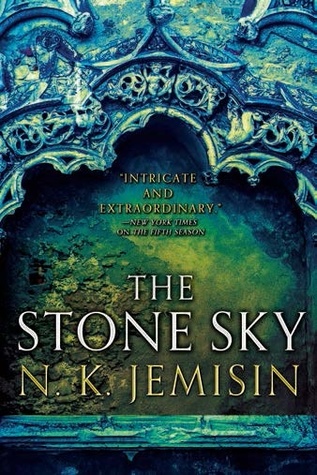 I can’t not mention the third installment of N.K. Jemisin’s Broken Earth trilogy, The Stone Sky. While I was the most blown away by the first installment, the rest of the trilogy didn’t fail to deliver. It’s tremendously inventive and intricately drawn far-future science fiction by a Black woman. She has won umpteen major awards for this trilogy, and she doesn’t really need a recommendation from me. But here it is anyway.
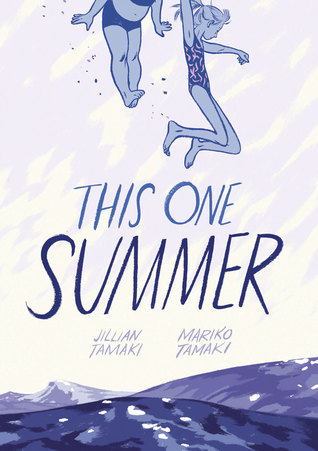 I’m still thinking about Mariko Tamaki and Jillian Tamaki’s YA graphic novel This One Summer. It’s a haunting coming-of-age tale that takes place at the lake, “this one summer.” Girls and women of different ages each change in different ways, and the pubescent protagonist learns—with resistance, even dread—what she’s up against becoming a woman. Definitely YA, not kids’.
 I read a few Hope Nicholson/Bedside Press comics anthologies this year, and the one that stood out for me was Gothic Tales of Haunted Love, which is just what it sounds like – spooky, gory, supernatural doomed romances, by a variety of artists and authors in a variety of styles. The stories featured many LGBTT* and BIPOC characters, breathing life into a genre that could otherwise come across as old-fashioned and stale. My daughter was so taken by the presence of this book in my house that I had to write a guide for her telling her which stories she could read and which were not age appropriate. (My daughter is obsessed with comics and I have to watch every one that I bring home.)
In cross-genre poetry/memoir/essay, I finally got around to reading Maggie Nelson’s Bluets. I recognized it as poetry, myself, and only realized that some people categorize it as essays upon reading some reviews. I’ve never believed in genre myself, so its cross-genre quality just makes me love it more. A book about a colour is a beautiful idea, and blue is the best colour, right? (Weirdly, I also read Anne Carson’s Autobiography of Red this year, which isn’t about a colour, only it sort of is….)
 One of the literary classics I picked up this year was Jean Rhys’s Wide Sargasso Sea. I have to say that what stays with me is more an impression than a specific element of craft or thematic takeaway, though I know it has many; for me, this book was an immersive experience that I can still kind of sink into in my mind.
 The most important book I read this year was Gregory Younging’s Elements of Indigenous Style. If you are a writer or communicator in this country, you should read this book. It gives practical and clearly explained, organized, and argued advice for best practices when writing about Indigenous subjects or working with Indigenous writers.
 I adored Daisy Hay’s book The Young Romantics, and it’s probably what gave me the biography bug. I’ve read that it was her PhD thesis in another form, which surprised me because the prose is so lively and the story so riveting (not something one can usually say about a dissertation). In it, she argues that the archetype of the lone, individualistic, tortured writer—an image invented by the Romantics—was never really true, certainly not by the second generation (the “young” Romantics), and probably not even for the first. She interweaves the stories of Leigh Hunt, Byron, the Shelleys, Keats, and a number of peripheral figures in order to show how they all interacted with and even depended on each other for inspiration, debate, intellectual stimulation, camaraderie, and support. (She also illustrates handily how the women of the circle paid the higher price for their nonconforming ways.) I am officially obsessed with the Romantics again, and if anyone can recommend which is the best biography of Byron, I’m gonna put it high on my list for 2019.
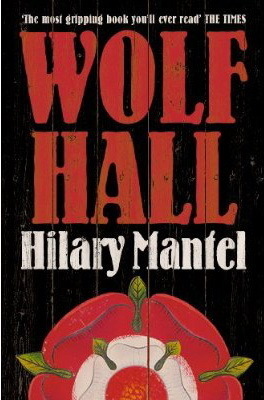 Last, probably my favourite book of 2018 was another one that needs no recommendation from me: Hilary Mantel’s Wolf Hall. It won the Booker, it was made into a miniseries, blah blah blah. These are historical characters I never would have predicted I’d have gotten so attached to. Thomas Cromwell, of course. And Henry VIII! I really missed him when I finished this book. This was one of the behemoths (about 600 pages) that I read this year, but it was worth every page. I don’t know if I’m going to be able to commit to reading the next two installments in 2019… maybe just part 2, Bring Up the Bodies. And, oh, maybe I’ll get the miniseries from the library, too.
Onward to 2019, my friends, and happy reading!
]]>

I kept my holds list full, with the holds mostly suspended, and when I took a book out and a hold spot opened up, I’d go to my lists and, rotating through the different subjects and genres, I’d place a new hold on something that took my fancy at the time. I tried to have one longer book and several shorter books checked out at all times.
And how did I find out about these books? Several ways:
- Social media. Even though I am not on it that often any more, the majority of my friends and followees are writerly types who talk about books rather a lot. A lot, but not all, of the books I learn about this way are Canadian books, because that is the world I friend in.
- Goodreads—the platform I have not blocked. Not that many of my friends are on it, but the feed is 100% about books.
- Personal recommendations from friends, colleagues and students IRL.
- Library research on subjects of interest to me, often for writing-related reasons.
- Podcasts. I listen to a number of book-related podcasts to hear about what’s new, and what I’ve previously missed, in the book world. Some of my favourite book shows this year:
- LeVar Burton Reads. He reads contemporary short stories and has really good taste. Also, he’s LeVar Burton.
- The New Yorker Fiction Podcast and The Writer’s Voice (respectively, older and newer stories from The New Yorker).
- Literature and History. This is a podcast about the history of English literature and everything that influenced it. It’s been going on for years and he hasn’t even got to the English language yet. It’s all about totally canonical stuff, but I haven’t read all of that (and it’s been a while since I read what I read). He also recommends scholarly works.
- Professional Book Nerds (from OverDrive), and Bookworm (from KCRW, with Michael Silverblatt). For book “round-up and interview” shows, those two are my current favourites, though I am also known to listen to the BBC’s, The Guardian’s and the TLS’s book podcasts for British book news, plus a whole slew of other American ones. (And the CBC, too!)
So, how did my semi-managed reading turn out by the numbers in 2018? Here are some percentages; keep in mind they are approximate, since I haven’t thoroughly researched the bio of every author and might not be privy to how they identify. Also, some of my genre attributions are probably debatable.
- About 68% of the creators (usually authors, sometimes illustrators, editors, or translators) were women or non-binary people.
- About 46% were Canadian.
- About 14% were LGBTT*.
- About 25% were BIPOC (Black, Indigenous, and People of Colour).
- About 8% of the books were translated from another language into English.
I gravitate towards books by women, plus the methods by which I get book information—due to the makeup of my friends circle—is going to emphasize books by women and books by Canadians. I need to put more attention towards choosing books by BIPOC, LGBTT*, and non-English-writing creators. My plan is to focus on the third in 2019, since it came in at a measly 8%. I’d love to practice actually reading in French (I used to in university), but I’m afraid that would slow me down a lot on my quest for 95 books. I’m looking at Asymptote for recommendations on new translated books. (Alas, their book club no longer ships to Canada!)
As for genre, here are the significant ones:
- About 35% of the books I read were novels (my first love).
- About 33% were SFF (science fiction and fantasy, though I’ve defined that broadly).
- About 21% were children’s and YA (young adult).
- About 21% were poetry.
- About 20% were in graphic forms (comics).
- About 14% were some form of narrative non-fiction.
- About 14% were based on myth or traditional stories (either presented straight-ahead as non-fiction or retold as fiction).
- About 11% were biography, autobiography or memoir.
For research purposes, I was actually trying to read significant amounts of mythology, YA, and SFF work this year. Those trends will probably continue, though I kind of got the bug for reading biography, what little of it I did.
I probably should have counted the living versus dead authors – but I can tell you the number of dead authors would be small. I also read a tiny bit of mystery, short stories, and informative non-fiction.
Next time: highlights of the year.
]]>