


My books of 2025 post
Hi my three readers! Here’s my annual roundup of books I read last year. Even if there are (generously) only three of you, I’ve decided to keep making this annual post so I have an ongoing record of my reading thoughts. Thought about moving it over to my website, but nah. Might as well be all in the same place here (though eventually I might decide to get the heck out of this part of the internet and retreat onto my Canadian-hosted website…)
I read 63 books (at least—sometimes I’m not so good about remembering to write them down) in 2025. This is more than last year’s 52, but still far fewer than I would like. Here is a list of my “most memorable books” in no particular order. Though some of them were new books, this list will include books previously released that I just happened to read this year.
Poetry

Ruins of the Heart by Kristjana Gunnars. Gunnars is a longtime favourite of mine, and a big influence on my own poetry. I actually took a class with her as a young person, but that was before I read her work (maybe just as well!). It’s been a while since a new poetry book from her, and I just realized that she came out with this one with a small press in the U.S. a couple years ago. It did not disappoint; her voice is just as I remember it.
A couple other poetry books I’ll mention without comment:
Wellwater: Poems by Karen Solie
Love Language by Nasser Hussain
Fiction

All Fours by Miranda July. While I didn’t fall over myself about this book quite the way some of my slightly younger friends did (my child on a Miranda July video I made them watch: “I see. It’s Millennial humour”), and even stalled for a while in the middle, in the end it’s nothing if not memorable (look up “the tampon scene”—or don’t). For the record, I preferred the story much more after I came back to the second half. What happens after the motel for me was much more interesting than the parts that happened in it.

We Do Not Part by Han Kang. Kang is a Nobel Prize– and Booker Prize–winning South Korean author. We Do Not Part chronicles atrocities of the Korean War through the experiences of a writer who learns more about them through her friend’s family history. But that’s the pedestrian way to describe it. It’s a book with many layers of ghosts and darknesses—of snowstorms, of night, of unconsciousness, of guttering candles, of black paint, of mine shafts, of the ocean, of mass graves.
Nonfiction

A Truce that is Not Peace by Miriam Toews. I peripherally know Miriam Toews, though I haven’t spoken to her in a long time (but she babysat my newborn once when I went to the dentist near her house!). I’ve met some of the secondary characters who feature in this memoir. All that adds a layer for me, but it doesn’t really matter: this book is brilliant in how it refuses to be a “memoir” and just is what it is. I don’t really believe in genre anyway, and this reads like a book that also doesn’t believe in genre. I don’t think a writer without the kind of track record she has could publish this with a major press. But publish it they did, and it’s making a tonne of best-of lists for 2025, so I don’t need to say much more.

Peggy and Balmer by Tom Radford. Radford, a documentary filmmaker, writes a history based on the lives of his grandparents, pioneering journalists in Alberta who literally arrived the day that Wilfrid Laurier spoke in Edmonton to mark the province’s entry into Confederation. It’s a fascinating take on journalism history, including its troubled relationship with business interests, and also a look at how Alberta got to be… Alberta. (I grew up in the Alberta. I have an unusually high tolerance for wacky governments. Things are getting a bit too much even for me out there these days, though.)

Of Floating Isles: On Growing Pains and Video Games by Kawika Guillermo. I read a lot of memoirs this year, and though Toews’s is the obvious star player, this one is a dark horse for my favourite book of the year. Some people who know me may know that I get a bit wrapped up in video games. Unusually only one game at a time, until I’ve spent so much time on it, perhaps over years, that I just have to delete it from my computer. Until the next time a game takes over my life. Guillermo is a video games scholar, so brings a lot of deep thought and receipts to this long reflection on their life in video games (I’ve already been following up on their bibliography). It’s pretty dark in the middle (darker than the marketing bumpf would let on), but the darkness is important. Games ground the memoir and the at-times turbulent—and queer, racialized, and neurodivergent–life inside it.

Dear Da-Lê: A Father’s Memoir of the Vietnam War and the Iranian Revolution by Anh Duong. The writing in this one is serviceable, not literary fireworks like some of the other books here (my usual fare). But this guy’s life story brings it: he comes of age in Vietnam during the war and as a young man manages to get out of dodge on an international scholarship to… Iran. Where he has to get out of dodge a second time.
A couple more honourable mentions in the nonfiction category:
Linguaphile: A Life of Language Love by Julie Sedivy
All Our Ordinary Stories: A Multigenerational Family Odyssey by Teresa Wong
On to 2026!


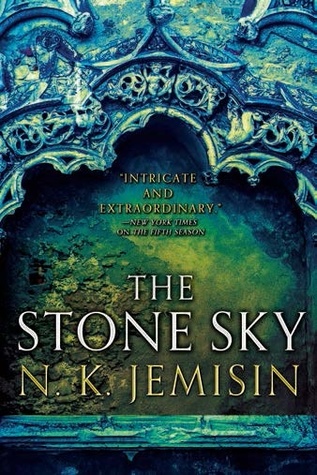 I can’t not mention the third installment of N.K. Jemisin’s Broken Earth trilogy, The Stone Sky. While I was the most blown away by the first installment, the rest of the trilogy didn’t fail to deliver. It’s tremendously inventive and intricately drawn far-future science fiction by a Black woman. She has won umpteen major awards for this trilogy, and she doesn’t really need a recommendation from me. But here it is anyway.
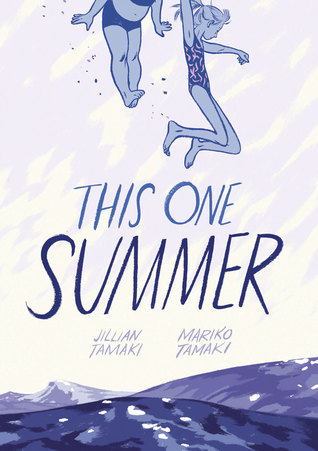 I’m still thinking about Mariko Tamaki and Jillian Tamaki’s YA graphic novel This One Summer. It’s a haunting coming-of-age tale that takes place at the lake, “this one summer.” Girls and women of different ages each change in different ways, and the pubescent protagonist learns—with resistance, even dread—what she’s up against becoming a woman. Definitely YA, not kids’.
 I read a few Hope Nicholson/Bedside Press comics anthologies this year, and the one that stood out for me was Gothic Tales of Haunted Love, which is just what it sounds like – spooky, gory, supernatural doomed romances, by a variety of artists and authors in a variety of styles. The stories featured many LGBTT* and BIPOC characters, breathing life into a genre that could otherwise come across as old-fashioned and stale. My daughter was so taken by the presence of this book in my house that I had to write a guide for her telling her which stories she could read and which were not age appropriate. (My daughter is obsessed with comics and I have to watch every one that I bring home.)
 One of the literary classics I picked up this year was Jean Rhys’s Wide Sargasso Sea. I have to say that what stays with me is more an impression than a specific element of craft or thematic takeaway, though I know it has many; for me, this book was an immersive experience that I can still kind of sink into in my mind.
 The most important book I read this year was Gregory Younging’s Elements of Indigenous Style. If you are a writer or communicator in this country, you should read this book. It gives practical and clearly explained, organized, and argued advice for best practices when writing about Indigenous subjects or working with Indigenous writers.
 I adored Daisy Hay’s book The Young Romantics, and it’s probably what gave me the biography bug. I’ve read that it was her PhD thesis in another form, which surprised me because the prose is so lively and the story so riveting (not something one can usually say about a dissertation). In it, she argues that the archetype of the lone, individualistic, tortured writer—an image invented by the Romantics—was never really true, certainly not by the second generation (the “young” Romantics), and probably not even for the first. She interweaves the stories of Leigh Hunt, Byron, the Shelleys, Keats, and a number of peripheral figures in order to show how they all interacted with and even depended on each other for inspiration, debate, intellectual stimulation, camaraderie, and support. (She also illustrates handily how the women of the circle paid the higher price for their nonconforming ways.) I am officially obsessed with the Romantics again, and if anyone can recommend which is the best biography of Byron, I’m gonna put it high on my list for 2019.
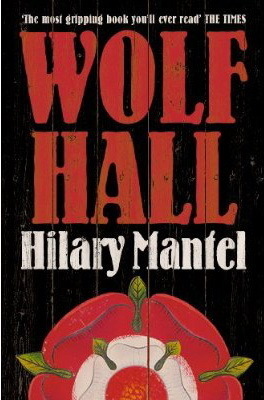 Last, probably my favourite book of 2018 was another one that needs no recommendation from me: Hilary Mantel’s Wolf Hall. It won the Booker, it was made into a miniseries, blah blah blah. These are historical characters I never would have predicted I’d have gotten so attached to. Thomas Cromwell, of course. And Henry VIII! I really missed him when I finished this book. This was one of the behemoths (about 600 pages) that I read this year, but it was worth every page. I don’t know if I’m going to be able to commit to reading the next two installments in 2019… maybe just part 2, Bring Up the Bodies. And, oh, maybe I’ll get the miniseries from the library, too.
 The Press Gallery