


| CARVIEW |
Kal Spelletich's Art

trees

Palm Tree in Presidio National Park, San Francisco, Ca.
___________________
How to green the planet:

 By spellkal
Greening The Planet
This is an instructable on Guerrilla gardening. I first tried it in 1984 and have been at it ever since. I have trees that are 40 tall now. I find spots in my neighborhood or on my commute path in need of some green. I tend to plant drought tolerant plants/succulents/cactus and or indigenous plants. Succulents are easy to procreate in a pot at home. They send of baby shoots which can be pulled off, rooted in a glass of water, transplanted to a small pot and when they start flourishing, plant out side! Indigenous plants of course thrive to the local weather best. Succulents and cacti need less watering. Watering being the key to getting a plant rooted and lasting.
This image is outside my workshop, there used to be twice as many plants and trees, but over the years our dirt road got paved and a sidewalk was put in causing the death of many plants.
All images in the Instructable are plants I have planted over the past 20+ years. Sadly, i haven’t photographed everything. A lot of plants I have planted have been stolen, cut down, dug up and thrown away by landowners and by city workers. Some have been vandalized by drunks or people who hate plants, others run over by cars veering off the road. Such is life, but this has never stopped my passion of greening bleak plant-less areas.
Step 1: Where to Plant?

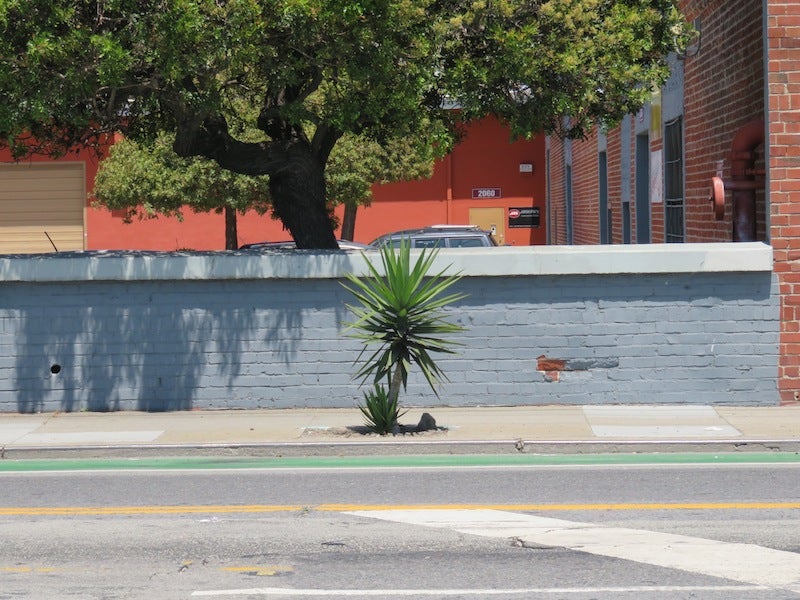
I look for boulevards on heavily traveled roads and intersections, intersections with small triangle areas of dirt/gravel, wastelands, industrial areas and vacant lots. Use your imagination. I have had friends eventually ask me to plant in their yard! Areas where there has been construction where plant life has been wiped out and not replaced. Under billboards, wasted space that could use some help.
I am not condoning breaking the law. More plants equals a healthier planet and happier humans and animals. There is almost always somewhere to find that could uses a little greening. Using local native plants restores local biodiversity by enhancing habitat for bees, birds, butterflies and other wildlife.
This photo is of a Yucca Tree I put in at an intersection given up on by the city. It has very heavy, dirty industrial/truck traffic. The trucks often veer up onto the sidewalk running over whatever is/was there. This is my 4th attempt at getting something to survive in this forbidden zone. Yuccas are hardy, can go without much water and sprout small offshoots that can be cut off, soaked in a cup of water and then planted. This is where this one came from, from one of the Yucca’s on the first page.
It is about 2 years old.
Step 2: What to Plant?
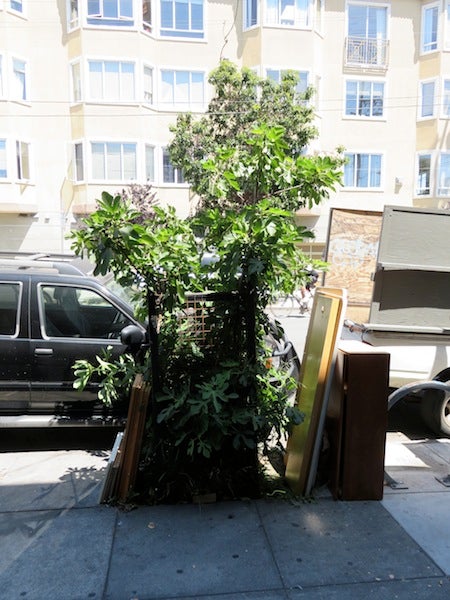


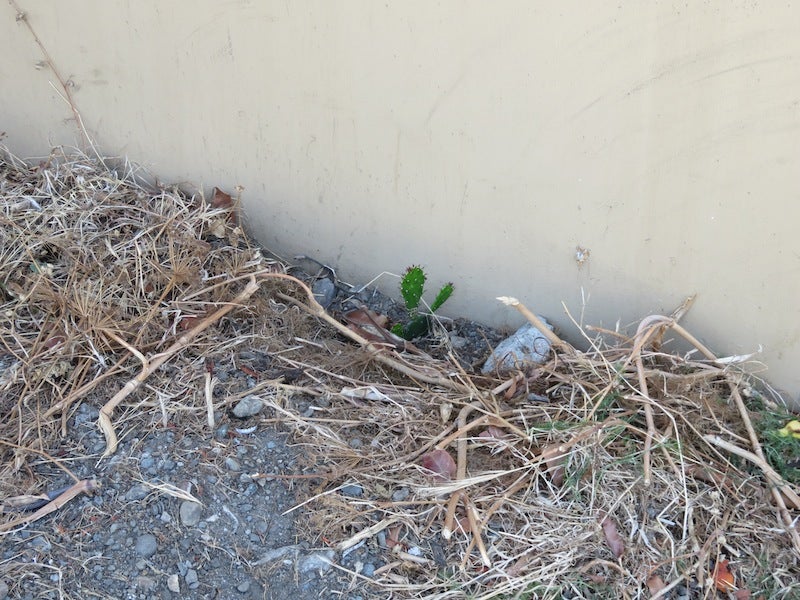
Using local native plants restores ecological integrity and continuity of the city’s natural environment, creating a healthier ecosystem that is more diverse and resilient, thus stemming biodiversity loss, adapting to climate change and improving the pollination system for local agriculture.
By rebuilding healthy soil, local native plants: Conserve our local geologic resources Recharge local groundwater Help prevent erosion Improve water quality Maximize water conservation in landscaping It is nice to have a helper, one to dig, the other to help carry materials and water. They are also priceless helping to water when you can’t, especially when the plant is trying to get rooted and started.
These photos are a Date Palm, a Redwood Tree and a Pear Cactus. I love redwoods, they can live for 3000 years and reach 350 feet tall. The Date Palm and Pear Cactus bear fruit. People are always harvesting from them for food, which makes me feel very good! The palm has been adopted by a bar that it is planted in front of, they have helped water it and had a steel protective cage placed around it, it lets their patrons lock bicycles to it as well.
Step 3: Planting!
Planting;
When planting, have a plan, move quickly with purpose and confidence. After all, you are helping the planet. I have never been stopped and have planted dozens of plants. Nighttime can work, though I just do it in broad daylight, I also like Sunday mornings when the streets are empty. I always have figured I would get out of trouble if i was stopped, tell them I am just trying to help the planet, I like clean air, birds and the environment.
Dig a hole a bit bigger than your plant roots or the pot it is in. I have a small shovel that fits in my backpack so I can bike to a spot with a plant, water and my shovel. Try and sprinkle some compost/fertilizer in the bottom of the hole to prep the soil and help the plant to grow. Try and fertilize your plant every month or so.
Watering is key, especially the first month or two after planting. I try and not plant during the hottest time of the year nor of course during the winter. I bicycle a lot, and tend to plant along my usual bike commute route, that way I can watch over my plants everyday. I use my bike water bottle or carry a gallon of water in my backpack. I also carry a couple of gallons of water in my truck and try and stop by and water as often as possible.
Fertilize; Do it. Especially if you plant in poor soil. I try and use non chemical fertilizer/compost. It is a little more expensive but far better for the environment. And keep watering!
Here are a couple of Yucca Trees. They are in an industrial section of my city. I bicycle to them and water using a water jug.
Step 4: Value Added!
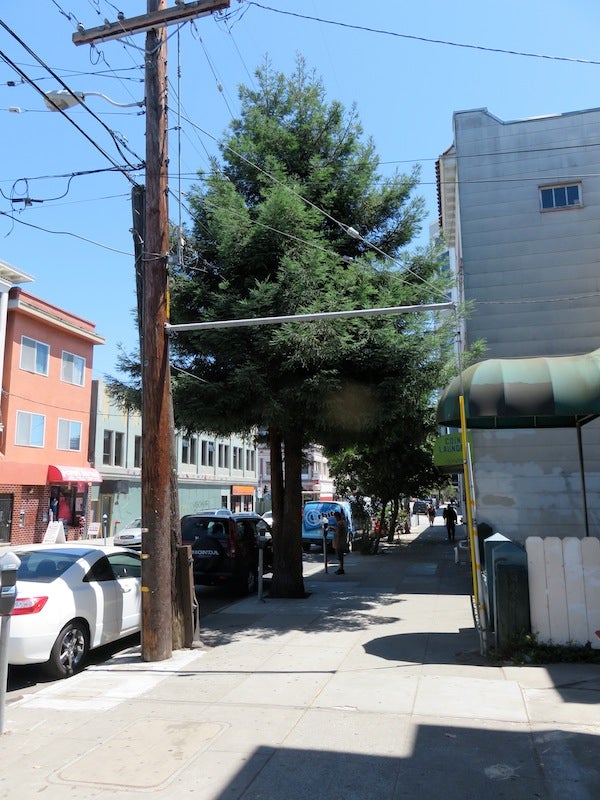 Every spring I load my truck up with some nice soil, 5 gallons of water, a shovel, plants and some compost and fertilizer. I drive around and tend to my urban plants and plant some new ones. Some may have gotten cut down, vandalized, stolen or run over by cars. That’s the way the cookie crumbles.
It is incredibly rewarding to see your plants take off and even thrive cleaning the air and bringing life to desolate areas. I have seen multiple birds nesting in trees I have planted.
Here are 2 pictures of a Redwood that is about 15 years old. Someone new moved into the house it is in front of. They have been trimming it’s lower branches and even cleaning off graffiti painted on it’s trunk!? Also, a pine tree a neighbor gave me when he moved away, he had it in a pot in his house. It was about 4 feet tall and very root bound and stunted. It is about 20 years old and 40 feet tall now. It is so grand and majestic, I get a kick out of sending him a photo of it every few years to let him see how his baby is doing.
During July on the prairie
The pine tree stands alone on the main street
Of a disintegrating country town.
Its needles pump all day,
Still it cannot turn all the passing carbon monoxide
Into anything useful.
On its trunk ants are stuck in the resin.
From its top we can see the dark clouds
In the blue sky.
The island in the lake drifts even farther from shore.
Heat increases.
The afternoon begins its insect hum.
We can tell a storm is coming
By looking into each other’s eyes.
“Clouds Rise like Fish” by Tom Hennen from Darkness Sticks to Everything.
New research says the closer you can live to trees, the better off you are. https://www.theatlantic.com/health/archive/2013/03…
https://www.theatlantic.com/health/archive/2014/07/…
Happy planting
Guerrilla Gardening by spellkal
Never interrupt your enemy when he is making a mistake.
– Napoleon Bonaparte


-

- golden gate park cypress
-

- Palm Tree in Presidio National Park, San Francisco, Ca.
Pages
- 1980’s Work (some)
- 5 excellent events this week.
- American Aria
- Art Survival
- ARTIFACTS OF A LIFE LIVED BY THE LIVING (TO LIVE) Sept. 2013-Jan. 2014
- ARTS BENICIA 7/2013 Installation “MORNING GLORY”
- Collaborations
- Cologne Germany. September 12-14, 2014. Robodonien
- ILLEGAL
- India Show 10/2010
- INTENTION MACHINES/PRAYING ROBOTS
- Kal Spelletich/Biography
- Light And Optics
- Molecular Vibrations of the Radiant Body: Reversed Engineering a Portrait of Human Energy into Light, Sound and Machine Movements
- N.Y.C, COSMICISM AND CONTEMPORARY FORESTRY, 8/2010
- Organs Sound The Body
- Photographs, Etchings And Drawings
- Player Pianos/Fire Arts Festival
- POLITICS
- Portfolio of 20 Images
- Prague Jan.-April 2011
- Press Quality Images
- PRESS/MEDIA/TALKS/VIDEO
- Private/Public Sculptures
- PUBLIC ART PROPOSALS
- Research & Survival in the Arts Class
- Resume / CV Kalman Spelletich
- SFMOMA December, 7, 2011
- Short Stories
- Silver & Gold: Generating Wealth
- Sound Art + Machine Philharmonic
- SPACE TIME SOLUTIONS
- SPLIT BRAIN ROBOTICS
- Student Work
- trees
- WHERE’S MY JETPACK!?, Jack Hanley Gallery, 6/2011, N.Y.C.
Archives
- November 2025
- October 2025
- September 2025
- March 2025
- February 2025
- September 2024
- August 2024
- July 2024
- May 2024
- February 2024
- October 2023
- September 2023
- August 2023
- July 2023
- May 2023
- April 2023
- October 2022
- September 2022
- August 2022
- June 2022
- March 2022
- January 2022
- July 2021
- January 2021
- December 2020
- November 2020
- October 2020
- June 2020
- May 2020
- February 2020
- January 2020
- November 2019
- August 2019
- July 2019
- April 2019
- March 2019
- January 2019
- November 2018
- October 2018
- September 2018
- July 2018
- June 2018
- April 2018
- March 2018
- February 2018
- January 2018
- November 2017
- August 2017
- May 2017
- April 2017
- March 2017
- February 2017
- January 2017
- November 2016
- October 2016
- July 2016
- May 2016
- April 2016
- March 2016
- February 2016
- January 2016
- December 2015
- November 2015
- October 2015
- August 2015
- May 2015
- February 2015
- September 2014
- August 2014
- November 2013
- September 2013
- March 2013
- December 2012
- January 2011
- November 2010
- October 2010
- September 2010
- July 2010
- June 2010
- May 2010
- April 2010
- March 2010
- February 2010
- October 2009
- September 2009
- August 2009
- July 2009
- June 2009
- May 2009
- April 2009
- March 2009
- February 2009
- January 2009
- December 2008
- November 2008
- October 2008
Categories
- Uncategorized (161)
-
Subscribe
Subscribed
Already have a WordPress.com account? Log in now.
 Kal Spelletich's Art
