I create images that exist in the space between documentation and construction. Photography and film becomes in my work a vehicle for suggestion, staging, and controlled ambiguity. I am intrigued by how we read images in a world saturated with visual information, and how we assign meaning, context, or emotion to what we see.
My photographs and films are carefully composed and often resemble moments taken from news reports or historical archives, yet they are entirely orchestrated. I work with actors, constructed environments, and selective visual cues to simulate familiarity—while quietly dismantling it. The goal is not to deceive, but to prompt awareness of how visual language is used to direct belief, emotion, and ideology.
Rather than capturing what has happened, I explore what could be seen as having happened. This opens a space for viewers to question what lies beneath the surface of image-making: intention, control, and the aesthetics of persuasion. In a time where images shape politics and identity as much as facts do, I use photography and film not to confirm reality, but to challenge its framing.
Work in collections
Stedelijk Museum Amsterdam
Fonds National d’Art Contemporain, Paris
Museum Boijmans van Beuningen
Dutch Ministry of the Interior and Kingdom Relations
Dutch Ministry of Education, Culture & Science
Royal Dutch Embassy in South Africa, Pretoria
Dutch Ministry of Foreign Affairs
E & L Dommering Collectie
Collectie Piet & Ida Sanders
Prentenkabinet University Leiden
H+F Collection
Collectie Reyn van der Lugt
Paleis van Justitie Arnhem
De Nederlandse Bank
Rabobank Nederland
ABNAmro Bank Art Collection
Teaching/lectures/advisor
21-24
Steenbergen Stipendium Jury member
2023
Lecturer at International Conference ‘Dynamics of Security’ at the Justus Liebig University Giessen
2022
Tutor at KABK, The Hague
12-16
Commission member at the Mondriaan Foundation, Amsterdam
09-16
Tutor at AKV St.Joost Masters, Documentary Strategies, Breda
2014
Artez Arnhem, extern gecommiteerde eindexam., Fine art Dept.
2010
Workshop at African Artist’ Foundation, Lagos, Nigeria
2007
Lecture at Market Photo Workshop, Johannesburg, South Africa
August 2025, about fifteen miles off the French coast near Boulogne-sur-Mer. It is an hour before sunset. We are sailing downwind with a large yellow spinnaker sail. You can see us coming from many miles away.
In the distance orange objects become visible between the waves. While getting closer we recognise people on a large dinghy which is barely making any speed between the waves. We adjust our course to avoid hitting them and a moment later we’re skimming right past them. There are about sixty immigrants aboard the rubberboat. It will take them at least another ten hours to reach the British shore. They wave enthusiastically and shout “Hello! Goodbye!”. We wave and shout back ‘Goodluck!!!’ On they go: towards the UK coast. I take the picture.
Parallel worlds. I have seen hundreds of similar images. I have met and interviewed dozens of young Afghan immigrants in Paris and Calais around the year 2010 but to see up close how desperate they must be and how vulnerable they are, shocked me anyway
Stroom Den Haag hosts a group discussion as part of the exhibition The Cost of Alliance curated by Vincent de Boer and Lua Vollaard. The discussion features the artists Anika Schwartzlose, an artist whose work focusses on the role of the stratgegic dissemination of images; Juul Hondius, an artist exploring the position and history of NATO in his work; Arnout Brouwers, a geopolitical expert and Wim Zwijnenburg from PAX.
The debate will include voices that question NATO’s position and aim to clarify the difference between allyship and allegiance.
This summer, for the first time in NATO’s 70-year existence, The Hague will host the NATO summit. Located between the city centre and NATO’s security cordon, Stroom Den Haag hosts The Cost of Alliance, an exhibition that contextualises NATO’s stated role and historical presence. The Cost of Alliance considers the historical dimensions of NATO as a political and military alliance. Alliances – a term towards strategic ends - are formed on account of the existence of a common enemy. The Cost of Alliance refers to the necessity of conflict or the threat of conflict to maintain the alliance. This cost consists not only of an economic value, but of a shared cost in the shape of history, the loss of common ground, cultural values, and ultimately, human lives. The project addresses the contradictions of complicity inherent to NATO: when does peacebuilding become a propaganda tool? What is the difference between individual and collective agency? What can we expect from allyship, and what do we provide in return?
The Cost of Alliance presents four works by four contemporary artists, contextualised by a public programme. The works on display speak to the culture of geopolitics, touching on themes such as secrecy, arms race, propaganda, the West, and the notion of a ‘world citizen’. Together the works reflect on the displacement of matter in service of NATO’s mission.
Juul Hondius’ film shows a semi-fictionalised account of the relocation of the NATO-statue in front of their Brussels’ headquarters. Kristina Benjocki and Stijn Verhoeff’s video installation sketches a portrait of the miles of tunnels underneath Maastricht that used to be NATO’s wartime headquarters. Vladislav Shapovalov’s installation recounts the story of NATO’s 1950s traveling exhibition ‘Caravan for Peace’ to look for its contemporary potential. Drawing upon the current conflict in Ukraine that implicates NATO’s mission, Lotte Geeven’s TILO, broadcasts the heartbeats of Ukrainians at the front lines.
The Cost of Alliance is part of the long-term programme See You in The Hague, which addresses The Hague’s ambition and reality as International City of Peace and Justice. With The Cost of Alliance Stroom participates in the Just Peace Festival in The Hague, a platform for dialogue, collaboration, and action on the pressing global challenges of peace and justice.
Sunday, 22 june - 13:30 - 15:30 hrs
The Cost of the Alliance is made possible thanks to the generous support of the Municipality of The Hague, the Just Peace Festival, and the Mondriaan Fund.
Dear Asif, I saw this incredible photo of you in the newspaper. You were rescued, and I thought you’d give up after that attempt. I found out that someone approached you a few weeks later in the dunes near Calais, and you told them you were going to try again with a slightly larger raft. Another attempt to cross the Strait of Dover! Right through the narrow shipping lanes of the large, fast ships that can’t see you! Risking your life like that is apparently the only way for you to make life worth living, and that’s heartbreaking.
For the video installation I’m currently working on, we made an exact copy of your raft. It turned out to sail quite well. However, the waves during our filming weren’t as high as you probably experienced on your second attempt. The White Cliffs of Dover seem close, but on a raft with only a small sail, it could have taken you days.
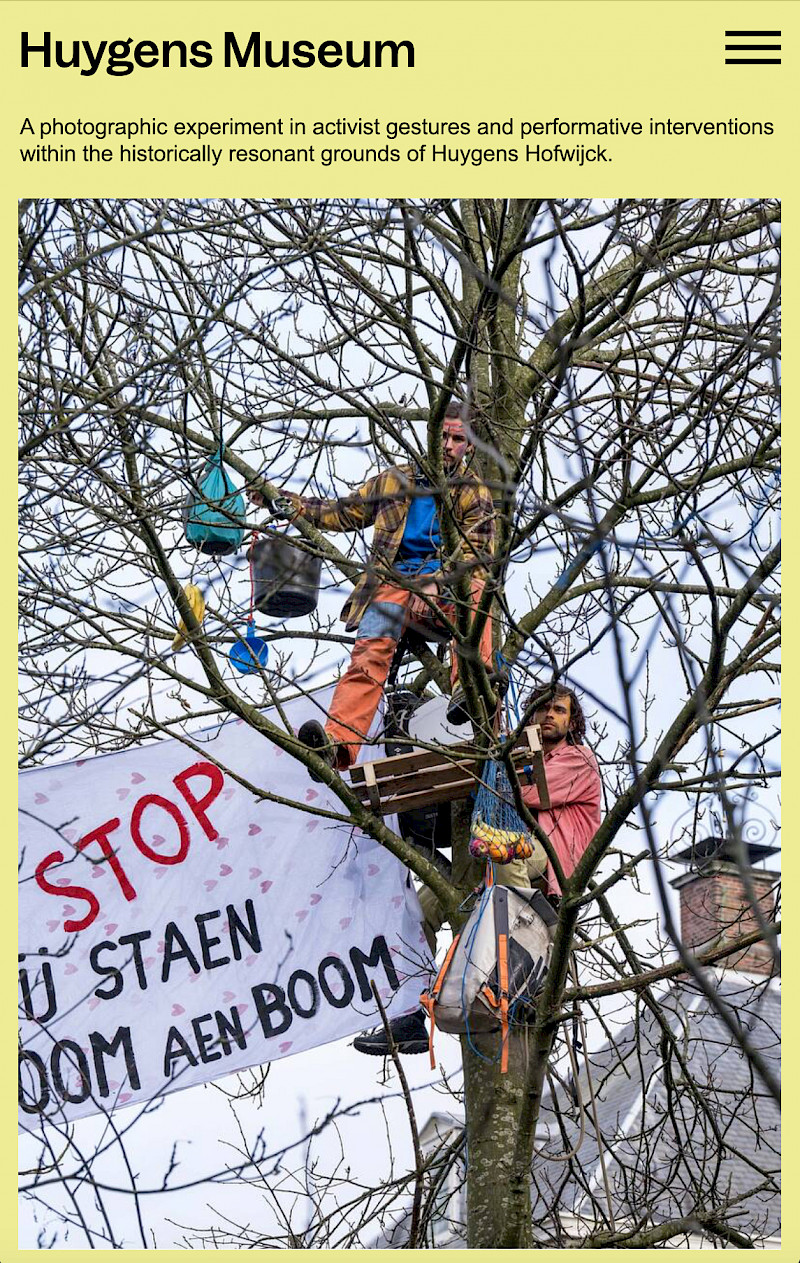
Hofwijck, with its shady elms and avenues of pine, was a place where poet, composer and diplomat Constantijn Huygens (1596-1687) was able to escape the pressure of Hague political life. But his garden was much more than just a quiet place to relax. As Huygens wrote in his famous poem about Hofwijck, the garden embodied a multifaceted vision of people and nature.
In Huygens’ idyllic garden there was little talk about protecting nature. But centuries have passed since, and nowadays trucks rumble by on that awful A12 motorway. Juul Hondius wakes us with a start, bringing the climate debate to Hofwijck. The slogans are not what you might expect. We are exorted to ‘Boom aen Boom staen’ (‘stand tree to tree’), a banner advertises ‘Gratis Maaltijden’ (‘Free meals’) and activists are called ‘Eve and Adam’. Are we losing our paradise on earth? Constantijn Huygens’ poem Vitaulium Hofwijck expresses a love and fear of nature. This contrast becomes painful in Hondius’ photographs, which evoke contradictory feelings and pose a question that is difficult to answer: what is Nature really worth to me?
Hofwijck is part of a complex and confusing reality. We think we known the banners and slogans of climate protest, but what happens when those images find themselves in the setting of a photogenic country estate? What do we think and feel then? How relevant is Hofwijck in this rapidly changing world?
The Teatrino di Palazzo Grassi in Venice presents an exclusive selection of films from the 15th edition of Lo schermo dell’arte, Cinema and Contemporary Art Festival.
The Shifting Pictures film festival showcases European cinema that addresses contemporary societal issues. Four directors and their films will visit Prague, Belgrade, Bucharest, and Amsterdam. The festival aims to reflect on the inner threats facing Europe, such as the rise of right-wing politics, populism, and the challenges surrounding identity.
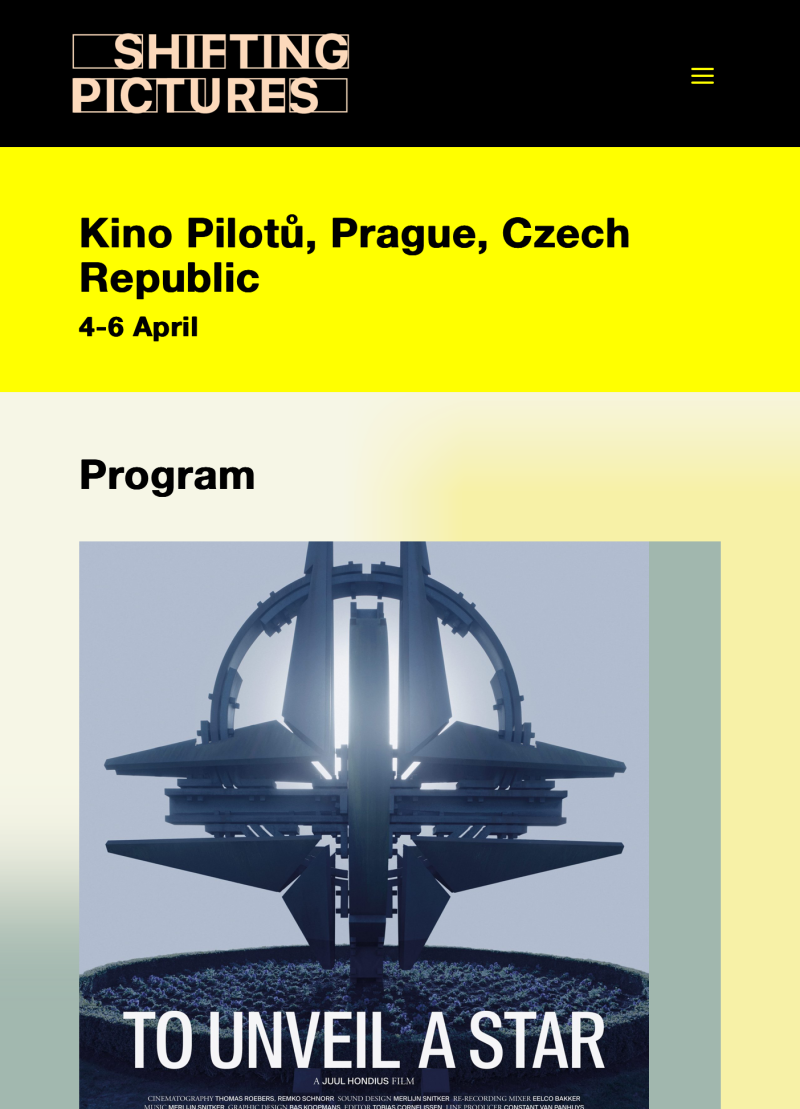
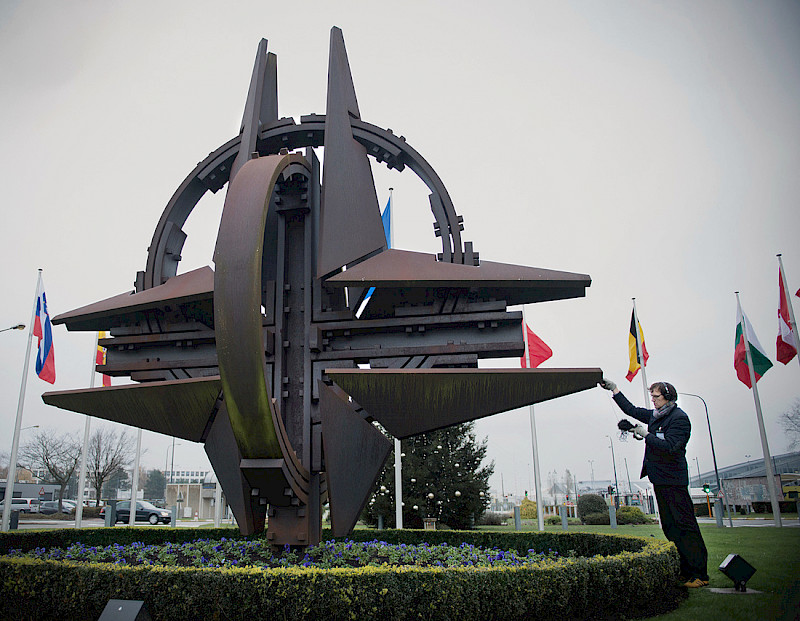
The film revolves around the large star-shaped steel sculpture that has stood in front of NATO headquarters in Brussels since 1971: an iconic monument observed from a documentary perspective that opens up a critical reflection on the media power of images and how these visual strategies determine our lives.
Previously in the media> Kaleidoscopic portrait of a NATO icon (text by Thomas van Huut in NRC 25.11.2021, original written in Dutch)
’ “It depends on who you mean by the enemy … if you mean the Russians, I haven’t seen them here yet.” A Dutch soldier stationed in Lithuania by NATO to “show that we are here” is just one of the many characters that artist/photographer Juul Hondius portrays in his fiction documentary To Unveil a Star (2021), a 54-minute search for the meaning of the giant rusty steel sculpture at NATO headquarters in Brussels. Hondius sketches a kaleidoscopic portrait of the image that has reached millions of living rooms via televisions for fifty years. He uses, among other things, archive footage of NATO meetings and speeches and personal family films of demonstrations against nuclear weapons. He also speaks to NATO employees and the artist who did not receive recognition. In between, Hondius mounts images of cockchafers crawling up from the ground around the image. Is the statue “the glorification of Western domination,” “a beacon of safety,” or a “symbol of a willingness to destroy others”? Probably all at once.
Nothing in the film is what it seems. Some of the conversations have been staged, performed by actors. Other parts are shot with real people. The film meanders between fact and fiction, between the personal and geopolitical, between bombastic and subdued. The game with fact and fiction confuses, you don’t know exactly what you are looking at, but at the same time Hondius gives you the idea that he is showing you a true portrait of the image. “We change when the world changes,” says the NATO general. The steel image remains the same, but is also different each time. The nature images of May beetles (in some areas a plague that kills entire forests) are masterful: they are, among other things, a metaphor for the silently watching Earth, another layer of time, the ‘geo-’ in ‘geopolitics’. At one point, a cockchafer opens its armor to take off from the cane of a soldier in uniform. Phenomenal.’
‘In einem Bus hat auch alles angefangen. Damals wusste ich nicht, dass ich krank war, ich dachte bloß, ich würde mich langweilen.’
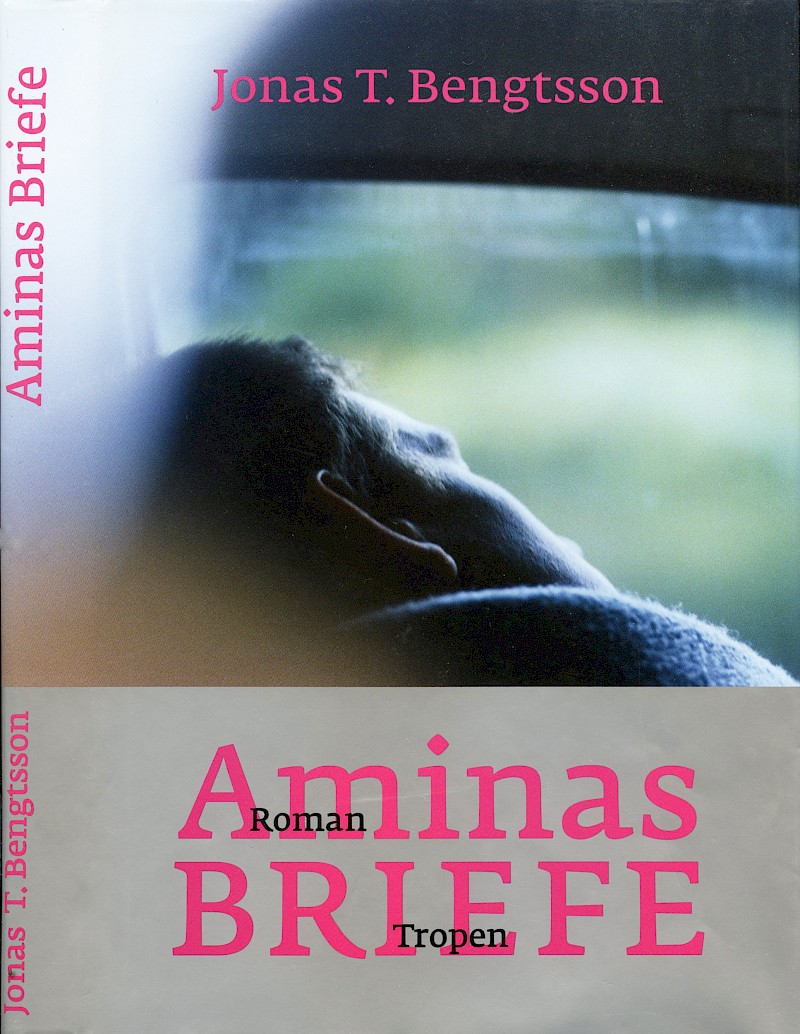
Publisher Klett-Cotta Verlag has used a detail from the image ‘Maboge’ for the cover of the great novel ‘Aminas Briefe’ by Jonas T. Bengtsson. ISBN 978-3-608-50100-1
The distance was less than ten nautical miles. I was on board the fishing trawler UK136 with it’s crew from the former island of Urk. We sailed over the North Sea and the wind was building up. Wind force 7 to 8 Beaufort, high waves for 72hrs. The captain was praying out loud for the crew at every dinner time in the galley. During the second night in the gale he spoke of finding a safe harbour at the island of Helgoland. I had never heard of it. While manoeuvring the fishing trawler over the dark seas, in his strong Urker dialect the captain told me all about it.
The island Helgoland is an about sixty meters high, red rock in the middle of the German Bight. It used to be an U-Boot naval base. Ideal for movies scenery. Today it is alive with people and birds. Too many birds.
Meanwhile on the fishing vessel, the raging storm wasn’t raging enough to make the captain decide to seek a safer place. He had to catch as much fish as he could with his ship and crew.
Helgoland has been on my mental horizon ever since. Now I will sail there alone with the Tissum, straight through the sea passage between Den Helder and Texel’s Mokbaai. They say that if you can sail the German Bight, you can sail anywhere in the world.
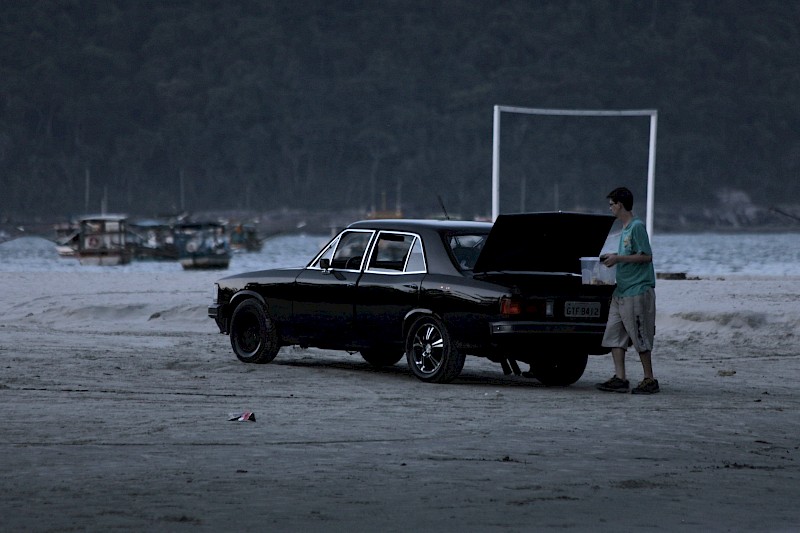
The small coastal village Pereque near Santos, in Brasil. A river full of life flows along the beach into the sea. Sweet water meets the salt. The smell of rotten fish and algea.
Estuary zones with tidal rythms have always been my place to be. Thousands of bright red sandcrabs take a good look at me. They disappear all at once when I land with my feet on the sand.
The fishermen living in this little paradise struggle because of the competition from the industrial fishing fleets that operate in their regional waters. At night in the bar they wonder out loud if they should make the shift towards piracy.
Using a contact microphone to capture sound from the inner core of a massive steel sculpture reveals a hidden world of vibrations, resonance, and subtle acoustics. The microphone amplifies the quiet hum of the metal, resonating with its own tension and structure. You might hear faint, mechanical creaks as the sculpture shifts, the reverberations of air moving through hollow spaces, or even the distant reverberation of environmental sounds, distorted by the dense material. Inside, the sculpture’s core is not silent—its interior is a vast, echoing chamber, alive with the whispers of its own being, responding to its surroundings in unexpected ways.
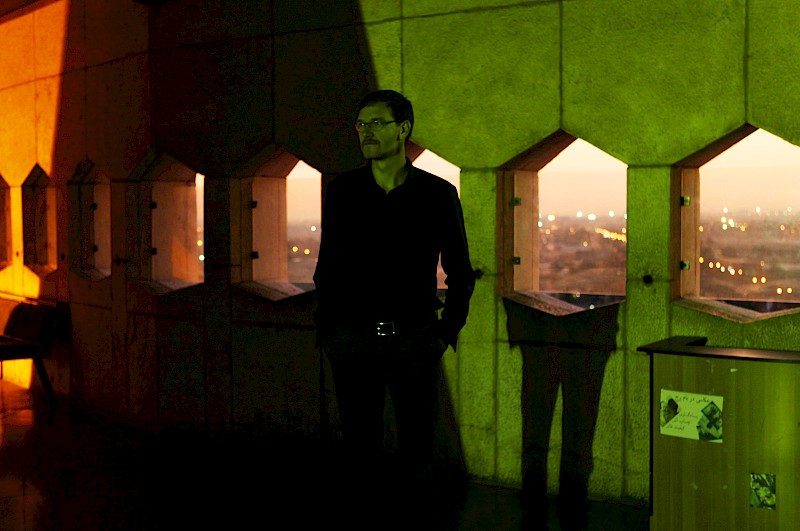
We arrive just after opening hours but the kind operator lets us enter the crazy shaped elevator in the mighty Azadi Tower in Tehran. The submerged entrance resembles a 70ties James Bond movie set. The elevator rattles to the top and the noise of city traffic is far away. We are the only guests in the top of the tower, where lamps divide the space in different colors.
Hexagonal windows provide a great view of the snowy high peaks north of the city, they ablaze in the setting sun. All the traffic on the square below us suddenly comes to a stop on the roundabout and then all traffic disappears in different directions.
A motorcade with about twenty cars moves on to the square. I know there is a summit of Gas Exporting Countries Forum going on where Vladimir Putin is the main guest. The cars stop to take a look up at the Azadi Tower. His deadpan face appears in a car window. We look back from the top of the tower. Vladimir Vladimirovich closes his window and continues with his escort to the airport. The rear lights of the motorcade seem to create the shape a Russian Orthodox cross.
Descending through the narrow stairways I experience the totality of the tower’s design. The stairwell has been designed in such a perfect way in chiseled dark granite that it makes me dizzy. The history of the Shayad or Azadi Tower is politically charged and yet I experience the design as something completely new, as if nothing of the history can stick to the building.
In an interview, the Tower’s architect Hossein Amanat compares “her” to a child whose life destination is unknown at birth. She came of age in the late 1970s, due to the revolution and regime change, she was given a different name when her role suddenly changed. Or is this a typical case of “Architectomancy” similar to “Geomancy”, through which practitioners of wizardry prognosticated the future via geometric shapes or other magical phenomena, was practiced in Iran long ago. Also, according to the late archeologist and historian Arthur Upham Pope, Iranian architecture has always been “magical and invocational in character.” He called it “guiding with a formative motif of cosmic symbolism by which man was brought into communication and participation with the powers of Heaven.” Often Westerners write about “Oriental exoticism” to engender mystic enthusiasm in their readers, but rarely do they believe in their scientific validity. This time Shahyad did perform magic as the unexpected really took place.” – Morteza Baharloo, “Shahyad (Azadi), A Monument of Many Faces,” in Art Lies
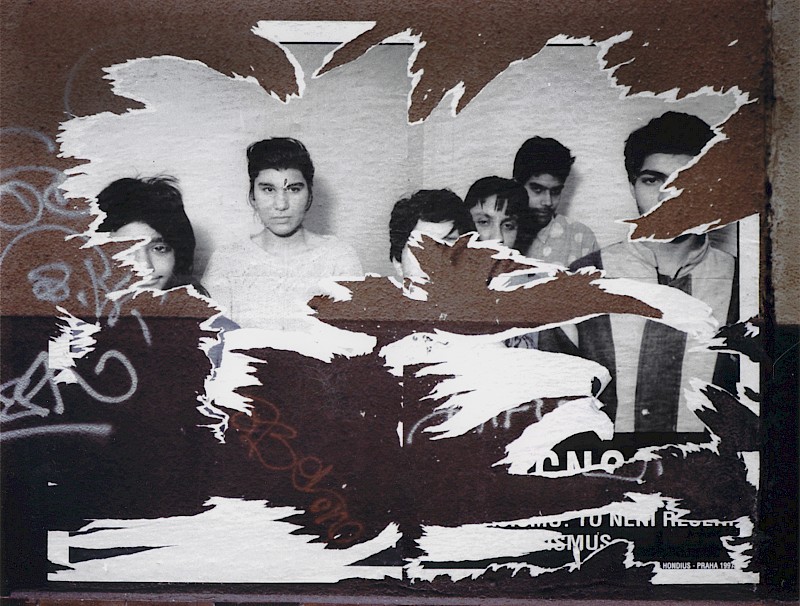
‘They appeared overnight, without warning. Stark, black-and-white posters of young Romanies captioned with anti-racist slogans were plastered on the walls and corners, heralding one of the most aggresive anti-racist campaigns ever seen in Prague. In the Czech Republic, public anti-racism campaigns were practically non-existent at the time of this campaign tried to put the subject in the spotlight. Afterwards, other campaigns with a more positive approach have followed. But in a sadly ironic twist, the posters quickly became victims of their message, ripped to shreds within days of their unveiling - thus painting the most vivid picture of intolerance and racism here. And for the campaign’s author, that was the whole point.’
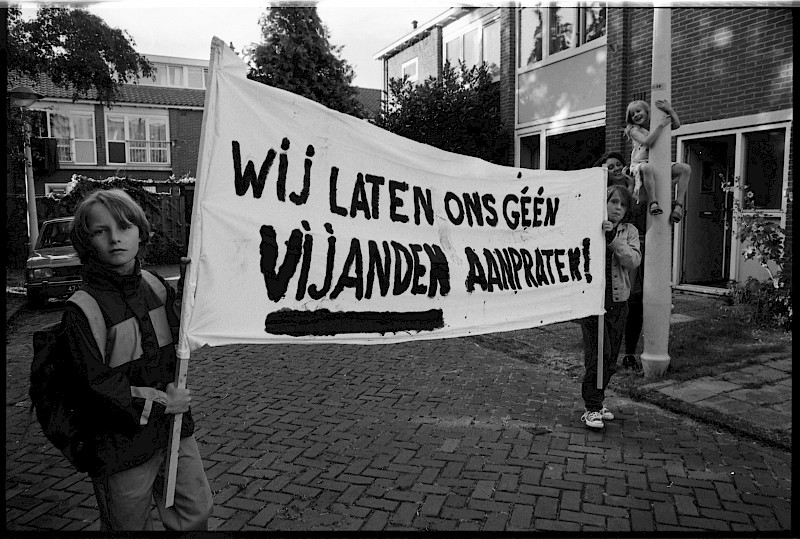
I am about 11 years old. Together with a friend and both our father’s, we go to The Hague along with half a million people to protest against nuclear weapons, against NATO.
We gathered at the bus station. It felt like an adventure, a school trip. I didn’t know the script of a demonstration yet. “Now all lie down!”someone shouts through a megaphone next to me. We are imitating a nuclear war. In a strange position, lying on middle of the road of the street, with your mouth half open. After a few minutes you get up again.
I remember the encouraging looks of adults when they see the text on our banner. It was all so clear, because we were right and the other half of the Netherlands were not, it was just a matter of time before they would all realize that.
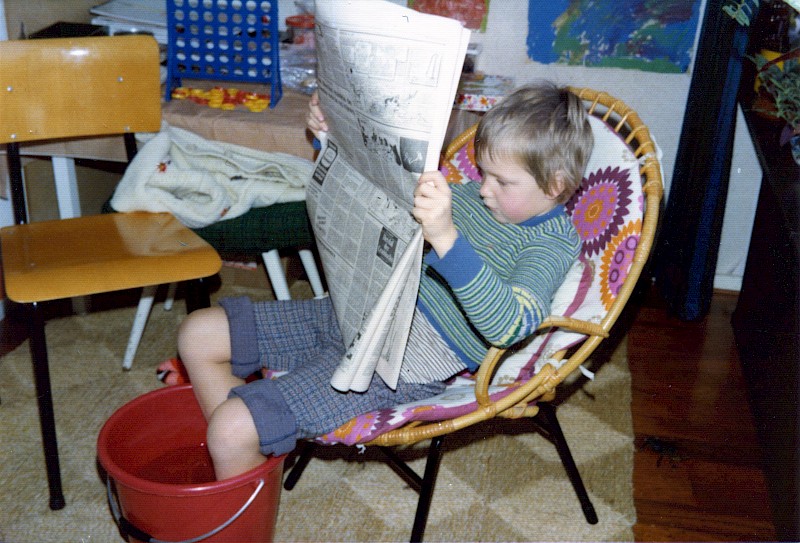
After playing for hours in the snow on a cold February morning in 1976, something in the newspaper made me suspicious. There was a reportage about the Empress Farah Diba, wife of the Shah of Persia and her visit to the Queen of Spain. But I couldn’t care less about the royals! What interested me was the illustrated article about the knock-out of Jean-Pierre Coopman by Muhammed Ali in the fifth round in Manila.