This is not goodbye

When I started The Rambler back in 2003, blogs were a relatively new phenomenon. They weren’t yet commercialised, they weren’t homogenised, they had a Wild West feel to them. I came to them slightly naively, searching for commentary on the Iraq War, which was then just beginning its ghastly unfolding. Most of what I read then, under banners variously libertarian and/or anti-mainstream, was, I now see, a kind of proving ground for what would become the American alt-right, and then …

But at the same time I found a community of music bloggers, many of them centred around London’s nascent grime scene. The writing ranged from the scattergun realism of heronbone and somedisco, to the deep intellectualism of Simon Reynolds and Mark Fisher, to the concrete poetry of Ian Penman. I loved all of it and wanted to be a part of it.

So I started The Rambler, first on Blogger, when that was still a thing, and then a little later here on WordPress. The name was a gag: I was studying for my PhD and at some point would become a Dr Johnson, like the great Samuel. In search of some reflected glory, I looked up the names of the various journals he had started and picked The Rambler. It seemed to suit the ad hoc, stream of consciousness approach to what I thought I was doing. Of course, when I got married a year later and took my wife’s surname, it stopped making sense. But it stuck.

Within a few months of starting, as I found my voice writing about modern composition rather than grime and dubstep, I began to diverge from that original community, though I still owe it a huge debt for those first seeds of legitimation and for the inspiration to begin at all. Now, blogs about contemporary and classical concert music were beginning to spring up – Kyle Gann’s blog had got there just ahead of mine, but other critics were beginning to enter the scene: Alex Ross, Steve Smith, Jessica Duchen, as well as other independent/amateur efforts like mine (shoutout here to to the long-running aworks).

I owe most of my writing career to The Rambler. It gave me community, visibility, a little bit of authority, maybe. The existence of both Music after the Fall and The Music of Liza Lim can be traced pretty directly to what I was writing here. (In the case of MATF, straight back to a single post.) Most importantly, it was a place for me to experiment with voice and style.

Which is why I am gently drawing it to a close and starting a new venture, over at Substack. While I love all the writing that I do, I’ve been feeling the lack recently of spaces in which I can write what I want to write. For a long time, I’ve been looking for a way to refresh my ears and refresh my words. I have also felt for a long time the need for some discipline around that. And while I love this place, it has never been a site for discipline or order. That has been part of its charm (for me, at least). It’s time to stop Rambling, and become more Purposeful.

Hence Purposeful Listening. The name is borrowed from David Dunn’s Purposeful Listening in Complex States of Time, a work introduced to me by another writer I encountered first through blogging, Jennie Gottschalk, and still I think one of the most interesting conceptual works around listening (and other things) I know. But it also gets at, I think, a drive I’ve always had, to go beyond surface-level aesthetics in search of meaning, contextual resonances and so on.

I intend to publish a couple of times a month (with the odd bit in between), with a mix of interviews, deep listening dives, reviews (live and recordings) and other things as they take my fancy. The first issue – an embellishment of my Leo Chadburn review published here last week, plus reviews of new discs from Mark Fell and Michael Finnissy – goes online today. Future issues will include interviews with soprano Stephanie Lamprea on female vocality in new music and with pianist Cheryl Duvall on long duration works for piano and her new Linda Catlin Smith edition; a close listen to Antti Tolvi’s remarkable 70-minute interpretation of Feldman’s Intermission 6; reviews of discs by Jason Eckhardt, Natasha Barrett, Arlene Sierra; and more. There may also be a chance to read previews/early drafts of extracts from (what I hope will be) my next book – an experimental memoir on Schubert, new music, listening and chronic illness.

Finally, it is just left to say a huge THANK YOU to everyone who has contributed to making this blog what it was. To those whose CDs or concert invitations gave me things to write about; to those whose comments have kept me honest; to those whose shares have grown my audience; and to those of you who have read and made the whole thing worthwhile. Thank you, thank you, thank you.

And I’ll see you next door

The Sound of Place: Leo Chadburn, Sleep in the Shadow of the Alternator

Navigate by the sound of my voice

Leading you astray

With the characteristic trip of the tongue

Or resonance in the mouth

You will be wrong

When you guess where I am from

carview.php?tsp=

Voice, body, language, place: these have long been the central preoccupations – basic materials, really – of Leo Chadburn’s work, from his early releases as his avant-pop alter-ego Simon Bookish (‘Portrait of the Artist as a Fountain’) to the stream of recent releases every year or two on his own Library of Nothing Records label: The Subject/The Object, Slower/Talker, The Primordial Pieces. For my money, his latest album, Sleep in the Shadow of the Alternator is his best yet, and the one to which so much of what he has made before seems to have been leaning.

It features many of the signatures of Chadburn’s music: the lists (of rock formations, local flora, occupations); the warm, disarming synths; the mingling of magic and pragmatic; a dichotomy of human and machine; and, of course, Leo’s own, misdirecting voice, mic’d in intimate, enveloping close-up. But on Sleep in the Shadow, they come together in the form of something both bigger and more personal than anything else I think he has done.

In a review I wrote in 2020 of The Subject/The Object, I alluded to a resonance with Russell Hoban’s deep time dystopian novel Riddley Walker – set in a post-apocalyptic East Anglia several thousand years into the future, in which culture, language and mythology are still being built upon the deep-buried and long-forgotten symbols of the twentieth century. In Chadburn’s work, I heard Riddley in the simultaneity of ancient and modern – or the vision of a future that has been remade as though ancient. In The Subject/The Object there are also allusions to some terrible event in the past that has brought us to this moment: the sorry state of things; the town where we sheltered for the night; the dogs by the encampment.

There is no such darkness, or not explicitly so, in Sleep in the Shadow. The work is on one level a memoir and a tribute to Chadburn’s upbringing in the coal-mining towns of the East Midlands. The four sections are tagged to different locations and times: the former Snibston, Whitwick and South Leicester collieries, autumn 2024; Charnwood Forest, between Leicester, Loughborough and Coalville, summer 1993; the Falcon Works in Loughborough and Coalville open cast mine, winter 1986; and Sence Valley Forest Park, northwest of Leicester, spring 3025.

However, a Hoban-esque atmosphere prevails. I hear it in the listing of medieval occupations – collier, farrier ostler, wheelwright, cooper, occultist. I hear it in the meditations on mining, geology and landscape. I hear it in the listing of magical flora and their properties. I certainly hear it in the final track, ‘It is a beautiful day (1,000 years later)’. And I hear it in the title itself, the alternator occupying a similar mental space to the Power Ring in Hoban’s novel – there, some kind of ancient (ie, modern day) nuclear device located outside what was Canterbury; here, a relic of the fossil fuel industry that brought into being the town in which Chadburn was born.

Hoban represents a certain kind of English artistry of which I am inordinately fond. Trippy, occultist, and above all steeped in fog and our mongrel, ridiculous language. (This Quietus review by Tom Bolton references, among others, Auden, Delia Derbyshire, Chris Morris, Ivor Cutler and Alan Moore, all of whom I would include in that pool.) By extension, Chadburn is part of the same. Often he has achieved this through lists of terms or collections of found texts: The Indistinguishables (2014) for string quartet and pre-recorded voices offers a soundtrack to a list of seventy species of moth sighted in Britain; Freezywater (2016) for ensemble does something similar for the names of fifty topographical features encircling London; Affix Stamp Here (2016) is a song cycle based on messages found on picture postcards. The lists of common and Latin species names in the second section of Sleep in the Shadow, ‘Magic Flora of the East Midlands’, certainly share that space.

Going back to place, then. It is a site of history and culture. But it is also a geology, a climate, a history of industry and patterns of working the land, collections of lore, the timbre of a voice and the vocabulary at its disposal. Each of these feeds and shapes the others. And the essence of place is in the people who live in correspondence with it. Neither is fixed, but neither is foundationless either. This correspondence and intersection is what Chadburn appears to be getting at. The lucidity of his music opens the channels by which one thing can be shown to be an aspect of another: the lists of occupations flow out of the lists of native flora; the names of ancient trades flow into modern ones – incline winder, brakesman, projectionist; the trades flow into the sounds and movements of a freight train, a turbine hall; they flow into an efflorescence of vocabulary: torque, parallax, microfiche, pyrite, consortium … If nothing else, Chadburn makes you want to write lists upon lists.

This is a time of national head-scratching over what it is or means to be English. Too frequently, that scratching results in breakouts of hives and broken skin. But it seems to me that, in his own modest way, Chadburn has been exploring this question for some time, and coming up with much more interesting, more satisfying answers, ones that lead to fewer red and white rashes. Sleep in the Shadow of the Alternator is his most complex and complete statement on the subject so far, and it may be well-timed.

Thank you for reading. And special thanks to those who have supported this blog with your views, comments, subscriptions and shares over the twenty-odd years that I have been doing this. The time has come for a refresh. To this end, and partly to help me re-engage with regular blogging, I will be moving operations over to Substack in the coming weeks. You can find me there, and keep reading and (hopefully) subscribing, under the title Purposeful Listening. Hope to catch up with you soon.

Sarah Dacey’s Night Songs: Reviving Women’s Voices

I was meant to be at the Southbank Centre on Sunday for the London Sinfonietta’s ‘deconstruction’ and performance of Boulez’s marvellous …explosante-fixe … On-stage conversations, leather seats and Boulezian orchestration at its most refined. Full luxury new music and all that. Unfortunately, a family football injury scuppered my afternoon and sent the rest of the day’s plans out of whack. I made do instead with the Boulez/EIC recording and Paul Griffiths’ booklet essay.

However, on Friday I did make it to a very different kind of gig. Mycenae House in Blackheath is the kind of place that hosts kids’ martial arts classes, Pilates, gong baths, a community choir, film nights and the odd wedding reception. It’s a humbler, community setting with a weather-beaten piano, local artists for sale in the corridor and a remarkably affordable little café/bar. It was here that soprano Sarah Dacey was launching Night Songs, her ongoing project to collect, commission, rediscover and perform songs by women on the subject of the night. The atmosphere was informal without compromising on musical quality; the sort of gig I’m much happier in anyway.

carview.php?tsp=

The recital was given in aid of the domestic violence support charity Refuge (to whom donations can be made here), and there was a deliberate evocation of movements such as Reclaim the Night. Dacey introduced proceedings with a reference to the BBC’s shocking exposé of Charing Cross police station, where an undercover journalist discovered a culture of racism and misogyny that persists even in the wake of the murder (by a serving Metropolitan police officer) of Sarah Everard in 2022. On Thursday, Dacey had been part of a Women against the Met protest in Central London, holding a placard of names of victims while trying to avoid being run over herself.

It goes without saying that there was none of this violence or ugliness in the fourteen songs by thirteen composers sung here (including new works by Kerry Andrew, Laura Bowler, Lucy Mulgan, Yshani Perinpanayagam and Freya Waley-Cohen), but it demands to be said too, because that was principally the point. No sooner had she told us of her deep anger at the Charing Cross revelations, than Dacey drifted into Andrew’s gorgeous ‘Bless my baby bless my baby bright’, a setting of one of the love notes Gertrude Stein used to write at night for her wife, Alice B. Toklas, and leave around the house for her to find in the morning.

Night, in these settings, could be a space for reminiscence, mourning, love, fun, exploration, magic and transformation. Laura Bowler set words across two songs from Joseph Sheridan Le Fanu’s sapphic vampire novel Camilla (written twenty-five years before Bram Stoker’s Dracula); Lucy Mulgan evoked the physical entrainment of moon and menstrual cycle in her ‘wishy washy’; Perinpanayagam’s ‘Seamstress’ sang sexily of ‘beaconing fridges’, fumbling mouths and a ‘screaming new-born’; and Waley-Cohen’s ‘spell for change’ brought a spell from the collection WITCH by poet and academic Rebecca Tamás powerfully into the concert hall. Perhaps most exciting were the songs – by Julia Perry (1924–1979), Marion Bauer (1882–1955), Madeleine Dring (1923–1977) and Amanda Aldridge (1866–1956) – that Dacey was bringing back to life, having discovered them in trawls through the British Library and online repositories such as IMSLP. Most of these – and surely she has more – were likely being heard for the first time in decades. Not only was the night being reclaimed, but so was these women’s music.

Dacey laughingly says she has no idea where the project is going, but there are already further recitals scheduled, a composers’ workshop in York booked and ideas for a recording loosely sketched. This feels like important work, with a lot more to be said.

Thank you for reading. And special thanks to those who have supported this blog with your views, comments, subscriptions and shares over the twenty-odd years that I have been doing this. The time is coming up for a refresh. To this end, and partly to help me engage with regular blogging once more, I will be moving operations over to Substack in the coming weeks. You can find me there, and keep reading and (hopefully) subscribing, under the title Purposeful Listening. Hope to catch up with you soon.

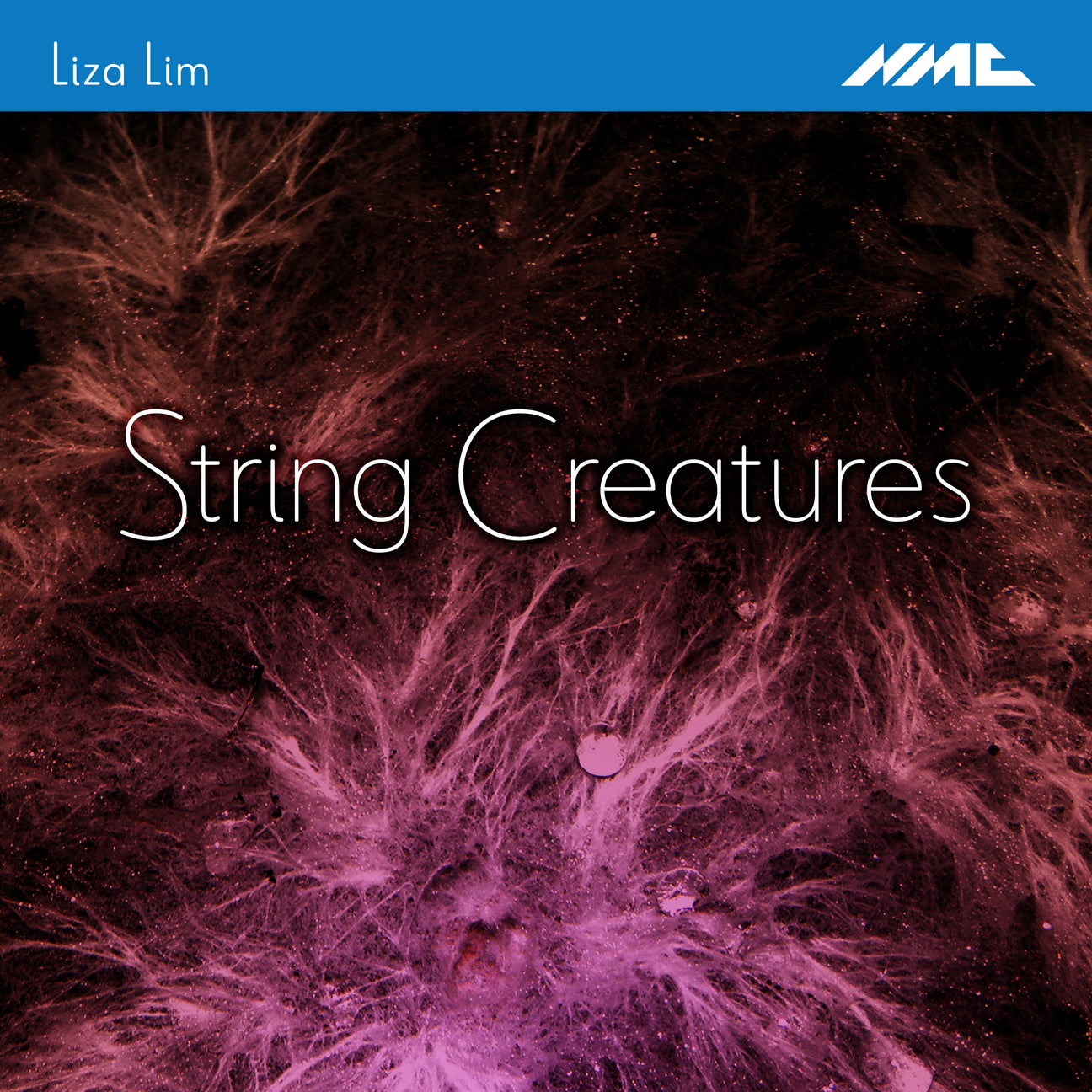
Liza Lim’s String Creatures

carview.php?tsp=

It was lovely to attend last night the launch of Liza Lim’s new disc for NMC records (and of Zoë Martlew‘s forthcoming debut, Album Z). I’ve reviewed String Creatures for an upcoming issue of Nutida musik in Sweden, so those who are really keen can read my initial thoughts on the album there.

But last night I realised too that not only is this a collection of really great music (the magnificent title work for string quartet; solos for cello and bass, an ocean beyond earth and Table of Knowledge; and the short birthday piece for the Arditti Quartet, The Weaver’s Knot). It is also a great object in itself. Too often, new music CDs can come across as slightly randomly put together – this piece, this piece, then something else because we’ve still got ten minutes’ space on the disc. You don’t get that sense with String Creatures. Yes, the pieces are chosen for their similarities of instrumentation and a shared concern with string-iness (the two solos involve their players drawing strings attached, respectively, to a separate violin or to their teeth), but the way they have been sequenced matters too: when the violin-to-cello sound space is opened up another octave or two by Table of Knowledge, which closes the disc, it feels like a moment of fulfilment that has been latent from the start. And this in turn is emphasised by Alistair McLean‘s outstanding production, which maximises the vibrancy of the sounds, the richness of overtones, and the bite and attack of every note.

Add to all this some excellent sleevenotes by Joseph Browning (one of the best writers on Lim’s music out there, and apparently the original coiner of the term ‘string creatures’), as well as NMC’s distinctive design style, and you have not only a collection of recordings, but an album. Each component contributes to something bigger. This is something non-classical music does naturally, and so well: no song is encased in a hermetically sealed bubble; it can be mixed, remixed, covered, playlisted and more. Contemporary music still (although it is getting better) thinks within a (capitalist, patriarchal) nineteenth-century model in which the unity of the work is everything. And that leads to discs (and concert programmes) that feel like random assortments rather than objects in themselves.

Anyway, none of that is the case with Lim’s and NMC’s String Creatures, which feels thoughtful on every level. Great stuff, go out and buy it.

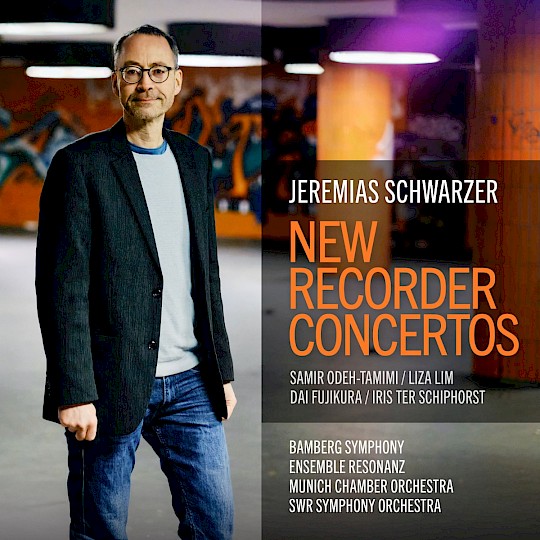
CD review: Jeremias Schwarzer: New Recorder Concertos

carview.php?tsp=

New Focus Recordings, fcr430

Recorder concerti are pretty rare beasts in contemporary music, so plaudits first of all to the German recorder player Jeremias Schwarzer for finding not only four, but four such and contrasting ones. (All four, it transpires, were written in collaboration with the performer.)

The principal challenge with combining recorder and orchestra, one imagines, must be one of audibility. How to avoid the sound of such a modest instrument from another time being completely overwhelmed by the forces of dozens of orchestral musicians, armed with the best amplificatory technologies the nineteenth century could muster? Fortunately, the recorder has two principal weapons in its own arsenal. First is the piercing quality of its highest register, strong enough to cut through almost any accompaniment. Second is the sheer weirdness of its sound when placed in a contemporary context.

There are plenty of examples of the former on the four pieces on this disc, by Samir Odeh-Tamimi, Liza Lim, Dai Fujikura and Iris ter Schiphorst. But it is the latter that is more interesting. Odeh-Tamimi’s Madjnun, inspired by the Romeo-and-Juliet-esque story Leila and Madjnun by the twelfth-century Persian poet Nezami Ganjavi, begins with a shudder of strings and a wall of rippling percussion (the orchestra is the Munich Chamber Orchestra, conducted by Alexander Liebreich). Over this already remarkable backdrop, Schwarzer’s recorder ducks and weaves with glissando pitch bends, stuttering tremolos and that uniquely open tone the recorder has. (The instrument in this case is a sixteenth-century-style Ganassi recorder, tuned slightly sharp for extra penetration.) It’s a stunning opening that convinced me not only that there is mileage in the contemporary recorder concerto, but that Odeh-Tamimi – a composer with whom I have not previously had many encounters – is one to pay attention to.

Regular readers will know that I need no such introduction to Liza Lim. However, The Guest is one of her works with which I am not so familiar. The recording here is the same one (sans applause) that was recorded live at Donaueschingen in 2010 with the SWR Sinfonieorchester Baden-Baden conducted by Rupert Huber and is collected on the hat[now]ART CD of Lim’s orchestral music. The advantage of reproducing it in this context is to hear Lim’s writing in contrast to that of three other composers, rather than as part of a portrait of her own orchestral writing.

Like many of Lim’s works since the late 1990s, The Guest draws on words by the Sufi poet Rumi. ‘The Guest’ is the Divine presence, sometimes symbolised in Rumi’s poetry by states of longing or desire. In Lim’s music, such states are often actualised through lines of distance and connection between instruments. The ‘teaching’ episode between violin and string drum in Extinction Events and Dawn Chorus is probably the most dramatic example of this, but the juxtaposition of a Renaissance recorder with a modern orchestra offers plenty of other possibilities. Again, Schwarzer plays a modern reconstruction of Ganassi (the same instrument Lim used for the solo weaver-of-fictions, written for Genevieve Lacey), plus alto and basset instruments. Lim’s music is intensely melodic – in the sense of a continuous musical line – into, out of and around which Schwarzer’s recorder swims and weaves, before dissolving at the end into the sound of the orchestral winds.

Dai Fujikura’s Recorder Concerto was also preceded by a solo work, Pérla. In this case, this was made in close collaboration with Schwarzer, composer and performer exchanging their favourite sounds and techniques back and forth to create a unique musical vocabulary for the work that was shaped by the character and abilities of its performer. For his Concerto, Fujikura expanded and amplified these ideas into his writing for string orchestra (the Bamberg Symphony, conducted by Jonathan Stockhammer): in this way, he answers the problem of audibility described above by turning his orchestra into a kind of ‘hyper-recorder’.

The punning title of Iris ter Schiphorst’s Whistle Blower points in two directions. First, to the recorder player themselves: literally, the blower of a whistle. More pointedly, however, it turns our thoughts to those individuals who speak up to and expose abuses of power, and for which the dynamic of a single recorder against a massed ensemble provides a suitable metaphor. (In this case, the ensemble is not an orchestra, but the smaller but no less commanding Ensemble Resonanz, conducted by Peter Rundel.) Those whistleblowers include the US Army soldier Chelsea Manning, who was convicted in 2013 of disclosing hundreds of thousands of classified documents to WikiLeaks, and who in 2016 petitioned President Obama to commute her 35-year sentence. Part of Manning’s letter is used as material in this collage-like work; as is the sound recording of the 12 July 2007 Baghdad airstrike video – one of the most shocking and infamous files leaked by Manning – in which US Apache helicopters are seen to fire on two vans of civilians, killing eleven men and injuring two children.

Schiphorst’s collaborative process with Schwarzer involved what she calls ‘performative composing’ – guided improvisation workshops that were recorded then mined for musical materials. Unlike the other three works on this disc, the difference between soloist and orchestra is not used as a means for creating loving contact, amplification or empathy, but as a framework for the violence of systems like that that imprisoned Manning, and the struggles whistleblowers face to make their voices heard and to enact meaningful change.

All in all, Schwarzer’s album could have been a colllection of curiosities and oddball combinations. But in fact it is a remarkable cross-section of the state of the art: four contrasting works by four composers from very different musical backgrounds, all of whom approach the fundamental challenges and affordances of the format in different but illuminating ways. Each work is special and all of them are given an exemplary reading by a leading soloist. Highly recommended.

You can listen to all four works via the New Focus website.

Delayed memorial: Chas Smith

carview.php?tsp=

Researching another piece of writing, I discovered today with great sadness that the American composer and instrument builder Chas Smith died earlier this year, on 13 May. I can’t say that I knew a huge amount about Smith’s life before today – although he found success in Hollywood, particularly through his work on Dune, he is a very peripheral figure to contemporary composition. (If you would like to know more, there’s a great interview with Fretboard Journal here, and another in artillery here.)

I mention him now, if only to note the impact his music had on my own development when I first encountered it in the mid-2000s, around when I started my new music writing journey in earnest. When the online music subscription service emusic first launched, I scoured it relentlessly for whatever new music I could find on there. It wasn’t always that much, but what was represented pretty well was the kind of late minimalism/post-minimalism represented by labels such as Cold Blue. It was in this dusty corner of emusic’s catalogues that I discovered Smith’s albums Aluminium Overcast and An Hour Out of Desert Center (both now available, along with others, on Bandcamp). I was fascinated by what I heard and loved the sound it made: those deep, enveloping drones, punctuated with metallic clangs; the sound of heat and space and distance. It wasn’t like anything else I knew at that time. I listened to those records over and over. What they introduced to my still-limited European view was a different kind of music that wasn’t made in resistance to or allegiance with the technical precepts of mid-century, but that had at the same time an aesthetic coherence and discipline all of its own.

Smith wasn’t the only composer who could be credited with such a way of working, of course – similar things could be said about many other musicians – but for some reason, his work became emblematic for me of the existence of any number of alternative approaches. Perhaps because it is so icon-like in its simultaneous transparency and inscrutability. Perhaps because it tickles that part of my brain that lives for huge, sonorous resonances. Perhaps because it hit me at a time when I needed to be shown a world apart from the one in which I had so far been educated. Whatever the reason, it meant a lot to me then, and I am very grateful to it today. Thank you, Chas.

Here’s one of my favourite things you made:

Train home review: Rolf Hind: Sky in a Small Cage

First of all, I loved it. This being the end of a busy and challenging summer, I came to Hind’s opera with little foreknowledge. Beyond knowing most of the players involved, and some of Hind’s music (although not so much recently), I also came with few expectations. Often that’s a problem if you’re trying to piece something like an opera together without the necessary background information. I even forgot to grab a programme on my way in.

In the event, though, everything was beautifully clear and legible. Not just the music but the libretto and staging too – all of it worked harmoniously and in the same direction. (I don’t know what baffled Andrew Clements quite so much, and I’m usually terrible at keeping up with a plot.) But it also wasn’t simplistic; it had the deceptive transparency of a Buddhist or Taoist epigram. It had depth; it probed. At the opera’s heart is the story of the thirteenth-century poet Rumi and his meeting with the dervish Shams-e Tabrizi, an encounter that changed the course of Rumi’s life. Hind’s music and Dante Micheaux’s libretto tied together this (love-like) story with a path towards enlightenment, threading them around each other in both their joys and perils.

The whole thing is framed informally, from the musicians milling around in the foyer beforehand, distributing slips of paper with the libretto printed on them, to the festive outburst of dance and song that concludes the work. The stage was lit from its centre by a small fire, with the musicians (the Riot Ensemble, plus a few additional members) arranged in a wide semi-circle behind it. As we took our seats, drummer Sam Wilson beat a slow, gathering pulse. The whole thing – and it wasn’t just the presence of gamelan instruments at the front of the ensemble, or the play of light and screens in the staging – had the feeling of stumbling onto a village shadow puppet play in a Balinese clearing; or perhaps a show in a Baghdadi marketplace. The staging itself was staged, which gave vividness and vitality to the story.

It was very Hind. Sky in a Small Cage is one of those works (without being too grandiose about it, it reminded me in this way of Messiaen’s St Françoise) that contained everything of an artist, the thing they have been put on earth to say.

More prosaically, it was also about birds and circles: singing and spinning were repeating motifs throughout, from the whirling screens that made up a large part of Frederic Wake-Walker’s minimalistic staging to the Parable of the Birds, narrated by Loré Lixenberg through megaphone-amplified squawks and trills (her aria was the most obviously virtuoso moment of the work; there were echoes of Lim’s ‘Angel of History’ in its rapid switches between species voices and Lixenberg carried it off brilliantly). Additional circles were created by impromptu entrances and exits of the players themselves, as though they were taking informal refreshment breaks.

Not longer after I’d made this connection with birds and circles, Lixenberg (now in the role of Rumi’s wife) sang how ‘birds make great circles of their freedom’:

they fall

and falling

they’re given wings

The libretto, as these lines suggest, is beautiful. A lot is adapted from Rumi himself. No shade to Micheaux, but lines like these are surely from the Sufi poet:

Their eyes met like two sparks from the same fire

[I am] The musical air through a flute, a spark of stone, a flickering in metal. Both candle and the moth crazy around it. Rose and the nightingale lost in the fragrance.

Near the work’s end, when the singers dispersed around the auditorium carrying recorded bird songs with them, it was clear that we were both the nightingale and the fragrance.

I had a few niggles: as Rumi’s wife, Lixenberg (or perhaps her writing) was possibly a shade too operatic at some moments; and Mitchener was under-used. (After her first entrance, she sat on one corner of the stage, unlit, for almost three-quarters of the piece.) The orchestral writing, while often striking and original, was somewhat unbalanced: there was lots of percussion and plucked/struck strings (including two harps, guitar and prepared piano) but the strings themselves had little to do a lot of the time. Riot’s oboist, Philip Howarth (doubling on shawm), had to carry practically all the instrumental melody, although he did a great job of it.

One last detail. When we first meet him, Shams is eating sweets from a paper bag.Finished, and licking his sticky fingers, he scrunches up the bag and tosses it to the floor, where it remains, a small and apparently accidental obstacle that the rest of the production must avoid. Yet near the end and after Shams’ murder, a kind of ritual pyre is made around the fire of all the pros used so far in the story. The paper bag stills lies where it was tossed. Apparently forgotten, it is not added to the pile. But then, when the pyre is cleared away, Rumi notices it, picks it up and, giving it one last scrunch, takes it away with him. I don’t know why I found this moment so affecting, but it seemed to sum up the whole production for me: precise, transparent, but no less surprising or moving for it.

Some recent sleevenotes

In the last couple of years I’ve found myself writing more and more sleevenote essays. I’ve said in the past that this is one of my favourite mediums for writing: 1500 words or so is a lovely length – long enough to explore an idea; short enough to contain in one breath. And while there is a responsibility to talk about the music in question, there are no rules for how you should do that. Sleevenotes reach a reader who is already in a particularly receptive frame of mind – unwrapping a disc, putting it on, taking time to listen. They sit somewhere between the essayistic, the poetic and the critical, which is a place that gives you a lot of freedom as a writer.

Anyway, some examples I’ve been very proud to have been involved with have come out recently and I wanted to share snippets and give the artists some love.

Riot Ensemble: Patricia Alessandrini – Leçons de ténèbres (HCR)

carview.php?tsp=

The music of Patricia Alessandrini is heard as if submerged beneath water, wrapped in layers of fog or obscured by a series of veils. Sounds appear muffled and distant, as though they must pass through thick, unforgiving media before reaching clear air and our ears. The aural impression is apt. These sounds do reach us from far away, shrouded as if in dust or cobwebs from the archives of musical history, filtered by and through electronic processes. Alessandrini’s compositions frequently begin with an existing musical work, and often one with a rich surrounding history.

Mads Emils Dreyer: Disappearer (Dacapo)

carview.php?tsp=

Forsvindere 2 by Mads Emil Dreyer begins like a fairy tale. Its nursery rhyme-like quality is thanks to the gently chiming sound of the celesta and the steady, simple pulse of the vibraphone. But it is also frozen music, glistening and thawing slowly under a cool winter sun. As the layers of sound accumulate to reveal hidden spaces between them, I’m reminded of the young girl Unn’s first encounter with the ice palace in Tarjei Vesaas’s novel of the same name – a frozen waterfall swollen by the cascading river into ‘an enchanted world of small pinnacles, gables, frosted domes, soft curves and confused tracery’. Dreyer’s piece builds slowly, adding bowed vibraphone and crotale tones, short glockenspiel flourishes, and different harmonic shades. Yet as the layers of chimes and bowed metal slowly grow and thicken, there are subtle hints of something flickering just beyond, past the range of peripheral vision. A subtle magic, or an uncanny presence, perhaps, like a figure walking out of sight into the dark. But it’s OK, the music says. Listen: that minor fall is only a bluesy twist. I’m just having fun, building intricate towers and secret alcoves with the harmonies. Sorry if I made you worry.

Sarah Saviet: Spun (Coviello)

carview.php?tsp=

Replace your modern strings of steel and nylon with traditional gut. Warmer in sound but more wayward in tension. Tune each downwards by eight small, approximately even steps such that your instrument rings dark and unfamiliar. Choose a Baroque bow – several centimetres shorter and noticeably lighter. It dances easily as you play but requires new lines of attack and control. You will need to adjust weights and movements – and the sense of timing you have learnt through years of practice to attach to these. Your instrument writhes awkwardly, like a small animal cupped in your hands that must be continually coaxed and comforted.

Gabriel Vicéns: Mural (Stradivarius)

carview.php?tsp=

The last work on this CD, La Esfera (The Sphere) for cello and piano, unfolds more than one such process of disintegration and accumulation. (The title nods to the Dustin Hoffman film of 1998, the music’s serial underpinnings suggesting a sci-fi connection to the composer.) Beginning with expansive piano harmonies, these dissolve first into pointillist fragments and then again into a dry cello pizzicato pedal tone, each successive change throwing into question the apparent solidity of the one that came before. From this state of almost complete erasure, new elements are added, however—a second cello note, a piano chord, some connecting tissue—until a new kind of music, built of strident exchanges between piano and cello, is fully fleshed out. But this too dissolves away into held chords, a reminiscence of the opening, and then a last, limping C, where everything began. No matter how clear and clean the surface may be, it cannot hold forever.

Bára Gisladóttir: Orchestral Work (Dacapo)

carview.php?tsp=

There is something treacherous about sounds. They are unreliable narrators. For example: the music of Bára Gísladóttir appears dark and troubled to our ears at first hearing. With its apparent screams of rage, rumbles of fear and vast, obliterating crescendos, it seems to speak of the night and its terrors. But this would be an illusion. Or at least, only part of its story.

Train home review: Hollie Harding, Theories of Forgetting

carview.php?tsp=
Photograph: ‘linen006’ Thomas Jackson (Fine Artist)

Colin Alexander, cello

Heather Roche, clarinet

Eva Zöllner, accordion

LSO St Luke’s, London | 14 January 2023

For her LSO Jerwood Composer+ showcase event, Hollie Harding curated an elaborate event on the theme of memory, culminating in her thirty-minute piece for clarinet, accordion and cello, Theories of Forgetting. Six pieces were given from the stage – as well as Harding’s, these were Christophe Bertrand’s Dikha, Laurence Crane’s Riis, Joanna Bailie’s Trains, Johan Svensson’s double dubbing (firefly song) and Bent Sørensen’s Looking on Darkness. Two other pieces were projected around the staged events: pre-concert, Pauline Oliveros’s Mnemonics II could be heard in the hall, and during the interval James Saunders’ overlay (with transience) was playing in the bar, with a video by Harding. My first live concert of the year, it was certainly a beautiful evening, albeit a slightly perplexing one; I’ll come to that in a bit.

For now, the good and very good bits. Riis is probably my favourite piece of Crane’s and is always a joy to hear. This version (prepared for tonight) with accordion and sine tones instead of organ was wonderful: there was a beautiful tension between the accordion and sine tones, the former played almost completely still to match the clean lines of those long, shimmering chords. I could live in the first one forever. Crane himself was greeted with a roar of acclaim when he came to take his bow.

Svensson’s double dubbing was also great: and a new discovery – I didn’t know anything of his before this. I loved the use of piezo buzzers, which in light and sound resembled variously constellations of fireflies, alarm bells, a chirping hedge of fledgling sparrows, a beeping hospital ward and more. Clarinet and accordion played with and among them, threading, outlining, plotting, ornamenting. A really clever, really compelling piece.

Svensson’s piece highlighted another great aspect of Harding’s curation – the sensitive and active use of lighting in every piece. Harding took great care to ensure that this concert was more than a ragtag collection of pieces, but worked as a coherent whole; and in Alexander, Roche and Zöllner she had three outstanding players well able to meet its various challenges. Svensson’s was the only work in which lighting was prescribed, but in all five others St Luke’s ample and varied lighting rig (both onstage and overhead) was used extensively: I particularly liked the array of giant coloured foglamps around the stage and the first light of morning feeling captured at the beginning of Theories of Forgetting. The use of Oliveros and Saunders in the gaps around the concert came from a similar attention to detail, but these were less successful for me. Neither was especially audible over the typical pre- and mid-concert hubbub, and this was especially problematic for Saunders’ piece, which depends so much on slight variations in sounds and therefore close attention. That said, I would love to see this idea of adding interstitial pieces continued and made to work.

There was more to like, too. Joanna Bailie’s take on mixing field recordings and live instruments is always interesting; Trains is a particularly odd example that I need to spend more time with to really work out. Eleven recordings of trains are modified to create a kind of chromatic scale, against which a solo cello plays – first – selected pitches that subtly colour the recordings and then more involved interventions, including a long quote from the Gigue to Bach’s Cello Suite no. 5 in C minor. (Marked in the score: ‘It’s Bach!’) Why? Who knows, but it kind of works – the tonality of the Bach meets that of the train in some way; and one can interpret in it a connection to the concert’s theme of memory.

Dhika, by the late Bertrand, was a curious opener: its second half in particular lies on the gnarly end of the new music spectrum – almost uniquely so for this concert. I loved the first half, with its echoes and multiplications of the clarinet into sumptuous, lyrical textures, but the second (featuring a switch to bass clarinet) felt a little more like new-music-by-numbers and didn’t sit so well with what followed. Its closest counterpart was probably Bent Sørensen’s lovely solo accordion piece, Looking on Darkness – both pieces take a melancholy tone – but whereas Sørensen’s faded haltingly away, like the half-keyed notes at the ends of its phrases, Bertrand’s rose aggressively, attempting to conquer something rather than let it go.

The former was certainly closer to the spirit of Harding’s substantial Theories of Forgetting, which closed the concert. The piece began in a ‘voyage of self-archaeology’, combing through old Dictaphone recordings, cassette tapes, family photographs and other memories. These are treated across four movements that are quite self-contained, yet which add up to something a little more symphonic over the work’s thirty minutes. ‘Remnants’ revisits a harmonic process from a twelve-year-old composition, developing it in new ways; ‘Revolve’ turns to decaying Dictaphone recordings, with damaged fragments of teenage singing barely preserved on them and brought to new, jittery life by the live instruments; ‘Bijou’ remembers a favourite song of Hardings’ mother (presumably the Queen track of the same name, including grand Brian May-esque gestures); and ‘Afterness’, which passes all three movements through another round of remembering and erosion. Harding’s language is humble and attractive, and suits the generally warm nostalgic glow of her concept: the loss that accompanies forgetting is something to accept; she waves fondly as the objects and sounds of her childhood recede from view. Like the opening chord of Riis, it’s a very nice place to be. But it’s an ephemeral one too, lighter than air. In the end, although this was an evening filled with lovely things, I travelled home feeling slightly empty, the music itself already fading into memory.

Train home reviews: Riot Ensemble, ‘from dusk to dawn’, Kings Place

carview.php?tsp=

A fabulous concert at Kings Place last night by Riot Ensemble, crowned by a coda in memory of composer, singer and guitarist Alastair Putt. Putt’s Quincunx was commissioned by Riot in 2019 but because of the pandemic was only getting its premiere tonight, two months after Putt’s death. It is a really beautiful piece: intricate, clever, but light too; undogmatic and always surprising. Balanced somewhere between Britten and a hoedown (but much better than that makes it sound).

The big piece of the concert was David del Tredici’s Syzygy, sung by Sarah Dacey. Syzygy is a curious piece; there are some lovely moments, particularly in the first movement and at the start of the second, but it’s an oddly balanced work. I’m not sure it completely landed for me. Not because of the playing or singing, although one or two moments felt a shade uncertain. More that I wasn’t sure it was the right piece for this programme, or this venue.

Kings Place’s dry, detailed acoustic served much better the two pieces of the concert’s first half. Anna Korsun said she was nervous about how her Ulenflucht would sound – it was written for reverberant church acoustics – but being able to hear it all so precisely was magical; the dusk chorus effect of a circle of sounds emerging out of the hall itself was spellbinding, like being in a forest at twilight, with senses sharpened and all the accompanying mystery and terror.

But the star for me was Naomi Pinnock‘s (it looks like someone lived there), a setting – more a solution, really – of a line from Virginia Woolf’s To the Lighthouse. Listening, I could only think: this is what a Woolf setting should sound like. I wrote in my programme note – working just from the score – that the work’s opening alterations of notes and chords were ‘like the Woolfean swell of a wave’, but the piece captured much more than that: the surge and taper of Mrs Ramsay’s stream of consciousness; the distributed perspectives (achieved by the simplest of means, just one note for the voice and then the same one for the flute)’ the way that, in Woolf, the small things are big and the big things small, the slow things happen quickly and the quick things happen slowly. But then there was also a stilling, a farewell, that absolutely captured the atmosphere of the Ramsay’s decaying holiday home in Lighthouse‘s central section. Aaron Holloway-Nahum’s conducting, to sustain the momentum of this slow disintegration, was superbly controlled, but really the piece is a gift. ‘I don’t know how she does so much with … almost nothing’, he told me afterwards. ‘She’s a witch!’