


| CARVIEW |
Select Language
HTTP/2 200
content-type: text/html; charset=UTF-8
expires: Tue, 20 Jan 2026 18:14:44 GMT
date: Tue, 20 Jan 2026 18:14:44 GMT
cache-control: private, max-age=0
last-modified: Sun, 06 Jul 2025 03:23:15 GMT
etag: W/"f3c7671b1d4c7c2a4ecf4c41bc671c407175cab59a6296614118b77cae5d1391"
content-encoding: gzip
x-content-type-options: nosniff
x-xss-protection: 1; mode=block
content-length: 52300
server: GSE
alt-svc: h3=":443"; ma=2592000,h3-29=":443"; ma=2592000
JACKSONVILLE TRANSIT
skip to main |
skip to sidebar


More money for constructing new roads sounds good superficially, since road expansion is necessary to keep up with the growing population, and no one likes driving in increasingly congested traffic. But it is not as simple as that. We're talking about brand new 4 lane highways right through the middle of virgin pine forest lands. So will federal (TIGER) Transportation Investment Generating Economic Recovery, grants spent on new road construction in Jacksonville make a difference? They will, but you aren't going to like it. Think transportation and mass transits role in the growth of our city, think of it as a choice. A recent study in the Tischler Report was published on metrojacksonville.com, found that Florida taxpayers pay $1.39-2.45 for every tax dollar paid by a new development. However new development within our urbanized areas actually costs less because the infrastructure is already in place.
While the previous argument has little to do with the cost of mass transit, it does make the point that we've been going in the wrong direction, with what amounts to a developer ponzi scheme. Eventually as development reaches further into the countryside the expenses become too much to bear and the whole economy collapses, note the current economic conditions. Red hot sprawling development outran our ability to sustain it and the key expense in new development is the automobile. If we learn to internalize our new developments and build on what is already in place we will be able to continuously improve our financial conditions. And to build internally, within the urbanized areas we are talking about mass transit.

 amtrak
 high speed rail
 passenger rail
 public transport
 rail
rail
 transportation
 green logistics


Jacksonville's Magic is for Everyone!





JACKSONVILLE





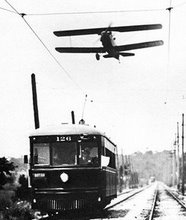
I guess I should expect a generation raised on Rice-a-Roni or old Trolley movies to think these poor vehicles could only move at Charlie Chaplin speed. Hardly, Witness the RED DEVIL, A deluxe lounge car "trolley" running out from under an airplane at 99.7 MPH. The aircraft wasn't on a city street but then neither was the Red Devil when it left the plane in it's dust. So PLEASE adjust your image of what might be possible along private rights-of-ways throughout the City, with a mix of antiques and ultra-modern streetcars sharing the spotlight on the SAME tracks.



Click on the image for information


Powered by WebRing.

Click on the map, for redirection to JTA scheduling and web-site assistance.

JACKSONVILLE TRANSIT
JACKSONVILLE'S TRANSPORTATION PUNDIT GIVES YOU NEWS, OPINION AND INFORMATION, REIGONAL AND THE WORLD.
17 June, 2013


10 March, 2013
19 FLEW
OVER THE
CUCKOO'S NEST

The City of Jacksonville received
top honors from the Florida Chapter of the American Planning Association
(APA) for its 2030 Mobility Plan. The APA’s Executive Committee will present
the city with the Award of Excellence in the Best Practices category at an
awards ceremony in Palm Beach.
The 2030 Mobility Plan is an
innovative response to the 2009 revisions to Florida’s Growth Management laws.
It is a long-range plan that links land use and transportation, establishing a
tiered mobility fee system. The Plan establishes acceptable levels of service
for transportation on city roadways, sidewalks, railways and bike paths.
The plan actually reduces the cost
of new development compared to the old system, and it guides development toward
infill projects where little or no fee would be assessed.
The plan is about a fair
"concurrency" system, and integrating transportation and land use
development for fiscally sustainable growth patterns. The mobility fee
serves as the funding source to implement these concepts. With
Jacksonville's revenue sources shrinking every year, the mobility fee provides
the city with a fair path to invest in itself, stimulating job creation,
quality of life enhancements, and economic growth in the process.
HOW DOES IT
WORK?
First the cost of vehicle miles
traveled (VMT) was calculated which we'll call item 'A'. Step two was time
consuming, but it ascertained the typical VMT within each of mobility district,
item 'B'. Finally the projected daily vehicle trips generated by the new
development project 'C' are calculated, the equation looks like this:


INSANITY: Doing the same thing
over and over again and expecting
different results.
Jacksonville is one of the
nation's leaders in market rate multifamily construction, infill continues in
Riverside and more development pops up around St. Johns Town Center and River
City Marketplace every day. But these market rate economic positives are not
enough for some, especially when the public could be hoodwinked into paying for
developer created sprawl.
The North Florida Builders
Association has 'worked with' city councilman Richard Clark to have the
citizens of the city pay for all infrastructure improvements effectively
subsidizing developers from the public purse. Despite community
opposition, Councilman Richard Clark has filed a bill in favor of the City of
Jacksonville implementing a 3-year tax increase in the form of a mobility fee
moratorium.
Lobbyists have been hired, and
false claims and accusations are flying hot and heavy. One councilman claiming
during the first moratorium we only lost $3 Million dollars that could
have gone to improvements, but he added you can't do anything with $3 million.
What he didn't say is those waivers have now past the $5 million dollar mark,
and will likely top out somewhere around $27 million dollars. Ah, but what can
be done with just $27 million?
They have claimed the Mobility Fee
is just to fund a couple of bike trails, and that the entire fee would be
consumed by just 3 projects. None of which is true.

The builders have produced this
graphic to 'prove' their impoverished condition to the city council
OVER THE
CUCKOO'S NEST
WE GO
What they didn't say to our 19
member city council is that a full 40% of the projects the builders association
has identified as 'endangered' by the fee wouldn't need to pay a dime, but it
appears our politicians are drinking the cool aid. It also appears that the
fear tactics may have fooled Television NEWS 4 by this slight of hand. The
builders are asking us for a 30 million dollar a year tax increase, and that
increase is only going to grow.
Ennis Davis (co-author of the
Mobility Plan) recently said "A full blown moratorium that basically
subsidizes nationwide expansions of 7-11, Waffle House, and Family Dollar. Our
overall annual city budget hovers around $2 billion. How on earth can it
make sense in anyone's view that a company which enjoyed $77 billion in sales
globally last year can't open in Jacksonville because we require them to cover
their negative impact." Jacksonville isn't so big or so important that we
will suddenly attracts hundreds of new businesses because of a token discount
on our dirt, but you can bet if we looked more like Palm Beach and less like
Philips Highway we'd have the luxury of picking and choosing.
Absolutely any national company
desiring to locate in Jacksonville has already got a line item in their
expansion plans to cover any 'impact fees'.
A HUGE HIDDEN
TAX INCREASE
CLOKED AS A FEE
MORATORIUM
'FOR' DEVELOPMENT
Imagine the moratorium passes for 3
more years, and imagine during that amount of time we get no more or no less
waivers of the mobility fee then the total amount of waivers during the first
year 'trial moratorium.' This is how it cooks down:
Value of waivers issued for the
past one-year moratorium - $27,000,000 one year.
Total value of waivers to be issued
for 3 more years (assuming no changes +/- in our rate of growth) - $27,000,000
x 3 years =
$81,000,000 million dollars.
Add all four moratorium years
together and you get - $108,000,000 million dollars.
Take $108,000,000 and divide by the
current city population - 822,000
ANSWER - $131.38. This
represents an infrastructure tax to every man, woman and child in the city of
$131.38, or $2,102.08 for a family of 4, for four years, which means we get a
four year tax increase of $525.52 per year for our average family just to
provide needed infrastructure.
SPECIAL THANKS TO:
metrojacksonville.com
Mr. Ennis Davis
Mr. Bill Killingsworth
01 November, 2011
AUTOMOBILES -V- THE ECONOMY

More money for constructing new roads sounds good superficially, since road expansion is necessary to keep up with the growing population, and no one likes driving in increasingly congested traffic. But it is not as simple as that. We're talking about brand new 4 lane highways right through the middle of virgin pine forest lands. So will federal (TIGER) Transportation Investment Generating Economic Recovery, grants spent on new road construction in Jacksonville make a difference? They will, but you aren't going to like it. Think transportation and mass transits role in the growth of our city, think of it as a choice. A recent study in the Tischler Report was published on metrojacksonville.com, found that Florida taxpayers pay $1.39-2.45 for every tax dollar paid by a new development. However new development within our urbanized areas actually costs less because the infrastructure is already in place.
Land designated as “residential” is legally entitled to roads, schools, drinking water, sewer, police, fire, playgrounds, and all the other infrastructure components that make a community.
The taxes (and impact fees) paid on the new development do not cover the costs for providing it with basic infrastructure and services. The difference is paid by the rest of the community. Because new development does not pay its way, most local governments in Florida are financially upside down.It is possible to build a conventional railroad on existing right of ways for $4,000,000 per mile (accor ding to Archer Western). According to Florida Department of Transportation a three lane urban arterial road with two travel lanes, and a center turn lane will cost $3,774,078.45 per mile, excluding drainage, water, sewer, electric and other services which must follow it. A 3 lane highway for the purposes of this study because that is the capacity of a single track railroad. FDOT goes on to post this highway project disclaimer:
Existing neighborhoods subsidize new residential development
Costs of intersections/interchanges/structures over 20 feet, preliminary engineering, right of way, and construction engineering inspection are not included. The cost per centerline mile figures are based on statewide average's. They are not to be used for Work Program estimating because they are not job specific.I am not against suburban or rural development as long as Impact fees and taxes on the home or business owners covers 100% of the cost of the sprawl, plus a contribution toward future maintenance. In other words sustainable.
While the previous argument has little to do with the cost of mass transit, it does make the point that we've been going in the wrong direction, with what amounts to a developer ponzi scheme. Eventually as development reaches further into the countryside the expenses become too much to bear and the whole economy collapses, note the current economic conditions. Red hot sprawling development outran our ability to sustain it and the key expense in new development is the automobile. If we learn to internalize our new developments and build on what is already in place we will be able to continuously improve our financial conditions. And to build internally, within the urbanized areas we are talking about mass transit.
30 October, 2011
SUNSET LIMITED, A SIMPLE SOLUTION
The eastern leg of the Sunset limited was fatally flawed in three ways. Some of the stations and their locations were terrible. Making a 90 degree turn from east-west to north-south at Jacksonville was an expensive waste of Amtrak's resources. Scheduling and frequency was deplorable for virtually all of the 'new' cities along it's route.
I'll use the example of a department store. Imagine we built a 100,000 square foot store, with locations in each of the towns served by the eastern Sunset Limited. Next we make a decision based on a handful of nocturnal customers to open our store 3 days a week from midnight until 5 am. How long do you think we'd last?
Running a daily, daylight train over this former Gulf Wind Route from New Orleans to Jacksonville would serve this market much better then the overnight schedule ever did. Amtrak proved it could run a coast to coast train, but the actual numbers making the trip beyond New Orleans in either direction was minuscule. A daylight train could serve as a second New Orleans - New York train through it's connections in Jacksonville.
Extending the Palmetto train into Florida south of Jacksonville would offer connections to lower Florida,. Jacksonville is now planning a downtown train station with a large enough rail side to handle of the switching plus commuter rail.
I'll use the example of a department store. Imagine we built a 100,000 square foot store, with locations in each of the towns served by the eastern Sunset Limited. Next we make a decision based on a handful of nocturnal customers to open our store 3 days a week from midnight until 5 am. How long do you think we'd last?
Running a daily, daylight train over this former Gulf Wind Route from New Orleans to Jacksonville would serve this market much better then the overnight schedule ever did. Amtrak proved it could run a coast to coast train, but the actual numbers making the trip beyond New Orleans in either direction was minuscule. A daylight train could serve as a second New Orleans - New York train through it's connections in Jacksonville.
Extending the Palmetto train into Florida south of Jacksonville would offer connections to lower Florida,. Jacksonville is now planning a downtown train station with a large enough rail side to handle of the switching plus commuter rail.
12 June, 2011
GOOD REASONS TO KILL FLORIDA HIGH SPEED RAIL

Symbolic of the crash of Florida's High Speed Rail project, as predicted in this blog, the photo is of the recent Chinese HSR crash. First HSR wreck ever unless we get to count Florida.
Just came across another professionals article on High Speed Rail, and why he, like John Mica and myself agrees that the Florida HSR plan was a train wreck waiting to happen. The funniest part of all of this is the same old group of players who brought down America's vast electric railroad, interurban and streetcar line network is at it again. This just stresses the fact that the first HSR rail line MUST be a smashing success. It was that success or failure that had me communicate to the governor to kill it.
NOTE: In the Federal Application there is a question, "why build this project?" One of the several reasons given was: "because its fun." The route was bad, the station locations worse, ridership numbers ridiculous and it would take that train longer to travel from Tampa to Miami then a regular Amtrak train at 90 mph on a more direct route. Makes you wonder if any of those planners ever drove Alligator Alley? Does anyone besides me smell a mouse in all of this?
NOTE: Jacksonville's streetcar system (AND 45 OTHERS) was sold out by Motor Transit which was a subsidiary of National City Lines which was a subsidiary of: Firestone Tire, Standard Oil of California (now Chevron Corporation), Phillips Petroleum (now part of ConocoPhillips), General Motors, Mack Trucks.
NOTE: Remember the Federal plan to extend the Northeast Corridor to FLORIDA. So in the broader meaning of this is SOUTHEAST HIGH SPEED RAIL, and Jacksonville will benefit first.
NOTE: Which is why Orlando's location would have failed. In this country rail travel tends to be regional and is usually a choice between a drive or a train. So most of your passenger base must come from the area around the stations, and that includes travelers who are staying temporarily in the area. If a family wants to go from Orlando to Tampa it's a choice of driving or train, flying plays no real part in the decision process and if the train is troublesome to get to they'll drive. Orlando already has the PERFECT HSR station and it's found on Church Street.
NOTE: The saddest part of this story is the FACT that a direct railroad line has existed between Tampa Union Station and Miami which if rebuilt to 90 mph standards would beat the socks off of a bullet train between the same two cities. Florida was in the wrong place, with the wrong train and that cost us the ball game.
So SORRY for Orlando-Tampa-Miami, but its time for us to reopen Jacksonville Terminal and get ready for it, because buddy, it's headed our way. Florida's most powerful politicians seem to understand that if you are going to sell ice cubes to Eskimos, you'll have to do it one cube at a time.
All quotes in this post are from: https://newurbannetwork.com/article/how-salvage-obama%E2%80%99s-high-speed-rail-%E2%80%98disaster%E2%80%99-14561
Just came across another professionals article on High Speed Rail, and why he, like John Mica and myself agrees that the Florida HSR plan was a train wreck waiting to happen. The funniest part of all of this is the same old group of players who brought down America's vast electric railroad, interurban and streetcar line network is at it again. This just stresses the fact that the first HSR rail line MUST be a smashing success. It was that success or failure that had me communicate to the governor to kill it.
Quote
How to salvage Obama’s high-speed rail ‘disaster’
Former Interior Secretary Bruce Babbitt calls the rail plan — target of a coordinated attack by the Right — “a complete catastrophe,” and tells where the nation should focus.
Author:
Philip Langdon
With segments of the rail plan now cancelled in Florida, Ohio, and Wisconsin, and with some federal funding revoked by Congressional Republicans this month, Babbitt thinks we must approach rail planning much more strategically than the Obama administration did.
Of the president’s stated aim — provision of high-speed rail service to 80 percent of the American population in 25 years — Babbitt declared, “It’s fantasy.”
In his view, the Obama plan suffers from these critical flaws:
• Routes were poorly chosen. The Orlando-to-Tampa line — 84 miles mostly in an Interstate highway corridor — would have run from one city that’s “not a model of transit” to another city with the same transit deficiency. Said Babbitt: “Frankly, it’s not surprising that the governor of Florida [when offered 90 percent of the funds to construct the line] turned it down.”
• Goals were defined vaguely. They were not hammered out through extensive discussion and political brokering — activities essential, in Babbitt’s judgment, to the program’s success.
• “The president didn’t help his visionary statement by holding up the transcontinental railroad as a model.” One-hundred-forty million acres were distributed to railroads through that post-Civil War enterprise, which led to the Crédit Mobilier scandal — “one of the largest government-sponsored fraudulent ventures of all time.”
Former Interior Secretary Bruce Babbitt calls the rail plan — target of a coordinated attack by the Right — “a complete catastrophe,” and tells where the nation should focus.
Author:
Philip Langdon
With segments of the rail plan now cancelled in Florida, Ohio, and Wisconsin, and with some federal funding revoked by Congressional Republicans this month, Babbitt thinks we must approach rail planning much more strategically than the Obama administration did.
Of the president’s stated aim — provision of high-speed rail service to 80 percent of the American population in 25 years — Babbitt declared, “It’s fantasy.”
In his view, the Obama plan suffers from these critical flaws:
• Routes were poorly chosen. The Orlando-to-Tampa line — 84 miles mostly in an Interstate highway corridor — would have run from one city that’s “not a model of transit” to another city with the same transit deficiency. Said Babbitt: “Frankly, it’s not surprising that the governor of Florida [when offered 90 percent of the funds to construct the line] turned it down.”
• Goals were defined vaguely. They were not hammered out through extensive discussion and political brokering — activities essential, in Babbitt’s judgment, to the program’s success.
• “The president didn’t help his visionary statement by holding up the transcontinental railroad as a model.” One-hundred-forty million acres were distributed to railroads through that post-Civil War enterprise, which led to the Crédit Mobilier scandal — “one of the largest government-sponsored fraudulent ventures of all time.”
NOTE: In the Federal Application there is a question, "why build this project?" One of the several reasons given was: "because its fun." The route was bad, the station locations worse, ridership numbers ridiculous and it would take that train longer to travel from Tampa to Miami then a regular Amtrak train at 90 mph on a more direct route. Makes you wonder if any of those planners ever drove Alligator Alley? Does anyone besides me smell a mouse in all of this?
Quote
Resistance from the Right
Ambitious rail plans have been subjected to a fierce campaign of disparagement in recent months. The Heritage Foundation, the Cato Institute, and the Reason Foundation have worked particularly hard to defeat the Obama rail plan, Todorovich told the gathering of about 30 journalists from around the country.
For companies that profit from the highway system and automobile-reliant means of transportation, the libertarian or conservative foundations have proven to be useful torch-bearers. SourceWatch, part of the Center for Media and Democracy, reports that Ford Motor, General Motors, DaimlerChrysler, ExxonMobil, Chevron, Shell Oil, and the Western States Petroleum Association have been among the donors to the Reason Foundation. David H. Koch of Koch Industries, once described by the Center for Public Integrity as "the biggest oil company you have never heard of," is a Reason trustee.
SourceWatch says Chevron, ExxonMobil, and the auto-maker Honda have been among Heritage’s contributors, though corporate donations to Heritage are small when compared than those made by individuals and foundations. Over the years, Heritages backers in the foundation world have included the Charles G. Koch Charitable Foundation, the Walton Family Foundation, and three Scaife foundations.
Cato, founded by Edward H. Crane and Charles Koch, has over the years received donations from corporate supporters including the American Petroleum Institute, ExxonMobil, General Motors, Honda North America, Toyota, Volkswagen of America, and Wal-Mart Stores, according to SourceWatch.
Ambitious rail plans have been subjected to a fierce campaign of disparagement in recent months. The Heritage Foundation, the Cato Institute, and the Reason Foundation have worked particularly hard to defeat the Obama rail plan, Todorovich told the gathering of about 30 journalists from around the country.
For companies that profit from the highway system and automobile-reliant means of transportation, the libertarian or conservative foundations have proven to be useful torch-bearers. SourceWatch, part of the Center for Media and Democracy, reports that Ford Motor, General Motors, DaimlerChrysler, ExxonMobil, Chevron, Shell Oil, and the Western States Petroleum Association have been among the donors to the Reason Foundation. David H. Koch of Koch Industries, once described by the Center for Public Integrity as "the biggest oil company you have never heard of," is a Reason trustee.
SourceWatch says Chevron, ExxonMobil, and the auto-maker Honda have been among Heritage’s contributors, though corporate donations to Heritage are small when compared than those made by individuals and foundations. Over the years, Heritages backers in the foundation world have included the Charles G. Koch Charitable Foundation, the Walton Family Foundation, and three Scaife foundations.
Cato, founded by Edward H. Crane and Charles Koch, has over the years received donations from corporate supporters including the American Petroleum Institute, ExxonMobil, General Motors, Honda North America, Toyota, Volkswagen of America, and Wal-Mart Stores, according to SourceWatch.
NOTE: Jacksonville's streetcar system (AND 45 OTHERS) was sold out by Motor Transit which was a subsidiary of National City Lines which was a subsidiary of: Firestone Tire, Standard Oil of California (now Chevron Corporation), Phillips Petroleum (now part of ConocoPhillips), General Motors, Mack Trucks.
Quote
Nonetheless, Todorovich thinks rail projects can gain considerable support from the populace and some of it from Republicans who hold elective office. After the new governor of Florida, Rick Scott, rejected $2.4 billion in federal funds for the Orlando-Tampa rail route, 24 states, including 11 with Republican governors, applied for portions of the money that Florida gave up.
Quote
In the case of interstate highways, “Babbitt maintained, the only way we got clarity was through federal legislation,” and that’s the only way to nail down a high-speed program for the Eastern seaboard
NOTE: Remember the Federal plan to extend the Northeast Corridor to FLORIDA. So in the broader meaning of this is SOUTHEAST HIGH SPEED RAIL, and Jacksonville will benefit first.
Quote
Like Babbitt and like Rep. John Mica, the Florida Republican who chairs the House Transportation and Infrastructure Committee, Todorovich thinks “we ought to invest first in the places with the greatest ridership ... the greatest chance of success.”
That strategy favors the Northeast Corridor, which has been the subject of three recent studies — a Northeast Corridor Infrastructure Master Plan prepared in May 2010 by representatives of 12 states, Amtrak, and other entities; a separate Amtrak design report; and a University of Pennsylvania study that was presented to no less than Vice President Joseph Biden.
That strategy favors the Northeast Corridor, which has been the subject of three recent studies — a Northeast Corridor Infrastructure Master Plan prepared in May 2010 by representatives of 12 states, Amtrak, and other entities; a separate Amtrak design report; and a University of Pennsylvania study that was presented to no less than Vice President Joseph Biden.
Quote
On the bright side, she noted that Rep. Mica has been bringing members of his committee — some of whom represent rural areas — to urban locales to improve their understanding of passenger rail networks and the places they serve. Babbitt’s proposal for a Northeast-focused federal rail act is “a great idea,” she said, adding that it “would have to be matched by federal funding.”
To obtain the maximum benefits from better rail service, “there needs to be a concerted strategy around stations,” Todorovich said. “It works best in center cities.”
To obtain the maximum benefits from better rail service, “there needs to be a concerted strategy around stations,” Todorovich said. “It works best in center cities.”
NOTE: Which is why Orlando's location would have failed. In this country rail travel tends to be regional and is usually a choice between a drive or a train. So most of your passenger base must come from the area around the stations, and that includes travelers who are staying temporarily in the area. If a family wants to go from Orlando to Tampa it's a choice of driving or train, flying plays no real part in the decision process and if the train is troublesome to get to they'll drive. Orlando already has the PERFECT HSR station and it's found on Church Street.
Quote
Nonetheless, Todorovich thinks rail projects can gain considerable support from the populace and some of it from Republicans who hold elective office. After the new governor of Florida, Rick Scott, rejected $2.4 billion in federal funds for the Orlando-Tampa rail route, 24 states, including 11 with Republican governors, applied for portions of the money that Florida gave up.
NOTE: The saddest part of this story is the FACT that a direct railroad line has existed between Tampa Union Station and Miami which if rebuilt to 90 mph standards would beat the socks off of a bullet train between the same two cities. Florida was in the wrong place, with the wrong train and that cost us the ball game.
So SORRY for Orlando-Tampa-Miami, but its time for us to reopen Jacksonville Terminal and get ready for it, because buddy, it's headed our way. Florida's most powerful politicians seem to understand that if you are going to sell ice cubes to Eskimos, you'll have to do it one cube at a time.
All quotes in this post are from: https://newurbannetwork.com/article/how-salvage-obama%E2%80%99s-high-speed-rail-%E2%80%98disaster%E2%80%99-14561
14 January, 2010
WHY FLORIDA HIGH SPEED RAIL WILL FAIL - PART II
BETWEEN A ROCK AND A HARD PLACE

Will Florida's High Speed Rail efforts crash THIS hard? Let's just say if they don't make some radical adjustments and trash the assumption that Orlando has to be the hub of a massive "hub and spokes railroad," then THIS IS where it is heading.

It's easy to spot the Northeast climb of the HSR route as it pulls away from Tampa, that's a heck of a way to get pointed Southeast.
Will Florida's High Speed Rail efforts crash THIS hard? Let's just say if they don't make some radical adjustments and trash the assumption that Orlando has to be the hub of a massive "hub and spokes railroad," then THIS IS where it is heading.
It's easy to spot the Northeast climb of the HSR route as it pulls away from Tampa, that's a heck of a way to get pointed Southeast.
Even if the entire project for Florida High Speed Rail, gets the blessing of the Federal Department of Transportation, and 100% financing, it is headed for a crash that might well bring down the whole industry.
Reason number 5 is not anyone's opinion about riders or ridership, it is however a story written in geography and no one short of The All Mighty could fix it. In one scenario (alternative "A") the train will run from Tampa, Northeast to Orlando, then with about a 10 degree turn, continue East to Melbourne (Space Coast Beaches). From Melbourne the new railroad turns 90 degrees South, and would likely hug some combination of the I-95 or Florida East Coast right-of-way, all the way through Fort Pierce - West Palm Beach - Ft. Lauderdale to Miami. Certainly no other route in the history of Florida, has ever served so many people in such a short stage length. Population is good, high speed is good, new railroads are good, so why does this one stand out as a bad plan?
To get to the answer one needs only to study the alternative routes from Orlando Southward to Miami. The Second Alternative "B" would turn South at the Orlando International Airport and roughly follow the historic Florida East Coast Railways Kissimmee River Valley line along or near the Florida Turnpike Alignment all the way to West Palm Beach - Ft. Lauderdale to Miami. This is the shortest of the current planned routes from Tampa to Miami via Orlando, but it sacrifices virtually every village, town and city on the East Coast of the State, North of West Palm Beach, to accomplish it's goal, and still maintains what is for all practical purposes a 100 degree turn, a "Fatal Corner" in the middle of the railroad system.
Alternative "C" would be the slowest schedule from Orlando to Miami, but the cheapest build, following the CSX Railroad. Running from St. Petersburg - Tampa - Auburndale - Orlando International Airport, as well as a line from Alburndale southeast to Lake Wales - Sebring - West Palm Beach - Ft. Lauderdale, and Miami. It would eliminate the need for Tampa/St. Petersburg trains to pass through Disney World - Orange County Convention Center and Orlando international Airport, before heading to the lower East Coast and Miami. So ironically the slowest option for Orlando, would be the fastest option for the Tampa Bay communities, but the hard place seems to be missing all of the Beach Communities North of West Palm Beach.

So Far the only map that makes ANY sense, is this largely ignored 2008, ICE Train Plan

4 rail lines into Orlando and they still miss the direct connection with Jacksonville, not to mention the line of the center of the State running virtually from Miami to LAKE CITY, guess it's comforting to know Tallahassee has a sense of humor.
It's a crazy curse to plan under but the bottom line for Florida is, by ignoring the historic travel patterns and trying to make Orlando into a railroad cross roads that it never was, has put us in a unique position. We can either build the fastest route and skip most of the cities, or, we can build through most of the cities and lose the fast train.
Due to the Fatal Corner, a high speed train that rips along at 120 mph, is still going to consume all of 4:00 hours between St. Petersburg and Miami, and 2:30 hours between Orlando and Miami alone. Since this is travel time the dwell time in the stations would have to be added in to any schedule. Leaving St. Petersburg by train, stations would be initially located in Tampa, Lakeland, Disney World, Orange County Convention Center, Orlando International Airport, Melbourne, Ft. Pierce, West Palm Beach, Ft. Lauderdale, and Miami. Dwell times of just 2 minutes per station average would add another 20 minutes to the through schedule. A schedule of 4 hours and 20 minutes between end points via the fastest train in America can be easily trumped by a 1968 Volkswagen Micro-Bus full or hippies at 4:00 hours even, on I-75. This is easy math, because the hippies in that micro-bus won't be traveling 120 miles Northeast to go Southeast of Tampa/St. Petersburg.

The Bus, Greyhound, La Cubana or Southeastern starts looking better and better as Florida's number one "Alternative."
Add in a fare of around $70 dollars for an end to end ticket, plus car rental, taxi or bus fare at the other end, and keeping with the Micro-Bus starts to look better and better. The time/dollar economics doesn't get any better with a simple Tampa/St. Petersubrg - Orlando trip either, because for $30 bucks, one is still going to have to get to Orlando from "Orlando!" By the time that taxi rolls to a stop in Winter Park, Maitland or Sanford, that lone Amtrak train will be half way to Jacksonville, making the entire system, either route option A, B, or C.
The last public transportation alternative seems a mockery of the states so-called "showcase HSR system." Bottom line? $25 dollars and a Greyhound ticket will get you there faster, and Greyhound has Wi-Fi!
Stay tuned as we move on to part 3 of this series, and look at Florida's surface travel patterns, historic railroad routes and gateways, as well as Southeast High Speed Rail. Only in Part III of "WHY FLORIDA HIGH SPEED RAIL WILL FAIL."
Reason number 5 is not anyone's opinion about riders or ridership, it is however a story written in geography and no one short of The All Mighty could fix it. In one scenario (alternative "A") the train will run from Tampa, Northeast to Orlando, then with about a 10 degree turn, continue East to Melbourne (Space Coast Beaches). From Melbourne the new railroad turns 90 degrees South, and would likely hug some combination of the I-95 or Florida East Coast right-of-way, all the way through Fort Pierce - West Palm Beach - Ft. Lauderdale to Miami. Certainly no other route in the history of Florida, has ever served so many people in such a short stage length. Population is good, high speed is good, new railroads are good, so why does this one stand out as a bad plan?
To get to the answer one needs only to study the alternative routes from Orlando Southward to Miami. The Second Alternative "B" would turn South at the Orlando International Airport and roughly follow the historic Florida East Coast Railways Kissimmee River Valley line along or near the Florida Turnpike Alignment all the way to West Palm Beach - Ft. Lauderdale to Miami. This is the shortest of the current planned routes from Tampa to Miami via Orlando, but it sacrifices virtually every village, town and city on the East Coast of the State, North of West Palm Beach, to accomplish it's goal, and still maintains what is for all practical purposes a 100 degree turn, a "Fatal Corner" in the middle of the railroad system.
Alternative "C" would be the slowest schedule from Orlando to Miami, but the cheapest build, following the CSX Railroad. Running from St. Petersburg - Tampa - Auburndale - Orlando International Airport, as well as a line from Alburndale southeast to Lake Wales - Sebring - West Palm Beach - Ft. Lauderdale, and Miami. It would eliminate the need for Tampa/St. Petersburg trains to pass through Disney World - Orange County Convention Center and Orlando international Airport, before heading to the lower East Coast and Miami. So ironically the slowest option for Orlando, would be the fastest option for the Tampa Bay communities, but the hard place seems to be missing all of the Beach Communities North of West Palm Beach.
So Far the only map that makes ANY sense, is this largely ignored 2008, ICE Train Plan
4 rail lines into Orlando and they still miss the direct connection with Jacksonville, not to mention the line of the center of the State running virtually from Miami to LAKE CITY, guess it's comforting to know Tallahassee has a sense of humor.
It's a crazy curse to plan under but the bottom line for Florida is, by ignoring the historic travel patterns and trying to make Orlando into a railroad cross roads that it never was, has put us in a unique position. We can either build the fastest route and skip most of the cities, or, we can build through most of the cities and lose the fast train.
Due to the Fatal Corner, a high speed train that rips along at 120 mph, is still going to consume all of 4:00 hours between St. Petersburg and Miami, and 2:30 hours between Orlando and Miami alone. Since this is travel time the dwell time in the stations would have to be added in to any schedule. Leaving St. Petersburg by train, stations would be initially located in Tampa, Lakeland, Disney World, Orange County Convention Center, Orlando International Airport, Melbourne, Ft. Pierce, West Palm Beach, Ft. Lauderdale, and Miami. Dwell times of just 2 minutes per station average would add another 20 minutes to the through schedule. A schedule of 4 hours and 20 minutes between end points via the fastest train in America can be easily trumped by a 1968 Volkswagen Micro-Bus full or hippies at 4:00 hours even, on I-75. This is easy math, because the hippies in that micro-bus won't be traveling 120 miles Northeast to go Southeast of Tampa/St. Petersburg.
The Bus, Greyhound, La Cubana or Southeastern starts looking better and better as Florida's number one "Alternative."
Add in a fare of around $70 dollars for an end to end ticket, plus car rental, taxi or bus fare at the other end, and keeping with the Micro-Bus starts to look better and better. The time/dollar economics doesn't get any better with a simple Tampa/St. Petersubrg - Orlando trip either, because for $30 bucks, one is still going to have to get to Orlando from "Orlando!" By the time that taxi rolls to a stop in Winter Park, Maitland or Sanford, that lone Amtrak train will be half way to Jacksonville, making the entire system, either route option A, B, or C.
The last public transportation alternative seems a mockery of the states so-called "showcase HSR system." Bottom line? $25 dollars and a Greyhound ticket will get you there faster, and Greyhound has Wi-Fi!
Stay tuned as we move on to part 3 of this series, and look at Florida's surface travel patterns, historic railroad routes and gateways, as well as Southeast High Speed Rail. Only in Part III of "WHY FLORIDA HIGH SPEED RAIL WILL FAIL."
amtrakhigh speed railpassenger railpublic transportrailtransportationgreen logistics
Labels:
Amtrak,
City of Jacksonville,
City of Miami,
City of Orlando,
City of Tampa,
FDOT,
Florida High Speed Rail,
Florida Passenger Rail,
HART,
JTA,
LYNX,
Ray LaHood,
Secretary of Transportation,
USDOT
Subscribe to:
Comments (Atom)
TECHNORATI
TAKE A FREE TOUR OF THE JACKSONVILLE SKYWAY
The arguments rage to this date, "Should have never been built," "waste of taxpayer money," "Doesn't go anywhere," "Nobody rides it..." etc. Bottom line is we have it, and it is finally showing signs of life. Simple extensions to the Stadium, San Marco, and the area of Blue Cross in North Riverside would turn this little train around. Addition of Park and Ride garages and multimodal transit terminals at the end points would bring on the crowds.
The video must have been shot on a Sunday Morning, as downtown is certainly as packed with life as any other major City on weekdays. Jacksonville is a city of Bikes, joggers, walkers, buses and cars, one almost wonders how the photographer managed to find this quiet moment.
Support the Skyway? Join the Monorail Society Today!
WELCOME ABOARD
Sign by Danasoft - For Backgrounds and Layouts
Total Pageviews
The Station Clock
Jacksonville |
Zulu Time
Jacksonville Transit
Welcome, friends, fans and foe's:
This blog was created as a window on Jacksonville and Florida Transportation news along with my reviews on everything rail.
Critical views and issues of controversy are an important part of building a great transit system. Your comments are welcome.
For Comments, Questions or Consultancy, contact me at: lightrailjax@gmail.com
BOB
This blog was created as a window on Jacksonville and Florida Transportation news along with my reviews on everything rail.
Critical views and issues of controversy are an important part of building a great transit system. Your comments are welcome.
For Comments, Questions or Consultancy, contact me at: lightrailjax@gmail.com
BOB

 Posts
Posts


THE INFORMATION BOOTH
Jacksonville's Magic is for Everyone!
Port of Jacksonville

TRANSIT NEWS WIRE
Moreover Technologies - Transportation industry news - of 6040 returned
Moreover Technologies - Airline industry news - of 17895 returned
Moreover Technologies - Shipping industry news - of 2136 returned
Railway Technology
MOVING AROUND NORTH FLORIDA AND SOUTH GEORGIA AUTO FREE
JACKSONVILLE
AMTRAK
JACKSONVILLE AIRPORTS
GREYHOUND
ST JOHNS
GAINESVILLE
BRUNSWICK
OCALA
VOLUSIA
Regional Transit Links
- American Public Transport Assoc.
- AMTRAK
- BRUNSWICK
- Community Transport Assoc of America
- Federal Transit Administration
- Florida Public Transit Office
- GAINESVILLE
- HILLSBOROUGH
- JACKSONVILLE
- Jacksonville Regional Transit System Plan
- Light Rail Jacksonville (Information Website)
- OCALA
- Ocklawaha Valley Railroad (A strange railroad History)
- ORLANDO
- TALLAHASSEE
- VOLUSIA
TRANSPORTATION CONTACT WIRES
BIKE JACKSONVILLE
GEORGIA TRANSPORTATION ASSOC.
REGIONAL & BLOG - WEB LINKS
- Airship Ventures Blog
- Buck Tracks
- Florida Times-Union News Paper Group Site
- Florida Transportation Magazine
- Folio Weekly Newspaper Blog Site
- Ft. Lauderdale/Broward Transit Blog
- Jacksonville Business Journal News Site
- Jax Out Loud Forum
- LIGHT RAIL NOW
- Metro Jacksonville Website-Blog-Forums
- National Association of Rail Passengers
- Tampa Rail Blog
- Transit Miami
- United Rail Alliance
Links Around The Country and Beyond
Blog Archive
- Jun 17 (1)
- Mar 10 (2)
- Nov 01 (1)
- Oct 30 (1)
- Jun 12 (1)
- Jan 14 (1)
- Jan 05 (1)
- Dec 27 (1)
- Dec 25 (1)
- Dec 13 (1)
- Dec 12 (1)
- Nov 28 (1)
- Nov 05 (1)
- Oct 14 (1)
- Aug 31 (1)
- Aug 13 (1)
- Aug 12 (1)
- Jun 10 (2)
- Jun 02 (1)
- May 26 (1)
- May 07 (1)
- May 04 (1)
- Apr 30 (1)
- Apr 29 (1)
- Apr 27 (1)
- Apr 22 (1)
- Apr 11 (1)
- Apr 06 (4)
- Mar 23 (1)
- Mar 18 (1)
- Mar 05 (1)
- Mar 01 (1)
- Feb 24 (1)
- Feb 12 (1)
- Feb 11 (2)
- Feb 07 (2)
- Feb 05 (1)
- Feb 04 (4)
- Feb 03 (1)
- Feb 02 (1)
- Feb 01 (1)
- Jan 25 (1)
- Jan 23 (4)
- Jan 22 (1)
- Jan 06 (1)
- Jan 02 (1)
- Dec 29 (2)
- Dec 24 (2)
- Dec 19 (2)
- Dec 11 (2)
- Dec 10 (1)
- Dec 09 (1)
- Dec 08 (1)
- Dec 07 (1)
- Dec 03 (2)
- Dec 02 (1)
- Nov 26 (2)
- Nov 25 (1)
- Nov 23 (2)
- Nov 14 (1)
- Nov 11 (2)
- Nov 08 (3)
- Nov 06 (1)
- Nov 05 (1)
- Nov 04 (2)
- Nov 03 (1)
- Nov 01 (3)
- Oct 27 (1)
- Oct 25 (1)
- Oct 23 (1)
- Oct 20 (1)
- Oct 17 (1)
- Oct 04 (3)
- Sep 30 (2)
- Sep 26 (1)
- Sep 25 (3)
- Sep 10 (3)
- Sep 09 (4)
- Sep 08 (1)
- Sep 03 (1)
- Sep 01 (6)
- Aug 31 (2)
- Aug 26 (2)
- Aug 23 (1)
- Aug 12 (4)
- Aug 11 (1)
- Aug 08 (1)
- Aug 06 (2)
- Aug 04 (2)
- Jul 31 (1)
- Jul 29 (2)
- Jul 26 (2)
- Jul 25 (3)
- Jul 23 (1)
- Jul 22 (1)
- Jul 16 (1)
- Jul 14 (2)
- Jul 11 (1)
- Jul 10 (1)
- Jul 09 (1)
- Jul 08 (2)
- Jul 07 (1)
- Jul 06 (6)
- Jul 04 (2)
- Jun 21 (1)
- Jun 12 (2)
- Jun 10 (1)
- Jun 09 (1)
- Jun 07 (1)
- Jun 06 (1)
- Jun 04 (2)
- Jun 03 (1)
- Jun 02 (2)
- Jun 01 (2)
- May 31 (3)
- May 24 (5)
- May 23 (1)
- May 22 (1)
- May 01 (1)
- Jan 18 (1)
- Dec 31 (1)
- Dec 30 (1)
- Dec 29 (1)
- Dec 23 (2)
- Dec 14 (1)
- Dec 13 (1)
- Dec 07 (1)
- Dec 03 (1)
- Nov 29 (2)
- Nov 27 (1)
- Nov 25 (1)
- Nov 24 (1)
- Nov 23 (2)
Not those slow old streetcars in traffic again... How about FLYING TROLLEYS?
I guess I should expect a generation raised on Rice-a-Roni or old Trolley movies to think these poor vehicles could only move at Charlie Chaplin speed. Hardly, Witness the RED DEVIL, A deluxe lounge car "trolley" running out from under an airplane at 99.7 MPH. The aircraft wasn't on a city street but then neither was the Red Devil when it left the plane in it's dust. So PLEASE adjust your image of what might be possible along private rights-of-ways throughout the City, with a mix of antiques and ultra-modern streetcars sharing the spotlight on the SAME tracks.
Labels
- 5-Points
- AC Transit
- Air Ships
- Air vs Rail Travel
- Aircraft Bar
- Aircraft Lounge
- Airport Transit
- Airship Ventures
- Albuquerque
- ALDOT
- Alex Kummant
- Alternate transit fuels
- American Association of Private Car Owners
- Amtrak
- Amtrak Florida
- Amtrak Study
- Anti Rail Bias
- Arlington Expressway
- Atlanta Constitution and Journal
- Atlantic Coast Line RR
- Atlantic Ocean
- Augusta
- Automobiles
- Aviation -vs- Rail
- Avondale
- Baker County FL
- Baldwin Diesel Locomotives
- Bay Meadows
- Belgin Railroads
- Bertkley CA
- Bicycle Skyway
- Bicycles
- Bicycles-On-Buses BOB
- Big Ideas
- Bike Power
- Birmingham Alabama
- Birmingham Streetcars
- Blount Island Terminal
- BNSF
- Bogota
- Bold Transit Concepts
- Bombardier Contessa
- Brain Dead in Florida
- Brain Dead in Jacksonville
- Brain Dead in Tallahassee
- Broadway Limited Imports
- Brooklyn NY
- BRT
- BRT as TRUNK lines
- BRT Failures
- BRT Jacksonville
- BRT SAVIOR OF THE UNIVERSE
- BRT Types
- Brunswick Georgia
- Buccaneer Ferry
- Buccaneer Trail
- building ridership
- Bus Design
- Bus Improvements
- Bus Rapid Transit
- Bus Ridership
- Bus Tranisit
- Bus Transit
- Bus vs Rail Travel
- Busway
- C
- Cal Train
- Calgary Canada
- California
- California High Speed Rail
- Cantenary
- Carrier Deployment
- Centipede
- Central Florida Commuter Rail
- Charleston S.C.
- Charlton County GA
- Chile
- Choice Riders
- Cincinnati Streetcar
- City Buses
- City of Birmingham
- City of Bogota
- City of Cape Town
- City of Cincinnati
- City of Jacksonville
- City of Miami
- City of Orlando
- City of Santiago
- City of Tampa
- City Parking
- Civil Rights Movement
- Cleveland
- CN
- Coast Guard
- COJ
- Cold Storage
- Colombia
- Colorado Railcar
- Commuter Bus
- Commuter Rail
- Commuter Trains
- Conductors
- Corrine Brown
- Corruption at city hall
- COSCO
- Cranes
- Creative Transit Finance
- CSX
- CSXT
- Curitiba
- Curitiba BRT
- Dallas Area Rapid Transit
- Dames Point Terminal
- DART
- Daytona Beach
- Deerwood
- Delta Airlines
- Denver
- development oriented transit
- dial-a-ride
- Diesel Multi-Unit
- Directional Signs
- DMU
- DOT
- downtown development
- DPM
- DVI
- Elevated Trains
- End of The Auto Era
- Eugene
- expanding bus services
- Express Bus
- Expressway System
- Failure Guaranteed
- fake trolleys
- faux trolley
- Faux Trolleys
- FDOT
- FEC RY
- FEC Ry.
- Federal Transit Funding
- FEMA Evacuations
- Fenandina Beach
- Fernandina Beach
- Ferry
- FLCofC
- Flight
- Flooding
- Florida
- Florida Amtrak
- Florida Commuter Rail
- Florida Corridor
- Florida Cruise
- Florida Development
- Florida East Coast
- Florida East Coast Corridor
- Florida East Coast Local Passenger Train
- Florida East Coast RY
- Florida High Speed Rail
- Florida High Speed Rail Exists
- Florida Highways
- Florida History
- Florida HSR
- Florida Passenger Rail
- Florida Rail News
- Florida Roadways
- Florida Scenic Byways Flagler Beach
- Florida Stimulus
- Florida Transportation
- Florida's Worst Commutes
- Floridas Largest Streetcar System
- Folkston Georgia
- FOX
- France
- Free Power for Transit
- Freeway Design
- Freeway Prisoners
- Ft. Lauderdale
- FTA
- GADOT
- GADOT ALDOT
- Gainesville Train
- Gare De Lyon
- GDOT
- GE 44 Ton locomotives
- Georgia
- Glynco Georgia
- Golden Isles
- Government Waste
- Governor Crist
- Governor Richardson
- Greyhound
- Gulf Coast High Speed Rail
- Gulf Wind
- Hanjin Shipping
- HART
- Heritage Institute
- Heritage Streetcars
- Highway A-1-A
- Highway Lobby
- Hillsboro Area Regional Transit
- historic train dangers
- Historic Trains
- Homeland Security
- HOV Lanes
- HSR
- Hybrid Commuter Coach
- Ideal Industiral Relocation
- Ikea Bus
- Imeson Airport
- Impact Fee's
- Infrastructure
- Intercity Train Serivce
- International Ports
- J. turner Butler
- JAA
- Jacksonille Development
- Jacksonville
- Jacksonville Airport
- Jacksonville Amtrak
- Jacksonville Aviation Authority
- Jacksonville Beaches
- Jacksonville BRT
- Jacksonville Bus
- Jacksonville Chamber of Commerce
- Jacksonville City Council
- Jacksonville Commuter Rail
- Jacksonville Cruise Terminal
- Jacksonville Curise Terminal
- Jacksonville Development
- Jacksonville Downtown
- Jacksonville Electric Railroad
- Jacksonville Expressways
- Jacksonville FL City Council
- Jacksonville FL Mayor
- Jacksonville freight rail
- Jacksonville Garden Club
- Jacksonville Growth
- Jacksonville High Speed Rail
- Jacksonville History
- Jacksonville Hub
- Jacksonville Ideas
- Jacksonville intermodal Terminal
- Jacksonville International Airport
- Jacksonville Interurban
- Jacksonville Light Rail
- Jacksonville LRT
- Jacksonville Maritime
- Jacksonville Military
- Jacksonville Monorail
- Jacksonville Naval Air Station
- Jacksonville Navy
- Jacksonville Parks and Recreation
- Jacksonville Port Authority
- Jacksonville Public Transportation
- Jacksonville Rail Passenger Gateway
- Jacksonville Railroads
- Jacksonville Regional Rapid Transit
- Jacksonville Skywalk
- Jacksonville Skyway
- Jacksonville Steamships
- Jacksonville Streetcars
- Jacksonville Streets
- Jacksonville Terminal
- Jacksonville Terminal Company
- Jacksonville Terminals
- Jacksonville Tourism
- Jacksonville Traction Company
- Jacksonville Traction Emblem
- Jacksonville Traction Logo
- Jacksonville Traffic
- Jacksonville Transit
- Jacksonville Transit RSS Feed
- Jacksonville Transportation
- Jacksonville Transportation Authority
- Jacksonville Transportation Center
- Jacksonville Union Terminal
- Jacksonville-New Orleans Amtrak
- Jaguars
- Jaksonville Railroads
- James Boyle
- JAX
- JaxPort
- JEA
- Jean Ribault
- JEDC
- Jitney bus
- John Mica
- JPA
- JTA
- JTA cartoon
- JTA ON THE MOVE
- JTB
- JTCO
- Judy Garland
- K-Line
- Kansas City Light Rail
- Kansas City Southern
- KCS
- Kendall Busway
- LADOT
- Lake County Commuter Rail
- Larry Hannan
- Las Vegas monorail
- Light Rail
- Light Rail Time-Line
- Light Rail Transit
- Lighter Then AIr
- Livable Cities
- Living Neanderthals
- Local Transit Disasters
- Local Transit Genius
- Los Angeles
- Lost Sheep of Florida
- Lost Sheep of Jacksonville
- Lost Streetcar
- Lounge Car
- LRT
- LRT -vs- BRT
- LRT is cleaner
- LTA
- LYNX
- Lynx BRT
- Mamburg SUD
- Mark Wilson
- MARTA
- Maryland
- mass transit
- Mass Transit Funding
- Mayor Buddy Dyer
- Mayor Diaz
- Mayor Pam Lorio
- Mayor Peyton
- Mayor Walkup
- Mayport Ferry
- Mayport NS
- MCI
- McKinney Avenue Dallas
- Merchant Marine
- Metro Jacksonville
- Metro Transit
- metrojacksonville.com
- Miami
- Miami-Dade Transit
- Michael Blaylock
- Michigan
- Micro-Transit
- Misunderstanding Transit
- Mitsui O.S.K. Lines
- Mobility Plan
- Modern Streetcar
- MOL Lines
- Monorail
- monorail revival
- Monorails
- Motor Transit Company
- MSDOT
- Multi-Modal Transportation Facility
- Museum Transit
- NAS Jax
- Nassau County FL
- National City Lines
- National Railroad Passenger Corporation
- National Railroads of Mexico
- National Transportation Policy
- Nations Largest Bus Operators
- Naval Railroad
- Navy Train
- NCDOT
- New Amtrak Routes
- New Mexico Commuter Rail
- New Orleans
- New Rail Routes
- No More Roads
- Norfolk
- Norfolk Southern
- North Florida Builders Assoc
- North-Central Airlines
- Northwest Airlines
- NS
- NS Kings Bay
- Obama Transportation Team
- OKC Sports
- Oklahoma City
- Oklahoma City Talk Shows
- operation lifesaver
- Orlando Commuter Rail
- Orlando FRA Meeting
- Ortega
- Parking
- Parking Enforcement Division
- Parking Meters
- Passenger Trains
- PCC cars
- PCT Trolley
- Peddle Monorail
- Pennsylvania Railroad
- Pensacola
- People Movers
- Philadelphia Bicycle News
- Phoenix Light Rail
- Political Games
- Political Transit Games
- Ponce De Leon
- Port
- Port Growth
- Port of Gold
- Port of Jacksonville
- Port Rail Access
- Port Sea Lane Security
- Portland
- Post Panamax Ports
- President Obama
- Prevost Car - Volvo
- Prime Osbourne Convention Center
- PRT
- Rail
- Rail As Economic Engine
- Rail Debate
- Rail Passenger Service
- Rail Ridership
- Rail Transit
- Rail vs Highway
- Railroad Corps
- Railroad Lounge
- railroad safety
- Ray LaHood
- RDC
- Real Trolleys Draw Crowds
- Rebuilt Buses
- Recreational Transit
- Regency Square
- Regional passenger rail
- Rep. Corrine Brown
- Rep. John Mica
- Rep.John Mica
- Republic Airlines
- Ride the Wind
- Riverside
- Roads
- Robert Mann
- Rosa Parks
- Royal Palm
- RTD
- S Line
- SAFETY
- San Francsico
- Santa Fe
- Sarasota
- Savannah Streetcar
- Saving Transit
- SCDOT
- Scooters
- Seaboard Air Line RR
- Secretary of Transportation
- Segway's
- SEHSR
- Shortline - Terminal Railroad Needed
- Sidewalks
- Silver Eagle
- Sky walks
- Skyway
- Skyway Concepts
- SNCF
- Someones Thinking in Tallahassee
- South Africa
- Southbank
- Southeastern High Speed Rail
- Southern Airways
- Southpointe
- Sprawl
- Sprawlrail
- St. Augustine Airport Authority
- St. Augustine Station
- St. Johns River
- St. Johns River Ferry
- St. Louis
- St. Marys Georgia
- St.Augustine attractions
- State of Florida
- Steamships
- Storm Damage
- Streetcar
- Streetcar Conspiracy
- Streetcar design
- Streetcar Holocuast
- Streetcar Return on Investment
- Streetcar Space Race
- Streetcar stop
- Streetcars
- Streetcars Conductors
- Streets
- Sumpter County Commuter Rail
- Sun Rail
- Sunrail
- Sunset Limited
- Sustainable Transportation
- Tallahassee Train
- Talleyrand Terminal
- Tampa Commuter Rail
- Tampa Electric Company Streetcar
- Tampa HART Rail
- Tampa Streetcar
- Tavern Lounge-Observation Car
- Tavern-Lounge Car
- taxi
- Technorati
- TECO Streetcar
- The "S" Line
- The Jean Ribault
- The Trolley Song
- Times Union
- Titusville Intermodal Terminal
- TOD
- Toledo
- Tour Bus
- Tour Operators
- Tourism
- Town Center Mall
- Trails
- Trailways
- Train Service
- Trains
- Transit Design Failures
- Transit Failures
- Transit History
- Transit Mix
- Transit Ridership
- Transit Signage
- Transportation Center
- TraPac Terminal
- Travel
- Travel Comfort
- Travel or Trip?
- Tri Pac Terminal
- TRI-PAC
- Tri-Rail
- trolley bus
- Trolley or Potato-Chip-Truck?
- Trolleys
- Tropical Storm Fay
- Tropical Storms and Transit
- Tuscon
- Twin-Cities Transit
- UMTA
- Union Pacific Railroad
- Union Station
- Urban Transit
- Urban Transit Solutions
- urbanjacksonville.com
- US Armed Forces
- US Army
- US Navy
- USAF
- USDOT
- USMC
- USN
- VADOT
- Valdosta
- Van Hool
- Veterans Day
- Vintage Buses
- vintage vehicles
- Virginia
- Virginia Views Jacksonville
- Vision
- Ware County GA
- Warehousing
- Washington DC
- Water Bus
- What is a Trolley?
- What is BRT
- Why Light Rail is Better
- Wind powered transit
- World Port
- Ying-Ming
- Yosemite Valley Railroad
- Yukon FL
- Zeppelin Aircraft
- Zeppelins
- Zero Polution Trains
Ocklawaha Valley Railroad History Group Badge, a re-discovery of Florida's most hard luck railroad
About Me

- Bob
- Thoughts on My Life, the lighter side: Revolutions Started Cheap - Barns burned-bridges torched - Opinions R Us - Don't pee on my leg and tell me it's raining - Skin and Flint Financial Services - Incurable Romantic - Dewey Cheatham and Howe Legal Advice - Whatever you do, DON'T! "Life is like a Toothpick, just as you work out all of the details, you lose the point" (RM)
seatbelts
THIS BLOG SUPPORTS FARE FREE TRANSIT
Click on the image for information
SEARCH THE TRANSIT JUNGLE

Custom Search
Technorati Favorites
Transportation For America
RAIL WEB RING
| ||||||

STAT COUNTER
Transit Terminal Ring
FIND YOUR WAY AROUND ON JTA
Click on the map, for redirection to JTA scheduling and web-site assistance.