


| CARVIEW |
|
||||||||
|
||||||||
Latest ArticlesWashington Must Get Serious About EurasiaJanuary 20, 2026 • The Washington Times Big changes are afoot in Eurasia. Over the past several months, the region has undergone a series of tectonic shifts, as countries in Central Asia and the South Caucasus have recalibrated their respective foreign policies and expanded ties with the West. This shift is being propelled by real-world worries. Russia's war on Ukraine has sent economic shock waves across the region and underscored the risk of overreliance on Moscow, and the resulting Western sanctions have narrowed the economic and political options available to regional states. At the same time, China's expanding economic footprint has heightened concerns about long-term sovereignty in those places. As a result, regional governments are increasingly seeking to diversify their external partnerships and reduce their geopolitical vulnerability. (These considerations have been amplified in recent days by the unrest roiling nearby Iran.) The effects have been dramatic.
Tehran Simply Has Nothing To Offer TrumpJanuary 13, 2026 • Forbes It's nothing if not predictable. For months after the June 2025 "Twelve-Day War," Iran's ayatollahs struck a defiant tone vis-à-vis Washington, refusing to enter into negotiations with the White House over their nuclear program. As recently as last month, Iranian officials were still insisting that the country would not "bow to pressure" and implement curbs on its nuclear development. But in recent days, as domestic protests have deepened, the regime in Tehran has changed its tune. President Trump recently disclosed that, against the backdrop of widening domestic opposition to their rule, Iran's leaders have reached out with an offer of new talks. In doing so, the Iranian leadership is clearly hoping to head off the "strong actions" that President Trump promised in response to their crackdown on protesters, and perhaps even to hammer out some sort of modus vivendi with Washington that might help them cling to power.
Iran's Crisis of Legitimacy Comes Into ViewJanuary 7, 2026 • The National Interest Is Iran finally on the brink of revolutionary change? Since the current round of protests broke out late last month, all eyes have been on the Iranian "street," where more and more citizens are turning out in opposition to the country's clerical regime. As the demonstrations have spread, hopes have risen in the West that this time the political ferment might prove decisive and finally bring about a fundamental political transformation in Tehran. Perhaps it will. But for the moment, the protests unfolding across Iran still seem to be missing two key ingredients.
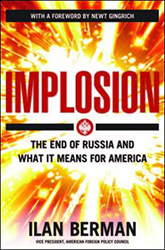
Beijing Is Facing A Population BustJanuary 2, 2026 • Newsweek When it comes to a nation's potential, few factors matter more than demographics. The pace of a country's population determines a great many things, from the vibrancy of its society to its global competitiveness. That's what makes the case of Russia so striking. Despite the ambitious neo-imperial agenda that has been charted by Vladimir Putin in recent years, the country is locked in a pattern of massive, protracted demographic decline that has the potential to fundamentally alter the complexion of the state. I have written on this subject for publications like The National Interest and The Moscow Times, and most extensively in my 2013 book Implosion: The End of Russia and What It Means for America.
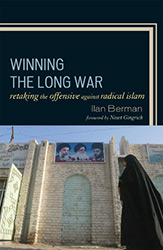
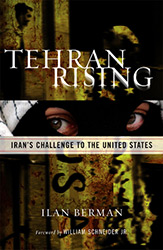
Actually, Putin's War On Ukraine Isn't Popular At HomeDecember 29, 2025 • Forbes Just how widespread is domestic support for Russia's war on Ukraine, really? Conventional wisdom has long held that the war of choice launched by the regime of President Vladimir Putin in February of 2022 is backed by most Russians. European officials have long interpreted polling results and Putin's consistently high popularity ratings as proof that the war is popular at home. They have responded accordingly, with measures such as travel restrictions that have curtailed the ability of ordinary Russians to access the Eurozone. Perhaps Putin's war of choice was indeed once a widely-accepted enterprise. But there are now clear signs that domestic support for Russia's "special military operation" against Ukraine is softening, as its material, human and reputational costs continue to mount. Books by Ilan Berman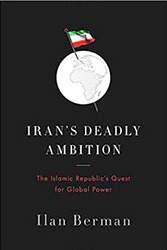
|
||||||||
|
home | biography | articles | blog | media coverage | spoken | books | mailing list | mobile site |
||||||||


 Continue to the full article