


“We like lists because we don’t want to die”, says Umberto Eco.
Not sure if that’s the reason I am writing this post but then the apocalypticaly tagged 2012 is also hanging close, so who knows what the subconscious mind may be cooking.
Anyhow, coming back to the title of the post, I actually didn’t read the whole year, save for the last two or three months. Part reason was the miserable business of life and also i didn’t much look beyond the few good writers I had read some years ago. A small opening, reading one or two previously unread but only heard voices led to a resurgence of sorts and am pretty glad for that. So without much further ado I’ll just list(Yeah, Mr Eco must be grinning now) some of the good titles.
Solo – Rana Dasgupta
Coincidence is what comes to my mind as I think of this book now. Though i read it now, I had in fact brought a copy some two to three years ago, when it was yet to be the winner of prestigious commonwealth prize. Going back home as I stayed over at a dear friend’s place, a book on his shelf caught my attention with its title and I decided to read a few pages. It was The Case of Exploding Mangoes and after having read some I decided to trade the book for Solo, with the intention of taking it back while coming back from home, though it never happened. Incidentally The Case of Exploding Mangoes later that year won the Commonwealth First book prize and Solo won the Commonwealth Best book prize the next year.
Solo is a story narrated by a hundred year old blind Bulgarian, Ulrich, who reminisces over his past and often daydreams. Overtly ambitious in its scope it tries to capture the life of a common man, an everyman, torn through the upheavels of the last century, which forms the 1st part of the novel, named – First Moment : Life. The second part, named- Second Moment : Day Dreams, takes few characters, with certain similarities to the cast of the 1st part, through the much changed landscape in the later part of the century, though the fate of these characters remains overpowered by the sociocultural and political forces of historical magnitude. A brilliant read.
Tokyo Canceled – Rana Dasgupta
It was imminent that after having read Solo one would seek his other novel, which is a collection of short stories, narrated by passengers stranded on an airport after their flight got canceled. Though the tone and character of these stories remains the same through out, for which the author was pointed out by numerous critics, but nevertheless the inventiveness and imagination behind them sails the book through many a miles. The stories are often surreal imbued with elements of magical realism. A highly recommended read.
The NewYork Trilogy – Paul Auster
The books contains three stories City of Glass, Ghosts and The Locked Room. All three are one of the initial works of Auster and were published individually, though they have been clubbed now as the Trilogy. Told in the form of detective fiction they are essentially existential tales of certain individual in search of certain identities, which often merge with their own identities blurring the lines of reality. I had some time ago read the Travels in the Scriptorium by the same author but it didn’t enthuse me enough to explore him further. I guess now I’l read few more of his works.
The High Window – Raymond Chandler
This book was another highlight of the year.I had never much liked detective fiction before, but after reading about Murakami’s inherent indulgence in his works, I was tempted to see what was being offered there and that check proved to be a rewarding experience. Its now easy to see from where the stylistic influence in Murakami’s fiction comes from.
The protagonist, Marlowe is the perfect hardboiled detective. He’s a tough, clever, contemplative chap who’s always ready with a wisecrack up his sleeve. Effortless in holding his own in any tough situation. A literary influence on many a crime fiction writers after Chandler. Another of the best thing about Chandler’s writing style is how beautifully things, places, faces or people are described. A delight to read. Quite a savoury experience.
Lady in the lake by Chandler is what am reading now.
Will you be quite, please? – Raymond Caver
The obsession to check the writing influences of Murakami made me read Raymond Caver too. Will you be quite, please? is a shot story collection. These are stories of common people, of their everyday mundane encounters, bordering on some quirky, eccentric upheaval, though mostly the tension is built but never released. The stories end usually with a tantalizing feel.
One Last Story and that’s it – Keret Etger
After having read Caver and Dasgupta’s short stories, reading some article about contemporary short story writers got me to check out Keret Etger and what a delightful experience it turned out to be. Etgar writes in a playful, mundane manner. The stories are often 2-3 pages long. All starting with everyday people or situations that are ready to take sinister tragic turns. There’s a tragicomic hint to every situation. At times things have their dreadful fated ends, though on others times events unfold to leave a smile on your face.
While Mortal’s Sleep – Kurt Vonnegut
While on that short story reading spree I also tried this. A great Humanist as Kurt was, these stories too mostly serve the purpose of telling a moral or driving home some point, though this implicit push robs the stories of their sheen. These stories are from his early times and were published posthumously this year.
Open – Biography of Andre Agassi
Whatever was seen over the years on and off the court was filled by this book with a heart wrenching as well as uplifting story of a great human. If Tennis is music to some, then he’s the Jim Morrison who’s survived through. These stories are once lived and then only told afterwards.
Also read some literary essays from Stranger Shores by J M Coetzee.
Read some in poetry too. Currently half through Rumi’s Selected Poems, Penguin edition. Also got hold of The Great Enigma by Tomas Transtormer and Charles Bukowski’s The pleasure of the Damned.
There were few currently half read, ready to be finished ones also. Orhan Pamuk’s The Naive and the Sentimental Novelist and Coetzee’s Elisabeth Costello top that list. Though there were few other’s too but i don’t see my self completing them except these two.
Currently reading Murakami’s 1Q84, apart from few mentioned above.
Lets see what 2012 has in store.


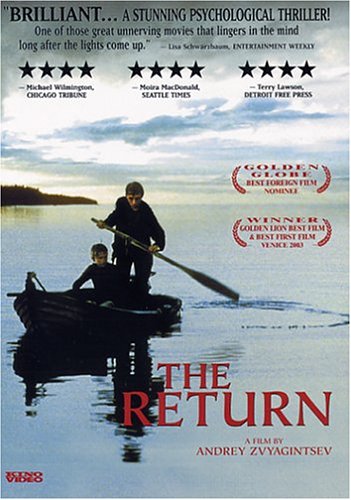 The Return
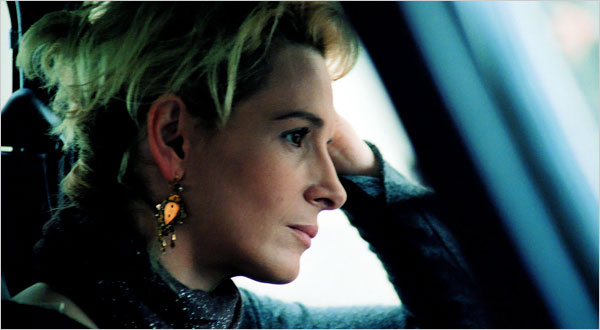
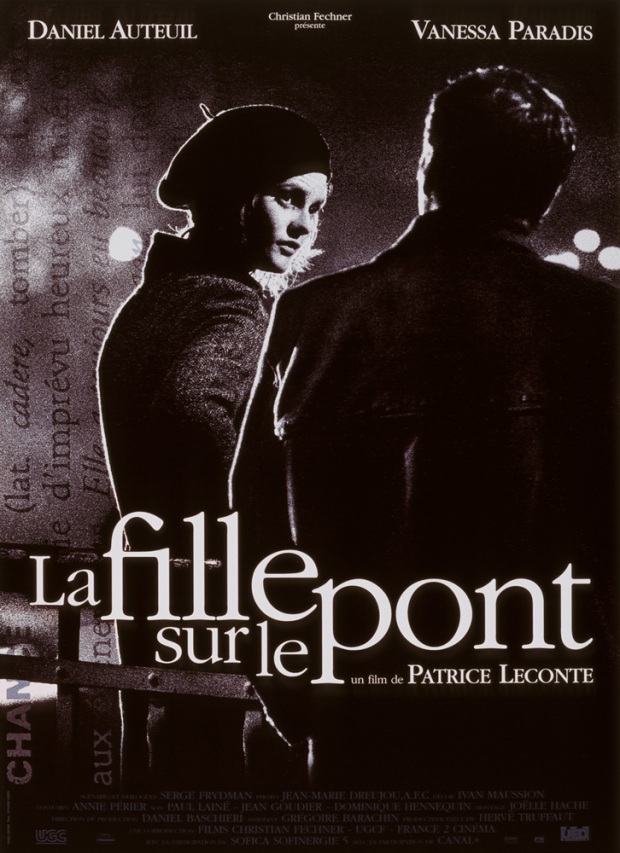 At times how well a movie finally comes out to be depends entirely on its lead character, or may be it appears so because of certain performances. Vanessa Chantal Paradis, acting as Adèle, delivers one such performance in T
 I read the book some two years back, liked every bit of it but somehow it felt hurried then, or maybe I read it so. And because of this I had been a bit apprehensive about watching this movie since then, but guess I was proved wrong. The movie’s quite stunning. The actors perform so seamlessly, so amazingly, in such an unassuming way that you wish the movie to go on and on. The role of Thomas is played by
 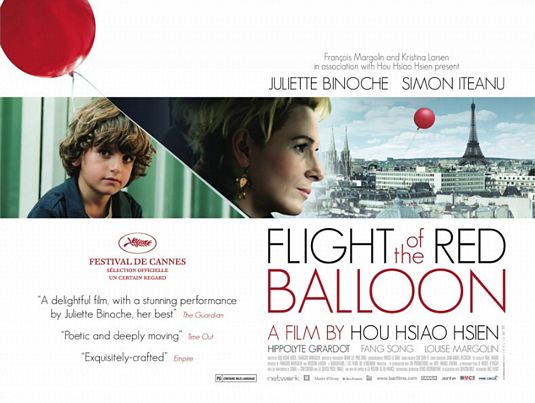 Hou Hsiao-hsien’
 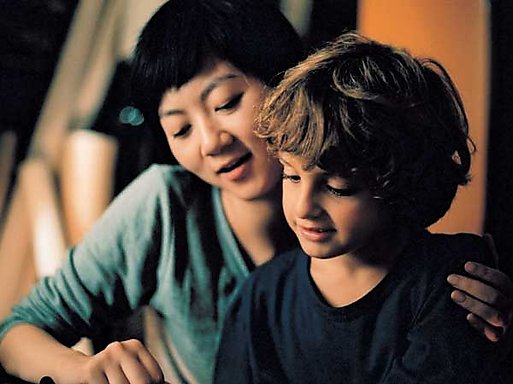 Song is quite and unassuming, like a spectator of this medley of life. In one scene she points out to Juliet that the green man in her movies carrying the balloon all the time is there in green so that he could be easily filtered out later. It almost as a metaphor suggests that the seemingly free flowing life that this movie looks has its underpinnings in something else, the elusiveness of which is what is giving this all that quality. The role of Juliette Binoche as Suzanne comes as a breath of fresh air, as she walks in and out of the frame as a butterfly may tease a child following her. Her emotional upturns, the frizzy makeup, the virtuoso dazzling performances and the voice over artist just make a delight to watch.
 tually about. In another scene towards the end Simone is in his class which is on a trip to a exhibition where the teacher is asking students what they see in the painting, if it’s dark or light painting. All children come up with different answers thinking of all possible explanation. At the same time Simone is shown elusive to all that discussion busy watching the balloon which as usual shows up in the ceiling glass pane of the center, telling the viewers that no matter what we may interpret of the movie the lyrical quality, the profused hum, the brisk lightness that’s there is not going to vanish.
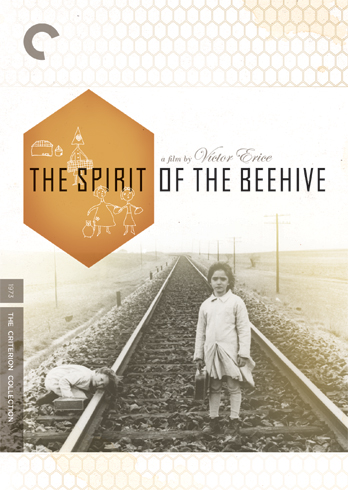
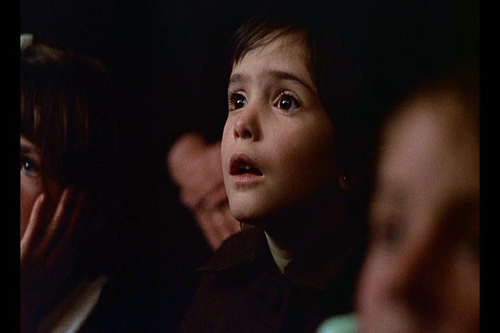 mystified and allured. Of some scenes shown, there was one where Frankenstein is shown playing with the girl. What she doesn’t understand is why Frankenstein kills the girl in the movie and why then further he himself is killed by the people. She asks her elder sister Isabel (elder only by a year or two) about this. Isabel beguiles her by saying that the monster is actually a spirit and meets only his friends, on being called. Isabel being elder and having past that tender age which Ana is in, understand the difference between fact and fiction. Ana is stuck with Frankenstein and Isabel still playing with her, points her towards a deserted house in a barren open as Frankenstein’s living place. Ana still hold with the whole idea visits the place several times and one day confronts a runaway fugitive there and immediately takes him for Frankenstein. She visits him once or twice with food but then later as reality clashes with her convoluted reality, the fugitive is killed by the local police. And as she visits the place next he’s not there but only few drops of blood. Startled and unable to comprehend and also as her father comes to realise her curious endeavors as he receives his timepiece and shoes from police as retrieved from the fugitive, she runs away. As she’s on her own at night, while the whole village searches for her, she had a mystical experience, having parallels to the Frankenstein’s story. Later she is found by the father along with police, and spends next few days without sleeping, talking or eating. The movie ends as she wakes up from her sleep and remembers what her sister told her about summoning Frankenstein, but she returns without calling for him. The ending in a way notes towards the end of age of innocence for her.
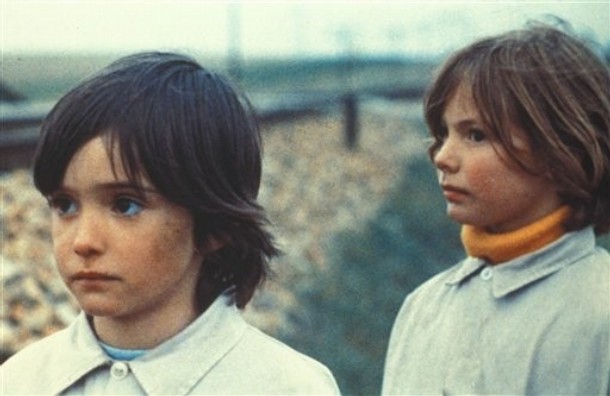 sabel is still a child, though her feet are in firm grounds of reality, she’s still coming in terms with her sexuality. There’s one scene where she, while playing with a cat, accidently cuts her finger and then playfully, though consciously she smears the blood on the lips and looks at herself in a mirror. Isabel mischievous doesn’t ends with her fueling the innocent curiosity of Ana, but there’s also a scene where she plays dead in order to frighten Ana.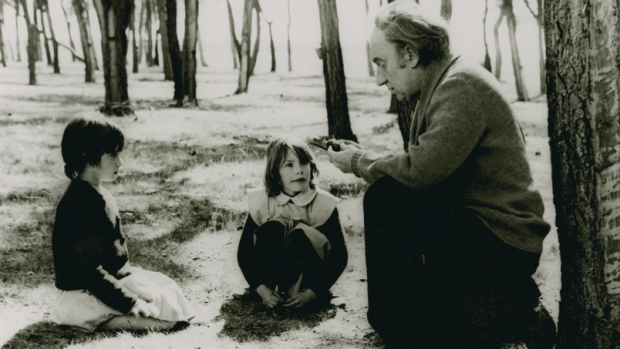
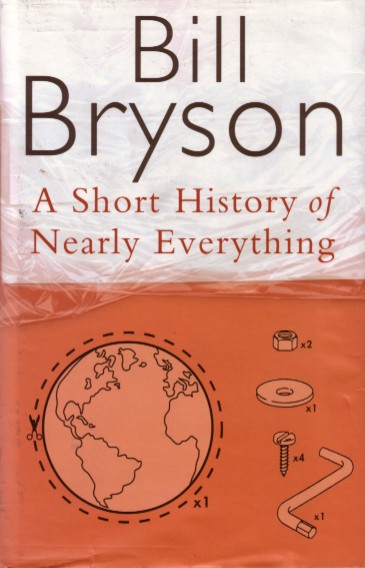 Ah, its no Proust post, and you already know it seeing the book cover on the left, anyhhow am just reading Bill Bryson’s A short History of Nearly Everything. It’s been two days and am more than halfway through and its been a pleasure till now. Every second page you turn and some name from the past tumbles up. One page you are reading about John Dalton and the next there’s Ludwig Boltzman, and then next Rutherford, followed by JJ Thompson and so on. Its such a delight to read about these men, their background and their eccentricities who filled all those elementary school days. The near misses they had or how simple plain luck paved their way to greater discoveries. The sudden delight learning actual names, sample this Lorenzo Romano Amedeo Carlo Avogadro, Count of Quarequa & Cerreto, remember Avogadro’s Number or Avagadros Laws. Or even Dmitri Ivanovich Mendeleev, reading whom you are suddenly wondering about The Karmazovs, then The Last French Open and finally the Periodic Table. Ok I made that this one up. Anyhow the writing style is smooth and its a ride down the memory lanes. Am enjoying it.
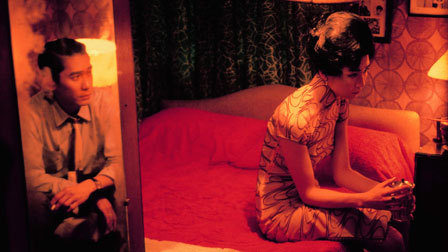
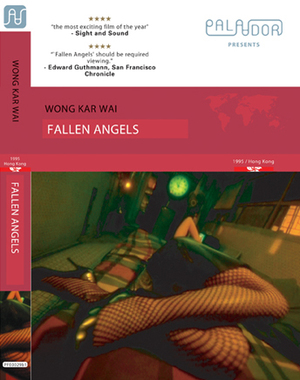 To be true I didn’t like falling Angels that much. Not from the general standards but from Wong Kar Wai’s. The movie was more on lines of Chungking Express, probable coming from the fact that the storyline of the movie was meant to be a part of Chungking Express. Still it was a fair enough movie coming from Wai’s stable infused with his usual elements of visuals, music, and a storyline at times eccentric, obsessed with past, and trying to overcome a
 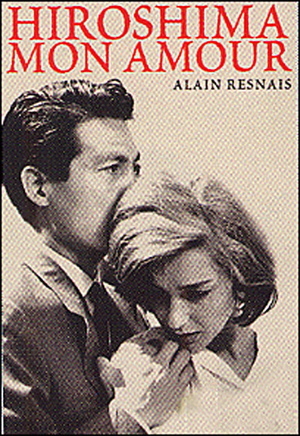 he centre stage. I haven’t seen any of his movies except for Hiroshima My love. It’s not only subjective memory of the past but also subjectivity as a whole which concerns him, coupled with fragile nature of time n memory engraved in existential dilemmas.
 gazemaze.wordpress.com