


| CARVIEW |
Just a reminder of where I started……
And what I can do now……..

I think my biggest take away from this course is that technologies make learning relevant to students in a way I hadn’t realized. All semester I have been hearing that if educators want to increase student engagement and motivation then lessons have to be authentic, they have to resonate with students, they have to be applicable to real world situations and they have to be relevant and reflect student interests. Technology is an integral part of all of our lives. Tech impacts many aspects of the way we live and learn so it seems crucial that tech be a part of the classroom environment too. I’m still a bit overwhelmed thinking about how I am going to go about incorporating technology into my classroom but I’m certainly more motivated to give it a try.
Because of this course I feel less like this……

And more like this…..

Just as I don’t have to think about implementing every good idea I’ve learned so far with regards to being an effective and inspiring educator (because that too is overwhelming), I don’t have to become an expert and try to implement every educational tech idea I’ve been exposed to either. However, I can choose to focus on one aspect of tech in the classroom to start with and go from there. I particularly like the idea of using digital stories in the later elementary grades to increase student voice and provide a platform where students can tell their own stories. I love the apps that make students ‘citizen-scientists’ where they can upload their recorded observations (about mushrooms or birds for example) and make real contributions to the scientific community. I can also see how tech can help non verbal and ELL students participate more fully in classroom activities.
I do realize that I am going to have to continue to push myself with regards to learning about and engaging with technology, but I feel decidedly less uncomfortable about tech now than when I started so it can only get better…….right?
]]>
Dr. Roberts emphasized the importance of open access to learning opportunities and expanding learning beyond the walls of the classroom. She posited that for learning to happen reflection is key and that an open learning design consists of four major stages.
- building relationships
- co-designing learning pathways
- how will students show their learning?
- students build their own personal learning network
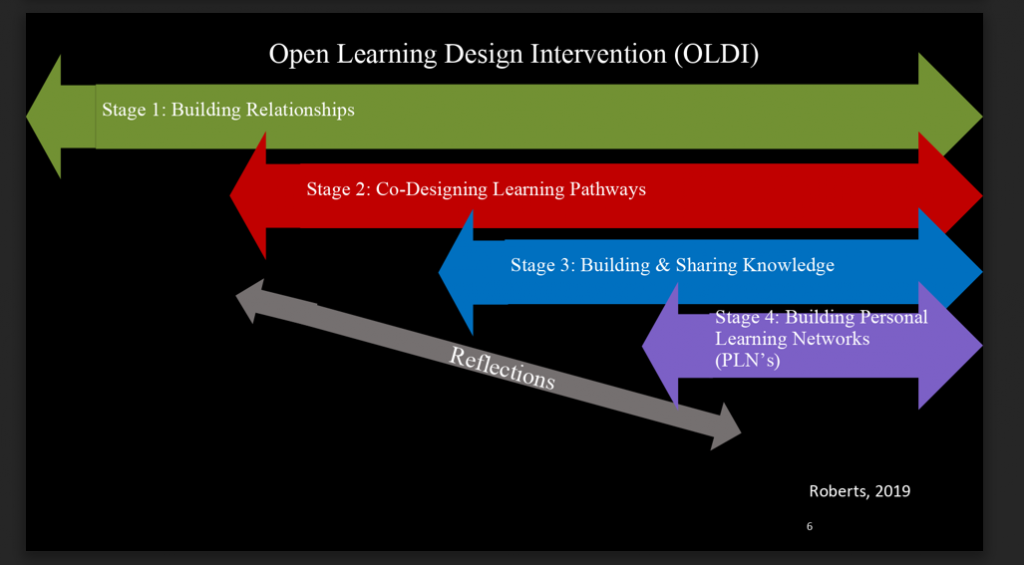
An important point moving forward –> encourage students to find and build the learning for themselves (the basic premise of inquiry).
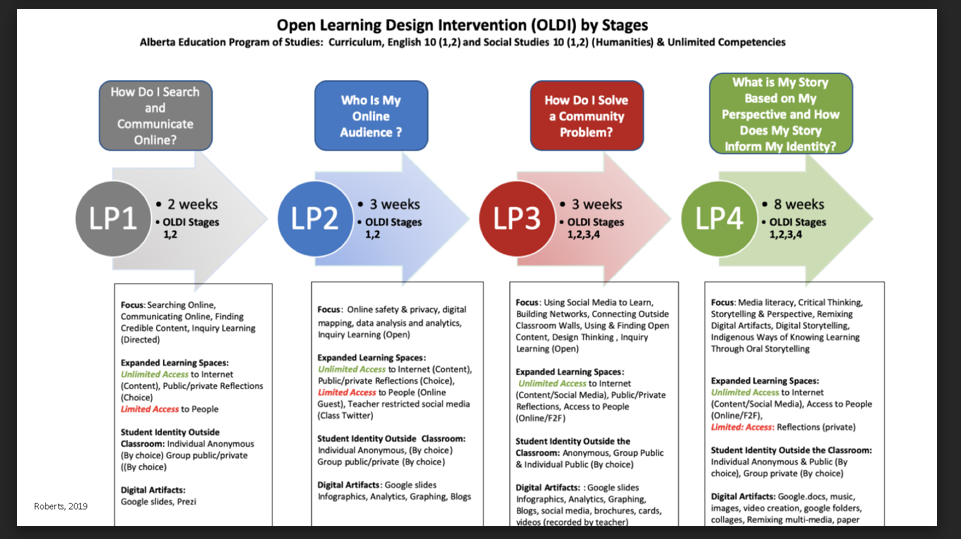
Below is an outline for moving high school students towards a more open learning framework. This is crucial because in order to support passion for learning in students, self-directed inquiry is necessary.
]]>
Presentation #1; Stop Motion Animation by Keiro
I appreciated how Keiro mentioned that stop motion animation could easily provide curricular integration and covers learning across the competencies.

I’m excited to try this for myself using free stop motion software from Apple. I think once I have a better understanding of how to make my own short animation I could be better equiped to think about how I could incorporate it into my classroom or into a lesson.
Presentation #2; Google Maps and Google Earth by Eliza, Anne, Connor and Kelly
How amazing would it be to take students to the Sahara when learning about desert biomes in Science class or allow students to visually explore the topographical features they are learning about in their geology class. We have been learning so much about making lesson plans authentic and that if students can relate what they are learning to the world outside the classroom they feel more invested in the lesson. How about combining a lesson on Egypt with a virtual trip to see the Sphinx? The fact that there are actual people in the picture further situates the Sphinx in a real world context, as well as gives much needed perspective on sheer size.

Or what about learning about Karst topography by actually looking at examples from all over the world? Lessons using Google Earth would be more engaging and work for a variety of different learning styles.

Another feature I would love to check out further is the ‘view the past’ application. Students can get a better understanding of how natural processes can change the land as well as how human developments have impacted our environment.
Thanks to these two groups for their inspiring presentations!
]]>
]]>
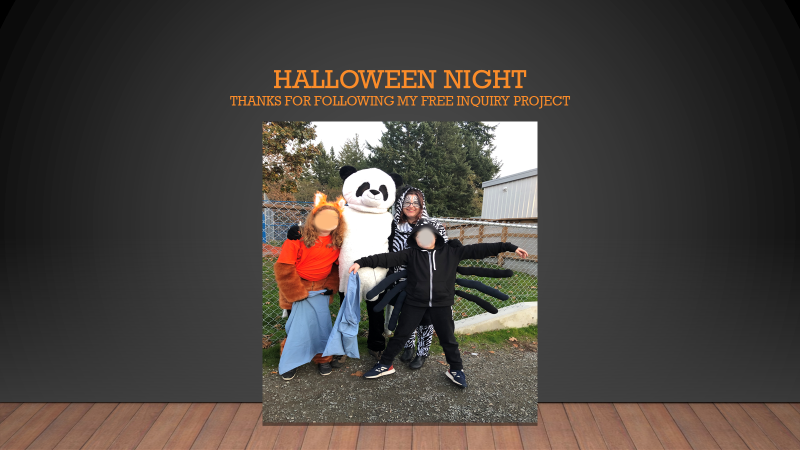
We carved pumpkins tonight……
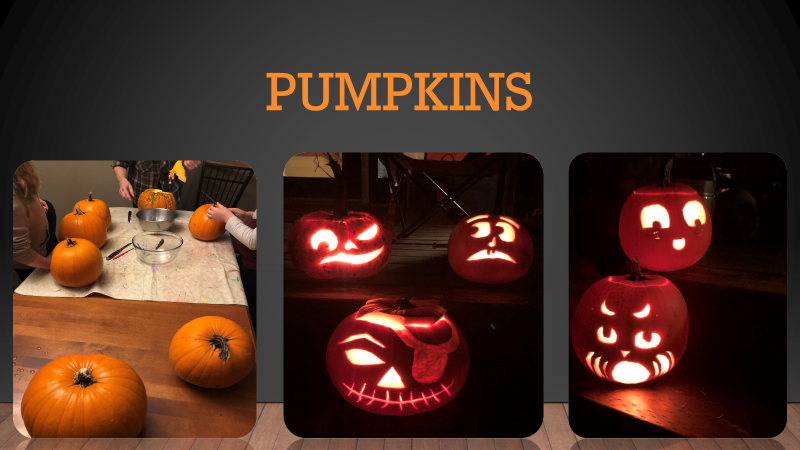
And made sure all costumes were looking good……
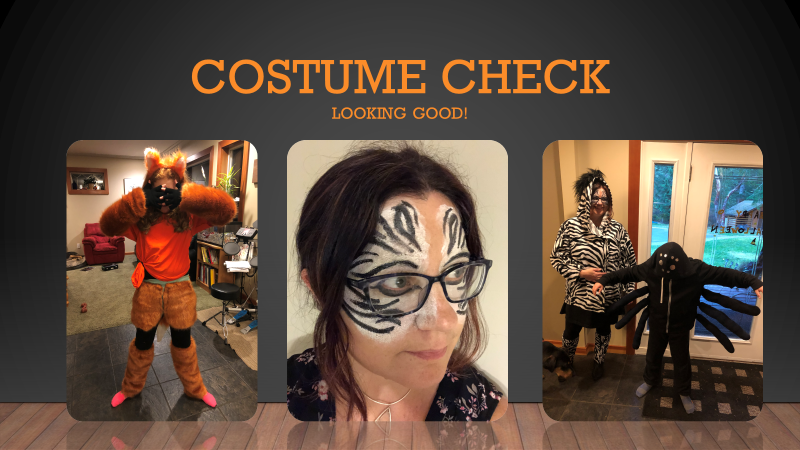
]]>
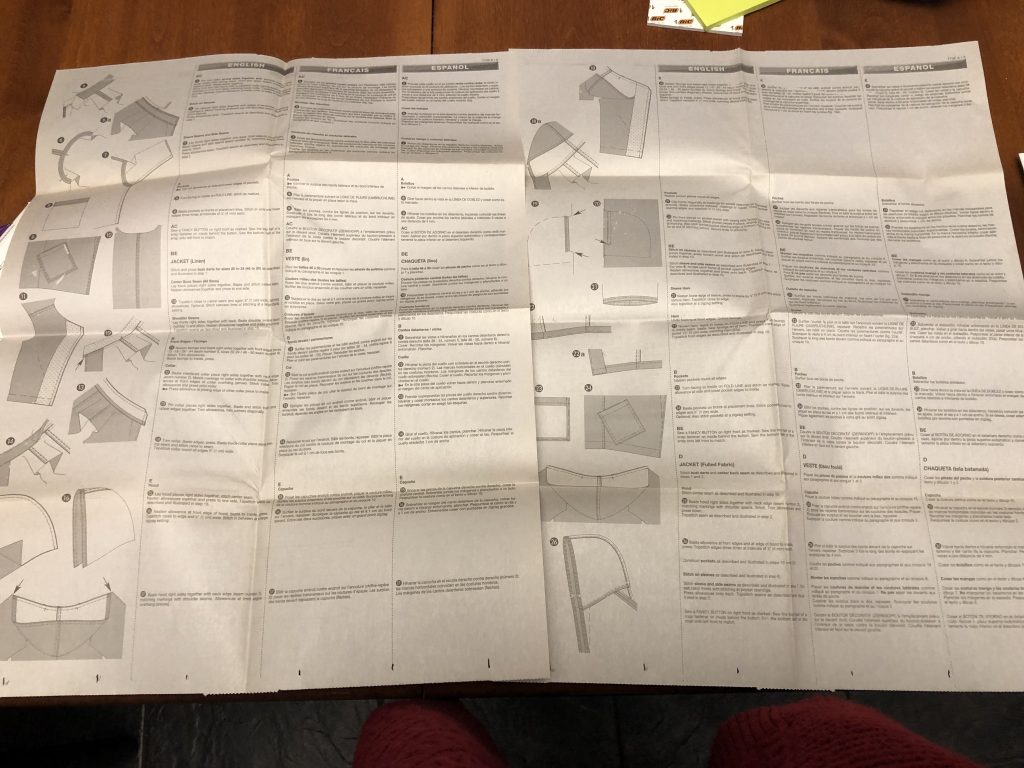
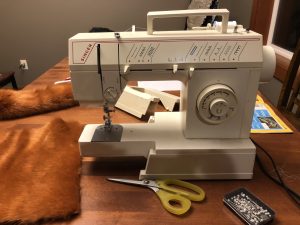
First you have to spend time looking at the instructions from the pattern you bought. They are written in such a way as to be as confusing and unintelligible as possible, much like some academic papers, where the language is so foreign that you wonder if it is still written in English. You must walk the fine line between studying the sewing instructions for long enough to get the gist of them and studying the instructions for so long you go clinically insane from confusion. You can fill in the rest of your understanding with some good old fashioned guess work.
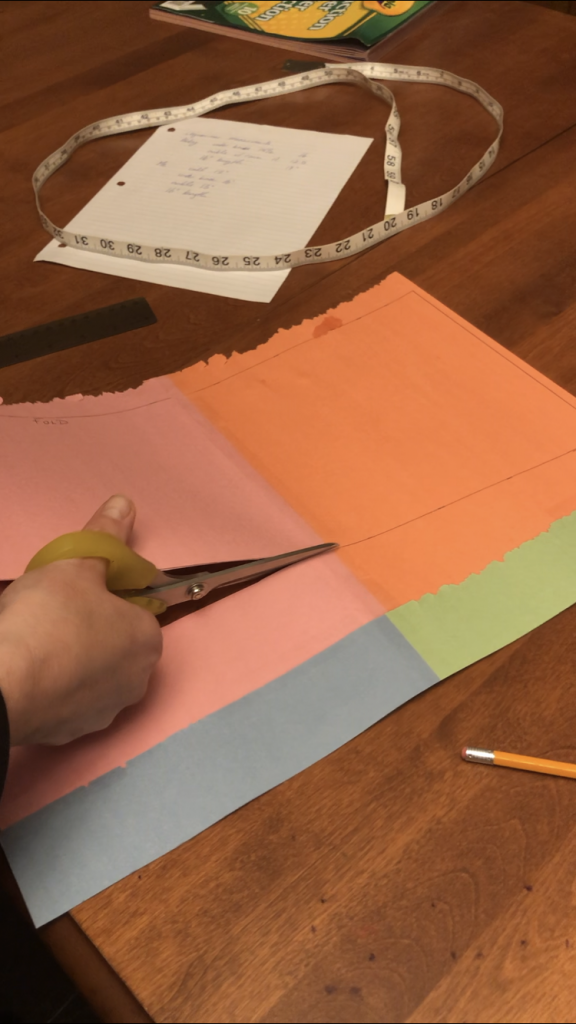
Then you have to make a pattern. Here I have made a pattern for fur legwarmers. It is essentially just a quadrilateral but it is also the most intricate pattern I have made so far.
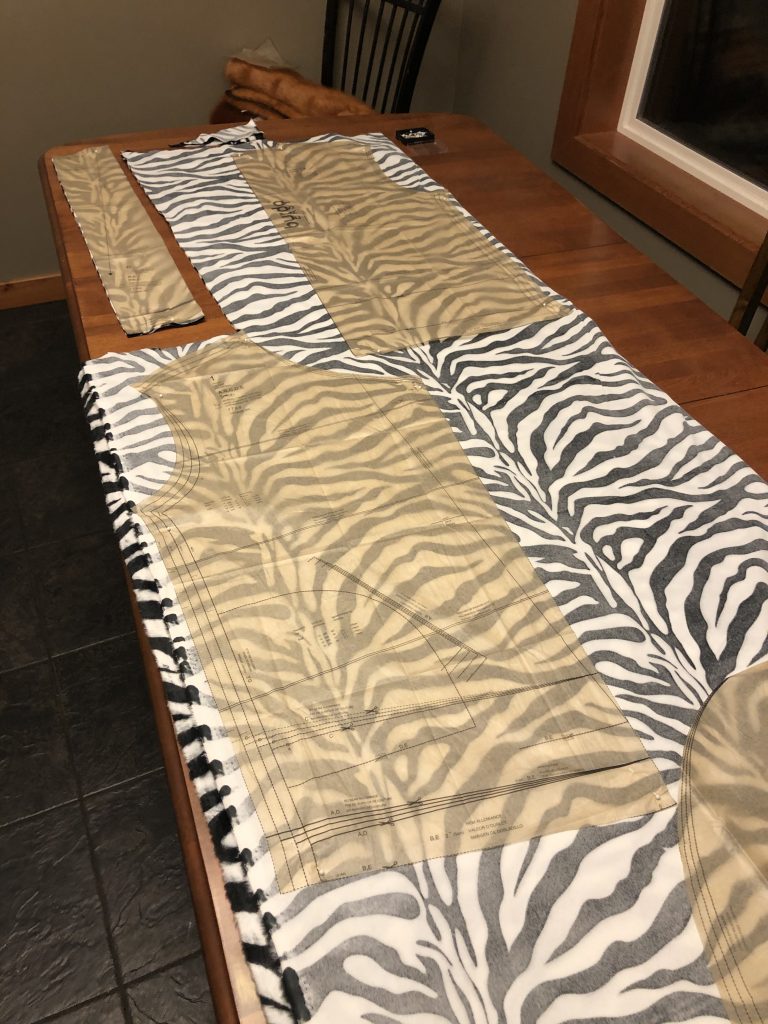
Then you have to pin the patterns on the fabric and cut everything out, trying not to accidentally cut anything you are not supposed to. The cut pattern pieces are then draped all over every possible surface in your home so as to try to keep them in some kind of order so you don’t sew your arm piece onto where the hood piece should go.
And then the fun part….. you are finally ready to sew!! I’m sewing with a machine my Gran gave me years ago. She was an amazing seamstress and while I can’t do the machine justice (or any pattern I attempt for that matter), I think she would be happy to know that it still makes all of our Halloween costumes every year. My skill might even be improving!
]]>
To stop having fur bits flying all over your house when you cut your fabric you need to….
- trace the pattern piece
- don’t cut more than one fur layer at a time
- try to only cut through the back layer and not the pile (which is the fur layer), this requires poking the tip of your scissors into the pile and making tiny cuts
- gently pull pieces apart and the long fur will still be attached right up to the side of your cut (and therefore not flying around your workspace
To sew two pieces together so the long fur doesn’t get trapped into the seam you need to….
- finger comb the fur so it is going into the middle of your cut piece – away from the cut edge, that way when you sew the cut edge the fur won’t get caught
- use pins! Pinning the two pieces together after finger combing the fur into the centre means the fur will be more likely to stay inside your two pieces and not get caught in the seam as you sew.
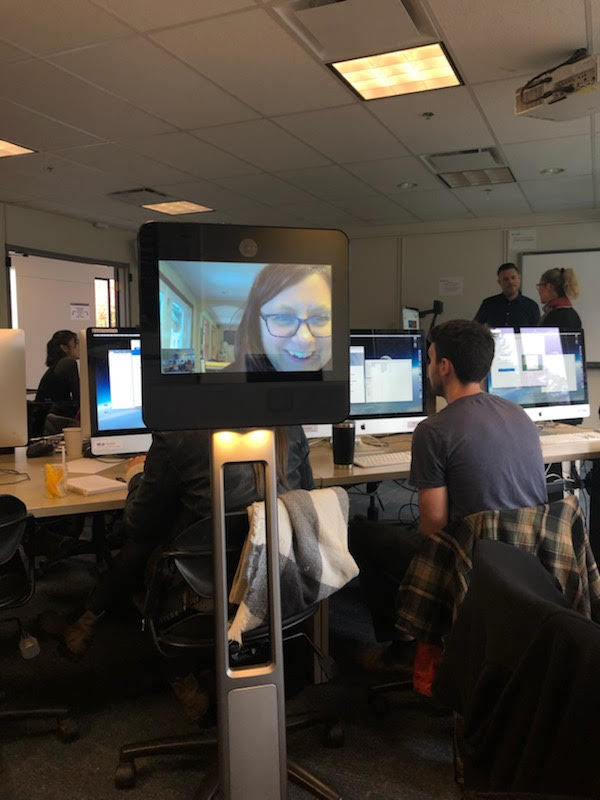
I think the biggest challenge being in the beam robot is that I had no non verbal communication cues. I realized I rely heavily on those cues to enter and exit a conversation. It was also a bit difficult to gauge how close I was in relation to other people. Was I parked too closely or creepily hanging over people’s shoulders? And although I could hear Michael speaking for the most part, there was a lot of ambient noise which made it difficult to hear especially when classmates were speaking in other parts of the room. But in terms of the pros? I was able to attend a three hour class from home while my sick son slept upstairs. This technology could be important for students who might be home bound for whatever reason or for students who live in other parts of the world but wish to attend Michael’s lectures 
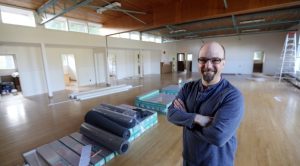
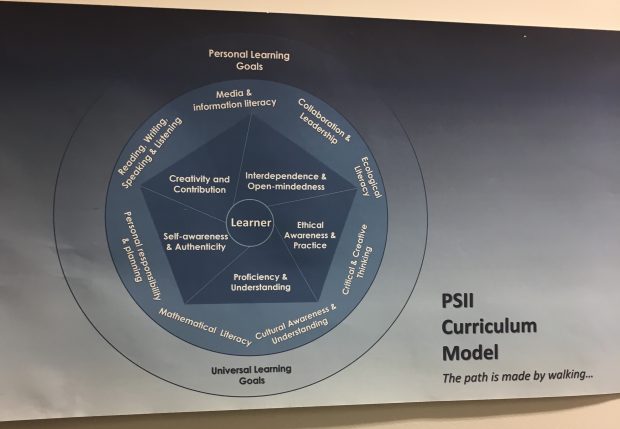
I left this session completely inspired to try to learn more about inquiry based learning and how I might incorporate it into my own teaching practice. Teachers are more likely to work lesson plans around student interest and real world experience in the earlier grades, but as the students progress, this form of teaching is lost and replaced with a focus on individual subjects and standardized testing. Jeff’s argument is that this model doesn’t prepare students for the real world where soft skills including critical thinking, collaboration and negotiation are valued far above what you can regurgitate of your Math 11 or Biology 12 text book.
In the cafe style, thinking, working and collaboration main room of PSII, I saw students engaged in what they were doing and this was the most inspiring sight. One thing I have noticed in observing middle school classrooms in the public school setting is that this engagement is easier said than done and that a key component to student engagement in the classroom seems to be the content relevancy to student interest’s and student life and the perceived usefulness of what is being learned in terms of navigating the ‘real world’ after graduation. What better way to ensure lesson plans are relevant to students than for the students themselves to have a say in what those lesson plans are? It seems obvious now that if students have some agency over what they are learning then all those things that we have come to know that increase student success and knowledge retention including discussion, engagement, curiosity and intrinsic motivation will be present before the actual learning even starts to take place. If as teachers our goals include helping learners to be dependent on themselves and encouraging student self determination to increase intrinsic motivation then isn’t it our duty to try to figure out how to incorporate inquiry based learning into at least portions of our daily teaching practice?

Jesse asked us to consider what private means? When you post something online you have to think about where it might end up. For example, screen shots can be taken of anything and distributed widely even if the information originated on someone’s private page. Private texts can even be distributed this way. Because of this we need to think about our digital identity. Are we differentiating between social, professional and personal communication networks? And how are we keeping our professional network separate from our personal and social networks? Jesse suggested that there are 3 audiences for social media use by educators…
- public/parents
- staff
- students
… and that we should be wary of crossing boundaries between these audiences. Think about who should be your friends on social media. Drawing the line at students and their families seems like a good place to start.
Jesse also mentioned the importance of understanding the school expectations and policies of the employer. Many businesses have not caught up legally around issues of employees posting images in and of their place of work.
Parts of this lecture that resonated with me personally were around one’s public digital identity and the fact that anything one puts online should be done with thoughtful intention. I think too many times people post without any thought at all or post from an emotionally charged place. As uncomfortable as I am with social media culture, I can see the value in being aware of it and having knowledge of it. As a teacher I need to be aware of the social networking environments my students are trying to navigate within so I can understand and help them with that.
]]>