


| CARVIEW |
But not all of ABC’s affiliated stations will be carrying Kimmel’s comeback show. Sinclair, one of the country’s biggest owners of local TV stations, said its ABC affiliates will preempt the show “beginning Tuesday night.” Sinclair said it will air news programming in the time slot instead.
“Discussions with ABC are ongoing as we evaluate the show’s potential return,” a Sinclair spokesperson told CNN.
Sinclair’s conservative owners condemned Kimmel last week and contributed to ABC parent Disney’s decision to pull the show from the airwaves temporarily.
The Kimmel controversy erupted last week after conservatives criticized a Kimmel monologue comment on Monday about the MAGA responses to the assassination of Charlie Kirk.
Kimmel said the MAGA movement was trying to score political points by trying to prove that the 22-year-old suspect accused of killing Kirk is not one of its own.
“The MAGA Gang (is) desperately trying to characterize this kid who murdered Charlie Kirk as anything other than one of them and doing everything they can to score political points from it,” Kimmel said. “In between the finger-pointing, there was grieving.”
On Wednesday, two days after the monologue aired, President Trump’s close ally atop the FCC, Brendan Carr, publicly suggested Kimmel should be suspended and invoked the FCC’s oversight of local TV stations. </a>
Read the full text on <a href=”https://www.cnn.com/2025/09/22/entertainment/jimmy-kimmel-returning“>CNN </a>.
]]>The policy will take effect Feb. 23 for workers living within 50 miles of a Microsoft office in the Puget Sound region, Microsoft’s chief human resources officer, Amy Coleman, said Tuesday in an internal memo viewed by The Seattle Times.
The return-to-office edict will eventually roll out to employees in other U.S. offices and to those based internationally. There’s no set timeline for those employees yet.
By Bassem Mroue
BEIRUT (AP) — The Israeli military said it struck Hezbollah’s headquarters in Beirut on Friday in a series of massive explosions that targeted the leader of the militant group and leveled multiple high-rise apartment buildings. The biggest blast to hit the Lebanese capital in the past year appeared likely to push the escalating conflict closer to full-fledged war. At least six people were killed and 91 were wounded, Lebanon’s health ministry said.
Hezbollah leader Hassan Nasrallah was the target of the strikes on the group’s headquarters, according to two people familiar with the matter who requested anonymity, including one U.S. official. The Israeli army declined to comment on who it was targeting. It was not immediately clear if Nasrallah was at the site, and Hezbollah did not comment on the report.
The death toll is likely to rise significantly as teams are still combing through the rubble of six buildings. Israel launched a series of strikes on other areas of the southern suburbs following the initial blast.
News of the blasts came as Netanyahu was briefing reporters after his U.N. address. A military aide whispered into his ear, and Netanyahu quickly ended the briefing.
Israeli army spokesman Rear Adm. Daniel Hagari said the strikes targeted the main Hezbollah headquarters, saying it was located underground beneath residential buildings.
The series of blasts at around nightfall reduced six apartment towers to rubble in Haret Hreik, a densely populated, predominantly Shiite district of Beirut’s Dahiyeh suburbs, according to Lebanon’s national news agency. A wall of billowing black and orange smoke rose into the sky as windows were rattled and houses shaken some 30 kilometers (18 miles) north of Beirut.
To a degree unseen in past conflicts, Israel this past week has aimed to eliminate Hezbollah’s senior leadership. But an attempt to assassinate Nasrallah – successful or not – would be a major escalation. The Pentagon said the U.S. had no advance warning of the strikes.
Nasrallah has been in hiding for years, very rarely appearing in public. He regularly gives speeches, but always by video from unknown locations. The site hit Friday evening had not been publicly known as Hezbollah’s main headquarters, though it is located in the group’s “security quarters,” a heavily guarded part of Haret Hreik where it has offices and runs several nearby hospitals.
Four hours after the strike, Hezbollah had still not issued any statement referring to it. Instead, it announced that it had launched a salvo of rockets at the Israeli city of Safed, which it said was “in defense of Lebanon and its people, and in response to the barbaric Israeli violation of cities, villages and civilians.” The Israeli military said a house and a car in Safed were hit, and officials said a 68-year-old woman suffered mild shrapnel wounds.
]]>(Washington Bureau Chief, The Daily Beast)
Kamala Harris heads to the U.S.-Mexico border in Arizona Friday seeking to rehabilitate one of her most serious vulnerabilities and take on Donald Trump’s fear mongering over illegal immigration.
“The American people deserve a president who cares more about border security than playing political games,” the vice president plans to say, according to a senior Harris campaign official briefed on the event.
Harris will turn the tables, and blame the ex-president for the immigration crisis at the southern border by spotlighting his leading role last spring in killing a bipartisan deal to curb illegal border crossings.
A preview of her speech in Douglas, Arizona, across from neighboring Agua Prieta in Mexico, focuses not on the surreal, far-right pet-eating conspiracies espoused by Trump and his running mate, JD Vance, but on Trump’s tangible record. He demanded that congressional Republicans who he largely controls reject a border enforcement bill negotiated by senators on both sides of the aisle. Trump has long viewed bipartisan governance as weak, and a political win for vulnerable Democratic congressional candidates in this high-stakes election cycle could have stung the GOP.
On Friday, Harris plans to announce that, if elected, she’ll reintroduce the bill, which would multiply border agents and strengthen asylum laws. She’ll tout her experience as a former prosecutor taking on drug and human smuggling cartels and announce that stopping theflow of lethal fentanyl across the border will be “a top priority,” the senior campaign aide said. Harris will propose adding new fentanyl detection machines at U.S. entry points. An ad touting her proposals is running in Arizona and other border states.
The Democratic candidate’s trip to the border is designed to counter claims by Trump and his MAGA allies that Harris and the Biden administration opened the floodgates to “illegal aliens.” Both Trump and Vance have spread outlandish claims that Haitian migrants in Springfield, Ohio, have been stealing and eating residents’ pet dogs and cats, leading a group to seek criminal charges against them.
The Trump campaign on Friday ridiculed Harris, who Trump routinely calls the Biden administration’s “border czar,” for taking a trip to the border to “rewrite the past 44 months of chaos, crime, and bloodshed caused by her open border policy.” Campaign press secretary Karoline Leavitt said voters are “smart enough to realize Kamala Harris has been in charge of the border for four years and she has failed.”
As anti-immigration sentiment among voters has soared, according to Gallup polling, Trump and Vance have hammered the issue constantly on the campaign trail. At a rally in Wilmington, North Carolina, last weekend, Trump declared, “I am your border president, your border president. Kamala would be your invasion president.”
Recent polls show that even as Harris matches or surpasses Trump in national head-to-head polls, the GOP candidate still owns the immigration narrative. A recent New York Times/Siena College poll finds a significant number of voters trust Trump over Harris to handle the issue of the border.
But Harris campaign advisers think the Democrat’s visit to the border Friday will help narrow the gap on her longstanding political vulnerability.
]]>Speaking at a press conference in the regional capital Mekelle, Ethiopia, on Tuesday, Debretsion said the first round of talks took place about six months ago in Dubai, United Arab Emirates.
He told reporters that Getachew Reda, the president of the Tigray Interim Regional Administration, represented the TPLF at the talks in Dubai.
Without indicating venue and date, Debretsion also said there have been subsequent meetings with the Eritrean leaders after the initial meeting in Dubai.
“This was decided by the TPLF Executive Committee,” he said. “Accordingly, President Getachew Reda has engaged with Eritrea’s leaders. This is something that I know and my party’s Executive Committee knows.”
He said the talks, which were aimed at creating peace between the two sides, had a positive result.
“The abduction of citizens, looting and other activities by the Eritrean forces has improved and eased as a result,” he said.
He said the TPLF party’s intention is to “make peace with all our neighbors, including the Fano forces and the Eritrean government.”
“Based on this principle, Getachew met with the Eritrean leaders, which is known by the honorable prime minister and my part. But this is for a good cause and for peace,” he said.
Debretsion indicated that Prime Minister Abiy Ahmed has been encouraging them to engage in the talks. He adds that Getachew has also briefed the Ethiopian leader about the talks.
There has been no immediate reaction from Ethiopia prime minister’s office, Eritrea and from IRA leader Getachew.
VOA’s Horn of Africa Service has reached out to the Ethiopia prime minister’s office and government communication service but has not received a response. Also, repeated attempts to get reaction from the Eritrea’s ministry of information were not successful.
The governments of Ethiopia and Eritrea were allies during a deadly two-year war in Tigray that killed thousands. Human rights organizations and the United States have accused Eritrean and Ethiopian forces of committing war crimes during the war in Tigray, a charge the two governments denied.
In November 2022, the Ethiopian government and TPLF signed the Cessation of Hostilities Agreement in Pretoria, South Africa, committing to a permanent ending of fighting.
Tigray regional officials allege that Eritrean troops remain in parts of their region despite the Pretoria agreement’s call for the withdrawal of foreign forces. The agreement called for the withdrawal of all foreign forces and non-Ethiopian National Defense Forces, referring to the Eritrean forces and Ethiopian militias allied with the Ethiopian government.
During his visit to Ethiopia, Hammer will review the implementation of the Pretoria Cessation of Hostilities Agreement on northern Ethiopia with the signatories, the State Department said in a statement.
“The United States remains committed to supporting the Ethiopian government and the Tigray Interim Regional Administration to achieve lasting peace, including through effective disarmament, demobilization, and reintegration for ex-combatants; an orderly and peaceful return of internally displaced persons; and advancing transitional justice and accountability,” the statement read.
Hammer will also discuss with Ethiopian officials their efforts to advance dialogue to end violence in the Amhara and Oromia regions, it added.
]]>As seen in a video trending on social media on Wednesday, thousands of Ethiopians trooped out at the event in Addis Ababa, the country’s capital, celebrating their unique new year.
]]>Abiy Ahmed did not direct his comments at any particular nation, but they come at a time of rising tensions with neighbouring Somalia and Egypt.
Somalia has described a maritime pact that Mr Abiy’s government signed with the self-declared republic of Somaliland in January as an act of “aggression”, and has responded by forging closer military ties with Egypt.
Somaliland broke away from Somalia more than 30 years ago, but Mogadishu regards it as part of its territory.
Egypt has been involved in a long-running dispute of its own with Ethiopia over Addis Ababa’s decision to build a large dam on a tributary of the River Nile.
It is reportedly planning to send troops to Somalia following the signing of a military pact between the two governments last month.
In a televised address marking Ethiopia’s Sovereignty Day, Mr Abiy said the east African nation had no intention of creating conflict.
However, he said that “those who are afar and nearby” should know that “we usually embarrass and repel those who dare try to invade us”.
“Anyone intending to invade Ethiopia should think not just once but 10 times because one great thing we Ethiopians know is [how] to defend ourselves,” Mr Abiy added.
Somalia has been angered by landlocked Ethiopia’s decision to reach a deal with Somaliland to give it access to a port.
Somaliland has also said that it could lease a section of the coast to Ethiopia’s navy, in exchange for Mr Abiy’s government becoming the first to recognise it as an independent state.
Tensions in the region escalated last month after two Egyptian C-130 military planes arrived in Somalia’s capital to mark the strengthening of ties.
Egypt reportedly plans to send up to 5,000 soldiers to join a new-look African Union (AU) force in Somalia at the end of the year, with another 5,000 to be deployed separately.
An AU force has been in Somalia since 2007 to help the government fight al-Shabab, a jihadist group waging a brutal insurgency in the country.
Ethiopian troops are part of the force, but Somalia has announced that they will have to withdraw next year.
For its part, Egypt has accused Ethiopia of threatening its supply of water from the River Nile following the construction of the Grand Ethiopian Renaissance Dam (Gerd) in the northern Ethiopia highlands, from where 85% of the Nile’s waters flow.
The Gerd is Africa’s biggest hydroelectric dam project, and Ethiopia sees it as vital to meeting its energy needs.
]]>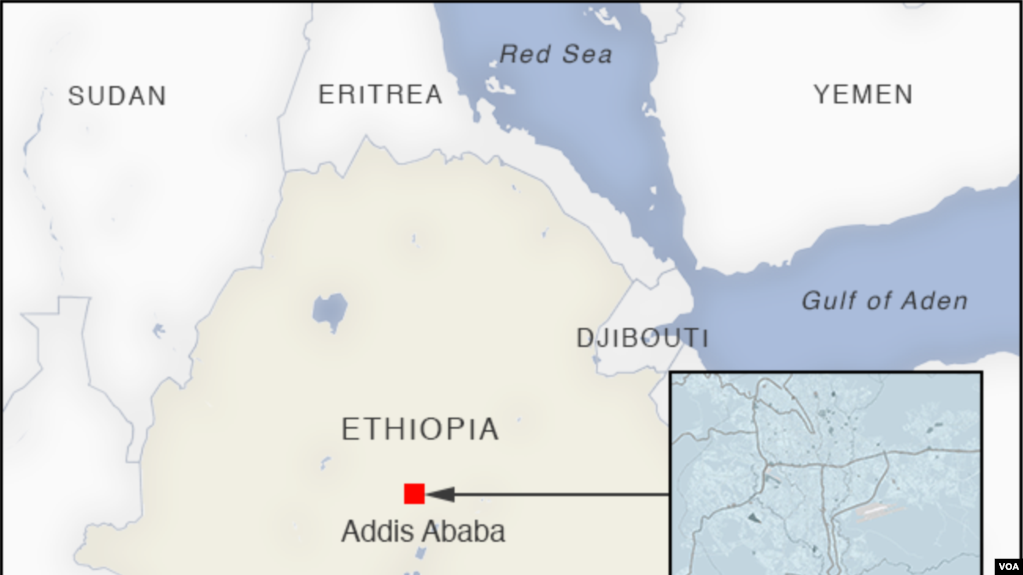
ADDIS ABABA, ethiopia —
The Ethiopian government has freed seven Oromo Liberation Front, or OLF, members who have been in prison for more than four years.
A spokesperson for OLF Lemi Gemechu told VOA’s Horn of Africa Service that the seven were released on Thursday from the different prisons where they had been held.
He identified the seven as Abdi Regassa, Dawit Abdeta, Lammi Begna, Michael Boran, Kenessa Ayana, Gada Gabisa and Gada Oljira.
“Before their release, there was a process that took all day,” Lemi said.
“Just now, the Oromo Liberation Front leaders who have been imprisoned for over four years at different sites have been released, including Abdi Regassa, members of the executive committee and other officials well-known among the people, all seven of them, are now released and here at home,” he said.
Abdi is a prominent member of the OLF who once was the commander of the military wing of OLF.
The release took place at Burayu police station outside Addis Ababa.
Some of the released detainees are members of the executive committee while others are central committee and executive members of the OLF.
Lemi said they welcomed their release and congratulated their supporters and those who advocated for their release.
On his Facebook page, Lemi posted a picture of the seven standing with the leader of OLF, Dawud Ibsa.
In a statement issued Thursday on Facebook, OLF said the members were released on bail. OLF said they were detained for “exercising their legitimate political rights” and said their detention was “unjust.”
The opposition members were detained in 2020 for what rights groups at the time described as “purely political” reasons.
The Ethiopian government has not yet officially commented on the release of the opposition figures.
The United States has also welcomed the release of OLF detainees.
“We remain ready to support negotiations aimed at ending the violence and promoting durable peace for all Ethiopians,” the State Department’s Bureau of African Affairs said in a post on X.
Human Rights Watch had been calling on the Ethiopian authorities to release the seven senior members of the opposition political party.
Meanwhile, the family of Taye Dendea, the detained former Ethiopian state minister of peace, has expressed their disappointment with the Supreme Court’s decision to deny him bail.
Taye’s wife, Sintayehu Alemayehu, told VOA’s Horn of Africa Service that she is sad because of the decision of Ethiopia’s federal Supreme Court.
The court on Wednesday upheld the decision by a lower court to reject the bail request by Taye.
Taye appeared before a court in Addis Ababa on Wednesday to find that his bail request had been rejected. The former state minister was arrested in December last year after he posted comments criticizing Prime Minister Abiy Ahmed.
Police accused him of collaborating with groups aiming to destabilize Ethiopia. It also accused him of using social media platforms to endorse violence.
]]>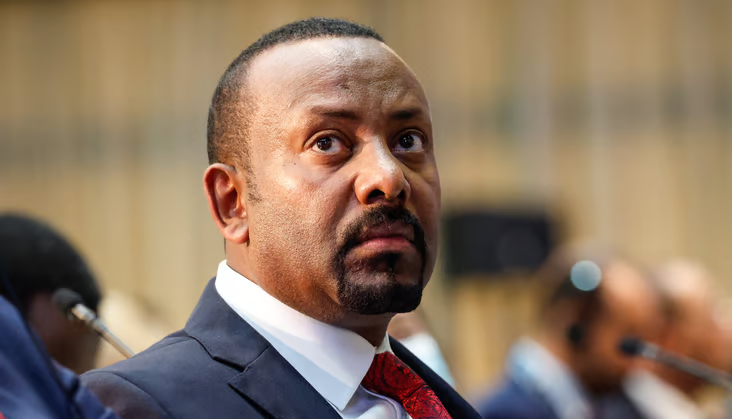
Prime Minister of Ethiopia Abiy Ahmed at the 6th UN Environment Assembly in Gigiri, Nairobi, Kenya, on 29 February 2024. (Simon Maina / AFP)
Fears of a new regional standoff grow as Addis Ababa rails against Egypt’s military aid to Somalia.
Ethiopia on Wednesday warned that a new African Union-led mission for Somalia could worsen tensions in volatile East Africa after Egypt said it sent military aid to the conflict-ridden nation.
The new mission, known as AUSSOM, is due to replace an AU peacekeeping force in January that is deployed in Somalia to fight the Al-Shabaab jihadist group.
Volatile Horn of Africa
Addis Ababa warned it was “fraught with dangers” and accused Somalia of colluding with unnamed actors seeking to destabilise the volatile Horn of Africa.
READ MORE Somalia threatens to suspend Ethiopian Airlines over sovereignty spat
The concern came after Egypt – which has long been at odds with Ethiopia – sent military equipment to Somalia in a move likely to escalate tensions between Cairo and Addis Ababa.
“The region is entering into uncharted waters,” Ethiopia’s foreign ministry said in a statement.
“Ethiopia cannot stand idle while other actors are taking measures to destabilise the region,” it said, adding that it was monitoring the developments.
Cairo and Addis Ababa have been at loggerheads for years, trading incendiary words over Ethiopia’s mega-dam project on the Blue Nile, which Egypt says threatens its fragile water security.
Egypt has long viewed the massive $4.2bn Ethiopian Renaissance Dam as an existential threat, as it relies on the Nile for 97% of its water needs.
Protracted negotiations over the dam since 2011 have thus far failed to bring about an agreement between Ethiopia and its downstream neighbours.
Relations between Mogadishu and Addis Ababa also nosedived after Ethiopia in January struck a controversial maritime deal with the breakaway Somali region of Somaliland.
Somaliland independence
Somaliland, a former British protectorate of 4.5 million people, has not had its independence claim recognised by the international community.
Egypt and Somalia have meanwhile drawn closer together and signed a military cooperation agreement this month.
It was not immediately clear what Egypt had sent to Somalia but Somali ambassador to Egypt Ali Abdi on Wednesday lauded the consignment as important.
“It is the first practical step to implement the outcomes of the Egyptian-Somali summit held recently in Cairo between President Hassan Sheikh Mohamud and President Abdel Fattah El-Sisi,” the statement quoted Abdi as saying.
READ MORE Horn of Africa: Ethiopia-Somaliland deal unsettles an already embattled region
He added that Egypt will be the first country to deploy forces to support Somali security after the withdrawal of the current AU force, known as ATMIS, according to a statement published by local media.
ATMIS, which operates with a mandate from the AU but is also mandated by the UN Security Council, is due to fully withdraw and hand over security responsibilities to the Somali army and police by the end of 2024.
The mission comprises troops from Burundi, Djibouti, Ethiopia, Kenya and Uganda.
]]>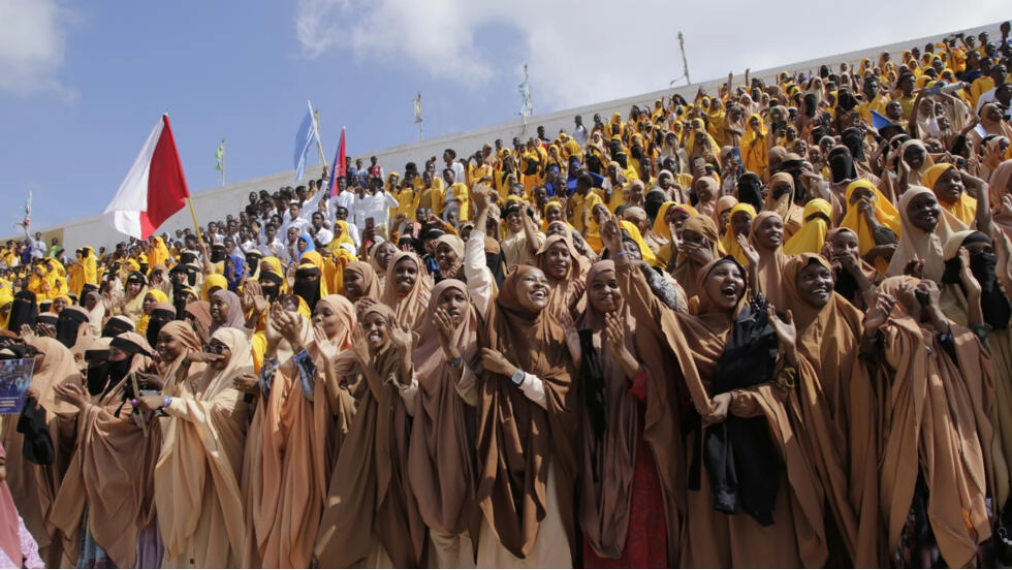
People rally in Mogadishu, Somalia, against an agreement signed between Ethiopia and the breakaway region of Somaliland to give landlocked Ethiopia access to its shoreline. AP – Farah Abdi Warsameh
Turkish foreign minister Hakan Fidan described August’s second round of indirect talks in Ankara between his Ethiopian and Somali counterparts as constructive and positive.
“We were able to focus on the details and technicalities of concrete steps that are important convergences on some major principles and specific modalities”, Fidan said.
“This constitutes notable progress.”
While there was no breakthrough, all sides agreed to meet again in September.
Controversial deal
Ethiopian-Somali tensions have escalated since January, when Ethiopia signed a memorandum of understanding with Somaliland, a breakaway state from Somalia.
Under the agreement, Ethiopia would secure sea access in exchange for recognising Somaliland, a deal condemned by Somalia as an infringement on its territorial integrity.
“Ethiopia needs access to a coastline”, said Dubai-based geopolitical consultant Norman Ricklefs.
“It’s the second-largest country in Africa. It’s a booming economy. And, somehow, that deal needs to be made, but it’s not going to be easy because of the previous deal earlier this year with Somaliland.”
Ricklefs predicts that finding a solution will require considerable diplomatic finesse.
“It’s not going to be easy to convince the Somalis to grant that [Ethiopian demands], feeling that they’re under pressure right now because of the deal that was previously done with Somaliland,” he said.
“But I think Turkey is probably best placed, as they have a very close relationship with both Ethiopia and Somalia.”
Somalia recently threatened to block access to Ethiopian Airlines in the latest bout of diplomatic tensions. Meanwhile, Egypt could reportedly deploy soldiers to Somalia, a move that threatens to further escalate and broaden tensions, given existing Ethiopian-Egyptian conflicts.
Deepening influence
The situation between Somalia and Ethiopia is expected to be discussed during Wednesday’s summit in Turkey, where Egyptian President Sisi and Turkish President Recep Tayyip Erdogan are set to meet.
Africa expert Elem Eyrice-Tepecikoglu from the African studies department of Ankara’s Social Sciences University said Turkey’s historical and deepening economic and military ties with both Somalia and Ethiopia give it an advantageous position in its mediating efforts.
“Somalia has a very important place in Turkey’s Africa policy. Turkey has established its largest embassy in Somalia’s capital, and it also established its largest military training facility, again in Somalia,” said Tepecikoglu.
“But Turkey also has old and established relations with Ethiopia as well. There are several investments of Turkish companies in the country, and Turkey also signed a military cooperation agreement with Ethiopia. Reportedly, Turkish drones were used against the Tigray rebel forces.”
Economic, military stakes
Earlier this year, the Somali parliament ratified a naval agreement with Turkey to protect its territorial waters and a deal to search for hydrocarbons. Turkey is second only to China in investment in Ethiopia, including selling its military-proven drones.
Analysts suggest that there is more than diplomatic prestige at stake for Ankara in resolving Ethiopian-Somali tensions, given the region’s potential and geostrategic importance as a critical world trading route.
“There’s a reason why the Horn of Africa has American military bases and Chinese military bases. The Japanese even have a base in that area. All of them think the Horn of Africa is a pretty significant region for global shipping,” Ricklefs said.
“It’s a region that has not been developed. It has hydrocarbon resources and other resources like agricultural resources that have not been developed and would need networks and infrastructure that a country like Turkey could provide if there was security and stability.”
Ethiopian and Somali talks are set to resume in September. Success would underline Turkey’s growing influence in a region of increasing international competition, while failure could threaten two decades of Turkish investment in the region.
]]>