


| CARVIEW |
Anthropologists and the ‘Depopulation’ Problem September 6, 2016
Posted by Christopher Donohue in Uncategorized.add a comment
A familiar trope in both American and European anthropology was the discussion of the ‘extinction’ of the savage tribes. It was taken as a kind of gospel that while civilized races in the modern world would increase, “savage” and “primitive” races would diminish and decline over time. Of course, there were those who believed that modernity was not beneficial to modern man, but even though who considered modern conditions to be degenerate, also underscored that “savage” tribes were quickly declining. For the emerging social sciences, the true problem in the early years of the 20th century was not the existence of the decline, but its causes.
In the early 20th century, the decline of savage peoples was bound in theories of population generally, which, as with most turn of the century anthropology, has not invited critical commentary. Everyone had a theory concerning the decline of “savages” “primitives” or “natives.” Friedrich…
View original post 2,362 more words
International Society for Intellectual History Paper: Adolphe Quetelet’s Social Mechanics in Turn of the Century American Sociology May 3, 2016
Posted by Christopher Donohue in History of the Human Sciences.Tags: Lester Frank Ward, Rudolf von Jhering, William Blackstone
add a comment
*Digression Begins Here*
One of the most wonderful happenings of research is finding one’s subject in unexpected places. The idea of “social mechanics” is to be found in the philosophy of law of Rudolf von Jhering (22 August 1818 – 17 September 1892). In the United States, Jhering most famous work was in its English translation. Published in 1914, Law as a Means to an End (published in translation in 1914) had the following central arguments. The first was that there was no “natural contract.” This was contrary to the jurisprudence of William Blackstone, which posited (like many others) the existence of an original contract as one of the conditions of modern society. Jhering was reacting against a very established natural law tradition. Conversely, Jhering underscored that law was simply the most convenient organization found by man. Morality and personhood were outside of law. It was not that law was amoral. It was that morality was outside of law. Law had no justification outside that it was convenient and that it provided a social function for society.
International Society for Intellectual History Paper: The Odd Career of Adolphe Quetelet in Early American Social Theory May 2, 2016
Posted by Christopher Donohue in History of the Human Sciences.Tags: Adolphe Quetelet, Auguste Comte, Justus Liebig, Louis Agassi
add a comment
I will have a response to all of my Zilsel friends shortly. It will be titled “Hunting for the Unicorn: Further Thoughts on Science and the Dissenting Sciences”
*Digression Begins Here*
One of my consistent complaints about our understanding of nineteenth century social theory in the United States is that there is little sustained efforts on these topics due to the problem of relevance. My contention was (now some years ago in “The Nineteenth Century Problem“) that our understanding of nineteenth century American intellectual history (as very narrowly defined by the history of ideas, so as to not include the history of social movements or ideologies) was hampered by the issue of relevance. We have a basic problem of knowing so little about nineteenth century social theory that we must resort to boot-strapping mechanisms.
Thus, historians of ideas and historians of science would like to think that they can study anything they’d like. But this is simply not true. I am discussing this since many issues were addressed with my Zilsel friends last week. One was the issue of justification of case studies and of topics for analysis. My respondent (the extremely smart and gracious Volny Fages , who throughout put up with my bad manners) questioned why I justified my attention to the pseudosciences and even my choice of case studies.
For My Zilsel Friends, Gordon Tullock and Public Choice: The Dissenter as Gadfly April 17, 2016
Posted by Christopher Donohue in History of Economic Thought, The Unified Theory of Christopher's Scholarly Interests.Tags: Gordon Tullock, James Buchanan
add a comment
I. Gordon Tullock and Joseph Agassi- A Brief Digression.
In the course of talking with Joseph on the first day of my questioning of him, I mentioned Gordon Tullock. Tullock and Joseph were good friends. Agassi met him where he was at Stanford and Tullock tried to work with Popper. Undeterred by Popper’s inability to work with Tullock, Tullock then went on to be a post-doc at the University of Virginia (though he only had a J.D) while spending most of his later years at George Mason University. Tullock, throughout his writings acknowledged his fondness for Popper, particularly his suspicion of dogma. By dogma, Tullock meant almost all of economics not written by Gordon Tullock. There are many Tullock anecdotes related to me by Agassi, but one which I shared with him was Tullock’s objection to seat-belts. Seat-belts were instituted in the 1970s to protect drivers from death. No, Gordon responded, the way to make drivers safe is to place a knife in the middle of the steering wheel, so that if drivers speed and shop short, they will be impaled instantly. There is also a page of Tullock insults.
For My Zilsel Friends, The Boar in the Vineyard: The Anthropology of Napoleon Chagnon April 17, 2016
Posted by Christopher Donohue in 20th-Century-Science Historiography, History of the Human Sciences, The Unified Theory of Christopher's Scholarly Interests.Tags: E.O. Wilson, Lee Cronk, Napoleon Chagnon, Robin Fox
add a comment
The “boar” of the title refers to Martin Luther and his heresy, referring to the famous bull of Pope Leo X. In the early modern world, the boar stood for the problem of heresy in the faithful church.
I. The “World’s Most Controversial Anthropologist”
Napoleon Chagnon has been christened the “world’s most controversial anthropologist” by the New York Times. Chagnon enjoys the label, it is on his faculty web site. Why is he the world’s most controversial anthropologist? I give two reasons. 1) in a book published in 2000, “Darkness in El Dorado,” he was accused with James Neel, a well-regarded epidemiologist, of exacerbating a measles outbreak in order to test the fitness of tribes of Yanomami in Northern Brazil and Southern Venezuela. These charges, offered by a journalist, were dismissed by the American Anthropological Association. 2) his linking of social status, with reproductive success or of cultural success with biological success. Chagnon argued, as had his adviser and mentor the geneticist and epidemiologist Jim Neel in the 1970s and 1980 (most explicitly in “On Being Headman” in 1980) that those Yanomami villagers who were good at warfare, good at killing had high social status. Aggression and warlike behavior (through mechanisms not really explained) have become social virtues due to their biological benefits. As a result of their high social status, they enjoyed reproductive success. They had more children than villagers less adept at warfare. Aggression persists, moreover, because it is evolutionarily adaptive and it is the result of human beings acting rationally, in the pursuit of their own self-interest as well as those of their kin.
Making Joseph Agassi the Subject of a Scholarly Work Leads to Nothing but Questions February 16, 2016
Posted by Christopher Donohue in Agassi and the 20th century.Tags: Imre Lakatos, Joseph Agassi, Karl Popper, Larry Laudan, Paul Feyerabend
2 comments
I am at the start of a highly interesting venture, writing about an important living philosopher of science, Joseph Agassi, the significance of his ideas and how the development of those ideas informs our understanding of the development of postwar history and philosophy of science. It is a very high-risk (people tell me) venture. I hope it works. This is not something that historians of science (or philosophers of science, sociologists of science) do very much of, in any aspect, as I will describe. There are of course numerous examples of living philosophers writing about living philosophers and living philosophers discussing dead ones. But, our history of science kin don’t really (and apologies to those who do) address the complex heritage of philosophy of science, except to suit very specific purposes. Philosophy of science is usually deployed in order to suit a methodological or theoretical approach. This is very different than writing about the philosophy of science as a historical development. Last, no one has really begun to ask, among this contemporary or just-past generation of philosophers of science, are there any worthy of attention? This is a serious problem, as it is a serious problem for my writing and thinking about Agassi.
I have argued, not explicitly, that Agassi (and his close friends, students and admirers), the development of his ideas and what that development illustrates about the course of post-war Anglo-American philosophy is worthy of a scholarly treatment, but why? I shall begin to address that in this essay. I have earlier discussed how Agassi’s influence is very hard to measure. He is now very well-cited, but does this mean that his influence is at its peak? How plausible is this when philosophy of science (but not the philosophy of the social sciences, to add complication to a complication) today is very different from when Agassi first developed the core of his philosophical research program.
Herbert Spencer on Instinct and Intelligence: The Background of the “Cambridge Mind” January 3, 2016
Posted by Christopher Donohue in Uncategorized.add a comment
In this post for the Grote Club, I reexamine Herbert Spencer’s discussion of a fundamental dispute in early psychology and intellectual history: the degree of difference between instinct and intelligence.
Simon Cook previously described the novel account of the human mind which emerged before the First World War- the Cambridge Mind. He considers the development of this conception of brain and behavior to be a critical moment in the early history of the social sciences in Britain, informing the views of both Alfred Marshall and W.H.R. Rivers, but to very different effects. From my vantage point of American intellectual history and history of science, I find a number elements of “the Cambridge Mind” interesting.
View original post 1,815 more words
Alexander M. Carr-Saunders and the “Cambridge Mind” (Part 1) December 2, 2015
Posted by Christopher Donohue in Uncategorized.add a comment
In this post I begin to tie one of the central concerns of the Grote Club, the concept of instinct and the role of evolution in human social behavior key to Simon Cook’s “Cambridge Mind” to one of the central texts of demography and population science.
Alexander Carr-Saunders (1886 to 1966) has been the topic of numerous posts at EWP. He was Director of the London School of Economics from 1937 to 1956, initially reading zoology. Carr-Saunders studied bio-metrics under Karl Pearson, was involved in the Eugenics Education Society as its Secretary, and in 1922 published, The Population Problem (PP). PP is among the most dense of texts and does not make for easy reading, particularly for contemporary readers. Nor does it really engender feelings of worthiness among historians of the 20th century social and behavioral sciences as it is (among other things) an account of the social evolution of primitive and civil peoples (or as Simon has pointed out in many other contexts- Carr-Saunders narrates in a text on quantity and quality the historical transition from races and peoples to nations, blending many, many approaches and disciplinary tools.
In this essay, I will…
View original post 1,544 more words
Joseph Agassi’s Philosophy and Influence Resist Simple Answers August 4, 2015
Posted by Christopher Donohue in Agassi and the 20th century, The Unified Theory of Christopher's Scholarly Interests.Tags: Ernest Gellner, Imre Lakatos, Joseph Agassi, Karl Popper, Paul Feyerabend
1 comment so far
I. My errors thus far (I have changed the title, so this portion of the post is somewhat dated.) The discussion of influence is still fresh.
At the start of this series (which by the way I am not concluding for some time, so don’t worry!) I gave a broad outline of Joseph Agassi’s major philosophical tenets. I think my title, “Why Joseph Agassi is No Longer Read as Much,” is unfortunate now. If I would have written the post today, I would resist cleverness at the expense of correctness. I would change the title, but the posts seem to be very popular and the nature of my mistake should be clear for everyone to see. Having stated that Agassi is not as read as much, I revise my statement: This may be true. This may be false. I have no way of knowing.
I think this is an important statement, because historians and philosophers of science are typically very cavalier in assigning importance and influence. I will be equally cavalier and underscore that we historians and philosophers of science have no clear way of doing so. Perhaps we will never have the ability to do so. How does one really measure the influence of a philosopher and historian of science like Agassi?
Recent Comments
- Danielle on Document: The Butt Report (1941)
- Money for science – rndm walk on The Benefits of Technology: Productivity as a Measure
- Money for science — Root Privileges on The Benefits of Technology: Productivity as a Measure
- mb on Jefferson’s Natural, Moral, and Political Philosophy of Race and Slavery
- Christmas Trilogy 2023 Part 1: Whose shoulders? | The Renaissance Mathematicus on Primer: Newton’s Prism Experiments and Theory of Color
Book Promotion
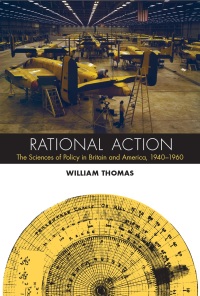
Available now from MIT Press
-
Recent Posts
- Housekeeping
- Jan Golinski on the Personas of Humphry Davy
- Anthropologists and the ‘Depopulation’ Problem
- International Society for Intellectual History Paper: Adolphe Quetelet’s Social Mechanics in Turn of the Century American Sociology
- International Society for Intellectual History Paper: The Odd Career of Adolphe Quetelet in Early American Social Theory
Our Other Blogs
History of Sci-Tech Blogs
- Advances in the History of Psychology
- Asylum Science
- Board of Longitude project blog
- Conciatore
- Darin Hayton
- Digressions & Impressions
- Dispersal of Darwin
- Distillatio
- Double Réfraction
- Drowned World Blog
- Early Modern Experimental Philosophy
- Early Modern Medicine
- European Science and Technology Policy
- Forbidden Histories
- From the Hands of Quacks
- Halley's Log
- Historiens de la Santé
- History of Economics Playground
- History of Geology
- IT History Society Blog
- Jacob Darwin Hamblin
- Leaping Robot Blog
- Oregon State History of Science
- PACHSmörgåsbord
- Remedia Network
- Restricted Data: Nuclear Secrecy Blog
- Roger Launius's Blog
- Shells and Pebbles
- Teleskopos
- The Chirurgeon's Apprentice
- The H Word (The Guardian)
- The Neuro Times
- The Renaissance Mathematicus
- Thick Objects
- True Anomalies
- UCL STS Observatory
- Until Darwin: Science & the Origins of Race
- Whewell's Ghost
Student Blogs
Collection Blogs
- @CHM (Computer History Museum)
- Center for the History of Psychology
- Circulating Now (NLM)
- Cold Spring Harbor Laboratory Archives
- Darwin and Gender
- Darwin and Human Nature
- Leeds HPS Museum
- Longitude Papers blog
- Medical Heritage Library
- Medical Museion
- Natural Selections
- Ptak Science Books
- Sloane Letters Blog
- Stories from the Stores
- The Pauling Blog
- The Repository (Royal Society)
- Towards Dolly
- Wellcome Library
Other Relevant Blogs
- A Sociologist's Commonplace Book
- Airminded: Airpower and British Society
- AmericanScience
- Auxiliary Hypotheses (BJPS)
- Carnet Zilsel
- Evolving Thoughts
- Genotopia
- Heterodoxology
- Making Science Public
- Martin Kusch's Thought for the Day
- Medieval Robots
- Michael Weatherburn's Blogs
- Pasco Phronesis
- Persistent Enlightenment
- Rachel Laudan's blog
- The Bubble Chamber
- The Dayside (Physics Today)
- The Junto (Early America)
- The Vault (Slate)
- Thoughts on Economics
- Through the Looking Glass
- U. S. Intellectual History
Collected Works and Papers
- Archives Bourbaki
- Archives Henri Poincaré
- Bibliothèque numérique Medic@
- Board of Longitude Papers
- Collected Papers of Albert Einstein
- Complete Work of Charles Darwin
- Darwin Correspondence Project
- Early English Books Online
- Encyclopedia of Diderot and d'Alembert
- FAS OTA Reports archive
- FRASER, Federal Reserve Archive
- Hans Sloane Correspondence
- Hartlib Papers
- Herbert A. Simon Collection
- Histoire Naturelle by Buffon
- Linnaean Correspondence
- Makers of Modern Genetics Digital Archive
- Papers of Sir Joseph Banks Online
- R. A. Fisher Digital Archive
- Samuel Goudsmit Papers
- The Chymistry of Isaac Newton
- The Marius Portal
- The Newton Project
- The Robert Boyle Project
- The UCL Bentham Project
- UWDC History of Science & Technology
- Wallace Letters Online
Oral History Collections
- Academy of Achievement: Science & Exploration
- American Institute of Physics collection
- British Library Voices of Science
- Caltech Archives collection
- Charles Babbage Institute Oral Histories
- Cold Spring Harbor collection
- Computer Simulation Archive collection
- Computing at Cornell
- IEEE collections
- Johnson Space Center Oral History Project
- National Institutes of Health collection
- National Library of Medicine collections
- Princeton Mathematics in the 1930s
- Voices of the Manhattan Project
- Web of Stories: Science
Images, Objects, Reference
- Annales (Full Text)
- Emilio Segrè Visual Archives (physics)
- EPA Documerica Project
- Grace's Guide: British Industrial History
- Harvard Collection of Historical Scientific Instruments
- Loria Collection of Mathematical Tables
- Museo Galileo Virtual Museum
- National Library of Scotland maps
- Osher Maps Library
- Philosophical Transactions of the Royal Society
- Royal Society Picture Library
- The Casebooks Project
- Viatimages
- Virtual Laboratory
- Wellcome Images
Biographical Resources
- Array of Contemporary American Physicists
- Biographical Memoirs of the NAS
- Bruce Medalists
- Database of Scientific Illustrators, 1450-1950
- Early Modern Practitioners
- Richard Westfall's Biographical Catalogue of the Scientific Revolution
- Royal Society Sackler Archive Resource
- Virtual Laboratory – People
Relevant Websites
- All @ SEE (The Cardiff Third Wave)
- CBC's "How to Think About Science"
- Commodity Histories
- Digital HPS
- EH.net Encyclopedia (economic history)
- History of Medicine in Oregon
- History of Science in Latin America and the Carribean
- Lens on Leeuwenhoek
- National Security Archive
- Stanford Encyclopedia of Philosophy
- The Galileo Project
- This Month in Physics History
- Transistor History
- U. S. Census Bureau History
- Victorian Web
Contributors
Categories
Archives
Meta
-
Subscribe
Subscribed
Already have a WordPress.com account? Log in now.
 Ether Wave Propaganda
For My Zilsel Friends, The Dissenting Sciences April 13, 2016
Posted by Christopher Donohue in 20th-Century-Science Historiography, Commentary Track, History of Economic Thought, History of the Human Sciences, The Unified Theory of Christopher's Scholarly Interests.Tags: Gordon Tullock, Napoleon Chagnon, Paul Feyerabend, Robin Fox, Thomas Kuhn
1 comment so far
I. Some Opening Thoughts On My Motivations
My friends at Zilsel have invited me to speak on a topic which I have been working on for quite some time, through my various researches in biosocial anthropology and human behavioral ecology, behavior genetics and public choice economics (in the work of Gordon Tullock especially) the “dissenting sciences.” I keep changing my mind on what to call them, having referred to them as “heterodox” and “pariah” sciences.
I am a bit in a muddle and I have decided to write my way out of this confusion. I have submitted two introductions to introduce my case studies. This is a version of those introductions.
Writing on the Pseudosciences
I do this because our field not only suffers from the privacy of criticism but also the privacy of ideas. As Will has written about many times, historians of science are too concerned with only publishing their very polished thoughts. This means that much of the knowledge of the profession is hidden from public view. This behavior is elitist.
And now everyone reading this hopefully has a better sense of my motivations. My thoughts on pseudoscience are a bit of a muddle, I am using this blog as a way to puzzle out this muddle, as a prelude to puzzling out some of my confusions in a talk on Tuesday. I am deliberately not holding back my unpolished thoughts in the hopes that others will do so. (more…)