


| CARVIEW |
Hi Kyra,
Great post! I quite liked the way that you structured your blog post as well as your choice of media to help strengthen you points. I stringly agree that the video you have chosen will be easy and engaging for children to follow along and understand. What I appreciated from reading this post was the way you accounted for the potential short-coming of the video you chose and provided a solution to deal with it. I feel that you have put a lot of consideration in this log post that is clearly represented in the thorough answers you have provided. Fantastic post!
Hi Leslie,
I wanted to start this comment off by saying that I really enjoyed your post! I quite liked how you provided a brief overview about what your groups research topic is and how its able to avoid most of the traditional barriers. Providing an example as to limitations regarding face-to-face teaching definitely helps to make your case for the freedom that your resource will have. While you acknowledge that there is a lot of freedom in your resource I appreciate that you were able to identify a potential barrier that may exist within your resource. After identifying this issue I thought that it was great for you to come up with what some potential solutions to this barrier can be. Great post!
I want to start this review off by saying that I am a big fan of the approach that you all as a group have taken for your resource. I think that the layout of the resource and the presentation is very well done and will be easy enough for your target demographic to be able to follow along without issue. One suggestion I would make considering the demographic you’re targeting, would be to adjust some of the wording used to be more simple language (ie, change cognitive to mental), so that students don’t get confused.
When looking at your outcomes I liked how they were all clearly outlined at the beginning of each module highlighting which ones will be addressed/answered. I think that the material you provide in each module will provide the students with what they need to properly achieve these outcomes. However, I might have missed this or misinterpreted some of the activities from the modules but for the modules with multiple outcomes associated with them I’m not sure if the activities address all of the outlined outcomes (example Module 3). I also noticed that there was no activity for module 2, so a suggestion from me would be to perhaps consider adding an activity to address these outcomes or tie them into the following activity.
The use of different activities at the end of each module I find helps to increase the overall interactivity of your resource. I think that all the activities you’ve chosen are very well laid out however I would suggest adjusting the activity within module 4. I feel that the activity from module 4 may need some rewording as I believe that this could cause students to feel uncomfortable or even stressed to have to present out loud to their peers what has made them stressed as this is a personal topic. My recommendation for this would be to instead of saying something that made them personally stressed, to create a “stressful” scenario and then have others identify why this situation is stressful.
When going through this resource I felt that it was strong inclusivity that would allow for students within your target demographic to be able to complete this resource without barriers to learning. Adding to this I found that the use of technology for this resource was strong and the rationale for using it considering your demographic makes perfect sense. Something that I have to note which I may have missed but when I was going through this resource, I noticed that there was a lack of citations in this resource. I’m not sure if this was intended and if it was I would recommend adding a small section addressing this. Overall, I feel that this is a very solid resource which covers all the necessary bases for this assignment!
]]>Hi Poom,
I wanted to start this off by saying that I’m a big fan of you’re use of media in this blog post. I feel that it really helps to support the points you are making. I also quite liked how you presented what direct description is and your method for describing it. When I was reading your section regarding how direct learning related to your groups learning pod, I appreciated how you included what your group should do in order for this learning environment to better suit your ILR. Great job on this post!
Hi Kirby,
I’m a big fan of the approach you have taken for this weeks blog post, to take two of the prompts and combine them to create one centralized answer. I also quite liked how you structured your post which utilized a smooth transition of points making reading this post very easy and engaging to read. I’m highly in favor of your point regarding how teachers should be able to balance and make use of the three learning approaches interchangeable depending on the setting and who the students are. You’re use of including your personal experience with teaching for the points you’ve made also helped to further your position on the topic. Loved the post and I’m looking forward to reading more!
What kind of interaction would the video require from your students? Does it force them to respond in some way (inherent)?
The students would be able to view these videos throughout our ILR as a way to help increase understanding of the material we are teaching. The desired interaction from these videos would be for the students to draw relation to the material through a question such as “think back to a time where scheduling has impacted your life (ie; airline, healthcare, day-to-day, etc). Were these experiences positive or negative?”. This response is not inherent from the videos unfortunately but will be attached as a follow up addendum to each video/section.
In what way are they likely to respond to the video on their own, e.g. make notes, do an activity, think about the topic (learner-generated)?
From the videos, students will most likely respond on their own through a couple of mediums. The first would be by creating notes on the material. The second would be drawing connections to their own experiences. The third way would be identifying what from the videos can be used to benefit them in their daily lives.
What activity could you suggest that they do, after they have watched the video (designed)? What type of knowledge or skill would that activity help develop? What medium or technology would students use to do the activity?
The main activity that I can think of associating these videos would be to have them do a self reflection regarding how a schedule has affected them at some point in their life and if it was a positive or negative experience. This activity would help for the students to develop a relation to the subject material making it so they are better able to communicate and engage with the ILR. The medium for this activity would be web based where students can write and submit their reflections directly to the figma platform where we host the ILR.
How could the video have been designed to generate more or better activity from viewers or students?
Considering how these videos are rather tailored to specific demographics with some of the nomenclature and jargon used, one of the ways to help engage more activity would be to increase the use of common language so those not specialized in the field can better follow along.
]]>Going into the design of my group’s interactive learning resource, the idea of making it inclusive for all demographics of learners was something we discussed early on. Part of what drove this discussion was from myself being partially color blind. From this after deciding on the direction we wanted to go in for our interactive learning resource we looked to identify which parts could raise potential barriers for atypical learners such as myself. The first part of that we wanted to allow for learners was the capability to complete the learning resource at their own pace, where they won’t be penalized for taking longer than the estimated time to complete. As for learners who suffer from color blindness, we made it so that no one specific color has an intended meaning which will directly impact how a learner interacts with the resource. However, color is still an important concept that we have taken extra attention to as it can be an important part to the learning process for typical learners (NoraNivel US, 2022). But in regards to this, we have selected a color pallet/ design of our resource which will allow for the same level of comprehension for those with color blindness and those without. Other things that we have decided for our interactive learning resource is breaking up each main task into sections that the learners will be able to learn in chunks of material rather than all at once. To also drive engagement, we have incorporated the use of section quizzes which are designed to test the learners understanding of the section material they have just learned. Attached to these quizzes are helpful addendums which help to point where in the interactive learning resource the question comes from so they are able to refresh their memory on the material. These are all current considerations we have taken into account in regards to designing our ILR to be able to incorporate the needs of all learners equally.
Reference:
The power of color in a learning environment. NorvaNivel US. (2022, February 24). Retrieved from https://norvanivel.com/the-power-of-color-in-a-learning-environment/#:~:text=Understanding%20the%20role%20that%20different,success%20in%20the%20learning%20environment
]]>Inquiry-based learning is an approach to create an environment which promotes the role of the student in learning (GradePower Learning, 2019). The characteristics that make up this approach revolves around the students having the opportunity to approach the material rather than being instructed by the teacher on what to do (GradePower Learning, 2019). In addition to this, this approach encourages the foundation that students will learn the material best by doing rather than simply attempting to memorize it (GradePower Learning, 2019). Other factors which make up inquiry-based learning are the use of small group discussions and providing guided learning (GradePower Learning, 2019).
When considering the approach we have taken for my group’s chosen topic, inquiry-based learning does not align with what we have set out to do. The reason that our topic does not align is due to how we designed this to be a self paced learning process which doesn’t have the necessary hands-on portion related to the main characteristic of the inquiry-based approach. In addition to this, while allowing the students to interact with our topic, the idea is more focused on them learning the material by reading and engaging with a quiz at the end of topics.
References:
What is inquiry-based learning (and how is it effective)? GradePower Learning. (2019, May 28). Retrieved June 13, 2022, from https://gradepowerlearning.com/what-is-inquiry-based-learning/
]]>Based on the three styles provided, I feel that my instructing style more closely represents the behaviorist style. The reason that I am a behaviorist is mainly influenced by how my upbringing is closely related to sports and the mentality that the continual practice and repetition of skills/actions is what leads to mastery. The greatest example I have from when I first developed this style stems from my time playing water polo. From this time, I had multiple coaches who while very different people all had the same thing to say about how to grow as a player: Practice, practice, practice. I used to underestimate this statement as it’s hard to see exactly how much you gain without anything to compare it to as it can feel as the practice you do becomes repetitive and meaningless. However, this changes once you’re able to put the practice into action. An example of this is when I played against a team who I felt was completely above me in every degree, there was then a four month span where I went off and just trained and practiced my skills. In this time of just training/practicing I was never sure how much I was actually gaining skill wise, but once I played another game against that particular team I could clearly tell that the time practicing I had put in was paying off. I was no longer lagging behind in skill and had matched their pace if not exceeding some of the players who once overpowered me in every degree. It was from this moment mixed with all my coaches teaching that I truly adopted the behaviorist style for instruction.
Moving forward a couple years, I have long retired from playing water polo/ coordinated sports and have begun to take up rock climbing where I find that I still maintain the behaviorist mentality. Switching from a water to land sport and from team to individual sport had literally made me a “fish out of water” in a sense. I found myself continually falling off the wall and struggling to climb at times. My answer to this was like how my coaches had told me “practice, practice, practice”, recognizing where I am falling and continually working on that part until I am able to surpass the wall I have created for myself. If there comes a time in my life where I take up coaching; be it for whatever sport/activity, I am definitely going to do as my coaches before me and use a behaviorist style of instruction to guide my students to progress further.
]]>When considering the activities we did for topic 3, the ones that helped me to understand online and open learning the most were editing Wikipedia articles and the Visitor and Resident Maps. I found that the most effective activity of these two for me was the editing Wikipedia activity. This is because of a couple of reasons, the first being that it helps to establish connectivism between all users who have contributed to develop the Wikipedia page to what it has become. Another reason why is because Wikipedia is a perfect example of an open and easily accessible source of information for being, if not the most or one of the most well known online education resources. The last main reason why I feel that the Wikipedia activity was the strongest was that it encourages the user to do further research into the topic that they are wanting to contribute to, thus increasing their knowledge not only about the topic but also about the process in finding said information. As for the Visitor and Resident Maps activity, I found this to be effective mainly because it helps the user gain an easy understanding on how their interactions with online resources reflect their online engagement.
Which Activity I Found To Be Disruptive Rather Than Beneficial
Another activity that I found helpful but also disruptive to understanding online and open learning was the Twitter activity. While I found Twitter chat to be helpful and if used in a meaningful manner can produce greater information spread and gain than the other activities can. However, with this said Twitter like all sources of social media are also home to vast amounts of misinformation in addition to the people who strive to spread it. Which, I unfortunately feel makes this activity more of a disruption than a positive gain due to the amount of information that needs to be taken with a grain of salt on the internet.
]]>The ideas of open education that we have been learning about this semester has partially revolved around the concepts of this information being open and where everyone has equitable access to it. However, while these are key components that make up open education, the reality is that open education is not as open or equitable as it implies
Inequities of Open Education
One of the premises of open education that makes it so desirable for many demographics is that it’s supposedly equitable for all users regardless of any barriers that may exist. Some examples of barriers are: financial, levels of education, systemic and even physical. Nonetheless the actuality of equity in open education is limited in its capacity. The reason for this is mainly due to Open education following the trend of technology as outlined by Selwyn and colleagues in 2019. In these trends there are two main areas that inhibit how equitable these services can be (Selwyn et al., 2019). The first is that its design ignores the larger social structures for providing service by only focusing on individualistic needs (Selwyn et al., 2019). The second is that the socio-cultural aspects of technology which has been found to drive modern education are neglected (Selwyn et al., 2019).
Lack of Openness in Open Education
Open is a concept that is generally accepted as a given in open education because it is in its name. But like all things that are delivered online is not true. We live in an age where we desire the things we read and learn to be open for us to access. However, online delivery of information can never truly be open because of barriers that have been put in place such as censorship, bias, and hate are all examples which prevent open education from truly being open (Singh., 2015).
Overview
I strongly believe that open education can never reach true openness and equity but this is solely due to the design for how the internet and technology are designed. With this said I do believe that open education can and will make vast improvements to improve these areas just by looking at the direction that it is going right now.
References:
Selwyn, N., Hillman, T., Eynon, R., Ferreira, G., Knox, J., Macgilchrist, F., & Sancho-Gil, J. M. (2019). What’s next for Ed-Tech? Critical hopes and concerns for the 2020s. Learning, Media and Technology, 1–6. https://edtechuvic.ca/edci339/wp-content/uploads/sites/5/2020/03/What-s-next-for-Ed-Tech-Critical-hopes-and-concerns-for-the-2020s.pdf
singh, sava. (2015). THE FALLACY OF “OPEN.” In Open at the margins: Critical perspectives on open education. essay.
]]>Of the four main learning theories we discussed in class by Bates in 2014, I was unable to decide on which theory best fit my learning style, until we were introduced to connectivism in week 6. Connectivism, as a whole I feel to not only be the best fit for myself but also as the best fit generally when compared to the other theories we have learned about. From having been in a variety of online classes this past year and a bit, I have had the opportunity to experience all five of the learning theories we’ve learned from the different teaching approaches that my professors have taken to deliver online education. While I can see how different people can benefit from the four main learning theories of behaviorism, cognitivism, constructivism, and social-constructivism; I have been able to note that the general class engagement and information retention has been greater in the courses that have used a connectivism approach to how online learning is delivered.
What makes connectivism so effective is when the general understanding about how learning is a chaotic process which is not defined by how an educator transfers knowledge to the learner but rather how the process in which the learner is able to engage with the information is not only understood by the educator but also from the student (Weller, M, 2020, CH.17). Additionally, when the four components of aggregation, relation, creation and sharing is used appropriately by the educator the learners are able to get a stronger and intrinsic understanding of the material they are being presented with.
Though I feel connectivism to be the most effective learning theory in terms of being able to stimulate learning in a broader range of people, it has three main flaws which can seriously hamper a learners ability to retain information. The first flaw is self-directed learning, which refers to the learners being able to be autonomous in their learning (Weller, M, 2020, CH.17). The second one is presence, involving the learner to maintain a connection with the other learners in the class which involves large time consumption and availability (Weller, M, 2020, CH.17). The final flaw involves the learners having a large range of literal competencies to be able to critically assess the information that they find through the large amount of resources which is known as critical literacy (Weller, M, 2020, CH.17).
To conclude, through my experiences with online learning, connectivism, while it has its flaws, has proven to be the strongest learning theory for myself as well as many of my peers in my cohort.
In this week’s topic we discussed what eLearning is as well as the implication that it has in regards to it as a potentially unethical source of learning for students in relation to their privacy Regan & Jesse’s (2018). This is a topic that is often brought up in my major as an area of concern for what exactly is considered as private information since so much information is gathered online nowadays. This is especially relevant today since almost all schools have incorporated some form of online learning into how they deliver learning to students since the beginning of COVID. With this said I strongly believe that there should be measures taken to ensure that all students’ data is protected.
Reasons to Protect Students’ Data
In my opinion, student data should be protected for a number of reasons. These reasons are primarily based to ensure that students are protected but there are also strong reasons for an institution to protect this data. A big reason why I believe that student data needs to be protected is because institutions such as universities and schools all collect various degrees of student information which can range from full name, date of birth, and all the way to current residence. In addition, this affects a students feeling of safety in the learning environment because of the unknown nature of how their information is being used. This ties into anonymity and how it is almost impossible for someone with an online footprint to remain anonymous on the internet due to many websites and social media services (Google, YouTube, Facebook, Instagram, Twitter) that collect your data and sell to affiliate services in order for them to “better know you” and provide you with tailored recommendation based on your online activity. This has led in recent years to large amounts of distrust to emerge between “Users” and institutions that “Collect” data because of the vagueness of how the data is used. This distrust causes a whole myriad of issues and unless handled in advance will take years to rectify.
Benefits to the Institution
In regards to why institutions should strive to protect students data is for a large part to prevent legal backlash from the release of personal information. The unwarranted release or collection of students’ data not only causes distrust but also creates mass amounts of ethical implications and often leads to institutions suffering from millions of dollars of lawsuits. With this in mind, all institutions, especially education which collect a wide variety of data for each students’ needs to outline what data they collect, why they need it, and how it is used if at all. There should also be terms set for students to opt out of some fields of information collection if they are not comfortable sharing certain pieces of information. This in effect would not only help to protect the institution but also help to strengthen the trust that students have in the institution and understanding how their information is stored.
References:
Regan, P. M., & Jesse, J. (2018). Ethical challenges of edtech, Big Data and personalized learning: Twenty-first century student sorting and tracking. Ethics and Information Technology, 21(3), 167–179. https://doi.org/10.1007/s10676-018-9492-2
]]>This weeks topic went over how using games in the classroom can be beneficial to the learning outcomes for students. I find that from personal experience to be true, from playing games of Kahoot, Jeopardy, Bingo, or Drawing I was able to better understand the topic as well as make the learning more enjoyable. From these experiences I can firmly say that gamifying learning material is something that should be incorporated in the classroom to a certain degree.

While I do think that gamifying learning materials are beneficial to a students learning, if its done incorrectly or is to frequently done the learning is instead harmed. I feel that there needs to be a balance between letting students interact with the gamified learning material and how often its used. This is because without balance, what was once an experience different from normal becomes common where the same skills are being used over and over. This can also lead to there being a deficit in new skills being learned as to much time is dedicated to letting students interact with the gamified material.

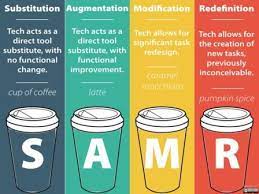
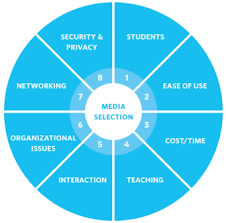
The main differences between the two models SAMR and Sections is that, SAMR focuses on categorizing and evaluating four different levels of technology integration in the classroom. Whereas, SECTIONS revolves around determining the appropriateness of technology in the teaching capacity. Another big difference is how much is covered by each model. I feel that while both models are strong in what they do, that the SECTIONS model is better for its intended purpose as it has a lot more steps involved to properly evaluate technologies appropriateness for the teaching capacity. For example SAMR has four degrees of evaluation: Substitution, Augmentation, Modification, and Redefinition which is further split into Enhancement and Transformation. Which I feel could be broken up into more terms to further specify each point. But as it is now it seems to be more umbrella terms which leave room for error and confusion. I feel that the SECTIONS model is stronger for what its purpose is because its divided into 8 parts which are each individually evaluated which can better prove its integrity for how it grades the appropriateness of tech in the teaching capacity.

Learning Outcomes:
- By the end of this topic you should be able to:
- Understand and describe the 3 main reasons for why there are limited plant-based alternatives at bakeries.
- Understand and communicate the health benefits of plant-based alternatives in baking.
- Identify and describe a variety of plant-based alternatives in baking, including eggs, milk, cream, and butter.
- Plan and integrate plant-based baking knowledge into home baking by converting recipes with appropriate alternatives.

Introduction
We have often found ourselves discussing our shared passion of baking, which inspired us to create a podcast for this assignment. This lesson will demystify plant-based baking and provide practical tools for the audience to incorporate in their own baking at home. Additionally, it will explain what health-benefits plant-based diets provide and why most food retailers do not carry plant-based goods.
Design Processes
The project was initiated with a research phase, however we soon realized we wanted to apply the dual-coding theory into our lesson. Therefore, we decided to make an additional infographic guide, presentation, and interactive quiz to help support the effectiveness of information transfer from the podcast. The applications we used to create the original multimedia elements included Canva, Google Slides, Kahoot, and a Google Chrome extension called Screenio.
Discussion:
As for theories we followed for this project, we focused on the Dual-Code theory mainly as we provide multiple channels of information transfer through audible and visual representation. We also focused on following the Cognitive Load Theory, where we ensured that in the presentation we kept each slide to one topic and had a maximum of 6 objects to chunk the information on each slide.
Infographic
The infographic was designed to be used as a guide for learners to reference throughout the duration of the lesson and to have afterwards. It directly follows the coherence principle by reducing the information to images and symbols. The infographic is a guide that allows learners to make connections through the placement of text and images, it therefore follows the Multimedia and Spatial Contiguity Principles. The Signalling Principle has been applied as each topic is highlighted by images, titles, and dividers.
Presentation
For the presentation we closely followed the principles of modality and multimedia by trying to keep as minimal information on each slide as we could while providing extra narration to further our points. Additionally, our presentation aims to adhere to the segmenting principle through “chunking” the information we are presenting on each slide so it is easier to digest. The animation principle was also applied here as we relied on static images and screens rather than using animations to keep the focus on the information we are presenting.
Kahoot
We incorporated a game of kahoot into our blog post to test the users understanding of the concept we presented in a fun manner. While not enforcing the game-based learning approach we learned about in previous weeks, we still wanted to incorporate a way where the viewer is able to play around and test their understanding of what they just learned through a fun quiz.
Podcast
Part of the intrigue for learning through podcasts is from the casual delivery in the form of a conversation between peers. This aligns with the Personalization Principle as the concepts are casually discussed instead of a formal presentation delivery. An example of this is how the podcast flows with comments and questions from each party, which demonstrates the realistic conversation aspect and expertise in the subject.
Pitfalls
One of the pitfalls that we encountered was not following our initial plan of a podcast since it would not meet a variety of the multimedia principles. This was because only providing the information through an auditory format would hinder the effectiveness of the lesson. Unfortunately, this design choice caused a repetition of a majority of the content. Since the content to meet the learning objectives was displayed through multiple facets, we had to sacrifice meeting the Redundancy Principle.
Conclusion
To develop a lesson optimized to teach learners about the benefits and practical skills for plant-based baking, we applied numerous multimedia theories and principles in all elements. Through these elements we aimed to provide the listeners with an experience which was not only engaging but effective for information retention. A successful participant should be able to use the tools provided to understand what hinders plant-based options from being available and how they can make their own. This can be measured by the the amount of participants who were inspired after to use the replacements or to explore more plant-based foods.
https://create.kahoot.it/share/plant-based-alternatives-game/94a01992-c1e1-488f-a9f4-20a644c71904
References
Britt. (2020, May 28). Vegan Baking 101. The Banana Diaries. https://thebananadiaries.com/vegan-baking-made-easy/.
Plant-based Protein: Baking Ingredients. BAKERpedia. (2021, January 13). https://bakerpedia.com/ingredients/plant-based-protein/.
MD Anderson Cancer Center, & Alexander, H. (2020, November 4). 5 benefits of a plant-based diet. MD Anderson Cancer Center. https://www.mdanderson.org/publications/focused-on-health/5-benefits-of-a-plant-based-diet.h20-1592991.html.
Mayer, R. (Ed.). (2014). The Cambridge Handbook of Multimedia Learning (2nd ed., Cambridge Handbooks in Psychology). Cambridge: Cambridge University Press. doi:10.1017/CBO9781139547369
Mayer, Richard E., and Logan Fiorella. “Principles for Reducing Extraneous Processing in Multimedia Learning: Coherence, Signaling, Redundancy, Spatial Contiguity, and Temporal Contiguity Principles.” The Cambridge Handbook of Multimedia Learning.Ed. Richard E. Mayer. Cambridge: Cambridge UP, 2014. 279-315. Print. Cambridge Handbooks in Psychology.
Yuen, J. (2020). Person Holding Stainless Steel Fork. Unsplash. https://unsplash.com/photos/pHCazCPGvPw.
Hi Ramneet,
Once again you have created another astounding blog post. You’re creative use of media content in combination with you’re writing help to make this post enjoyable and easy to follow. I also quite liked how you were able to reference personal experience with dealing with online school due to COVID-19 and have made me wish some of my professors from other semesters had done similar to your POLI400 professor did.
Hi Tianna,
Your use of real life experiences made reading about this topic easier to read and promotes the relevancy of the topic you’re writing on. I was just wondering, if in addition to what you have already written, you could strengthen the post by adding some media content or images. Other than this, I think this is an absolutely STELLAR post!
Hi Molly,
I’m a big fan of how you laid out all of your information here and “chunked” the information into easy to digest sizes. it made it really easy to follow and understand what you had to say. I also quite liked the image you used to convey your point of where teachers should aim to keep their lessons above of.
Hi Ramneet,
I loved what you had to say about incorporating game-based learning in the classroom and I strongly agree with what you had to say! The way you were able to incorporate personal experience into the subject made reading it so much more relatable and enjoyable to read.
]]>Hi Tianna,
I strongly agree with what you had to say about Jeopardy as an educational tool in the classroom. I could really feel your passion for playing Jeopardy and can tell you have a lot of experience with it. One thing I have to wonder though is, if in addition to the text you provided, it would be helpful to add some images or media content to strengthen your point.
]]>
I believe that the potential for digital storytelling and screencasting is directly related to the progression of technology, where its adoption and use increases at the same rate that technology improves.
In terms of possibilities for how digital storytelling can be incorporated into education, I can see digital storytelling being used as a tool to help provide students with a visual and audible representation for the material they are learning. The use of digital storytelling in this manner would help to adhere to the dual coding theory and improve the amount of information that is retained. An example of this is an infographic designed to incorporate the key points of a topic handed out before an accompanying video which dives into further detail is played would help to solidify the main concepts.
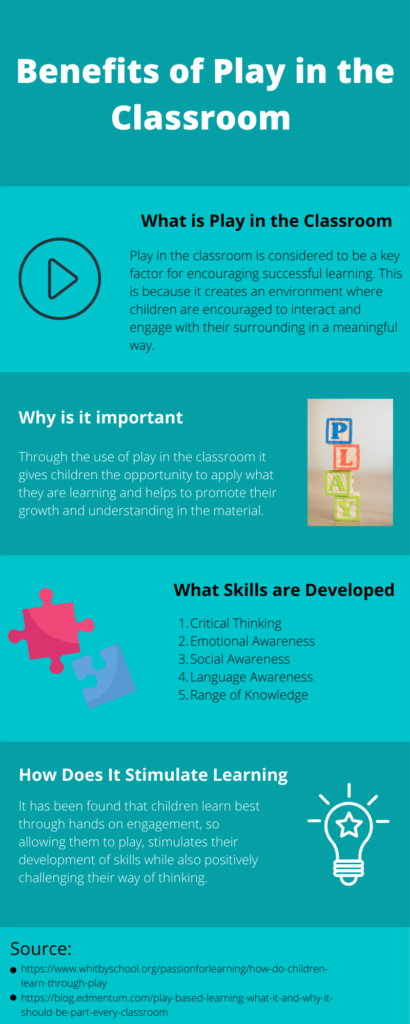
As for possibilities for how screencasting can be used in education is through providing students with a quick reference for how to go about completing or beginning certain class activities. Another possibility is providing a platform for online students to be able to complete presentations where they can not only show what they have completed but also incorporate their own voice in their presentation.
]]>
Before 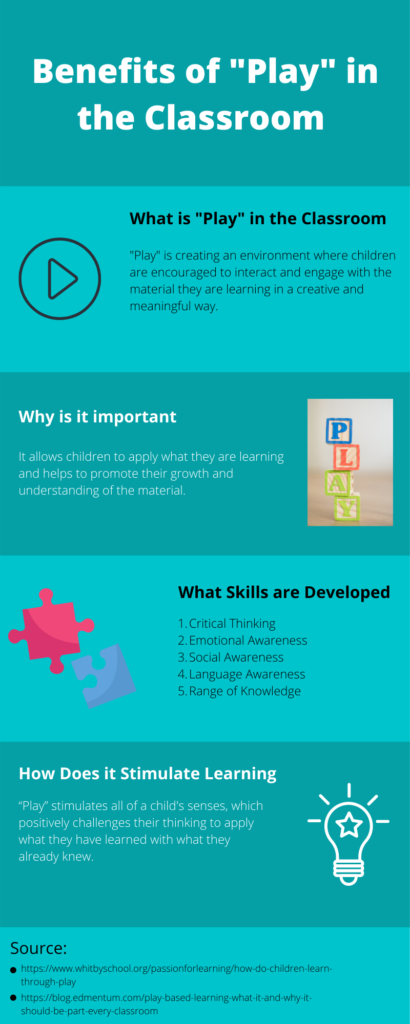
After
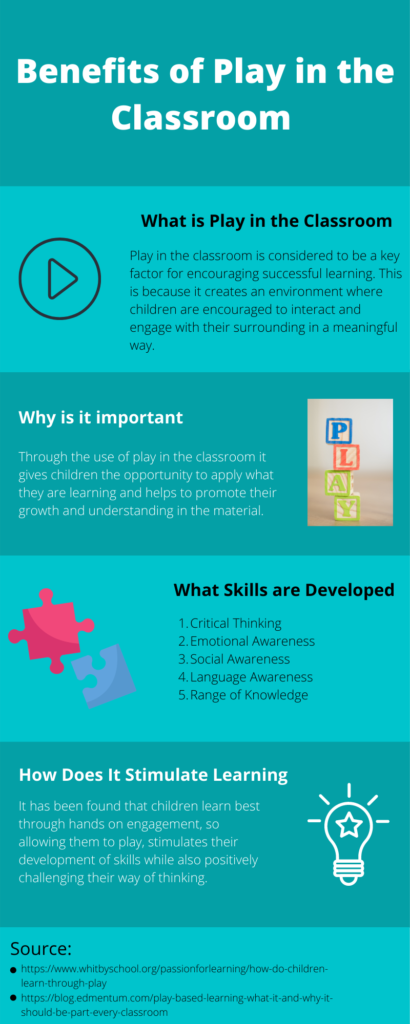
I found that the principles I had overlooked when I developed this infographic for Blog Post #3 originally were the coherence and signaling principles for reducing extraneous load. I decided that in order to adhere to the coherence principle, I took out all extraneous information from the infographic and made sure to only keep the key information for getting the point across. Whereas, for the signaling principle, I highlighted the word “play” with quotations to emphasize its importance to the infographic which I had originally neglected to do for Blog Post #3.
I felt that with just the infographic alone, there were aspects of what I wanted to convey that may not have as much impact as I originally intended. So to ensure that the information is retained, I added narration in the screencast which covered the same key points as the infographic but added more detail to each section. By doing this, I reinforced the dual code theory because the infographic, while not being as detailed as the verbal presentation, still hits on the key points of what I am intending to provide, increasing the amount of information that is retained from viewing the screencast.
References:
Mead, S. (n.d.). How Do Children Learn Through Play? Whitby School. https://www.whitbyschool.org/passionforlearning/how-do-children-learn-through-play.
O’Leary, W. (2021, April 21). Play-Based Learning: What It Is and Why It Should Be a Part of Every Classroom. Edmentum Blog. https://blog.edmentum.com/play-based-learning-what-it-and-why-it-should-be-part-every-classroom.
Mayer, R. (2011, July 4). Cognitive Theory of Multimedia Learning. Cognitive Theory of Multimedia Learning – ETEC 510. https://etec.ctlt.ubc.ca/510wiki/Cognitive_Theory_of_Multimedia_Learning.

Augmented reality has only recently been incorporated in education though its been around since the early 1990s. This is because educators have found that AR tools help to improve student engagement and learning outcomes (Scarlett, 2019). AR tools provide students with the opportunity to experience “Real-life” environments. Here they are encouraged to play leading to greater student interaction and engagement (Scarlett, 2019). The increased engagement has been found to positively influence students skills regarding numeracy, reading and content creation (Scarlett, 2019).

A great example of an AR tool that vastly improved engagement by promoting “play” was the introduction of Pokémon Go back in 2016. Pokémon Go unintentionally became the one of the largest tools for increasing physical activity in the world and has reached tens of millions of people worldwide ignoring the barriers of gender, age or weight that many of the other physical activity tools struggled with (Althoff, White, Horvitz, 2016.). It was found that Pokémon Go was able to inadvertently influence physical activity in a way that other health promotion tools couldn’t because it incorporated “play” to be part of its main functionality (Althoff, White, Horvitz, 2016.). This involved requiring users to move around in order to achieve goals and replenish their items which would help to advance them in game. Looking at Pokémon Go as an example, “play” should be incorporated into any AR education tool to help increase engagement and interaction with students’ overall learning.
References:
Scarlett. (2019, December 18). 6 Benefits and 5 Examples of Augmented Reality in Education. ViewSonic Library. https://www.viewsonic.com/library/education/6-benefits-and-5-examples-of-augmented-reality-in-education/.
Althoff, T., White, R. W., & Horvitz, E. (2016). Influence of Pokémon Go on Physical Activity: Study and Implications. Journal of Medical Internet Research, 18(12). https://doi.org/10.2196/jmir.6759
The Neuromyth that was surprising to learn was a misconception was the concept of left and right brained thinking. This thinking states that an individual is born with either a dominant left or right brain hemisphere and guides how a person interprets information and lives their lives (OECD, n.d.). The category of left brain thinking traditionally has been defined as the detail oriented area of the brain that is analytical and is able to logically understand information that is presented to it (OECD, n.d.). Whereas, the right hemisphere views information holistically and has a more emotional and imaginative approach to how the information is interpreted (OECD, n.d.).
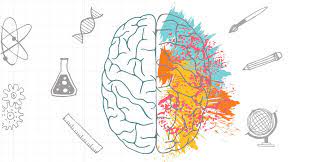
This Neuromyth has been around for a long time and has been represented and taught through all manners of communication to all ages. From my experience, this concept was first introduced to me in Elementary school where the class was divided between left/right brained students based on how we answered the questions we were given. At the time, this information was interesting to learn because I answered as a left brain thinker and it made sense to me why I struggled in art classes but did well in math, while a friend who identified as right brained was the opposite. I only realized later that this concept was flawed and not necessarily the best thing to teach to younger demographics because it acted as an excuse that could stifle the potential that a child has (Briggs, 2016). An example of this is that a child who has a strong love for the arts may be found to be left brained and may lose confidence in what they love because they believe they are not fit to pursue it since their brain is not wired to think that way. But, since this Neuromyth has been found to be false, I believe that it benefits the learning of all ages and no longer discourages or limits potential.
References:
OECD. (n.d.). Neuromyth 6. OECD. https://www.oecd.org/education/ceri/neuromyth6.htm.
Briggs, S. (2016, November 10). How the right brain/left brain paradigm may harm early learning. Saga Briggs – ABC Education – https://education.abc.net.au/newsandarticles/blog/-/b/2424976/how-the-right-brainleft-brain-paradigm-may-harm-early-learning?null. https://education.abc.net.au/newsandarticles/blog/-/b/2424976/how-the-right-brainleft-brain-paradigm-may-harm-early-learning.
]]>- Do you want to be online vs. offline?
- Do you want to use your name (or part thereof) vs. a pseudonym (e.g., West Coast Teacher)?
- Do you want to have your blog public vs. private? (Note, you can set individual blog posts private or password protected or have an entire blog set to private)
- Have you considered whether you are posting within or outside of Canada? This blog on opened.ca is hosted within Canada. That said, any public blog posts can have its content aggregated/curated onto social networks outside of Canada.
First tasks you might explore with your new blog:
- Go into its admin panel found by adding /wp-admin at the end of your blog’s URL
- Add new category or tags to organize your blog posts – found under “Posts” (but do not remove the pre-existing categories or sub-categories). If you would like to add more course categories, please do so (e.g., add EDCI 306A with no space for Music Ed, etc.)
- See if your blog posts are appearing on the course website (you must have the course categories assigned to a post first and have provided your instructor with your blog URL)
- Add pages
- Embed images or set featured images and embed video in blog posts and pages (can be your own media or that found on the internet, but consider free or creative commons licensed works)
- Under Appearance,
- Select your preferred website theme and customize to your preferences (New title, etc.)
- Customize menus & navigation
- Use widgets to customize blog content and features
- Delete this starter post (or switch it to draft status if you want to keep for reference)
Do consider creating categories for each course that you take should you wish to document your learning (or from professional learning activities outside of formal courses). Keep note, however, that you may wish to use the course topic as the category as opposed to the course number as those outside of your program would not be familiar with the number (e.g., we use “Multimedia Learning” instead of “edci337).
Lastly, as always, be aware of the FIPPA as it relates to privacy and share only those names/images that you have consent to use or are otherwise public figures. When in doubt, ask us.
]]>