


| CARVIEW |

Lab Mission : Energy-Autonomous Embodied Systems
We innovate novel soft-electronic devices, circuits, and algorithms to sense, understand, and interact with the signals of life and matter embodied deep within organisms, material structures, and environments. To ensure ubiquitous deployment across diverse environments, we treat energy autonomy, resource-aware functionality, and scalable design as core design principles for embodied systems . Our work captures physical dynamics—emerging as sound, chemical, tactile, proprioceptive, force, thermal, and light phenomena with exceptional fidelity. We aim to enable new tools for life sciences and applications in human–computer interaction, IoT, and mobile systems, establishing the engineering foundations for the embodied AI revolution. Our lab nurtures collective well-being across people, nature, and technology—a vision reflected in our name and logo: VAK, short for Vasudhaiva Kutumbakam, an ancient Sanskrit phrase meaning “the world is one family.”
Research Process
We follow a unique interdisciplinary research process, spanning computer science, engineering, materials, and manufacturing—reimagining the computing stack for core design principles of physical embodiment and scalability (e.g., power, cost, usability).
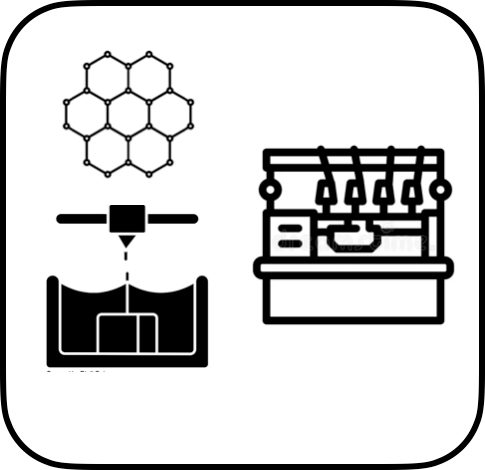
Soft-Electronic Devices
The discovery of embodied material dynamics and the fabrication of soft devices and energy harvesters that are physically tuned to their material properties and environmental conditions.
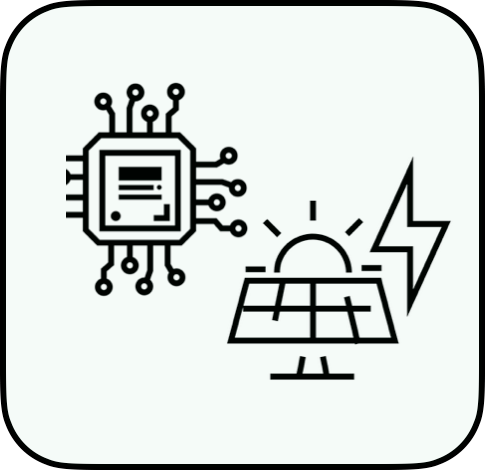
Low-power Systems
Design of low-power/battery-free wireless control circuits that operate by energy harvested from embodied bodies or environments.
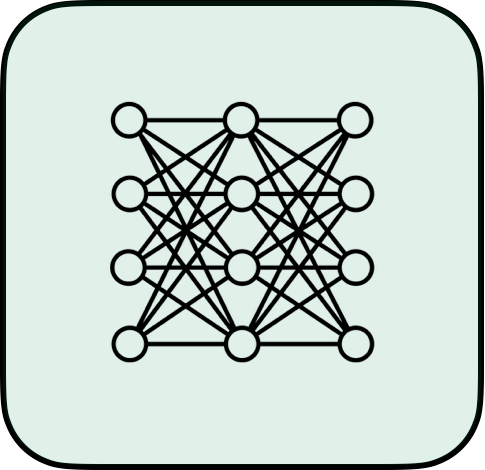
AI/ML
Leverage AI/ML to understand, learn or self-calibrate data sensed through embodied devices fabricated in lab.
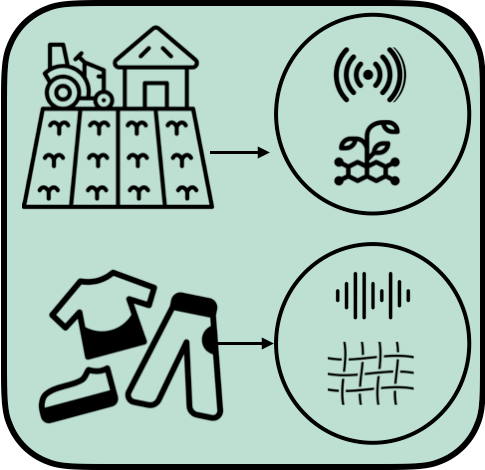
User-Technology Interface
Human- and nature-centered design and deployment for interaction, education, and scalable environmental sensing.
Current Research Themes
In-Field Frugal Plant Sap Monitoring as a Tool for Plant Science, Data-Driven Biology Education, and Agriculture
Living plants can reveal their electrochemical acidity rhythms—the daily oscillations of pH that reflect photosynthesis and stress physiology. By embedding soft electrodes powered by the plant’s own electrolytes, we capture these rhythms continuously and non-destructively. This approach opens new opportunities for scientific discovery in plant metabolism, accessible classroom demonstrations of photosynthesis and stress, and long-term monitoring for sustainable agriculture.
Tags: Electrochemical sensing, OECT, Redox-Flow Cell, Living batteries, Environment Sensing, Battery-free, Plant Science, Physical Education, Experimental Data Collection, Applied Machine Learning, Bio-electronics
Knitted Textile as second-skin that captures human motion, pose, and pressure
Textiles offer a familiar and flexible substrate for sensing the human body. By knitting conductive and dielectric yarns into soft fabrics, we create garments that capture motion, pose, and pressure without adding rigid electronics. These textile-based systems demonstrate how sensing and interaction can be seamlessly integrated into everyday clothing—enabling new forms of assistive technology, rehabilitation, and expressive movement studies.
Tags: Knitting, Electro-spinning, Piezoelectric Yarn, Meta-materials, Capacitance Sensing, Machine Learning, Signal Processing
Everyday Surfaces with Self-powered Embodied Interactivity
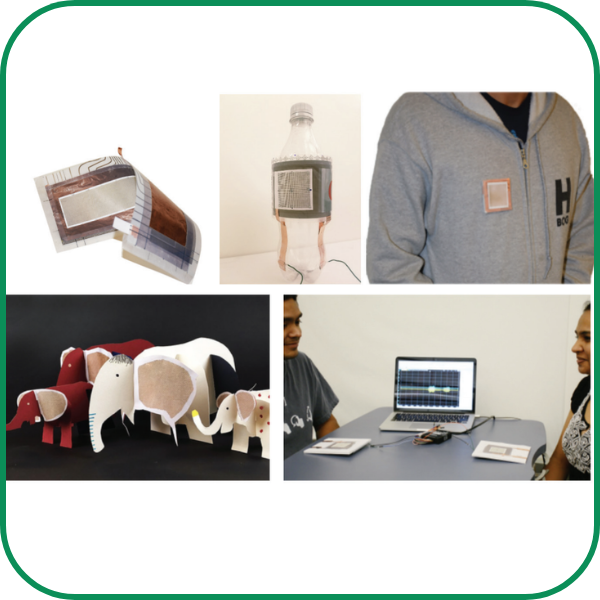
Surfaces we touch daily—such as paper notes, walls, or furniture—can become computationally active when endowed with soft sensors. In our work, interactive sticky notes sensed and responded to vibrations while being powered by human touch, showing how energy harvesting and interaction can be unified in thin, flexible materials. Extending this vision, we explore how embodied systems can augment ordinary surfaces with new interactive capabilities, transforming the way people engage with their environment.
Tags: Triboelectric Nanogenetrator, Backscatter-Communication, Electrochromic Display, Low-Power, Human Computer Interaction, Energy Harvester
Publications
2025
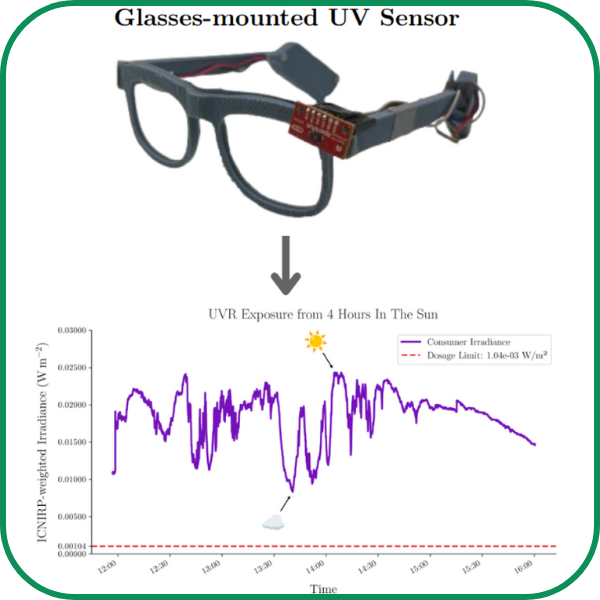
Smart Glasses for Monitoring Eye Damage Risk from UV Exposure
Akash Deo, Sofia Maidman, Jonathan Raport, Zacaria Bahojb Nouri, Matthew Lee, Nivedita Arora
IEEE-EMBS International Conference on Body Sensor Networks (BSN), 2025.
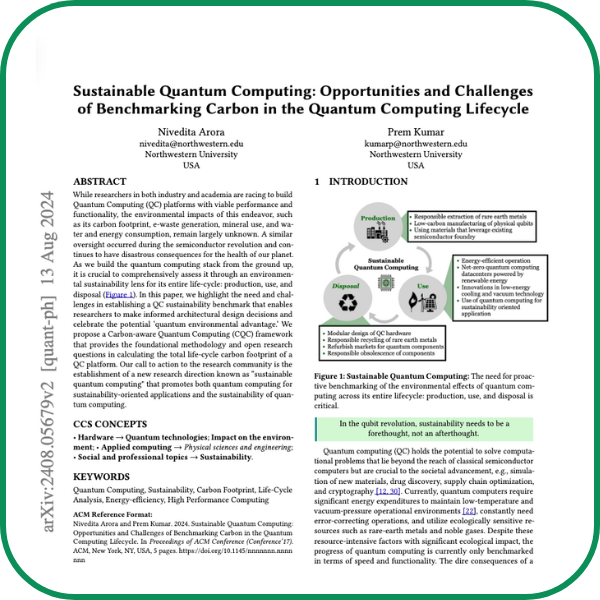
Sustainable Quantum Computing: Opportunities and Challenges of Benchmarking Carbon in the Quantum Computing Lifecycle
Nivedita Arora, Prem Kumar
Communications of the ACM, August 2025.
2024
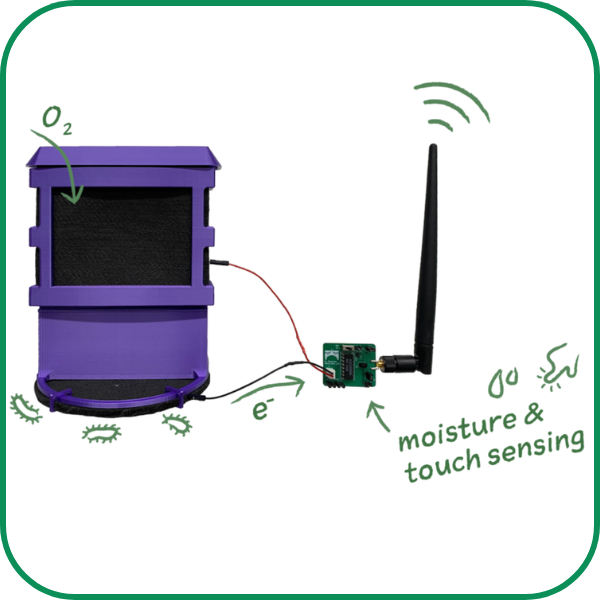
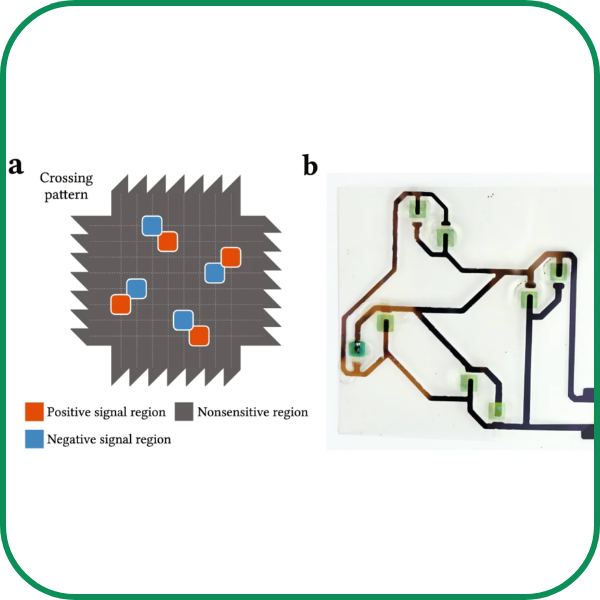
Soil-Powered Computing: The Engineer’s Guide toPractical Soil Microbial Fuel Cell Design.
B. Yen, P. Sahinidis, S. Bernstein, L. Jaliff, G. Marcano, C. Josephson, P. Pannuto, W. Shuai, G. Wells, N. Arora, J. Hester. Proceedings of the ACM Interactive Mobile Wearable Ubiquitous Technology, Vol. 7, No. 4, Article 112. September 2023
Fast Company’s Innovation by Design Competition Honoree
2023
2022
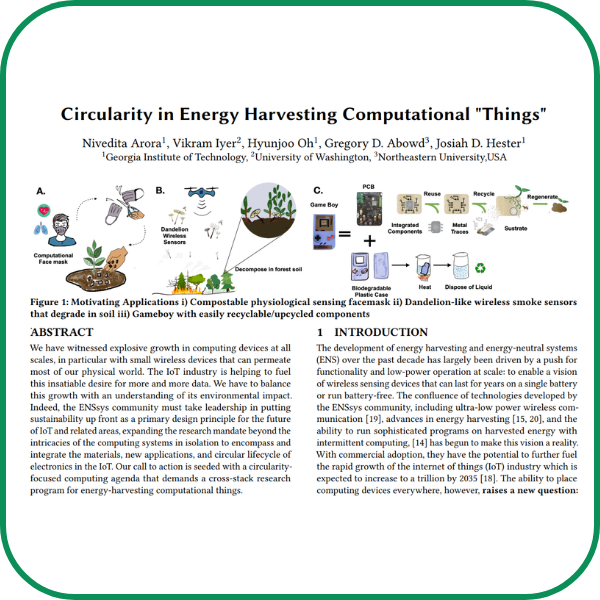
2021
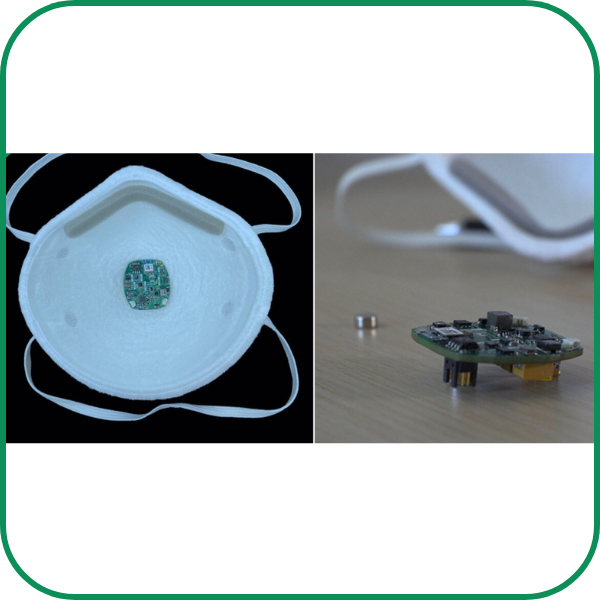
FaceBit: Smart Face Masks Platform.
A. Curtiss, B. Rothrock, A. Bakar, N. Arora, J. Huang, Z. Englhardt, A. Empedrado, C. Wang, S. Ahmed, Y. Zhang, N. Alshurafa, J. Hester. Proceedings of the ACM on Interactive, Mobile, Wearable and Ubiquitous Technologies, November, 2021.
Finalist, Fast Company’s Innovation by Design Competition
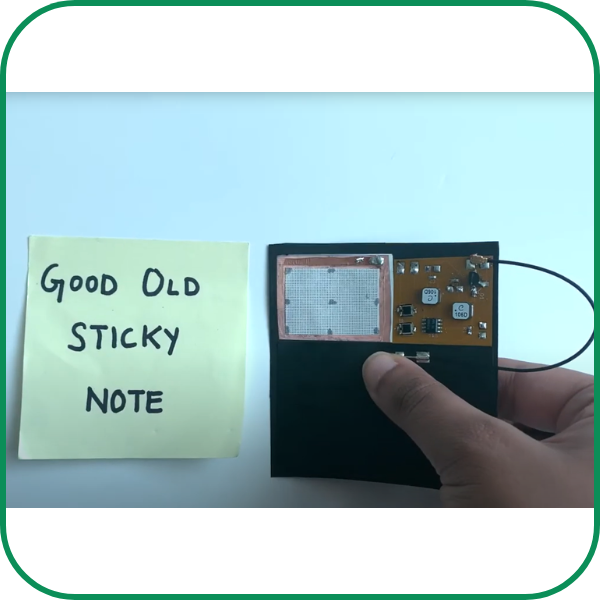
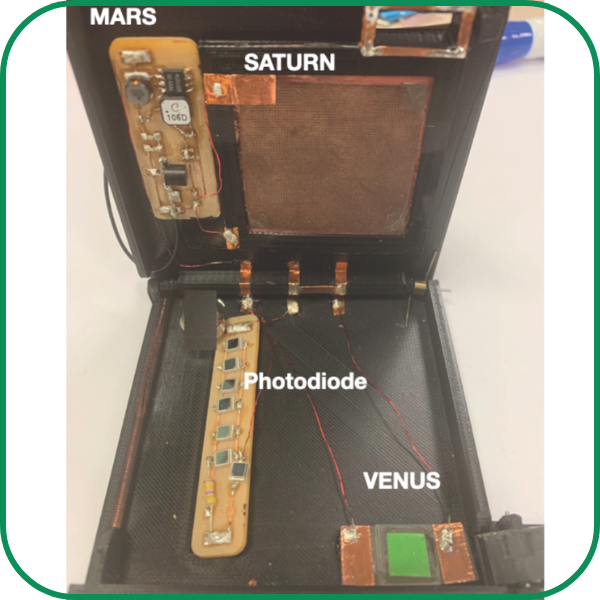
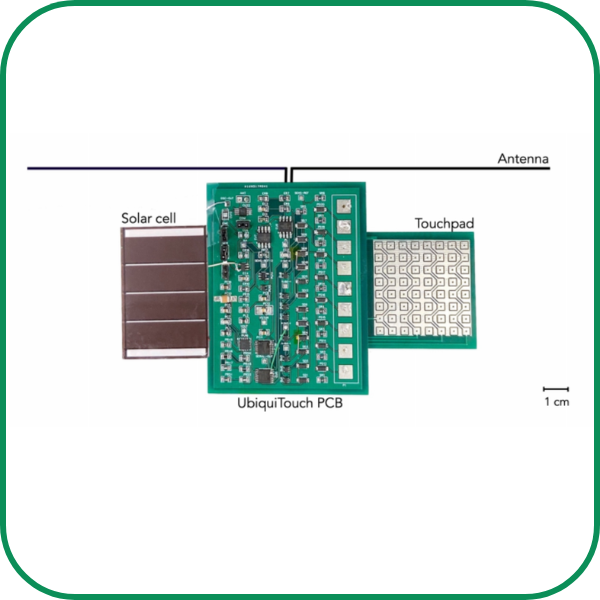
MARS: Nano-Power Battery-free Wireless Interfaces for Touch, Swipe, and Speech Input.
N. Arora, A. Mirzazadeh, I. Moon, C. Ramey, Y. Zhao, D. Rodriguez, G. D. Abowd and T. Starner. Proceedings of the 34th Annual ACM Symposium on User Interface Software and Technology, October 2021.
Honoree, Fast Company’s Innovation by Design Competition
2020
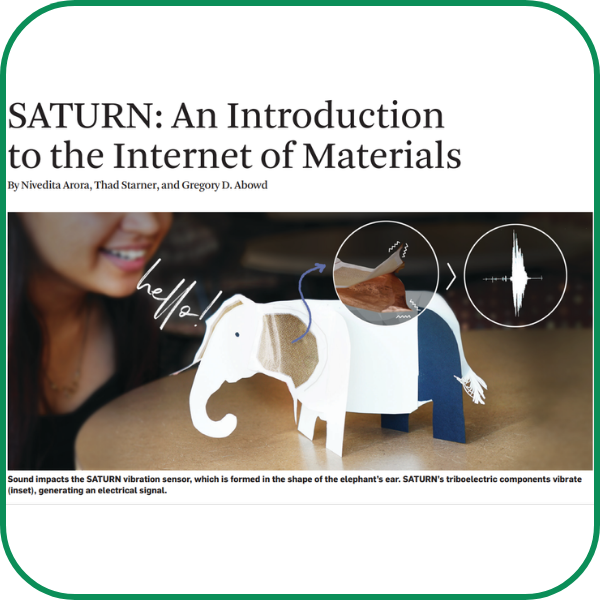
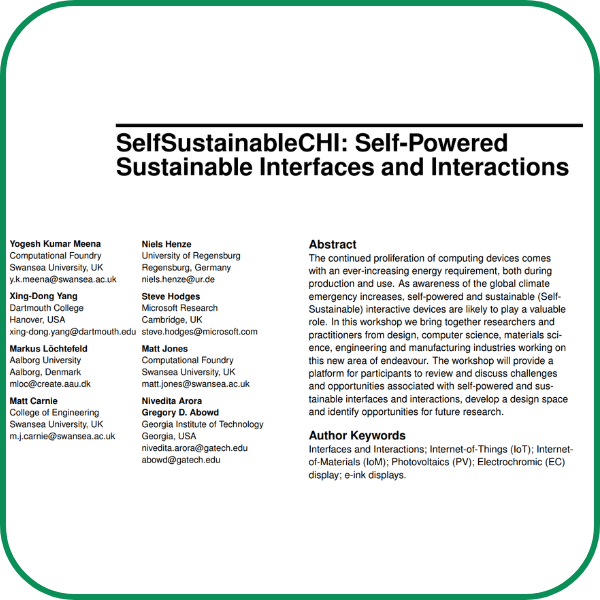
Self-Sustainable CHI: Self-Powered Sustainable Interfaces and Interactions.
Y.K. Meena, N. Arora, X.D. Yang, M. L¨ochtefeld, M. Carnie, N. Henze, S. Hodges, M. Jones, and G.D. Abowd. In Extended Abstracts of the 2020 CHI Conference on Human Factors in Computing Systems, April 2020.
2019
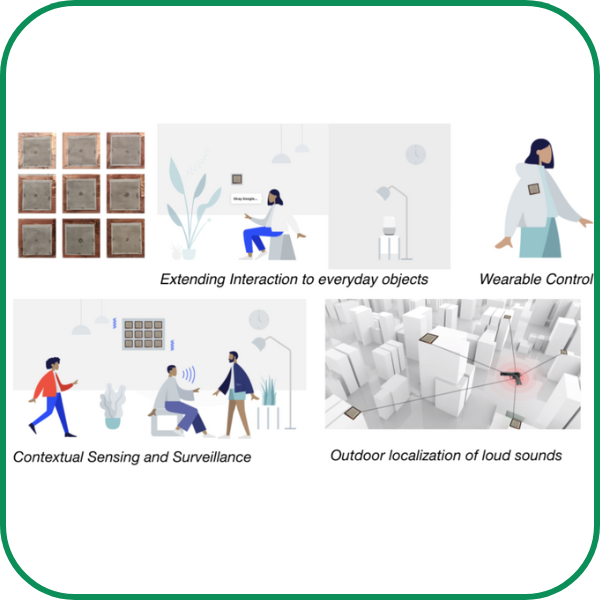
Surface++ : A Scalable and Self-sustainable Wireless Sound Sensing Surface.
N. Arora, Q. Xue, D. Bansal, P. McAughan, R. Bahr, D. Osorio, X. Ma, A. Sample, T. Starner and G. D. Abowd. In Proceedings of the 17th ACM Annual International Conference on Mobile Systems, Applications, and Services, MobiSys (pp. 543-544), June 2019.
Best Poster
2018
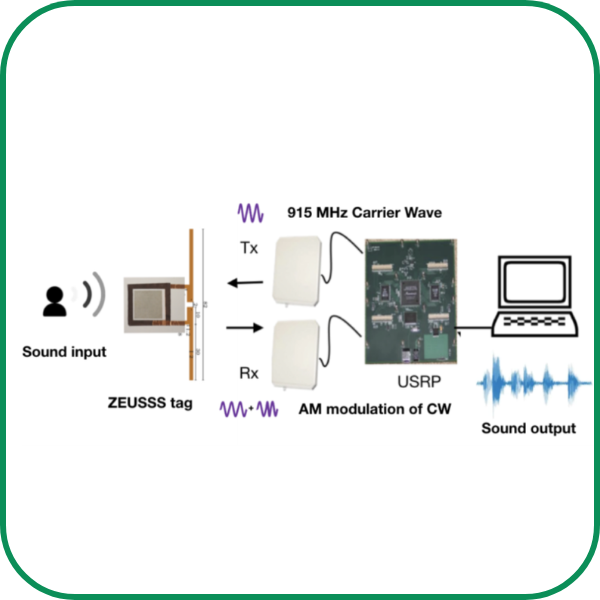
ZEUSSS: Zero Energy Ubiquitous Sound Sensing Surface Leveraging Triboelectric Nanogenerator and Analog Backscatter Communication.
N. Arora, and G. D. Abowd. Adjunct Publication of the 31st Annual ACM Symposium on User Interface Software and Technology, October 2018.
Best Poster People’s Choice Award
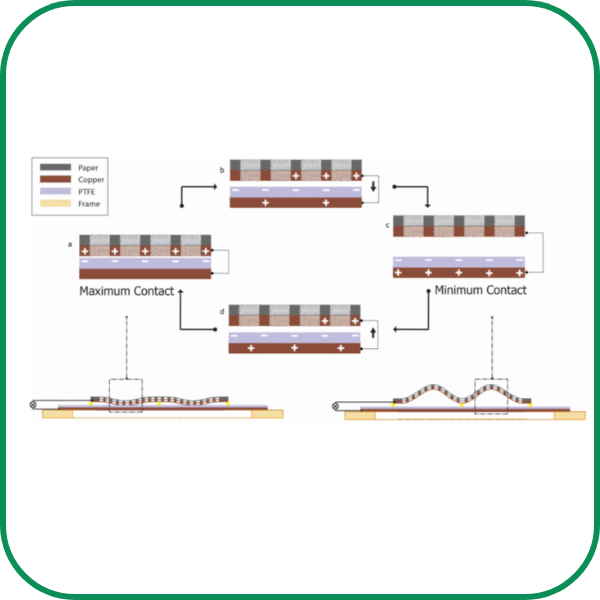
SATURN: A Thin and Flexible Self-Powered Microphone Leveraging Triboelectric Nanogenerator.
N. Arora, S. L. Zhang, F. Shahmiri, D. Osorio, Y.-C. Wang, M. Gupta, Z. Wang, T. Starner, Z. L. Wang, and G. D. Abowd. Proceedings of the ACM on Interactive, Mobile, Wearable and Ubiquitous Technologies (IMWUT), Volume 2 (2), June 2018.
Distinguished Paper (Top 3%)
2016
-
Subscribe
Subscribed
Already have a WordPress.com account? Log in now.
 VAK Embodied System Lab