Explore birds and hotspots near you and wherever you go, all based on the latest sightings from around the world.
| CARVIEW |


The Cornell Lab of Ornithology builds the eBird global platform for communities and partners around the world to advance data-driven science, education, and conservation.

eBird India is a collaborative project managed by Bird Count India
Learn More About Regional Partners
Explore birds and hotspots near you and wherever you go, all based on the latest sightings from around the world.
Join the world's largest birding community. Every sighting matters. Contribute yours.
What's your latest life bird? What bird lists do you care about? eBird tallies them for you and archives your photos and sounds—all for free.
Your sightings contribute to hundreds of conservation decisions and peer-reviewed papers, thousands of student projects, and help inform bird research worldwide.
It’s the start of the new year and January is, of course, peak birdwatching season. The Great Backyard Bird Count is taking place from 13 to 16 Feb, 2026.
Winter is here. While the temperature is pleasant in southern India, it will soon get extremely cold in the northern parts.
November arrives with the promise of more birds and more birding. Warblers, raptors, waterfowl, and a bunch of passerines have been enthralling birders who’ve been reporting them all over the country.
A new publications demonstrates how your eBird observations support targeted conservation efforts across North America. Bird conservation groups used eBird data to select priority species, manage habitat, identify important bird areas, and monitor populations.
eBird in Action is a segment which shares the conservation stories made possible because of your contributions. This edition describes how Northwest Arkansas Land Trust (NWALT) teaches mindfulness and restorative birding with the help of eBird and Merlin.
This January’s the eBirder of the Month Challenge, sponsored by ZEISS, is your chance to sharpen your eBirding skills and start the year strong. Whether you’re new to eBird or a seasoned contributor, this challenge is designed to help you learn something new while maximizing your use of the eBird platform.
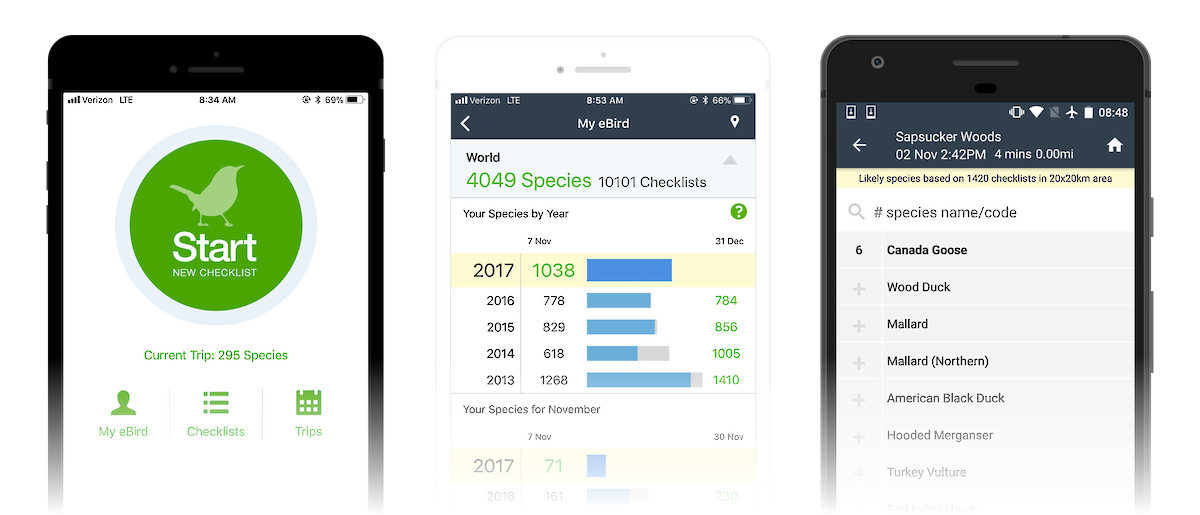
Easy data entry from the field, even when offline. All your lists and stats in your pocket. Wherever you go, eBird is there. Available in 27 languages on iOS and Android, all for free.