


| CARVIEW |

People don’t take trips, trips take people” (John Steinbeck)
If Steinbeck says it, it has to be right, right!
Hello poets from all over the world!
Since this has been a long weekend for us in India (today being republic day here; the day we declared we are a democratic nation) we embarked on a road trip from Delhi to Jaisalmer in Rajasthan.We love going on long road trips. Thankfully my kids enjoy going on these trips as much as we do.
I have realised family trips help us bond better and create some wonderful memories. But more than that we learn about different cultures, customs and cuisines, as well as develop a deeper understanding of history and environment. This helps children pick up new languages and appreciate little things.

So, for this Monday quadrille prompt, as you may have all guessed, I would like you to write a poem of exactly 44 words including the word trip. You can get trippy, get on an airstrip, strip your clothes or stand on a tripod, earn your stripes, serve tripe, paint a triptych…you get the drift, right!

I am sharing excerpts of three poems that I enjoyed and I hope they provide some inspiration, if needed.
My trip by Donald Revell
Of course, the river’s in California,
And the actor is dead now. Nevertheless,
This is the first of many hotels this trip,
And I find myself preferring wars
To smut on the networks,
Even as I find myself reading
The Pisan Cantos for the umpteenth time
Instead of the novel in my bag.
The poet helps me to the question:
Does anything remain of home at home?

I was the Map she used on her Roadtrip by Jonny Angel
She followed my veins like a roadmap,
said I was the trip of her lifetime.
My arms began the journey

Ego Tripping by Nikki Giovanni
I was born in the congo
I walked to the fertile crescent and built
the sphinx
I designed a pyramid so tough that a star
that only glows every one hundred years falls
into the center giving divine perfect light
I am bad

Now go unleash your creativity but remember to contain it in 44 words. Share the link of your poem at Mr.Linky, link back to us, find time to read other poems to see if they have outstripped themselves this time! 
But most of all have fun. You have till Saturday 3 pm to join in. I might be slow in catching up with my reading as I will be tripping all over the sand dunes, but I promise each poem will be read.
We are now already more than midway through January. A month where many people struggle with the aftermath of holidays, maybe spending, drinking or eating too much. Before the next salary comes we may have some time to reflect and maybe even write a little bit longer.

I thought we should revisit a form we had not done together since May 2013 when it was presented to the community by Samuel Peralta. This is the glosa (sometimes gloss or close) that is a poetry that goes back to the Spanish courts of the 14th century. The idea is to use four lines from a famous or well-known poet and expand on the poem keeping it in line with the original poem, and to honor the author. There are other variants of the form but this is the one that seems to be the most common variant for the modern glosa.
In November I wrote one myself for Open Link and also read it for the Live session, and as some of you remember I promised to have it as my next prompt.
Listen to their song
Before the sodden churchyard has been kissed
by daylight skipping in between headstones,
I hear them through the chilling autumn mist,
the muffled footsteps of returning souls.
From All Souls by Kim Russel 2025
We came through mud, through trenches dug
with muscles aching, we came with friends
for foes, through reek of sweat, on gangrene
feet, we marched before we came to rest
inside these walls, we came to sing our hymns
reminding humans all that have been missed:
our unborn children, our families erased;
yet on a dawn like this, you should recall
that soon the wind and sun will meet in tryst
before the sodden churchyard has been kissed
by jackdaws dancing with last of leaves; we leave
cause somewhere underneath the fattened bulbs
of tulips wait to burst in praise of life still had;
while boughs will bow and grass will grow to green
our home will serve to recall of beauty here,
remaining in the poppies sprung from our bones
and we will watch and walk with you a while
to serve and save, reminding you: preserve
what’s left and why we died in pain and groans.
By daylight skipping in between headstones,
you may hear our rattled breath in branches
moving with November winds, telling stories
of unrest, you may hear the calls for actions
you may hear the bells of war, and shadows
telling tales too true to comprehend
In your guts you sense revenge you must resist
our corpses has to serve the cause we set
when dying, we must remember lives denied
we urge you, please remember, we insist.
I hear them through the chilling autumn mist,
through fields and gardens on a restless wind
they’re burdened by the dread of words unread
by forgotten wisdoms, by my ignorance
to reckon what I failed to solve, my hate
my urge for retribution and attack.
while below in the darkness of their holes
they cannot rest, tonight to rise again
and sing for me, for us and even them.
can you hear it, how on threadbare soles
the muffled footsteps of returning souls?
In this case I thought it would be cool to borrow four lines from one of our dVerse poets (who I asked before I wrote the poem), but you may borrow from any poem of your liking.
The form consists of four borrowed lines from your poem (the cabreza) of choice and four stanzas of ten lines where the last line of each stanza is a line from the cabreza. There is no requirement on the meter other than it should not be too different from the borrowed poem. There is only one other requirement and that is that in the glosa line 6 and 9 should rhyme with the borrowed line.
After having writing a few of these poems I have some personal experience that I would like to share.
- Avoid poems with rhyming stanzas. since it may be hard to find enough rhyme words to complete the writing.
- Even though it is only a part of a poem. read it through to get a feeling for the theme not to disrupt it too much.
- Even though it was not typical in the original style I recommend not to hesitate to use enjambment across the stanzas to make the borrowed lines fit better with the flow.
I know that this is quite a challenge for many of you who are used to writing short poems, but every now and then I think it is good to stretch our muscles. If the number of words is a challenge it could be a good idea to select a cabreza with short lines and follow through in your own poem.
Also if you have an old glosa, maybe it is time to do an update and review it to get a semi-new poem.
When you have written your poem, please post it to your blog, and link back to dVerse and the prompt.
It would be nice to also say a few words about the poet you choose to honor with your glosa, but the most important is to read and comment on the other linked poems.
Have fun, and remember it is actually easier to write once you get writing.
Back in the summer, I discovered a wonderful poem that I thought would make a great Poetics prompt, but I decided to save it for a more appropriate time of year – and that time has come. It’s a poem by Frances Horovitz, entitled ‘New Year Snow’:
New Year Snow
For three days we waited,
a bowl of dull quartz for sky.
At night the valley dreamed of snow,
lost Christmas angels with dark-white wings
flailing the hills.
I dreamed a poem, perfect
as the first five-pointed flake
that melted at dawn:
a Janus-time
to peer back at guttering dark days,
trajectories of the spent year.
And then snow fell.
Within an hour, a world immaculate
as January’s new-hung page.
We breathe the radiant air like men new-born.
The children rush before us.
As in a dream of snow
we track through crystal fields
to the green horizon
and the sun’s reflected rose.
I was attracted to this poem because it reminded me of Sarah Connor, our poet friend, whom we lost to cancer last year. They were both British poets, their style of writing is eerily comparable, and they wrote about similar topics and themes. They also both died of cancer.

Frances Horovitz – Alchetron, The Free Social Encyclopedia
Frances Margaret Horovitz was an English poet and broadcaster, who wrote under the surname of her first husband. She was born in London in 1938, studied English and Drama at Bristol University and at the Royal Academy of Dramatic Art in London, and was a reader and presenter for the BBC, known for her careful preparation and quality of delivery.
Frances married two poets: Michael Horovitz in 1964 and Roger Garfitt just before her death in 1983.
In 1971, having just given birth to her son Adam, also a poet, Frances and her family moved to a remote part of the Slad valley in Gloucestershire, which became the inspiration for many of the poems in her third collection Water Over Stone, published in 1980, which included ‘New Year Snow’. She remained in Slad Valley until the end of 1980, after which she and Adam moved to join Roger Garfitt in Sunderland, where she was eventually diagnosed with skin cancer in her left ear. Operations and other treatments failed to stop its spread, and she died in the Royal Marsden hospital at the age of 45.
In ‘New Year Snow’, I love the way Horovitz evokes the feeling of a snowy landscape and sets it firmly in the New Year, particularly in the lines:
At night the valley dreamed of snow,
lost Christmas angels with dark-white wings
flailing the hills
and then zooms in from the wideness of the valley to the ‘first five-pointed flake’ before delivering the snow in the four-line sentence ‘And then snow fell’.
And she uses a simple but effective simile to describe ‘a world immaculate as January’s new-hung page’, evoking a sense of renewal and anticipation of the year ahead.
The inclusive pronoun ‘we’ pulls us into the final scene, has us breathing ‘radiant air like men new-born’ and seeing the children rushing before us, the ‘crystal fields’ and ‘sun’s reflected rose’.

Whether you live in a place where there is lots of snow or where there is never snow, whether you love it or hate it, I would like you to write about snow as you see, feel or imagine it, in any form you wish, using clear imagery as crisp as fresh-fallen snow.
If you are new to dVerse and/or Poetics, here’s how to join in:
- Write a poem in response to the challenge.
- Enter a link directly to your poem and your name by clicking Mr Linky below.
- There you will find links to other poets, and more will join, so check back for their poems.
- Read and comment on other poets’ work – we all come here to have our poems appreciated.
- Please link back to dVerse from your site/blog.

Alejandro Escovedo
photo by Ed Perlstein
Greetings to all Poet Pubsters assembled here today. Lisa here, serving up a prompt, goodies, and liquid refreshments. Today will be Prosery, where you write a prose story instead of a poem, using a given line of poetry or song lyric to inspire you. Word limit is 144 words, not including title, and the given line must be used without adding or taking away any words in between. Punctuation may be changed.
I first heard, “Bury Me,” by Alejandro Escovedo a couple of years ago and it stuck with me. Here is a person doing a personal reckoning on how he is living his life. In a moment of self-reflection, he considers what he would like to see happen if he dies right then or in the near future. Doing a little research on Alejandro and the context of the song within his discography, I learned that in 1992, right around the time he wrote it for his debut album, “Gravity,” he learned that he had Hepatitis C.

After years of treatment, Escovedo, now age 75, is still standing. He brought a revamped version of, “Bury Me” back, on his 2024 album, “Echo Dancing.”
The lyrics make me think of Step 4 in the Alcoholics Anonymous’ 12 steps, where one does a fearless moral inventory.
Now that you know a little bit about the song and the song writer, your mission today, should you choose to accept it, is to write a story of up to 144 words using the line:
Bury me with the lies I told
Bury Me
Alejandro Escovedo

Bury Me
If I should die 'fore I turn 43
Bury me beneath the justice tree
Bury me with the lies I told
Bury me with the rusted sword

If I should die 'fore I turn 46
Lay me next to old Saint Chris
Dress me in my suit of blue
And my favorite picture of you

If I should not see 49
Bury me with my last silver dime
You might get a long distance call
Might tell a lie, might tell it all

If I should die 'fore I turn 51
Bury me with the loaded gun
So I may lose my misery
Please erase my memory

If I should not make my way up there
If I should find myself somewhere
Where it's always cold inside

Written by: Alejandro Escovedo
Album: Gravity
Released: 1992; re-released on Echo Dancing album (2024)
Here’s how to take part in the Prosery Prompt:
• Write a piece of flash fiction or other prose up of up to or exactly 144 words, including the given line from the song lyric.
• Post your Prosery piece on your blog and link back to this post.
• Place the link to your actual post (not your blog url) on the Mister Linky page.
• Don’t forget to check the little box to accept use/privacy policy.
• Please visit other blogs and comment on their posts – reciprocation is the life of this challenge.
Prompt ends on Saturday at 3 p.m.
]]>Please join us for our first LIVE session of 2026 on Saturday January 17th, from 10 to 11 AM EST.
Click on the Google Meet link below to join us with audio and video:
https://meet.google.com/ens-tohx-wjq
Come sit in on our LIVE (video and audio) session. Read aloud a poem of your choosing, join in the informal conversation OR simply sit in and listen. We always have people from around the globe, all speaking in English. In the past we’ve had folks from Sweden, Pakistan, the UK, Kenya, Trinidad Tobago, Australia, India, South Africa, and across the US. We’re a friendly bunch…..the more the merrier! Hope to see you Saturday! Click on the Google Meet link above between 10 and 11 AM EST, Saturday, January 17th.
______________________________________________________________________________________________________________
Lillian here, hosting the pub from sunny San Diego! As we’ve done for the past 15 or so years, we’re escaping Boston’s cold heavy-coat, scarf, mittens, wool hat weather by enjoying California’s “winter”. Temperatures are always in the high 60s to mid-70s …. great sweater weather! And I must say, the ever-present sun sure puts a smile on my face!
Today is Open Link Night (OLN) at the dVerse pub. This means you’re invited to post ONE poem of your choosing on Mr. Linky below. There is no required form, prompt, or length;
OR
you may use today’s OPTIONAL PROMPT which is to write an ekphrastic poem related to the image below. The painting is entitled “Mme Kupka among Verticals” and was painted in 1910-11 by Frantisek Kupka. It is in public domain…however, please do credit the painter at the end of your post, should you choose to use this optional prompt.

AND, I do hope to see you on Saturday at our LIVE session!
New to dVerse? Need to be refreshed on the rules? Here’s what to do:
- Write ONE poem of your choosing (no required form, length, topic) OR ONE ekphrastic poem related to Frantisek Kupka’s painting, shown above.
- Post the ONE poem to your blog AND add the exact URL for your poem to Mr. Linky below.
- REMEMBER to either TAG dVerse in your post, or include a link at the end of your poem that leads readers back to dVerse (https://dversepoets.com).
- If you do not TAG or include a link to dVerse at the end of your post, I will gently remind you to do so. After all, this will increase your readership and comments, and others will find dVerse and hopefully join in the fun. If you do not add the TAG or link after my reminder, I will remove your post from Mr. Linky. I do not want to do that! So please do include the TAG or link!
Join dVerse at our first LIVE session of 2026 (video and audio) on Saturday, January 17th from 10 to 11 AM New York City time (EST).
We always have attendees from around the globe! Read a poem of your own aloud OR come sit in to watch and listen. The more the merrier! A Google Meet link will be provided on the Thursday, January 15th OLN prompt.
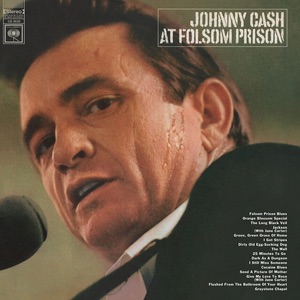
Hello my friends! Welcome to Tuesday Poetics here at dVerse! I am your host, Melissa from Mom With a Blog.
On this day in 1968, Johnny Cash performed and recorded an album at Folsom State Prison in Folsom, California. Johnny Cash at Folsom Prison was the singer’s first live album recorded. Inspired by the Crane Wilbur film Inside the Walls of Folsom Prison, Cash wrote “Folsom Prison Blues,” a song that became popular among inmates there.
After receiving letters from inmates requesting Cash to perform at their prisons, he held his first prison performance at Huntsville State Prison in Huntsville, Texas, in 1957. He performed at other prisons in the years leading up to the Folsom Prison performance.
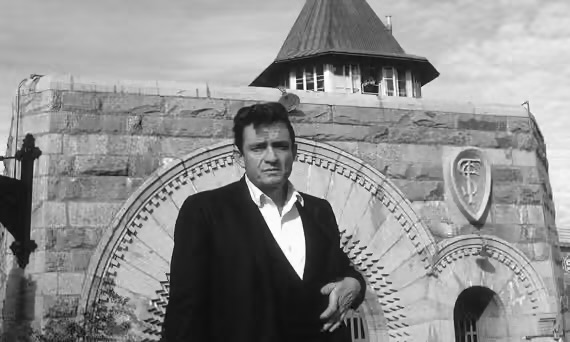
Cash held two performances on January 13, 1968, accompanied by his future wife, June Carter; his father, Ray Cash; the Tennessee Three; Carl Perkins; the Statler Brothers; and Reverend Floyd Gressett, pastor of Avenue Community Church in Ventura, California. The album received rave reviews and went on two win two awards at the 1969 Grammy Awards.
At Folsom Prison has been cited as one of the greatest albums of all time by multiple sources, and in 2003, it was one of fifty recordings chosen by the Library of Congress to be added to the National Recording Registry. Source: https://en.wikipedia.org/wiki/At_Folsom_Prison
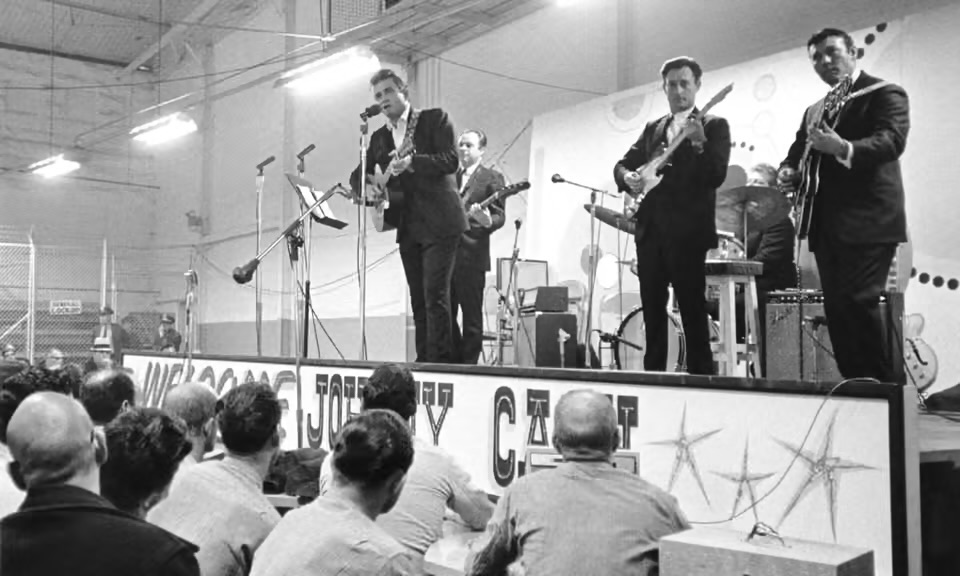
Here are the lyrics to the song, “Folsom Prison Blues.”
I hear the train a-comin’, it's rolling ‘round the bend
And I ain’t seen the sunshine since I don’t know when
I’m stuck in Folsom prison, and time keeps draggin’ on
But that train keeps a-rollin’ on down to San Antone

When I was just a baby, my mama told me, “Son
Always be a good boy, don’t ever play with guns”
But I shot a man in Reno just to watch him die
When I hear that whistle blowin’, I hang my head and cry

I bet there’s rich folks eatin’ in a fancy dining car
They’re probably drinkin’ coffee and smoking big cigars
Well, I know I had it coming, I know I can’t be free
But those people keep a-movin’, and that's what tortures me

Well, if they freed me from this prison, if that railroad train was mine
I bet I’d move it on a little farther down the line
Far from Folsom prison, that’s where I want to stay
And I’d let that lonesome whistle blow my blues away
For today’s Poetics prompt, I’d like you to read the lyrics, listen to the song, and write a poem about whatever it evokes for you. You may write in any form, but I’d like you to keep your poem to twenty lines or less.
If you’re new, here is how to join us:
- Write a poem in response to the prompt.
- Enter your name and a link directly to the post containing your poem into Mr. Linky. Remember to check the box to accept use/privacy policy.
- Read other poets’ work as they enter their links into Mr. Linky. Check back as more will be added.
- Please link back to dVerse from your post.
- Have a wonderful time!
Mr. Linky will remain open until 3pm EST on Thursday, January 15, 2025.
]]>
First, an announcement…
***ANNOUNCEMENT***
Join dVerse at our first LIVE session of 2026 (video and audio) on Saturday, January 17th from 10 to 11 AM New York City time (EST). We always have attendees from around the globe! Read a poem of your own aloud OR come sit in to watch and listen. The more the merrier! A Google Meet link will be provided on the Thursday, January 15th OLN prompt.
Now…
Smile, Wordsmiths! De Jackson (aka WhimsyGizmo) here, and it’s the first Quadrille Monday of the year here at dVerse! The Q is my fave, and today I thought we’d just try starting the year off with a SMILE.
If you’re new to the Q, the rules are simple: just write a poem of exactly 44 words (not counting the title), including one word we provide. And today, I’m providin’ a smile.

Smiley face. Smiled. Smiling. Go the extra (s)mile. Smile, you’re on Candid Camera! Have a Coke and a smile. Smile and the world smiles with you. Crack a smile. Hack a smile. Clack a smile.
You could even sneak a simile in there (shhh, I won’t tell).

Is your smiler sore (or bored) yet? Don’t fret. Ponder these, then write:
– What might “smile” be a collective noun for? If a group of starlings is a murmuration and a group of otters is a romp, what makes up a smile?
– What if a smile was a form of measurement, like a foot? How many (s)miles between where you live, and the North Pole?
– Use one of the smile quotes or smile poem snippets I’ve provided, verbatim, as an epigraph within your poem (just be sure to give ’em credit).

New to the Q? Smile! It’s simple!
Just sling us a poem of precisely 44 words (not counting the title), including some form of the word smile. Post your poem on your own blog, and link up with us using the Mr. Linky below. Then spend awhile grinning your way through the interwebs, as you read and comment on the awesome work of your fellow poets. The Quadrille is here all week to make you smile, so be sure to come back and read (and write) some more!
 Music, Maestro:
https://www.youtube.com/watch?v=sMPy8uKbZ5k&list=RDsMPy8uKbZ5k&start_radio=1
Louis Armstrong
Nat King Cole
The Killers
Tim McGraw
In fact, here’s a whole post about songs about smilin’:
https://discover.hubpages.com/entertainment/Songs-About-Smiling-and-Smiles

Charles Bukowski

/

And since we are at the beginning, putting words again to paper then we are naturally invoking the alphabet as does Emily Yearn’s “Seeding an Alphabet”
“To invent the alef-beit,
decipher the grammar of crows,
read a tangle of bare branches
with vowels of the last leaves
scrawling their jittery speech
on the sky’s pale page.

Choose a beginning.
See what God yields and dirt cedes...”
Similarly Francine Sterle’s “Deciphering the Alphabet” sees the tracks and marks in winter snow decoded as an alphabet of flora and fauna.
“Each tree
was a letter once.
Pagans
spelled out their secrets
by threading
the proper leaves
in proper order—
Birch tree, Heather leaf,
leaf of the Ash.
A language
you could hold in your hand…

Everything that moves
leaves a story. No story
can exist by itself….”
And for today’s MTB prompt we are becoming Abecedarians – that is taking the Latin script alphabet of consonants and vowels and writing an acrostic type poem thus:-
Poetry Rules:
- 26 lines
- each line begins with a letter of the alphabet
- the letters are sequential
Poetry Options:
- can include ‘abecedarian/rius’ or alphabet or any A word as the titular start of the poem!
- can begin from Z and work backwards to A
- can start anywhere within the alphabet but continues on sequentially through all 26
- can be broken into stanzas but not as stand alones
- syllabic count and rhyme is up to you
Hint:
Enjambment will help with the acrostic technique but try and align breaks with natural syllable or beat patterns. For example, break after a word that ends on a strong syllable.
Helpful Examples
- A poem for S
- See also here
Once you have written and posted your poem, according to the guidelines above, do add it to Mr Linky below then go visiting and reading other contributors as that is half the fun of our dVerse gatherings.
Please also TAG dVerse in your post, or include a link at the end of your poem that leads readers back to this dVerse prompt
[N.B. Mr Linky closes Saturday 3 p.m. EST]

Lately, I’ve been drawn to read some of Elizabeth Bishop’s poems and their poetics struck me as something familiar and odd at the same time. One recognizes shades of Wordsworth’s “emotions recollected in tranquility” and Robert Lowell’s “confessional nonsense” (Bishop’s words) and Marianne Moore’s “imaginary gardens with real toads in them.”
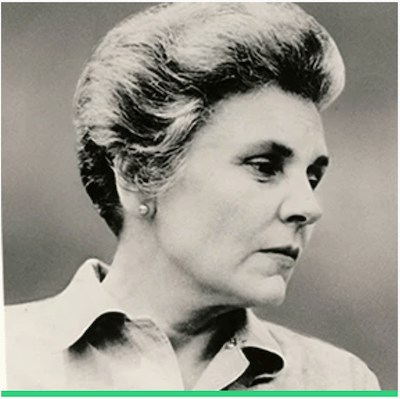
That became more explicable when I read her thoughts on what a poem should contain. She wrote,
The three qualities I admire in the poetry I like best are: Accuracy, Spontaneity, Mystery” (in “Writing Poetry is an Unnatural Act”).
While we’re speaking in threes, three of her most well-known poems, “The Moose,” “The Filling Station,” and “In the Waiting Room,” all avidly marinate in these traits. The latter poem describes an awakening. “The Filling Station” reminded me of William Carlos Williams’ “The Red Wheelbarrow,” unsurprisingly since for Williams, like Bishop, the “mystery” is in the ordinary details. Bishop’s “The Moose” is an encounter with an otherworldly sweetness. These poems dwell on the minutiae only for them to give way to the larger sense of things, painting the canvas with the fine brush of verisimilitude to reveal the unexpected or incongruous.

The Filling Station
by Elizabeth Bishop,The Complete Poems 1927-1979 (Farrar Straus and Giroux, 1983)

Oh, but it is dirty!
—this little filling station,
oil-soaked, oil-permeated
to a disturbing, over-all
black translucency.
Be careful with that match!

Father wears a dirty,
oil-soaked monkey suit
that cuts him under the arms,
and several quick and saucy
and greasy sons assist him
(it’s a family filling station),
all quite thoroughly dirty.

Do they live in the station?
It has a cement porch
behind the pumps, and on it
a set of crushed and grease-
impregnated wickerwork;
on the wicker sofa
a dirty dog, quite comfy.

Some comic books provide
the only note of color—
of certain color. They lie
upon a big dim doily
draping a taboret
(part of the set), beside
a big hirsute begonia.

Why the extraneous plant?
Why the taboret?
Why, oh why, the doily?
(Embroidered in daisy stitch
with marguerites, I think,
and heavy with gray crochet.)

Somebody embroidered the doily.
Somebody waters the plant,
or oils it, maybe. Somebody
arranges the rows of cans
so that they softly say:
esso—so—so—so
to high-strung automobiles.
Somebody loves us all.
For your first poetics challenge of the year, I’d like you to dip your word-brush into Bishop’s poetic inkpot, as it were, consciously incorporating accuracy (detail), spontaneity (immediacy), and mystery (revelation) to write your own original poem. Use the three poems by Bishop mentioned above as your examples. Colored by your own poetic voice, take us there, to that place, that person, that occasion; peel back a layer or two of experience, and show us what you found.
New to dVerse? Here’s how to join in:
* Write a poem in response to the challenge.
* Post your poem on your blog and link back to this post.
* Enter your name and the link to your post by clicking Mr. Linky below (remember to check the little box to accept the use/privacy policy).
* Read, enjoy, and comment on your fellow poets’ work –- there’s so much to derive from reading each other’s writing: new inspiration, new ideas, new friends.
* Mr. Linky will remain open until 3pm EST on Thursday, January 8th. Miss the cutoff? No worries. Save your poem up for Open Link Night next Thursday.

Happy New Year, Poets. Welcome to the first dVerse prompt of 2026—Haibun Monday 1/5/2026! I am your host, Frank Tassone. Today, let’s talk about Epiphany!
A cursory definition of the word epiphany is “a moment of sudden revelation or insight.” In the Christian tradition, the Epiphany is the revelation of the Christ Child to the wider world, symbolized by the visit of the 3 Magi (or kings) as recounted in the Gospel of Matthew. The Catholic Church commemorates this event as the Feast of the Epiphany, held every January 6th, 12 days after Christmas Day.
Nevertheless, one doesn’t need to adhere to Christian dogma to appreciate Epiphany as a moment of sudden clarity or enlightenment. & a new year may open us to the state of mind in which such an epiphany is possible.
Consider how these poets bear witness to Epiphany:
Yvonne Cabalona
Epiphany
New school year, second grade, Ms. Jue’s class: I bring my favorite little Golden Book, Lady and the Tramp, for that morning’s show and tell. After our lessons begin, we are told we can play with those items if our work is finished and returned within a specific amount of time. Our heads bend eagerly toward the assignments in front of us, the classroom quiet except for the occasional scraping of chairs back and forth against the floor—sure signs of classmates seeking rewards after the conclusion of their tasks. Scribbling faster, I pause to watch an unfamiliar little boy walk along side of the display table, look over each prize, and then reach for my book. Indignant, I rush to him, snatch the treasure from his hands and vehemently declare ownership of it. His question and expression of hurt, however, humbles my possessiveness: “But I thought you brought it to share?” Silent, I press the book back into his hands and return to my desk shame-faced.
at the chalkboard,
his small fingers sketching
a dog’s earsCourtesy of Contemporary Haibun, American Haibun and Haiga, 2002, Vol. 3
David Cobb
Down Epiphany Way
In Berlin on a late summer’s day the Epiphanienweg leads to a cemetery called Luisenfriedhof. I am coming to see you, Corporal Gabler. My second visit. After fifty years.
Monuments face each other across the gravel path, so that the acute morning sun, creating a pattern of serried shadows, strikes the blank rears of those on my left, while lighting up the inscribed faces of those on my right.
The place is full of flowers and German widows. The widows stare at me, they tend graves, some of them recording loved ones born in the very year you died. Almost-old-comrade in the enemy’s army, on the last day of the war you had a Russian bullet in the head, in the street outside your home, wearing your civvies. And me now, obligated to bring you the news of your widow, she too lying at peace, though in a corner of some English field.
Weren’t we all three confirmed Romantics? The triangle has to be closed.
The sun is very warm today and, traversing row after row of tombstones, I can’t find you anywhere. As I speak to you, Wo steckst du denn?, I wonder if it’s in order to call you du. We were never properly introduced, we never even spoke. Just I stood beside her at the grave, holding a trowel that had lost its shape, while she laid flowers on you. That day, also in summer.
Rest, we all wished you rest, thinking of peace for ever. Ewige Ruh’. But now, fifty years on, when I ask the gardener with a watering can in his hand where you might be concealed, he shakes his head, tells me ñ and I know he means help—to ask at the office. A plot for Gabler? Maybe his tenure …?
‘Rest in Peace’—
and just nearby a plaque,
‘Lease expired.’I cannot face the office, go to the Lietzenseepark instead, where “the public are requested to respect the local residents’ need of quietness.” A Turkish family are spreading out a picnic, a Chinese woman goes through the unhurried postures of Tai-Chi, weeping willows touch the surface of the lake. It is still beautiful, do you remember the tulips, Liebchen? I think of sitting down in Babylon and weeping, and in that moment a faint shower begins.
a sound I can’t hear
the consciousness of leaves
receiving rain . . .Courtesy of Contemporary Haibun, American Haibun and Haiga, 2002, Vol. 3
Ken Jones
Epiphany
“Where is the wisdom we have lost in knowledge?
Where is the knowledge we have lost in information?”T.S. Eliot – The Rock
The open door of the shabby little Hotel de la Gare. The municipal street washer has just clattered over the cobbles, freshening the air before the sun gets up. On their way to work, the locals drop in for a petit noir or a shot of something stronger. Hands are briefly shaken all round. Even the solitary touriste anglais, dunking his croissant in his bowl of coffee. No one says much. A new and unrepeatable day is on its way.
Morning brightness
sipping
coffee’s bitter edgeListlessly I flip the bible paper pages of the Guide Bleue. Things to see and do. Something significant might be missed. You never know.
Among the natives of the town were Pierre Magnol (1638-1715), who conceived the idea of plant classification; and A J Balard (1802-1876) who discovered bromine in 1826.
The cathedral dates mainly from the 13C (transepts). Some good 14C glass is preserved, together with murals of 1347 in some chapels. The 14C cloister contains some sculptural fragments.
Enough! Enough! I thrust guide book and street plan firmly back into my travelling bag and close the zip. Now a mere flâneur, I stroll round the town gallery again; always the same favourites. Chewing their cud, in their heavy gilt frame, Albert Cuyp’s sunlit cows. After the coach tours have departed, I sneak into the cathedral.
In the cage of stone and glass
the long echo
of a dropped cameraCome the evening, off to a favourite brasserie for a biere blonde and badinage with the barmaid. En route, there is a certain ancient door, this time unlocked.
Chapel of the Black Penitants
a lonely Christ
hangs in his silenceIn the dim light I find a stone seat and sit with him in the cold.
Next day to the one town on the railway that gets scarcely a mention in the guide. As soon as I get off a gritty metallic tang catches my throat. And there’s no tourist office. Only the huge, ugly church of an industrial Christianity. The interior shelters a dozen or more migrant families.
Beneath the stony gaze of saints
homeless
on a mosaic floorOutside, among pollarded plane-trees, a travelling fair is in full swing.
A merry-go-round
of painted horses
up-and-down we goCourtesy of Western Chan Fellowship CIO
How about you? What moments of revelation or insight have you experienced? What enlightenment has an epiphany brought you? Now is your opportunity to bear witness to it! Write a haibun in which you allude to Epiphany, however you understand it.
New to haibun? The form consists of one to a few paragraphs of prose—usually written in the present tense—that evoke an experience and are often non-fictional/autobiographical. They may be preceded or followed by one or more haiku—nature-based, using a seasonal image—that complement without directly repeating what the prose stated.
New to dVerse? Here is what you do:
- Write a haibun that references Epiphany.
- Post it on your personal site/blog.
- Include a link back to dVerse in your post.
- Copy your link onto the Mr. Linky.
- Remember to click the small checkbox about data protection.
- Read and comment on some of your fellow poets’ work.
- Like and leave a comment below if you choose to do so.
- Have fun!