In this retelling of Cinderella, “Ella” is murdered by her stepmother and becomes a ghost inhabiting the house that once belonged to her father. Unfortunately for Ella, even as a house she still can be persecuted by her stepmother and stepsisters, and forced to do all the housework. If you know the fairly tale of Cinderella, you know that eventually there will be a fairy godmother and a Royal Ball with a Prince on display. But, as it says on the cover copy, “You’re halfway right, and all the way wrong.”
This is one of the most inventive fairy tale retellings I’ve ever read. Like Cinderella, Ella spends very little time feeling sorry for herself. Unlike her fairy tale version, Ella is smart and intrepid and beginning to take charge of her own not-life well before the Royal Ball is rumored. The bargains she makes are her own, for her own reasons, which have nothing to do with being rescued by a Prince. But the truly wonderful thing about the book is that the other characters—including the woman-resembling-a-fairy-godmother, the step-trio, and the Prince—also have agency. This is a story that can only be told by a writer who is able to break away from the Prince/Princess narrative and forge a different sort of happy ending.
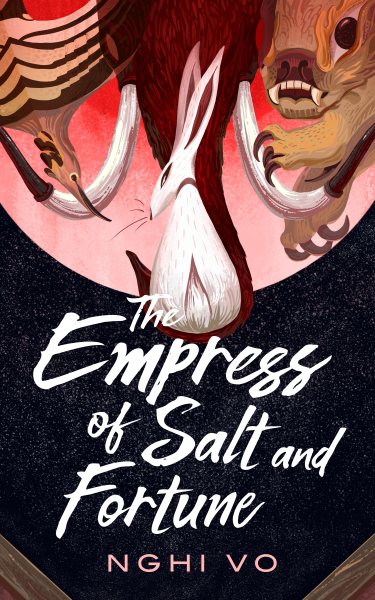
Chih is a Cleric of the Singing Hills, a fading order of non-gendered monks whose duty it is to record history. They travel with Almost Brilliant, a bird-like creature who remembers everything back to her ancestors’ memories of the Xun Dynasty. In The Empress of Salt and Fortune, they arrive at the now-deserted palace on Lake Scarlet, that once was the home in exile of the Empress In-yo. There, they catalog the items they find. They are aided by Rabbit, a handmaiden who may be a ghost.
As each precious artifact is revealed, Rabbit reveals a small gem of a story about the lives of the former inhabitants of the palace. The sum is a history of how the exiled Empress arrived at and left Lake Scarlet. Woven through the history is a wrenching but beautiful understanding of exactly what it might cost for the powerless to come into power. It is a history of sorrow and loss and triumph, told by the things left behind.
According to Cory Doctorow, we are living in the Enshittocene, wherein the once-friendly internet is being turned against us, not by evil attacking AI robots, but by giant tech corporations. I found the various usages of the word “enshittify” rather hilarious, until I realized that Doctorow is correct, and enshittification is actually not very funny. I caught on pretty quickly because bookstores were the first things to be attacked by the new tech giants (see the third chapter: Case Study: Amazon, page 20), and DreamHaven survived partly because we were on-line way before Amazon.
Enshittification is the transformation of the internet from a user-friendly way to connect with others, to an intrusive mess designed to funnel boatloads of money and private information into a few giant tech companies. Doctorow carefully traces how this was done, beginning with secret data collection and hidden tricks of internet pricing. They took advantage the current governmental reluctance to regulate anything, and crafted new laws to prevent competition. Eventually they were able to erode the basic honesty of tech workers, and the usefulness of their products declined. The details of these are very simply (and snarkily) explained in the book, despite many of them being pretty complicated.
The book is subtitled “Why Everything Suddenly Got Worse and What to Do About It.” I’m not sure the worsening is sudden, since problems seem to me to be rooted in Reagan-era deregulation and end-stage capitalism. Doctorow really only deals with the enshittification of the internet—now called the “enshitternet”—which arrived well after Reagan. But, honestly, shit on the internet may totally be able to enshittify the world.
Doctorow confirms what we booksellers always suspected—that Amazon was losing money on every book sale. What we didn’t know was that Amazon had enough money to do this indefinitely or, at least, until it had intentionally put a lot of us out of business. From there, it was able to acquire a currently-legal monopoly on books and then everything else. After all, Amazon is secure enough to sell this book. Though, if you buy an e-copy, you’re only renting access to it, which they can remove any time they want.
Happily, Doctorow spends no words predicting that things will get worse from here, though that may be just because of course it will. He also, in the last section of the book titled “The Cure,” has very few suggestions for individual action. But he does offer some bright spots—a few small-but-worldwide government shifts that he believes will eventually lead to positive changes. Overall Enshittification makes for an informative and surprisingly entertaining read.
This novel is already a New York Times bestseller, because Lev Grossman is also the author of the very popular series “The Magicians.” It has cover blurbs from George RR Martin, Rebecca Yarros, Oprah Daily, and the Wall Street Journal. It is also nominated for a World Fantasy Award. I expected to hate it. I didn’t think the world needed another King Arthur story. Now I think it should win the World Fantasy Award.
The plot does not follow King Arthur himself, not really; but the tragic shadow he casts is large enough to be visible on every page. The hero is Collum of the Out Isles, a seventeen-year-old of no particular parentage who happens to be the best fighter in a tiny village. (I think he is the only character in the novel that Grossman invented.) With no other options, he steals a horse and armor from his abusive guardian, and heads for Camelot, as heroes do. He is just in time to miss the final battle between King Arthur and his son Mordred. He finds himself set upon the final quest of the Round Table, with the few remaining knights of Camelot.
Like Collum, the remnants are a suspect bunch, none of whom really live up to their legendary counterparts. Sir Scipio is a Roman legionnaire lost in time, Sir Palomides the Saracen is a minor prince from Bagdad, Sir Dinidan is a trans man trained under a lake near a convent. They are knights in shining armor, in an age where magic is real and armor shouldn’t have been invented yet. They get drunk and sweaty and piss in unsavory places. Their moments of heroism are often misguided, and always bloody, but nonetheless guided by courage and attempted righteousness. They’re doing their best, like Arthur did.
The legend of King Arthur and his Knights of the Round Table, in all its many versions, is a centuries-long conversation about loyalty, power, and morality. Every generation adds its own message to the story. This retelling has all the tragic resonance of The Once and Future King, mixed with some of the absurdity of Monty Python and the Holy Grail. Grossman’s Arthur is caught between the old magic of Fairy and the new magic of the Christian God, and ultimately abandoned by both. The Bright Sword is a brilliant retelling of his story, made for these troubled times.
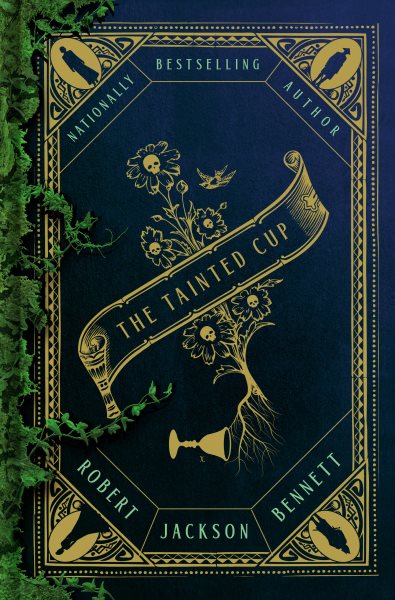
Despite being shortlisted for both the World Fantasy and the Hugo Awards, The Tainted Cup is not really either fantasy or science fiction. Yes, there is an Empire threatened by enormous, destructive horrors that come from the ocean depths every wet season. And there is a detailed, invented civilization which fights these leviathans using advanced biological techniques. But the book is a solid murder mystery. It features an absolutely delightful, neurodiverse detective, and her equally interesting new assistant.
Anagosa Dolabra is a high-ranking Iudex Investigator, sent to a backwater town not far from the sea wall that keeps the leviathans away. There, presumably, her idiosyncratic behaviors will be less intrusive. Her newly assigned assistant, Dinios Kol, doesn’t actually know very much about her. Din just knows that they have been assigned a gruesome murder case, and that, since Ana rarely leaves her sensory-protected rooms, he will be the one doing the actual legwork.
Almost everyone in this world has been augmented—physically or mentally or both—by carefully developed serums, grafts, spores and implants. Despite rigorous biological and bureaucratic oversight, these improvements can have permanent and debilitating side effects. Din doesn’t know how Ana has been augmented, or if all those augments are functioning properly. Din himself has been successfully augmented to become an “engraver,” able to remember absolutely everything he sees and hears.
Din really doesn’t want to remember the scene of his first murder case, clearly some sort of biological event gone monstrously wrong, but he faithfully collects and brings all the details back to Ana. Her brilliant deductions and his sometimes-unwilling attention to detail are the perfect combination for solving such crimes. They have a wonderfully sardonic relationship leading to a growing mutual respect. This serves them well as additional murders are uncovered and the case edges deeper into the politics of the Empire. They must move closer to danger, too. Some of the murders caused a breach in the sea wall, and it’s only a matter of time before a leviathan makes its way through it.
There are hints that there are more secrets waiting for Ana and Din to find them, but The Tainted Cup is a complete novel without cliffhangers. A sequel, A Drop of Corruption, is already available.
Malaysian-Chinese author Yangsze Choo is a New York Times bestselling author, and this book already has many prestigious reviews. It is also now a nominee for the World Fantasy Award and the Mythopoeic Award. Despite being based clearly on the Eastern mythology of hulijing (fox spirits who seek enlightenment in human form), it felt to me more like a mainstream novel. Choo has a simple, eloquent style, with lovely descriptions of the landscape as metaphor, reminiscent of Chinese poetry. The Fox Wife is a comfortable book, slow-moving and dreamy, full of the magic of the ordinary.
Most of the novel is narrated in first-person by Snow (Xue’er in Chinese, Yuki in Japanese), who takes every opportunity to remind the reader that she is a fox. She never takes the form of a fox, though presumably she can. She was present for events in the distant past, but seems to have no real understanding of history. Foxes are mischievous, she tells us, too curious, and impulsive. To me, she seemed childish despite her age.
Though it means stepping off her path to enlightenment, Snow is on a quest for revenge for the death of her child. She is following the trail of a mysterious photographer, made possible by the rarity of photography in 1908 China. She intends to kill him. She says very little about her child, except to reminisce about the horror of her loss. She never mentions the husband she must have had in order to be the fox’s wife.
Happily, there is also an interwoven story, of an old man, possibly dying, named Bao. His story is told in the more traditional third person, present tense. I found him much more interesting. As a child, he and a long lost childhood friend, had an encounter with foxes, a memory now hazy and relegated to imagination. But he can, very reliably, hear lies, which makes him a good detective. He is an otherwise unremarkable person, quiet and somewhat lonely, but more or less content with his life. He is on the trail of a series of disappearances and deaths, that eventually link to the same photographer.
The journeys of Snow and Bao are joined as much by attitude as by the crossing of their paths. Their search for the photographer is almost incidental. Their magic, real as it is, seems unimportant. It is the people they both meet along the way, and the small kindnesses they give and receive, that are important. Snow’s kindness comes from naivety and Bao’s from an unhurried wisdom, but they are both truly seeking connection, and ultimately find it.
Matt Dinniman burst upon the traditional publishing scene last year when Penguin Random House bought his “Dungeon Crawler Carl” series. Dinniman was already a successful author, having self-published the first books in the series, along with another dozen or so popular novels. Very popular, it seems. The most recent book hit number two on the New York Times bestseller list.
Carl is a twenty-seven-year-old, ex-US Coast Guard dude who has just broken up with his girlfriend. He tells his story in first person, and never gives his last name. He becomes “Dungeon Crawler Carl” on page sixteen. His ex-girlfriend’s prize-winning show cat, Princess Donut, has inexplicably jumped out a window into a tree at 2AM on a frigid Seattle night. So Carl is outside trying to rescue her when all the human-built structures in the world collapse, along with their contents, living or inert. This leaves Carl and Donut as the sole Seattle survivors of the end of the world. Since Carl is wearing only boxer shorts, too-small Crocs, and an old leather jacket, they head for the nearest light and warmth, which happens to be the entrance to a massive-multiplayer-RPG-style dungeon.
Unsurprisingly, aliens are involved in the conversion of all of Earth’s resources into a giant dungeon. It is an alien reality TV show projected to the entire universe, sort of like Hunger Games for adults, but without the need (mostly) for the participants to kill other players. This shouldn’t be funny, but it is. Dungeon Crawler Carl is probably the funniest end-of-the-world scenario since Douglas Adams’ Hitchhiker’s Guide to the Galaxy removed Earth to put in an inter-galactic highway. I predict that boxers with leather jackets and pink Crocs will join bathrobes and towels as the best easy cosplay for men.
Carl is a decent, practical guy who spends only a little time agonizing over the fate of the world. He survives by the seat of his non-existent pants, mostly by cleverly using explosives found in the dungeon. He tries to keep the other “crawlers” he encounters alive as well. This includes Donut the cat, who has hilarious abilities (and opinions) of her own, and a bunch of wheelchair-bound nursing home residents for whom “leveling up” doesn’t seem to be an option. It also includes non-player-characters (NPCs) who, turns out, have tragic backstories of their own.
If you want a good, long summer read, you won’t run out of books for a while. Dinniman began the series in 2019, and has already written eight of the anticipated ten books in the series. The first book finishes only Level 2 in a dungeon that, Carl is told, extends to Level 18, but no one has ever made it past Level 13. Dungeon crawl stories tend to get repetitive, so hopefully, other side-plots will develop. There are already hints of a universe-wide political system badly in need of an upgrade. But even without that, Dungeon Crawler Carl is a fun read, full of surprises, and oddly comfortable despite the enormously high body count.
This book is a great example of the new genre called “romantasy.” Books given this label often seem to be standard romance with a random bit of fantasy thoughtlessly thrown in. But The Gentleman and His Vowsmith has excellent world-building and an interesting magical system. The romantic relationship is fraught, and obstructed by both magic and society. This is romance and fantasy at its best. And, for added fun, both the gentleman and his vowsmith are men.
In the tradition of romance, Lord Nicholas Monterris is the somewhat useless and extremely unhappy heir to a dukedom. He has been in love since he was at school with Dashiell sa Vere, who is—also a genre tradition—not a suitable match because of his lack of noble birth. (Their sexuality is a bit less of a problem.) At school, they both received training in the magic art of vowsmithing, the crafting of the intricate and deathly binding contracts that both empower the nobility and keep them in their roles. Dashiell finished his training; Nicholas did not.
All the story needs now is a new obstruction, which comes in the form of an arranged marriage for Nicholas to Lady Leaf Serral. Even this could be weathered, since Lady Leaf is a delightfully practical woman who has no more desire for Nicholas than he does for her. But vowsmithing the magical marriage contract between them requires weeks of locked-room negotiations. These must be attended by both families and their vowsmiths, with dire consequences for withdrawal. And, of course, one of the vowsmiths responsible for crafting this contract is Dashiell sa Vere.
Things get complicated very quickly, when Nicholas and Dashiell find a dead body at the bottom of the stairs on the way back from an ill-advised tryst. An accident, perhaps. Then ghosts begin interrupting meals and the suspicion arises that Lord Monterris, Nicholas’ father, is keeping dire secrets. Dashiell makes his way to Nicholas’ bedroom and, though Lady Leaf cheerfully accepts their relationship, not everyone is happy about it. Tempers get short. Then the murders start.
What follows is a genre-crossing delight of fantasy, romance, and mystery. It’s all there. Was it murder or accident? Why did Nicholas and Dashiell break up? What happened to the Monterris family fortune? Does someone (besides Leaf and Nicholas and maybe Dashiell) want to stop the marriage? And, of course, what will it take for Dashiell and Nicholas to find happiness together?
This is an extremely interesting book, though I must say that I’m not sure I entirely understood it. At the very least, my old-fashioned brain kept mis-gendering the characters. Notes From A Regicide is the story of Etoine Keming, transcribed from his written prison journal by his adoptive son, Griffon. This is interwoven with the story of how Griffon came to be adopted by Etoine and his lover Zaffre. And why, after their deaths, Griffon decided to tell the story from Etoine’s journal.
Etoine was an artist in the now-lost city of Stephensport, and he was unwittingly involved in the revolution which destroyed it. He did, in fact, commit regicide, though that was not why he was imprisoned. His fellow artist and eventual lover, Zaffre, was probably much more actively involved, but her story is unreliable. She supposedly “burned down half of Stephensport,” but her memories are described from a fuzzy distance, as though this might have been more or less accidental.
Etoine and Zaffre are old when they find their son (or maybe Griffon finds them). They have finally arrived at themselves as both artists and revolutionaries. All three are living in a future New York City, where artists and refugees abound, and most of the streets are canals. Griffon is still finding himself, as a trans man whose biological parents were abusive and, ultimately, unworthy of him. Zaffre and Etoine are also trans, but secure enough in their bodies that the way they live can be a sort of guide. However they are both broken in other ways, and seem to still be in mourning for their lost city.
I thought at first that Isaac Fellman meant for revolution to be a metaphor for transitioning. Both involve uncertain change. The Stevensport revolution was passionate and messy, barging with minimal guidance toward an unknown future. But, though it was ultimately successful, it was not clear that everyone, including the revolutionaries, was satisfied with the outcome of the revolution.
The story is told in evocative, beautifully poetic prose, but it is filled with a sense of loss. The city burned, its magical foundation dismantled. The king is dead. Perhaps too many things of value were unintentionally destroyed in the process, or the new way of life is not as much of an improvement as hoped. Fellman does not really answer these questions, telling instead a story of wrenching love and loss and change.
The Tomb of Dragons is the third book in “The Cemeteries of Amalo Trilogy,” which takes place in a world populated by goblins and elves that was introduced in an earlier book called Goblin Emperor. All I remember about Goblin Emperor is that I quite liked it. It was one of the first books I read where kindness was more important than the power to wield either sword or magic.
I liked the Amalo Trilogy for much the same reason. There is a quiet heroism in doing the right thing, over and over, no matter how small or difficult or unpopular it is. I picked up The Tomb of Dragons as soon as I finished The Witness for the Dead and The Grief of Stones. It has been a long time since I’ve read the entirety of a trilogy.
Thara Celehar is a Witness for the Dead. This means that, not only can he hear the last thoughts of the dead by touching them, but also that he has the duty to investigate the death if someone asks him to. He takes all requests with the seriousness and carefulness of his calling as a prelate of his god, Ulis. He tells his story himself, with a lovely self-deprecating honesty, and kindness toward everyone except, possibly, himself.
The story is not exactly a murder mystery, though there are several mysterious murders. Celehar is a lonely man (elf, actually, though whether he is elf or goblin is of so little importance to him that it is barely mentioned) who carries the grief of the deaths he investigates along with his own past sorrows. He follows the threads needed to solve deaths with patience and persistence. He feeds the stray cats on his doorstep. He does not seem aware that he is gathering friends and allies along the way.
I did not have to reread Goblin Emperor in order to understand the trilogy. I did have a bit of a problem with the complexities of the government of Amalo, which is made up of assorted religious and secular bureaucracies, all with multi-syllabic, unfamiliar names. I looked for a map or list of characters, but didn’t find one. Despite this, I had no trouble figuring out who was who or understanding the political implications of events.
However, I intend to proceed immediately to rereading Goblin Emperor. I find that, in these times, I want to spend as much time as possible in this world where elf and goblin are learning to peacefully coexist. It is good to be reminded that small acts of decency, while not necessarily world-changing, still matter.
When Mary Darling’s three children disappear through an open window into the night, leaving no footprints behind in the snow, she has a pretty good idea what happened to them. She had her own childhood adventures, you see. And while she doesn’t know exactly where the imaginary place called Neverland is, nor exactly how to find the ageless boy who calls himself Peter Pan, she does know where she ended up, when she was a girl.
The problem is that she is now a more or less respectable British mother, and women of her status don’t travel half a world away unaccompanied, for any reason. But Mary is willing and eager to do anything for Wendy, Michael and John. When Mary’s Uncle, Dr. John Watson, and his colleague Sherlock Holmes prove to be of very little help, she disguises herself and escapes to a ship headed in the right direction. Watson and Holmes are not far behind. Holmes’ amazing deductive abilities are hilariously not terribly useful.
What follows is a wonderful musing on the toughness required for motherhood, and the lack of innocence inherent in childhood. There are some snide comments about British Imperialism and the rigidity of rational science. But there’s plenty of adventure too. All the Peter Pan things are there—a bunch of displaced Native Americans enacting Peter’s idea of Indians, some decidedly dangerous mermaids, pirates who may actually be normal seamen, a one-handed Captain, and flying with fairy dust.
And sword fights, of course. Who knew that Mary Darling, who spends most of JM Barrie’s Peter Pan presumably sitting tearfully in front of the window, is actually trained in martial arts? And that her granddaughter, Jane, who canonically also went off with Peter Pan, would one day write the true story of Mary Darling and the other children who once were lost.
The Witch Who Trades With Death is the newest fantasy novel by local author and internet sensation C.M. Alongi. It is due to arrive at DreamHaven in March.
The book is about a young woman named Khana who escapes a nasty life as a witch in service to the immortal emperor Yamueto. Not only is she forced to be his concubine; she must also participate in the emperor’s magical workings, which drain life from his enemies and channel it into the formation of terrible, mindless magical creatures. She wishes for a different life, but no witch has ever escaped Yamueto’s clutches, for long anyway. His empire is vast and powerful and ever-expanding.
Most of the magic in the book is based on the use and transfer of “âji,” a life force very similar to Qi (Chi). On the verge of her escape, Khana discovers a remarkably simple addition to the magical system, previously known only to the emperor. She learns that any witch can make deals with Death, trading pieces of their selves for extended life. Using this new, costly magic, Khana is able to make her way out of the empire, to the small mountain town of Pahuuda.
Despite the horrific things she has seen done with magic, and the abuse in Khana’s past, Khana remains oddly innocent. She sets about making a new home with nothing but determination and kindness. She uses her âji to heal, asking nothing in return. She finds people who are supportive and kind, even though they are suspicious of anyone from the empire. She starts to fall in love. Unfortunately, Pahuuda is directly in the path of Yamueto’s next expansion, and war is inevitable.
Like Khana, the book refuses to dwell on the gruesome magic or eventual terrible battles. The book remains upbeat throughout, concentrating on kindnesses between people and the camaraderie of found family. Khana’s past psychological trauma is acknowledged, but overcome fairly easily with the help of new friends. Even the deals with Death carry an innocence and helpfulness, which allows the story to count as a comfort read even though the plot contains rape, war, and trauma.
I chose this book because I don’t think I’ve ever read anything translated from Korean, though I have watched a couple magnificent Korean TV shows. In this case, the translator is Anton Hur. Both the translator and the author are quite good. The story unfolds in crisp, understated prose, with none of the awkwardness I have seen in translations from other languages.
I expected the book to erupt in horrible violence, what with its fiery orange cover, and “blood” in the title. The book is an interweaving of the tales of three unexpected heroes, all of whom come from the conquered country of Arland. Events are clearly leading to conflict with the oppressive Imperial Empire. But the war, it seems, is born more from resignation and determination, rather than hopelessness or anger. It happens in the same introspective, almost-gentle viewpoint with which the protagonists start their journeys.
Loran is a middle-aged swordswoman who, after her husband and daughter are killed by the Empire, has no reason not to give herself to the chained dragon of Arland and declare herself King. She doesn’t actually expect to survive. Cain is a refugee living in the Imperial Capitol. He is an ordinary young man, just getting by, and helping his fellow Arlanders wherever possible. Arienne was born with magic, and has been forcibly removed from her home to attend mandatory magic schooling. What she learns about the fate of people with magic sends her on a daring escape from the Imperial Capitol and into the heart of a rebellion.
This is a story of perseverance in kindness and fairness, despite overwhelming odds. It teaches that perhaps there are some things that must be done, even if they are likely to be met with skepticism or failure. It is oddly hopeful, aided by an ending that turns out fairly well for all three protagonists. I can’t vouch for their ultimate success, however. According to the author’s post-script, Blood of Old Kings is the first book in a trilogy.
Nnedi Okorafor is an accomplished F/SF author who has written several New York Times bestsellers and has won major awards in both America and Africa. Her latest novel is a stand-alone science fiction novel for adults, set mostly in Chicago and Nigeria. Despite its complex themes and ideas, it flows easily, with enough suspense to carry the reader through changing narrators and styles.
The story centers around Zelu, a young Nigerian-American woman who is partially paralyzed after a childhood accident. At the beginning of the novel, her career as a writer is in tatters. Her novel is rejected for the tenth time, and she is fired from her adjunct professor position because of her poor attitude. In shame and depression, she begins writing a science fiction novel about robots. The astonishing success of this novel drives the rest of Okorafor’s book.
Zelu, oddly for a novel’s protagonist, is a fairly unpleasant woman. To be fair, the world around her, including her family, is trying to protect her in ways that she doesn’t want or need to be protected. She also doesn’t want to behave in the ways that either Americans and Africans think a disabled woman ought to behave. The success of her SF novel does not grant her immediate acceptance or happiness, but it does demonstrate her strength and determination. I didn’t have to like her to feel that I understood her and sympathized with her completely.
Distributed between the chapters about Zelu’s career, are two other narratives. One is the successful SF story Zelu writes. Though it is perhaps not actually the best SF novel I’ve ever read, it is insightful and, even though there are battles between opposing factions of robots, surprisingly sweet. There are also chapters relating a journalist’s interviews with Zelu’s friends and family, conducted after “everything that happened.” I’ll leave new readers to find out exactly what it is that happens.
The parallel stories are obviously intertwined and meant to enhance each other. Together they certainly tell a tale about the power of storytelling. I suspect that with rereading and further discussion, this book has more to offer than I was able to take in on my quick initial reading. I’m looking forward to others reading the book and telling me what they found.
This seems to be the first novel by Seattle-based author and Tolkien podcaster, Jared Pechaček. He is also an artist; the odd drawings at the start of each chapter—which look like the illuminations on an ancient manuscript—are all different, and done by the author. It’s an incredible first effort, beautifully written, strangely illustrated and bizarrely wonderful.
The West Passage has the melancholy feel of Mervyn Peake’s Gormenghast, with it’s enormous, ancient halls, empty except for long-forgotten rituals and artifacts. It reminds me a bit of Crowley’s Engine Summer, where things that seem to be bits of old advanced technology are put to odd uses by people who have no idea what they really are. The nameless threat of “the Beast” lurking somewhere is also not a particularly new idea. But this Beast is revealed only in patches of remaining knowledge and seems hardly more dire than the dangers of the decay of a civilization from which entire branches of information have been lost. Put together, the story is utterly unique.
The young people who the story follows are cheerful and plucky, and naively uncaring of the dangers. There is Yarrow (who was Pell until her master died and passed on her name) and Kew (who should have, but somehow didn’t, become Hawthorne when his master, the last Guardian, died). They both grew up in the Grey Tower, where the women of Grey House conduct funerals and the single remaining Guardian trains her apprentice for a threat that seems non-existent.
Yarrow and Kew are teenagers whose masters died untimely, before full knowledge could be imparted to them. The reader has the impression that this is not the first time over the centuries this has happened, and that any knowledge they might have received would still have been incomplete and insufficient. They are sent on separate adventures, largely unaware that they are off on world-saving missions.
They show us a world enclosed by the immense towers of five castles. There are uncounted passages and stairways, chasms filled with garbage and jackals, and chambers the size of cities that house the Ladies who vie for power. There are vast, unused libraries and rooms full of inexplicable, dusty items. There are places where humans (or part humans) still try to fulfill their ancient roles, performing rituals whose meaning has been lost.
But it all starts, and ends, in the West Passage, where the legion of Guardians of the Grey Tower once fought the Beast, but are now reduced to one girl who knows nothing except ancient funeral songs and one apprentice who did not receive his name.
H.G. Parry is a New Zealand writer, known for her A Declaration of the Rights of Magicians and The Magician’s Daughter. Her latest book, The Scholar and the Last Faerie Door, is also steeped in historical research and classical ritual magic, in this case magic based on bargains with a very real, very dangerous faerie realm.
Clover Hill is a lower-class but very intelligent young woman who is lucky enough to be accepted into England’s elite, exclusive school of magic, Camford. There, she is surprised to find herself becoming close friends with a small group of affluent, powerful students. They share her fascination with knowledge and magic, and her love of Camford itself. Or at least they seem to.
All the doors to faerie have been closed and sealed following an incident near the end of World War I, when something escaped through an unwise and hastily conjured faerie door. Hundreds of people were killed by the uncontrolled faerie. Clover’s brother is one of the few survivors, the only non-magician to witness the event. He still bears injuries both physical and psychological from the event. He can only be cured by opening a new, now-illegal faerie door to make a new faerie bargain.
Clover is not quite forthcoming with her new friends about her true reason for studying magic. Nor does she tell them exactly why she goes along with their attempts to figure out how to open a faerie door. But they don’t tell her their secrets either, and those secrets are many. And much more deadly, because the faerie from World War I is still waiting behind the membrane which separates the two worlds.
This is a book about friendship, and the difficulties of crossing barriers of class and gender. It is a book about the dangers of knowledge, and the dangers of restricting that knowledge. It is a book about love and betrayal, and the necessity of sometimes giving up both. It’s also a pretty good read.