


-
-
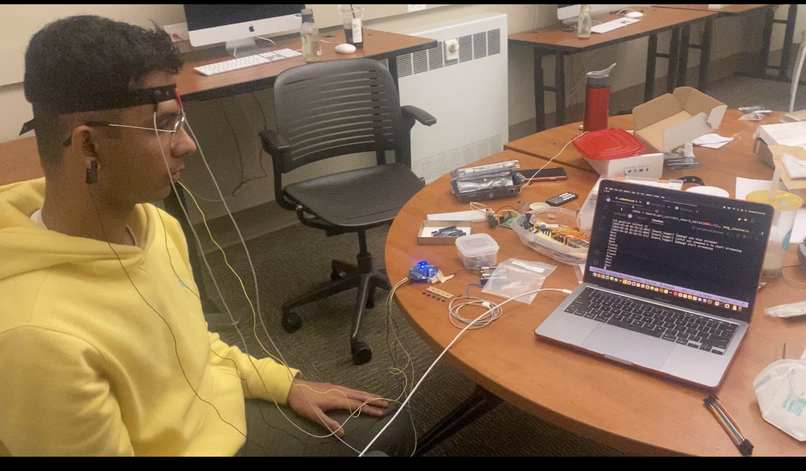
Training trials for ML
-
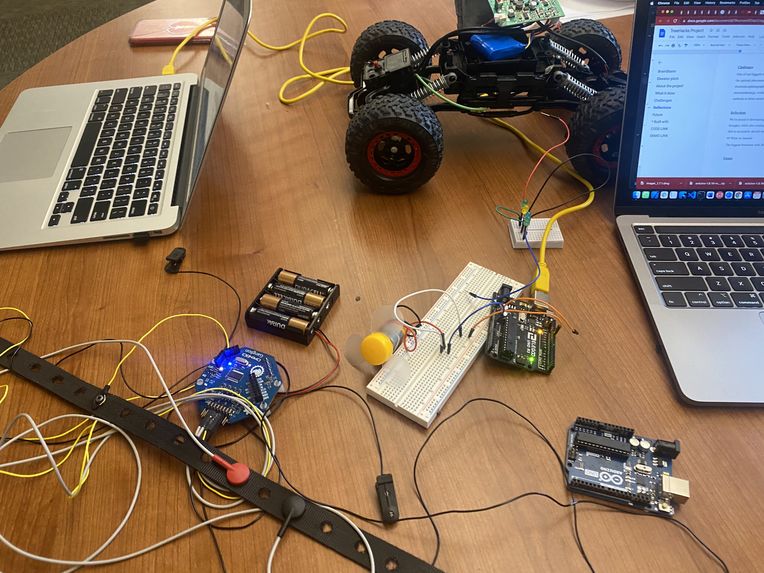
EEG & hardware devices
-
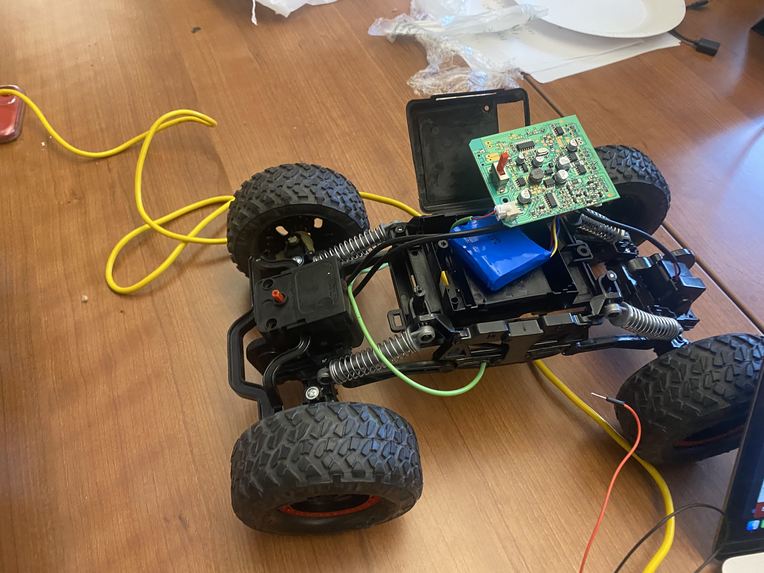
Wheelchair module
-
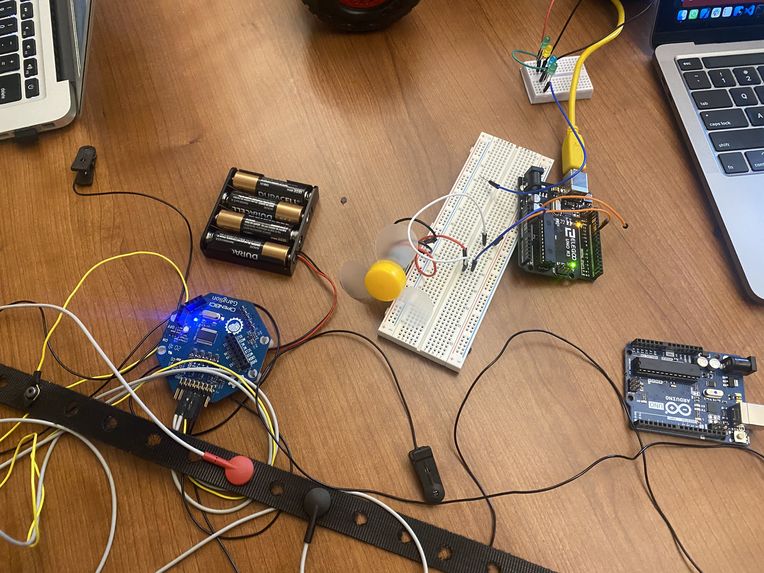
Fan module
-
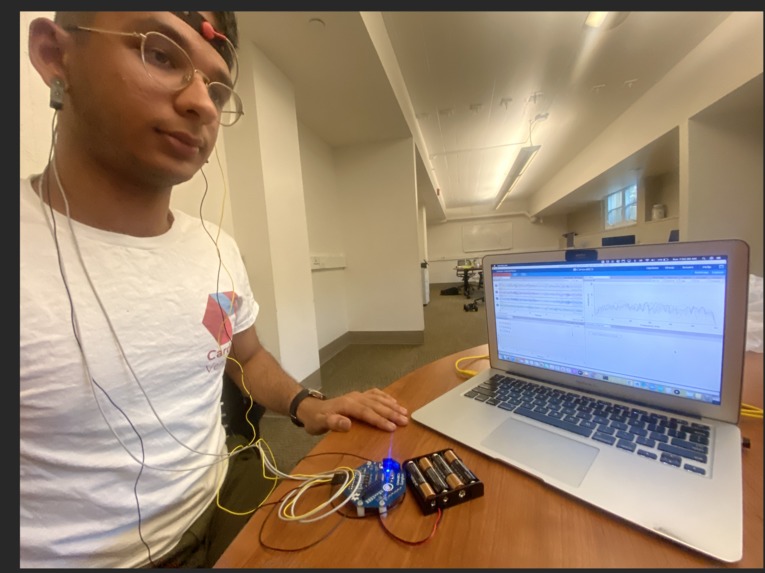
Interface to visualize decoding
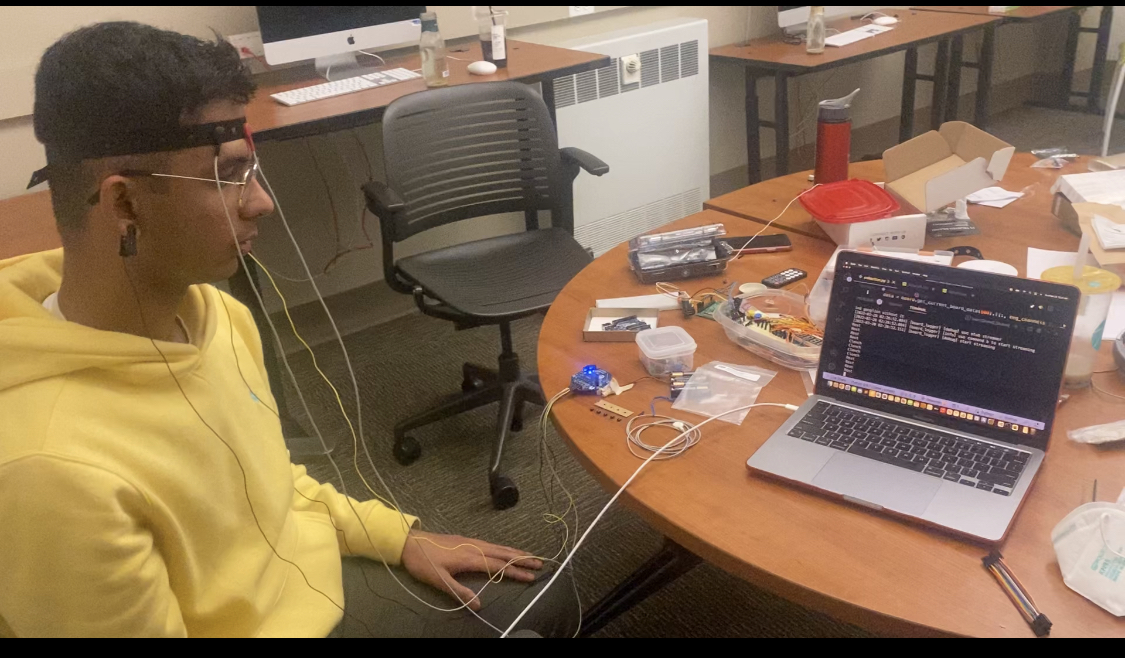
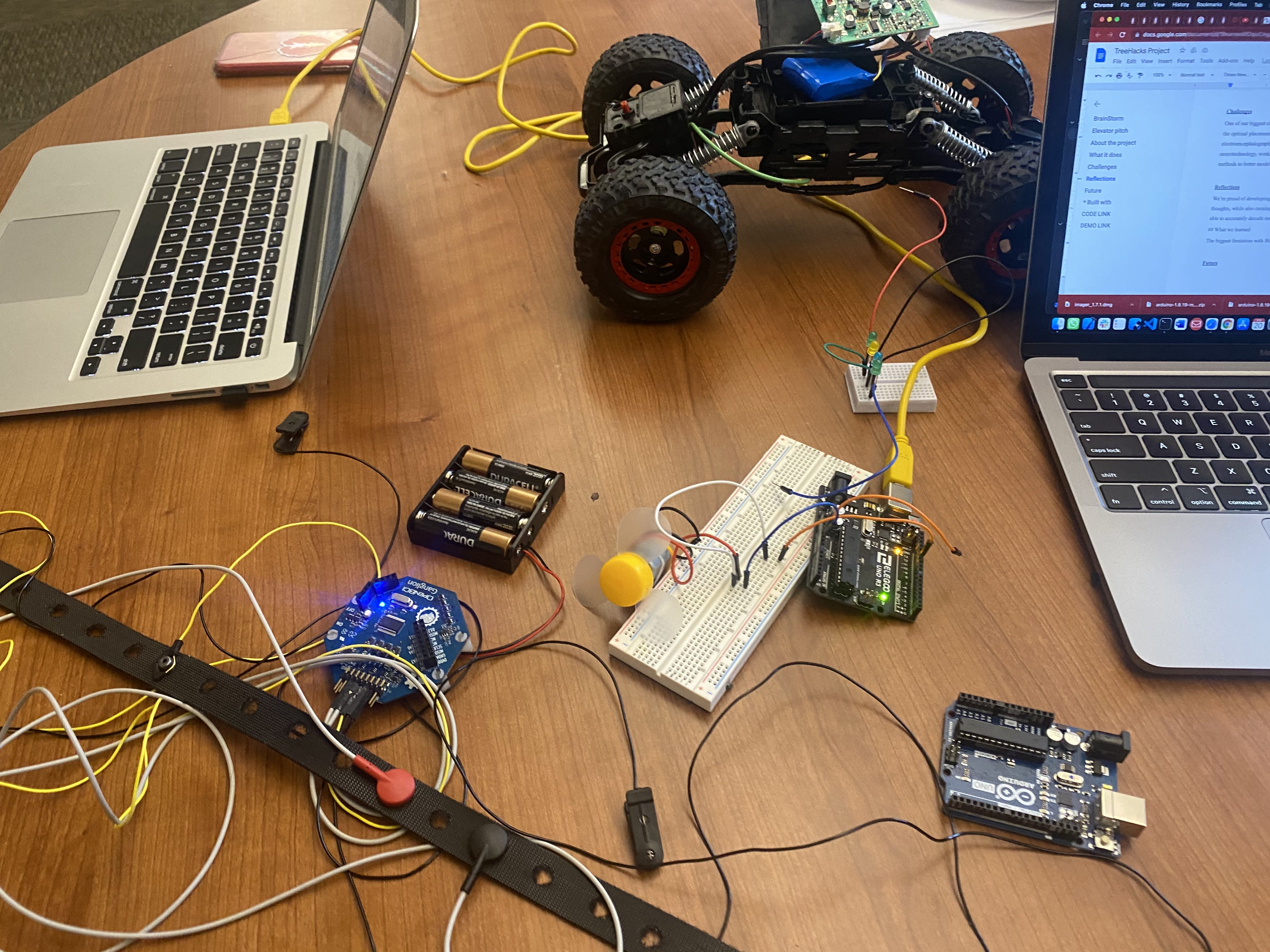
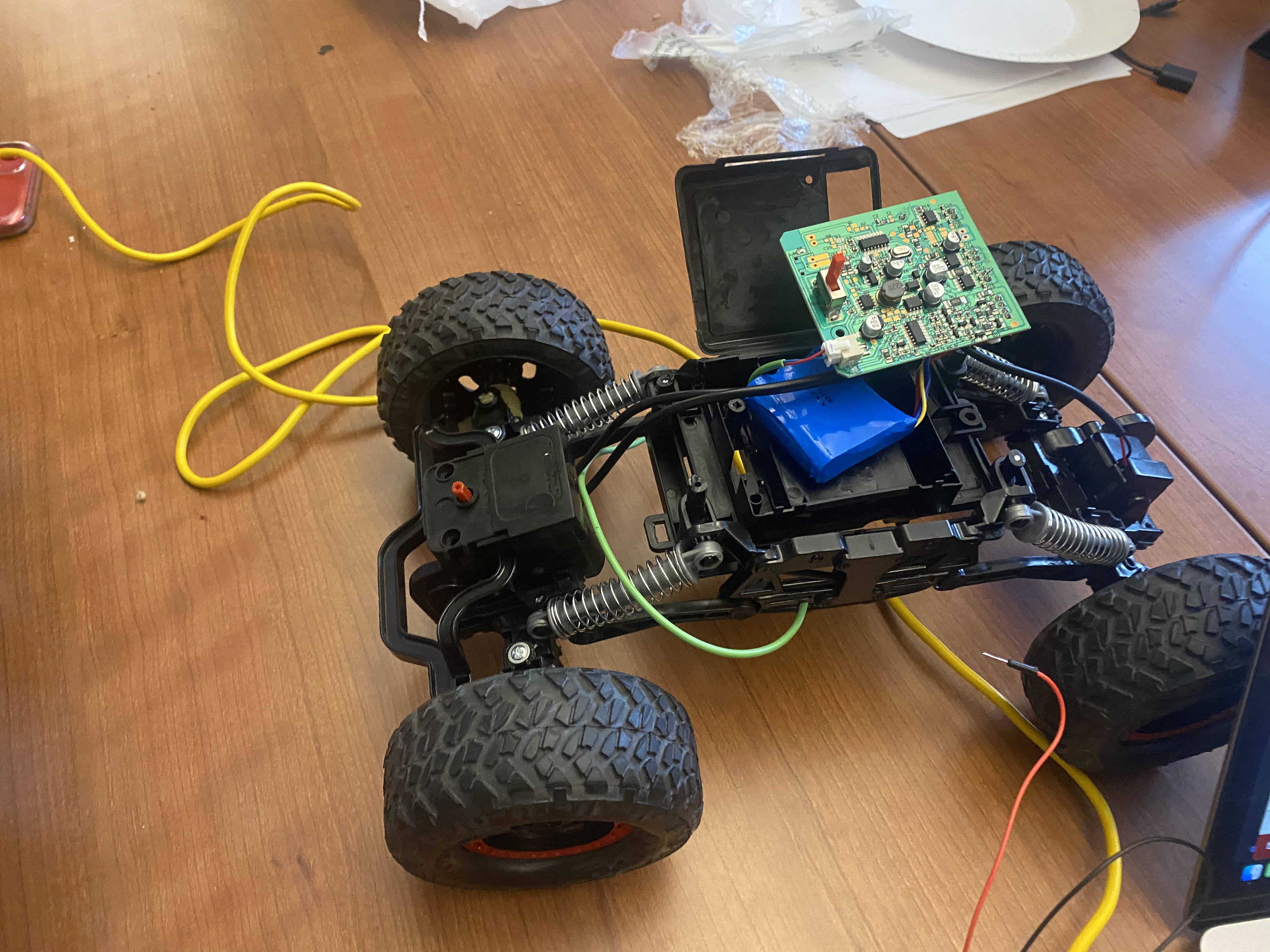
Additional Demos: https://youtu.be/Or4w_bi1oXQ https://youtu.be/VGIBWpB8NAU https://youtu.be/TrJp2rsnL6Y
Inspiration
Helping those with impairments is a cause which is close to all of the team members in Brainstorm. The primary inspiration for this particular solution came from a recent experience of one of our team members Aditya Bora. Aditya’s mother works as a child psychiatrist in one of the largest children's hospitals in Atlanta, GA. On a recent visit to the hospital, Aditya was introduced to a girl who was paralyzed from the neck down due to a tragic motor vehicle accident. While implementing a brain computer interface to track her eyes seemed like an obvious solution, Aditya learned that technology had yet to be commercially available for those with disabilities such as quadriplegia. After sharing this story with the rest of the team and learning that others had also encountered a lack of assistive technology for those with compromised mobility, we decided that we wanted to create a novel BCI solution. Imagine the world of possibilities that could be opened for them if this technology would allow interaction with a person’s surroundings by capturing inputs via neural activity. Brainstorm hopes to lead the charge for this innovative technology.
What it does
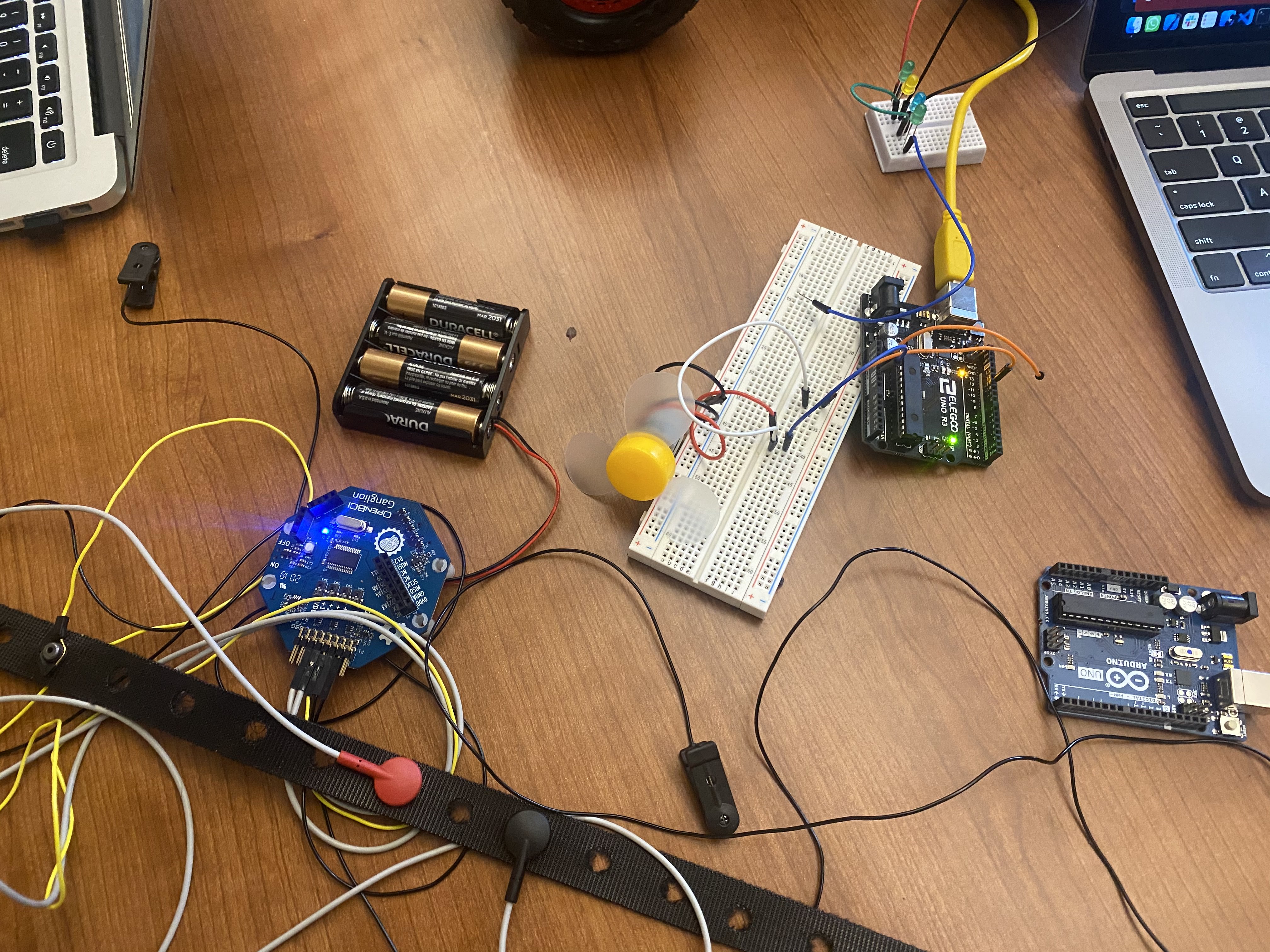
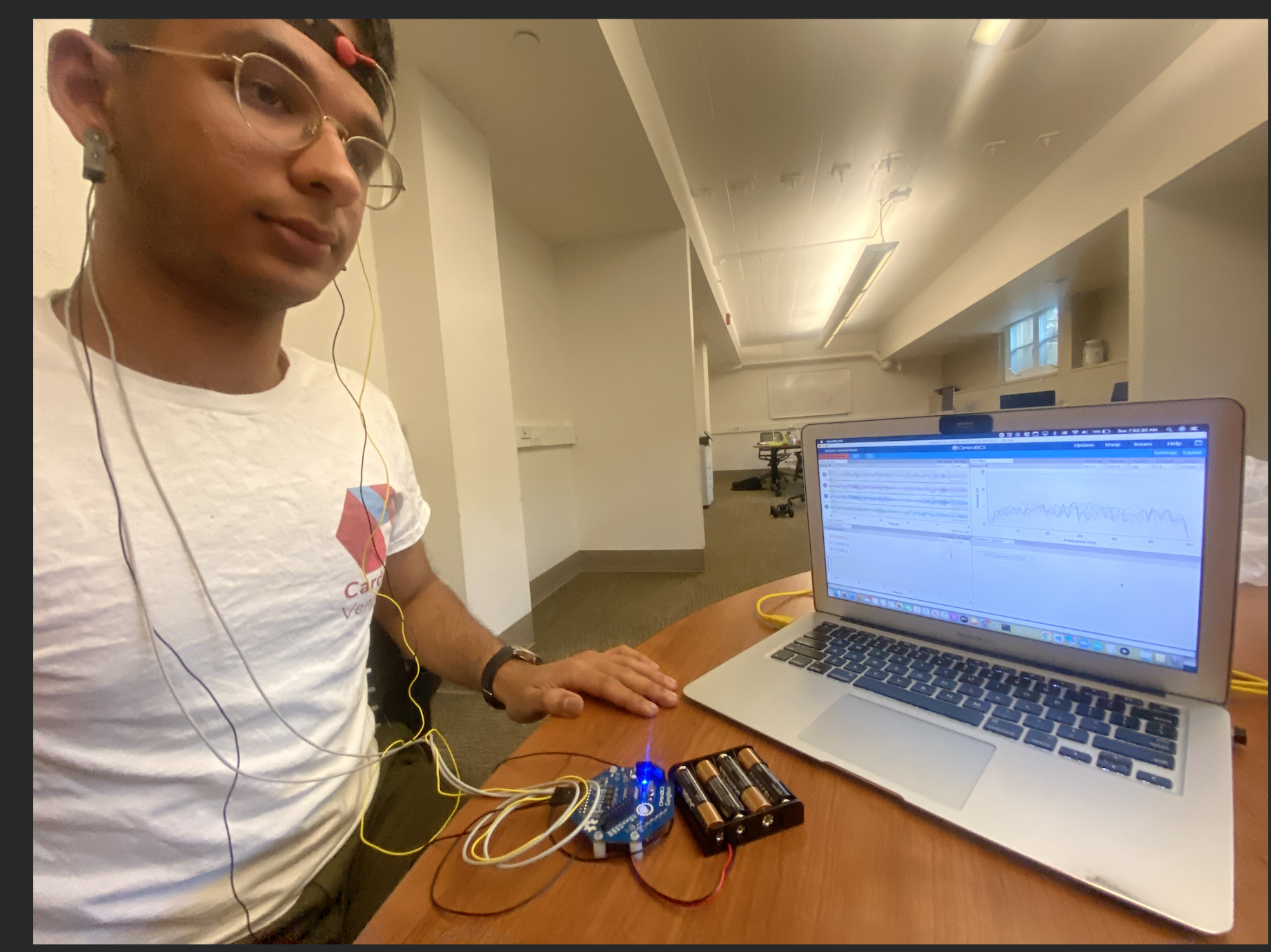
We built a wearable electrode headset that gets neural data from the brain, and decodes it into 4 discrete signals. These signals represent the voltage corresponding to neuron activity in the electrode’s surrounding area. In real-time, the computer processes the electrical activity data through a decision tree model to predict the desired action of the user.
This output can then be used for a number of different applications which we developed. These include
- RC Wheelchair Demo: This system was designed to simulate that control of a motorized wheelchair would be possible via a BCI. In order to control the RC car via the BCI inputs, microcontroller GPIO pins were connected to the remote control’s input pins allowing for the control of the RC system via the parsed out of the BCI rather than the manual control. The microcontroller reads in the BCI input via the serial monitor on the computer and activates the GPIO pins which correspond to control of the RC car
- Fan Demo: This was a simple circuit which leverages a DC motor to simulate if a user was controlling a fan or another device which can be controlled via a binary input (i.e. on/off switch).
Challenges we ran into
One of our biggest challenges was in decoding intent from the frontal lobe. We struggled with defining the optimal placement of electrodes in our headset, and then in actually translating the electroencephalography data into discrete commands. We spent a lot of time reading relevant literature in neurotechnology, working on balancing signal-to-noise ratios, and doing signal processing and transform methods to better model and understand our data.
What we learned
We’re proud of developing a product that gives quadriplegics the ability to move solely based on their thoughts, while also creating a companion platform that enables a smart home environment for quadriplegics. We believe that our novel algorithm which is able to make predictions on a user’s thoughts can be used to make completing simple everyday tasks easier for those who suffer from impairments and drastically improve their quality of life.
What's next for Brainstorm
We’ve built out our tech and hardware platform for operation across multiple devices and use-cases. In the future, we hope our technology will have the ability to detect precise motor movements and understand the complex thoughts that occur in the human brain. We anticipate that unlocking the secrets of the human brain will be one of the most influential endeavors of this century.
Built With
- arduino
- brainflow
- c
- openbci
- piserial-framework
- python
- raspberry-pi


Log in or sign up for Devpost to join the conversation.