The Ministry of Agriculture and Environment has issued the national action plan on combating desertification through 2030, with a vision to 2050.
The plan reflects Vietnam’s sense of responsibility and efforts to contribute to the implementation of the United Nations Convention to Combat Desertification (UNCCD) and fulfil the international commitments to which the country is a party.
Preventing and combating desertification is identified as a key task, helping with nature and biodiversity conservation, sustainable management of forests, water and land resources, and improvement of people’s incomes and life quality. It also supports poverty reduction, stable settlement, and the integration of desertification control objectives with national, sectoral and local strategies, as well as the UN Sustainable Development Goals (SDGs).
By 2030, the plan aims to identify and map desertification-prone areas nationwide and by socio-economic region; expand the meteorological and hydrological monitoring network for observation, forecasting and early warning; and develop adaptive management plans to mitigate impacts of drought and land degradation. Targets include sustainable use of land and water resources, maintaining 3.5 million hectares of rice farming land, ensuring forest coverage of 42–43%, improving forest quality, and conserving wetlands.
By 2050, total degraded land is to account for no more than 40% of the country’s natural land area, with severely degraded land and that at high risk of desertification kept below 4.5%. Average incomes in desertification-affected areas are hoped to reach at least 50% of the national average.
Farmers apply automatic sprinkler irrigation techniques to save water. (Photo: VNA)
Among region-specific measures, northern midland and mountainous areas will have eroded and leached land restored through reforestation, sustainable farming on sloping land and agroforestry.
The north-central region is set to rehabilitate arid and infertile land; conserve protection, coastal, special-use, and large-timber forests; form concentrated citrus fruit, tea, peanut, and sugar cane cultivation zones; develop drought-resistant crops; and upgrade irrigation infrastructure.
Meanwhile, the south-central coast and Central Highlands will prioritise natural forest protection, water-saving practices, high-tech agriculture, and crop restructuring to avoid natural disasters, droughts, and saltwater intrusion.
In the Red River Delta, southeastern, and Mekong Delta regions, efforts will focus on controlling salinity and acidification, expanding irrigation and coastal forests, upgrading reservoirs and dykes, enhancing inter-provincial coordination in operating irrigation systems to prevent saltwater intrusion, promoting intensive and high-technology farming and increasing high-quality rice cultivation, and stepping up climate-adaptive crop restructuring linked to processing and markets./. VNA
Cultivated lands in India are in the grips of desertification. The country’s Green Revolution pockets are especially prone to the problem. The biggest threat of desertification emanates from the major crops of the Green Revolution — wheat and paddy.
Sardara Singh Johl, a Padma Bhushan-awardee agricultural economist and chancellor of Central University of Punjab, has suggested that if agricultural land in Punjab is to be protected from desertification, the best way is to shift wheat and paddy cultivation to 5 million hectares of land in the Indo Gangetic plains of Uttar Pradesh, Bihar and West Bengal
Johl’s mantra, unfortunately, doesn’t provide concrete measures to pause desertification. The senior agricultural economist should have counteracted Green Revolution which gave birth to the problem. Transferring a disease from one geographical area to the other is not a remedy because we do not know how to get rid of the causal agent of the disease.
Across the globe
The area most affected by desertification is the dry land, which alone tightens its screws on about 40 per cent of Earth’s land area. Dry land is home to more than 2 billion people worldwide.
Out of the world’s arid land, an area of about 12 million square kilometres is affected by desertification. About 10-20 per cent of dry lands are already degraded. The rapidly expanding desertification threatens more than a billion people living in dry land around the world.
Desertification is, in a sense, crawling of death on the land. The desert means a dead land. The death may not be permanent. For example, cultivated land dies almost every year or after every crop season when the nutrient reserves in the soil are used up.
With application of sufficient amounts of nutrients through chemical and mined fertilisers, the soil gets a new lease of life with the onset of a new harvest season.
Agricultural land is in the cruel clutches of desertification almost everywhere. In the long run, despite the huge amount of external inputs applied in agriculture, death on cultivated land will go on creeping, irreversibly and permanently.
After cleaning the forest, the process of desertification begins naturally but the growth of the process depends on the management of farming practices, such as tillage intensity, amounts of chemical fertilizers and pesticides applied, frequency of irrigation, soil fertility management, among other things. The greater the intensity of tillage and amount of agri-inputs, the higher the rate of desertification.
India’s ‘green’ death knell
Introduction of the dwarf wheat varieties developed by Norman Borlaug in Mexico in the 1960s in India’s agriculture sparked the process of desertification of the earth. The dwarf wheat crops of the Green Revolution licked the fertility of the soil in a few years.
Then, in the 1970s, the International Rice Research Institute in the Philippines dispatched short-duration dwarf rice varieties. The new rice varieties fueled the processes of desertification.
With very high fertilizer, chemical and water consumption capacity, the dwarf crop varieties of the Green Revolution have two contrasting attributes to offer to humanity: food security and desert.
In the agronomic activities of the green revolution, the soil is so manipulated that its erosion and death are inevitable. Desertification, soil erosion and land degradation are interlinked. As a result of soil erosion and land degradation, natural systems also become victims of desertification.
An anthropogenic disaster
All deserts in the Earth’s geological history had emerged thanks to natural factors. But in our contemporary world, the process of desertification is virtually anthropogenic. Desertification associated with agriculture, in fact, is a deep concern that we need to focus on and chalk out workable strategies to prevent the process and reclaim desert lands into fertile fields.
Desertification begins with human activities involving removal of vegetation from the surface of the land, or deforestation and uncontrolled grazing by animals. The Green Revolution agricultural system has given a boost to the process.
There are many more developmental dimensions behind the soil erosion and land degradation. Deforestation, of course, has become a necessary evil for socio-economic progress in our times.
In the adoption of policies and schemes such as agriculture, road construction, urbanisation, industrialisation, which are important development signs of modern socio-economic development, the desolation of forests seems to have become an imperative.
The essence is that our contemporary world cannot live without devouring the earth’s forests. That is, the desertification of the Earth is at the core of today’s civilization
Agriculture, without which our existence would be at stake, is the root cause of desertification. Modern agriculture has no connection with forests. Chemical fertilisers, various types of chemicals and pesticides that destroy soil microbes and other organisms, alter the structure of the soil and destroy its flora and fauna.
Intensive tillage with heavy machinery and equipments, tendency of growing monocultures, overexploitation of soil and soil pollution are the processes turning fertile land into unproductive desert. Excessive and frequent irrigation, an essential need of the Green Revolution crops, salinises the soil, causing death of the soil in the long run.
Desertification takes only the upper fertile layer of the land into its clutches. The lower layers of the land are replete with nutrients.
Sometimes the nutrients in the upper layer may be abundant, but due to some factors, such as the high proportion of salts in the soil, soil water and dissolved nutrients do not become available to plants and vegetation does not grow on such soils.
According to data from the World Food Federation, 3.1 per cent of land in the world is affected by salinisation and 3.4 per cent of land by excess of sodium.
The Asia-Pacific region is at the forefront of these figures, with 6.3 per cent and 8 per cent of land salinisation and sodium excess, respectively. More than 9 million hectares of land in India is suffering from salinisation.
Regaining fertility
Soil fertility is a ‘byproduct’ of the microbial decomposition processes, and microorganisms in the soil thrive on nutrients in organic matter. The food chain of all organisms inside the soil is based on organic matter produced by photosynthesis.
Organic matter flows through the roots, leaves and other parts of the plant into the soil and from there into life via foods. In the soil, such bacteria also thrive, which fix atmospheric nitrogen into soil, making it available to the plants. But chemical fertilisers and agrochemicals destroy these bacteria further accelerating desertification.
To regain the fertility of the soil, we have to enhance the capabilities of photosynthesis. Although grain crops, like all green plants, do photosynthesis, but since they cannot absorb nutrients in the deeper soil layers, the desertification process cannot be stopped.
Unlike these, trees absorb nutrients from the depths of the earth and bring them to the upper surface of the soil, thus protecting the land from becoming a desert. Adoption of agro-forestry, raising legumes, recycling of nutrients, nurturing soil with organic fertilizers, expanding the biodiversity base of agriculture, proper management of soil water, and afforestation and reforestation on larger and larger areas of the land would prove vital for preventing desertification of the earth.
LANZHOU — A study by Chinese and German researchers has shed light on the link between groundwater balance and plant water-use efficiency in desert ecosystems, offering valuable insights for ecological restoration and combating desertification.
The study indicates that vegetation restoration in arid drylands is an effective solution for preventing desertification, according to the Northwest Institute of Eco-environment and Resources of the Chinese Academy of Sciences.
The study, a joint effort by researchers from institutions in China and Germany, was published in the journal Water Resources Research on Nov 17.
Drylands often show a negative water balance due to low rainfall and high evapotranspiration, and water becomes the main limiting factor for plant survival and growth.
“Groundwater is an important water source in desert ecosystems. The water balance of groundwater ecosystems in drylands is closely related to plant growth and determines the sustainability of ecological restoration,” said Zhang Zhishan, a researcher at the Chinese institute and leader of the study.
“Groundwater is therefore crucial for ecological restoration works that are mainly based on vegetation reconstruction, as well as for desertification control efforts,” he said, adding that appropriate replanting strategies play a pivotal role in preventing desertification.
The researchers conducted the study based on the automatic simulation monitoring system for water balance in the Shapotou Desert Research and Experiment Station in Northwest China’s Ningxia Hui autonomous region.
The researchers used 12 lysimeter units, large-scale instruments for measuring evapotranspiration, to systematically quantify water balance components and plant growth dynamics across different desert ecosystems from 2019 to 2023.
These lysimeters were filled with wind-blown sand from the Tengger Desert and represented a range of conditions, from bare sand to plots planted with single-species shrubs and semi-shrubs, as well as mixed plantings.
The researchers then assessed plant growth performance, using water-use efficiency as the primary evaluation metric.
The study showed that groundwater recharge transformed the changes in soil water storage to a new water balance state, increasing the actual evapotranspiration and seepage. Linear mixed-effects models also showed that groundwater had a significant effect on the water balance components and enhanced plant growth performance.
Groundwater-dependent desert ecosystems exhibited higher actual evapotranspiration compared to groundwater-independent ones, according to the study.
It also highlighted that semi-shrubs play a key role in desert ecosystems with or without groundwater, providing a direct basis for the recommended plant configuration strategy for those desert ecosystems with groundwater.
“Our new study revealed that vegetation reconstruction in arid deserts is an effective solution for preventing desertification. Among which, a reasonable plant configuration method is the key to ensuring the long-term sustainability of ecological restoration and reconstruction,” Zhang said.
Representational image: Grass grids spread out across the area, serving as barriers and trapping sand in the area.Getty Images
Chinese researchers are working on a massive geoengineering project of “artificial crusting.” They are using vast amounts of blue-green algae to turn barren dunes into stable, reclaimable land.
According to the South China Morning Post (SCMP), this method marks the first time microbes have been used on such a massive scale to reshape natural landscapes.
Known to have existed on Earth for billions of years, cyanobacteria are photosynthetic microbes found in almost every environment, from oceans to soil.
Developed at the Shapotou Desert Experimental Research Station, part of the Chinese Academy of Sciences (CAS), this innovative “biocrust” technology is a product of years of research in China’s Ningxia region.
This cyanobacteria-based crust, which can withstand winds of 36 km/h (22mph), is slated to reclaim up to 6,667 hectares in Ningxia over the next five years.
Interestingly, this low-cost, high-efficiency technology could serve as a blueprint for global desert restoration and climate change mitigation.
Reclaiming deserts
Deserts are notoriously difficult to reclaim. Most plants cannot survive the abrasive, shifting nature of sand.
However, researchers at a research station in Ningxia have found a way to glue the desert floor together by deploying specially selected strains of cyanobacteria.
SCMP explained that this creates an “ecological skin.” These microorganisms can endure extreme heat and bone-dry conditions for years.
Upon hydration from even slight rain, the cyanobacteria activate and proliferate, secreting a biomass-rich matrix that binds sand particles. This biological soil crust immobilizes shifting dunes and establishes a nutrient-rich substrate essential for the successional development of plant life.
In the natural world, a stable desert crust can take 5 to 10 years to form. This new blue-green algae technique cuts that time to just one year for the formation of soil crust.
Solid seed method
The process was perfected through trial and error. Initially, scientists tried spraying liquid algae, but the method was too reliant on heavy infrastructure.
After screening over 300 species, researchers identified seven key cyanobacterial strains as the foundation of the project. These strains were blended with organic matter into a nutrient-rich paste and cast into hexagonal molds.
The result is a specialized “solid seed” — a portable block designed to survive the journey into the deep desert and thrive upon arrival.
Once dispersed across the parched landscape, these engineered blocks lie in wait for moisture; the moment it rains, they burst into growth, knitting the sand together into a resilient, protective crust.
This technology is no longer just a laboratory experiment. Ningxia is preparing to apply the technique to over 6,000 hectares of desert in the coming years.
The geoengineering project is part of China’s ambitious “Great Green Wall” to fight desertification. It moves beyond traditional tree planting to address the root cause of desertification: shifting sands.
These strategies are now being scaled globally to Africa and Mongolia.
With the recent completion of a massive 1,856km (1,153-mile) sand control belt in Inner Mongolia, China continues to advance core technologies to fulfill its long-term mission of halting desertification and restoring arid landscapes on a planetary scale.
In this study, based on the sample covering 1990–2023, we use ARDL methods to test potential driving forces of Desertification (DS), including key socioeconomic and climatic determinants in Saudi Arabia: renewable energy consumption (RE) , economic growth (EG) , CO₂ emissions(CO2E), temperature anomaly(TA) and vegetation index(VI). To address the lack of time-series-integrated data studies in Saudi Arabia, this article uses ARDL and VECM models to capture short-run dynamics and long-run equilibrium. The findings indicate that a 1% increase in renewable energy results in an average reduction of 0.1003% in desertification . In contrast, improvements in the vegetation index have been more effective and could reduce desertification by up to 8.7%.Conversely, improved economic growth and increased CO2 emissions significantly aggravate land degradation. These results illustrate the need to reconcile Vision 2030’s development aims with environmental protection. Recommendations on policy: Increase the proportion of renewable energy to 50% of total energy consumption by 2030; expand afforestation to restore 10% of degraded land per year; work toward universal environmental protection for major development projects at a rate commensurate with the scale and potential impact. .
Chinese scientists are working on soil restoration and developing biotechnological plates capable of stabilizing arid lands and generating biological crusts in record time.
The advance of degradation of arid lands has found a new and powerful technological adversary.
A team of researchers from the Chinese Academy of Sciences has designed a method of soil restoration with cyanobacteria blocks, a kind of prefabricated “ecological skin” that allows transforming sand dunes into stable and biologically active lands in just twelve months, a process that, under natural conditions, would take decades to complete.
The science behind artificial biological crusts
The core of this innovation, led by the Northwest Institute of Ecology and Resources, lies in the biological soil crusts (BSC). These are organic communities composed of cyanobacteria, algae, mosses, and lichens that act as a protective shield in arid areas.
Unlike traditional sand fixation methods —such as straw barriers or chemical stabilizers—, these blocks use the intrinsic ability of cyanobacteria to secrete extracellular polymeric substances (EPS).
These substances function as a natural glue that binds loose sand particles, creating a consolidated structure that resists wind erosion and improves moisture retention.
A paradigm shift: From natural waiting to technical installation
Historically, the formation of these natural crusts is an extremely slow process and vulnerable to climatic conditions.
The Chinese technique breaks this limitation by creating biotechnological algae plates cultivated under controlled conditions. These blocks are installed on the ground as if they were tiles or a protective “skin“, eliminating the initial phase of vulnerability of traditional spray sowings.
Field test results have shown that this soil restoration with cyanobacteria blocks achieves coverage and stability equivalent to that of a mature natural crust in just one year.
In addition to stopping the movement of dunes, these blocks initiate a virtuous cycle: they increase the fixation of nitrogen and carbon in the soil, facilitating other plant species to colonize the area in the medium term.
Ecological impact and future viability
This system not only stands out for its speed but also for its resilience. The structure created by scientists from the Key Laboratory of Desert Environment Rehabilitation allows the artificial ecosystem to withstand extreme aridity conditions while recovering critical ecosystem functions.
By acting as a physical and biological barrier, it drastically reduces nutrient loss and promotes the microbiological biodiversity of the subsoil.
The implementation of this “ecological skin” represents a milestone in environmental engineering, offering a scalable and sustainable solution for countries facing the threat of desertification, a phenomenon that affects global food security and climate.
Published: 7:15pm, 31 Dec 2025Updated: 7:46pm, 31 Dec 2025
Deserts are hard to reclaim because plants cannot survive on shifting sand, but scientists in northwest China are changing that – by dropping vast amounts of blue-green algae onto the dry terrain.
These specially selected strains of cyanobacteria can survive extreme heat and drought for long periods, according to China Science Daily on Thursday. When rain finally comes, they spring to life, spreading rapidly and forming a tough, biomass-rich crust over the sand. This living layer stabilises the dunes and creates the perfect foundation for future plant growth.
This is the first time in human history that microbes are being used on a massive scale to reshape natural landscapes. As the “Great Green Wall” – China’s massive multi-decade initiative to plant trees and fight desertification – expands to include efforts in Africa and Mongolia, the unprecedented geoengineering technology could one day transform the face of our planet.
This artificial “crusting” technique was developed by scientists at a research station in Ningxia Hui autonomous region, located in northwest China on the edge of the Tengger Desert, according to China Science Daily.
Ningxia has adopted the technique as part of its sand control strategy under the Great Green Wall. The technique is expected to be used on a massive scale to treat around 5,333-6,667 hectares (13,178-16,475 acres) of desert over the next five years.
It was developed over more than a decade of efforts by the Shapotou Desert Experimental Research Station, affiliated with the Chinese Academy of Sciences (CAS), in the city of Zhongwei in Ningxia.
Zhao Yang, the research station’s deputy director who led the team, told China Science Daily that they had enabled blue-green algae to accumulate on stable sand surfaces. It gradually bonded with soil particles to form a crust-like structure resembling soil clods – known to scientists as “cyanobacterial crusts”.
The crust serves as an “ecological skin” that covers the sandy terrain and is capable of withstanding winds of up to 36km/h (22mph).
Cyanobacteria are photosynthetic microorganisms that first appeared around 3.5 billion years ago. They can be found in nearly all natural ecosystems, including soil, freshwater and marine environments. Some species can produce toxins that harm people, animals or the environment.
It takes at least five to 10 years for a natural crust to form using traditional sand stabilisation techniques, according to the state-owned Science and Technology Daily.
09:35
How is China building a great green wall to protect itself from desertification
How is China building a great green wall to protect itself from desertification
The new blue-green algae method, in contrast, significantly speeds up this process, enabling the formation of soil crusts in around a year, greatly improving humanity’s ability to fight soil desertification.
In 2010, Zhao learned from his supervisor that a type of cyanobacteria could produce soil when used in the desert. However, it took over a decade to fine-tune the technique.
During the early years, the main challenge was that the bacteria, which thrived in laboratory conditions, struggled to survive in the wild. In 2016, Zhao discovered that applying pressure to spray the cyanobacteria and forcing it into the gaps between sand grains could boost the survival rate to over 60 per cent.
However, this approach was later deemed unsuitable for large-scale use because of its reliance on electricity and road access.
This prompted Zhao to explore whether these biological crusts could be transformed into solid “seeds” for easier transport and dispersal, finally leading to a solid technique.
The team first selected seven cyanobacteria strains from over 300 species. Solutions containing blue-green algae were then mixed with organic matter and fine particulate matter to form a paste-like substance. This mixture was poured into moulds containing hexagonal grids, ultimately yielding seeds resembling soil clods.
“These soil blocks are not only easy to transport, but they also boast a very high survival rate,” Zhao told China Science Daily. When scattered across arid terrain, they grow rapidly after it rains and form stable soil crusts.
The Shapotou Desert Experimental Research Station, established in 1955, is affiliated with the CAS Northwest Institute of Eco-Environment and Resources. As China’s first comprehensive sand control research station, it is a vital platform for desert research in China and an internationally renowned desert science research base.
The research station is well-known for pioneering the “straw checkerboard” anti-desertification method. But it has also developed many other theories and practices for stabilising sand, which have been widely adopted around the globe.
According to an October article on the website of the National Development and Reform Commission, China has made significant progress in combating severe desertification, sandstorms and soil erosion in arid northern regions over the past four decades through the Three-North Shelterbelt Forest Programme – the official name for the Great Green Wall.
The article said the country still needed to “persistently advance” the Great Green Wall project, reflecting previous comments by President Xi Jinping. It called for speeding up developments in core technologies and promoting practical techniques and suitable models.
Hungary’s Great Hungarian Plain faces severe desertification as groundwater depletes and droughts intensify, threatening agriculture and prompting government action.
Farmers dubbed “water guardians” redirect thermal spa water to artificially flood low-lying fields, re-creating natural flooding cycles disrupted by river channelization.
Early results show improved groundwater levels and increased vegetation, offering a potential conservation model for other drought-stricken regions worldwide.
KISKUNMAJSA, Hungary — Oszkár Nagyapáti climbed to the bottom of a sandy pit on his land on the Great Hungarian Plain and dug into the soil with his hand, looking for a sign of groundwater that in recent years has been in accelerating retreat.
“It’s much worse, and it’s getting worse year after year,” he said as cloudy liquid slowly seeped into the hole. ”Where did so much water go? It’s unbelievable.”
Nagyapáti has watched with distress as the region in southern Hungary, once an important site for agriculture, has become increasingly parched and dry. Where a variety of crops and grasses once filled the fields, today there are wide cracks in the soil and growing sand dunes more reminiscent of the Sahara Desert than Central Europe.
The region, known as the Homokhátság, has been described by some studies as semiarid — a distinction more common in parts of Africa, the American Southwest or Australian Outback — and is characterized by very little rain, dried-out wells and a water table plunging ever deeper underground.
In a 2017 paper in European Countryside, a scientific journal, researchers cited “the combined effect of climatic changes, improper land use and inappropriate environmental management” as causes for the Homokhátság’s aridification, a phenomenon the paper called unique in this part of the continent.
Fields that in previous centuries would be regularly flooded by the Danube and Tisza rivers have, through a combination of climate-change-related droughts and poor water retention practices, become nearly unsuitable for crops and wildlife.
‘Water guardians’
Now a group of farmers and other volunteers, led by Nagyapáti, are trying to save the region and their lands from total desiccation using a resource for which Hungary is famous: thermal water.
“I was thinking about what could be done, how could we bring the water back or somehow create water in the landscape,” Nagyapáti told the Associated Press. “There was a point when I felt that enough is enough. We really have to put an end to this. And that’s where we started our project to flood some areas to keep the water in the plain.”
Along with the group of volunteer “water guardians,” Nagyapáti began negotiating with authorities and a local thermal spa last year, hoping to redirect the spa’s overflow water — which would usually pour unused into a canal — onto their lands. The thermal water is drawn from very deep underground.
Mimicking natural flooding
According to the water guardians’ plan, the water, cooled and purified, would be used to flood a 2½-hectare (6-acre) low-lying field — a way of mimicking the natural cycle of flooding that channelizing the rivers had ended.
“When the flooding is complete and the water recedes, there will be 2½ hectares of water surface in this area,” Nagyapáti said. “This will be quite a shocking sight in our dry region.”
A 2024 study by Hungary’s Eötvös Loránd University showed that unusually dry layers of surface-level air in the region had prevented any arriving storm fronts from producing precipitation. Instead, the fronts would pass through without rain and result in high winds that dried out the topsoil even further.
Creation of a microclimate
The water guardians hoped that by artificially flooding certain areas, they would not only raise the groundwater level but also create a microclimate through surface evaporation that could increase humidity, reduce temperatures and dust, and have a positive effect on nearby vegetation.
Tamás Tóth, a meteorologist in Hungary, said that because of the potential impact such wetlands can have on the surrounding climate, water retention “is simply the key issue in the coming years and for generations to come, because climate change does not seem to stop.”
“The atmosphere continues to warm up, and with it the distribution of precipitation, both seasonal and annual, has become very hectic and is expected to become even more hectic in the future,” he said.
After another hot, dry summer this year, the water guardians blocked a series of sluices along a canal, and the repurposed water from the spa began slowly gathering in the low-lying field.
After a couple of months, the field had nearly been filled. Standing beside the area in early December, Nagyapáti said that the shallow marsh that had formed “may seem very small to look at it, but it brings us immense happiness here in the desert.”
He said the added water will have a “huge impact” within a roughly 2½-mile radius, “not only on the vegetation, but also on the water balance of the soil. We hope that the groundwater level will also rise.”
Drought task force
Persistent droughts in the Great Hungarian Plain have threatened desertification, a process in which vegetation recedes because of high heat and low rainfall. Weather-damaged crops have dealt significant blows to the country’s overall gross domestic product, prompting Prime Minister Viktor Orbán to announce this year the creation of a “drought task force” to deal with the problem.
After the water guardians’ first attempt to mitigate the growing problem in their area, they said, they experienced noticeable improvements in the groundwater level, as well as an increase of flora and fauna near the flood site.
The group, which has grown to more than 30 volunteers, would like to expand the project to include another flooded field, and hopes their efforts could inspire similar action by others to conserve the most precious resource.
“This initiative can serve as an example for everyone. We need more and more efforts like this,” Nagyapáti said. “We retained water from the spa, but retaining any kind of water, whether in a village or a town, is a tremendous opportunity for water replenishment.”
Several countries emphasized that the ability to implement LDN depends on governance reforms linking national planning with community realities.
Delegates lauded Panama’s Nature Pledge – a national effort to integrate planning, monitoring, and reporting under the three Rio Conventions.
Concern emerged that leaving out recommendations of the Intergovernmental Working Group for a Future Scientific Framework would stand in the way of a strong outcome at COP 17 in 2026.
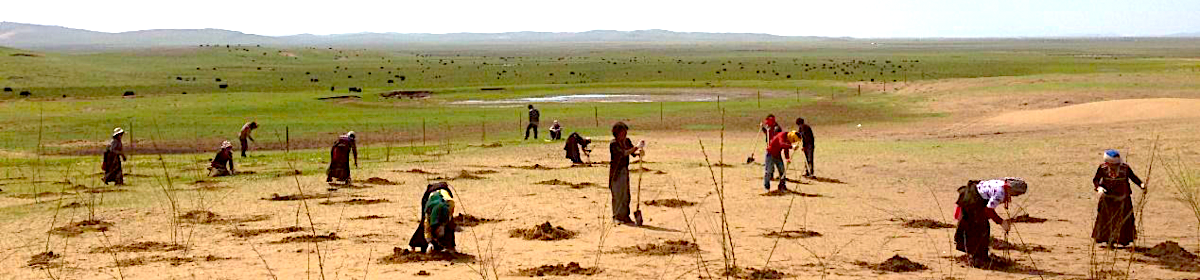
After decades of human activities and overgrazing, desertification has accelerated at an alarming speed in China, resulting in sandstorms, flooding and drought. The economic repercussions are potentially affecting more than 400 million people. In the past, Chinese kingdoms and empires erected the Great Wall to prevent steppe nomads from invading from the north. Now, the government is planting a whole new kind of wall to protect from encroaching deserts.
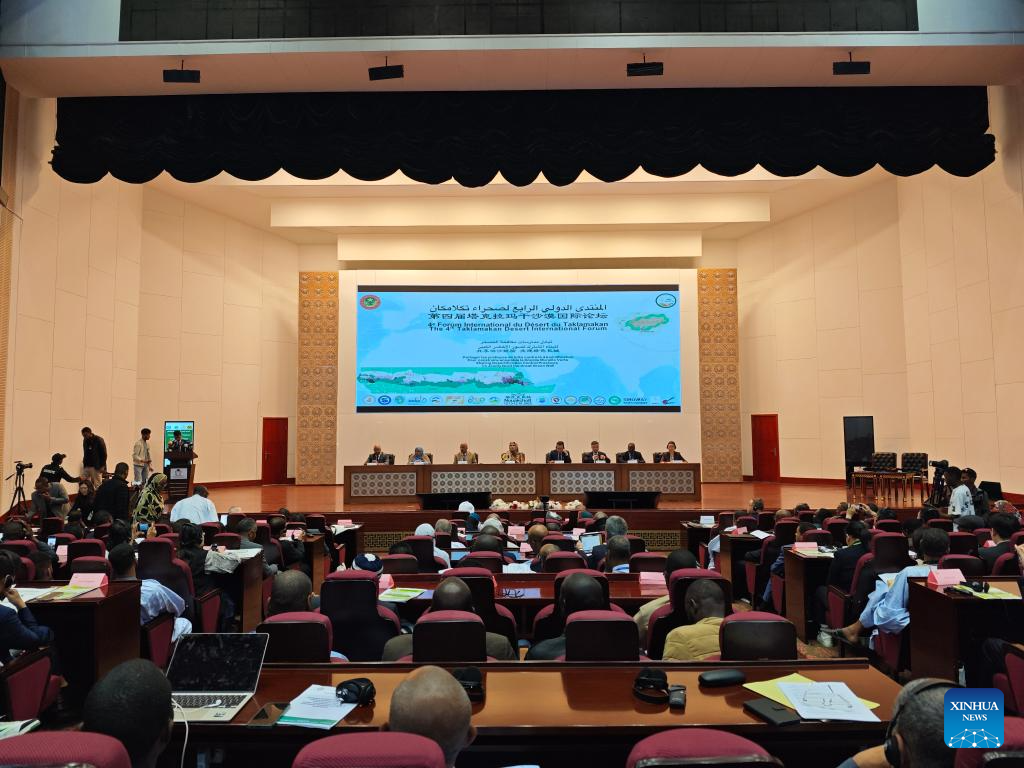
Officials and experts from China and Africa attend the Fourth Taklamakan Desert International Forum in Nouakchott, Mauritania, Dec. 14, 2025. Officials and experts from China and Africa on Sunday called for stronger scientific and technological cooperation to address desertification and land degradation, urging closer coordination to advance Africa’s Great Green Wall initiative. The calls were made at the fourth Taklamakan Desert International Forum, held in Nouakchott, the capital of Mauritania, where participants stressed that desertification remains a shared global challenge requiring joint action and the sharing of experience.(Xinjiang Institute of Ecology and Geography/Handout via Xinhua)
NOUAKCHOTT, Dec. 14 (Xinhua) — Officials and experts from China and Africa on Sunday called for stronger scientific and technological cooperation to address desertification and land degradation, urging closer coordination to advance Africa’s Great Green Wall initiative.
The calls were made at the fourth Taklamakan Desert International Forum, held in Nouakchott, the capital of Mauritania, where participants stressed that desertification remains a shared global challenge requiring joint action and the sharing of experience.
Duan Weili, vice president of the Xinjiang Institute of Ecology and Geography under the Chinese Academy of Sciences, said China has developed a distinctive approach to combating desertification through more than 70 years of sustained efforts, combining scientific management, integrated treatment and livelihood-oriented ecological restoration.
China has taken the lead globally in achieving “zero growth” of land degradation, Duan noted, adding that practices from the management of the Taklamakan Desert, including ecological barriers and vegetation restoration along desert margins, could offer valuable references for arid and semi-arid regions in Africa.
He said China stands ready to deepen cooperation with African countries in research platforms, technology sharing and capacity building to support the localization and practical application of desertification control technologies.
Sidna Ahmed Ely, director general of Mauritania’s National Agency of the Great Green Wall, said the Sahara Desert and the Taklamakan Desert share many similarities in ecological characteristics and governance challenges, making the forum an important platform for dialogue between the two major desert ecosystems.
In recent years, Mauritania has worked with Chinese research institutions on pilot projects involving dune fixation, vegetation restoration and soil improvement, Ely said, expressing hope for expanded cooperation in information exchange, joint research and environmental monitoring.
Xiao Wensheng, economic and commercial counselor at the Chinese Embassy in Mauritania, said combating desertification is an integral part of global governance. Since joining the United Nations Convention to Combat Desertification, China has explored solutions suited to its national conditions and accumulated experiences that are both replicable and scalable, he said.
China is willing to strengthen policy coordination and scientific cooperation with African countries to support the Great Green Wall initiative and enhance regional ecological governance capacity, Xiao added.
Mauritanian Minister of Trade and Tourism Zeinebou Mint Ahmednah said climate change and land degradation have become critical issues affecting food security and socio-economic stability across Africa, noting that cooperation between Mauritania and China in combating desertification has become a practical example of South-South cooperation.
Jointly organized by the Xinjiang Institute of Ecology and Geography, Mauritania’s Ministry of Environment and Sustainable Development, the Alliance of International Science Organizations and the Pan-African Agency of the Great Green Wall, the forum featured keynote speeches, thematic discussions and a roundtable dialogue between experts on the Taklamakan and Sahara deserts. ■







 DESERTIFICATION