Transfigurări M-am bucurat de cartea lui Dănuț. M-am bucurat și de ajutorul editurii decenu.eu care mi-a trimis cartea tocmai la Viena pentru care le mulțumesc. Valoarea istorică a cărții, tratând momente importante din perioada învățământului underground din România despre care nu s-a scris încă, este dublată de elocvența cu care respondenții abordează răspunsurile la întrebările puse de editor. Dincolo de istoriile personale, care se întind peste două regimuri politice, părerile exprimate de eroii supuși investigării, apare clar faptul că alegerile lor au la bază cel puțin obiective de urmărit deși viziunile nu sunt întotdeauna clar definite. Poate doar o primă impresie, ”întrebătorul” insistând asupra viselor ”suspecților”. Întrebările țintesc clar și spre o istorie a învățământului superior/academic pentru cultele neoprotestante pentru care, din perspectiva deceniilor deja trecute, oferă o distanțare suficientă pentru a fi ”atacată” cu bune-rele… Parcursuri de viață care se împletesc cu învățământul superior teologic sunt convingătoare și prezentate sincer. Poate cu prea mare încredere, cum că ”teologia salvează România”. Am evitat, mai sus, termenele evangelicii, creștini evanghelici sau evanghelici protestanți pentru că este/pare un pleonasm. Majoritatea intervievaților fie evită sintagma ”evanghelicii români” fie folosesc când un termen când altul. Alții preferă simpla denumire a cultelor ca baptist, penticostal, ortodox, catolic, protestant, etc. Este de remarcat tendința celor din volum preocuparea de a se reîntoarce în studiile lor la părinții bisericii. La mulți dintre ei studiul textelor s-a finalizat cu teze de doctorat. Suita de transformări lente ca urmarea unor alegeri personale, destăinuirea despre succese și har trăite pe parcursul acestora reprezintă tema principală cărții… Și nu transfigurarea care este un moment singular perceput ca eveniment – șoc, chiar emoțional, cu încărcătură dramatică. Idee excelentă cu ilustrațiile… Transfigurări… Felicitări…
NOTA: Am rugat pe feciorul meu, Daniel, care este atât cleric hirotinit în Church of Scotland, cât și psihoterapeut certificat, și membru cu drepturi depline al asociației profesionale britanice în domeniu, să răspundă, din perspectiva experienței lui psihoterapeutice, dar și a experiențe pastorale, la textul lui Danuț Jemna pe tema rellației creștinism -psihologie. Iată aici rezultatul.
______________
Dintru început trebuie să facem o distincție clară între psihologie și psihoterapie sau consiliere. Psihologia studiază în general relația dintre mecanismele de gândire, emoții și comportamentul uman. Consilierea și psihoterapia se inspiră semnificativ din teoria psihologiei, însă nu presupune întotdeauna studierea psihologiei ca disciplină în sens strict. Un consilier sau psihoterapeut nu este un psiholog. Psihologul studiază mecanismele comportamentului uman, pe când psihoterapeutul folosește în mod specific metoda conversațională ca să ajute un client/pacient să rezolve diverse probleme și dezechilibre din viața personală. Din acest punct de vedere, psihoterapia și consilierea sunt mai mult o formă de artă decât o știință exactă, deși se inspiră și se bazează pe elemente de teorie psihologică.
Psihoterapia este o disciplină în plină dezvoltare, cu o mare varietate de abordări și sisteme teoretice care evoluează constant. Ce le leagă pe toate este în mare parte o înțelegere la nivel mondial cu privire la etica relației terapeutice. Așadar, a pune mersul la biserică și mersul la psihoterapeut într-o relație de polarizare de aceeași natură cu dihotomia religie – știință reprezintă o eroare epistemologică.
Este adevărat că din ce în ce mai mulți oameni în occident preferă să meargă la psihoterapeut decât la pastor/preot, însă aceasta nu este o alegere direct alternativă. Liderii religioși nu pierd oameni pentru că aceștia preferă să se ducă la psihoterapeut. Ei pierd oameni pentru că aceștia și-au pierdut interesul in serviciile oferite de liderii religioși.
Nu-i trece nimănui prin cap ideea că în general este mai bine să meargă la psihoterapeut decât la pastor. Mulți merg și la biserică, și la psihoterapeut, având așteptări radical diferite de la ambele. Astfel, găsesc că este prudent să evităm plasarea religiei și psihoterpiei într-o relație strict dualistă. Este adevărat că psihologia poate fi folosită pentru a manipula oameni în contextul religios, precum poate fi folosită pentru a manipula oameni în camera de consiliere. În final, este o chestiune de etică, după cum am menționat mai sus.
Scopul principal al consilierii și psihoterapiei este să ajute clientul printr-o serie de conversații să ajungă la un punct în care este capabil să-și rezolve propriile probleme. Din acest punct de vedere, în majoritatea abordărilor nu se folosește un model medical sau clinic, în care clientul vine la specialist pentru un diagnostic și un tratament aplicat fără implicarea directă a pacientului. Psihoterapia se bazează pe formarea unei relații terapeut – client de încredere reciprocă, de educație a clientului și de colaborare apropiată. După cum spunea Scott Peck, clientul încheie psihoterapia în momentul în care poate fi și ea/el terapeut pentru altcineva. Majoritatea nu ajung la acest nivel pentru că puțini sunt dispuși să depună așa de mult efort. (Am parafrazat din Scott Peck.)
Mersul la duhovnic se aseamănă într-o anumită măsură cu psihoterapia în termenul formării unei relații de încredere și formare personală. Abordarea însă este radical diferită. Un consilier sau psihoterapeut bun nu dă sfaturi ca un duhovnic. Psihoterapeutul ajută clientul să ajungă el la deciziile folositoare pentru viața și situația lui specifică, conform metodologiei sale și sistemului etic. A da sfaturi ar fi o gravă eroare terapeutică. Din acest punct de vedere, poate n-ar fi rău ca duhovnicii să învețe câte ceva din etica și metodologia psihoterapiei. Mersul la biserică e cu totul altceva. Mulți clienți în psihoterapie merg la biserică. Unii sunt pastori. Unii psihoterapeuți sunt pastori, și abordează pastorala și psihoterapia ca două discipline distincte, deși învață una de la alta.
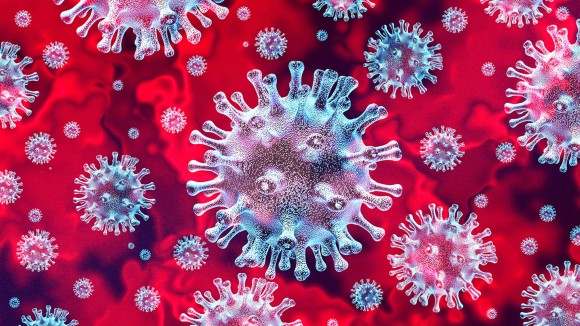
Note: The following considerations are the summary of a personal conversation I had with a close friend who is a leading population geneticist from the Unites States and thus a reliable source of information, as she is personally and corporately involved in finding a solution to the coronavirus crisis, together with tens of thousands of specialists in the whole world. I believe they are worth taking in consideration, even if, maybe, some of this advice may sound to you overly cautious. They come not only from an expert, but also from a mother with a toddler. That should help you set things in perspective.
Protection suggestions
I give people some basic advice as they ask me. In brief, we can’t control many variables, but a few we can, to the best of our ability. At first it seems like a time-consuming burden, and a constant reminder of the stressful time we live in, but it very quickly becomes the new norm, and a routine. Plus, we now have the extra time to do so.
Here are a few basic rules.
Remember, the virus lives in aerosol form up to 3 hours, on cardboard at least for 1 hr and up to 24 hrs, while on plastic for 3 days. The virus lasts in the freezer for up to 2 years! On the Princess ship RNA traces lived up to 17 days, but the complexity of comparing conditions from the ship to our environment (humidity and other parameters) is too complex to discuss here.
When we come from the outside (from shopping or anywhere where we might have been exposed to droplets and fomites — objects or materials which are likely to carry infection, we take all our clothes off and place them into a bin that’s at the door. We place immediately everything in the washer on high temperature and take a shower right away. We dress modestly these times, so we can wash clothes with high temperature.
No hugging, no kissing with anybody, until you took the shower. Lots of soap. This virus is held together by a lipid layer. This is very important to know, as it is good news. Soap (any soap) disintegrates the lipid layer (fat) and therefore inactivates the virus. There are viruses that have a protein layer, and that would have been catastrophic and significantly harder to destroy. Not to scare you, but you’re hearing this from the horse’s mouth.
No shoes in the house. We have a carton box at the door, and we put the shoes we use outside in the box at the garage door. Spay them right away with a bottle of disinfectant. Again, modesty fits best. We use our sports shoes.
We cook all the bread in the house. If you buy bread outside and it’s in a plastic bag, make sure please that you empty the bag with the bread in a plastic bowl and dispense of that bag right away while you’re using gloves. We have a clean table on which we place all the items that we wiped off after we took them out of the bags and put them on that desk.
We do not place the bags from the store on the counter, not on the floor, just in the garage. Same for food delivery. Drivers leave it in the garage (we open the garage door, and have a sign on the door that asks them to do so – trust me they are thankful to not see one more potential infectant), and leave a nice tip on a table right by the edge of the garage. And a Thank You note. If no garage, the floor will do and then wipe the floor immediately.
Do not keep the plastic bags under the sink. Take them immediately out. Discard of them or disinfect them and place them in a box that you will not touch for weeks. Trick with saving them is that if you add contaminated bags in a box, you keep the infection there. Is this something one really wants to have in the garage, or worse, under the sink? A box full of constantly brought in contaminants? Best to thrown away. This is not the time to use your nice and fancy, fabric bags.
Bread is one of the most infectious vectors right now as people touch those bags, or droplets land on them.
Same goes for fruit. There is a link I attached bellow (link 1) where this doctor washes them in the sink with a bit of soap water and rinses them very well. There is of course the danger of using too much soap and not rinsing properly. This is therefore a controversial technique. We do soak them for at least 30 seconds and wash them in a sink full of lightly soaped water and then rinse them very well. We also do not bring any vegetables or fruits in the fridge until 3 days have passed from having been brought from the store.
If you get a package, ideally do not open it for one day. The 24 hr rule for cardboard. Once you open it, again, use your gloves and if it’s plastic inside throw that away before you get access to your item, which you should still sanitize with a wipe.
And finally, every night we wipe all the counters and the floors. At the beginning it seemed insane but then you get the hang of it. It becomes routine.
Not to scare you, but please take this advice from a population geneticist and an epidemiologist who is reading all the research papers. And I’m communicating with top specialists in the world when I share this.
Perspectives
On the point about how long this will last, it’s not impossible to estimate how long this will take. Models are now shown on a daily basis, albeit they change as data keeps populating them. It’s safe to assume, and this is referencing top epidemiologists, that until we have either a vaccine or a cure, we will be in constant risk of being contaminated.
Aerosols live in the air for 3 hours, so if somebody coughed in a store and you’re behind that person you’re still at risk of being contaminated because those aerosolized particles can land on your face/shoulders. Please see link with video showing how micro droplets last in the air, even after one left the place, for 20 minutes.
In the summer it’s possible the cases will go down but then a second wave will most likely be coming in the winter. As things will start to progress into a different kind of normal, with certain regulations on social distancing, the new norm will be more work from home, and 2 meters apart from others on the street, and so forth.
Our hope is that treatments will come before the second wave hits this winter. Most likely no vaccination until September 2021
But from a strictly epidemiological point of view, if the population can reach a point of ‘herd immunity’ of 60 to 70%, the population has then become ‘immune to the pandemic’. That means that 60-70% of the population, at least, got infected and survived. so that those 30% that would potentially still have the risk of being infected with the virus would not be enough to create a new pandemic. At least in theory.
The number of deaths depends on how sharp or flat the curve of new cases is, because it will depend on how reliable the healthcare system will be to deal with the number of acute and severe cases. A paradox happens in the way the pandemic could take its course. Ideally the 60 to 70% immunity of the population should happen very fast; but if you ‘let that happen’, the healthcare system is overwhelmed with the number of cases they have to deal with. This is why, we have to flatten the curve, and not prolong the pain, to allow the healthcare system to take care of all the people that may be at high risk of complications. Also, by flattening the curve, even though we prolong the time for the herd immunity to occur, we gain time in learning how to better manage the disease and even hope for going up with treatments.
And to your question, when will that happen, one cannot really assess that in a generalized manner, because different countries or even regions (here we have stricter rules in California vs other states for example) approach this differently. So, there will be various inflection points and with continuous potential for cross-contamination.
All this being said, this is NOTHING, compared to what our dear health care providers go through. They are the real heroes. They are our angels. We have nurses in the US that do not go home at their families after their shift, to avoid infecting their kids.
I believe the world will be very different one from here on. There will be the before the pandemic and after the pandemic way of life. And the curves for social distancing and fear of infection from friends and neighbours, and family included, will last for a while. At least till the vaccination is available. And after, if people wonder about the next pandemic.
Alanna Shaikh is a global health consultant who specializes in strengthening health systems. She holds a bachelor’s degree from Georgetown University and a master’s degree in public health from Boston University. She has lived in seven countries and it the author of What’s Killing Us: A Practical Guide to Understanding Our Biggest Global Health Problem. Recent article publications include an article on global health security in Britain’s Daily Telegraph newspaper and an essay in the Annual Review of Comparative and International Education.
This is a very important discussion in the context in which, in majority Orthodox countries, includng Romania, the structural conservatism of Orthodoxy is usually also associated with an anti-science stance, very similar to the one that dominates much of conservative evangelicalism, not just in the United States, where it could be explained by their blind allegiance to the Trump madness, but in many other places, especially in the West.
Here is the story of Tremper Longman’s ‘conversion’ to theistic evolution.
He stands in a long list of rmarcable people, of (more or less) Evangelical persuasion, who went on a similar pilgrimage of faith. Here is the list of those who share theiir testimonies in this book, along with the above mentioned biblical scholar: N.T. Wright, Scot McKnight, Francis Collins, Jennifer Wiseman, Denis Lamoureaux, James Stump, James K. A. Smith, Richard Mouw, John Ortberg, Daniel Harrell, Ken Fong.
And, for full disclosure, I have to say that I have personally followed the same track, mostly for reasons related to biblical hermeneutics.
‘The Abolition of Man’, a series of three lectures that were published, has been rated as one of top ten non-fiction books of the 20th century, and is a booklet really. (It’s only three chapters long or two hour’s read).
Louis J. Ignarro (born May 31, 1941) is an American pharmacologist. For demonstrating the signaling properties of nitric oxide, he was co-recipient of the 1998 Nobel Prize in Physiology or Medicine with Robert F. Furchgott and Ferid Murad.
Currently, he is professor of pharmacology at the UCLA School of Medicine’s department of molecular and medical pharmacology in Los Angeles, which he joined in 1985. Before relocating to California, he was a professor of pharmacology at Tulane University School of Medicine, New Orleans, for 12 years. Ignarro has also previously worked as a staff scientist, research department, for the pharmaceutical division of CIBA-GEIGY Corporation in New York.
‘Today, any assertion of expertise produces an explosion of anger from certain quarters of the American public, who immediately complain that such claims are nothing more than fallacious “appeals to authority,” sure signs of dreadful “elitism,” and an obvious effort to use credentials to stifle the dialogue required by a “real” democracy.’
This, unfortunately, is true not only for the American public, but, increasingly also for the European cultural milieu.
Tom Nichols is an expert, and he dares to tackle this matter directly. In an article published by The Federalist, he suggests’ some things to think about when engaging with experts in their area of specialization.’
Tema extinsa a acestui dialog este ‘Dialogul dintre stiinta si credinta in epoca tehnologiei informatiei – Despre Inteligenta Artificiala astazi’.
Prelegerea, care a avut loc in data de 21 martie, si a fost gazduita de Serile Dialogos din Arad, a fost sustinuta de Dr. Liviu Ciortuz, conferentiar la Facultatea de informatica a Universitatii Al.I. Cuza din Iasi.Ea a fost urmata de o sesiune de intrebari si raspunsuri. Dialogul a fost moderat de teologul baptist Dr. Emil Bartos.
N.T. Wright presenting a song whose words he wrote with Francis Collins. A song based, of course, on the song ‘Yesterday‘, by the Beatles.
N.T. Wright was an Anglican bishop and is a leading New Testament scholar. He received his Doctor of Divinity degree from Oxford University and he teaches presently at the University of St. Andrews in Scotland.
Renowned activist and author Michael Pollan argues that cooking is one of the simplest and most important steps people can take to improve their family’s health, build communities, fix our broken food system, and break our growing dependence on corporations. The event was chaired by Tim Lang, professor of Food Policy at City University London.
We live in a world of unseeable beauty, so subtle and delicate that it is imperceptible to the human eye. To bring this invisible world to light, filmmaker Louie Schwartzberg bends the boundaries of time and space with high-speed cameras, time lapses and microscopes. At TED2014, he shares highlights from his latest project, a 3D film titled “Mysteries of the Unseen World,” which slows down, speeds up, and magnifies the astonishing wonders of nature. Continue reading “Louie Schwartzberg: Hidden Miracles of the Natural World”
This is a very good article. REally worth reading.
Here is a quotation:
‘Religion (either secular or theological) does not poison all of society and science should not be feared, but rather embraced. Both can bring humanity to new heights of empathy, imagination and progress. To quote the greatest American reformer, “Science investigates; religion interprets. Science gives man knowledge, which is power; religion gives man wisdom, which is control. Science deals mainly with facts; religion deals mainly with values. The two are not rivals.”
This video, narrated by astronomer Carl Sagan, definitely puts into perspective how tiny we are in relation to the whole universe. However, it also reminds me that despite the enormity and vastness of space, Earth is the only home we have; as a result, we’d better take care of it and the people in it.
Too often, the human race gets so consumed with power and being “right” and dirty politics that we forget about our ultimate obligation – to take care of each other by acting wisely, conservatively and responsibly. It’s an obligation that if neglected will be our downfall and if fulfilled will be our legacy.
My story is almost always met with surprise: How could an atheist convert to Christianity at Harvard, the bastion of secular intellectual elitism?
Now this reaction has some empirical justification. A recent meta-analysis of studies on religion and intelligence found that yes, overall, people with high IQs and test scores are less likely to be religious. Researchers analyzed 63 studies on religion and intelligence from the past 80 years with differing results to discover the slightly negative correlation between the two.
Unlike previous studies that tried to explain the data by suggesting that smart people simply see past religion’s claims, these researchers, led by University of Rochester psychologist Miron Zuckerman, tried to identify other social factors in play. Nevertheless, the hype about their conclusions is overblown, and all of us—the religious and the non-religious—should be wary of placing too much weight on their findings. Continue reading “Jordan Monge – Why Intelligent People Are Less Likely to Be Religious”
As many people hit middle age, they often start to notice that their memory and mental clarity are not what they used to be. We suddenly can’t remember where we put the keys just a moment ago, or an old acquaintance’s name, or the name of an old band we used to love. As the brain fades, we euphemistically refer to these occurrences as “senior moments.”
While seemingly innocent, this loss of mental focus can potentially have a detrimental impact on our professional, social, and personal well-being.




 Persona
