Back in 2017, I unveiled the 2nd Theorem of government, which observed that it is much easier to stop a new program than to repeal an existing program.
 The example I used was Obamacare. Republicans had spent years arguing that the law was bad fiscal policy (they were right) and bad health policy (they were right).
But when they suddenly had power after the 2016 elections, their anti-Obamacare bravado largely evaporated (there was a vote to undo some of the law’s extra Medicaid spending, but that failed in the Senate because of John McCain’s last-minute flip flop).
It’s now time to revisit the 2nd Theorem. And, in the words of Yogi Berra, it’s going to be deja vu all over again. Because our example is going to involve a pandemic-era expansion of Obamacare and a fight in Washington about whether that temporary spending should expire or be made permanent.
The Washington Post has a story on the controversy, authored by Yasmeen Abutaleb and David Ovalle.
Here are some excerpts.
Republicans have tried more than 70 times over the past 15 years to weaken or kill Obamacare. But their campaign keeps backfiring. The sweeping tax-and-spending bill President Donald Trump signed this summer got his party closer to that goal than ever before. …it unraveled much of the law and is expected to eventually push millions of people who gained insurance since the Affordable Care Act’s passage off the rolls. Even that legislative achievement is proving politically fraught. As the partial government shutdown stretches into its second week, the White House and a growing number of congressional Republicans are worried that Democrats’ demand to boost Obamacare as part of any bill to reopen the government is proving salient with voters — including their own. Republican voters will be disproportionately hurt by a spike in health insurance premiums if the measure is not included. …Democrats have said they will not vote to fund the government unless Republicans agree to extend pandemic-era subsidies passed under President Joe Biden… Democrats are betting on one of two things. Either Republicans cave, realizing the issue could cost them in next year’s midterm elections. Or they stand firm, and let Democrats use what has been one of their strongest issues to retake control of the House. …“As hard as it was for Republicans to try to weaken the ACA back in 2017, it’s even harder now as enrollment has grown…,” said Larry Levitt, executive vice president for health policy at KFF.
I have one correction and two observations.
The correction is that there will not be a “a spike in health insurance premiums” if Republicans prevail. What will happen is that a smaller share of the premiums will be financed by taxpayers. Indeed, it’s likely there will be a reduction in overall premiums since the problem of “third-party payer” will be somewhat reduced.
Now for my two observations.
The first one is political. At the risk of stating the obvious, I hope Republicans hold firm.
The story implies that the GOP is on the defensive. And maybe they are getting pressure to surrender.
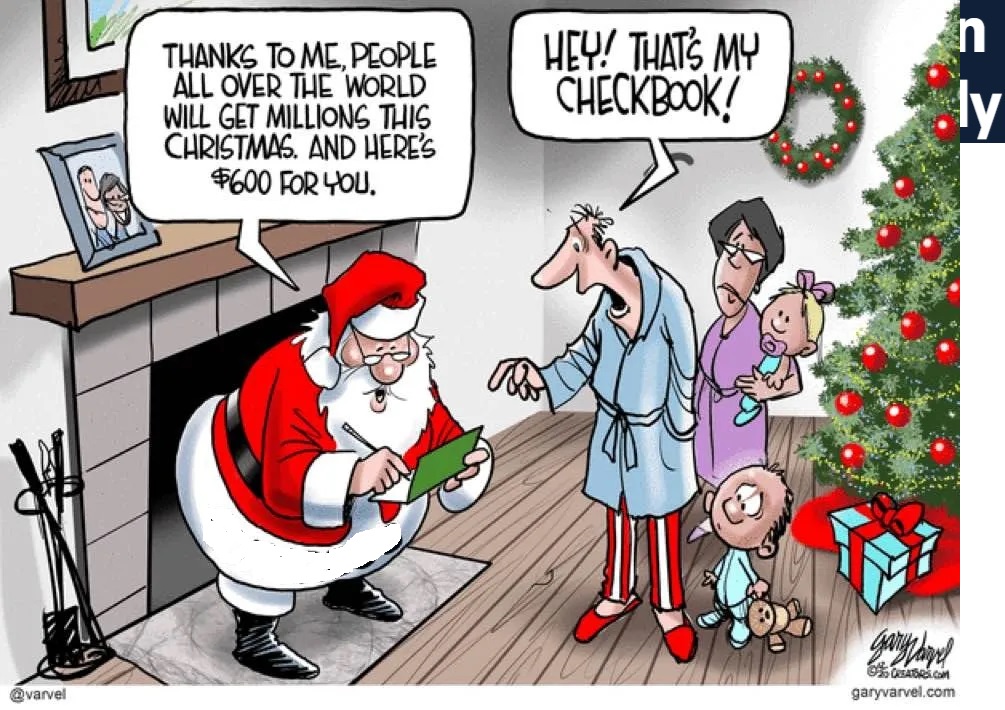
But I advise them to remember the fight a few years ago over Biden’s per-child handouts.  As part of his fake stimulus in 2021, Biden and congressional Democrats created a massive new entitlement that gave parents $3,000 (or even more) for every kid.
But that handout expired after one year. The left obviously hoped this new handout would be very popular and that there would be irresistible pressure to extend it or even make it permanent.
Fortunately, Republicans did the right thing, notwithstanding plenty of demagoguery.
Was there a political backlash in the 2022 midterms? Hardly. Republicans wound up winning both the House and Senate (to be fair, perhaps they would have won more seats if the handouts were extended).
If they hold firm this year on the added Obamacare subsidies, I suspect once again there will be no adverse political consequences (though, with Trump in the White House, 2026 will be a tougher election cycle for the GOP, so it will be a guessing game on what factors affect the outcome).
My second observation is about fiscal policy.
The U.S. is on an unsustainable path because of our aging population and our poorly designed entitlement programs.
If policy is left on autopilot, the spending burden will rise and government debt will further increase. But the government is running out of “fiscal space,” so it’s just a matter of time before politicians have to choose between these two options.
- Genuine entitlement reform, presumably including Social Security
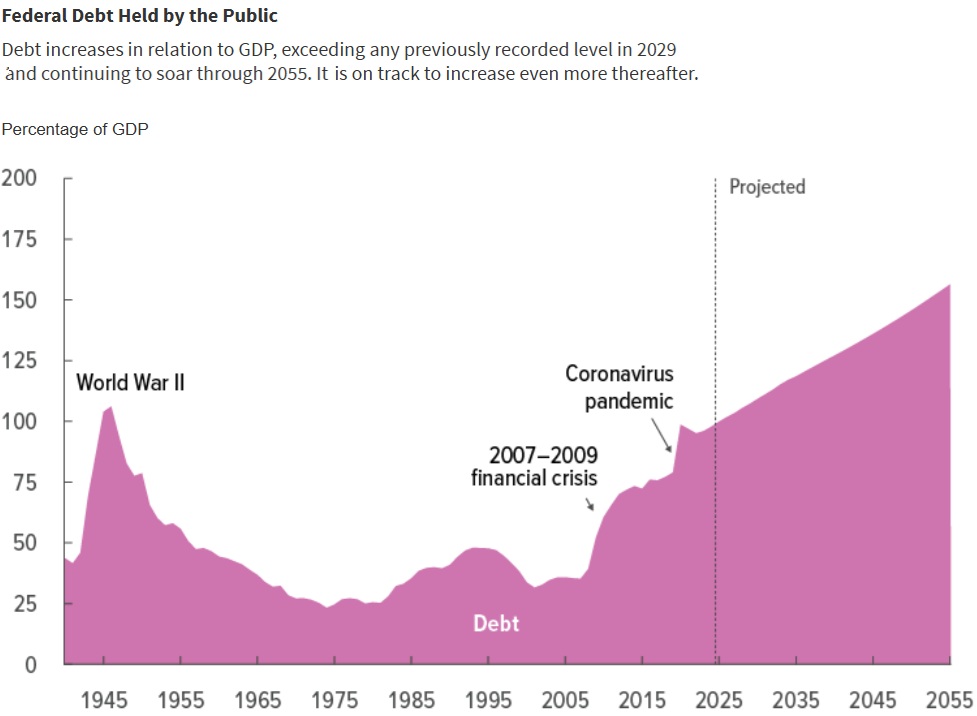 but definitely including the various health programs (Medicare, Medicaid, Obamacare, etc).
- Massive tax increases, with lower-income and middle-class taxpayers being hardest hit since there are not enough rich people to finance big government.
Donald Trump has ruled out the first option, but I’m hoping other Republicans have stronger principles (and stronger backbones).
After all, the GOP was fairly good on entitlement reform just 10 years ago. So hopefully the ghost of Ronald Reagan can be reawakened once Trump leaves the White House.
If not, we’re doomed to become a slow-growth European welfare state.
Read Full Post »


…Not only did her son not officially report her death, he wrapped her body in a bed sheet, stuffed it into a sleeping bag and hid it in his house. He then set out to masquerade as her when it came to renewing her identity card in a government office in the suburb of Borgo Virgilio on the outskirts of Mantua… But his deception eventually raised the suspicions of an employee, who thought there was something a little off – not least his low voice and thick neck. The member of staff alerted the police and the local mayor. …The son had an annual income of €53,000, thanks to his mother’s pension… The man is being investigated for illegally concealing a body and benefit fraud.























 International Liberty